Arezou Niknam, Maryam Khalili, Mehran Fateminia (2026). Autimo: Designing A Gamified Product to Enhance Fundamental Motor Skills of Children with Autism Spectrum Disorder. In: Human Interaction and Emerging Technologies (IHIET-AI 2026): Artificial Intelligence and Future Applications. AHFE Open Access, vol. 201, pp. 568–579. https://doi.org/10.54941/ahfe1007210
Autism spectrum disorder (ASD) significantly affects fundamental motor skills (FMS) development in children. Despite numerous occupational therapy strategies to address FMS, there is a significant gap in qualitative research exploring the design of gamified products for the development of FMS. Conducting 38 interviews with parents and seven observations of children with ASD, we developed Autimo for children aged 5 to 9, engaging them with a product to do FMS in homes or clinics. Autimo incorporates gamification techniques from the Octalysis framework and physical activities from the Sports, Play, and Active Recreation for Kids (SPARK) program. The results of our study reveal insights into the design and delivery of early gamified FMS interventions. Furthermore, it suggests positive feedback from children and occupational therapists (OTs), reassuring the potential acceptance of Autimo. Although future longitudinal or controlled studies is needed to evaluate the effectiveness of gamified FMS interventions.
Autism Spectrum Disorder (ASD) is a complex developmental condition characterized by restrictions in social interactions and communication and repetitive activities and interests, appearing in infancy and persisting into adulthood. It is 4 to 5 times more common in boys (Association AP, 2000) and frequently associated with extensive motor impairments in the first years of life (Liu, 2012). Motor impairments appear even before social interaction deficits and affect them as age increases, facing children with the risk of developmental coordination disorders (MacDonald et al., 2014). Children with ASD aged 6–7 years exhibit significant motor development problems, such as balance function issues, impaired muscle activity regulation, coordination disorders (Spark Physical Education, 2024), reduced physical activity (Katz Zetler et al., 2023), strength or agility problems, and motor programming deficits, especially in the younger age group (Ming et al., 2007) which prevents the performance of many activities, including self-care, writing, games, athletics, dance, and leisure activities, which require motor abilities in ASD adulthood (Clark JE, Metcalfe, 2002, Stodden et al., 2008). Poor motor skills can hinder a child’s ability to engage in school activities,
Autimo: Designing a Gamified Product to Enhance Fundamental Motor Skills 569 such as writing, participating in physical education, and completing hands-on tasks, leading to lower academic performance and school disengagement (Hudson et al., 2021). Meaner et al. (Maenner, 2020) and Jin et al. (Jin et al., 2023) found that, compared with children without ASD, individuals with ASD showed limited motor and cognitive skills, which may negatively affect their independence in daily living and their quality of life. No exact cause has been identified for ASD (Camargo et al., 2019), and no definitive cure exists; therefore, daily intervention is essential to improve the executive functions (EF) and restricted/repetitive behaviours of children with ASD, aiding their integration into their families and societies (Jin et al., 2022). Addressing ASD with social support or accommodations and interventions contributes to the overall well-being and quality of life of children (Sauer et al., 2021). It improves manual coordination and gross and fine motor skills (Jin et al. 2023), enhances engagement in physical activities and sports (Todd, 2012), boosts school readiness and cognitive development (Hudson et al., 2021), and facilitates better social integration (Wibowo et al., 2022). Research indicates that motor programs for children with ASD can produce positive outcomes, including reduced stereotypical behaviours, increased appropriate responses, improved eye contact, enhanced social interactions, and better motor skills (Richmond, 2000, Hatipoğlu et al., 2024). The FMS, through motor programs, can support social communication skills in children with ASD as well (Ketcheson et al., 2017). These motor programs reduce stereotypical behaviours, increase appropriate responses, improve eye contact, enhance social interactions, and develop better motor skills. Research has been done to improve motor skills and make life easier for children with ASD. For instance, Santos et al. (Santos et al., 2021) introduce a robotic coaching platform to enhance social, motor, and cognitive skills. Despite numerous occupational therapy strategies to address physical activity performance, there is a gap in qualitative research exploring the subjective experiences of children with ASD and their caregivers and the design of gamified products that intervene in the development of motor skills. Most existing products for children with ASD focus on sensory or social skills (Zhang et al., 2021), often increasing physical limitations by encouraging passive play. Effective interventions must address low physical activity, poor user engagement, and low technology engagement across multiple disciplines. Research often remains siloed within these specific disciplines. More interdisciplinary studies are needed to combine game design, occupational therapy, and child psychology experts to create more effective, holistic interventions.
BACKGROUND
The use of gamification for children with ASD is a well-established therapeutic approach. The most successful and accessible interventions were those that encouraged players’ interactions and utilized straightforward game designs. They were designed to target three main areas: socio-communication skills, academic skills, and physical skills (Atherton and Cross, 2021). Physical skills and motor skills of children with ASD are addressed using assistive tools used in occupational therapy centres and clinics (Cañete et al., 2021),
smart toys (Rodriguez et al., 2019), gesture-based video games (Rodriguez et al., 2019, Altanis et al., 2013), and music-based products (WHO, 2023, Jahadakbar et al., 2023). KEYme is a multifunctional game-based assistive technology that enhances the social, cognitive, fine and gross motor, and behavioural skills of children with ASD, allowing children to interact in multiple ways and perform many physical activities (Cañete et al., 2021). Similarly, Music Wheel is an interactive augmented reality product aimed at improving target sensory problems like tactile, visual, auditory, fine motor skills, attention, concentration, and communication skills of children with ASD (Jahadakbar et al., 2023). These two examples and other studies (Zager et al., 2014, Li and Cui, 2021, Hilton et al., 2015, Lee et al., 2018, Ramshaw et al., 2023) have shown how technological items are now used in therapies; they are generally classified as interventions that help children maintain typical growth and education and increase quality of life, although they do not completely cure the ASD disorder. To better improve children’s experience with technological products and their quality of life, in some of the articles, authors have mentioned that involving children with autism in the design process is an excellent strategy to prevent usability disasters (Camargo et al., 2019). Following this approach, Sri Lankan practitioners co-designed iPPy toys iteratively to evaluate and improve the design of low- cost toys for children with ASD. Despite addressing some of the limitations of current tools for children with ASD, they did not directly involve children to understand their needs and evaluate the iPPy toys in terms of usability (Soysa and Mahmud, 2020). Similarly, Jahadakbar et al. addressed the limitations of some of the designed tools for children with ASD by involving ASD experts and parents (Jahadakbar et al., 2023). Although these studies co-designed the product for children with ASD with their parents and caregivers, they missed the most helpful design methods that foster valuable insights into how children interact and engage with products. According to the review of gamification products for children with ASD by Camargo et al., only 3.3% (one study) of the gamification products were aimed at improving the motor skills of children with ASD, which is not promising because of the role that motor skills play in the quality of life of the children (Camargo et al., 2019). A study by Ketcheson et al. shows that when children with ASD receive direct and intensive instructions on targeted motor skills delivered within an evidence-based framework, the motor skills improve. This study built upon early motor skill interventions and investigated a strategy to provide motor skill instruction to children with ASD. Strategies demonstrated improvement in locomotor and object control, which later proved to have positive effects on the social interactions of individuals with ASD (Ketcheson et al., 2017). On the other hand, based on our secondary research, fewer studies focus primarily on the motor skills of children rather than suggesting solutions for the improvement of social interactions and cognitive skills, specifically when designing gamified products (Camargo et al., 2019). Research has shown that motor skills interventions can improve the motor skills of children with ASD (Santos et al., 2021, Sansi et al., 2021, Williams et al., 2024). For example, Ruggeri et al. have shown that evidence supports that specific types
Autimo: Designing a Gamified Product to Enhance Fundamental Motor Skills 571 of motor intervention improve specific motor participation, activity, and body structure and function outcomes in children with ASD (Ruggeri et al., 2020). This conveys an emerging need for designing gamified interventions for motor skills. Motor skills have an essential relationship with lifestyle variables. There is a substantial correlation between motor skills and freedom in daily tasks. More chances for physical activity practice and intervention research promote a higher level of adherence to physical activity practices, which would positively impact lifestyle choices and ultimately enhance quality of life (Kruger et al., 2019).
METHOD
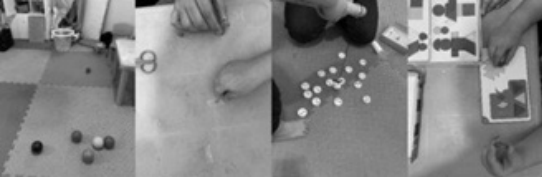
We conducted this study using the gamification-cantered experience design method from Morschheuser et al., which includes seven steps described in the method section. This method is created based on a design science research approach through interviews with gamification experts, concluding in the development of a process that is comprehensive, complete, and provides practical utility (2017). To gain a comprehensive understanding of the challenges and needs of children with ASD, in the preparation phase of the project, three semi-structured interviews were conducted with OTs, each lasting 90 minutes (one Google Meet and two face-to-face). To ensure the appropriateness of objectives and techniques for this gamified product for motor skills in the context of design for children with ASD, the children’s needs and the effectiveness of gamified and motor interventions are explored. The goal is to design the gamified interactions of an affordable product using the movements extracted from the SPARK program (2024), and to encourage children to perform motor skills tasks. We conducted semi-structured interviews at two occupational therapy centres in Tehran, Paya Rehabilitation Clinic and West Tehran Rehabilitation Clinic to gather information about the challenges children and OTs encounter and activities performed to improve motor skills. Thirty-seven parents of children aged 5 to 9 years (25 boys and 12 girls) participated in the study. Due to the ethical considerations of the research as per the limitations of working with children, we interviewed 30 parents of children with ASD who were in direct contact with the child for more than 12 hours a day and observed seven children in occupational therapy sessions of 40 to 45 minutes in the clinic in the user and context analysis phase of the project. Two of these children finally took part in the usability and ergonomic evaluation session of the product. All of the participants of the study were Iranian children living in Tehran, showing signs of ASD in motor, sensory, and communication skills. To gain insights through semi-structured interviews, we prepared three series of questions: A set of questions as a conversation starter with the parents, a set of questions about their child’s routine behaviours and activities, a set of questions about the difficulties they have living with an ASD child in society.
Figure 1: Observations.
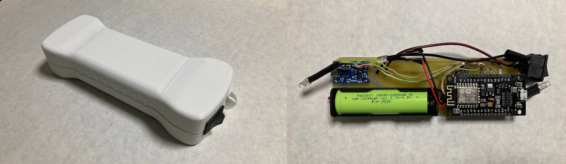
Interview responses were qualitatively transcribed, categorized by relevance, and scored for repetition. To develop the idea, first, 80 ideas were produced divergently in a group of three designers and an engineer to address significant motor skill problems: fine motor skills, gross motor skills, coordination difficulties, strength, agility problems, and motor persistence. Second, using an evaluation table of the most critical needs collected in the user and context analysis phase, we selected 10 of the most effective ideas. Finally, due to the unique characteristics of children with ASD and the need for the supervision of a specialist, in an expert interview with an OT, one of the ideas was selected as the final solution for further development and detailed design. Wireframes, and user scenarios were created for further development and testing in the following phases. Gamification principles were investigated, and four white-hat principles of gamification ownership, accomplishment, empowerment, and epic meaning were selected in this process to embody in the product. We analysed SPARK movements and selected those implementable and engaging for a gamified product. We sketched various device forms inspired by the gaming tools in the current market. We considered the child’s ergonomics and anthropometry in the product’s measurements. Three industrial designers took part in a dot-voting session and selected one of 4 forms. For the initial version of our product, we developed a full-scale, 3D-printed physical prototype. An electronic board, including an ESP8266 board, IMU sensor, on/off button, LEDs, lithium battery, and charger, was built at a significantly low price and located in the 3D-printed shell. A fully interactive mobile application prototype was created in Figma. It integrates a camera within the application user interface, which processes children’s activities on the interface and provides data used for further analysis of the movements. We consulted with an ergonomics expert, defined eight evaluation criteria: foot rotation, hand rotation, deviation from the centre, deviation from the target, response time, and error rate. We used Kinovea, a free, open-source video annotation tool designed for sports analysis, to capture and analyse the movements of two children with ASD while they used the device. Through analysis of the MVP, we asked a neurotypical child to use the product and provide feedback on its weight, size, and overall user experience. We found some minor improvements that would strengthen and enhance children’s experience with ASD regarding the product’s weight, size, and look and feel.
RESULTS
Interview responses were qualitatively transcribed, condensed into meaningful sentences, categorized by relevance, and scored for repetition. These results are presented in Table 1 as significant needs of children with ASD. The mentioned needs were the cornerstones in evaluating 80 initial ideas. First, during interviews, we understood that children are intensely interested in engaging in games that use music and water. However, they do not usually exercise at home. After asking follow-up questions, we found that by “exercise,” parents usually meant a serious athletic act, which differs from what we meant. After declaring this discussion, we found that children with ASD like playing games containing movements and exercises but usually don’t find them interesting. For example, one of the parents said: “He enjoys going to the game room and doing physical activities with the OT, and he is happier coming out of the game room, but he does not perform activities based on the structures at home”. The second point obtained from the interviews is about children’s interest in technology, such as mobile games and TV, which the parents and OTs frequently diminish. As parents reflect in their interviews, children with ASD like to play with technology. However, due to the risks that using technology brings to children with ASD, parents, and OTs usually do not allow children to use technology or limit the hours of engagement. The third point from the interviews was that children with ASD like doing repetitive activities. For example, they put their toys in rows or stare at the washing machine for hours. It is essential to decrease the repetitive movements in children with ASD without giving them an unpleasant feeling. One of the OTs mentioned that “It creates a negative feeling in children with ASD to consistently hinder them from doing what they like.” So, in our product, we used positive gamification elements to help children focus on the gamified physical movements, which creates positive emotions rather than negative ones.
Table 1: Identified needs of children with ASD.
Table available in the original PDF paper.
Needs Importance Feel motivated to do physical activities 5
Affinity to technology 5 Stay concentrated on doing activities 4
Consistency in user flow 4 Clear presentation and logical flow of data 4
Empower short-term memory 3 Stay balanced in activities 3
Involve in favourite activities 2 Constant feedback on motor performance 2
The product is a device synchronized with an application that engages children with ASD in their favourite games and experiences in the comfort of their homes. Using four white hat (positive) principles of gamification
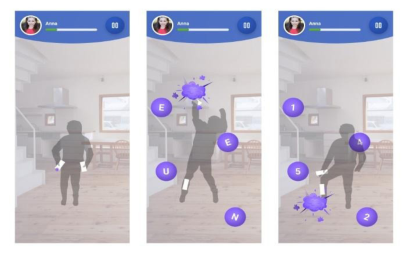
ownership (avatar, collection sets, and companion), accomplishment (status points, badges, step-by-step tutorial, leaderboard, and fixed action rewards), empowerment (milestone unlocks and feedback), and epic meaning (narrative) children are encouraged to complete each level of movements and move on to the next. For instance, after completing each level of the game, a crown is given to show progress (accomplishment). After completing some games related to one skill, a medal is dedicated to showing the improvement of that skill (empowerment). Autimo, contains a physical device and a mobile app. One to four devices synced to the app can play the games. The mobile app includes three major categories of games: 1) Device-based games only use the device in 5 games and require the ASD child to move the device in reaction to colours of light played in a specific rhythm 2) Application-based games use both the device and the application in 5 different games and require the ASD child to move the device in reaction to elements of the user interface 3) Children use a small stick to adhere the device to their leg to incorporate more significant areas of their body in the activities.
Figure 2: Autimo user interface.
The 3D model of the selected form was created in Rhino-3D and printed in PLA. An electronic board, including an ESP8266 board, IMU sensor, on/ off button, LEDs, lithium battery, and charger, was built at a significantly low price and located in the 3D-printed shell. The product was examined using the interactive prototype and the 3D-printed physical device programmed with Arduino. Metrics defined in the consultation with the ergonomics expert were measured using Kinovea (Kinovea). According to the results of this test, the device covers a suitable range of hand and foot rotation and deviation from the centre, indicating robust support for a wide range of movements. The capability to assess metrics such as error rate, deviation from the target, and response time allows for comprehensive evaluations over extended periods of use. The results of two interviews indicated that initially, both children were curious to explore the product’s capabilities upon seeing its appearance. They expressed interest in playing with the product, demonstrating a willingness to make a purchase. During the game’s second stage, they felt moderate difficulty (neither too low nor too high), highlighting a balanced engagement during the gameplay.
In this study, we aimed to design a gamified product, Autimo, inspired by movements in the SPARK program to engage children in interactive, engaging, and enjoyable physical activities, focusing on their needs and experiences with occupational therapy sessions. Designing a gamified product for the motor skills of children with ASD is challenging because of the variety of the characteristics of these children and the limitations that should be considered in the design of their products. Many of the prior studies did not involve children with ASD in the design process to extract user characteristics that can inspire design ideas (Li and Cui, 2021, Kruger et al., 2019). Many studies did not test the interventions to validate the usability and effectiveness of the designs (Cañete et al., 2021). Additionally, few studies have investigated the design and evaluation of products that intervene in the motor skills of ASD children despite the effectiveness of interventions and the significant need for developing such designs. To cover this gap, in addition to semi-structured interviews with OTs and semi-structured interviews with parents, we observed children with ASD in the occupational therapy centers. We conducted a pilot evaluation with children using our prototype. Autimo is adaptable to the contextual environment (home and occupational therapy clinics) of children with ASD. It can be used at home with the help of parents or caregivers or in an occupational therapy clinic with the help of an OT. The properties of device synchronization, modularity, and interactivity allow for different activities and modes of play to be included in the product to cover a wide range of the needs of children with ASD, including motor and cognitive skills and repetitive behaviors. Autimo allows for interaction between the child and a digital product in a home environment, and it can be applied to other
environments, such as occupational therapy clinics. It provides an inclusive, accessible, and attractive product equipped with Arduino components to achieve interactivity and gamification through a natural environment. The different game modes motivate the child to pay attention to both the physical device and the digital elements of the app. In this case, technology is used to encourage and improve the bodily movements and activities of the children. It creates an easy-to-use mobile app that can collect children’s detailed data for further analysis of their movements and effective feedback on their performance concerning their privacy. Our research contains limitations due to the COVID-19 pandemic.
CONCLUSION
This study aimed to design a gamified product to enhance motor skills in children with autism spectrum disorder (ASD) by incorporating movements from the SPARK program. We proposed a product that employs positive gamification principles to motivate children with ASD to engage in fundamental motor skills (FMS) practice. The SPARK program serves as an inspiration for this product. This gamified solution is an affordable digital user experience and a synchronized Arduino-based device to improve and assess the motor skills of children with ASD. Our product assists parents, and occupational therapists foster gross motor skills within a home or clinical environment. Autimo encourages children with ASD to minimize sedentary behavior and actively perform FMS, thereby enhancing their overall quality of life and well-being. We conducted a pilot study involving two children with ASD to evaluate and refine the product’s usability. A notable limitation of our study was the impact of the COVID-19 pandemic, which affected the collaboration procedures within occupational therapy clinics due to the sensitivity of children with ASD to infection and disease and the clinics’ responsibility to safeguard their rights. Future work may involve a long- term final product evaluation in an experimental study with a control group conducted in home or occupational therapy settings.
ACKNOWLEDGMENT
Thanks to “The Tehran West” clinic, “Paya Rehabilitation” clinic, the ergonomics department of “Iran University,” and “Dr. Hamid Khazaei Rehabilitation” clinic for their cooperation and support in writing this paper.
REFERENCES
Altanis G, Boloudakis M, Retalis S, Nikou N. Children with motor impairments play a kinect learning game: first findings from a pilot case in an authentic classroom environment. J Interact Design Architect. 2013;19:91–104. Association AP. Diagnostic and statistical manual of mental disorders. Text revision.
2000. Atherton G, Cross L. The use of analog and digital games for autism interventions.
Frontiers in psychology. 2021;12:669734.
Autimo: Designing a Gamified Product to Enhance Fundamental Motor Skills 577 Camargo MC, Barros RM, Brancher JD, Barros VT, Santana M, editors.
Designing gamified interventions for autism spectrum disorder: a systematic review. Entertainment Computing and Serious Games: First IFIP TC 14 Joint International Conference, ICEC-JCSG 2019, Arequipa, Peru, November 11–15, 2019, Proceedings 1; 2019: Springer. Cañete Yaque R, López S, Peralta-Álvarez ME. KEYme: Multifunctional Smart Toy for Children with Autism Spectrum Disorder. Sustainability, 13 (7), 4010-. 2021. Clark JE, Metcalfe JS. The mountain of motor development: A metaphor. Motor
development: Research and reviews. 2002;2(163-190):183–202. Hatipoğlu Özcan G, Özer DF, Pınar S. Effects of Motor Intervention Program on Academic Skills, Motor Skills and Social Skills in Children with Autism Spectrum Disorder. Journal of Autism and Developmental Disorders. 2024:1–15. Hilton C, Attal A, Best J, Reistetter T, Trapani P, Collins D. Exergaming to improve
physical and mental fitness in children and adolescents with autism spectrum disorders: Pilot study. International Journal of Sports and Exercise Medicine. 2015;1(3):1510015. Hudson KN, Ballou HM, Willoughby MT. Improving motor competence skills in early childhood has corollary benefits for executive function and numeracy skills. Developmental science. 2021;24(4):e13071. Jahadakbar M, Araujo de Aguiar CH, Nikkhah Dehnavi A, Ghandi M, editors. Sounds
of Play: Designing Augmented Toys for Children with Autism. Proceedings of the 16th International Conference on PErvasive Technologies Related to Assistive Environments; 2023. Jin C, Gu T, Shi B, Wang X, Jing J, Cao M. The association between motor coordination impairment and restricted/repetitive behaviors in autistic children: The partial mediating effect of executive function. Research in autism spectrum disorders. 2022;99:102053. Jin Y-R, Sung Y-S, Koh C-L, Chu SY, Yang H-C, Lin L-Y. Efficacy of Motor
Interventions on Functional Performance Among Preschool Children With Autism Spectrum Disorder: A Pilot Randomized Controlled Trial. The American Journal of Occupational Therapy. 2023;77(6):7706205020. Karacar E, Özer D, Şahin M, Özcan GH. An Investigation of Motor Skills of 8-to 12-Year-Old Children With Autism Spectrum DIsorder Compared to Typically Developing Peers. Palaestra. 2023;37(3). Katz Zetler N, Gal E, Engel Yeger B. Predictors of daily activity performance of
children with autism and its association to autism characteristics. The Open Journal of Occupational Therapy. 2023;11(1):1–9. Ketcheson L, Hauck J, Ulrich D. The effects of an early motor skill intervention on motor skills, levels of physical activity, and socialization in young children with autism spectrum disorder: A pilot study. Autism. 2017;21(4):481–92. Kinovea. (n.d.). Kinovea: Video analysis software [Computer software]. Retrieved
from https://www.kinovea.org Kruger GR, Silveira JR, Marques AC. Motor skills of children with autism spectrum disorder. Revista Brasileira de Cineantropometria & Desempenho Humano. 2019;21:e60515. Lee D, Frey G, Cheng A, Shih PC, editors. Puzzle walk: A gamified mobile app to
increase physical activity in adults with autism spectrum disorder. 2018 10th International Conference on Virtual Worlds and Games for Serious Applications (VS-Games); 2018: IEEE.
Li C, Cui J. [Retracted] Intelligent Sports Training System Based on Artificial Intelligence and Big Data. Mobile Information Systems. 2021;2021(1):9929650. Liu T. Motor milestone development in young children with autism spectrum disorders:
An exploratory study. Educational Psychology in Practice. 2012;28(3):315–26. MacDonald M, Lord C, Ulrich DA. Motor skills and calibrated autism severity in young children with autism spectrum disorder. Adapted physical activity quarterly. 2014;31(2):95–105. Maenner MJ. Prevalence and characteristics of autism spectrum disorder among
children aged 8 years—Autism and Developmental Disabilities Monitoring Network, 11 sites, United States, 2020. MMWR Surveillance Summaries. 2023;72. Ming X, Brimacombe M, Wagner GC. Prevalence of motor impairment in autism spectrum disorders. Brain and Development. 2007;29(9):565–70. Morschheuser B, Hamari J, Werder K, Abe J. How to gamify? A method for designing
gamification. 2017. Organization WH. Autism Geneva, Switzerland: World Health Organization; 2023. Ramshaw G, McKeown A, Lee R, Conlon A, Brown D, Kennedy P, editors. Introduction of Technology to Support Young People’s Care and Mental Health—A Rapid Evidence Review. Child & Youth Care Forum; 2023: Springer. Richard Williams N, Hurt-Thaut C, Brian J, Tremblay L, Pranjić M, Teich J, et al.
Improved motor skills in autistic children after three weeks of neurologic music therapy via telehealth: a pilot study. Frontiers in Psychology. 2024;15:1355942. Richmond LM. The effect of physical activity on stereotypical behavior of autistic children: Texas A&M University-Commerce; 2000. Ruggeri A, Dancel A, Johnson R, Sargent B. The effect of motor and physical activity
intervention on motor outcomes of children with autism spectrum disorder: A systematic review. Autism. 2020;24(3):544–68. Ruiz-Rodriguez A, Martinez-Garcia AI, Caro K, editors. Gesture-based video games to support fine-motor coordination skills of children with autism. Proceedings of the 18th ACM International Conference on Interaction Design and Children; 2019. Sansi A, Nalbant S, Ozer D. Effects of an inclusive physical activity program on
the motor skills, social skills and attitudes of students with and without autism spectrum disorder. Journal of Autism and Developmental Disorders. 2021;51(7):2254–70. Santos L, Geminiani A, Schydlo P, Olivieri I, Santos-Victor J, Pedrocchi A. Design of a robotic coach for motor, social and cognitive skills training toward applications with ASD children. IEEE Transactions on Neural Systems and Rehabilitation Engineering. 2021;29:1223–32. Sauer AK, Stanton J, Hans S, Grabrucker A. Autism spectrum disorders: etiology and
pathology. Exon Publications. 2021:1–15. Soysa AI, Mahmud AA. Interactive Pretend Play (iPPy) Toys for Children with ASD. Proceedings of the 31st Australian Conference on Human-Computer- Interaction; Fremantle, WA, Australia: Association for Computing Machinery; 2020. pp. 285–9. Spark Physical Education. (2024). SPARK physical education program. Retrieved
from https://sparkpe.org/
Autimo: Designing a Gamified Product to Enhance Fundamental Motor Skills 579 Stodden DF, Goodway JD, Langendorfer SJ, Roberton MA, Rudisill ME, Garcia
C, et al. A developmental perspective on the role of motor skill competence in physical activity: An emergent relationship. Quest. 2008;60(2):290–306. Todd T. Teaching motor skills to individuals with autism spectrum disorders. Journal of Physical Education, Recreation & Dance. 2012;83(8):32–48. Wibowo Y, Nugraha AFS, Lestari IAP, Widyastuti S, Muslimin TA. The training for
children’The Training for Children’s Motor Development at TPA AL-Mubasyir Desa Dibal, Kecamatan Ngemplak, Kabupaten Boyolali, Central Java. Jurnal Pengabdian Teknologi Tepat Guna. 2022;3(2):124–31. Zager D, Cihak DF, Stone-MacDonald A. Autism spectrum disorders: Identification, education, and treatment: Taylor & Francis; 2004. Zhang B, Wang Y, Yang Y, Song L. ASD Children’s APP Emotional Interaction
Design Based on Smart Toys of Internet of Things. Mobile Information Systems. 2021;2021(1):1342538.
LISTED IN THE AHFE DIGITAL BOOKSTORE CATALOGUE
Explore the complete digital volume
Human Interaction and Emerging Technologies (IHIET-AI 2026): Artificial Intelligence and Future Applications
Read this individual research paper free through the original publisher, or explore the full digital proceedings book.
ISBN 978-1-964867-77-9
Explore this ISBN in the AHFE Bookstore ↗Listed in the July 2026 bookstore catalogue; search by ISBN to confirm current availability · Digital book purchase optional