Daniela Onofrejova, Hana Pacaiova (2023). Contribution To Safety Standards and Their Relevance for Ergonomic Risk Assessment In Slovakia. In: Human Systems Engineering and Design (IHSED 2023): Future Trends and Applications. AHFE Open Access, vol. 112, pp. 321–326. https://doi.org/10.54941/ahfe1004143
Ensuring that a person's health is protected at work, it is important to monitor the parameters that affect his or her body. Important parameters for occupational health protection are the position and movement of the employee during the performance of work. These have a direct influence on the likelihood of damage to the musculoskeletal system, so it is necessary to introduce appropriate protective measures. It is also necessary, for long-term monitoring of the impact, to establish the correct limits of movements and positions, based on the legislation in force. There are two standards in the territory of the Slovak Republic, Decree 542/2007 Coll. and STN EN 1005-4+A1, which do not coincide. Comparing to French standards, i.e. AFNOR and INRIS, implemented in measurement wireless multisensory system CAPTIV, the legislation in force does not conform, so the measurement evaluation is not clearly established. Therefore, we compared the values needed for workload assessment. Such assessment is useful for exoskeleton selection, as a possible alternative to a personal protective equipment, providing support for the body and preventing damage to it. To select the right exoskeleton, it is essential to evaluate the work process and the load that accompanies the particular work task.
Job evaluation in terms of work positions is most significant in stable work locations (e.g. work on stationary and mobile work machines, work in crawler production, etc.) when the employee is more than half of an eight- hour shift at the same place of work and performing the same work activity. In doing so, the employee cannot choose his working position himself, but his working position is directly dependent on the design of the machine, the layout of the workplace, the spatial parameters of the workplace, etc (Decree 542/2007 Coll.). Surveys and statistics on occupational diseases in the territory of the Slo- vak Republic, from 2021, show an increasing trend in the incidence of these diseases. Compared to 2020, an increase of 169 cases of occupational dis- eases has been recorded. The total number of detected cases in 2021 was
423. Diseases of the musculoskeletal system were recorded in 175 patients, accounting for 41.3% of the total number of diseases, which is the largest share (NCZI, 2021).
The Industry 4.0 is moving towards the 4th revolution, seeking for the smart, skilled, and healthy operator. To reduce the exposure of workers to hazardous environments and tasks, ergonomists and engineers have been putting their efforts into developing risk assessment methods for quantifi- cation of the risk of WRMSDs (Cerqueira, Da Silva, and Santos, 2017). These tools can be divided into self-reports, observational methods, and direct/instrument-based methods (David, 2005). RULA and NIOSH analyses and methods for assessing working positions according to current legislation are often used as part of the risk assessment (Bednar, 2023) for upper limbs, according to national legislation limits.
In this respect, however, there are two standards in force in the territory of the Slovak Republic, Decree 542/2007 Coll. and STN EN 1005-4+A1, which do not coincide (Onofrejova, Balazikova and Porubcanova, 2022). If we use the CAPTIV system for load measurement, we also find differences in the pre-set threshold values, compared to the valid standards. This system is the work of a French development, therefore it is subject to local standards, i.e. AFNOR and INRIS. Although the system Captiv allows for changing the thresholds according to the local standards in force, the legislation in force does not conform in this respect and therefore the evaluation of the measurements is not clearly established.
The increasing pace of work and the ever-increasing demands on workers are leading to higher rates of accidents and sick leave due to dispropor- tionate load on the body (Salvendy, Karwowski, 2021). Damage to the human musculoskeletal system has become a phenomenon in this area in recent years. However, as technology advances, the possibilities for mea- suring and assessing workload are also improving, which should lead to improved safety and the development of appropriate protective work equip- ment to help reduce the effects of workload on the human body and health (Onofrejova et al., 2022).
ISSUES OF STANDARDS APPLICABLE IN THE SLOVAK REPUBLIC Decree 542/2007 Coll. applies in the territory of the Slovak Republic. The Slovak Republic, as well as the standard STN EN 1005-4+A1. However, these valid standards do not coincide in many parameters in the field of workload assessment. They also differ in the starting positions from which the subsequent determination of the limit values for determining unaccept- able and conditionally acceptable positions and movements at work is based. Nor are the segments or parts of the limbs that represent a given limb iden- tical. Therefore, complications arise when trying to research and evaluate ergonomic risk (physical load) due to inconsistency of current standards. The range of acceptable values pre-set in the CAPTIV system also varies. Therefore, we compared the values needed for workload assessment.
Occupational diseases were most common among health care workers, specifically 163 cases. The other, unspecified, manufacturing sector came
Contribution to Safety Standards and Their Relevance for Ergonomic Risk Assessment 323
second with 38, followed by fabrication of metal structures except machinery and equipment and manufacture of motor vehicles, trailers and semi-trailers, with 37 workers with an occupational disease. According to the NCZI, occu- pational diseases in 2021 were most prevalent in the age group between 50–59 years (NCZI, 2021). Results of differences between standards in the ergonomic risk assessment of work positions have to be researched. Comparison of the values for Upper limb, whether unacceptable or conditionally acceptable, is difficult as the form or the specific segment/joint according to which the assessment was made, does not match.
In defining the movements of the Back, the Decree coincides with the Standard in defining the unacceptable forward flexion, the conditionally acceptable ranges of both forward flexion and extension (see Table 1). The STN EN agrees with the CAPTIV system in defining the angle of lateral flex- ion (see Table 1). Limits in Slovak legislative, in contrast to default limits used in Captiv, distinguish static and dynamic type of work, too.
Table 1. Comparison example of posture limits for unacceptable risk level for ergonomic risk assessment (authors, 2023).
Table available in the original PDF paper.
Segment Coll. SR 542/2007 STN EN 1005-4 Captiv Back Forward flexion>60
Forward flexion >60
/
Lateral flexion/Rotation >10
Extension without support/significant lateral flexion/rotation >20
Forward flexion ≥60
, f ≥2/min
Forward flexion >20
, f ≥2/min.
Forward flexion ≥45
Extension, f ≥2/min. Extension ≥20
Significant lateral flexion/rotation >20
, f ≥2/min.
Lateral flexion ≥20
Lateral flexion/Rotation >10
, f ≥2/min.
Rotation ≥30
Upper limb Shoulder flexion >60
Flexion >60
/
Awkward positions Extension Abduction >60
Adduction Shoulder flexion >60
, f ≥2/min.
Flexion >60
, f ≥2/min Vertical rotation right/left ≥90
Shoulder extension, f ≥2/min.
Extension, f ≥2/min. Horizontal rotation right/left -90
/30
Abduction >60
, f ≥2/min.
Rotation internal/external -60
/45
Adduction, f ≥2/min.
324 Onofrejova and Pacaiova
RESULTS OF ERGONOMIC RISK ASSESSMENT WITH DIFFERENT STANDARDS AND THEIR LIMITS In collaboration with INRS (French National Institute for Research and Safety), TEA has developed CAPTIV, an innovative data collection system to synchronise video sequences together with visual observations and sensor measurements in the application of physical load limit values related to work- ing positions as well as other physiological characteristics. The CAPTIV wear- able multisensor system is used to measure movement for post-processing in the form of multi-functional analysis of posture, load capacity, muscu- loskeletal constraints and repetitive movements and vibrations. It is a flexible,
a)
b)
c)
d)
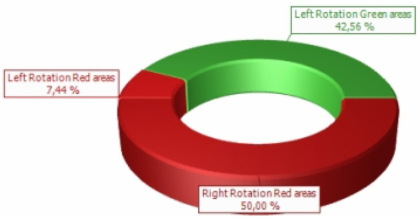
Figure 1: Comparison of the results from the assessment of the working position of selected body segments according to: a) Neck: Lateral flexion (Captiv: AFNOR, INRIS), b) Neck: Lateral flexion (Decree 542/2007 Coll.), c) Neck - rotation: (Captiv: AFNOR, INRIS), d) Neck - rotation: (Decree 542/2007 Coll.) (Authors, 2023).
Contribution to Safety Standards and Their Relevance for Ergonomic Risk Assessment 325
scalable measurement and analysis toolset for ergonomics, workplace anal- ysis, occupational safety, HMI (Human-Machine Interface), prototyping, research, VR (virtual reality) and other applications (Onofrejova et al. 2022). Comparison of the results from the assessment of the working position, par- ticularly selected body segment - Neck in lateral flexion, rotation according to standards Captiv: AFNOR, INRIS vs. Decree 542/2007 Coll. can be seen in Fig. 1.
CONCLUSION
Industry is a key pillar of economy. Factories are aware of the innovation importance and implementation in their internal processes. How well a work- place is designed depends on the movements that workers have to perform on a daily basis. Time consumption, performance standards, production capacity and other production indicators are then derived from workplace movements (Fusko et al., 2021). This contribution presents our approach to starting a modern monitoring and inspection system for ergonomic improve- ments, addressing the high incidence of MSDs in Slovak industry, especially in assembly operations in the automotive industry. Ergonomic assessment of physical worker activity with wireless multisensor system Captiv, espe- cially working postures capturing can help in prevention of MSDs disorders. Simultaneously, we want to consider possible measures, as one of the priority solutions is to test the suitability of exoskeleton implementation, as support- ing technical devices in strenuous work, within the ergonomic prevention projects. To select the right exoskeleton, it is essential to evaluate the work process and the physical load, eventually mental load, that accompanies the particular work task. Even for supporting this research, we need to objectify noticed positives and shortcomings in Slovak legislative. There is a need for uniform standards for ergonomic risk assessment of body posture, not for- getting a more detailed description of the limit values of the individual body segments.
ACKNOWLEDGMENT
The authors would like to acknowledge for the support by the Slovak Agency Supporting Research and Development APVV-19-0367. This publication is the result of the project implementation Research and development of intelligent traumatological external fixation systems manufactured by digital- isation methods and additive manufacturing technology (Acronym: SMART- fix), ITMS2014+: 313011BWQ1 supported by the Operational Programme Integrated Infrastructure funded by the European Regional Development Fund.
REFERENCES
Bednar, M. et al. (2023). Managing Risks and Risk Assessment in Ergonomics—A Case Study. n book: Research and Innovation Forum 2022, pp. 683–697.
326 Onofrejova and Pacaiova
Cerqueira, S., M., Da Silva, A., F. and Santos, C., P. (2017) Smart Vest for Real-Time Postural Biofeedback and Ergonomic Risk Assessment. IEEE Access, pp. 1–9, DOI: 10.1109/ACCESS.2020.3000673. David, G. C. (2005). Ergonomic methods for assessing exposure to risk factors
for work-related musculoskeletal disorders. Occupational Medicine (Chic. Ill). Vol. 55, No. 3, pp. 190–199. Decree No. 542/2007 Coll. of the Ministry of Health of the Slovak Republic of 16 August 2007 on the details of health protection against physical strain at work, psychological workload and sensory strain at work. Fusko, M. et al. (2021). The Importance Of Digitization And Innovations For Small
And Medium-Sized Enterprises. Proceedings of CBU in Economics and Business. 2. 32–40. NCZI - Occupational diseases or risk of occupational disease (October 15, 2021).
Website: https://www.nczisk.sk/statisticke_vystupy/tematicke_statisticke_vystup y/choroby_povolania_alebo_ohrozenia_chorobou_povolania/Pages/default.aspx Onofrejova, D., et al. Ergonomic Assessment of Physical Load In Slovak Industry Using Wearable Technologies (2022). Applied Sciences, Vol. 12, No. 7, pp. 1–16. Onofrejova, D., Balazikova, M. and Porubcanova, D. (2022). Legislative support for
prevention and evaluation of ergonomic risks. In: Actual issues of work safety 2022. Kosice (Slovakia): Technical University of Kosice, pp. 111–117. Salvendy, G., Karwowski, W. (2021). Human Factors and Ergonomics. JohnWilley&Sons, pp. 1576.
LISTED IN THE AHFE DIGITAL BOOKSTORE CATALOGUE
Explore the complete digital volume
Human Systems Engineering and Design (IHSED 2023): Future Trends and Applications
Read this individual research paper free through the original publisher, or explore the full digital proceedings book.
ISBN 978-1-958651-88-9
Explore this ISBN in the AHFE Bookstore ↗Listed in the July 2026 bookstore catalogue; search by ISBN to confirm current availability · Digital book purchase optional