Anran Feng, Mengye Zhou, Wanjun Li, Ziyi Wang, Weiru Zhang, Jing Chen (2023). A Lead User-Persona approach to eliminate communication barriers among stakeholders in co-design. In: Human Factors in Communication of Design. AHFE Open Access, vol. 90, pp. 72–81. https://doi.org/10.54941/ahfe1003697
An appropriate representative Persona is a critical factor in helping interaction design (IxD) innovation and product marketing succeed. Designers, users, and marketers usually work together as stakeholders to build Persona. However, researchers have noted that differences in understanding among stakeholders lead to Persona being created but not used well. Therefore, utilizing a mobile photographing market investigation project as a case study, this study proposes a new approach called Lead user-Persona. The core aim of the Lead-User Persona method is to help stakeholders reduce differences in persona understanding. Researchers use hybrid qualitative and quantitative approaches to find and analyze users’ information and ultimately build Lead-User Persona. At the end of this project, researchers invited project stakeholders to find IxD insight and fill out the satisfaction report. The results show that the Lead-user Persona can improve stakeholders' satisfaction with communication and creation.
Collaborative design (Co-Design) allows consumers to participate in the whole product design process and believe that it will eventually lead to product improvement and innovation (Burkett, 2012). Co-Design has been widely used in the research of user-centered product design to understand the needs of users. Bødker provide a new idea define co-design : It is a team work involve a lot of stakeholders in a project (Bødker, 1988). Base on this viewpoint, co-design requires a higher sense of cooperation and teamwork to achieve creative thinking in the design process, which also means that the first condition of collaborative design is to maintain the communication of project stakeholders. Thus, co-design is a study on the cooperative design method of stakeholders. The key factor of collaborative design is how to make stake- holders work more harmoniously to achieve the purpose of improving the design service quality. In the past time, persona is a best way to make “true person” in a design process which in HCI(human-center interaction) rese- arch area. Undoubtedly, the numerous qualitative, quantitative, and hybrid
A Lead User-Persona Approach to Eliminate Communication Barriers 73
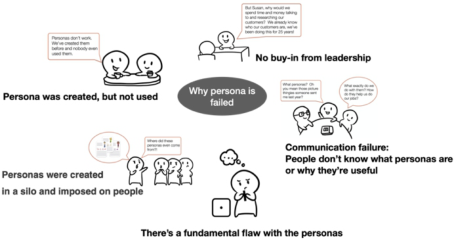
Figure 1: Why personas fail? Redrew by author base on Salazar (Salazar 2018).
Persona methods have provided designers, marketers, product managers with the convenience of understanding users in depth. However, existing Persona methods do not connect these stakeholders include but not limited to desi- gner and marketer to work together for the purpose of innovative product design.
As shown in figure 1, Salazar considers that Personas was created but not fully understood and used by stakeholders. Some project stakeholders like marketers do not know who composed the persona. More than this, Salazar think the persona do not help stakeholders work together as an organization to make some creativity design because of communication gap. The core rea- son is the communication and understanding barriers among stakeholders when they use same Persona. Thus, establishing a new approach to elimi- nate the communication and understanding barriers among stakeholders in a project, and to provide better design insight and marketing strategy is the fundamental aim of this study. In this study, we use hybrid methodology (qualitative and quantitative) to build Lead-User Persona.
LITERATURE REVIEW
Persona The concept of “persona” was originally come from “user’s characteristics” which developed in the game design to help users better immerse themselves in the game experience(Lankoski and Staffan 2008). Alan Cooper establishes a Persona methodology that can help designers analyze user’s data through a data visualization (Cooper, 2007) (Cooper 1999). Goh, Kulathuramaiyer, Zaman reviewed the research methods on Persona in the human-centered- design(UCD) approach in the past 18 years and visualized the trends. In qualitative methods, researchers usually establish Persona using traditional human technology such as focus groups, interviews, observation, etc (Brickey et al. 2010). Compared with qualitative persona methods, the quantitative persona methods can find out to find characters in user data that may be latent or unobservant to the human eye by using techniques such as explo- ratory factor analysis (EFA), hierarchical clustering, k-means, clustering and etc.(Tomasz et al. 2008;Andrey et al. 2011; Jennifer and Nalini 2008). Even
though using mixed methods for Persona is wired to apply in the HCI rese- arch area, the lack of resources often results in the researcher is choosing either a purely quantitative or purely qualitative method(Joni et al. 2020). However, quantitative and qualitative methods all have some crises with- out discussing bias. Qualitative methods need to overcome the limitations of human cognition, the limitations of the survey’s sample size, the cost of research, and other problems(Forrester 2017; Adlin et al. 2006; Por- ter 2008). Moreover, due to the different data collected, the result may be varied. Therefore, ensuring the reliability and security of the big data sources turns an issue(Hoffmann and Jonas 2016; Salminen et al. 2019). As Table 1 shows, Jon Brickey summarizes how to establish the Persona and analyze Persona approach’s benefit and limitations from quantitative and qualitative perspectives (Brickey et al. 2010).
In summary, Personas describe an individual or group of people, including their, embody behaviors, user experiences, user needs, purchase motivati- ons, and some information that can portray themselves. Images, graphics, or symbols usually conduct the form of Personas.
Persona in Co-Design Design is a collaborative activity mixed with ability and experience, which should be jointly participated by multiple beneficiaries, which is the origin of collaborative design (Bucciarelli, 1994). Following this concept, Sharock and Anderson (1994) described how software developers use the “virtual
Table 1. Sample human systems integration test parameters (Folds et al. 2008).
Table available in the original PDF paper.
Approach Type Technique Benefit limitation Qualitative Ethnography interview Richdesign insight Sample size. Due to high cost, the sample size usually not very big and comprehensive Observation Deep-data driven
Lack of objectivity and rigor. Quality of the analysis depends on the human cognition and experience. Affinity diagrams Safety Card sorting exercises Expert panels Quantitative Latent semantic analysis Big-data dricen
Objective Unsafely
Quality of the analysis depends on the ability to capture desired goals, needs, frustrations and behavior Cluster analysis Save money Clusters any input data, even if there is no real underlying structure. Principal component analysis Semi-automated techniques Data complexity Factor analysis
A Lead User-Persona Approach to Eliminate Communication Barriers 75
user persona” approach to introduce “user” as a construction into collabo- rative design, According to Sharock and Anderson, although developers do not involve users in real product design project practices, they can explore and develop scenarios for future use of products based on “virtual user per- sona”. Unlike normal persona, collaboration persona are defined according to the needs of the enterprise and help collaborators of different capacities, such as developers and managers, to work towards a common design goal (Steve Whittaker, 2011). However, it is worth noting that in the last five years we have seen very little further discovery, optimization or innovation in the collaborative design of persona.
Assessment of Information Quality The core of co-design is the synchronization and harmony among partici- pants, enriching the cooperative feature of the coordinated organization. Therefore, we brief the literature review of information quality manage- ment(IQM) research history and use it as a estimating tool for the Lead-User persona methodology.
Information has losses in the process of transmission, and how to eliminate unnecessary losses is the fundamental mission to improve the quality of infor- mation (Khinchin, A.Y., 2013). Stong D.M optimized two specific contents of information quality: 1) information needs to be fully guaranteed by confor- ming to specifications. 2) Information needs to meet or exceed expectations. The quality of collaborative information includes the following dimensions: relevance, timeliness, hierarchy, etc.
Lead User From Marketing Theory The lead user concept was first proposed in the field of marketing by Luchin(Sänn 2017). After that, Hippel thought the use of lead user metho- dology could help high-tech and fast consuming industries find their market orientations more accurately and thereby further promoting product opera- tion and production. Due to lead user theory, the demands from these users, which are very similar to the future demands, can be used to predict the future development of laboratory properties. Moreover, they often satisfy the demands of their match according to their own experience and thus can be utilized in product conception and design.
Research Questions and Hypotheses Even though the current Persona research methodology points out the impor- tance of understanding users’ product success from qualitative and quantita- tive perspectives, previous studies have failed to pay attention on a question who compose the Persona. More than this, whether persona can help improve the collaboration efficiency of stakeholders in a project is rarely discussed. As Salazar summarizes in her paper, Persona is established but not used compre- hensively by stakeholders and ultimately brings profit back to the enterprise. Thus, the research questions are:
What kind of persona building can be best used
Specifically, and in line with the research question, we derive the following hypothesis: Lead user-Persona approach can build a bridge among stakeholders which can help them understand users comprehensively and give more creative IxD or marketing cases.
Researchers verify this hypothesis through a case study supported by an enterprise and university.
METHODOLOGY (PROJECT IMPLEMENT) According to the definition of stakeholders(Freeman 1984), we invited 8 users, 10 product marketers from business member, and 16 designers consist our co-design team. The project was divided into four steps:
Stage 1: Find Lead User &Preprocess the Lead User’s Data The main purpose of this part is to locate mobile photograph lead users by constructing vocabularies and to obtain the lead user’s data from social platforms. Based on the definition of leading users, we believe that leading users should meet four essential characteristics: 1. Empirical. 2. Prediction. 3. Participation. 4. Professional. Stakeholders find lead user and pick up their original data base on these principle from different social platforms in a uni- fied format by crawl tool. And finally, we identifying valid text and remove duplicate data from appropriate lead users original data through Python 3.5.
Stage 2: Acquire and Analysis the Lead User’s Original Data Using the AP algorithm (Frey&Dueck 2007) and VOC tools to cluster and analyze the original lead users information to form a description of the product preferences of the leading users.
Stage 3: Establish Lead-User Persona & Find Design and Marketing Insight According to the persona building method, stakeholders broke up, merged, and reorganized the lead users’ data collected in the bigdata and interview to build Lead-User Persona in four characters. (Chang, Yen-ning, Youn-kyung Lim, and Erik Stolterman. 2008). Designers and marketers are use group study to discuss the design and marketing insight base on Lead-User Persona
Stage 4: Evaluate Lead-User Persona by Stakeholders Using the AIMQ(Assessment information management quality) methodology to evaluate whether the delivery of Lead-User Persona information are satisfy of(the) stakeholders in this project (Lee et al. 2002). The satisfaction questi- onnaire contains questions from six aspects, four questions in each aspect(Lee et al. 2002). The researchers used a five-point scale to score the items in terms of the satisfaction questionnaire. More than this, researchers also make some simple interview with the stakeholders.
A Lead User-Persona Approach to Eliminate Communication Barriers 77
Figure 2: Word construction of the target product.
DATA COLLECTION Stage 1: Find Lead User & Preprocess Data
Base on the four principle of lead user, stakeholders believe that the leading attributes of leading users can be reflected in their professional identity (cer- tification) on the Internet, the number of Internet fans and the number of Internet posters, and etc. Stakeholders build a word cloud based on their professional and empirical knowledge about mobile photography through desktop research.
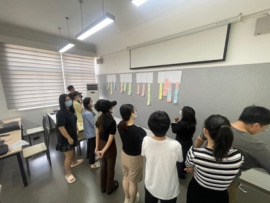
The target words approved only by more than half of the stakeholders will be recorded (Figure 3).Parts of these target words are shown in the Table 2.
Stakeholders find lead users which come from the enterprise data cloud, Weibo (https://weibo.com), Xiaohongshu (https://www.xiaohongshu.com/ex plore), and Zhihu (https://www.zhihu.com/) column.
Stage 2: Analysis by Bigdata and Ethnography Interview The information of lead users’ data mainly includes the following dimensions: gender, city, keyword and the original content containing (see Table 3).
Beside this, Stakeholders use NPL to analysis lead users’ photo attitude (See Table 4).
More than this, Lead Users’ interview survey based on ethnography theory. The interviews were transcribed in a naturalistic way, i.e., the transcri- ber recorded the user’s original words and specific characteristic behaviors
Table 2. Target words list.
Table available in the original PDF paper.
Category Number Descriptor Words
22 Wide-angle lens, selfie stick, fill light...
Take place 23 Shop, home, hotel, internet celebrity shop… Phone model 18 HUAWEI Mate50,iphone 11,xiaomi 14… Mobile camera mode 28 Landscape mode, Portrait Mode, Professional Mode... Mobile camera software 42 Meitu, NOMO CAM, Qingyan... Additional equipment for mobile phone photography mobile phone camera topic 56 Spring Cherry Blossom Viewing, OOTD, selfie…
Table 3. Keywords and corresponding original data clusters.
Table available in the original PDF paper.
Gender City Keyword (2290) Original Content (3780) Female (62%), Shanghai (18.1%)
Wuhan (14.7%)
never sleeps The streets of Shanghai are still crowded at three or four in the morning Male (28%), Unknown 10%),
River Bridge Wuhan Yangtze River Bridge will be extraordinarily beautiful against the backdrop of dusk … … …
Table 4. User characteristic attribute content and emotional tendency (partial) results.
Table available in the original PDF paper.
User characteristic attribute content Emotional value Feature
1 Forward
The color is beautiful, the phone is also very light, the photos are beautiful
1 Forward
front-facing camera is unreal of OPPO 0 Negative Taking pictures with girlfriends is happy 1 Forward The quality of photos taken by Apple mobile phones is considered to be the best among mobile phones
0 Negative
Making a video is one of life’s little things 2 Neutral The quality of pictures taken by mobile phones is not very good
2 Neutral
Can now record short videos for ten minutes in Wechat All filter in VSCO is also very easy to use 1 Forward Mobile phone’s brand is not very important to 2 Neutral effect my phrase attitude … … …
at the time of the interview, those that were considered meaningful for understanding the user (Tilley 2003).
Stage 3: Establish Lead-User Persona Stakeholders comprehensively analyze quantitative and qualitative data about online behavior characteristics, product-related content and other basic information, classify the basic attributes of leading users, such as age, gender, education level, and describe them as dynamic stories of this type of leading users:
She has her from an art major in college, and her sideline is a mobile phone photography network V. She is passionate about participating in various forums to share her mobile phone photography stories. Her professionalism and leadership in mobile phone photography are reflected in her use of more than one model, up to 6 models at the same time, such as Meitu for portrait photography, iPhone for landscape photography, and the professional cha- racteristics of each mobile phone, such as aperture and lens, are all in the palm of her hand. Not only that, she is often invited to use mobile phones
A Lead User-Persona Approach to Eliminate Communication Barriers 79
Figure 3: Summary of personal data. Drew by author.
for photography competitions, mobile photography forums and other acti- vities. She often uses the related photography knowledge she learned in her major to solve the problems encountered in mobile phone shooting and share solutions with everyone.
After above steps, stakeholders established 4 Lead-User Persona which include Lead-User Persona-shareability Lead-User Persona- particularity, Lead-User Persona- professionalism and Lead-User Persona- technological.
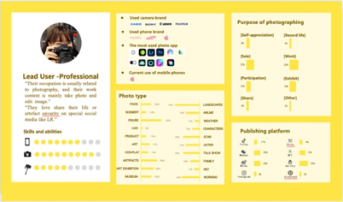
Use Lead-User Persona-professional as an example, in the first of Figure 6, the researcher summarizes the characteristics of lead users in a highly general way through a few simple sentences at first. Secondly, researchers illustrate the Lead-User Persona-professional in 7 parts include used phone, camera brand, skills and abilities, photo type, purpose of photographing, and publi- shing platform. Thirdly, researchers describe Lead-User Persona-professional from the 3 aspects include equipment, filters and parameters which data collated in bigdata and interview.
In order to make the research methodology more competitive, we condu- cted a group discussion for design and marketing insight and organize them into a report.
Researchers intercepted the part of IxD and marketing insight. From the results, the designers got many ideas on key marketing points based on the report, focus group discussions, and served directly to the design. For example, in Lead-user Persona-professional report, designers believe that manufacturers can be asked to work with camera brands to launch high- quality cell phone cameras, which are used to attract high-end players of cell phone photography.
Stage 4: Evaluate Lead-User Persona by Stakeholders Through AIMQ To assess the effectiveness of the Lead-User Persona approach, we makes sati- sfaction questionnaires and qualitative interviews for stakeholders which are not involve our project in before steps. We distributed 34 satisfaction questi- onnaires to 16 designers, 8 users and 10 marketers which are all stakeholders involve in this project before, and received valid 34 questionnaires. In addi- tion, due to project time constraint researchers conducted sample interviews with ten people, which are joining the group discussion.
The satisfaction result shows that user, designers and marketers have same attitude on Accessibility, Believability, Appropriate amount and
Table 5. T-test was conducted in determining the satisfaction level of the participants.
Understandability for Lead-User Persona. The attitude consistency on Rele- vancy and Objectivity are not very high, but acceptable.
In terms of the simple interview, the designer and marketers gave their comments (Table 5).Therefore, I think the Lead user-Persona approach can be helpful for understanding users, finding product innovations and marke- ting based on this simple satisfaction feedback.The researcher also applied the Lead user-Persona approach to other project examples to discover the deficiencies and more possibilities of this research method. Thus, the result of stratification questionaries and simple interviews shows that all stakeh- olders have similarly thinking about Lead-User Persona, this help remove communication barriers among them.
CONCLUSION & LIMITATION In this study, relying on enterprise and university corporate support for this research, the researchers were driven to establish a new interdisciplinary approach based on the concept of marketing and design. Back to our initial assumption, we think the Lead-User Persona is identified has the following innovations:
All stakeholders have involved the establish process of Lead-User Persona which can help them with similarly attitude about Lead-User Persona.
Researcher find the Lead-user who joined ethnography interview from closer familiar people.More than this, the ethnography interview method ensures the comprehensive of Lead user-Persona which information can not acquire from bigdata.
The customers could quickly identify their needs from the lead user- Persona.
The innovation of a research method requires application, feedback, and improvement in various fields. Thus, in subsequent projects, the research team should expand the application field of this Persona methodology and build more solid and robust case support for this methodology. Obviously, there are must be some limitation of our study.
Select bias. Lead-user Persona is created based on the characteristics of lead users, ignoring ordinary users.
A Lead User-Persona Approach to Eliminate Communication Barriers 81
Dimension bias. There are 12 portrayal dimension for traditional Persona, but in this study we only focus on user’s professional, predictive, empirical, and participant which attribute from Lead User’s character.
Low simple bias. researchers in total invited 34 stakeholders include designers, users, bigdata analyst and marketers to participate in the satisfaction study, which is obviously not enough.
FUND BY Research on the construction of national discourse in fashion design criticism
REFERENCES
ACM. Association for Computing Machinery: Advancing Computing as a Science & Pro. Adlin T, Pruitt J, Goodwin K, et al. Putting personas to work[C]//CHI’06 Extended
Abstracts on Human Factors in Computing Systems. 2006: 13–16. B. Frey and D. Dueck. Clustering by passing messages between data points. Science, 315:972–976, 2007. Bødker, Susanne, et al. “Computer support for cooperative design.” Proceedings of
the 1988 ACM conference on Computer-supported cooperative work. 1988. Brickey J, Walczak S, Burgess T. A comparative analysis of persona clustering methods[J]. 2010. Burkett I. An introduction to co-design[J]. Sydney: Knode, 2012: 12. Chang Y, Lim Y, Stolterman E. Personas: from theory to practices[C]//Proceedings
of the 5th Nordic conference on Human-computer interaction: building bridges. 2008: 439–442. Chiao J Y, Reginal Jr B. Adams, Peter U. Tse, William T. Lowenthal, Jennifer A. Richeson & Nalini Ambady (2008). Knowing who’s boss: fMRI and ERP investigations of social dominance perception[J]. Group Processes & Intergroup Relations, 11: 201–214. Cooper, A. (1999). The inmates are running the asylum: Why high-tech products
drive us crazy and how to restore the sanity. Indianapolis, Ind.: Sams. Goodwin, K., & Cooper, A. (2009). Designing for the Digital Age: How to Create Human- Centered Products and Services. John Wiley & Sons. Hannan, M. T., and Freeman, J. 1984. “Structural Inertia and Organizational
Change.” American sociological review 49 (2): 149–164. doi: 10.2307/2095567. Khinchin A Y. Mathematical foundations of information theory[M]. Courier Corporation, 2013. Pipino, L. L., Lee, Y. W., and Wang, R. Y. 2002. “Data Quality Assessment,”
Communications of the ACM (45:4), pp. 211–218. Pruitt, J., & Adlin, T. (2010). The Persona Lifecycle: Keeping People in Mind Throughout Product Design. Morgan Kaufmann. Pruitt, J., & Grudin, J. (2003, June). Personas: Practice and theory. Proceedings of
the 2003 Conference on Designing for User Experiences. Tharenou P, Donohue R, Cooper B. Management research methods[M]. Cambridge University Press, 2007. Whittaker S. Personal information management: from information consumption to
curation[J]. Annual review of information science and technology, 2011, 45(1): 1.
LISTED IN THE AHFE DIGITAL BOOKSTORE CATALOGUE
Explore the complete digital volume
Human Factors in Communication of Design
Read this individual research paper free through the original publisher, or explore the full digital proceedings book.
ISBN 978-1-958651-66-7
Explore this ISBN in the AHFE Bookstore ↗Listed in the July 2026 bookstore catalogue; search by ISBN to confirm current availability · Digital book purchase optional