Sha Liu, Yang Long, Junren Wang (2023). Which Can Better Guide Consumer Behavior, the Appearance or the Packaging Information of Fruit: A Study Based on Eye Movement Experiment. In: Human Factors in Communication of Design. AHFE Open Access, vol. 90, pp. 118–127. https://doi.org/10.54941/ahfe1003703
Fresh food, such as fruit, its physical characteristics, and its packaging characteristics provide separate internal clues and external clues for consumers' cognition and attitude and purchase intention, however, how consumers pay attention to them and how they recognize their importance have not been analyzed and discussed. In this paper, three empirical studies were conducted to explore the role of the physical characteristics and packaging characteristics of fresh food such as fruits in the shopping process and their impact on consumers' attention distribution, cognition, and purchase decisions. Study 1 conducted an eye movement experiment to compare the difference in fixation points and fixation duration between cut and uncut fruits when the subjects gazed at fruits. Significant impacts of the fruit's physical characteristics on consumers' visual attention were found. Study 2 used another eye movement experiment to explore the effect of the visual elements of the fruit package on consumers' visual attention, and to compare the difference in the fixation points and fixation duration between the fruit itself, the text, and the image on the fruit package. Study 3 used a series of scales to investigate the importance of the specific information displayed by packaged fruits, consumers’ most concerned information was found by analyzing the impact of fruits’ physical characteristics and the package information on consumers' cognition and purchase decisions and the interaction between the two types of factors. The research results have specific reference significance for the packaging optimization design of fresh products such as fruits and commodity displays.
Fruit packaging plays a crucial role in ensuring the freshness and safety of fruit, as well as providing consumers with essential information regarding the product’s origin, producer, shelf life, and more. Moreover, it serves as an effective tool for display, promotion, and advertising (Mahajan, B et al. 2015; Nath, A et al. 2012). In the past, consumers obtained product informa- tion through verbal inquiry with salespersons or through text-based labels or posters on product shelves (Dörnyei, K.R. and T. Gyulavári, 2016; White, A. and S. Lockyer, 2020). However, with the widespread use of packaged fruits, the written information on the packaging has become the primary source
of information for consumers such as product variety, origin and shelf life. The stability and accuracy of this information have made packaged fruits a popular choice for consumers (Sirieix, L. et al. 2013; Tonkin, E. L. et al. 2015). Several studies have demonstrated the impact of specific label informa- tion and packaging design on consumers’ decision-making. The inclusion of elements such as cultivation method (Wang, L, 2019), origin (Pérez y Pérez, L., 2020), nutrition claims (Cecchini, M. and L. Warin, 2016), and packaging characteristics (Bandara, B. et al. 2016) on the fruit packaging can affect consumers’ purchasing decisions. On the other hand, marketing theory suggests that product differentiation is partly achieved through packa- ging, which influences consumers’ decision-making behavior (Li, X, 2008). Additionally, research in industrial psychology or ergonomics highlights the dominant role of the visual sensory channel in the food purchase process (Fenko, A., 2010). For instance, images on packaging can stimulate people’s imagination and expectations about the product’s smell and taste, or novel graphics and images can arouse people’s curiosity to try the product.
While previous research has investigated the impact of food physical chara- cteristics and packaging transparency, visual elements, and text information on consumers’ evaluation, cognition, and purchase intention, there is still a lack of comprehensive empirical research on the following questions: how to distribute consumers’ attention when choosing fresh food such as fruit, which elements of the packaging are most concerning to consumers, and what are the main factors affecting their purchase intention.
This article aims to shed light on three specific aspects: (1) the influence of the visual characteristics of fruit on consumers’ attention, (2) the impact of visual elements of fruit packaging on consumers’ visual attention, and (3) the effect of fruit visual characteristics and packaging information on consumers’ commodity evaluation and purchasing decisions.
EXPERIMENTAL DESIGN In our research, we utilized a combination of eye movement experiments, scales, and questionnaires to gather data. The eye movement experiment was conducted using SmartEyePro, which was used to track the subjects’ eye movements and record information about their pupil size. The experi- ment established a coordinate system through the calibration of head position information, measurement of screen position, and capturing of fixation points. The four infrared cameras captured eye movement data with a sam- pling frequency of 60Hz. Participants were instructed to sit comfortably at a distance of 60cm from the eye contact screen.
The methodology of the study involved a practice phase to acclimate sub- jects to the experimental interface, followed by the presentation of stimuli in the form of slides and images. A sample of thirty Chinese undergraduate students, with ages ranging from 18 to 24 (mean = 20.7, SD = 2.16), and normal or corrected vision participated in the study, and were compensated for their participation. Due to technical difficulties during the experiments, a portion of the data was eliminated during post-processing. The eye tracking
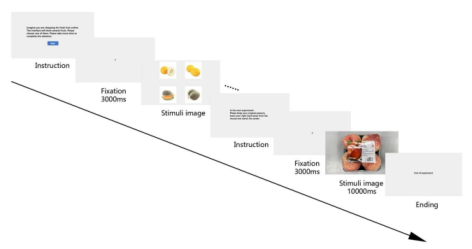
Figure 1: The procedures of eye movement experiment.
experiment in Study 1 resulted in 25 valid samples, and Study 2 resulted in 10 valid samples. In Study 3, two Likert-scale questionnaires were distribu- ted to a sample of 115 participants, aged between 20 and 45 (mean = 29.6, SD = 6.16) through the Questionnaire Star platform, to validate the study’s hypotheses. Of these participants, 58 responded to Questionnaire A and 57 responded to Questionnaire B.
STUDY 1 Research has demonstrated that consumers’ trust in a product is often con- tingent on intrinsic characteristics such as form, color, and flavor. Prior investigations suggest that these internal cues can boost consumer trust (L. G. Schiffman, 2000). For our research goal, the visual quality of fruit, as a product, has been found to significantly influence consumer attention. Hypothesis 1 (H1) is that by cutting the fruit and displaying its quality, it will be able to attract more attention from consumers, affecting their purchasing decisions. Hence, we posit that cutting the fruit will result in a greater visual attention compared to an uncut fruit, evidenced by an increased duration of gaze and attention.
Procedure This study utilized images of six common fruits commonly found in Chinese markets, including muskmelon, casaba, Hami melon, oranges, pears, and apples, as stimuli. The images depicted both cut and uncut conditions, with variables such as color, quantity, and freshness held constant. Participants were asked to imagine shopping for fruit online, and were presented with three fruit selection tasks displaying pairs of the same fruit in both cut and uncut conditions. To avoid potential biases, the presentation order of the images was randomized. Participants were instructed to focus on a cross in the center of a blank page for three seconds prior to each task to ensure consistent visual starting point. Eye movement data was recorded during the task. The task page and an example of eye movement are shown in Figure 2.
Which Can Better Guide Consumer Behavior 121
Figure 2: The examples of eye movement trajectory.
Results
25 valid samples were obtained from the eye movement experiment of hypo- thesis H1. In order to compare the difference of visual attention between the cut fruit and the uncut fruit, we divided the four stimulus images of each sample into regions of interest (AOI) according to the frame, and recorded the number of fixation points and the duration of continuous fixation in each AOI. We use the SPSS26 software to process the data and compare the mean values of the cut / uncut two groups of data by the paired t-test.
There was no significant difference in the number of fixation points betw- een the cut fruit and the uncut fruit, but the duration of continuous fixation of the cut fruits was significantly longer than that of the uncut fruits (t =−2.305, p = 0.030 < 0.05). And the fixation points mean of cut fruit was slightly more than that of uncut fruit. Therefore, it is speculated that the cut fruit may get more visual attention because it exposes more information about the fruit itself to consumers, such as maturity, freshness and so on, and H1 is verified.
STUDY 2 In the context of fruit labeling, it is posited that consumers tend to rely on external cues, such as brand, origin, date, security and ecological attributes, when making judgments about product quality. The information conveyed through the text and images on the fruit label may be perceived as more informative than the physical characteristics of the fruit itself. This study aims to investigate the hypothesis 2 (H2) that consumers will pay more attention to the information on the fruit label, particularly the text, than to the physical attributes of the fruit. This is premised on the notion that external cues may be more impactful in the absence of practical experience (L. G. Schiffman, 2000) and that the text on the label may elicit a deeper gaze due to its need for reading and comprehension.
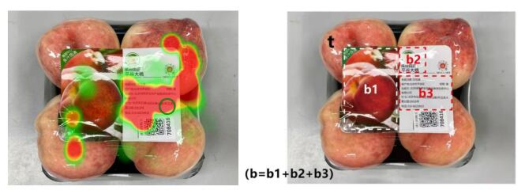
Figure 3: Example of the eye dynamic thermal area diagram and division of the regions of interest.
Procedure An eye movement experiment was conducted to test Hypothesis 2, which compared the visual attention to the fruit, text, and images on fruit packa- ging. The stimuli consisted of images of packaged small tomatoes and peaches with detailed labels. Participants viewed these images on a computer screen for 10 seconds, with eye movement data recorded and analyzed. A screenshot of the task page and the hot spots of eye movement are shown in Figure 3.
Results
Ten valid samples were obtained from the eye movement experiment. The images were divided into two types of interest areas: t (the exposed fruit) and b (the whole label). The b area was further divided into three regions: the fruit picture (b1), the commodity logo (b2), and text information (b3). The division of the areas of interest (AOI) is depicted in Figure 3. The num- ber of fixation points and duration of continuous fixation in each AOI were recorded and analyzed using a paired t-test on the mean of the data.
The results, as depicted in Table 2, indicated that there were more fixation points and a longer fixation duration on the b area (label) than the t area (fruit). The text information on the label obtained a greater fixation depth than the picture and commodity logo. There were significant differences in the number of fixation points and the duration of continuous fixation in t-b (t=−4.668, p = 0.001<0.05; t=−4.645, p = 0.001<0.05). Furthermore, the
text part of the label(b3) has more fixation points and longer fixation dura- tion than b1 and b2, that is, text information can obtain a greater fixation depth than picture and commodity logo. The duration of continuous fixa- tion of b1-b3 showed significant difference (t=−1.571, p = 0.006<0.05), and the number of fixation points and duration of persistent fixation of b2- b3 showed significant difference (t=−6.481, p = 0.001<0.05; t=−4.970, p = 0.003<0.05). H2 is verified.
STUDY 3 The research examines the effect of packaging information (external cues) and fruit physical characteristics (internal cues) on consumers’ decision- making. Four hypotheses are proposed, including: Hypothesis 3 (H3), con- sumers value external features such as brand and origin more than physical characteristics; Hypothesis 4 (H4), fruit exposure in packaging affects evalu- ations and purchase intentions when physical characteristics are consistent; Hypothesis 5 (H5), sufficient packaging information, compared to insuffici- ent, affects evaluations and purchase intentions when physical characteristics are consistent; and Hypothesis 6 (H6), fruit physical characteristics moderate the relationship between packaging information and fruit exposure.
PROCEDURE In order to explore how consumers view the importance of specific infor- mation in fruit labels, a total of 115 valid data were obtained by structured questionnaire. The participants aged between 20 and 45(mean = 29.6, SD =6.16), with a male-to-female ratio of 0.46 to 0.52. The questionnaire consists of two parts.
Verify hypothesis H3. The survey aimed to investigate consumers’ eva- luations of fruit attributes, both from its physical appearance and from information on the packaging. Participants were shown images similar to those in study 2 and were asked to rate the importance of various chara- cteristics (freshness, maturity, size, variety, origin, price, brand, packaging, safety) in their purchasing decisions on a seven-point scale. The study aimed to discern the relative weight placed on both visual and informational cues in the participants’ decision-making process.
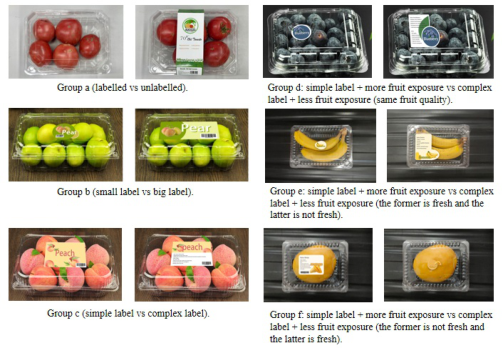
Verify hypothesis H4, H5 and H6. The second phase of the study invo- lved the development of three sets of experimental materials, each consisting of a different type of fruit: tomato, winter jujube, and peach. Participants were asked to choose which of two packaging options they were more likely to purchase for each fruit type. The attributes of the fruit, including fresh- ness, maturity, fullness, beauty, quality, and price, were rated using a 7-point scale, where 1 indicated the lowest score and 7 the highest. To mitigate the impact of simultaneous presentation of fruit images on the participants’ asses- sment of quality, the images of the three fruit pairs were randomly divided and assigned to two separate questionnaires (A and B). Participants in both groups evaluated the six attributes. Groups a (no label vs. with label) and b (small label vs. large label) tested H4, examining the effect of fruit exposure
on consumers’ evaluations and purchase intentions when physical characte- ristics are consistent. Group c (simple label vs. complex label) verified H5, exploring the impact of sufficient information on the packaging on consu- mers’ evaluations and purchase intentions when physical characteristics are consistent. Finally, H6 was tested in the third part of the experiment, which comprised three sets of materials (groups d, e, f) using two types of fruit: banana and mango. Participants were asked to choose their preferred packa- ging option for each group. The experimental materials aimed to assess the combined impact of fruit exposure and packaging information on consumer evaluations and purchase intentions.
Group d: simple label + more fruit exposure vs complex label + less fruit exposure (with the same fruit quality) Group e: simple label + more fruit exposure vs complex label + less fruit exposure (the former is fresh and the latter is not fresh)
Group f: simple label + more fruit exposure vs complex label + less fruit exposure (the former is not fresh and the latter is fresh).
RESULTS
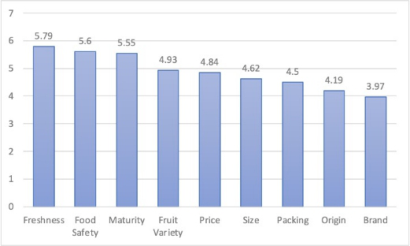
Results of hypothesis H3. The findings of the scoring analysis are depicted in Figure 4. The results indicated that the K features, which could be dire- ctly derived from the visual attributes of the fruit, received higher scores in “freshness,” “maturity,” and “variety.” Meanwhile, among the J features that require label information to be obtained, “origin” and “brand” were deemed relatively less important, whereas “safety” received the highest score. To fur- ther assess the significance of these results, a paired t-test was conducted on the scoring results of both the K and J features, as illustrated in Table 3.
The mean scores for the K and J features were found to be 5.2 (±1.29) and 4.62 (±1.25), respectively, through the data analysis. The results of the paired samples t-test indicate a statistically significant difference between the two (t = 5.31, p < 0.001). This suggests that consumers tend to subjectively place
Figure 4: Consumers’ score on the importance of the 9 fruit characteristics.
Which Can Better Guide Consumer Behavior 125
Figure 5: Consumers’ score on the importance of the 9 fruit characteristics.Table 3. Results of the paired T-test.
Table available in the original PDF paper.
Paired Differences Mean t df Sig. (2-tailed)
Pair 1 K-J .603 5.310 57 .000
more emphasis on the K-type features (information obtained directly from the visual features of the product) in their decision-making processes, while sho- wing only significant concern for the safety aspect among the J-type features (information obtained from reading label information). Hence, hypothesis H3 was not fully confirmed.
It may be that consumers trust the internal clues provided by the physical characteristics of fresh products like fruit to make “rational” and “objective” judgments regarding the quality of the product. However, they also exhibit concern for external cues, such as safety, which could explain their visual attention to text information in eye movement experiments.
Results of hypothesis H4, H5 and H6. The data collected for the decision- making questions in the questionnaire consisted of 115 valid observations, with 58 obtained from Volume A and 57 from Volume B. To determine the significance of the mean difference between each group, an Analysis of Vari- ance (ANOVA) was performed. The results of the analysis are presented in Table 4.
In the study, 115 valid data were collected from participants regarding their decision-making behaviors in purchasing fruit products. Three groups were analyzed: labeled vs. unlabeled, small label vs. large label, and simple label vs. complex label.
The results showed that a higher percentage of participants (79.31%) pre- ferred labeled fruit products, while only 20.69% preferred unlabeled fruit products, with significant differences observed in the six impression indices of freshness, maturity, fullness, beauty, quality, and price. These findings partly contradicted H4, which postulated that participants would prefer unlabeled packaging.
In the comparison between small label and large label, 60.34% of partici- pants preferred small labels, with no significant differences observed in the
six impression indices. However, when comparing simple label and complex label, 79.31% of participants preferred complex labels, with a significant difference noted in the fullness score. These results partially supported H5, which posited that consumers would prefer complex fruit labels with higher evaluations.
Additionally, the cross-over experiments showed that participants prefer- red packages with complex labels, even if the fruit was slightly stale, and information from the label was more important than fruit exposure, contrary to H6. These results indicate that even after observing defects, consumers would still choose fruit with more labeling information.
CONCLUSION
Subjectively, consumers tend to assess the quality of fruit products based on their physical characteristics. The abundance of information displayed by the fruit itself serves to enhance consumers’ ability to make informed judgments about quality. However, consumers also place great importance on safety, among other aspects, and such information can only be obtai- ned from the text on the product’s packaging. As such, it is recommended that fruit packaging should present both the physical characteristics of the product and the necessary text information regarding safety. The findings of this research hold relevance for the optimization of packaging design for fresh products such as fruits, as well as the manner in which commodities are displayed.
Which Can Better Guide Consumer Behavior 127
ACKNOWLEDGMENT
This research was supported by Beijing Social Science Foundation Project “Research on the development mechanism and strategy of driving tourism and leisure agriculture in Beijing by cultural and creative design” (19ytb018).
REFERENCES
Bandara, B., D. De Silva, B. Maduwanthi, et al. (2016). Impact of food labeling information on consumer purchasing decision: with special reference to faculty of Agricultural Sciences. Procedia Food Science,. 6, 309–313. Cecchini, M. and L. Warin. (2016). Impact of food labelling systems on food choi-
ces and eating behaviours: a systematic review and meta-analysis of randomized studies. Obesity reviews, 3, 201–210. Dörnyei, K. R. and T. Gyulavári. (2016). Why do not you read the label?–an integrated framework of consumer label information search. International Journal of Consumer Studies, 1, 92–100. Fenko, A., H. N. Schifferstein, P. Hekkert. (2010). Shifts in sensory dominance
between various stages of user–product interactions. Applied ergonomics,. 1, 34–40. L. G. Schiffman, L. L. Kanuk. (2000). Consumer behavior (Seventh Hall). Prentice Hall Inc. Li, X. (2008). Research on added value in commodity packaging design. Packaging
Engineering, 4, 158–160(In Chinese). Mahajan, B., W. Dhillon, M. Kumar, et al. (2015). Effect of different packaging films on shelf life and quality of peach under super and ordinary market conditions. Journal of food science and technology, 6, 3756-3762. Nath, A., B. C. Deka, A. Singh, et al. (2012). Extension of shelf life of pear fruits
using different packaging materials. Journal of food science and technology, 5, 556–563. Pérez y Pérez, L., A. Gracia, and J. Barreiro-Hurlé. (2020). Not Seeing the Forest for the Trees: The Impact of Multiple Labelling on Consumer Choices for Olive Oil. Foods,. 2, 186. Sirieix, L., M. Delanchy, H. Remaud, et al. (2013). Trust in and through labelling–a
systematic review and critique. British Food Journal, 2, 143-151. Tonkin, E. L., A. M. Wilson, J. Coveney, et al. (2015). Trust in and through labelling: a systematic review and critique. British Food Journal, 117, 318–338. Wang, L., J. Wang, and X. Huo. (2019). Consumer’s willingness to pay a premium
for organic fruits in China: A double-hurdle analysis. International journal of environmental research and public health,. 1, 126. White, A. and S. Lockyer. (2020). Removing plastic packaging from fresh produce– what’s the impact? Nutrition Bulletin,. 1, 35–50.
LISTED IN THE AHFE DIGITAL BOOKSTORE CATALOGUE
Explore the complete digital volume
Human Factors in Communication of Design
Read this individual research paper free through the original publisher, or explore the full digital proceedings book.
ISBN 978-1-958651-66-7
Explore this ISBN in the AHFE Bookstore ↗Listed in the July 2026 bookstore catalogue; search by ISBN to confirm current availability · Digital book purchase optional