Ester Iacono, Laura Vagnoli, Enrica Ciucci, Francesca Tosi (2023). Design and Healthcare: Evaluation of emotional experience in pediatric radiology. In: Ergonomics In Design. AHFE Open Access, vol. 77, pp. 254–271. https://doi.org/10.54941/ahfe1003383
1 Laboratory of Ergonomics and Design, DIDA Department, University of Florence, Italy ↗
2 Pediatric Psychology - Meyer Children’s Hospital, Florence, Italy; Joint Laboratory of Methods and Techniques of Analysis of the Experience of Illness (MeTA-Es) ↗
3 FORLILPSI Department, University of Florence, Italy; Joint Laboratory of Methods and Techniques of Analysis of the Experience of Illness (MeTA-Es) ↗
It is well known to anyone who has had a direct or indirect hospital experience how the sterile and aseptic healthcare system often generates negative emotions such as anxiety, frustration, and pain. It is usually due to the exclusively functional aspect of medical equipment (MRI scans, ventilators, ultrasounds, etc.), which induces fear and perception of threat, neglecting the importance of formal and emotional aspects within the healthcare environment. In the last decade, the intervention of Design on hospital aesthetics, products, communication, and services has allowed a partial reduction of stress and anxiety levels, improving patient satisfaction and guaranteeing, at the same time, health and healing.However, the contribution of Design becomes even more decisive when it comes to pediatric patients, who need a hospital system that considers their needs, feelings and opinions. Therefore, the vision of the patient as a person with psycho-emotional and relational, as well as physical and functional requirements, led the designers to design equipment and spaces with a pleasant and familiar appearance, which would favour the reduction of the trauma of hospitalisation and negative emotions experienced by young patients. Although some design interventions present in the literature demonstrate great sensitivity towards the world of children, the contribution of Design in the hospital setting is still minimal.Based on the scientific contributions provided by various disciplines such as Affective sciences, Social and Cognitive Neurosciences, Cognitive Psychology and Design, this research addresses the issue of children's affectivity in the evaluation and Design of positive user experiences. It questions the possible areas of implementation and the evaluation strategies and tools of Human-Centered Design (HCD), User Experience (UX), Affective Evaluation Methods (AEM) of Psychology, Affective Sciences, and Cognitive Ergonomics that allow the measurement of emotions. Specifically, the study aims to understand the following:- how it is possible to evaluate the emotional impact generated by the health system on the child;- the emotional response of children in interaction with the health product-service system.In particular, the study's main focus was analysing the emotional impact generated by the magnetic resonance imaging (MRI) examination before and after the examination simulation procedure with the Philips Kitten Scanner to understand the actual contribution.This research presents the results of a survey conducted within the diagnostic imaging department of the Meyer University Hospital in collaboration with the NOS ERGOMeyer group and the Ergonomics & Design laboratory of the University of Florence.The methodological approach of the research was quantitative and envisaged the application of Ergonomics for Design and Human-Centered Design methods. Specifically, the single-centre observational survey was conducted by structured interviews and questionnaires addressed to healthcare personnel and psychologists who work with children, especially in the hospital setting.From the survey, it was possible to grasp and define: the main behaviours and emotional factors linked to the hospital world, the primary emotional difficulties of the child linked both to the disease, but also to the context of care, the negative impact of medical instruments/equipment, the benefits and the criticalities related to the preparation of the MRI exam, but above all the importance of the game in minimising the negative emotions associated with medical procedures and the hospital system. Therefore, the survey highlighted many possibilities for implementing and developing design solutions to improve the young patient's emotional experience.
It is well known to anyone who has had a direct or indirect hospital experie- nce how the sterile and aseptic healthcare system often generates negative emotions such as anxiety, frustration, and pain. It is usually due to the exclusively functional aspect of medical equipment (MRI scans, ventilators, ultrasounds, etc.), which induces fear and perception of threat, neglecting the importance that formal and emotional elements have within the healthcare environment (Maiocchi, 2010).
Design and Healthcare: Evaluation of Emotional Experience in Pediatric Radiology 255
In the last decade, the intervention of Design in hospital aesthetics, produ- cts, communication, and on services has allowed a partial reduction of stress and anxiety levels, improved patient satisfaction, and guaranteed, at the same time, health and healing. However, the contribution of Design becomes even more decisive when it comes to pediatric patients, who need a hospital system that considers their needs, feelings and opinions. Therefore, the vision of the patient as a person with psycho-emotional and relational, as well as physi- cal and functional requirements, led the designers to design equipment and spaces with a pleasant and familiar appearance, which would favour the redu- ction of the trauma of hospitalisation and negative emotions experienced by young patients.
In this regard, there are various examples, reported in the literature, of products designed to introduce children in a playful way to hospital practices unknown to them, including the project of a series of “toys-furniture” made by the Care Toys laboratory for the ‘Meyer Children’s Hospital in Flore- nce (Baratta, 2019; Scolaro and Vannetti, 2015); the computed tomography machine of Presbyterian Morgan Stanley in New York; the “Superformulas” for cancer patients of the A.C. Camargo Cancer Center of São Paulo; Kon- neKt for immunocompromised patients by designer Job Jansweijer (Desmet, 2013); the respiratory spirometer for visually impaired children (Azevedo et al., 2018).
Although some design interventions in the literature have demonstrated great sensitivity towards the child’s world, the Design’s contribution in the hospital setting is still minimal (Iacono, 2021). Many products still need the emotional input of designers, who have the vital task of influencing the emotional impact of their projects. Including the emotional factor in pro- duct design is essential to ensure the psychophysical well-being of the person within the hospital and in any other field of application. In our opinion, it becomes necessary to in-depth investigate the emotional impact generated by the hospital environment and medical devices on hospitalised children, how to evaluate this emotional impact, and the role of communicating medical procedures to patients and parents in reducing this emotional impact. We considered the point of view of the healthcare personnel (i.e., medicians and psychologists) as well as we in-depth explored the specific experience of MRI Play simulation.
In sum, this study aimed to understand: a) the emotional response of children in the interaction with the health product-service system and the mediating role of the healthcare personnel; b) how it is possible to evaluate the emotional impact generated by the health product-service system on the child. In particular, the main focus of the research was the analysis of the emotional impact generated by magnetic resonance imaging (MRI) through a survey conducted within the diagnostic imaging unit of the Meyer Chil- dren’s Hospital in collaboration with the NOS ERGOMeyer group and the Ergonomics & Design laboratory of the University of Florence.
BACKGROUND
The diagnostics activities concern instrumental investigations involving soph- isticated and cumbersome equipment with a strong emotional impact on
patients (Del Nord, 2006). As reported in the literature (Anastos, 2007; Del Nord, 2006), no other medical procedures, except surgery, can generate anxiety and fear of the unknown more than diagnostic procedures.
Although they do not generate physical pain, the unfamiliar environment, the noises, the size of the machinery and many other factors are among the leading causes that cause stressful and intimidating experiences in the patient (Miller and Swensson, 2002) with negative physiological (increa- sed blood pressure) and cognitive (memory, level of attention), motivational and behavioural effects (Maxwell and Evans, 1998). Undergoing the magne- tic resonance examination can be tiring, stressful and boredom, above all because it requires, during the acquisition of the image, the immobility of the subjects for extended periods (about 40–50 minutes) and the permanence in closed environments, in semi-dark conditions, with unfamiliar machinery, noisy, etc. All this can cause discomfort and agitation in the child, especially when he finds himself in a radiological environment for the first time. There- fore, in the case of lengthy procedures requiring movement control, sedation is used in young or uncooperative children (Arlachov and Gancora, 2012; Serafini et al., 2005). However, the latter procedure can have health risks and possible side effects (Kaila et al., 2012) and an impact on hospital resou- rces (human resources and use of drugs) which involve higher costs for the execution of the exam (Vanderby et al., 2010).
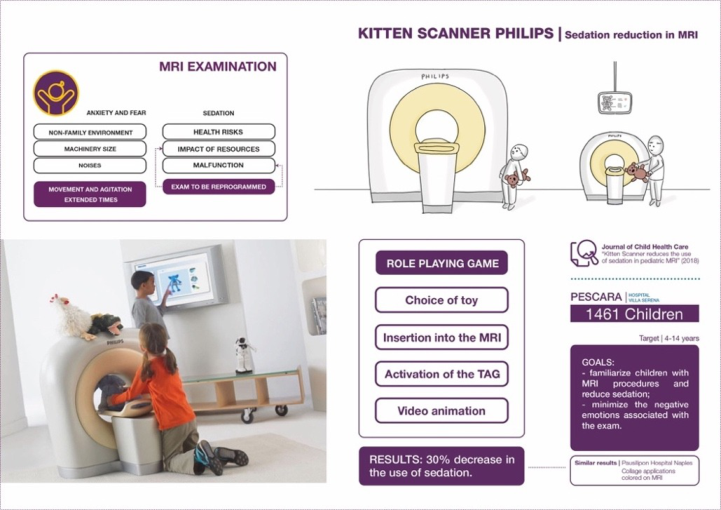
Therefore, several studies reported some psychological interventions (clown shows, pets and music therapy) (Antonelli et al., 2019; Viggiano et al., 2015) and non-invasive strategies adopted to reduce the use of seda- tion, such as the case of the children’s cancer hospital Pausilipon of Naples, who, through the application of coloured collages on the magnetic resonance equipment, reduced the use of sedatives from 35-40% of cases to 2% (Mai- occhi, 2010). Moreover, again, according to a 2018 study conducted at the Villa Serena hospital in Pescara, on a sample of 1461 children aged between 4–14 years, the use of a small-scale reproduction of a toy magnetic resonance (see Figure 1) would have reduced the use of sedation by 30% (Cavarocchi et al., 2019). In this case, the aim was to allow the child to become familiar with the MRI/CT scan procedures and reduce negative emotions related to the exam, such as anxiety and fear (Edwards and Arthurs, 2011; Jaimes and Gee, 2016). For this reason, Meyer hospital, within the MRI playroom, since 2018 also began to provide the MRI exam simulation service through the use of Kitten Scanners and play therapy, before the actual MRI examination, with children aged 4–5 years. However, although these strategies have allo- wed the examination to be carried out, avoiding sedation, it is still possible to wonder whether they have improved the child’s emotional experience.
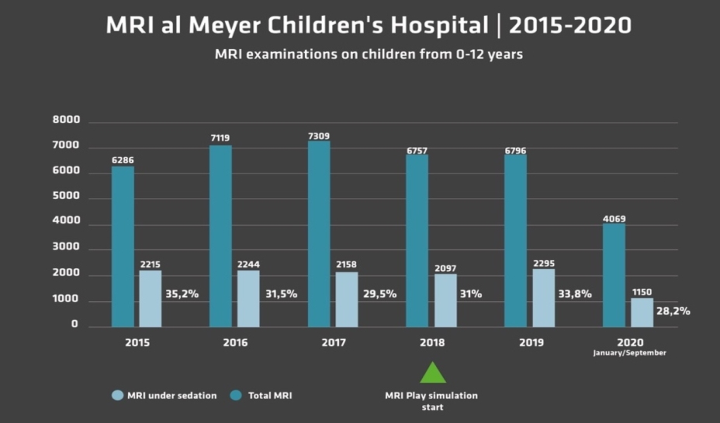
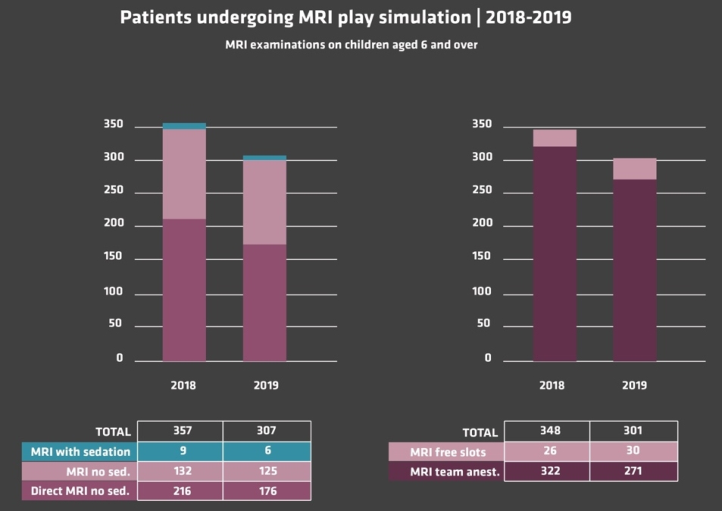
Several studies (Anastos, 2007; Cavarocchi et al., 2019; Runge et al., 2018) and also the data collected in this research at Meyer Children’s Hospital (see Figures 2-3) showed a decrease in the number of exams performed under sedation; it is, however, necessary to understand how effectively being exa- mined without sedation is associated with a reduction of the negative impact generated by the medical procedure. For this reason, the research has tried to understand how to effectively evaluate and measure the emotional impact before and after the application of the exam simulation procedure. Although
Design and Healthcare: Evaluation of Emotional Experience in Pediatric Radiology 257
Figure 1: Philips kitten scanner and the role-playing game.Figure 2: Meyer data processing: number of MRIs performed on children aged 0–12 and percentage of MRIs performed under sedation from 2015 to 2020.
there are various self-assessment methods and tools in the literature (Verbal Self report, Pictorial Self report and Sensorial Self report) that allow the mea- surement of emotions (Bettini et al., 2019; Ciucci et al., 2015; Ciucci et al., 2016; Ciucci et al., 2017; Desmet, 2018; Isbister et al., 2007; Kotsch et al.,
Figure 3: Meyer data processing 2018-2019: patients aged 6 to 11 years undergoing MRI play simulation. In 2018, out of 357 children who experienced the pre-MRI exam simulation, 348 underwent the exam without anaesthesia, 9 resorted to sedation. In 2019, out of 307 children who experienced the pre-MRI exam simulation, 301 did not resort to sedation, on the contrary six did.
1982;), in childhood and for specific age groups, the application of these tools is not sufficiently adequate to investigate the affective response of children in interaction with the health system (Iacono et al., 2022). The inadequacy of some tools also emerged from a study conducted at Meyer by Viggiano et al. (2015) to evaluate the emotional state (anxiety, fear) of children aged 4–11 through subjective self-assessment tools, such as the SAM, whose results are considered less reliable if administered to children under 8 (Harter, 1983; Rieffe et al., 2008). Therefore, based on the scientific contributions pro- vided by various disciplines such as affective sciences, social and cognitive neurosciences, developmental psychology and design, this research addres- ses the issue of evaluating children’s affectivity and developing positive user experiences. Furthermore, it questions the possible areas of implementation and the evaluation strategies and tools of Human-Centered Design (HCD), User Experience (UX), Affective Evaluation Methods (AEM) of Psychology, Affective Sciences, and Cognitive Ergonomics that allow the measurement of emotions.
METHODOLOGY
The methodological approach of the research was quantitative and envisaged the application of the methods of Ergonomics for Design (Tosi, 2020) and
Design and Healthcare: Evaluation of Emotional Experience in Pediatric Radiology 259
Human-Centered Design (ISO 9241-210,2019). Specifically, the monocen- tric observational investigation was conducted within the diagnostic imaging department of the Meyer hospital through the structuring and administration of interviews and questionnaires addressed to health personnel and psycholo- gists who work with children, especially in the hospital setting. The activities were coordinated and followed up by the whole research team and allowed the comparison between experts in different disciplinary sectors, permitting the definition of specific objectives which would guarantee an understan- ding of the received data during the analysis phase. The study also envisaged the administration of questionnaires to parents and direct observation of patients in the field during the various stages of preparation and execu- tion of diagnostic tests (MRI/TC). Still, due to Covid-19, these activities were suspended. Although six observations of outpatients were conducted during the preparatory phase for the exam, given the small sample size, it was not considered valuable and sufficient to report the results of the observations.
QUESTIONNAIRE The field investigation phase involved the administration of questionnaires (Wilson and Sharples, 2015), which allowed the evaluation of the hospital system’s emotional impact, the children’s emotional states and the approaches used by different types of users. For the development of the questionnaires, a planning phase was necessary through the construction of the conceptual scheme, the formulation and verification of the relevance and clarity of the questions. In addition to verifying that the questions could contribute in a discriminating way to the definition of the opinion, the analysis of the questionnaire had the purpose of detecting the following aspects: degree of completeness and correctness from the point of view of the data collected, degree of clarity and acceptance of the questionnaire by the respondents. For this reason, it was previously submitted to the attention of various psychologists and the head of the Pediatric Unit of medical radiology health technicians, who provided practical suggestions on the changes to be made to the initial questions to make them more usable by the respondents. The questionnaires were constructed taking into account the different characte- ristics of the recipients, one for medical personnel and one for hospital and non-hospital psychologists and psychotherapists. In creating the que- stions, one of the main requirements was to guarantee a comparison of the data resulting from the two questionnaires. Although specific questions were addressed to psychologists, for example, as regards the use of particular tools for assessing the emotional state, or to healthcare personnel, as assumed the experience relating to the diagnostic examination, in general, the question- naires were all structured in 4 parts. The total sample interviewed consisted of 38 hospital and non-hospital psychologists who work with children and 16 health professionals who work within the Diagnostic Imaging depar- tment. Participation of the subjects was voluntary, and the data collection was anonymous.
Framework and Scope The two questionnaires were made up of 4 sections, respectively: (1) Personal data; (2) Emotional impact; (3a) Emotion evaluation methods, (3b) Asses- sment of communication and relationship between medical staff, patients and parents; (4) Evaluation of the MRI Play simulation. The questionnai- res reported questions on objective events and behaviours, but also opinion questions, in which it was requested to give a subjective judgement regar- ding the satisfaction of some aspects of which critical issues had already been identified a priori. As quantitative analysis tools, the questionnaires made it possible to collect the opinions of the professionals and users involved in eva- luating the emotions children felt in the pediatric-hospital setting through the administration of predetermined items. Furthermore, collecting the data was to get sufficient, relevant and appropriate information to establish robust requirements. The dissemination of the questionnaires, which took place online through the Google Forms platform, began in July 2020 and ended in October 2020.
RESULTS AND ANALYSIS The data collected in this investigation phase constituted an essential part of the evaluation of some assessment tools, the critical issues that emerged in the interaction with the health system and the definition of the requi- rements valid for the development of a) a matrix of tools that can guide the designer in choosing the most appropriate tool to use; b) concepts and experimentation protocols for the evaluation of emotional aspects within the pediatric-hospital context (Iacono, 2021). In general, from the survey, it was possible to grasp and define the main behaviours and emotional factors lin- ked to the hospital world, the main criticalities and emotional difficulties of the child linked both to the disease, but also to the context of care, the negative impact of the instruments/medical equipment, the benefits and cri- ticalities related to the preparation of the MRI exam, through the MRI play, but above all the importance of the game in minimizing the negative emotions associated with medical procedures and the hospital system. Specifically, the questionnaires addressed to professionals in the world of psychology highli- ghted the following: a) Possible integrations of the assessment tools within the matrix of tools developed by the research team; b) the most suitable evalu- ation approaches; c) a list of the primary emotional states associated with the behaviour; d) ways of expressing emotions; e) the reliability or unreliable of some assessment tools. In detail, the results obtained from the administration of the questionnaires are reported below.
Questionnaire (A) for Psychologists and Psychotherapists | Evaluation of Emotions in Children (6-10 Years) in a Pediatric Hospital Setting Section 1a – Personal Data The first section [Q.1-Q.5] aimed to collect the participants’ personal data. Most of the interviewees were psychologists (52.8%), followed by psycho- therapists (31.5%), neuropsychologists (13.1%) and a minimal number of Neuro and Psychomotor Therapists of the Developmental Age (2.6%), thus
Design and Healthcare: Evaluation of Emotional Experience in Pediatric Radiology 261
embracing a wide range of specific skills relating to the area of child psych- ology. Furthermore, the very different age groups of the participants[36–45 (44.8 %), 26–35 (36.8%), 46–55 (10.5%), 20–25 (5.3%), 56 –60 (2.6%)] allowed the collection of data on a wide range of users and also the compa- rison of their opinions, beliefs, etc. Furthermore, most interviewees (76.3%) have some experience working with children in the hospital, and 42.1% have 10–15 years of professional experience outside the hospital. Therefore, the characteristics and experiences that emerged from the general registry indica- ted that the sample of participants in the survey appears to be representative and has a profile suitable for the objectives of this survey.
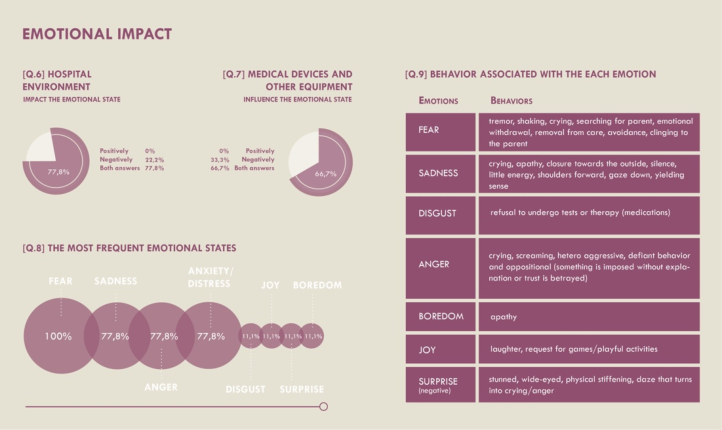
Section 2a – Emotional Impact The second section [Q.6 - Q.9] aimed to investigate the hospital environment and medical equipment’s emotional impact, but above all, patients’ emoti- onal states (see Figure 4). [Q.6] Regarding evaluating the emotional impact generated by the hospital system, 77.8% of the participants declared that the hospital environment influences their emotional state, both positively and negatively, and 22.2% only negatively. Specifically, 20% of those interviewed stated that the hospital environment could negatively influence the emotio- nal state of the child depending on the situation: for example, due to painful episodes that recall a period of treatment in which the subject felt anxiety and fear and which led to a regression of the attachment bond; even the lack of empathy on the part of the staff and the presence of poorly organised and aseptic spaces (centered on the disease) can negatively affect the emotional state of the child. On the other hand, other interviewees (53%) highlighted how much the environment could positively influence the emotional state of young patients and favour their adaptation if welcoming and with child- friendly furnishings. Furthermore, the relationships the child experienced and a welcoming environment lowered the arousal threshold and placed him in a welcoming, collaborative and open attitude. Naturally, as reported by the participants, the emotional state could also be conditioned by many factors such as the specific disease and the course of treatment, the type of care, the professional figures with whom the child interacts, his family relationships and also the knowledge or lack of understanding of medical procedures.
[Q.7] Regarding evaluating the emotional impact of medical devices/in- struments, most participants (66.7%) declared both a positive and a negative influence and 33.3% only a negative one. Participants stated that, in gene- ral, medical devices could make the child uncomfortable and generate fear. They are not designed to attract the child positively but tend to remind them of the illness. Therefore, eye-catching and less invasive equipment can be more functional; decorations or furnishings more suitable for chil- dhood can have a calming effect on the patient and defuse or exorcise negative emotions resulting from unfamiliar medical procedures and equi- pment. [Q.8] Concerning the request to indicate the most frequent emotional states in pediatric patients, all the participants showed fear (100%) as the primary emotion experienced by children, then sadness, anger and distres- s/anxiety (77.8%), disgust, boredom, joy and surprise (11.1%). Therefore,
Figure 4: Results related to section 2a of emotional impact assessment by psychology professionals.
it was requested to list the behaviours (see Figure 4) that can be associa- ted with the emotions felt by the child and selected in the previous question [Q.9]. Some interviewees (30%) reported that no single behaviour could be identified with emotion. Still, a general observation of non-verbal and verbal behaviours is necessary to hypothesise the prevailing sentiment.
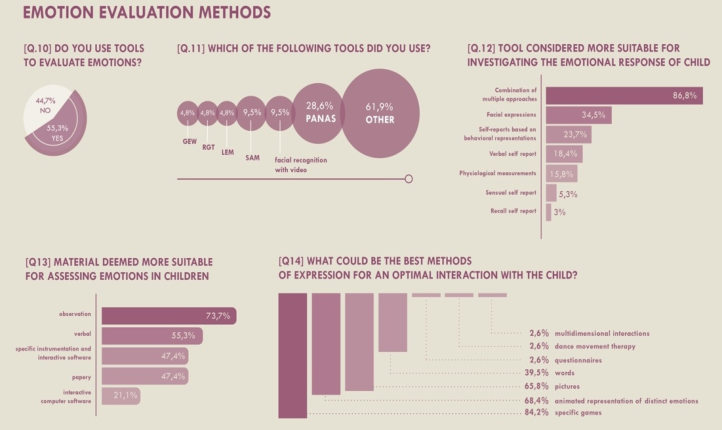
Section 3a – Emotion Evaluation Methods The third section [Q.10 - Q.14] aimed to investigate the assessment meth- ods used and considered most suitable by professionals in the world of psychology (see Figure 5). [Q.10, Q.11] Only 55.3% of participants used assessment tools, including PANAS-C (28%), SAM (9.5%), LEM, RGT, and GEW (4.8%). The 61.9% of subjects said they used other tools such as PH-C, HIF, EAQ, DES III, paper-pencil tests, emotion games, and game observations. [Q.12] Most of the participants indicated, as the most suita- ble means to investigate the affective response of children in the interaction with health products and services, the combination of several approaches (86%), followed by facial expressions (34.5%), self-reports based on beh- avioural representations (23.7%), verbal self-report (18.4%), physiological measurements (15.8%), sensual self-report (5.3%), recall self-report (3%). [Q.13] The material, however, considered more valid in the evaluation is the observation grid (73.7%), followed by verbal material (55.3%) and paper or interactive software (47.4%). Finally, the participating subjects were asked to express their opinion regarding the best modes of emotional expression for functional interaction with the child [Q.14]. 84% of the participants declared that the best form of expression is the application of specific games, follo- wed by the animated representation of distinct emotions (68.4%), images
Design and Healthcare: Evaluation of Emotional Experience in Pediatric Radiology 263
Figure 5: Results related to section 3a on emotion assessment methods used by psychology professionals.
The results that emerged from this third section of the questionnaire were fundamental for structuring the list of relevant requirements that an affective evaluation method (AEM) must satisfy to be suitable for evaluating emoti- onal experience in a context related to childhood and, in particular to the pediatric-hospital sector (Iacono et al., 2022).
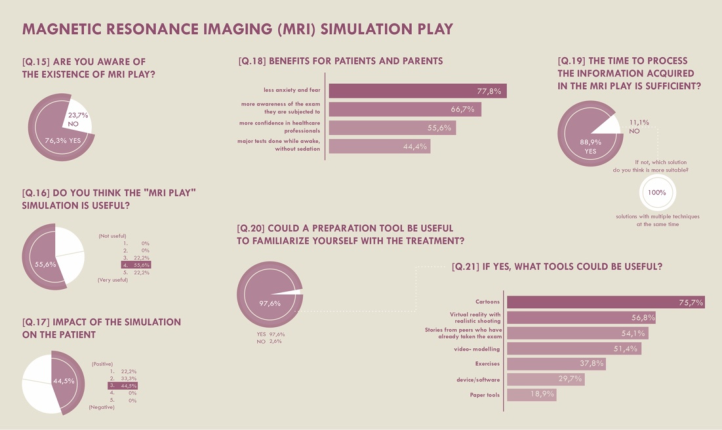
Section 4a – Evaluation of the MRI Play Simulation The last section [Q.15–Q.21], dedicated to the evaluation of the MRI play simulation (see Figure 6), made it possible to identify benefits and criticalities related to the preparation of the MRI exam and, in particular, the importance of the game in minimising the negative emotions associated with medical pro- cedures and the hospital system. [Q.15-Q.16] Only 23.7% of the participants knew the MRI Play simulation service, and 55.6% considered completing the exam helpful (not wasting time and resources).
[Q.17, Q.18] None of the interviewees thought that simulation could have negative repercussions; in fact, 77.8% said that among the main benefits, there is the reduction of anxiety and fear not only for children but also for parents, followed by a greater awareness of the examination, which he will be subjected (66.7%), more trust in healthcare personnel (55.6%), more exams made while awake, without sedation (44.4%).
[Q.19] 88.9% of the involved subjects believed that the time available to the patient (20-30 minutes) to metabolise the acquired information in the simulation is sufficient, only 11.1% believed the opposite and indi- cated the simultaneous combination of multiple tools as a solution to facilitate and prepare patients and families (preparation at home, through
Figure 6: Results of the diagnostic imaging department’s Play MRI simulation service from the perspective of psychology professionals.
digital and paper tools, or in telepresence, etc.). In particular, difficulty emer- ges in preparing the hospitalised patient in the same way, who does not have the opportunity to access this service and become familiar with the medical procedure.
Therefore, in this investigation phase, it is asked whether a remote prepa- ration tool to be used at home or in the ward could be considered valid and which of the proposed tools could be more efficacious [Q.20, Q.21]. 97.6% considered a remote preparation tool useful, indicating cartoons (75.7%) and virtual reality with realistic shots of the environment (56.8%) as the most effective tools.
The participants allowed the hypothesis of the development of possible new intervention scenarios. Ultimately, therefore, we can say that the que- stionnaire has made it possible not only to obtain helpful information for evaluating the emotional impact generated by the hospital system but also the possibility of identifying benefits and critical issues; for example, in this case, concerning the MRI exam, which may lead not only to the experimentation of new forms of exam preparation but could also ensure the measurement of emotions.
Questionnaire (B) for Healthcare Personnel | Diagnostic Imaging Evaluation Section 1b – Personal Data The first section [Q.1-Q.4] aimed to collect the participants’ personal data. Most of the respondents were radiology doctors (37.5%), followed by nurses (25%) and radiology technicians and anaesthetists (18.8%), thus embracing a wide range of specific skills within the diagnostic imaging department. Fur- thermore, the very diverse age groups of the participants[46–55 (37.5 %),
Design and Healthcare: Evaluation of Emotional Experience in Pediatric Radiology 265
36–45 (31.3%), 26–35 (18.8%), 56–60 (6.2%), over 60 (6.2%)], also in this case, allowed the collection of data on a wide range of users and the compa- rison of their opinions, beliefs, etc. Furthermore, most interviewees (31.2%) have more than 20 years of professional experience and 81.2% work weekly, within the diagnostic unit, for 38–48 hours. The characteristics and expe- riences that emerged from the general registry indicated that the sample of participants in the survey appeared representative and presented a profile suitable for the objectives of this survey.
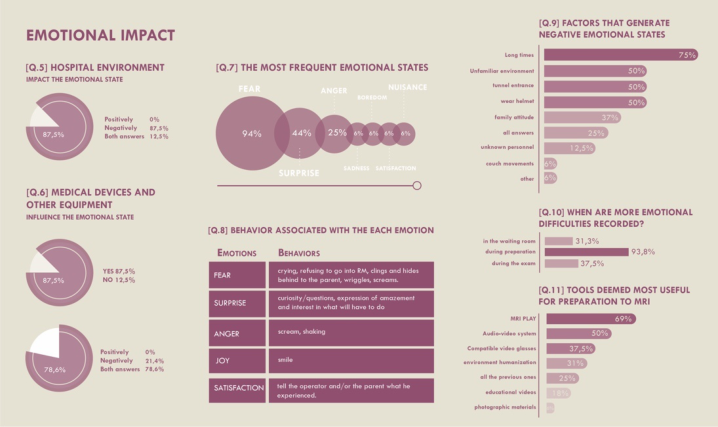
Section 2b – Emotional Impact The second section [Q.5 - Q.11] aimed to investigate the hospital system’s emotional impact from the healthcare personnel’s perspective (see Figure 7).
[Q.5] 87.5% of the subjects declared that the environment negatively influences the emotional state, as it is considered chaotic, noisy, unknown, non-habitual, and not worthily decorated. The negative or positive influe- nce may depend on various factors such as the expectations of the child and the parent, the reception and approach of the staff, effective communication regarding the medical procedure that will be performed, the frequency of ingress to the hospital, etc.
[Q.6] 87.5% believed that equipment could influence the emotional state if not adequately explained; they generate fear, for example, due to noise or simply because they are unknown and considered painful. [Q.7] About the request to indicate the most frequent emotional states in pediatric patients, almost all healthcare personnel indicated fear (94%), as the primary emo- tion experienced by children, then surprise (44%), anger (25%), sadness, boredom, satisfaction, annoyance (6%). Therefore, in this case, it was also requested to list the behaviours that can be associated with the emotions
Figure 7: Results relating to the evaluation of the emotional impact by healthcare personnel.
experienced by the child and selected in the previous question [Q.8]. Furth- ermore, to better understand the emotional impact within the department, subjects were then asked to indicate not only the factors that generate nega- tive emotional states [Q.9] such as long times (75%), the environment not family (50%), entering the MRI tunnel (50%) and wearing the helmet (50%) but also the moments in which there are more significant emotional difficul- ties [Q.10] during exam preparation (93.8%), during the exam (37.5%) and in the waiting room (31.3%). [Q.11] The survey showed that, in addition to the MRI play simulation (69%) as a helpful procedure for preparing for the exam, healthcare personnel indicated additional tools that could improve the experience of young patients, such as audio-video systems (50%), etc.
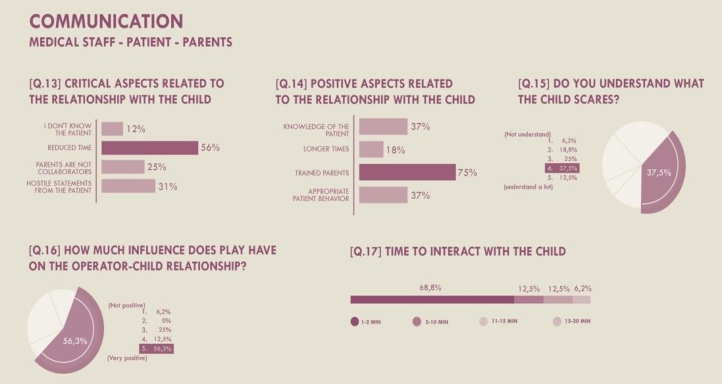
Section 3b – Assessment of Communication and Relationship Between Medical Staff, Patients and Parents The third section (Q.12- Q.17) aimed to evaluate the role of communicating medical procedures to patients and parents in reducing the emotional impact generated by unfamiliar machinery and environments (see Figure 8).
[Q.12] All interviewees considered very important that patients and parents know the procedures for carrying out the examination. [Q.13] Among the significant critical aspects related to the relationship with the child, the interviewees reported: reduced time to interface with the patient (56%), hostile attitudes of the patient (31%) or uncooperative parents (25%). [Q.14] Good relationships, on the other hand, are cre- ated when the parents are trained (75%) or if the patient is already known (37%). [Q.15] Furthermore, if 37.5% of the participants believed they understood what scares the child, 25% only partially, the remai- ning subjects declared that they had difficulty understanding it. [Q.16] According to what emerged from the survey, the gaming strategy had a positive influence on guaranteeing a relationship between patient and ope- rator; almost all of the interviewees (68.8%) considered the influence of
Figure 8: Results related to section 3b.
Design and Healthcare: Evaluation of Emotional Experience in Pediatric Radiology 267
gaming to be positive, suggesting different games according to age. In par- ticular, the operators, based on their experience, justified their response by arguing that play creates empathy and trust, distracts the child and makes his stay in the healthcare setting more pleasant.
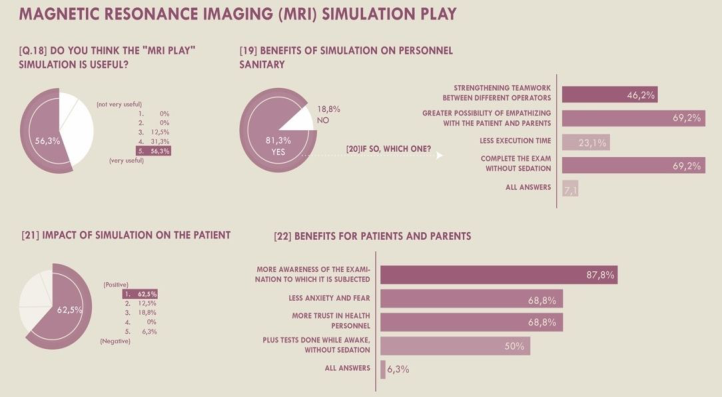
Section 4b – Evaluation of the MRI Play Simulation The last section [Q.18-Q.22] (see Figure 9) allowed us to identify benefits and criticalities related to the preparation of the MRI exam and the evaluation of the MRI play simulation service. 56.3% of operators believed the MRI Play simulation service was beneficial not only for the child on whom the medi- cal procedure has positive repercussions (62%), ensuring greater awareness of the exam (87.8%) and less anxiety and fear (68.8%) but also for opera- tors (81.3%), who considered it a fundamental resource for completing the exam (69.2%) and empathising with the child (69.2%). Despite the benefits expressed by most of the interviewees, some subjects (10%) also reported some critical issues that emerged from the interaction with MRI play, stating, for example, that the video reproduced by the toy simulator is difficult to understand and does not explain what will happen to the child during the exam, does not simulate the noises and does not allow a realistic view of the resonance room, let alone the dimensions of the machine. Nevertheless, the relationship established with the operator favours the exam’s success.
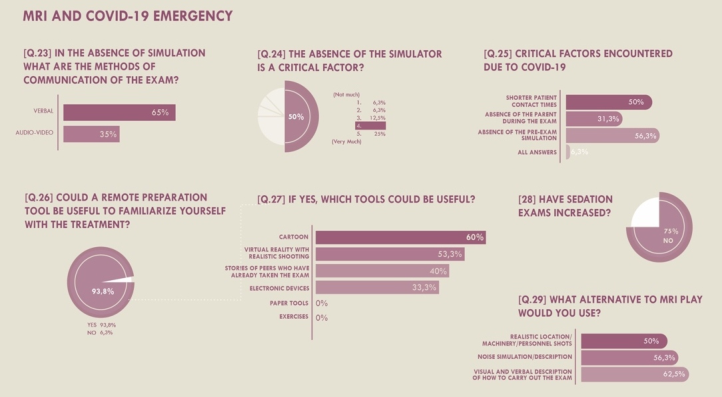
[Q.23-Q.29] Concerning the Covid-19 emergency (see Figure 10), which led to the suspension of the simulation service, the healthcare personnel were asked which replacement measures had been adopted and whether the abse- nce of the simulation had represented a critical factor. [Q.24] 75% considered the absence of MRI Play to be a very critical factor; [Q.23] the preparation, in that period, took place through verbal explanations (65%) and audio-video systems (35%) that allowed the children to know the procedures.
Figure 9: Results related to the evaluation of the MRI play simulation.Figure 10: Results related to MRI procedures during the Covid-19 state of emergency.
[Q.25] The Covid-19 emergency, in addition to causing the absence of the simulation (56.3%), reduced the interaction times with the patient (50%) and resulted in the absence of the parent during the execution of the exam (31.3%). All that is perceived as a critical issue for the child who has to undergo the exam; therefore, the operators were asked if they considered remote preparation (from home) valid, allowing them to familiarise them- selves with the diagnostic procedures. [Q.26] 93.8% answered positively to this question, and [Q.27] indicated cartoons (60%), virtual reality with reali- stic shots of the diagnostic area among the main tools useful for preparation (53.3%), the use of electronic devices (33.3%). [Q.28] Furthermore, 75% of operators believed that the state of emergency had not increased the num- ber of tests performed under sedation, as the number of subjects undergoing diagnostic tests has decreased due to the restrictions. In general, it emerged from the operators’ statements that children were much more stressed due to the health emergency and that even the staff’s stress had repercussions on the patient. Therefore, in that period, the preparation of the patient was verbally substituted.
[Q.29] Finally, the staff was asked what could be a valid alternative to the simulator (MRI play) and the operators indicated three possible intervention methods: Visual and verbal description of the methods of carrying out the examination (62.5 %); Simulation of noise (56.3%); Realistic shots of space, medical personnel and machinery (50%).
DISCUSSION AND CONCLUSION The survey has provided further indications of what the child experienced within the hospital. In addition, it has allowed the evaluation of the emo- tional impact generated by the hospital system and specific situations from the point of view of the psychologists and the operators. In summary, it was possible to grasp the most frequent emotional states associated with specific behaviours, criticalities and emotional difficulties linked to the disease and
Design and Healthcare: Evaluation of Emotional Experience in Pediatric Radiology 269
the context of treatment, which can evoke unpleasant events or, vice versa, be unknown and unfamiliar. Above all, it emerged that medical equipment is little studied and is perceived as a threat. Therefore, the survey highligh- ted many possibilities for implementing and developing design solutions to improve the young patient’s emotional experience.
The current study reveals some limitations. First, participants were very limited in number, and the results cannot be considered generalisable. More- over, with this survey, it was only possible to grasp the perception of the operators and psychologists regarding the emotional experience of the child. As previously anticipated, the survey would have also envisaged the involve- ment of parents and a phase of direct observation of the hospitalised children. Still, this was not possible due to the limitations of the health emergency. The- refore, although it was necessary to evaluate and investigate the emotional impact from the point of view of the subjects surrounding the child, a limi- tation of this research is that it was not possible to understand the children’s experience from their point of view.
As emerged from this study, the administration of questions to children, already stressed by the environmental stimuli of the hospital, could lead to unreliable answers; for this reason, the child’s experience can be detected by other methods, such as drawings and structured observations. In fact, the use of methods as drawing have led to promising results in hospitalised children: in several areas of practice in pediatrics, drawing had been used to provide patients a method of communication to express emotions and as an opportunity to identify potential issues in children (Clark et al., 2019).
Moreover, in the future it would be interesting to observe children’s beh- aviour in the interaction with the health product-service system and to conduct structured observation and/or measure objective physiological mea- surements, as cues of their emotional arousal, during and after the specific medical procedure.
A multi-method approach will provide insight in children’s emotional experience during medical procedures, thus it could help designers under- stand children’s preferences, such as colours and shapes that elicit positive emotions and helpful information for redesigning products, services and systems in the hospital.
Despite these limitations, we believe that the present study encourages in-depth explorations of the children’s emotional experience in pediatric wards and to consider the importance of collaboration among different professionals who take care of the patients’ quality of life.
The experimentation protocols and the evaluation tool defined thanks to these research results and the field survey (workshop on Emotions for Chil- dren) conducted with children in a neutral context (Iacono et al., 2022) will be presented in following articles.
The questionnaires are available at the following links: Questionnaire (A) https://drive.google.com/file/d/18NmFDD-2iLiEJnHYmLnz_0Cm09nF9O El/view?usp=share_link Questionnaire (B) https://drive.google.com/file/d/1j8prQr1m_8Opy5SifJ-xo2JoMbKZxJw4/ view?usp=share_link
ACKNOWLEDGMENT
The authors would like to thank the participants in the survey and the various professionals of the NOS ERGOMeyer team and of the Diagnostic Imaging Unit of the Meyer Children’s Hospital: Gabriele Frangioni, Daniele Di Feo, Sara Tempesti, Sandra Angileri.
REFERENCES
Anastos, J. P. (2007). The ambient experience in pediatric radiology. JOURNAL OF RADIOLOGY NURSING, 26(2), 50–55. Antonelli, E., Vagnoli, L., Ciucci, E., Vernucci, C., Lachi, F., & Messeri, A. (2019). A
comparison of nonpharmacologic interventions on the emotional state of children in the emergency department. PEDIATRIC EMERGENCY CARE, 35(2), 81–88. Arlachov, Y., and Ganatra, R. H. (2012). Sedation/anaesthesia in paediatric radiology. THE BRITISH JOURNAL OF RADIOLOGY, 85(1019), e1018-e1031. Azevedo, F., Amado, G., Cruz, L., Pacheco, N., and Pompeu, N. (2018). “Designing
Solutions for Healthcare System Problems-LUFT Incentive Spirometer: Study of Case”, in: Congress of the International Ergonomics Association, pp. 320–331. Cham: Springer. Baratta, A. F. (2019). Lo spazio e la cura dei bambini: l’approccio del Meyer. Firenze: Giunti. Bettini, A. Amore, E. Vagnoli, L. Maffei, F. and Martin, R. (2019). Acceptability and
feasibility of a therapeutic board game for children and adolescents with cancer: the Italian version of Shop Talk, SUPPORTIVE CARE IN CANCER, Volume 27 No. 12. pp. 4479–4485. Cavarocchi, E., Pieroni, I., Serio, A., Velluto, L., Guarnieri, B., and Sorbi, S. (2019).
Kitten scanner reduces the use of sedation in pediatric MRI. JOURNAL OF CHILD HEALTH CARE, 23(2), 256–265. Ciucci, E. Baroncelli, A. Golmaryami, F. N. and Frick, P. J. (2015). The emotional correlates to callous–unemotional traits in children, JOURNAL OF CHILD AND FAMILY STUDIES, Volume 24 No. 8. pp. 2374–2387. Ciucci, E., Baroncelli, A., Grazzani, I., Ornaghi, V., and Caprin, C. (2016). Emo-
tional arousal and regulation: Further evidence of the validity of the “How I Feel” Questionnaire for use with school-age children. JOURNAL OF SCHOOL HEALTH, 86(3), 195–203. Ciucci, E., Baroncelli, A., Tambasco, G., Laurent, J., Catanzaro, S. J., and Joiner, T. E.
(2017). Measuring positive affect, negative affect, and physiological hyperarousal among Italian youth: Translations of the PANAS-C and PH-C. JOURNAL OF PSYCHOPATHOLOGY AND BEHAVIORAL ASSESSMENT, 39, 373–382. Clark, M. E., Carleton, M. E., Cummings, B. M., and Noviski, N. (2019). Children’s drawings with narratives in the hospital setting: Insights into the patient experience. HOSPITAL PEDIATRICS, 9(7), 495–500. Del Nord, R.(Ed.). (2006). Lo stress ambientale nel progetto dell’ospedale pediatrico:
indirizzi tecnici e suggestioni architettoniche. Milano: Motta architettura. Desmet, P. M. A. (2013). Positive design. Delft: TU Delft, Faculty of Industrial Design Engineering. Desmet, P. (2018). “Measuring emotion: Development and application of an instru-
ment to measure emotional responses to products”, in: Funology 2, Blythe, M. Monk, A. (Eds). pp. 391–404. Edwards, A. D., and Arthurs, O. J. (2011). Paediatric MRI under sedation: is it necessary? What is the evidence for the alternatives?. PEDIATRIC RADIOLOGY, 41(11), 1353–1364.
Design and Healthcare: Evaluation of Emotional Experience in Pediatric Radiology 271
Harter, S. (1983). Self-perception profile for children. University of Denver. Iacono, E., Becchimanzi, C., and Brischetto, A. (2022). Emotional Design: Affective Evaluation Methods to Assess the Emotional Response of 6–11 Years Children. AFFECTIVE AND PLEASURABLE DESIGN, 41, 91–103. Iacono, E. (2021). Emotional Design per il benessere psico-emotivo: strumenti di
valutazione emotiva di sistemi, prodotti e servizi in ambito pediatrico. (Docto- ral dissertation, Università degli Studi di Firenze) https://hdl.handle.net/2158/ 1239048. Isbister, K. Höök, K. Laaksolahti, J. and Sharp, M. (2007). The sensual evaluation instrument: Developing a trans-cultural self-report measure of affect, INTERNA- TIONAL JOURNAL OF HUMAN-COMPUTER STUDIES, Volume 65 No. 4. pp. 315–328. ISO 9241–210 (2019). Ergonomics of human-system interaction - Part 210: Human-
centred design for interactive systems. Ginevra: International Standard Organiza- tion. Jaimes, C., and Gee, M. S. (2016). Strategies to minimize sedation in pediatric body magnetic resonance imaging. PEDIATRIC RADIOLOGY, 46(6), 916–927. Maiocchi, M. (2010). Design e medicina. Santarcangelo di Romagna (RN): Maggioli
Editore. Maxwell, L. E., and Evans, E. (1998). “Interior noise exposure and reading readiness among preschool children”, in: Noise Effects (Vol. 98, pp. 373–376). Miller, R. L., and Swensson, E. S. (2002). Hospital and healthcare facility design.
New York: WW Norton & Company. Kaila, R., Chen, X., and Kannikeswaran, N. (2012). Postdischarge adverse events related to sedation for diagnostic imaging in children. PEDIATRIC EMERGENCY CARE, 28(8), 796–801. Kotsch, W. E. Gerbing, D. W. and Schwartz, L. E. (1982). “10 The construct vali- dity
of the Differential Emotions Scale as adapted for children and adolescents”, in: Measuring emotions in infants and children: based on seminars sponsored by the Committee on Social and Affective Development During Childhood of the Social Science Research Council, Cambridge University Press, pp. 251–278. Rieffe, C., Oosterveld, P., Miers, A. C., Meerum Terwogt, M., and Ly, V. (2008).
Emotion awareness and internalising symptoms in children and adolescents: The Emotion Awareness Questionnaire revised. PERSONALITY AND INDIVIDUAL DIFFERENCES, 45, 756–761. Runge, S. B., Christensen, N. L., Jensen, K., and Jensen, I. E. (2018). Children centered care: Minimizing the need for anesthesia with a multi-faceted concept for MRI in children aged 4–6. EUROPEAN JOURNAL OF RADIOLOGY, 107, 183–187. Scolaro, A. M., and Vannetti, G. (Eds.). (2015). I colori dell’umanizzazione (Vol. 1).
Firenze: Altralinea Edizioni. Serafini, G., Ongaro, L., Mori, A., Rossi, C., Cavalloro, F., Tagliaferri, C., Mencherini, S., and Braschi, A. (2005). Anesthesia for MRI in the paediatric patient. MINERVA ANESTESIOLOGICA, 71(6), 361–366. Tosi, F. (2020). Design for Ergonomics. Cham: Springer. Vanderby, S. A., Babyn, P. S., Carter, M. W., Jewell, S. M., and McKeever, P. D.
(2010). Effect of anesthesia and sedation on pediatric MR imaging patient flow. RADIOLOGY, 256(1), 229–237. Viggiano, M. P., Giganti, F., Rossi, A., Di Feo, D., Vagnoli, L., Calcagno, G., and Defilippi, C. (2015). Impact of psychological interventions on reducing anxiety, fear and the need for sedation in children undergoing magnetic resonance imaging. PEDIATRIC REPORTS, 7(1), 5682. Wilson, J. R., and Sharples, S. (Eds.). (2015). Evaluation of human work. CRC press.
LISTED IN THE AHFE DIGITAL BOOKSTORE CATALOGUE
Explore the complete digital volume
Ergonomics In Design
Read this individual research paper free through the original publisher, or explore the full digital proceedings book.
ISBN 978-1-958651-53-7
Explore this ISBN in the AHFE Bookstore ↗Listed in the July 2026 bookstore catalogue; search by ISBN to confirm current availability · Digital book purchase optional