Antônio Roberto Miranda De Oliveira, Amilton Arruda, Carla Langella, Valentina Perricone (2023). 'Biomimicry as a tool for developing bioinspired products: Methods, process and application. In: Ergonomics In Design. AHFE Open Access, vol. 77, pp. 24–39. https://doi.org/10.54941/ahfe1003360
Biomimicry is a method of transferring natural strategies developed over millions of years of evolution into new practical applications. The identified biological principles are abstracted and used to solve problems with the aid of technological tools. Based on a biomimetic bottom- up approach, the present study regards the development of new orthodontic forceps based on pedicellariae, which are reactive pincer-like structures present on different echinoderm surfaces, e.g., sea urchins and sea stars. The morphological study carried outby means of scanning electron microscopy (SEM) and digital fabrication lead to the designing of a new bio-inspired solution for optimized orthodontic surgical forceps promoting less damage to the alveoli, with minimal tissue disruption, as well as providing greater comfort to the patient. Through biomimetics, ergonomic concepts and generative design, a new product is developed.
Biomimicry is an approach designed to solve technological problems by obse- rving, analyzing, abstracting, and transferring biological principles (Arruda et al. 2019). Thus, nature provides models with a plethora of biological stru- ctures and systems that perform various functions, from the simplest to the most complex (Benyus, 1997). These strategies are employed by organisms to enhance their survival and reproduction, to withstand biotic and abiotic envi- ronmental stresses, representing a multitude of possible solutions to human problems (Rowland, 2017).
This interdisciplinary approach is also known as “Biomimetics” or “Bio- nics”. Over the past few decades, other terms have emerged in conjunction with this process, such as nature-based solution, bioinspired design, bio- technologies, etc. All these terms are mainly used as equivalents and the terminological choice often depends on the historical and cultural contexts in which projects are developed (Langella, 2019). The term biomimicry was coined by engineer and physicist O.H. Schmitt in 1957 and the related
Biomimicry as a Tool for Developing Bioinspired Products 25
approach was officially introduced and certified in 2015 by the International Organization for Standardization (ISO 18458).
The term biomimicry was coined by Benyus (1997) and includes specific methods and tools developed by the institute of Biomimicry, which is now widely adopted. The definition of “bionic” or bionics was stated in 1993 at a meeting of the Association of German Engineers and successively extended by Werner Nachtigall in 1998, defining a technical transfer from nature to technology. This term was widely used during the 1950s and in the remar- kable biographical works of Prof. Carmelo di Bartolo. However, this term nowadays changes its definition referring mainly to robotics as well as bio- technology in the replacement or enhancement of tissues, body parts and organs with mechanical versions. In this article, the terms Biomimicry and Biomimetics are used synonymously.
In biomimetics, biological systems can inspire studies and projects in many areas, such as engineering, design, and architecture. Among the various forms of collaboration between design and bioscience, Biomimetics is a discipline that proposes the transfer of biological quality and functionality to design artifacts. The study of these biological systems is an appropriate response to the respective challenges that present themselves as design problems (Oliveira et al. 2021).
Numerous bio-inspired solutions were developed from the study of Echi- noids, commonly known as sea urchins (Echinodermata: Echinoidea), which are characterized by functional skeletal structures and adaptive strategies that have been effectively abstracted and applied in various sectors, such as con- struction, robotics, biomedical and materials engineering (Perricone et al., 2020). Among the skeletal components, the test and spines, articulated on their surface, provide effective support and protection from predators. In addition, a wide range of small pincer-like appendages, called pedicellaria, are present on the surface with the ability to deter pests and parasites (Coppard et al., 2012).
Pedicellariae can be broadly classified into four types: globiferous (gem- miform), ophiphyllous, triphyllous (trifoliate), and tridentate (tridactylous) (Cavey; Markel, 1994). Each form has specific functions and are employed in different activities such as grasping, defense, covering and cleaning (Coppard et al., 2012). In this context, with inspiration in the morphologies of pedi- cellaria, the present study aimed to develop new concepts of surgical forceps for the dental area based on the inspiration of pedicellariae morphologies.
The orthodontic technology has advanced integrating function and esthe- tics, optimizing the preservation of dental elements. However, these elements need to be often removed for various reasons, such as: teeth without perio- dontal support, extensive carious lesions that make restorations impossible, root fractures, unsolved endodontic problems, and other orthodontic indi- cations (Irinakis, 2006). For this reason, exodontia is still one of the most routine procedures in the clinical practice of dental surgeons and one of the most challenging (Donati, 2015). Common accidents and complicati- ons include: bleeding; alveolitis; pain; edema and trismus; inferior alveolar nerve injury; infections covering facial spaces; injuries in adjacent teeth; bone fractures of the maxillary tuberosity and/or mandible; bucosinusal
communications; periodontal problems in adjacent teeth and displacement of teeth to noble anatomical regions (Oliveira, 2006).
For the prototype elaboration the following criteria were considered: third molars are usually the last teeth to erupt in the oral cavity and, therefore, are the most commonly found teeth in inclusion position. Surgical removal of the third molar, although a relatively common procedure, is an invasive operation and is commonly performed on young and healthy people, who most often do not have experience with this type of surgery. Moreover, third molars are potentially capable of causing disorders and damage to the individual’s oral health, a risk that justifies the indication of exodontia. Morphology of the prototype must be adequate not to be an obstacle in the access to the dental structure; adequate contact support surface for better support on the dental surfaces; surface or gripping system in relation to the patient’s anatomy support points not to cause discomfort during use.
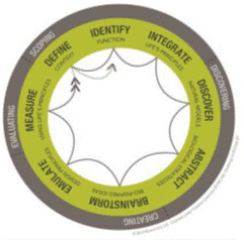
METHODS AND APPROACHES According to Roland (2017), Biomimicry thinking has been described in four phases of the design process. From Biology to Design, there is a specific path to start with an inspiration from the world of Biology and allows to trace the diagram in a sequential problem-based or bottom-up manner. This process is defined according to a studied biological entity, its strategies are mapped out. By understanding its biological principles, an implementation technique is used to propose a design solution. The four phases of this research are identified in a diluted form in the steps of the diagrams that constitute Bio- mimicry DesignLens. This is a methodological approach developed by the Biomimicry Institute 3.8, which includes Biomimicry Design Thinking, and has its details framed in the constituent stages and phases in the Biology for Design diagram modality, being a flexible methodology for creative processes with application of nature models in the creation of innovative bioinspired solutions.
The dialogue at all stages occurs contiguously during the development of this study. The Biology for Design modality was selected because it presents a didactic method that is close to the bottom-up project approach, facilitating the fulfillment of the objectives in face of the problematic presented. Bio- mimetic Thinking consists of four areas in which the process is developed: scoping, discovery, creation, and evaluation. By following the steps of the Biology for Design method and its specific steps, this research presents the necessary requirements and successfully integrates the strategies and princi- ples of life into the area of bioinspired design. The diagram is composed of four main fields, according to figure 1.
1. Scoping: Divided into five stages; during the scoping phase, the design challenge is contextualized and eventually communicated, as well as: a. The description of the chosen design challenge; b. The description of the context; c. A design statement listing the specific function that a potential solution must fulfill;
Biomimicry as a Tool for Developing Bioinspired Products 27
Figure 1: Diagram Biomimicry Thinking – challenge to biology – Biomimicry design- Lens Source: Biomimicry Institute 3.8 (2015).
d. A vision statement for the desired outcome and impact in the descri- bed context; e. Life principles most relevant to the specific type of design challenge.
2. Discovering: Divided into two stages; discovery of a natural model and abstraction of biological strategies; it is the process of exploratory research in search of design inspiration. 3. Creating: Divided into two stages; brainstorming for bioinspired ideas and emulation of design principles; an exercise to find creative design solutions to a specific design challenge. 4. Evaluating: Where the design is evaluated using as a measure, the princi- ples of life. The process achieves best results when it occurs in iterative processes. This is the way to measure or estimate the nature, quality, capacity, extent or importance of a specific solution.
DESIGN METHOD The steps to be followed are not rigid. The Biomimicry Institute lists two possibilities that can occur as shown in figure 2 and makes it possible to go through the diagram sequentially. Problem-based (Top-down) - steps can follow sequentially that start with a design problem (a problematic) to solving the problem based on the biological solution transferred from nature. Solution-based (Bottom-up) - need-defined process in which a bio- logical entity is studied, mapping its strategies, through understanding its biological principles to propose a design solution. Thus, the focus of the rese- arch was on the Bottom-up method in which a search for structures in nature was conducted for the development of a tooth extraction forceps.
1. Biological research
The echinoid endoskeleton has attracted the attention of several research- ers due to its unique morphology, structure and material properties (Perricone et al., 2020). The endoskeleton has numerous functional details and consi- sts of four main structural components: tests, dental apparatus, spines, and pedicellaria. All these parts of the echinoid skeleton consist of the same basic
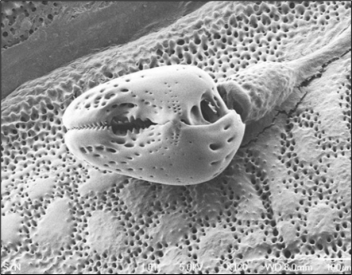
Figure 2: Diagram Biomimicry Thinking – Challenge to Biology – Biomimicry Design- Lens Source: adapted from Biomimicry Institute 3.8 (2015).Figure 3: Pedicellariae of system apical of Arbacia lixula.
material of calcite with high magnesium content; however, its microstru- cture presents great potential to meet diverse mechanical needs according to a direct and clear structure-function relationship.
This versatility has allowed the echinoid skeleton to adapt to different activities such as structural support, defense, feeding, digging, and cleaning. Although limited by available energy and resources, many of the structures found in the echinoid skeleton are optimized in terms of functional perfor- mance and, consequently, can be used as models for bio-inspired solutions in various industrial sectors. In this context, an in-depth study of the pedicella- riae was performed using Scanning Electron Microscopy (SEM) as depicted in figure 2 and images taken from the literature (Coppard; Kroh; Smith, 2012). The different forms of pedicellariae were studied based on their functions.
Anatomy and Functional Morphology Pedicellariae can be categorized into globiferous, ophiphyllous, triphyllous, and tridentate (Caveyand Markel, 1994). Each is specialized to fulfill diffe- rent functions, varying from species to species in number, combination, and distribution on the surface of the echinoid. Often all four can be found in the same individual, with clear differences in spatial distribution, suggesting that their form and functions are closely related. Each morphology is spe- cialized to efficiently keep the surface of the organism free of algae, fouling organisms, detritus, and deter pests and parasites (Coppard; Krohand Smith, 2012).
Biomimicry as a Tool for Developing Bioinspired Products 29
Understanding the Principles and Strategies Reactive and grasping systems of the pedicellariae provide the echinoid with a sensitive and reactive epithelium to biotic and abiotic environmental sti- muli. They appear as grasping elements with variable selectivity in scale (from small detritus and algae to large particles of detritus, parasites and predators). Pedicellariae open and close upon direct stimulation through an embedded reflex arc or by stimulation of the test surface through subcutaneous nerves (Campbell, 1976).
Abstraction of the Biological Model In this step, construction lines were generated for use as a reference to create surface lines for understanding the anatomy of the pedicellariae. This type of study in industrial design is characterized as an aid to the construction of the shape.
Thus, with construction lines it is possible to identify features on the sur- face of the object to generate orthogonal views: frontal, lateral and superior. The projections provide a better dimensioning and understanding to gene- rate three-dimensional models, making it easier for the professional who is generating a digital model closer to the captured images. With this, providing a greater similarity with the biological entity being analyzed, since the stru- cture has a form due to functionalities or strategies that the entity develops in its natural habitat.
Technical Implementation Through searches in databases through the CAPES journals portal, CAFe access, a parametric search was performed through keywords in order to identify studies of comparative evaluation between the types of forceps and effectiveness in orthodontic extraction. Through the analysis of the study conducted by Patel, H.S. et al., (2016) two types of products were identi- fied. A conventional model and a forceps model with superior results for performing atraumatic extraction.
In this study, a significant reduction in operation time was observed in the physics forceps group. In the group that used physics forceps, there was a decrease in the extraction surgery time. When the forceps was used, there was much less bone and soft tissue loss than with traditional forceps. Thus, it was decided to generate two concepts, one based on the traditional model and the other based on the model with better results, to then select the alternatives for continuing the development process of bioinspired products.
Two models were developed, one based on conventional forceps (extra- ction by means of a press like a forceps) and the other on physics forceps (extraction by means of a physics lever). Generating an idea requires many phases and tests to verify certain attributes, such as build feasibilities, costs, and then shipping all resources based on the decisions made from the early stages of the process to the final product development. Throughout the Pro- duct Development Process (PDP), various forms of representation are used in the form of models, whether 2D - through technical drawing, Dimensional sketches, sketches or three-dimensional models through polygonal modeling
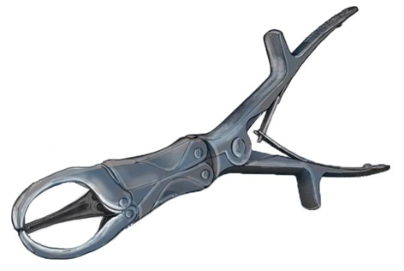
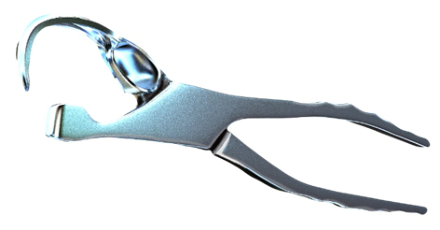
Figure 4: Bioinspired product concept 01 based on conventional forceps.Figure 5: Bioinspired product concept 02 based on physics forceps.
software such as 3ds max, fusion 360, Blender. With the help of these tools, it is possible to obtain a virtual model and the rendering is done through plugins such as vray.
Concept 01 (figure 4) resembles the conventional forceps, but to it was added the bio-inspired structure abstracted from the biological entity stu- died (pedicellaria). Concept 02 (figure 5), was based on the physics forceps because it is a lever instrument, performing the extraction of the tooth through rotation and support in the alveolar bone.
DESIGN SOLUTION Increasingly in the field of dentistry, specialists are looking for tooth removal techniques that reduce or eliminate trauma to the tissues while preserving the remaining bone around the tooth. Thus, reducing discomfort after tooth removal and preserving the gums (Patel et al. 2016).
Biomimetics becomes a catalyst for new solutions and methods, offering new horizons and chances for design-science hybridization. It also symbo- lizes an integrative and competitive process critical for the new industrial period, sometimes known as the fourth industrial revolution. In this work, natural methods have been abstracted and used to build a new biomedical solution that optimizes the interaction between features, performance, kno- wledge transfer, principles, and logic. Given this, the present study emerges
Biomimicry as a Tool for Developing Bioinspired Products 31
as a logical convergence of problem, biological inspiration and development of a new bio-inspired product. Models of tooth extraction forceps based on pedicellar characteristics and functions were established in this work.
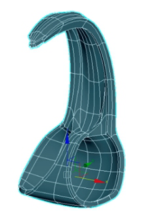
Based on the concepts generated, it was chosen to develop a prototype based on concept 02 (figure 5) through digital fabrication, the choice was made also through the study presented by Patel et al. (2016). Through the sketches developed in the shape abstraction phase, it was possible to model three-dimensionally in Autodesk 3ds max software the biological structure (as shown in figure 6).
Digital Fabrication Digital manufacturing has been playing an increasingly important role in Design, Engineering and Architecture courses. There is a wide variety of approaches to the definition of manufacturing or Digital Manufacturing as confirmed by (Daviy, Paklina; Prokofyeva, 2017) that there is no common opinion among researchers and practitioners of what Digital Manufactu- ring is and how it should be understood. However, the authors’ analysis allows highlighting the essential characteristics of the term and the definition translated into the Portuguese language, Digital Manufacturing, proposed by researchers and business representatives.
In Digital Manufacturing, it is possible to develop artifacts, through rapid prototyping techniques, through additive and/or subtractive manufacturing, enabling the materialization of solutions in Design projects, developing expe- riences and tests with users (Perez; Santos, 2017). Digital Manufacturing in the broadest sense, that is, digital product development aims to solve the challenges faced in modern product development (Promyoo, et al., 2019).
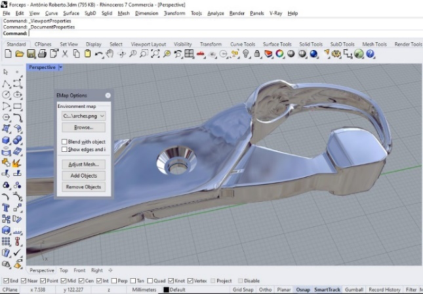
Through digital manufacturing, it was possible to develop a physical model for initial testing. As suggested by (Oliveira et al. 2021). The model was initially modeled in Autodesk 3ds max software then exported to Fusion 360, also from Autodesk for development of the fittings and holes of the artifact connections as shown in Figure 7.
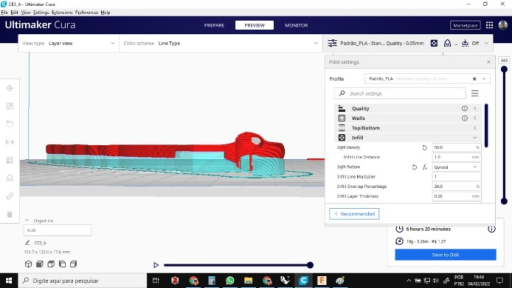
It was then exported in STL format to the Ultimaker Cura software to prepare the model for 3D printing by defining the print quality, time estimate, and media, as shown in figure 8.
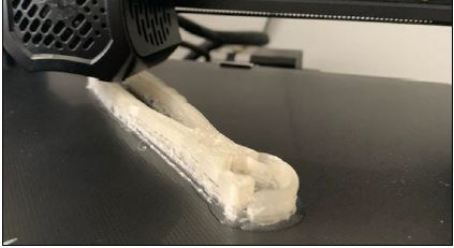
An Ender 3 V2 printer with PLA filament was used for printing (figure 9).
Figure 6: 3D model of the biological abstraction generated from the pedicellaria.Figure 7: 3D model in fusion 360.Figure 8: Configuration in Ultimaker Cura.Figure 9: FDM printing process.
Below, in Figure 13, the resin printed prototype with respective print media on Ld 002h.
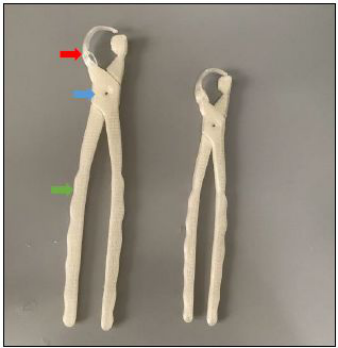
Two models with different sizes were printed for and the following characteristics were observed, seen in figure 13, below: a) a better grip of the smaller model (20% reduction); b) Weakness in the bioinspired structure (demarcated in red);
Biomimicry as a Tool for Developing Bioinspired Products 33
c) Although the smaller structure had a better usability due to its size, it still had a straight grip, rotating the handle, providing an inadequate grip; d) The models did not present problems due to material shrinkage. e) The design for assembly resulted in a good symmetry of the parts. How- ever, the thickness of the rods was not adequate for an adequate grip, being too thin (highlighted in green) and evidenced in figure 10. f) The assembly was done using a screw and nut (only two components). Although small, no problems resulted. Reaming was also created on the part - with the purpose of performing a conical or cylindrical enlarge- ment at the entrance of a hole to facilitate its fixation (highlighted in blue).
After the corresponding analysis by the prototype based on figure 11, it was possible to understand some requirements of adjustments for the deve- lopment of a new model and consequently a new printing process with the following characteristics: a) a better grip of the forceps by extending the rods; b) Optimize the structure through generative design, since the final product will be developed in stainless steel. c) To observe the manufacturing process to make a reduction or enlar- gement observing shrinkage or expansion processes of the analyzed materials.
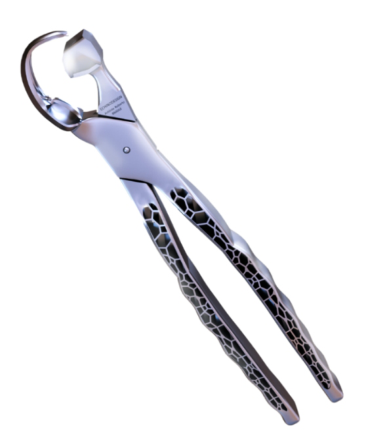
With these objectives defined, a new three-dimensional model was genera- ted. With observed ergonomic characteristics and with concepts of generative design using a Voronoi pattern in the rods to reduce weight by thickening the structure as shown in Figure 12.
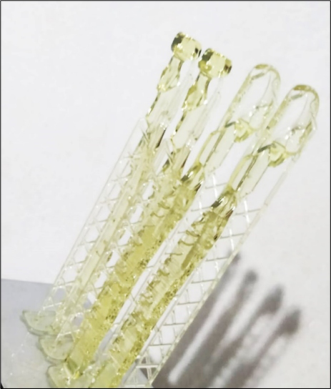
For a better quality of the print, the manufacturing was changed. We opted for resin printing for better fidelity of the digitally generated model observed in Figure 13. Through resin printing, with the Creality Ld 002h
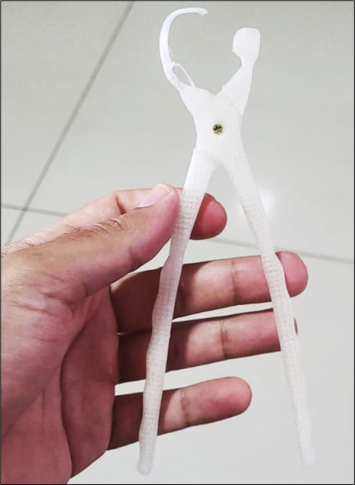
Figure 10: Prototype printed in PLA on Ender V2.Figure 11: 3D model of the bioinspired forceps.Figure 12: Resin printed prototype in creality Ld 002h.
printer, we obtained the rapid prototyping of the bioinspired forceps stru- cture, Figure 16. The Chitubox slicer was used, with a printing time of approximately 2h, first, the mesh exported from 3ds max format (.STL) and after it is sliced it becomes a (CTB).
According to Kumalasari (2022) the parametric model and optimization were the two main components of generative design. Generative design simu- lation works by combining both indicators to produce solutions. From this point of view, ‘generative design’ becomes an important tool for developing design and modeling processes involving different criteria.
Biomimicry as a Tool for Developing Bioinspired Products 35
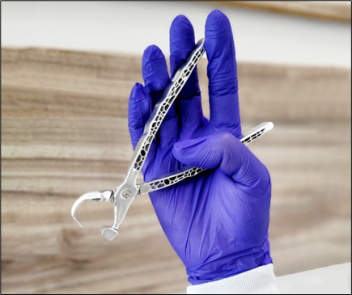
Figure 13: Final prototype printed in resin.Figure 14: (Left) final prototype printed in resin.
Tools based on this concept are very useful, especially for architecture, design and engineering professionals in the early stages of a project. Thus, the term “Generative Design” refers to a method that allows the iterative exami- nation of design problems including various optimization targets. Using this approach allows the designer to test and analyze a larger number of design alternatives, allowing them to identify the best choice in less time (Veloso et al. 2022).
In figure 15 and 16 we can evidence the change of the forceps stem provi- ded by the generative design, in which there was a thickening of it. However, without significant weight increase, due to the geometric structure generated
Figure 15: Handle of the prototype printed in PLA.
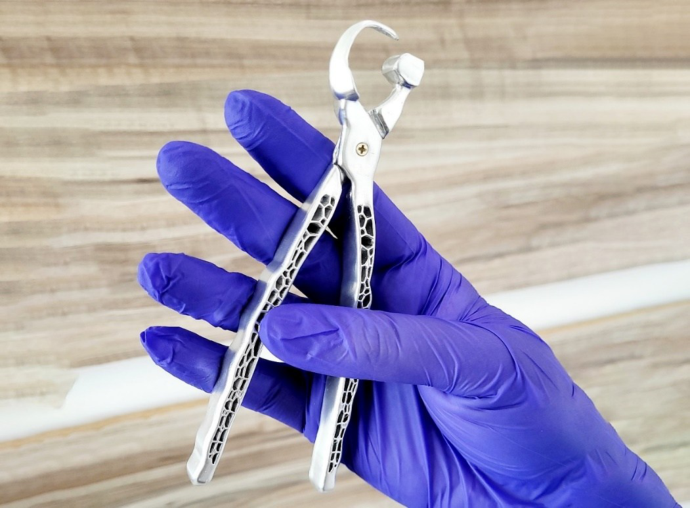
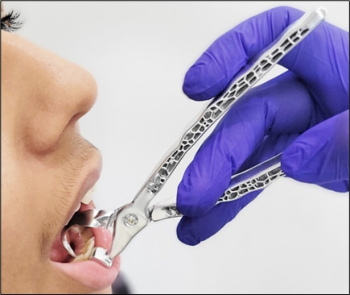
by the software. The hollow structure brings a material optimization, obtai- ning a scale production cost saving, since it is a surgical instrument for further metal fabrication. Besides the optimization of material, this process genera- tes unique aesthetic results. Figure 16 shows the instrument in positioning for the exodontia procedure.
A metallic finish was applied to give the prototype a metallic look as illustrated in figure 14. Unlike the filament printing of the first prototype where there was material shrinkage after drying the part. In resin printing, an expansion of material in some regions of 0.2 mm was noticed.
Figure 16: (Right) simulation of the use of bioinspired forceps.
Biomimicry as a Tool for Developing Bioinspired Products 37
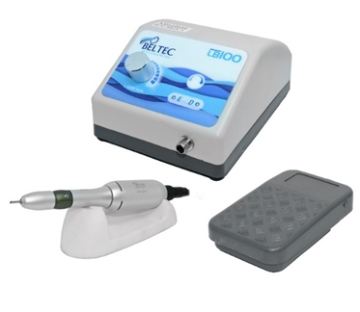
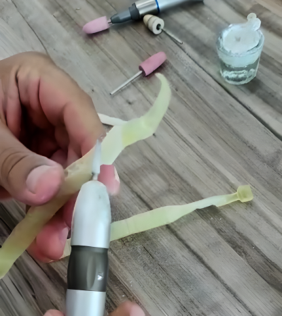
Thus, the prototype needed to go through a finishing process with sand- paper and grinding to better fit the parts. The equipment used was the Beltec LB100 Micro Motor, (figure 17), which are commonly used for wear activi- ties, drilling, cutting, engraving with direct drive or by foot pedal. The drills used were 2.35 mm in diameter. The figure 18 shows the place that required greater wear on the part due to the expansion of the resin and the process performed.
Figure 17: (Left) Beltec LB100 motor.Figure 18: (Right) grinding the prototype in resin.
FINAL CONSIDERATIONS The emergence of new technologies in biological research, such as SEM ima- ging and the use of micro-computed tomography (micro-CT), as well as advances in manufacturing processes, have led designers to generate new bio- inspired concepts based on the conversion of the biological strategies into physical products to solve technical problems. Along with this advancement
in production modes, design must consciously study nature, allowing life to serve as a mentor for the development of cutting-edge technologies. Beyond trends, consumerism, and prejudices, it is essential to cultivate conscious and sustainable manufacturing.
Starting from a study of a biological entity, it was possible to remodel a surgical instrument using structures found in nature, studying theorganismal morphology to apply and solve design problems. Thus, biomimetics shows itself as a methodology for solving problems by observing how nature per- forms its functions to obtain efficiency in the purpose of performing its tasks. In addition to presenting an innovative product, this study brings to light the design process and the steps to develop a bio-inspired product.
The resin printed model proved to be far superior to the filament printed model. There was a preservation of the characteristics of the digital model favoring the transposition of the biological characteristics studied in the pedi- cellariae to the bio-inspired product. For Veloso et al., (2022) the application of Generative Design as a branch of methodologies to optimize design pro- jects that, by definition, must comply with a series of constraints. Generative design is based on approaches to solve known problems by means of genetic algorithms, which use processes to develop optimized products.
Digital manufacturing is playing an increasingly important role in Design, Engineering and Architecture courses. There is a wide variety of approaches to the definition of manufacturing or Digital Manufacturing as confirmed by (Daviy; Paklina; Prokofyeva, 2017) that there is no common opinion among researchers and practitioners of what Digital Manufacturing is and how it should be understood. However, the authors’ analysis allows highlighting the essential characteristics of the term and the definition translated into the Portuguese language, Digital Manufacturing, proposed by researchers and business representatives.
In Digital Manufacturing, it is possible to develop artifacts, through rapid prototyping techniques, through additive and/or subtractive manufacturing, enabling the materialization of solutions in Design projects, developing expe- riences and tests with users (Perez; Santos, 2017). Digital Manufacturing in the broadest sense, that is, digital product development aims to solve the challenges faced in modern product development (Promyoo, et al., 2019).
Given this, the present study emerges as a logical convergence of biological inspiration and design solutions for the development of a new bioinspired product. A new forceps model is suggested, as well as a lever model for tooth extraction based on the characteristics and functions of pedicellariae, found in echinoderms, have been established in this work. The results obtai- ned are encouraging and serve as a paradigm for further studies involving transdisciplinary between design, biology and dentistry.
REFERENCES
Arruda, Amilton et al. Tópicos em design: Biomimética, sustentabilidade e novos materiais. Curitiba, PR: Insight, 2019. Benyus, Janine M. Biomimicry: Innovation inspired by nature. 1997.
Biomimicry as a Tool for Developing Bioinspired Products 39
Campbell, Andrew C. Observations on the activity of echinoid pedicellariae: I. Stem responses and their significance. Marine & Freshwater Behaviour & Phy, v. 2, n. 1-4, p. 33–61, 1973. Campbell, Andrew C. Observations on the activity of echinoid pedicellariae: III. Jaw
responses of globiferous pedicellariae and their significance. Marine & Freshwater Behaviour & Phy, v. 4, n. 1, p. 25–39, 1976. Coppard, S. E., Kroh, A., & Smith, A. B. (2012). The evolution of pedicellariae in echinoids: an arms race against pests and parasites. Acta Zoologica, 93(2), 125–148. Daviy, A. O.; Paklina, S. N.; Prokofyeva, A. S. Digital Manufacturing: new challenges
for Marketing anD Business MoDels. RMJ, v. 15, n. 4, pp. 537–552, 2017. Donati, Mauro et al. Marginal bone preservation in single-tooth replacement: A 5year prospective clinical multicenter study. Clinical implant dentistry and related research, v. 17, n. 3, pp. 425–434, 2015. Irinakis, Tassos. Rationale for socket preservation after extraction of a single-rooted
tooth when planning for future implant placement. Journal of the Canadian Dental Association, v. 72, n. 10, 2006. Jelínek, Filip; SMIT, Gerwin; BREEDVELD, Paul. Bioinspired spring-loaded biopsy harvester—experimental prototype design and feasibility tests. Journal of Medical Devices, v. 8, n. 1, 2014. Kumalasari, Dewi. Generative Design for Walkable Cities: a case study of Sofia.
2022. Dissertação de Mestrado. University of Twente. Langella C., Design e Scienza, ListLab, 2019. ISBN: 9788832080070. Madathanapalli, S. et al. Physics forceps vs conventional forceps in extraction of maxillary first molar. Int J Oral Care Res, v. 4, n. 1, pp. 29–32, 2016. Oliveira, Antônio Roberto Miranda; DE ARRUDA, Amilton José Vieira; LAN-
GELLA, Carla. Biomimetics as a strategy for the development of bioinspired structures for energy absorption based on fruits. Cuadernos del Centro de Estudios en Diseño y Comunicación. Ensayos, n. 149, pp. 189–206, 2021. Oliveira, Leandro Benetti de et al. Avaliação dos acidentes e complicações associados à exodontia dos 3os molares. Rev. cir. traumatol. buco-maxilo-fac, pp. 51–56, 2006. Org. Arruda et al. Tópicos em design: biomimética, sustentabilidade e novos
materiais. Curitiba, PR: Insight, 2019. ISBN 978-85-62241-65-9. Patel, Harsh S. et al. Comparative evaluation of efficacy of physics forceps versus conventional forceps in orthodontic extractions: A prospective randomized split mouth study. Journal of Clinical and Diagnostic Research: JCDR, v. 10, n. 7, p. ZC41, 2016. Perez, Iana Uliana; DOS SANTOS, Aguinaldo. Uso da Fabricação Digital para o
Design de Superfície em Produtos de Moda. ModaPalavra e-periódico, v. 11, n. 21, pp. 56–78, 2018. Perricone, Valentina et al. Constructional design of echinoid endoskeleton: main structural components and their potential for biomimetic applications. Bioinspiration & Biomimetics, v. 16, n. 1, p. 011001, 2020. Promyoo, Rapeepan; ALAI, Shashank; EL-MOUNAYRI, Hazim. Innovative digi-
tal manufacturing curriculum for industry 4.0. Procedia manufacturing, v. 34, pp. 1043–1050, 2019. Rowland, Regina. Biomimicry step-by-step. Bioinspired, Biomimetic and Nanobiomaterials, v. 6, n. 2, pp. 102–112, 2017. Veloso, Gabriel P. et al. Design generativo aplicado às estruturas: Otimização do
plano de corte dos painéis de tela soldada em paredes de concreto.
LISTED IN THE AHFE DIGITAL BOOKSTORE CATALOGUE
Explore the complete digital volume
Ergonomics In Design
Read this individual research paper free through the original publisher, or explore the full digital proceedings book.
ISBN 978-1-958651-53-7
Explore this ISBN in the AHFE Bookstore ↗Listed in the July 2026 bookstore catalogue; search by ISBN to confirm current availability · Digital book purchase optional