Poying Chu, Hsin-Ju Chang (2023). Exploring the Impact of CMF Design and Online Shopping on Consumer Emotional Experience in Product Design. In: Affective and Pleasurable Design. AHFE Open Access, vol. 71, pp. 261–269. https://doi.org/10.54941/ahfe1003266
The quantification of material experience is a trend in modern product design. Most enterprises also pay more attention to customer behavior and have begun to customize the design in terms of color, material, and finish (CMF design) to meet the emotional experience of consumers. On the other hand, online shopping has become a basic aspect of daily consumption. With the rise of the internet and the covid-19 epidemic, consumers can only choose products that meet their preferences through online services. That is, visual experience becomes the key factor for consumer response and product success. Therefore, it is worth exploring how the CMF design of customized products, and how to meet the user experience of consumers in the environment of online shopping. The major findings of this study include the following: (1) Different material simulation methods mainly differ in "grain" and "gloss", resulting in slightly different perceptions of the same material. (2) Currently, the overall material simulation operation experience on BMW's website is the most popular way for users. (3) If the material experience is presented in VR mode, more realistic 3D models are needed to bring users into the experience. At present, the VR operation interface is not mature, and the operation experience will affect the user's feelings about the material.
In an era of technological explosion, the internet is inseparable from our lives. However, with the advancement of technology and changes in people’s habits, some offline activities are gradually being completed online for conve- nience. The most obvious example is online shopping. People can buy many diverse products through the developed internet and logistics system. They do not need to spend a lot of time and effort searching for products in various physical stores, they can just click on the webpage to get the target product. Especially after the impact of the pandemic, people have gradually become accustomed to shopping online and even customizing products, which has prompted the rapid development of global e-commerce.
In addition, research has found that participating in the customization pro- cess can bring consumers unique and unforgettable products and experiences, deepen brand connections, and allow consumers to express their self-concepts
(Coelho, Bairrada & Matos Coelho, 2020). Therefore, we understand that in today’s popularization of online shopping and e-commerce, in order to attract the attention of consumers, many well-known brands have started to offer consumers simulated and planned experiences online as part of their product or service offerings, giving consumers the opportunity to express their personality and meet their individual needs.
Therefore, this study focuses on customized product websites to under- stand how the operation and material experience of customized product websites affect consumers’ emotions. The objectives of this study are as follows: (1) to investigate the differences in material experience caused by different product simulation methods on different customized product websites.; and (2) This study uses the Ma2E4 and SUPR-Q scales to under- stand how the usability and material experience of different websites affect consumers’ emotions.
METHODS
Material Experience and Sensory in Product Design Material is an important factor that affects experience and aesthetics, and has an influential role in the design process. (Karana, Hekkert & Kandachar, 2009; Ashby & Johnson, 2013; Karana, Pedgley & Rognoli, 2015) There are increasing numbers of studies on the sensory characteristics of materials. However, there are numerous factors of materials that can affect emotions, including texture, color, quality, luster, etc., making it difficult to control variables and achieve accurate results. Currently, many studies only focus on certain features of materials or product categories to further understand consumers’ emotional and cognitive responses to materials.
Although related studies suggest that multiple senses should be used for material experience (Ndengue, Juganaru-Mathieu & Faucheu, 2017), it is difficult for consumers to use touch to perceive materials when designing products through website simulations, unlike in physical stores. Most of the time, they can only rely on visual perception and information released on the website to understand the material of the product. (Petiot &Yannou, 2004) In studies on the influence of visual and tactile senses on material experi- ence, it was found that visual perception dominates other senses, and even the loss of touch does not affect the evaluation of product imagery by visual perception. It can be understood that most people rely on visual perception when experiencing materials. (Veelaert, Du Bois, Moons&Karana, 2020) Although vision cannot completely replace touch, there are also studies indi- cating that humans can rely on visual experience to directly perceive the physical properties of objects such as weight, temperature, and dryness or wetness in the absence of touch. In the discussion of visual perception, it was found that the degree of preference between product styling changes and material perception is similar, and the influence of texture is greater than that of styling under visual perception. (Lederman, Thorne & Jones, 1986)There- fore, from the above studies, it can be understood that although vision cannot replace all the perceptual abilities of touch, it has a significant proportion of the ability to perceive materials.
Exploring the Impact of CMF Design and Online Shopping 263
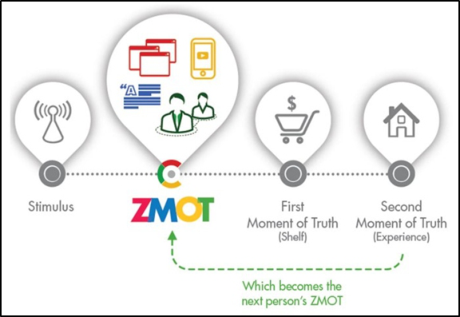
Material Experience on Customized Product Websites Nowadays, online shopping has become a daily routine. Consumers usually browse their favorite products online. This is the moment of first contact between the business and the consumer, which is emphasized by Google’s Zero Moment of Truth (ZMOT) (Figure 1), highlighting the critical moment when customers browse and collect product information online before they come into contact with the product. Therefore, how online websites present product information clearly on the interface, including the texture of product materials, becomes a topic worth discussing.
Customization is mainly tailored to customers’ personalized needs and preferences (Thirumalai & Sinha, 2009; Franke, Keinz & Schreier, 2008). Consumers can design products according to their own preferences and needs through online websites, so that they can express their self-preference in the appearance of the product, thereby generating a sense of identification (Kwon & Kowal, 2017). Customized services can not only help consumers find high- related needs, but also establish emotional relationships between businesses and consumers.
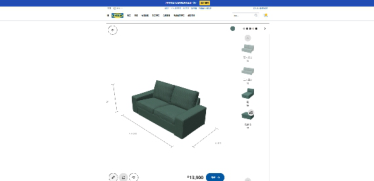
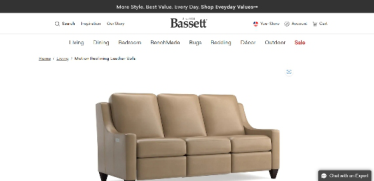
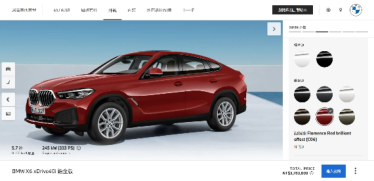
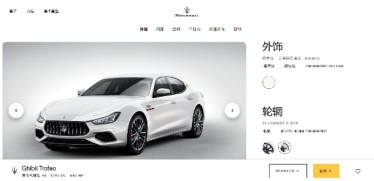
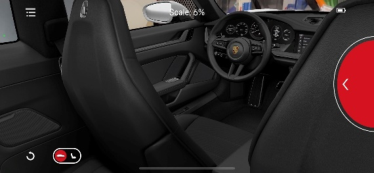
With the advancement of technology, the high competitiveness of online customization services and the creation of high value in segmented markets are well-known keys. Customized services have been widely used in vari- ous industries, and many businesses even apply online customized services to their websites. For example, well-known furniture brands IKEA(Figure 2) and Bassett (Figure 3) offer customers the freedom to change the color and material of furniture surfaces. Customers can simulate their ideal furniture appearance on the website with just a click, providing customers with a more concrete imagination of their own designed furniture. In the automobile industry, many manufacturers’ webpages provide optional services and allow consumers to quickly compare the differences before and after. In addition to providing high-resolution simulated images, Maserati (Figure 4) and BMW (Figure 5) automobile websites even provide 360-degree panoramic simula- tion, allowing consumers to browse the equipment and material colors in the car from all directions through the mouse or screen sliding. Porsche even
Figure 1: Stimulus, ZMOT, FMOT and SMOT (Lecinski, 2011).
264 Po-Ying and Hsin-Ju
Figure 2: The customization webpage interface of IKEA. (https://www.ikea.com.tw/zh /planner/kivik).Figure 3: The customization webpage interface of Bassett. (https://www.bassettfurnitu re.com/).Figure 4: The customization webpage interface of BMW. (https://www.bmw.com.tw/ zh/index.html).Figure 5: The customization webpage interface of Maserati. (https://www.maserati.c om/tw/zh).
provides VR in a real-life context to enhance the consumer’s usage experience and purchase intention (Figure 6).
Ma2E4 Toolkit This study uses the Ma2E4 scale, an instrument designed and developed by a team led by Professors Camera and Karana of Delft University of Technology.
Exploring the Impact of CMF Design and Online Shopping 265
Figure 6: The customization webpage interface of Maserati (https://www.porsche.com/ taiwan/zh-tw/).
In this study, the sensorial level and interpretive level of the Ma2E4 scale were used to assess the experience of the material, including sensorial level, interpretive level, affective level and performative level. They were used to assess black leather textures commonly found on four customised product sites to understand the emotional impact of the way textures are presented on different sites. (Camera & Karana, 2018; Giaccardi & Karana, 2015).
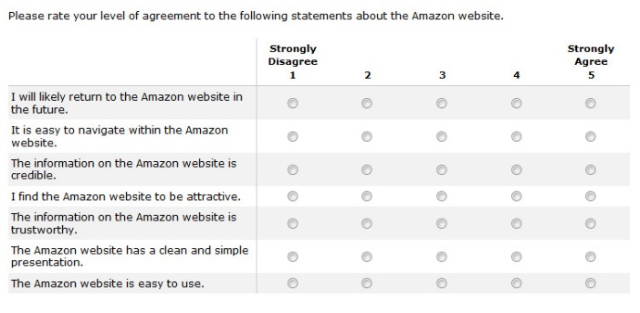
SUPR-Q Scale This study uses the SUPR-Q scale, an instrument designed and developed by Jeff Sauro of MeasuringU Company. The SUPR-Q is an 8-item question- naire used to measure the quality of website user experience, including an overall quality metric (similar to satisfaction), as well as measures of usa- bility, credibility/trust, loyalty, and appearance. The first 7 questions were answered using a 5-point Likert scale, with 1 indicating “strongly disa- gree” and 5 indicating “strongly agree.” (Figure 7) The last question, “How likely are you to recommend this website to a friend or colleague?” had 11 response options, starting with 0 and ending with 10, with endpoints and midpoints labeled. It also provided the commonly used Net Promoter Score (Sauro, 2015).
Figure 7: Question items of the SUPR-Q scale (https://measuringu.com/ product/suprq/).
266 Po-Ying and Hsin-Ju
RESULTS
Procedure This study aimed to investigate the relationship between the usability of different custom product websites and the experience of material texture. Four custom product websites were tested for usability and the experie- nce of black leather texture. Fifteen users (6 males and 8 females), aged between 26 and 50 years old, were invited to participate in this study. Two automotive websites and two furniture websites were selected as exam- ples. Participants rated their experience with website navigation and their perception of black leather after using the four customization product websites (−2 to +2).
Sample The four customized product websites used in this study were the furniture brands IKEA and Bassett, as well as the automotive brands Maserati and BMW. The fabric of the furniture sofas and car interior seats were used for testing. Black leather, a common material available on all four websites, was used as the experimental sample.
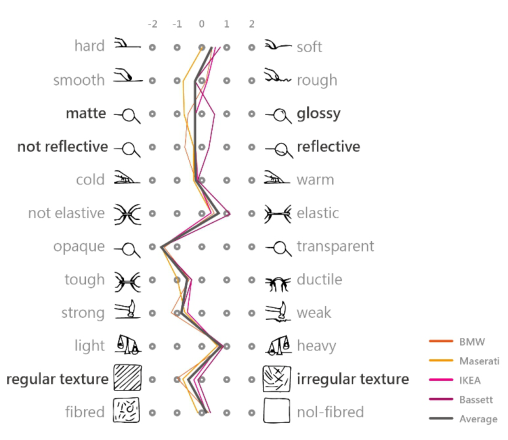
Analysis of Material Experience Data At the sensory level, Figure 8 shows the differences in the perception of black leather through visual cues alone across four websites (BMW, Maserati, IKEA, Bassett). Specifically, users did not perceive significant differences in the tactile quality of black leather on each website. However, there were signi- ficant differences in “grain” and “gloss”. This phenomenon is closely related to the material simulation methods and rendering techniques provided by each website.
Figure 8: Organization of sensory levels of material texture.
Exploring the Impact of CMF Design and Online Shopping 267
At the interpretive level, it was found that users interpreted and understood the same black leather differently on different websites. On the BMW website, users tended to use adjectives such as “elegant,” “calm,” and “professional” to describe their perceptions. On the Maserati website, users described the black leather as “masculine,” “professional,” and “elegant.” On the IKEA website, users described it as “sober,” “ordinary,” and “processed.” Finally, on the Bassett website, users described it as “sober,” “nostalgic,” and “calm.”
Analysis of Website Operation Experience
Table 1 shows that both BMW and IKEA have significant advantages in terms of overall website user experience, but overall no website is significantly below average. (1) In terms of website usability, BMW and IKEA both have significant advantages, but IKEA’s website navigation may not be as conveni- ent. Users often complain about uncertainty about whether they have clicked on the correct step. (2) In terms of trust, IKEA has a significant advantage. However, the comfortable experience of the BMW website, combined with users having less experience with cars, leads to less confidence in the web- site. Bassett’s website information overload also leads to less user trust. (3) BMW excels in aesthetics compared to other websites. (4) Finally, in terms of loyalty, the respondents were clearly satisfied with the BMW and IKEA websites and were willing to try the website again. However, there was less willingness to recommend the Maserati and Bassett websites.
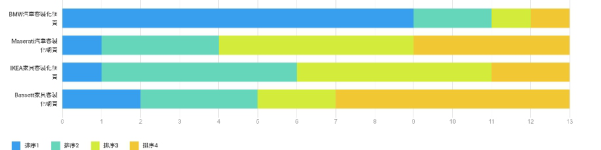
Website Operation and Material Experience At the end of the questionnaire, the study asked participants to rank the four websites in terms of how well they facilitated understanding of material experience through website operation. The results showed that the ranking in order was the BMW website, IKEA website, Maserati website, and Bas- sett website was last. The IKEA and Maserati websites were almost tied. (Figure 9).
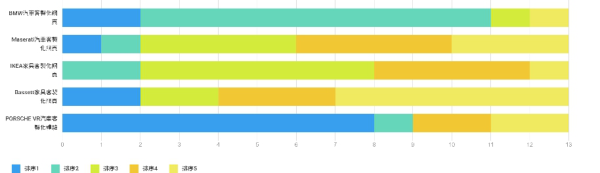
The study also provided participants with the PORSCHE VR simulation experience to operate and asked for a ranking again. The results showed that the ranking in order was the PORSCHE VR, BMW website, IKEA website, Maserati website, and Bassett website (Figure 10).
Table 1. Organizing analysis of website interface operations.
The main purpose of this study is to investigate the differences in mate- rial experience caused by different product simulation methods on different customized product websites. As a result of this study, the following are the main findings: (1) Different material simulation methods mainly differ in “grain” and “gloss”, resulting in slightly different perception of the same material. (2) Currently, the overall material simulation operation experience on BMW’s website is the most popular way for users. (3) If the material experience is presented in VR mode, more realistic 3D models are needed to bring users into the experience. At present, the VR operation interface is not mature, and the operation experience will affect the user’s feeling of the material.
ACKNOWLEDGMENT
The authors would like to express our gratitude to the Ministry of Science and Technology, Taiwan, R.O.C. for financially supporting this research under Grant No. MOST 111-2410-H-036-003.
REFERENCES
Ashby, M. F., & Johnson, K. (2013). Materials and design: the art and science of material selection in product design. Butterworth-Heinemann. Camera, S., & Karana, E. (2018). Experiential characterization of materials: Toward
a toolkit. Coelho, F. J., Bairrada, C. M., & de Matos Coelho, A. F. (2020). Functional brand qualities and perceived value: The mediating role of brand experience and brand personality. Psychology & Marketing, 37(1), 41-55. Dacleu Ndengue, J., Juganaru-Mathieu, M., & Faucheu, J. (2017). Material perce-
ption and material identification in product design. In DS87-8 Proceedings of the 21st International Conference on Engineering Design (ICED 17) Vol 8: Human Behaviour in Design, Vancouver, Canada, 21-25.08. 2017 (pp.429–437).
Exploring the Impact of CMF Design and Online Shopping 269
Franke, N., Keinz, P., & Schreier, M. (2008). Complementing mass customization toolkits with user communities: How peer input improves customer self-design. Journal of product innovation management, 25(6), 546-559. Giaccardi, E., & Karana, E. (2015, April). Foundations of materials experience:
An approach for HCI. In Proceedings of the 33rd Annual ACM Conference on Human Factors in Computing Systems (pp. 2447–2456). Karana, E., Hekkert, P., & Kandachar, P. (2009). Meanings of materials through sensorial properties and manufacturing processes. Materials & Design, 30(7), 2778–2784. Karana, E., Pedgley, O., & Rognoli, V. (Eds.). (2013). Materials experience:
Fundamentals of materials and design. Butterworth-Heinemann. Kwon, S., Ha, S., & Kowal, C. (2017). How online self-customization creates identification: Antecedents and consequences of consumer-customized product identi- fication and the role of product involvement. Computers in Human Behavior, 75, 1–13. Lecinski, J. (2011). Winning the Zero Moment of Truth: ZMOT. Zero Moment of
Truth. Lederman, S. J., Thorne, G., & Jones, B. (1986). Perception of texture by vision and touch: multi dimensionality and intersensory integration. Journal of Experimental Psychology: Human Perception and Performance, 12(2), 169. Petiot, J. F., & Yannou, B. (2004). Measuring consumer perceptions for a better
comprehension, specification and assessment of product semantics. International Journal of industrial ergonomics, 33(6), 507-525. Sauro, J. (2015). SUPR-Q: A comprehensive measure of the quality of the website user experience. Journal of usability studies, 10(2). Thirumalai, S., & Sinha, K. K. (2009). Customization strategies in electronic
retailing: Implications of customer purchase behavior. Decision Sciences, 40(1), 5–36. Veelaert, L., Du Bois, E., Moons, I., & Karana, E. (2020). Experiential characterization of materials in product design: A literature review. Materials & Design, 190, 108543.
LISTED IN THE AHFE DIGITAL BOOKSTORE CATALOGUE
Explore the complete digital volume
Affective and Pleasurable Design
Read this individual research paper free through the original publisher, or explore the full digital proceedings book.
ISBN 978-1-958651-47-6
Explore this ISBN in the AHFE Bookstore ↗Listed in the July 2026 bookstore catalogue; search by ISBN to confirm current availability · Digital book purchase optional