Haiyan Wang, Chengyong Huang, Junhong Zhou, Wenzhuo Lian, Kang Hou (2022). Automatic Control System of Transportation Equipment for Power Transmission Line. In: Human Factors in Robots, Drones and Unmanned Systems. AHFE Open Access, vol. 57, pp. 159–163. https://doi.org/10.54941/ahfe1002324
1 Huizhou Power Supply Bureau Guangdong Power Grid Co., Ltd, Huizhou 516003, China ↗
2 School of Mathematical Sciences Soochow University, Suzhou 215031, China; Kunshan Industrial Technology Research Institute Co., Ltd, Suzhou 215316, China; Institute of Semiconductors Chinese Academy of Sciences, Beijing 100083, China ↗
In this paper, the automatic control system of transportation equipment for power transmission line is studied to realize the unmanned operation of the equipment. The speed control system, weighting system, sensor system for sensing the surrounding environment, slope detection system, operation state system and automatic parking system are installed in transportation equipment for power transmission line. So the automatic control system improves the work efficiency, reliability and safety of transportation equipment. In order to realize the unmanned control of transportation equipment for power transmission line, the overall structure and control is designed to realize the automatic work of the transportation equipment.
With the increasing demand for electrical power in remote mountainous areas, the demand for power transmission equipment will be raised. In the process of adding power transmission line, various materials need to be tran- sported to the construction site for installation. Since most of the transmission line materials are heavy and bulky, transportation trucks were mostly used before, but this causes serious damage to the vegetation in mountainous areas. In order to reduce the damage to the vegetation during transportation, a rail transportation equipment is proposed to realize the transportation of power transmission line materials.
At present, trucks and animal powered vehicles are the traditional tran- sportation ways in mountains and forests. These traditional transportation methods will make the damage the forest ecology and the cost of these tra- ditional transportation methods is high. The rail transportation system can solve the transportation problems of power transmission lines in mountains and forests. It is an efficient way of transportation equipment for power tran- smission line. The rail transportation equipment is researched by scholars all
over the world (Goda K, 2000, Gorbachev, 2016 and Gao, 2010). The mono- rail orchard transport vehicle for slope land is developed and improved in Japan (Sanders, 2005 and Yamamoto et al. 2008). Because the operation sta- bility and reliability of monorail vehicle is slightly lower than that of double rail vehicle, Japan has developed double rail vehicle, which has stable ope- ration, high reliability and low cost. In Korea, monorail transport vehicles are widely used in agricultural orchards and temporary transportation lines. During the construction of Hanna Mountain National Park, a wooden pede- strian road needs to be installed. The timber is transported by installing a monorail transportation line, and the monorail is removed after the road is repaired. In China, the mechanism of forest multi-functional monorail tran- sportation equipment is deeply analyzed, which provides ideas for the design and development of monorail vehicles (Liu and Wang, 2009).
In mountainous areas, transportation equipment has the following chara- cteristics in the transportation process of transmission line materials: 1) The weight and size of transmission line materials are large, the weight is not fixed; 2) The environment along the track is complex, there are often living animals and people passing by, which need to be observed and handled by the staff; 3) The track is erected along the line, and the track slope is diffe- rent. For different slopes, the staff need to manually control the speeds; 4) Each state of equipment operation needs to be operated and controlled manu- ally, and the staff needs to observe the movement of equipment in real time; 5) When the transportation equipment pulls the transmission line materials to the destination, the staff need to stop the vehicle manually. Automatic control of transportation equipment is realized according to the above characteristics in this paper.
This paper presents the automatic control system of transportation equi- pment for power transmission line. Firstly, the components of transportation equipment for power transmission line is given, and there are three main parts: fuel engine transport tractor, loader and transportation track. Then, the components of the automatic control system are proposed in detail, including speed control system, weighing system, surrounding environment sensing system, slope detection system, operation state system and automatic parking system.
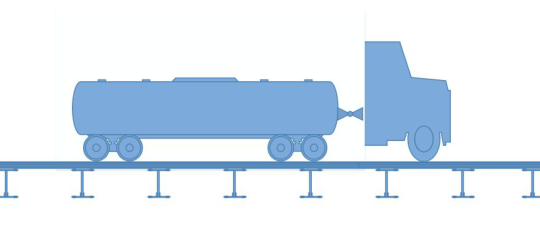
COMPONENTS OF TRANSPORTATION EQUIPMENT The transportation equipment for power transmission line belongs to the field of transportation equipment in power system. The rail transportation equi- pment for the power transmission line includes three parts: 1) fuel engine transport tractor as the power source; 2) loader as carrying equipment to load the materials of power transmission line; 3) transportation track as tran- sport route carrier. They are indispensable and important parts of the rail transportation equipment system of the transmission line (see Figure 1).
The fuel engine transport tractor and the loader are connected through the traction ring, and the transportation track carries the fuel engine tractor and the loader to realize the smooth transportation of the materials of power transmission line. As the power unit of transportation equipment for power
Automatic Control System of Transportation Equipment for Power Transmission Line 161
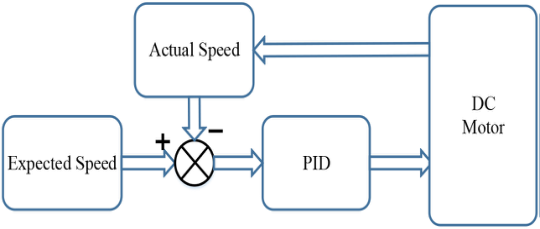
Figure 1: Diagram of transportation equipment for power transmission line.Figure 2: Speed control system based on PID algorithm.
transmission line, the fuel engine transport tractor provides all power for the whole rail transportation equipment. It draws the loader to carry the materials of power transmission line along the track. The loader is used to load the materials of the transmission line. It has no power and is pulled forward by the tractor. The transportation track is used to carry the fuel engine tractor, tower material loader and materials of power transmission line. The transportation track is laid according to the materials transportation path. Due to the rugged roads, the track needs to be supported on the ground by erecting supports during the laying process. The tracks are laid according to different transportation paths through modular design. They are easy to disassemble and can be reused for many times in different transportation routes.
AUTOMATIC CONTROL SYSTEM The autonomous control motion system of transportation equipment for power transmission line rail mainly comprises six parts: speed control system, weighing system, surrounding environment sensing system, slope detection system, operation state system and automatic parking system.
The speed control system is realized by a single-chip microcomputer through the PID algorithm. The speed sensor is installed on the equipment wheel, and the difference between the expected speed and actual speed is the input in PID algorithm. The DC motor controlling the throttle of the fuel engine is the output. These form a closed-loop to control the movement speed of the equipment (see Figure 2).
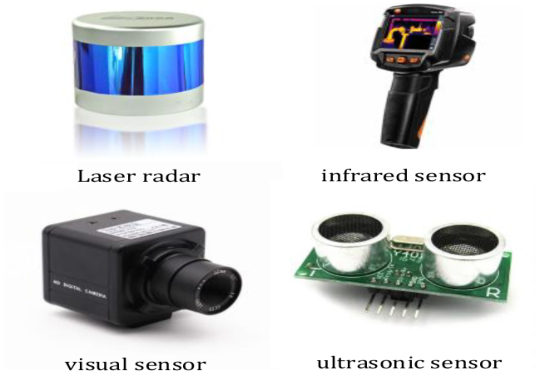
Figure 3: Surrounding environment sensing system.
The weighing system is to realize the real-time monitoring of the weight of transmission line materials to prevent overload and the missing of transmis- sion line materials during transportation. The weight of transmission line materials can be sensed in real time by installing a weighing sensor in the bottom of loader.
The surrounding environment sensing system senses the surrounding envi- ronment through sensors, such as infrared sensor, visual sensor, laser radar, ultrasonic sensor (see Figure 3). The infrared sensor can sense the tempera- ture and find the surrounding living animals. The visual sensor can recognize the types of objects through perception. The laser radar can conduct three- dimensional modeling of the surrounding environment. The ultrasonic sensor can sense the obstacles in close range. When there are living animals or people around the equipment (within 3m) and objects that will hinder the normal operation of the equipment, the single chip microcomputer will send instru- ctions to the braking system, the fuel engine throttle will be turned off, the wheel electromagnetic brake will be turned on, the equipment will stop auto- matically, and an alarm sound will be sent at the same time to remind the people passing around and disperse the living animals. After the obstacle disappears, the equipment will continue to operate.
The slope detection system plans the whole track through three- dimensional modeling of the whole route track, and designs different speeds corresponding to different track slopes. In this way, it can realize the passage of small speed and large torque in the place with large slope and large speed and small torque in the place with stable slope, so as to ensure the reliability and stability of transportation equipment operation.
The operation state system can collect the real-time operation state of rail transportation equipment (including running speed, position, load and other information). The running speed and load information are obtained through the aforementioned wheel speed sensor and weighing system. The position
Automatic Control System of Transportation Equipment for Power Transmission Line 163
information can sense the position of the equipment by installing position sensors on the tracks.
The automatic parking system carries out limit control through the limiter after the transportation equipment moves to the destination. The transporta- tion equipment has no power output, and carries out electromagnetic brake to realize the parking of transportation equipment.
Through the above six modules of automatic control system, the tran- sportation equipment can realize the real-time monitoring of the weight of transmission line materials, real-time perception and process of the sur- rounding environment during equipment operation, the correlation control between track slope and operation speed, the real-time reading of equipment operation status, and effectively carry out parking control at the destination. The transportation equipment effectively realize the automatic movement.
CONCLUSION
In this paper, the automatic control system of transportation equipment for power transmission line is researched. The main parts of transportation equi- pment for power transmission line is proposed in detail. The six modules of automatic control system, can realize controlling speed, weighting, sen- sing surrounding environment, detecting slope, obtaining the operation state and parking automatically. This real-time control system of the equipment is designed to realize the automatic work of the transportation equipment.
ACKNOWLEDGMENT
This work is supported by the Technical Projects of China Southern Power Grid (No. 031300KK52190154). The authors would like to thank all the members including trainees in China Southern Power Grid.
REFERENCES
Gao L , Xue H , Li W , et al. (2010) Research on Monorail Car’s Wireless Positioning and Speed Measurement. International Conference on Future Computer & Communication. IEEE Goda K, Nishigaito T, Hiraishi M, et al. (2000) A Curving Simulation for a Monorail
Car. Railroad Conference. Proceedings of the 2000 ASME/IEEE Joint. IEEE. Gorbachev R A, Grechishkina N A, Grigor’ev, F. N, et al. (2016) Identification of the Model Parameters and Filtering of the Motion Coordinates of the Car of a Monorail Road. Journal of Communications Technology and Electronics. 61(6). pp. 717–721 Liu B F, Wang L H. (2009) Analysis on Stability of Forest Ecosystem-friendly
Monorail Cars. Forest Engineering. 25(3). pp. 57–59 Sanders K F. (2005) Orange Harvesting Systems Review. Biosystems Engineering.
90(2). pp. 115–125 Yamamoto S, Kanamitsu M, Ajiki K, Fujiwara M, Tanaka K. (2007) S-shaped Multipurpose Monorail for Hillside Orchards. Japan Agricultural Research Quarterly. 41(2). pp. 147–152
LISTED IN THE AHFE DIGITAL BOOKSTORE CATALOGUE
Explore the complete digital volume
Human Factors in Robots, Drones and Unmanned Systems
Read this individual research paper free through the original publisher, or explore the full digital proceedings book.
ISBN 978-1-958651-33-9
Explore this ISBN in the AHFE Bookstore ↗Listed in the July 2026 bookstore catalogue; search by ISBN to confirm current availability · Digital book purchase optional