Taufiq Rahman, Bryan De Santiago, Anika Rimu, Shuchisnigdha Deb, Anurag Pande, Mouyid Islam (2022). A Virtual Reality Program to Improve Child Pedestrians’ Safety at Street-Crossing Scenarios. In: Human Factors and Systems Interaction. AHFE Open Access, vol. 52, pp. 148–155. https://doi.org/10.54941/ahfe1002150
A training program was designed and developed for school-going children of 7-12 years old in order to help them improve their understanding of safety rules at critical street-crossing scenarios. The training is constructed of two modules that take place on two different platforms. The first one is a bilingual instruction-based video presentation that demonstrates street crossing safety rules and is viewed on a digital display. The second one (virtual "game" ) takes place in a virtual environment (VE), and the trainee wears a virtual reality (VR) head-mounted device (Oculus Quest) to physically walk on 30-ft long marked and unmarked crosswalks to put the lesson into practice. Eight types of scenarios called "levels" were developed to test and improve the player's decision-making ability. In addition, an experiment was designed to test the efficacy of the program. Trials were run, where a participant watched the video presentation between the two times they were allowed to play the game. The process required an average of 40 minutes per participant to complete. No participants went through simulation sickness according to the Simulation Sickness Questionnaire provided, and an experience survey conducted at the end of the trials showed that all participants found the training program natural and informative.
Even as the trends in traffic fatalities for motorists have been improving, vulnerable road users (VRUs), specifically pedestrians and bicyclists, have seen an alarming rise in fatalities in recent years. According to the Center for Disease Control, injuries from road traffic crashes are a leading cause of death for children under the age of 10, hence a critical public health issue. In 2019, children (aged 1-14) accounted for 11% (8000) of the 76,000 injured pedestrians in pedestrian-related traffic incidents (NHTSA, 2021). School- age pedestrians in lower-income neighborhoods may be particularly at risk. This training program was designed to educate child pedestrians on street- crossing so that they are able to make safer decisions when they are crossing a street.
A Virtual Reality Program to Improve Child Pedestrians’ Safety 149
LITERATURE REVIEW
The efficacy of Virtual Reality was previously studied for pedestrian safety research (Deb et al., 2017). The study acknowledged that VR technology is effective for research on full-motion tasks. VR training for child pedestrians was also previously seen. Semi-immersive and semi-mobile VR environments had been developed for child pedestrians aimed for use at community places (Schwebel et al., 2016). In another study, child pedestrians were put in a VE simulated at a dome projection facility to measure their ability to identify hazardous traffic situations (Meir et al., 2015). In both studies, the partici- pants were not walking on a floor, and the immersion was simulated with screens. In this training, an HMD was used and let participants walk on the floor and have a 360-degree immersion of the VE. In an attempt to test the road crossing behavior among children and young adults, it was found out that younger children made more mistakes (Simpson et al., 2003). In the same study, a wired HMD was used, and participants were allowed to walk. How- ever, they only crossed up until the traffic island and returned. The authors also recommended that sound effects may improve the experience of the VE. In this VR training, a wireless HMD was used that included traffic sound in general but didn’t assign the sound specific to any approaching or depar- ting car. In a recent study of simulator validity, where the participants had to wear an HMD, the analysis suggested that the road-crossing decisions of the participants are not affected by a virtual environment (Feldstein & Dyszak, 2020).
METHODOLOGY
The training program has two parts: a video presentation on a safety lesson to cross a street and a VR game.
Video Presentation A video presentation was made with a safety lesson on crossing a street at marked or unmarked crosswalks and midblock. There are two parts of the video: Introduction to new terms and the street-crossing process. The video has been narrated in both English and Spanish to reach the audience of different ethnicities.
At first, three words were introduced: “Edge” (of the street), “Interse- ction,” and “Crosswalk,” along with a relevant video. Inspiration was taken from a video published online for child pedestrian safety explaining these words (CityofTacoma, 2020). A small lesson on using a pedestrian beacon and following pedestrian lights were also demonstrated in the video.
Four steps to cross a street were demonstrated. There are 1. Stop, 2. Look, 3. Listen, and 4. Cross. The first three steps were chosen from an online safety video made for child pedestrians (RACQOfficial, 2013). The audie- nce is asked to stop on the edge of the street, look from left to right and to left again, and listen to approaching vehicles before they decide to cross a street. The whole process was video recorded from a first-person view so the audience could relate it to the VR game they were about to play.
Figure 1: Flowchart of the VR game development.
Figure available in the original PDF paper.
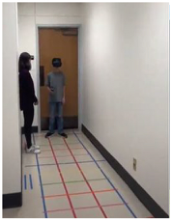
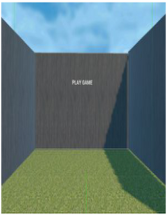
Figure 2: Playground at the laboratory.Figure 3: “Play Game” menu.
Virtual Reality Game The game was developed following the flowchart in Figure 1.
Game Design At first, the player takes place in the “Playground,” a 30 by 4 square ft floor area in a laboratory for the controlled experiment (see Figure 2). There is a designated area for the player to stand and start the game. They wear the HMD and hold the right-hand VR controller.
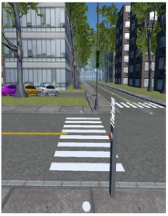
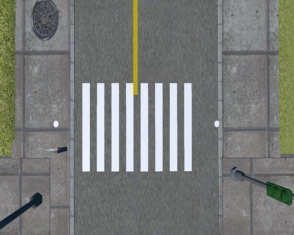
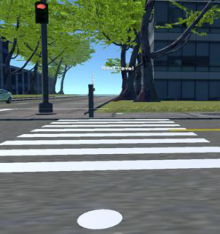
The player is introduced to the first virtual environment - a room with wooden walls and a grass floor. They can see a “Play Game” button in front of them (Fig. 3). They are asked to look around to get familiar with VR. It works as a VR familiarization environment for the child participants where they get the first VR exposure and learn to use the VR controller. As the pla- yer presses the “Play Game” button with their controller, they are shifted to a virtual traffic environment, standing on the edge of a street, facing a cros- swalk in front of them (Figure 4). There are two white round marks on the sidewalk adjacent to the crosswalk indicating the “Start Point” and the “End Point” of the crossing task (Figure 5). The player will observe his surroun- dings and attempt to cross the street. They will try to reach the other white dot (End Point).
A Virtual Reality Program to Improve Child Pedestrians’ Safety 151
Figure 4: Player position (edge).Figure 5: Top view of a crosswalk.Figure 6: “Next Level” button shown across a crosswalk.
After getting to the End Point, the player will turn around (180 degrees) and see a button called “Next Level” across the street (Figure 6). This turn- around is necessary to ensure the player doesn’t get out of the playground or walk into any obstacles (walls or equipment in the lab). As soon as the player clicks the “Next Level” button, they will be shifted to the “Start Point” of the next level.
The player will continue until they complete all scenarois. There is no dif- ficulty level set for any game level. When the player completes all the levels, he will again find himself standing in the wooden room with a “Complete” button in front of him. If the player presses the “Complete” button, he will be allowed to play the game again from the beginning.
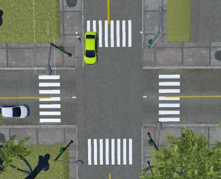
Figure 7: Top view of a marked crosswalk scenario.Figure 8: Top view of an unmarked crosswalk scenario.
Apparatus and Software Researchers chose the “Unity”, a cross-platform game engine developed by Unity Technologies for virtual environment development. Unity allows users to use the platform for educational purposes and for non-commercial use. The HMD used in this research was the “Oculus Quest.” It is a consumer VR device that runs on the operating software Android. The device is lightweight, cheaper, and has an easy setup procedure than its alternatives.
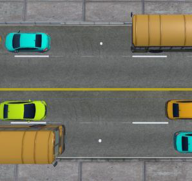
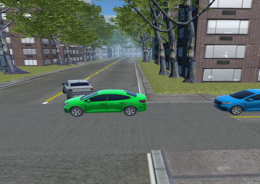
Scenario Development Different types of grass, streets, houses, traffic lights, and cars were used to build the environment and make it look realistic. The traffic system was made possible with the help of an asset used from the Unity Asset Store (Gley, 2021). For all street crossing conditions, the streets were 2-lane. Eight scenarios/ levels are developed based on four criteria.
Traffic Speed: Two levels of traffic speed limits are considered: 20 mph and 45 mph.
Crosswalk Position: The crosswalk can be at the intersection of a street or at a midblock.
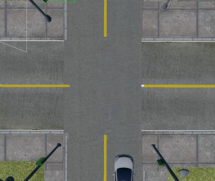
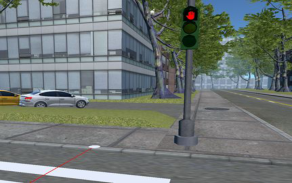
Crosswalk Type: Crossing areas can be marked (Figure 7) or unmarked (Figure 8). An intersection can have both type of crosswalks, but a midblock will have an unmarked crosswalk (Figure 9).
Traffic control: An intersection may or may not include traffic control with traffic lights and pedestrian lights (Figure 10 and 11).
Game Quality A quality control checklist was developed to ensure right vehicle speeds at different scenarios, proper no. of vehicles on the road, adequate time allo- cation for the green light signal, optimal traffic flow and right direction of
A Virtual Reality Program to Improve Child Pedestrians’ Safety 153
Figure 9: Top view of a midblock scenario.Figure 10: Traffic light with pedestrian signal.Figure 11: A scenario with no traffic light/ control.
cars at an intersection, accurate player position and movement in the street, game controller functionality, properly measured distance between the start and the endpoint, etc. For every criterion, a standard value or condition was documented and matched before the program was uploaded to ensure the quality of the experience of the gameplay.
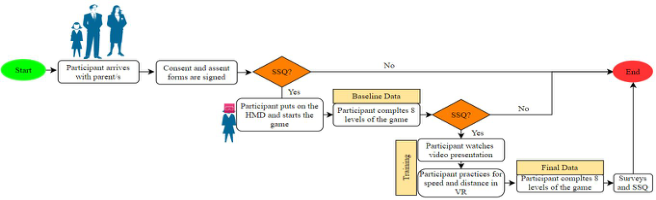
EXPERIMENTAL STUDY After the training program was developed, it was time to put it to the efficacy test by means of an experimental study. A simulation sickness questionnaire (SSQ) was prepared that indicated a participant’s health status and eligibility for the next step of the experiment. 7-12 year-old school-going participants were invited to the lab along with their parents. The participant filled up the SSQ and played the game first time to provide the baseline data. After that, they filled up the SSQ again and were asked to watch the video presentation. Finally, they were asked to play the game once again, followed by another set of SSQ completion. In the end, they were given an experience survey to fill up as they had completed the experiment (Figure 12).
Figure 12: Flow diagram of the experimental study.
DATA COLLECTION The subjective measures collected include participants’ demographic data (age, gender, school, mode to travel to and from school, daily walking freque- ncy, and weekly walking time), simulation sickness questionnaire (SSQ), and their experience survey about the training module and testing environment. The objective measures collected include participants’ pedestrian behavior, such as looking for vehicles, walking speed, waiting time, near misses, and the number of collisions with vehicles.
RESULTS AND DISCUSSIONS Results reveal the effectiveness of the training in developing safer pede- strian behaviors in children. After the video presentation, children looked for vehicles and threats of collisions in each scenario. They followed the instru- ctions about traffic lights at crossing signals and waited until they found a safe gap to cross the street. There was no significant difference in crossing times before and after training. However, there were significant differences in waiting times before and after the training. For all the SSQs completed, results showed that no participant suffered from simulation sickness, and all of them could complete the entire study.
All participants agreed that they liked the VR training more than the video presentation, and the training improved their understanding of safe pede- strian behaviors. Before training, only one-third of the participants were following the traffic signal at an unmarked but controlled crosswalk. After training, all the participants learned to follow traffic signals at pedestrian crossings. In the same scenario, it was observed that the training successfully taught participants to look for vehicles on both sides for each time they cros- sed as opposed to two-thirds of the instances before they had watched the video presentation. The average waiting time before crossing a street signi- ficantly increased in all eight scenarios, especially at midblock. Midblock with cars running at 20mph showed a pedestrian waiting time increase of 25.2 seconds. At the same midblock, the participants waited for an average of 15.2 seconds more when the cars were moving at 45 mph. However, a significant change in the crossing time of the streets was not observed.
CONCLUSION
Because of the Covid-19 pandemic, a limited number of participants parti- cipated in this trial. In the future, researchers will add more features to the
A Virtual Reality Program to Improve Child Pedestrians’ Safety 155
program and collect positional data and eye-tracking to improve the user experience. The video presentation could also be removed from the program, and instruction-based tasks can be integrated into the VR module itself so that it becomes a complete learning package. Regardless of these limitations, the study discusses a new approach to educating children on street-crossing safety. The most significant aspect of this training program is the opportunity for subjects to be present and participate in an immersive but safe environ- ment. Because this training program is designed with consumers in mind, any household with access to a digital display and a VR headset will be able to teach their children better safety practices. In that case, some modifications need to be made to the program to allow it to run in various households with limited access to space.
ACKNOWLEDGMENT
This work was supported by a grant from the Center for Transportation Equity, Decisions and Dollars (CTEDD) funded by U.S. Department of Tran- sportation Research and Innovative Technology Administration (OST-R) and housed at The University of Texas at Arlington.
REFERENCES
CityofTacoma. (2020). Crossing the Street. YouTube. https://www.youtube.com/wa tch?v=WEYMQ_V0SYQ&list=PLfN_fxIeqfReDtbphXP2WS2ODso9_xOPx&i ndex=3 Deb, S., Carruth, D. W., Sween, R., Strawderman, L., & Garrison, T. M. (2017).
Efficacy of virtual reality in pedestrian safety research. Applied Ergonomics, 65, 449–460. https://doi.org/10.1016/j.apergo.2017.03.007 Feldstein, I. T., & Dyszak, G. N. (2020). Road crossing decisions in real and virtual environments: A comparative study on simulator validity. Accident Analysis and Prevention, 137, 105356. https://doi.org/10.1016/j.aap.2019.105356 Gley. (2021). Mobile Traffic System. Unity Asset Store. https://assetstore.unity.com
/packages/tools/ai/mobile-traffic-system-194888 Meir, A., Oron-Gilad, T., & Parmet, Y. (2015). Are child-pedestrians able to identify hazardous traffic situations? Measuring their abilities in a virtual reality environ- ment. Safety Science, 80, 33–40. https://doi.org/10.1016/J.SSCI.2015.07.007 NHTSA. (2021). 2019 Data: Children. https://crashstats.nhtsa.dot.gov/Api/Public/
ViewPublication/813122 RACQOfficial. (2013). RACQ Road Safety Lessons - Crossing The Road. You- Tube. https://www.youtube.com/watch?v=WPe22XLMHZQ&list=PLfN_fxIeqf ReDtbphXP2WS2ODso9_xOPx&index=1 Schwebel, D. C., Combs, T., Rodriguez, D., Severson, J., & Sisiopiku, V. (2016).
Community-based pedestrian safety training in virtual reality: A pragmatic trial. Accident Analysis and Prevention, 86, 9–15. https://doi.org/10.1016/j.aap.2015. 10.002 Simpson, G., Johnston, L., & Richardson, M. (2003). An investigation of road crossing in a virtual environment. Accident Analysis & Prevention, 35(5), 787–796. https://doi.org/10.1016/S0001-4575(02)00081-7
LISTED IN THE AHFE DIGITAL BOOKSTORE CATALOGUE
Explore the complete digital volume
Human Factors and Systems Interaction
Read this individual research paper free through the original publisher, or explore the full digital proceedings book.
ISBN 978-1-958651-28-5
Explore this ISBN in the AHFE Bookstore ↗Listed in the July 2026 bookstore catalogue; search by ISBN to confirm current availability · Digital book purchase optional