Ching Yuan Wang, Ching I Chen, Meng-Cong Zheng (2022). Exploring the Design of the Sign System of NTUH through Wayfinding Behavior in Virtual Environment. In: Human Factors in Virtual Environments and Game Design. AHFE Open Access, vol. 50, pp. 48–54. https://doi.org/10.54941/ahfe1002060
This study uses National Taiwan University Hospital (NTUH) as the experimental field to explore the existing sign system design through the wayfinding behavior in the virtual environment. The experiment simulated scenes that allowed the participants to move freely from a first-person perspective and provided wayfinding tasks. The results showed that participants were more likely to use signs suspended from the ceiling to find directions. When they don't see the target information on the signs, they wander around or go to a similar section to look for it. If the target is not on the first floor, indicators should provide clear information about the floor. The existing sign system makes users ignore information in layout, and the way of arrow direction indication also needs to be standardized. The results of this research help to understand the wayfinding behavior of users in the hospital, to serve as a reference for design improvements.
Finding one’s way through the building is a prerequisite for successfully reali- zing one’s goals within the structure (Weisman, 1981). Successful movement in a medical institution is one of the first steps for a patient to obtain tre- atment. In medical institutions, wayfinding barriers can cause confusion, frustration, anger, stress, elevated blood pressure, headaches, and fatigue (Shumaker and Reizenstein, 1982). Staff is also forced to constantly inter- rupt work to provide route guidance, thus wasting staff time and reducing their attention (Water et al., 2018). Therefore, how to promote the user’s wayfinding experience is a crucial matter. Many environmental factors affect wayfinding in indoor space, among which the landmark can reduce cogni- tive workload. At the same time, if correctly set and positioned, signs can also help minimize wayfinding difficulty and promote a higher success rate of wayfinding (Nothegger et al., 2004).
National Taiwan University Hospital (NTUH) is Taiwan’s medical care core. As time goes by, new services and facilities are gradually added, signifi- cantly increasing the complexity of the interior layout, which makes users easily get lost in the hospital. The hospital also needs to invite several
Exploring the Design of the Sign System of NTUH Through Wayfinding Behavior 49
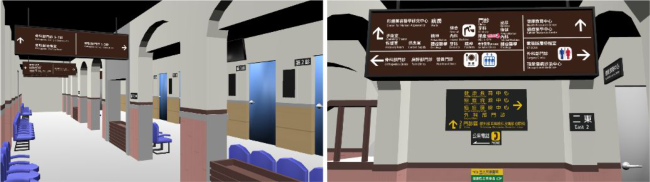
Figure 1: The screen is displayed when moving.
volunteers to help directions guidance. In addition to using human guida- nce, environmental factors can also improve wayfinding efficiency. However, since the building is listed as a municipal historic site, it is challenging to change arbitrarily, so how to increase the sign system flexibly and master the efficiency of users’ movement is quite important.
It is challenging to conduct wayfinding studies in established medical faci- lities without affecting hospital operations. The virtual environment has become a new feasible experimental method in recent years. Many resea- rchers have compared the differences between a virtual environment with a prototype and its real-world in the cognitive process of wayfinding and spa- tial knowledge acquisition. It is found that the way people find their way in the virtual environment and the real world is similar, and there is no noti- ceable difference (Conroy, 2001). With this technology, all changes in the experimental setting can be accomplished at a lower financial cost and in less time (Morganti et al., 2007). Designers can use it to evaluate or develop wayfinding systems before construction, avoiding costly modifications after physical structure.
METHODS
This study takes the old building of NTUH as the experimental field of the virtual environment to explore the wayfinding in medical institutions under the sign system design. Use Blender to build a virtual model of circulation corridors on the first and second floors of the old building of NTUH. It will include non-temporary signs, light up all environments evenly, and then import the model into Unity 3D to simulate a first-person free movement scene in a hospital. And the movement is shown by a desktop computer screen and operated through the keyboard and the mouse.
The experiment recruited 32 participants aged between 20 and 39. None of the participants had been to the old NTUH building before. The experiment was divided into three stages. In the first stage, participants fill in a question- naire about their basic information and experience playing 3D first-person games and used the wayfinding ability affecting factors scale to understand their essential wayfinding ability and confidence. In the second stage, parti- cipants learned how to move in virtual space through a practice room. After the participants were familiar with the whole process of the experiment, the wayfinding task in the two groups of situations began formally. Each set of
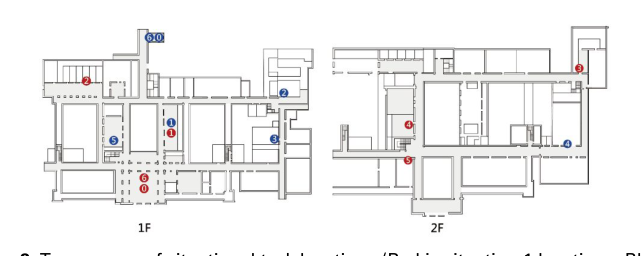
Figure 2: Two groups of situational task locations (Red is situation 1 locations, Blue is situation 2 locations).
conditions started with a different entry point. Participants were given a text description of the situation, asking them to imagine being in a hurry to find their way around a medical facility. Each set of six tasks involves going up and down floors and back the starting entrance in the last task. After each task, participants filled out two questions to report how anxious they felt and rated signs on the route. In the third stage, participants fill in the whole environ- mental assessment questionnaire; Finally, conduct semi-structured interviews to understand their decisions, behaviors, and causes of wayfinding.
RESULT AND DISCUSSION
The Behavior of the Participants During the Task Results showed that Q3 (please find the dermatology clinic) and Q10 (please find the physical therapy center) took the longest to complete in two groups of Settings (e.g., see Table 1). Both tasks involve going from the first floor to the second floor. In Q3, six signs show the dermatology clinic’s information on the first floor, distributed near the hall, central corridor, stairs, and eleva- tors. Therefore, although the participants will search back and forth on the first floor, they can still find these specific signs and successfully go upstairs. However, in Q10, only two signs showed the information of the physical therapy center, one near the elevator with all floor information and the other near the stairs. Therefore, the participants spent a lot of time on the first floor looking for signs related to the physical therapy center repeatedly. The parti- cipants had to walk almost the entire first floor before going upstairs. Finally, 16 people found the sign next to the elevator, nine people saw the sign on the stairs, and the rest, seven people, did not find the sign. It is worth mentioning that in these two tasks, when some participants could not find clear infor- mation on the signs, they would guess that they were classified under other related departments. In Q3, six people speculated like this, among which four people speculated that dermatology clinic was surgery clinics. In Q10, 12 people predicted this, and the six people among them indicated that the physical therapy center was rehabilitation.
We can obtain the efficiency of the signs observed by the participants in each task by calculating the number of signs observed and whether the signs
Exploring the Design of the Sign System of NTUH Through Wayfinding Behavior 51
Table 1. Average completion time of each task (seconds).
observed provided information of the task objective, namely, effective signs and invalid signs. The results showed that task Q6 (please find the hall) and task Q12 (please find the Jin-Fu Tunnel) had the lowest average efficiency in the two groups (e.g., see Table 2). Both tasks required participants to find the starting entrance. It is because few signs provide exit location information in the hospital. In Q6, the hall is a tall space with significant differences from other areas, and most people can find the hall without relying on signs. However, in Q12, most of the participants need to spend a lot of time looking for each corridor and sign information repeatedly on the first floor, and only 4 of them can remember where Jin-Fu Tunnel is.
The Evaluations Reported by the Participants in the Questionnaire After completing each task, the participants fill in two questions, a five-point Likert scale for commenting on the signs in the route (The signs in this task were easy to understand) and their anxiety level (This task made me feel anxious). The results showed that participants rated the Q3 and Q10 signs lower and felt more significant anxiety in both groups, the same as the task duration (e.g., see Table 3 and Table 4).
The results of the whole environmental assessment questionnaire after the completion of all tasks showed that the participants thought that the signs
in the hospital were not easy to understand (mean-2.75, standard deviation- 1.02, minimum-1, maximum-5), but agreed that it was helpful for wayfinding (mean-3.56, standard deviation-1.01, minimum-1, maximum-5). In addition, participants gave higher scores to signs hanging from ceilings (mean-3.75, standard deviation-0.8, minimum-2, maximum-5) than to signs posted on walls (mean-2.66, standard deviation-1, minimum-1, maximum-5), indica- ting that they thought signs hanging from ceilings in hospitals were more helpful in their wayfinding.
The Impact of Relevant Game Experience on Wayfinding Performance Participants replied whether they had played 3D first-person games in a pre-experiment questionnaire. Twenty-five of the participants said they had played, and seven said they had never played. After the independent sample T-test of game experience and the completion time of each task, we found that the Q6 found the hall (p = 0.02) and Q9 found the CT Scan room (p = 0.01) are significant. The results showed that although all participants moved in the environment using the mean speed during the simulated way- finding process, those with relevant game experience could still reach the task goal faster than those without game experience in some cases. When we observe behavior on tasks, those with game experience move their perspe- ctive more smoothly to see signs and walk up and down the stairs, which is more difficult for non-gamers.
The Effect of Orientation Perception on Wayfinding Performance As for the factor of directional perception of the wayfinding ability affe- cting factors scale, the participants were divided into high, middle, and low directional perception groups through average plus or minus one standard deviation. There were six persons in the high-ability group and six persons in the low-ability group. After an independent sample T-test of high and low directional perception groups and completion time of each task, it is signifi- cant that Q1 found the Registration & Cashier (p = 0.049), and Q3 found the dermatology clinic (p = 0.013). The results showed that those with high directional perception could reach the task goal faster in both tasks.
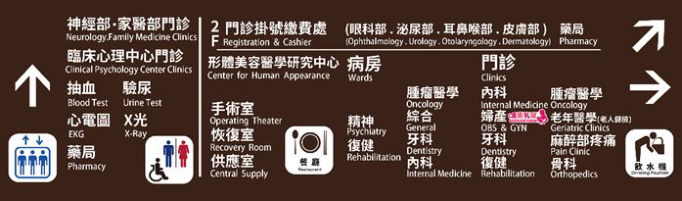
Participants’ Feedback in Semi-Structured Interviews All participants indicated that they would prioritize looking for directions by looking at signs hanging on the ceiling (see Figure3). The reason mentio- ned was that they believed that signs hanging on the ceiling would provide
Exploring the Design of the Sign System of NTUH Through Wayfinding Behavior 53
Figure 3: The sign is hanging on the ceiling in the NTUH.
more and complete information, making them feel more intuitive in dire- ction guidance. Moreover, the information provided by signs posted on the wall makes them feel more fragmentary, providing only partial information and being viewed as an auxiliary sign in the wayfinding process.
The participants thought that the hospital signs provided too much infor- mation. The line of sight of reading would be interfered with by typesetting and interspersed graphics. It isn’t easy to find the information they want and easy to miss. In addition, they could not understand the meaning of classi- fication. The participants hoped to have a more precise classification and a more obvious typesetting method. They were confused by arrows slanting up directions, sometimes going upstairs, sometimes going straight to turn, and were often troubled by incoherent messages between signs. If the target message is to go straight and turn left, they want the next sign to tell them whether to continue straight or turn left, and if it doesn’t, they might want to go back and check. Overall, many participants suggested adding information about floor information in the hall and using color or code to distinguish the corridor to help find the way. In addition, most of the information on signs is repetitive, and some information that is not immediate can be put on the wall.
CONCLUSION
In this study, we used the virtual environment as the experimental method, which has the advantage that the exploratory process will not affect the hospital’s operation and save a lot of measured time and physical strength. However, this approach has some limitations, and the lack of a “crowd” could impact both perception and wayfinding. Except for the orientation perception ability of the participants, the experience of 3D first-person per- spective games may also affect the experimental performance. In addition, this study was conducted by using a desktop computer screen to display ima- ges. The walking perspective was relatively narrow compared with the real field, and participants easily ignored both sides’ scenery. And a few reported feeling dizzy, especially when walking up and down the stairs. Therefore, the researcher should pay more attention to the physical state of the participants in the experiment. However, a virtual environment is still a feasible tool to evaluate the wayfinding system in medical institutions.
The study results found that visitors who were not familiar with the buil- ding in a medical facility were more challenging to complete a task that required moving between floors. A clear sign is necessary to tell the floor information, or visitors wander around on the first floor. On retrieving the original exit, we found that most people could find their way back to the hall and leave without any trouble. But it showed difficulty with another less visible entrance. Therefore, signs can be added for small specific entrances to assist wayfinding. In addition, participants relied more on signs hanging from the ceiling to find their way than on signs posted on walls, so it was essential to provide a complete sign system of hanging.
In design, attention should be paid to the readability and coherence betw- een the signs. When faced with a large amount of information, visitors are more likely to look through the first word to search for information quickly. Therefore, can arrange the information in a column to reduce the reading burden. In addition, the directional arrows should also be used in a standar- dized manner to avoid confusion. Because medical institutions will gradually increase new services and facilities, hospitals can use changeable types in the sign system to make flexible adjustments. On the other hand, adding color or code to the sign system to distinguish the whole hospital space to help wayfinding is also a field to explore further.
REFERENCES
Conroy, R. A. (2001). Spatial navigation in immersive virtual environments. Ph.D.
diss., University of London. Morganti, F., Carassa, A., & Geminiani, G. (2007). Planning optimal paths: A simple assessment of survey spatial knowledge in virtual environments. Computers in Human Behavior, 23(4), 1982–1996. Nothegger, C., Winter, S., & Raubal, M. (2004). Selection of salient features for 26
route directions. Spatial Cognition and Computation, 4, 113–136. Shumaker, S. A., and Reizenstein, J. E. (1982). Environmental factors affecting inpatient stress in acute care hospitals, in Environmental Stress, ed. G. W. Evans (New York, NY: Cambridge University Press), 179–223. Weisman, J. (1981). Evaluating architectural legibility: Wayfinding in the built
environment. Environment & Behavior, 13(2), 189–204. Water, T., Wrapson, J., Reay, S., Ford, K.,(2018). Making space work: staff sociospatial practices in a paediatric outpatient department. Health Place 50, 146–153.
LISTED IN THE AHFE DIGITAL BOOKSTORE CATALOGUE
Explore the complete digital volume
Human Factors in Virtual Environments and Game Design
Read this individual research paper free through the original publisher, or explore the full digital proceedings book.
ISBN 978-1-958651-26-1
Explore this ISBN in the AHFE Bookstore ↗Listed in the July 2026 bookstore catalogue; search by ISBN to confirm current availability · Digital book purchase optional