Yansong Luo, Chunrong Liu, Kong Fan Qiang (2022). Extraction of Key Factors to Determining the Acceptability of Diet Therapy Based on Syndrome Differentiation of Traditional Chinese Medicine. In: Human Factors in Communication of Design. AHFE Open Access, vol. 49, pp. 36–42. https://doi.org/10.54941/ahfe1002033
Purpose: Extract key factors to determining the acceptability of diet therapy based on syndrome differentiation of Traditional Chinese Medicine for middle-aged and elderly people and propose some suggestions to improve their acceptance of it. Method: Thirteen main influencing factors are selected from literature survey and interviews. Semi-structured interview are conducted with Decision-Making Trial and Evaluation Laboratory questionnaires to evaluate factors’ interrelationship. Results: The understandability and the memorability of medicinal food’s knowledge, the type of medicinal food and the popularity of medicinal food’s knowledge are key influencing factors. Suggestions: Pre-research of people’s taste preferences is important and necessary; the identity of propagandist and the source of propaganda content should be transparent and the organization of publicity activities should be normalized; concise and multi-sensory propagation mode should be adopted; “Medicinal Virtue Association” can be used to reduce the difficulty of memorizing knowledge.
During the COVID-19 epidemic, Traditional Chinese Medicine (TCM) par- ticipated in the prevention and treatment of this severe infectious disease and cured 68885 cases as of March 30, 2020, which account for 92% of all cured and discharged cases (Wang and Hu, 2020). Therefore, the inheritance and development of TCM has been gradually valued by the Chinese govern- ment, provincial governments have induced such as promote the integration of TCM, science and technology, entertainment and other industries, build TCM health tourism brand and other policies to accelerate the development of TCM.
In the future, TCM will be closer to people’s life, TCM diagnosis and tre- atment technology will have more opportunities to serve people. Therefore, in order to further improve the popularity and acceptance of TCM among the public, especially people who have high demand for health care, this
Extraction of Key Factors to Determining the Acceptability of Diet Therapy 37
study takes middle-aged and elderly people in urban areas as the subjects to explore the key factors affecting the acceptance of diet therapy based on syn- drome differentiation of TCM by using questionnaire survey, semi-structured interview and DEMATEL analysis.
Diet therapy based on syndrome differentiation of TCM is a dietary method based on the long-term medical and life practice of predecessors. It’s usually used for daily health care or disease prevention and treatment. According to patient’s disease pathogenesis, syndrome type, symptoms of dis- ease and the patient’s constitution, specific dietary therapy will be determined based on the nature flavor and channel tropism and nutrition benefits of the food (Cai and Lu, 2020). For example, warm-natured food such as mutton, dog meat and ginger is usually given to patients with cold aversion symptom to dispel cold.
PREPARATION In order to narrow down the range of influencing factors, this study only take into account the factors related to dietary therapy, and for the purpose of comprehensively covering all the influencing factors related to dietary the- rapy, “Knowledge, Attitude/Belief, Practice”(KAP) framework is used for influencing factors’ classification. This framework is the most commonly used model to explain how personal knowledge and belief affect people’s health behavior. “Knowledge” is the understanding of health-related know- ledge; “Attitude” is the correct belief and positive attitude to health behavior; “Practice” is health-related behavior (Li et al, 2015).
Based on the KAP model, influencing factors of this study can be divided into three categories: (1) Factors that influence the understanding of die- tary therapy; (2) Factors that influence the establishment of correct belief and positive attitude to dietary therapy; (3) Factors that influence the imple- mentation of dietary therapy. Thirteen main influencing factors (MIFs) are summarized based on the three categories above according to the litera- ture research and subjects interview. Due to the limitation of paper size, elaboration on each MIFs won’t be given.
Factors that influence the understanding of dietary therapy are as follows: (1) The understandability and the memorability of medicinal food’s know- ledge (MIF1); (2) The authority and the authenticity of medicinal food’s knowledge (MIF2); (3) The systematicness and the integrality of medicinal food’s knowledge (MIF3); (4) The interestingness of medicinal food’s kno- wledge and the variety of propaganda methods (MIF4); (5) The popularity of medicinal food’s knowledge (MIF5).Factors that influence the establish- ment of correct belief and positive attitude to dietary therapy are as follows: (6) The practicability of medicinal food’s virtue (MIF6); (7) The understan- ding of medicinal food’s virtue (MIF7); (8) The understanding of the wrong usage of medicinal food (MIF8). Factors that influence the implementation of dietary therapy are as follows: (9) The expenditure of medicinal food (MIF9); (10) The type of medicinal food (MIF10); (11) The flavour of medicinal food (MIF11); (12) The convinence of buying medicinal food (MIF12); (13) The complexity of medicinal food’s cooking (MIF13).
DEMATEL OPERATIONS Decision-Making Trial and Evaluation Laboratory (DEMATEL) was propo- sed by American scholars A. Gabus and E. Fontela at the Battelle Conference in Geneva in 1971 and it is used for solving complex and difficult problems in the real world (Xu, Shang and Shi, 2020). The DEMATEL procedure in this study comprise the following steps: (1) Identify MIFs of this study; (2) Invite subjects to evaluate the degree of mutual influence between each element; (3) Generate the direct relation matrix; (4) Calculate the normalized direct relation matrix, the direct/indirect relation matrix, the Prominence and Rela- tion value of each MIF; (5) Draw a causal diagram based on the Prominence and Relation value and the direct/indirect relation matrix; (6) Extract key influencing factors (KIFs) from MIFs to reveal the relationship between main factors.
After determining thirteen MIFs, ten middle-aged and elderly people (5 males and 5 females) living in Changzhou and Shanghai, whose average age range is between 45 and 65, are kindly invited to participate semi-structured interviews and complete questionnaires based on the direct relation matrix Z shown in the Table 1.
During the interview, subjects are asked to determine the influencing degree between any two MIFs and explain the reasons of making such judgments.
Based on the data in Table 1, direct/indirect relation matrix T shown in the Table 2, Prominence and Relation value of each MIF shown in the Table 3 are obtained.
Top three factors in Prominence and Relation shown in the Table 4 can be obtained by ranking the data in Table 3.
The Prominence value represents the relative weight of one factor’s influ- encing intensity in total influencing intensity of all factors. The positive
Extraction of Key Factors to Determining the Acceptability of Diet Therapy 39
Table 4. The top three factors in prominence and the top three factors in relation.
Table available in the original PDF paper.
The Top Three Factors in Prominence The Top Three Factors in Relation MIF10 (The type of medicinal food) MIF1 (The understandability and the memorability of medicinal food’s knowledge)
MIF10 (The type of medicinal food) MIF3 (The systematicness and the integrality of medicinal food’s knowledge) MIF5 (The popularity of medicinal food’s knowledge)
MIF9 (The expenditure of medicinal food)
Relation value represents influence degree of one certain factor on other factors and the negative Relation value represents influence degree by other factors.
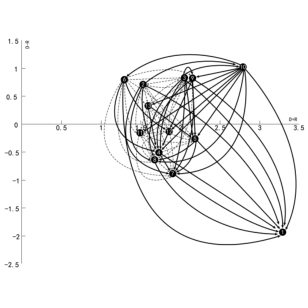
THE CAUSAL DIAGRAM Based on the direct/indirect relation matrix T and the Prominence and Rela- tion values shown in the Table 3, the causal diagram can be drawn as shown in Fig. 1. The horizontal axis stands for the Prominence value and the verti- cal axis stands for the Relation value. The direction of the arrow indicates the direction in which one factor influence another. The solid line indicates that one factor have a strong effect on the other factor, while the dotted line indicates that one factor have a moderate effect on the other factor. In order to highlight the key point, weak influencing relationship is omitted.
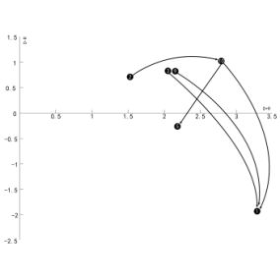
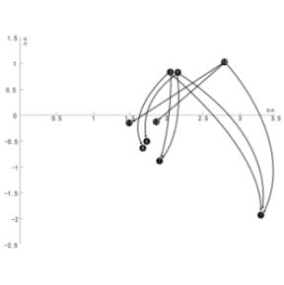
As shown in the Fig. 2, MIF1 has the largest Prominence value and the smallest Relation value. Top three influencing factors to MIF1 are MIF10, MIF9 and MIF3. Based on the analysis of matrix T, we can find that MIF2 is the main influencing factor to MIF10 and the influencing intensity level is strong, thus MIF2 should be taken into account when we develop solutions to the problem. What’ more, from matrix T, we can also find that MIF10, whose Prominence value rank the second place in all factors, is also the stron- gest influencing factor to MIF5, who has the third largest Prominence value in all factors, this phenomenon imply that MIF10 is the key to the problem. Based on the analysis of matrix T and Fig. 3, we can know that MIF10 has the largest Relation value and MIF1, MIF12 and MIF11, in descending order of influence intensity, are the top three factors that affected by MIF10. More- over, MIF3 has the second largest Relation value and MIF1, MIF8 and MIF7, in descending order of influence intensity, are the top three factors that affe- cted by MIF3. MIF9 has the third largest Relation value and MIF1, MIF4 and MIF7, in descending order of influence intensity, are the top three factors that affected by MIF9.
CONCLUSION
Based on above findings, four suggestions can be proposed: (1) Pre-research of middle-aged and elderly people’s taste preferences is important and neces- sary. During the semi-structured interviews, most interviewees think medici- nal food’s knowledge will become much easier to remember if those medicinal food are their favourite varieties. (2) The identity of the propagandist and the source of propaganda content should be transparent and the organi- zation of publicity activities should be normalized. Most interviewees are more willing to believe and remember the advice from doctors or other pro- fessionals in TCM field and more pleased to participate in normalized and authoritative lectures and activities. (3) Gradual, concise and multi-sensory propagation mode should be adopted. Middle-aged and elderly people tend to memorize knowledge that includes pictures and videos, because those type of knowledge usually has small amount of knowledge and is relatively easy to understand compared to the plain text knowledge. (4) “Medicinal Virtue Association” can be used to reduce the difficulty of remembering knowledge. Knowledge of rare and expensive medicinal food such as ginseng, lucid gano- derma, pilose antler and cordyceps sinensis usually leaves a deep impression on people, thus we can use this advantage to make the process of memorizing
Extraction of Key Factors to Determining the Acceptability of Diet Therapy 41
Figure 1: The causal diagram.Figure 2: The separate prominence causal diagram.Figure 3: The separate relation causal diagram.
more easier. For instance, lucid ganoderma, which is quite expensive to ordi- nary people, can benefit qi and nourish blood, fructus ziziphi jujubae, whose price is acceptable for most people, also has the virtue that lucid ganoderma has, thus, people can memorize the virtue of lucid ganoderma first and then remember that fructus ziziphi jujubae has the same virtue of lucid ganoderma. In this way, knowledge memorizing will become much easier and the time for which knowledge stay in people’s mind will become longer.
These four pieces of advice, from my perspective, should be taken into account when designers create cultural and creative products, this can make
products more likely to be accepted and loved by people. What’s more, event organizers should also consider these suggestions when they hold TCM culture related lectures or events, this can increase people’s enthusiasm to par- ticipate in activities and willingness to apply the knowledge they have learned in the lecture to their daily life.
REFERENCES
Cai, L.Q., Lu, Y. (2020). Investigation on the Status Quo of Dialectical Diet Among Nurses in Chinese Medicine Hospital Knowledge-Attitude-Practice and Its Influence Factors Analysis. Chinese Evidence-Based Nursing, 6(07), pp. 673–677. Li et al. (2015). Application of the Knowledge-Belief-Practice Model in Nursing
Practice: Current Status and Prospects. Journal of Nursing Science, 30(06), pp. 107–110. Wang, C.C., Hu, J.Q. (2020). Summary of TCM Diagnosis and Treatment Plan and Several Important Events in COVID-19 Epidemic. Modernization of Traditional Chinese Medicine and Materia Medica - World Science and Technology, 22(03), pp. 535–539. Xu, Z.Y., Shang, S., Shi, Y.X. (2020). Analysis of Key Factors Influencing User Expe-
rience of E-Health Website Based on DEMATEL. Library, (11), pp. 33–39, 62.
LISTED IN THE AHFE DIGITAL BOOKSTORE CATALOGUE
Explore the complete digital volume
Human Factors in Communication of Design
Read this individual research paper free through the original publisher, or explore the full digital proceedings book.
ISBN 978-1-958651-25-4
Explore this ISBN in the AHFE Bookstore ↗Listed in the July 2026 bookstore catalogue; search by ISBN to confirm current availability · Digital book purchase optional