Theresa Lobo (2022). Design and Art: An Important Contribution for the Design Studies. In: Human Factors in Communication of Design. AHFE Open Access, vol. 49, pp. 78–85. https://doi.org/10.54941/ahfe1002039
This paper explores the boundaries between disciplines and professional practices: between Design and Art. The collaboration between Artist and the Designer can introduce innovation and development for new design products. Associations with fine arts can be beneficial for the emerging design product. This approach implies a revision of the field of design study and a redefinition of goals, introducing the study of art, a concept that better describes the daily environment of students and which reoriented design practice towards social and cultural awareness. Within design studies, fine arts continueto be one of the least-examined areas that deserve serious attention, and the research methods and interpretive techniques used by design studies can serve as appropriate models. This paper proposes a model of design research used to structure projects in design education, exploring the boundaries between disciplines and professional practices, with relevant connections between design practice and the fine arts. This paper will utilize examples from a university design program to illustrate a model of design research, with an emphasis on artistic methods. The model will be critiqued as a structure for projects in design education and practice, where the fine arts have an important contribution.
The purpose of this paper is to explore art as an experiential aesthetic value, dependent upon user-product interactions. The objective is to offer designers a valuable tool: a systematic, extensible model for describing fine arts for design, with powerful insights drawn from other disciplines, including psych- ology, philosophy, computer science, and architecture (Hickman, 2008). There is no question, that aesthetics have recently become very popular in the design community. Just consider Karim Rashid and Yves Behar, industrial designers who have been very famous for their stylish concepts. Meanwhile, researcher Patrick Jordan argues the need for creating”pleasurable” human factors, suggesting a closer link between aesthetics and usability metrics (Jordan, 2002). Finally, Virginia Postrel express there’s a “rise of artistic con- sciousness” in the broader American public, thanks to the great success of Target, Starbucks, and Apple (Postrel, 2003). The art in designing products and services, it has become the expectation of product design. Several rea- sons have been cited for this phenomenon, and according to Postrel, it is the
Design and Art: An Important Contribution for the Design Studies 79
“recent cultural, business and technological changes [that] are reinforcing the prominence of aesthetics and the value of personal expression” (Postrel, 2003).
ART IN INDUSTRIAL DESIGN Within design language, the discussion of aesthetics and style often moves around the term “form.”
Used to describe the overall physical delineation and contours of objects, it is the key factor employed in the evaluation of aesthetic quality. Other sup- plemental elements of design that relate to form are surface characteristics such as material, color and texture, as well as details such as grooves, grills and buttons. Such descriptive critiques of objects are similar to the traditi- onal methods employed in art criticism derived from the formalism of early twentieth century (Hirst, 1973).
In the pursuit of a unique, recognizable visual style, individual designers and corporations often develop their own signature art languages, as is visible in the products designed by, for example, Philippe Starck and Karim Rashid. Of course, this is not unique to industrial design; all forms of cultural produ- ction, whether painting, architecture, film, or literature, bear an imprint of the responsible mind and the environment within which the artifacts are cre- ated (Hickman, 2008). The meanings of objects are explored in all disciplines including philosophy, material culture studies, art history and design, but the meanings of art in relation to objects is an area seldom explored in academic terms. Some of the efforts directed towards understanding the meanings of objects were inspired by the scholarly work in semiotics and structuralism of linguists and philosophers such as Fernand Saussure (1959), Roland Barthes (1972), and Jean Baurdillard (1996).
FRAMING THE EXPERIENCE The connection between industrial design and user experience is becoming unavoidable. Consequently, artistic value can and should be part of the indu- strial designer’s effort, including her ability to achieve a total integrative experience. To frame this discussion, it is offer the following hypothesis of experience: This depends upon the following elements:
The relationship between a person and an object or sign;
The process of being drawn to that object and engaged on multiple levels: physical, behavioral, and emotional;
The value that originates from the attractive encounter; These essentials may be labeled broadly as attention, attraction, and art; additional insights from other disciplines will deepen our understanding of art as a matter of experience (Steers, 1988).
The paper explores the notion that art can help designers plan and craft products that offer a rewarding, memorable encounter. It is presented a model (case study) of School of Design, Carnegie Mellon University that provides the language to systematically understand art as an experiential phenomenon.
80 Lobo
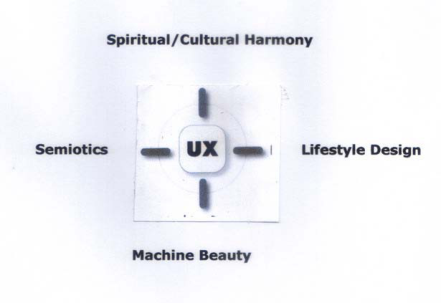
Figure 1: Four insights into aesthetics.
FOUR INSIGHTS INTO AESTHETICS The model: four insights into aesthetics should serve as a tool to guide discus- sions about a product’s aesthetic value, centered upon user experience. This example offers four insights into aesthetics as a matter of experience, to help drive the artistic imperative for industrial designers, whether in the classroom or in a client meeting (Barone, 1997). The model is based upon the writings of Ferdinand de Saussure (philosophy of language) semiotics; Gelernter’s (com- puter science) machine beauty; Dewey’s (philosophy) lifestyle design; and Gropius’ (architecture) spiritual/cultural harmony. Several product examples will be described to reinforce the four interpretations: products that convey functional elegance and that engender spiritual/cultural harmony.
SEMIOTICS: FERDINAND DE SAUSSURE Ferdinand de Saussure had considered language as a scientific and indepen- dent notion that could be separated from elements of culture or comprehen- sion. Saussure believed that words are embedded with semantic meaning of the word “chair” is deeply associated with the idea of sitting and the idea of the object that we sit on. A sign, by definition, should be universal and easy to understand (Saussure, 1995). Designer Shelley Evenson (Carnegie Mellon University) considered language as the strong connector between artifacts and people and discussed how art languages become a connector for how people experience products, services and systems in the world around them. The Interaction Designer shapes art directly through the creation of new visual form language. This semantic view of design recognizes the need for emotional and social connections in the human-made world and is formally grounded in the study of semiotics. A sign need not be a printed object, but instead can include the theoretical understanding of the process of significa- tion. By signifying something (or signing as a verb), humans can communicate meaning, and a sign itself is thought to carry some form of art. A sign can be a visual element—like a street sign—but can also be
Design and Art: An Important Contribution for the Design Studies 81
Figures 2 and 3: Georges Braque’s painting and Yves Saint Laurent’s cocktail dress.
Figures 4 and 5: The art of origami and student’s dress interpretation.
the way one uses his body language, or an object used to communicate to another.
EXAMPLES The 1965 Yves Saint Laurent’s cocktail dress (Fig. 3) was inspired by the artist Georges Braque’s painting: Birds on Blue, 1960 (Fig. 2). This design repre- sents Yves Saint Laurent’s fascination with art. It is a visual style of an artifact that communicates. The object is imbedded with more than just functional significance—recognizes the need for emotional and social connections in the human-made world. Another example, the pleated structure of the cloth of the student’s dress (Fig. 5) was inspired by the art of origami, (Fig. 4) (the origin of the paper art, Japan, 7th century).
MACHINE BEAUTY: DAVID GELERNTER The computer scientist David Gelernters witty argued essay, “machine beauty”, which he defines aesthetic as an inspired mating of simplicity and power. It is in a Bauhaus painting or chair. “Today most of us are willing to apprehend aesthetics wherever it occurs - in a museum or on a computer screen, in the words of a poem or the patterns of a fractal design” (Gelernter, 1998).
EXAMPLES Today poetic design is based on a plethora of complex criteria: human expe- rience, social behaviors, global, economic and political issues, physical and mental interaction, form, vision, and a rigorous understanding and desire for contemporary culture. The combinations of all these factors shape our objects; inform our forms; our physical space; visual culture; and our contem- porary human experience. This is the concept of art and every design should
82 Lobo
Figures 6 and 7: Henry Moore’s Sculptures and Karim Rashid’s Blobulous Chairs.
Figures 8 and 9: Klee’s Painting: Forest Witches, 1938 and the student Interpretation of Klee’s painting.
be completely concerned with an artistic style - it is after all a collective human need. The Karim Rashid’s Blobulous Chairs, 2008 (Fig. 7) were inspired by Henry Moore’s Oval Sculptures, 2005 (Fig. 6). In a project more clearly rela- ted to industrial design, the professors stress the importance of establishing cultural connections between design-related disciplines. This student project (Fig. 9) explored how visual art was used as sources of inspiration in the formulation of a concept.
LIFESTYLE DESIGN: JOHN DEWEY Dewey was especially concerned with recovering fine arts experiences, which feature a dynamic integration of thought, action, and emotion into a unif- ying whole, that he termed “an experience”. Dewey pursued what may be construed as experiential aesthetic —a harmonious balance of the maker’s intent and the perceiver’s expectations towards a meaningful consummation of movement of emotion from inception, carried through development, and ending with an artifact that lives in experience (Dewey, 1980).
EXAMPLES The Zaha Hadid’s Vortexx Chandelier, 2007 (Fig. 11) was inspired by Kazi- mir Malevich’s painting: Portrait of a Peasant Girl, 1912/1913 (Fig. 10). The Chandelier shows a seemingly infinite ribbon of fantastic light, its flo- wing form defined by continuously shifting colors. Hadid has shown her deep concern about how art and design should make collaboration to speak up about good metaphor. The following image (Fig. 13) establish compa- rison and contrast between the original painting of the master artist (Fig. 12) and the inspired three-dimensional metaphor of the student’s design project (Fig. 13).
Design and Art: An Important Contribution for the Design Studies 83
Figures 10 and 11: Kazimir Malevich’s painting and Zaha Hadid’s, Vortexx Chandelier.
Figures 12 and 13: Vincent van Gogh’s painting: The Large Plane Trees, 1889 and the students Interpretation of van Gogh’s painting.
SPIRITUAL/CULTURAL HARMONY: WALTER GROPIUS Finally, the fourth view takes a holistic look at the relationship between a user and her product and how that impacts personal beliefs, cultural values, and even a sense of “spirit”. This is drawn from Walter Gropius’ idea of a “scope of total architecture”. Gropius described his vision of design planning as “the art of coordinating human activities towards a cultural synthesis.” (Gropius, 1955) Therefore, Gropius’ approach sought to achieve balance, order, and unity within one’s life, collectively and personally. There is an internal movement that connects a person to something greater than herself, perhaps ideals that speak of an art synthesis.
EXAMPLES The Daniel Libeskind’s Freedom Tower, 2009/2010 (Fig. 15) concept is inten- ded to regenerate the devastated area of Ground Zero in New York City. This bold concept embodies patriotic ideals of nationalism as well as resurre- ction over tragedy. The height symbolizes this nation’s birth and prevalence over violent transgressions of this nation’s deepest values. In doing so, the startling design elevates the personal spirit, much like the Gothic cathedrals, 1356 (Fig. 14) while connecting to a collective need for healing. The Quadracci Pavilion, 2001 (Fig. 17) is a sculptural addition to the Milwaukee Art Museum, designed by Spanish architect Calatrava. This is a postmodern interpretation of a Gothic Cathedral, 13th Century with a central nave topped by a 90-foot-high glass roof. It symbolizes the conne- ction between perception and representation and the spatial relation between viewer and art. Another example, the ligthing project (Fig. 18) is an interpre- tation of Gothic cathedrals and reveals that students were clearly able to demonstrate how to establish a concept from the historical framework of architecture.
84 Lobo
Figures 14 and 15: Gothic Cathedral and Freedom Tower.
Figures 16, 17 and 18: Interior of Gothic Cathedral, Image of Quadracci Pavilion and the student’s project of lighting.
EDUCATION AND WORK This model should serve as a basis for fostering vital conversations about the aesthetic value of designing new products, services, and experiences. Conse- quently, beyond the philosophical metaphors, there are notable implications for both design education and practice. For the classroom, educators may use this set of insights to foster critical dialogues about a design, particularly its sensual, behavioral, and reflective qualities. By giving students the tools to shape a conversation about aesthe- tics, educators will be helping usher the aesthetic imperative in a variety of organizations. The model also provides points of reference for coherent deba- tes about features, branding, and the experiential quality, backing “trendy” buzzwords with substantive rhetoric.
CONCLUSION
Within design studies, fine arts continues to be one of the least-examined areas that deserve serious attention, and the research methods and inter- pretive techniques used by cultural studies can serve as appropriate models. Engagement with the discourses outside the discipline can only enrich the discourse within, providing us with better tools for understanding the extent of the impact design has on the everyday lives of people.
Finally, industrial designers and educators should be increasingly concer- ned with arts and other disciplines as the environment of human experience becomes rapidly shaped by digital, networked, multifunctional products that influence lifestyles, values, and cultures.
ACKNOWLEDGEMENT
I would like to express my thanks to Unidcom/IADE who have sponsored the research presented in this paper.
Design and Art: An Important Contribution for the Design Studies 85
REFERENCES
Barone, T. & Eisner, E. W. (1997). Arts –Based Educational Research, In R. M.
Jaeger (ed) Complementary Methods for Research in Education. Washington, pp. 73–116. Dewey, J., (1980). Art as Experience, 1o ed. NY: Perigee Books, pp. 85-87. Gelernter, D., (1998). Machine Beauty: Elegance and the Heart of Technology, NY: Basic Books, pp. 56–57. Gropius, W.,1955, Scope of Total Architecture, NY: Harper and Row, pp. 27–28. Hickman, Richard, (2008). Research in Art & Design Education, Chicago: Intellect
Books, pp. 15–23. Hirst, P.H., (1973). Literature and the Fine Arts as a Unique Form of Knowledge. In Cambridge Journal of Education 3(3), pp. 118–142. Jordan, Patrick, (2000). Designing Pleasurable Products, 1o ed. London: Taylor &
Francis, pp. 1118–119. Laurel, Brenda and Lunenfeld, P. (2003). Design Research: Methods and Perspectives, Cambridge: The MIT Press, ), pp. 185–196. Postrel, Virginia, (2003). The Substance of Style: How the Rise of Aesthetic Value Is
Remaking Commerce, Culture, and Consciousness, NY: Harper Collins, pp. 5–10. Saussure, F. (1995). Course in General Linguistics, 7o ed. Illinois: Open Court, pp. 65–74. Steers, J., (1988). Art and Design in the national curriculum, Journal of Art, and
Design Education, 7 (3), pp. 303–323.
LISTED IN THE AHFE DIGITAL BOOKSTORE CATALOGUE
Explore the complete digital volume
Human Factors in Communication of Design
Read this individual research paper free through the original publisher, or explore the full digital proceedings book.
ISBN 978-1-958651-25-4
Explore this ISBN in the AHFE Bookstore ↗Listed in the July 2026 bookstore catalogue; search by ISBN to confirm current availability · Digital book purchase optional