Zhuoyue Diao, Yueqi Liu, Pu Meng, Xin Meng, Liqun Zhang, Xiaodong Li (2022). Information Analogies Between Digital Communication and Communication of Design. In: Human Factors in Communication of Design. AHFE Open Access, vol. 49, pp. 108–116. https://doi.org/10.54941/ahfe1002043
Drawing on Shannon's information theory, this study begins with an analogy between the basic elements and processes of information communication in the fields of digital communication and design. By comparing the similarities and differences between the elements involved in the two communication processes and the improved approaches in the field of digital communication, we propose the use of Stigmergy to study the perception and behavior of information between groups of users in a virtual social environment and to explain the process of information communication in design. Formalizing this process can provide the model of information communication in design under the context of virtual socialization, and improve the efficiency of design information communication among a wide range of users to maximize the value of design.
Since Shannon developed the famous paper A Mathematical Theory of communication (Shannon, 1948), this theory revolutionized the field of com- munication by developing an effective method of encoding signals, which can efficiently transmit information across diverse noisy communication channels. In recent decades, information technology has reached a level of development that is beginning to make a powerful influence on the progress of civilization processes. First of all, it concerns digital communication pro- cesses, the old traditional forms of communication are gradually replaced by the new communication system. Then with a digital and evolutionary con- text, the same standards of efficient and effective communication apply to the transmission of information in the social systems of humans. Weaver, W suggested that information theory can be used not only for applications limited to the transmission of signals for communication but also as a theo- retical knowledge that provides a model for understanding the significance
Information Analogies Between Digital Communication and Communication of Design 109
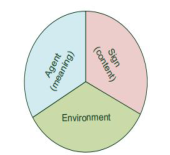
Figure 1: Core components of stigmergy. (Dipple A et al. 2014).
of the level of human communication and the recipients of the information affected(Weaver, W. 1949).
Design is also a form of communication in the social environment (Zheng P et al. 2021)Designers inject pre-determined information into the design sym- bol to make it meaningful by giving the form to design work, they are also in the process of coding. As the sender, designers expect the user, the recei- ver, to read their pre-determined information, decode it accurately, resonate with it and make a corresponding physiological or psychological behaviour. For example, visual information with intentional indicators at intersections will prompt people to make directional movements, and prominent links in web interfaces will prompt people to click with their mouse to gain new knowledge.
This study integrates aspects of digital communication and design, fields seldom connected, which could be facilitated by establishing information analogies between their principal processes. Analogies can also be drawn to the starting point, the endpoint, the vehicle and medium of communication in both domains, with the ultimate goal of improving the accuracy and efficie- ncy of communication. Based on the analogy between some aspects of the two domains and the current improved approach to the dissemination of digital communication, we approach the perception and behaviour of information among groups of users in the virtual social environment using Stigmergy, and evolving the agent, the sign to engage in stigmergic communication based on the abstract model of stigmergy (see Figure 1) . We believe that forma- lizing the process may bring us closer to finding principles of information dissemination in design. Such principles could be used both for guiding the construction of systems with the desired information and studying users’ beh- aviour. The use of stigmergic communication provides us with a universal framework that minimizes the influences of particular implementation.
INFORMATION IN DIGITAL COMMUNICATION Information
Before reviewing the specific information types relevant to these two fields, it is necessary to understand what information is. Much of the academic lite- rature on information use has emerged in recent years is thought to stem from Ackoff’s exploration of the relationship between dates, information, knowledge, intelligence and wisdom, which are now commonly referred to as the DIKW Model (Ackoff, R. L 1989). The hierarchical system clearly
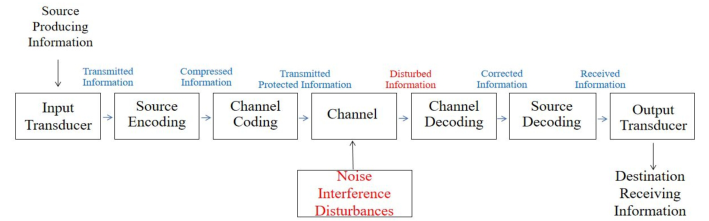
Figure 2: Process of digital communication.
summarizes that data is obtained from original observations and measure- ments, information is an existence independent of material and energy that containing processed data, and organizing date into valuable content, the application of information to action produces knowledge, wisdom implies implication and influence in the future (Targowski, A. 2005). In the field of communications, information is part of our daily life, it can be transmitted, stored, and processed. However, its value lies in the surprise effect it causes, it is more interesting because of the unpredictability (El Assad et al. 2020, p. 75).
Information Dissemination Process of Digital Communication People in a digitally interconnected society have increasingly high require- ments for information interaction, therefore the development of communica- tion systems takes on the responsibility of achieving efficient communication. The subject of digital communication includes the problem of transmitting information in digital form from the source that generates it to one or more destinations. That is to say, what is most important in the analysis and design of communication systems is the characteristics of the physical channel through which the information is transmitted. Figure 2 illustrates the basic components of the communication system and process.
The information in the digital communication system might be a human voice, music, a scene a file, or other possibilities (George R. Thoma. 2020). The first step in the transmission of the message is conversing it to an electrical signal accomplished by an input transducer, a general term which could be taken to mean, such as a microphone(for voice), a TV camera(for scenes). The design of these transducers belongs to communications engineering and will not be discussed here. We should focus on the process of sending the electrical signal from the input transducer to the output counterpart and can be converted into the approximate message.
The information source is usually coded using a binary sequence to repre- sent the source output (message) with a few binary digits as possible (El Assad et al. 2020, p. 251), thus little or no redundancy is created, and known as sou- rce encoding. To overcome the effects of noise and interference suffered by the signal in channel, some controlled redundancy needs to be introduced through the channel coding. The added redundancy is used to increase the
Information Analogies Between Digital Communication and Communication of Design 111
reliability of the received information as well as to improve the fidelity of the received signal, helping the receiver to decode the desired sequence of mes- sages. Information is propagated through a channel as a physical medium, which can be either wired, fiber optic, wireless microwave or atmosphere (arbitrary free space). The signal in the channel is subject to deterioration by various possible mechanisms, therefore needing to be delivered to the recipient by demodulator and decoder to minimize the distortion of the message.
Information Uncertainty in Digital Communication According to the process of information transmission in digital communica- tion, we can conclude that that process is in the face continuous elimination of randomness and uncertainty. In information theory, the information is assimilated into an event or a variable of random nature. Shannon used the term ‘information entropy’ as a mathematical measure of the ‘uncertainty’ (Shannon, 1948). If the system is complex and has many different kinds of possible occurrences, the information entropy is relatively high. If the system is simple and has few different possible occurrences, the information entropy is relatively low.
On the basis of information theory, all communication occurs in a noisy channel, and the system both predicts and quantifies the degree of freedom of choice, a communication system contains under the physical, biological, and social environment in which it has evolved and currently operates. Noisy communication channels require communication systems to exhibit more ste- reotypes and redundancies, or less degrees of freedom or choice, which result in a smaller amount of information being transmitted at each level of the organization, so that the receiver can accurately receive the signal from the sender (McCowan et al. 2002).
Methods of Improvement Therefore, to eliminate information uncertainty and make information tran- smission faster and more accurate, it is necessary to reduce the information entropy and increase the probability of information occurrence, and the most critical point is the channel, whose capacity determines the amount of infor- mation transmitted, while the noise in the channel affects the quality of information transmission, then there are usually three ways to improve it.
(1) Keeping expanding the channel to increase its capacity, which can accommodate more information flowing through it. (2) Eliminating as much noise as possible by increasing confinement. (3) Repeating the signals sent over and over again, adding redundancy where appropriate to improve the accuracy of the information.
INFORMATION IN DESIGN Extending the applicability of information theory beyond its engineering base into human communication in general is essentially based on the Sender- Message-Receiver (SMR) model (Shannon, Claude & Warren Weaver. 1949)
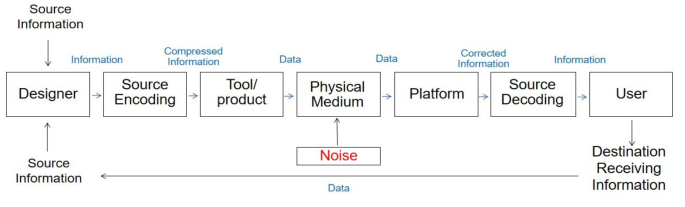
Figure 3: Process of design information communication.
of communication, first formulated by Shannon and Weaver. It models com- munication on a process in which a source encodes and transmits a message along a channel to be received and decoded at its destination.
Information Dissemination Process of Design It is well established from a variety of studies that communication can be defined as the transfer of information and information can be defined as something used to eliminate randomness and uncertainty. We therefore need to identify the stages in which communication occurs and determine the role and impact of these stages in the overall process so that each stage can be studied appropriately.
Information as an existence independent of matter and energy (C.-H. Lim et al. 1948), scholars in the field of design focus on the relationship that exists between data and knowledge, mining valuable information from user- generated data and transferring it to users (C.-H. Lim et al. 2018), managing the information generated by designers in the process of product and service development (C.-H. Lim et al. 2018), resulting in the creation of information modules (D. Opresnik and M. Taisch. 2015, pp. 174–184) and information systems, thus recording and updating input and output information for each module to propose updates and solutions (J. C. Aurich. 2006).
From the preceding paper, it is clear that digital communication demon- strates the linear process and focuses on how to ensure and improve the accuracy and efficiency of information dissemination. However, what makes design different from other fields is that the Closed-loop process is condu- cted among design and usage stage. The designer not only plays the role of the organizational agent that controls the centre of the model but also acts as the perceptible recipient of the information, the user will feedback to the desi- gner what he or she understands to be the meaning, then the designer uses this as a basis for adjustment, in this way, both parties achieve the desired effect of meaning dissemination. Figure 3 illustrates the basic components of information communication in design.
There is a communication system that aims to convey as faithful and reli- able messages as possible between sender and recipient, at any distance, with reasonable costs and the intention of a sender sending a communication is to affect the behavior of the receiver. Messages are information on entities and their routing requires the existence of a communication channel to convey
Information Analogies Between Digital Communication and Communication of Design 113
them (El Assad et al. 2020, p. 47). When diverse disciplines take on task of information design, they have confronted a situation where the user receives only a small part of the body of the message or produces information bias due to the communication environment in which they live, but the scholars react differently depending on their orientation.
Information Uncertainty in Design Because of the mathematical nature of information entropy, measures from information theory provide a common currency for examining and com- paring the potential information contained in different signals and signal repertoires within and across individuals and groups(Bradbury, J. 1998). Based on information entropy, Wu et al. (2016, pp. 583–593) defined design entropy as a description of the disorder found in design objects and proposed a design entropy model, which is a measurement of the degree of informa- tion chaos in a user interface. Gong et al. discussed that design entropy could be a measure of information design in Smart product-service systems(Smart PSS) for describing its certainty degree (Cong J et al. 2020). In the design phase, a new plan needs to be proposed, and the design entropy of the plan need to be reduced as possible. Designers should predict and list informa- tion, which will be collected in future stages, and design its conversion plan and converted information. In usage stage, collecting new information conti- nuously makes iterative design entropy increase, therefore designers need to convert the information in iterative stage to reduce the design entropy.
While most scholars in the field of design have focused on reducing infor- mation entropy in the design process to make users can accurately decode the information encoded by designers, few have focused on how to elimi- nate uncertainty in the communication of design information to improve correctness and efficiency.
A Model of Improving Design Information Communication The way users communicate with design information is gradually shifting from physical interaction to virtual social interaction under the background of virtual socialization. Like most people who buy a product by first search- ing for information such as appearance pictures and videos of its use, reviews of the product by other users, and unconsciously forming their own perce- ptions. This process is essentially a social interaction, where a consensus is formed between the sender and the receiver with the help of information. Lasswell does a model ‘Who says what in which channel to whom with what effect’(Lasswell, H.D. 1948) the implication of which is to identify the sta- ges of communication, each of which may be properly studied to specify the perception and behaviour of each recipient throughout the process.
In the process of digital communication, the capacity of the channel deter- mines the amount of information transmitted, while the noise in the channel affects the quality of information transmission, and in the design of the information dissemination process, the environment of the social platform corresponds to the channel. We propose the perception and behaviour of information among groups of users in the virtual social environment using
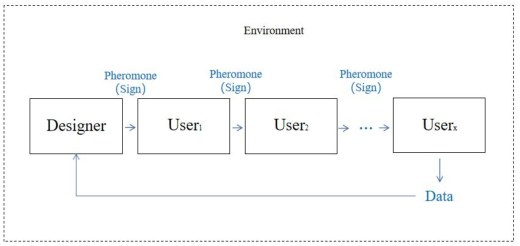
Figure 4: Model of information communication in design.
Stigmergy to trigger group effects and increasing the number of users. Sti- gmergy was originally used to discuss the insect swarm-behaviour describing a communication mechanism based on pheromones which trigger responses among the swarm (Dipple, A. 2014). Pierre-Paul Grasse’ (Grasse’. 1959) first described this method of indirect communication using mediated signals, an individual’s behaviour and their traces left in the environment affect sub- sequent perception and behaviour of themselves, and of other individuals. Agent interacting with the environment and the sign, which facilitates the construction of scalable systems that introduce communication directly into the group. We evolving the designer as an agent, information generated in the design communication process as signs to engage in stigmergic communica- tion to starting from the agent, with each subsequent senders delivering useful pheromones for better perception and behaviour, thus accelerating the rate of communication of useful information in the virtual social environment(see Figure 4).
In the case of product design, for example, the designer who formalizes information and then promotes it on social platforms are in fact leaving pheromones for the user, and when the user successfully perceives the infor- mation, it stimulates the user to generate behaviour, like browsing manual, asking questions, expressing reviews, making purchases, etc. Pheromones are then visualized on platforms to stimulate other users to perceive the infor- mation and act. As this continues, the accumulation of information enhances the attractiveness of the product through the diffusing pheromone emitted. A variety of users are drawn to one or more signs (text, images, videos, etc.) of the product that they find interesting. As more users prefer a particular information, which leads to more users focusing on the product. Stigmergy leverages the various forms of pheromones delivering from the process to quickly expand the user population and maximise the value of design. While this process is a positive feedback process, the accumulation of information left by the user is balanced by negative feedback as illustrated with itera- tive design: when these pheromones from users are passed on again to the designer, the designer perceives it and acts, then modifies and improves the design plan. Stigmergy reduces design entropy throughout the design process, eliminating more information uncertainty, allowing users to receive accurate information from the receiver and increasing the value of the design.
Information Analogies Between Digital Communication and Communication of Design 115
Table 1. Analogy of basic elements in the two domains.
Table available in the original PDF paper.
Digital Communication Design Starting Point Input Transducer Designer/User Endpoint Output Transducer User/Design Forms of Communication Electrical Signal Sign Media of Communication wired, fiber optic, wireless microwave or atmosphere
Physical Medium/Virtual Medium
CONCLUSION
Information analogies have been established between digital communication and design. Table 1 summarizes the result of the analogy of basic elements in the two domains. The ultimate goal in both domains is the accurate and fast communication of information from the sender to the receiver. While some noise and interference is encountered in the process, we need to adopt some methods to reduce the uncertainty of the information.
The stigmergy approach to the dissemination of design information trig- gers the perception and behaviour of each recipient, creating a group effect where the information left by each person increases the concentration of phe- romones in the environment and the probability of each user being able to capture the information becomes greater, thus accelerating the dissemination of design information. This is a positive feedback process. When the num- ber of users reaches a certain level, the feedback accumulated by the users is passed on again to the designer through a negative feedback process, and the designer reacts to the information and modifies the solution. This study suggests a new direction for future thinking on the topic of using perceptions and behaviors between individuals and groups to explore the communica- tion of information, but the approach should continue to be explored using the mathematical nature of information theory, including noise and inter- ference in the dissemination process, and whether it is appropriate to add redundancy.
REFERENCES
Ackhoff, R. L. (1989). From Data to Wisdom. Journal of applied systems analysis, 16, 3–9. Aurich, J. C., Fuchs, C., & Wagenknecht, C. (2006). Life cycle oriented design
of technical Product-Service Systems. Journal of Cleaner Production, 14(17), 480–1494. Bradbury, J. W., Vehrencamp, S. L., & Vehrencamp, S. L. (1998). Principles of animal communication. Sinauer Associates. Cong, J., Chen, C. H., & Zheng, P. (2020). Design Entropy Theory: A New Design
Methodology for Smart PSS Development. Advanced Engineering Informatics, 45. Dipple, A., Raymond, K., & Docherty, M. (2014). General theory of stigmergy: Modelling stigma semantics. Cognitive Systems Research, 31-32(4), 61–92. El Assad, S., & Barba, D. (2020). Digital communications 1 :Newark. ISTE : Wiley
& Sons.
Grassé, P. (1959). La reconstruction du nid et les coordinations interindividuelles chez. Bellicositermes natalensis et Cubitermes sp., La theorie de la stigmergie: Essai d’interpretation du comportement des termites constructeurs. Insectes Sociaux, 6(1), 41–80. Lasswell, H. D. (1960). ‘The Structure and Function of Communication in Society
(1948)’. Lim, Chiehyeon, Kim, Ki-Hun, Min-Jun, Heo, Jun-Yeon, Kwang-Jae, Maglio, & Paul. (2018). From data to value: A nine-factor framework for data-based value creation in information-intensive services. International journal of information management, 39(Apr.), 121–135. Lim, C. H., Kim, M. J., Heo, J. Y., & Kim, K. J. (2018). Design of informatics-
based services in manufacturing industries: case studies using large vehicle-related databases. Journal of Intelligent Manufacturing, 1–12. McCowan, Brenda, Doyle, Laurence, R., Hanser, Sean, & F. (2002). Using Information Theory to Assess the Diversity, Complexity, and Development of Communi- cative Repertories. Journal of Comparative Psychology, 116(2), 166–166. Opresnik, D., & Taisch, M. (2015). The value of Big Data in servitization. Internati-
onal Journal of Production Economics, 165, 174–184. Rapoport, A. (1954). Recent Contributions to the Mathematical Theory of Communication (vol 10, pg 261, 1953). Etc.; a Review of General Semantics, 11(3), 240–240. Shannon, C. (1948). A mathematical theory of communication Bell Syst. Shannon, C. E., Weaver, W., Blahut, R. E., & Hajek, B. (1949). The mathematical
theory of communications. Targowski, A. (2005). From Data to Wisdom. Dialogue & Universalism, 15(5), 55–71. Thoma, G. R. (1981). Transmission of information: An overview. Journal of the
American Society for Information Science, 32(2), 131–140. Weiner, N. (1948). Cybernetics, or control and communication in the animals and the machine. Wimmer, W. (2010). Analysing communication configuration in a process control
system. WO. Wu, L., Li, J., & Lei, T. (2016). Design Entropy: A New Approach for Evaluating User Experience in User Interface Design. Advances in Ergonomics in Design. Zheng, P., Chen, C. H., & Wang, Z. (2021). Design entropy theory. Smart Product-
Service Systems.
LISTED IN THE AHFE DIGITAL BOOKSTORE CATALOGUE
Explore the complete digital volume
Human Factors in Communication of Design
Read this individual research paper free through the original publisher, or explore the full digital proceedings book.
ISBN 978-1-958651-25-4
Explore this ISBN in the AHFE Bookstore ↗Listed in the July 2026 bookstore catalogue; search by ISBN to confirm current availability · Digital book purchase optional