Rui Sun, Chunrong Liu (2022). Factors Influencing the Elderly’s Acceptance of Online Health Education Courses in Chronic Disease Based on DEMATEL Method. In: Human Factors in Aging and Special Needs. AHFE Open Access, vol. 38, pp. 118–126. https://doi.org/10.54941/ahfe1001671
Online health education courses for chronic diseases are an important tool for the prevention of aging diseases. Analyzing the factors influencing the acceptance of the online courses by the elderly will help improve the design of the courses and make the elderly more willing to use this kind of health education courses.This study takes 60-75-year-old Chinese urban elderly as the research object, and collects relevant influencing factors through literature research. These factors are extracted, filtered and organized at three levels: visceral level, behavioral level and reflective level, resulting in 11 factors that influence the elderly’s acceptance of online education courses on chronic diseases. The Decision-Making Trial and Evaluation Laboratory (DEMATEL) methodology was used in the study for user research and quantitative analysis.The results show that: (1) "subjective motivation", "technical acceptance" and "difficulty of operation" are the key factors affecting the acceptance of online chronic disease health education courses by the elderly. (2) "course price", "social support" and "course duration" are factors that have a strong influence on other factors.This research provides new perspectives and positive suggestions for the development of online health education courses for chronic diseases in the context of an aging society.
The aging process has been accelerating in recent years, and with the innova- tion and progress of industrialization, modernization, science and technology, a new type of aging society has been formed. We need to bring the whole society to help improve the quality of life of the elderly.
The healthy life span of the elderly can be extended by developing good lifestyle habits and preventing diseases. It can not only reduce the burden of social security expenses, but also an important indicator to determine the happiness index of the elderly. The survey shows that the prevalence of hyper- tension, diabetes, and dyslipidemia in China is increasing year by year. The frequency of appearance of health science content for the elderly is positively correlated with the prevalence of diseases (Wu et al. 2017). After giving health science popularization, it can increase the awareness rate of patients about
Factors Influencing the Elderly’s Acceptance of Online Health Education Courses 119
the knowledge related to chronic diseases in the elderly, thereby reducing the occurrence of health-threatening behaviors.
The existing educational resources for the elderly cannot meet the huge demand for geriatric education. The rapid development of the Internet makes online courses an important way to meet the needs of senior education.
First, online health education can play a role in helping the elderly improve their disease problems. Researchers (Yang and Li, 2020) found that online health education on mobile Internet can significantly improve the sleep qua- lity of maintenance hemodialysis patients. Research (Kaiser et al. 2020) has shown that one of the most effective strategies to improve outcomes and reduce costs for patients with ESRD (End-Stage Renal Disease) is to pro- vide multidisciplinary care and education to those at high risk of early CKD (Chronic Kidney Disease). The use of technology can provide more scalable interventions with lower cost and wider impact.
Different from younger people, there is a decline in cognitive ability in the elderly. Some scholars (Lunsford et al. 2017) have discussed the online education model of geriatric science, and geriatric medicine education deve- loped using the palliative care framework can help them address the needs of the elderly in terms of disease and symptom management, communication of nursing goals, and supportive care. Using a mixed methods study, (Fink and Beck, 2013) developed and evaluated an online program to improve older adults’ skills in identifying high-quality web-based health information. Positive feedback on improved health search, e-health literacy and health results.
As the theory of lifelong aging education and active aging has become the dominant theory of aging education, whether online courses can interpret the theory of lifelong aging education and active aging directly affects the healthy development of elderly education. Therefore, this study aimed at the elderly aged 60–75 to understand the willingness of the elderly to participate in the online chronic disease health course and its influencing factors.
PREPARATION In the determination of the factors influencing the acceptance of the online chronic disease health education courses by the elderly, the methods of lite- rature survey and induction were mainly used. The first step is to refer to the factors that affect the use of online health information of the elderly, and expand from the subjective and objective dimensions. The basic status of the subject and the classification of the skills used (Liu et al. 2021). In the second step, due to the physical and psychological changes caused by the cognitive decline of the elderly, we extracted and filtered the factors according to the three characteristic levels of human nature explained in Norman’s book “Emotional Design”, that is, visceral level, behavioral level, and reflective level, and summarized 11 influencing factors.
Visceral Level (1) Factor 1 - Course Interface At present, the elements of the online course interface are mainly text, graphics, images, colors, icons, buttons, navigation,
120 Sun and Liu
etc. There have been researches on aging adaptation based on web and mobile interfaces before, and some design guidelines have been put forward, such as, the color matching of the interface should be as simple and elegant as possible, and do not use too many bright colors (Wang et al. 2013).
(2) Factor 2 - Course Price The current online courses are divided into two types: paid and free according to the different producers. Most of the free and convenient services are offered to hospitals and communities, and the paid courses are offered to colleges and entrepreneurship institutions for the elderly. Many entrepreneurs in the field of middle-aged and elderly edu- cation have said that the habit of paying for knowledge of elderly users is accelerating.
(3) Factor 3 - Information Quality The reliability and validity of course information, and whether it can affect personal cognition, determine whether the online health education courses customized for the elderly can signifi- cantly improve their medical nursing knowledge. The medical knowledge, personal health guidance and other related help provided by the course need to be true and accurate, so that the elderly can correctly understand and operate in the process of learning and practice (Freund et al. 2017).
Behavioral Level (1) Factor 4 - Difficulty of Operation The good interactivity of mobile phone applications can not only bring the fun of smooth use, but also increase the sense of achievement of the elderly, which is more related to the learning effect, and brings confidence to the elderly users in use. In order to achieve a better interaction effect, we can start from three directions: one is to reduce the difficulty of operation for the elderly, the second is to provide auxiliary functions, and the third is to strengthen feedback (He et al. 2020).
(2) Factor 5 - Technical Acceptance Ability The technology acceptance model proposes two main determinants: perceived usefulness and perceived ease of use. Reflected in older adults taking online courses, perceived useful- ness and ease of use were positively correlated with older adults’ attitudes toward smartphone use.
(3) Factor 6 - Subjective Motivation Subjective motivation refers to whe- ther the elderly have the will to overcome their inherent thinking and learn new things; in terms of willpower, whether they have the mentality and effort to face aging. With the increase of age, changes in physical conditions and changes in family structure, as well as the influence of values, ethics, habits and other aspects brought by social development, the elderly will inevitably think that their energy and ability have declined sharply, and gradually Loss of the spirit and vitality of the past, loss of passion for life, and then a sense of powerlessness or uselessness (Zhao, 2014).
(4) Factor 7 - Mobile Phone Using Experience For users who have been using older mobile phones, directly starting online learning will face grea- ter barriers to use. Compared with young people who actively explore the online world and are proficient in various network applications and functi- ons, the number and types of mobile phone applications used by the elderly are relatively limited(Jiang et al. 2021), usually only about 3-7 .
Factors Influencing the Elderly’s Acceptance of Online Health Education Courses 121
(5) Factor 8 - Course Duration Whether an online course can keep older students focused is related to the length of the course. The concentration when using electronic products is different from that in offline courses, and it is easier to be distracted and fatigued when using electronic products. The results of the current survey of older adult classrooms (Zhang et al. 2017) were conducted offline, and the percentage of participants who were able to pay attention to the class for 30-60 minutes was 32. 7%, and the percentage of those who were able to pay attention to the class for more than 60 minutes was 62.1%, which is a very impressive figure.
Reflective Level (1) Factor 9 - Lifestyle The physical health of the elderly and their relati- ves and friends, and whether they practice a healthy lifestyle will affect the elderly’s interest in the course.
(2) Factor 10 - Companionship Studies have shown that establishing and maintaining various social relationships is highly correlated with the ability of older adults to maintain the ability to maintain healthy ageing. Whether the course can provide remote guidance will affect the quality of the course, and it is also a way to reduce the gap between online and offline interacti- vity. Communication with real people will make the elderly more likely to develop a sense of intimacy and trust. The use of group activities will cre- ate a better learning atmosphere and reduce the boredom and loneliness of learning.
(3) Factor 11 - Social Support Social support is an environment-related factor. According to the viewpoint of social support theory, the stronger the social support network a person has, the better able to cope with various challenges from the environment.
METHODOLOGY
DEMATEL Method Decision-making Trial and Evaluation Laboratory(DEMATEL) was deve- loped in the 1970s to analyze complex socioeconomic system problems. DEMATEL can analyze the causal relationship between complex social factors and evaluate the key factors in the system (Sun et al. 2017). Scholars apply DEMATEL to various fields to solve complex problems.
DEMATEL Questionnaire First, the questionnaire uses scales to assess 11 factors. Four levels of impact are set: no impact (0 point), slight impact (1 points), comparative impact (2 points), very impact (3 points). The collection method of this questionnaire survey data is a combination of online and offline with interview, and the interviewees are the elderly aged 60–75. Before the interview, communica- tion was conducted to confirm the intention of participants. In order to take care of the experience of the elderly and allow the interviewees to relax and think, we first trained several interviewers to conduct interviews with the
elderly in their own households. The duration of each interview is control- led to be no more than one hour to ensure that the elderly can concentrate. The questionnaires were conducted from May 2021, and a total of 20 valid questionnaires have been received.
DEMATEL Operations By processing and averaging 20 valid data, the direct relationship matrix of the interaction of 11 main factors is obtained, as shown in Table 1.
The direct/indirect influence matrix is calculated by the calculation sof- tware, and the results are shown in Table 2. The threshold is taken as the quartile of 0.481, which is the threshold for measuring the interaction strength between factors. There are no factors to be removed.
Causality values were calculated as shown in Table 3. The value of D+R indicates the degree of its influence on other factors, and the value of D-R indicates the degree of influence by other factors.
Factors Influencing the Elderly’s Acceptance of Online Health Education Courses 123
Table 3. Prominence and relation values.
Table available in the original PDF paper.
D+R D-R D+R D-R 9.197 -0.007 F1 Course Interface 9.712 0.844 F7 Mobile Phone Using Experience
Table 4. The centrality (D+R) values are ranked as the top three and last three factors.
Table available in the original PDF paper.
Top three (D+R) Last three (D+R) F6 Subjective Motivation F9 Lifestyle F5 Technical Acceptance F8 Course Duration F4 Difficulty of Operation F11 Social Support
Table 5. The relation (D-R) value is ranked as the top three and the last three factors.
Table available in the original PDF paper.
Top three (D-R) Last three (D-R) F2 Course Price F4 Difficulty of Operation F11 Social Support F5 Technical Acceptance F8 Course Duration F6 Subjective Motivation
DISCUSSION
The Centrality and Relation Indexes The analysis showed that at the time of completion of this study, factor 6 (subjective motivation) was still the most important decision-making factor in whether or not the elderly chose to take online courses. Factors directly affect the consideration of other factors. Because of the use of mobile phones as a curriculum tool, factor 5 (technical acceptance) and factor 4 (difficulty of operation) also strongly influence whether the elderly are willing to accept online education.
Among the potential influencing factors, those that directly affect other evaluation factors include the course composition itself including factor 2 (course price) and factor 8 (course duration), which are mainly references when the elderly choose different courses. At the same time, from factor 11 (social support), it can be seen that the social promotion of online chro- nic disease health education courses not only affects the subjective wishes of the elderly, but also affects the quality of the course itself. Government community hospitals and other units should do a good job of publicity and investment, and assume the responsibility of helping the elderly live a healthy life.
124 Sun and Liu
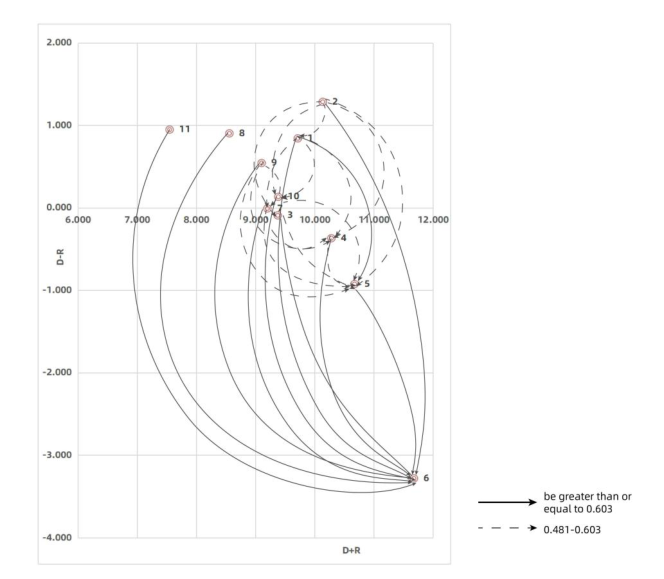
Figure 1: Cause and effect diagram of DEMATEL.
Analysis of Causal Diagram In a cause-and-effect diagram, the vector line indicates the direction of influ- ence of one factor on another factor pointed to, the solid line indicates a greater degree of influence, and the dashed line indicates a weaker degree of influence. In order to intuitively express the main causal relationship betw- een various factors, the values of D+R and D-R are used as the coordinate axes to establish quadrants, and the causal relationship diagram of 11 main influencing factors is drawn (Figure1). Only influence values above 0.481 (threshold: quartile) are plotted. When the influence value of a factor is gre- ater than 0.603 (threshold: one-third digit), the solid line in the figure shows a strong influence relationship, and the dotted line shows a weak influence relationship.
According to the causality diagram, factors 4 (difficulty of operation), 5 (technical acceptance), and 6 (subjective motivation) were influenced by other evaluation factors. All factors except factor 6 had a strong effect on factor 6.. This shows that factor 6 (subjective motivation) and other factors have a great influence. It can be considered that the subjective motivation of the elderly is the ultimate goal of promoting the elderly to accept online chro- nic disease health courses. Here we believe that “subjective motivation”is the main problem that the course must solve. We can strengthen the construction of the course from the aspects of factor 1 (course interface), factor 2 (course
Factors Influencing the Elderly’s Acceptance of Online Health Education Courses 125
price), and factor 4 (difficulty of operation), through multi-dimensional solu- tions. The program can strengthen the willingness of the elderly to learn new things and pay attention to health knowledge.
Factor 1 (course interface) has a strong influence on factor 5 (technological acceptance). If you want to improve the elderly to join online courses instead of offline courses, the aging-appropriate design of the course interface is very important.
Factor 2 (course price) affects 5 factors at the same time, which shows that knowledge payment is still an important factor to be measured for the elderly, and also affects factor 3 (information quality), that is, the quality of course content production, the higher the information quality also means more cost input.
CONCLUSION
This study derived and defined 11 main influencing factors through literature research and user interviews. And by using the DEMATEL method and mani- pulation tools, three key factors affecting the elderly were extracted from these main factors, including (1) subjective motivation; (2) technical acce- ptability; (3) difficulty of operation. In addition, three factors were found to have a strong influence on other factors, namely (1) course price; (2) social support; (3) course duration.
The main factors affecting acceptance are behavioral factors. The results of this study show that the behavioral ability and willingness of the elderly are the most critical. The most important thing to promote and build online courses is to improve the positive will of the elderly. We can start by reducing the technological barriers for the elderly, and on the other hand, we can use community hospitals to promote the importance of chronic disease education courses. According to the cause and effect diagram, the construction of online chronic disease health education courses should take care of the experience of the elderly, try to reduce consumption and achieve high quality, help the elderly to improve their willingness to learn, and jointly create a healthy old- age life.
REFERENCES
Fink, A., Beck, J., (2013). Developing and Evaluating a Website to Guide Older Adults in Their Health Information Searches. Journal of Applied Gerontology, 34(5), pp. 633–651. Freund, O., Reychav, I., McHaney, R., et al., (2017). The ability of older adults
to use customized online medical databases to improve their health-related knowledge. International Journal of Medical Informatics, 102, pp. 1–11. He, C., Tan X., (2020). A review of research on digital reading interface design for the elderly under the background of smart old age care. Packaging Engineering, 41(20), pp. 57–68. Jiang, Q., Liu, R., Qiu, Q., (2021). The new characteristics of the elderly’s media life
under the empowerment of technology——Taking the use of smart phones by the elderly as an example. Journalism and Writing, (03), pp. 5–13.
126 Sun and Liu
Kaiser, P., Pipitone, O., Franklin, A. et al., (2020). A Virtual Multidisciplinary Care Program for Management of Advanced Chronic Kidney Disease: Matched Cohort Study. Journal of Medical Internet Research, 22(2), p.e17194. Liu, C., Jia, X., Lin, Y., (2021). Research on the use behavior of online health infor-
mation of foreign elderly users: theoretical basis, influencing factors and future enlightenment. Intelligence Magazine, 40(06), pp. 178–186. Lunsford, B., Posey, L., (2017). Geriatric education utilizing a palliative care framework. Gerontology & Geriatrics Education, 39(2), pp. 183–192. Sun, Y., Han W., Duan W., (2017). Review on research progress of DEMATEL
algorithm for complex systems. Kongzhi yu Juece/Control and Decision, 32(03), pp. 385–392. Wang, L. et al., (2013). Design guidelines for information technology products for elderly users in China. Ergonomics, 19(03), pp. 82–85. Wu, Y., Xing, Y. et al.,(2017). Literature Analysis of 20 Years of Health Science
Popularization Research in China. Popular Science Research, 12(3), pp. 1–7. Yang, P.,Li D.,(2020). Effects of online health education on sleep quality in maintenance hemodialysis patients. Chinese Geriatric Medicine, 18(05), pp. 147–149. Zhang, B., Zou, L., Liu, J., (2017). Investigation and Research on the Learning Psych-
ological Characteristics of the Elderly in the Urban Community——Taking the Elderly in the Community of Jinan as an Example. Journal of Shandong Radio and Television University, (04), pp. 18–22. Zhao, S., (2014). A Brief Discussion on the Positive Spiritual Pension of the Elderly. Journal of Social Sciences of Shanxi Higher Education Institutions, 26(01), pp. 40–41.
LISTED IN THE AHFE DIGITAL BOOKSTORE CATALOGUE
Explore the complete digital volume
Human Factors in Aging and Special Needs
Read this individual research paper free through the original publisher, or explore the full digital proceedings book.
ISBN 978-1-958651-14-8
Explore this ISBN in the AHFE Bookstore ↗Listed in the July 2026 bookstore catalogue; search by ISBN to confirm current availability · Digital book purchase optional