Yuhan Li, Danhua Zhao (2022). Apology Strategies to Reduce Electric Vehicle User Frustration. In: Ergonomics In Design. AHFE Open Access, vol. 47, pp. 503–509. https://doi.org/10.54941/ahfe1001976
The probability of abnormal charging termination due to charging pile faults is high. Drivers often experience frustration due to charging failure, which affects their long-term willingness to drive EVs. Existing studies have demonstrated apology strategy as a potential method to reduce frustration. However, there are no studies on apology strategy in the charging abnormal termination scene. A Wizard-of-OZ experiment was conducted to investigate the effects of in-car robotic agents' apology feedback and facial expression on users' emotion. The results showed that the participants were less frustrated and more satisfied when robotic agents apologized. Compared with "neutral" expression, the application of "shyness", "embarrassment" and "sadness" expression could significantly alleviate frustration, with apology feedback combining best with "shyness". The results of this study can provide innovative ideas for improving the charging experience of EV users.
Frustration is the feeling that may occur when being impeded in attaining goals. Jiang et al. (2021) analyzed the data of a charging station for one year and found that the abnormal charging termination caused by charging pile faults accounted for as much as 26%. Abnormal charging termina- tion hinders users’ travel goals and is a high-frequency scene of frustration. In addition, the negative emotion also comes from relative deprivation (Stouffer et al., 1949) caused by the comparison with the fuel car. Relative deprivation could produce anger, resentment, and other negative emotions. Frustration would damage the user experience and reduce long-term willin- gness to drive EVs. Previous studies focused on the detection and maintenance of charging pile faults (Gao, 2019; Jing, 2018). However, it is impossible to eliminate all faults. It is necessary to find other solutions to reduce fru- stration. Apology strategy is an effective way to reduce frustration in HCI (Dechmukh, 2014; S. Alpers, 2020; Park, 2012; Ge, 2018). However, apolo- gizer and apology attribution could affect users’ feelings in different scenes. In this study, the in-vehicle emerging intelligent unit-robotic agent is the apologi- zer, and the cause of abnormal charging termination is external - charging pile
faults. A Wizard-of-OZ experiment was conducted to investigate the effects of robotic agents’ apology strategy from two aspects of the words and facial expression.
RELATED WORKS Apology in HCI
In interpersonal communication, an apology is a display of regret which can mitigate anger and restore relationships. Apologies can reduce frustra- tion and improve user satisfaction in HCI. The apology strategy has been used in various scenes. Deshmukh and Aylett (2014) let the robots apologize to alleviate users’ disappointment when the robots could not move due to charging. S. Alpers et al. (2020) found that participants were more trusting of autopilot vehicles when the virtual agent apologized for a sudden stop. Park et al. (2012) revealed that the apologetic system reduced the frustration in an information retrieval task. Ge et al. (2019) found that participants were more satisfied when smart speakers apologized in error scenes. Therefore, we hypothesized that the apology of in-car robotic agents could reduce frustra- tion and improve satisfaction in the charging abnormal termination scene.
Facial Expression When Apologizing Psychologist Albert found that 55% of the information was conveyed through facial expressions and movements when people expressed feelings. In human-robot interaction, it is necessary to consider the influence of the robot’s facial expressions when they apologize to the users. In previous stu- dies, robots often made apologies with sad faces. For example, when a robot fails to recognize instruction (You et al., 2020), fails to cooperate with a human (Buchholz et al., 2017), or operates incorrectly (Hamacher et al., 2016), it shows a “sad” expression when apologizing. However, apologizers always express different emotions according to the scenes in interpersonal communication.
Although there are no studies on the effects of facial expressions when robots apologize in human-robot interaction, there are studies on the appli- cation of emoticons in the apology presented by textual formats in human- computer interaction. Tzeng, J. Y. (2004) found that adding “sadness” emo- ticons to apology text improved the attractiveness of the interface, but could not reduce negative emotion. Chen et al. (2021) found that the application of emoticons in the error feedback of smart TV voice assistants could significan- tly reduce negative emotion. The emoticons included “happiness”, “shyness” and “embarrassment”. Ketron et al. (2020) concluded that “sadness” emo- ticons were harmful when the provider was not to blame but could improve repatronage intentions when the provider was at fault. And “happiness” emoticons had no benefit to repatronage intentions. Summarizing previous studies, researchers conclude that when the electronic equipment apologizes, the effects of emoticons are not uniform. This experiment aims to investigate the effects of robotic agents’ different expressions on users’ emotion when agents apologize.
Apology Strategies to Reduce Electric Vehicle User Frustration 505
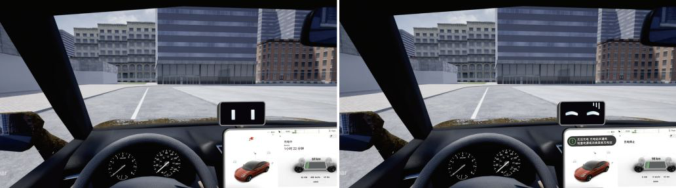
Figure 1: The interface in the driving simulator.
METHOD AND MATERIAL Participant
Twenty participants (9 females and 11 males) were recruited, and their ages ranged from 22 to 30 years old (M = 23.8, SD = 1.75). All participants had between one and three years of driving experience. Four of them had driving experience in electric vehicles, and all of them had lots of knowledge of electric vehicles.
Experiment Design A Wizard-of-OZ experiment was conducted. Participants simulated driving in a driving simulator, simulated charging by plugging in and out of sockets, and simulated paying in a tablet computer.
Based on the two sources of frustration and apology model (Blum-Kulka & Olshtain, 1984), the apology wording is “I’m sorry. Charging pile fault leads to abnormal charging termination. I apologize for the inconvenience caused by the power supplement mode.” In this study, the in-car robotic agent has “neutral”, “happiness”, “shyness”, “embarrassment” and “sadness” five categories of expressions when it apologizes. We found that each desi- gned expression’s correct emotion recognition rate reached more than 85% through a questionnaire survey. The feedback is listed below (see Figure 1 and Table 1).
After each trial, participants filled in a questionnaire that included three aspects with a seven-point Likert scale: pleasure, arousal, and satisfaction. The degrees of pleasure and arousal can reflect affective states. Satisfaction is an important reason for users’ preference (Hong, 2008) and an important indicator of long-term willingness to use EVs.
Procedure When the experiment started, researchers told participants that “You made an appointment with your friends to meet in a theme park at 10 a.m. you drive your electric car from Hunan University at 8:00 a.m., but you may not be able to reach your destination due to the low battery. You plan to spend an hour charging on the way.” After arriving at the charging station, parti- cipants first selected the charging pile’s serial number. The participants were told that “Your choice would determine the outcome of the charging. Six of the twelve charging piles can be successfully charged”. Each participant
506 Li and Zhao
Table 1. Feedback of the in-car robotic agent when EV charging stops abnormally.
Table available in the original PDF paper.
Apology wording
Facial expressions
Abnormal charging termination.
(neutral)
(neutral)
I’m sorry. Charging pile fault leads to abnormal charging termination. I apologize for the inconvenience caused by the power supplement mode.
(sadness)
I’m sorry. Charging pile fault leads to abnormal charging termination. I apologize for the inconvenience caused by the power supplement mode.
(shyness)
I’m sorry. Charging pile fault leads to abnormal charging termination. I apologize for the inconvenience caused by the power supplement mode.
(happiness)
I’m sorry. Charging pile fault leads to abnormal charging termination. I apologize for the inconvenience caused by the power supplement mode.
(embarrassment)
I’m sorry. Charging pile fault leads to abnormal charging termination. I apologize for the inconvenience caused by the power supplement mode.
experienced ten trials, and six of them would induce abnormal charging ter- mination, which the researchers manipulated. After each trial, participants filled in a questionnaire and then had a break for one minute.
RESULTS
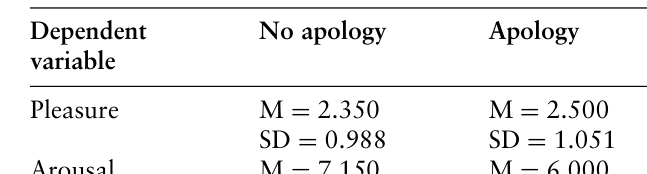
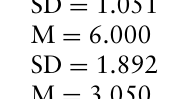
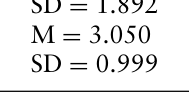
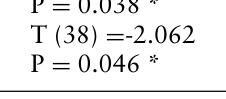
Apology Wording The researchers conducted independent samples T-test on the experimental data of the “apology & neutral expression” group and “non-apology & neu- tral expression” group. The results are shown in Table 2. When the robotic agent apologized, participants’ arousal was lower and satisfaction was higher, with a significant difference. There were no significant differences in pleasure. Since the average score of pleasure was less than 5, the overall mood tended to be unpleasant. That indicated that apology could alleviate frustration by reducing arousal. P7(participant #7) said that the robotic agent was obliga- ted to tell her the bad news, and it was good that the agent could provide emotional compensation. Thus, the hypothesis was supported.
Apology Strategies to Reduce Electric Vehicle User Frustration 507
Table 2. Results of independent samples T-test.
Table available in the original PDF paper.
No apology Apology T-test
Equation reproduced from the original PDF.Equation reproduced from the original PDF.Equation reproduced from the original PDF.Equation reproduced from the original PDF.Equation reproduced from the original PDF.Equation reproduced from the original PDF.
Note: *stands for P < 0.05.
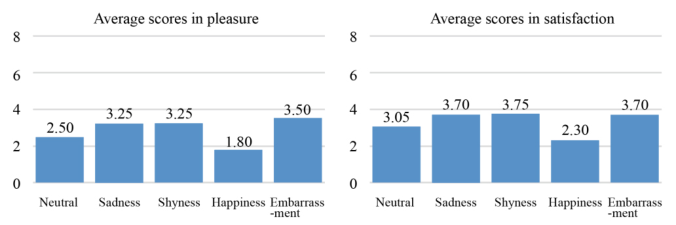
Figure 2: Average scores of different expressions in pleasure and satisfaction.
Facial Expression In One-way ANOVA analysis, the result showed the differences of pleasure and satisfaction between groups were statistically significant (p < 0.05), and there were no significant differences in arousal (p > 0.05). Researchers then used LSD to make multiple comparisons of pleasure and satisfaction. The results are shown in Table 3. There were significant differences in pleasure and satisfaction between neutral expression and the other four categories of expression (P<0.05). Compared with “neutral” expression, the application of “shyness”, “embarrassment” and “sadness” expression could significan- tly improve pleasure and satisfaction, and the application of “happiness” expression could reduce pleasure and satisfaction. There were no significant differences in pleasure and satisfaction between “shyness”, “embarrassment” and “sadness” expression (p > 0.05), but there was still some volatility. Since there were no significant differences in arousal and the “embarrassment” expression was rated as the most pleasurable, the apology feedback combing with “embarrassment” was best.
This result is significantly different from Chen’s (2021). They found that applying “happiness” emoticons in the error feedback of smart TV voice assistants could reduce negative emotions. The difference between research results indicated that the severity of the consequences would affect users’ attitude towards the apology. Compared to “recognition failure”, “abnor- mal charging termination” could lead to the more severe consequence that the users could not reach the destinations. P11 commented that when the
agent showed “happiness” expressions when apologizing, I thought it was gloating.
Ketron et al. (2020) found that adding “sadness” emoticons to apology textual feedback was harmful when external causes led to service delays. The difference between research results indicated that the level of anthropomor- phism affected the user’s attitude towards the apology. P 7 said that this robot was her partner, and it was very empathetic because it showed “sadness” expressions when apologizing.
CONCLUSION
This study explored the effects of in-car robotic agents’ apology strategy on frustration and user experience in the scene of abnormal charging termina- tion of electric vehicles. The results showed that the participants were less frustrated and more satisfied when the robotic agent apologized. Compared with “neutral” expression, the application of “shyness”, “embarrassment” and “sadness” expression could reduce frustration and improve user experi- ence. Moreover, the apology feedback combing with “embarrassment” was best.
Due to the time and cost limitations, this paper still has some shortco- mings. Firstly, this study only considers the external causes. Future work should also include the typical scenes where internal causes cause abnormal charge termination. Secondly, the apology wording of this study contains three dimensions:(1) IFID; (2) explanation of cause; (3) take on responsibi- lity. Blum-Kulka & Olshtain (1894) proposed that there were five dimensions of the apology model: (1) an illocutionary force indicating device (IFID; such as, “I’m sorry”, “I apologize”, or “Excuse me”, “I apologize”); (2) expla- nation of cause; (3) take on responsibility; (4) offer of repair; (5) promise of forbearance. In the next step, we intend to select other dimensions of the apology model.
REFERENCES
Buchholz, V., Kulms, P., & Kopp, S. (2017). It’s (not) your fault! Blame and trust repair in human-agent cooperation.
Apology Strategies to Reduce Electric Vehicle User Frustration 509
Blum-Kulka, S., & Olshtain, E. (1984). Requests and apologies: A cross-cultural study of speech act realization patterns (CCSARP). Applied linguistics, 5(3), 196–213. Chen, C., Cheng, K., & Wang, W. J. (2021). The role of emojis in voice interaction
error feedback. Packaging Engineering, 42(18), 159–164. (in Chinese). Deshmukh, A. A., & Aylett, R. (2014, March). Exploring socially intelligent recharge behaviour for human-robot interaction. In Proceedings of the 2014 ACM/IEEE international conference on Human-robot interaction (pp. 150–151). Gao, D. X., Liang, K., Hou J. J., & Yang, Q. (2019). Design of mobile monitoring
and fault diagnosis system for electric vehicle charging pile. Journal of Qingdao University of Science and Technology: Natural Science Edition, 40(3), 107–113. (in Chinese). Ge, X., Li, D., Guan, D., Xu, S., Sun, Y., & Zhou, M. (2019, July). Do smart speakers respond to their errors properly? A study on human-computer dialogue stra- tegy. In International Conference on Human-Computer Interaction (pp. 440–455). Springer, Cham. Hamacher, A., Bianchi-Berthouze, N., Pipe, A. G., & Eder, K. (2016, August).
Believing in BERT: Using expressive communication to enhance trust and coun- teract operational error in physical Human-robot interaction. In 2016 25th IEEE international symposium on rbot and human interactive communication (RO-MAN) (pp. 493–500). Hong, Z.J. (2008). Research on the influences of operating product on the preference
for form factors: a case study of USB flash drive. (in Chinese) Jiang, Y., Jia, Y. J., Liu, H., Li, L., Xu, H. S., Ding, Y., & Zhang, Y. D. (2021). Analysis and accurate maintenance of electric vehicle charging faults. Electrotechnics Electric(08), 68–70. (in Chinese). Jing, Y., Liang, L. X., & Xing, Z. (2018). Fault detection of AC charging piles based
on fault dictionary method. Application of Electronic Technique, 44(6), 56–59. (in Chinese). Ketron, S., & Naletelich, K. (2020). How anthropomorphic cues affect reactions to service delays. Journal of Services Marketing. Park, S. J., MacDonald, C. M., & Khoo, M. (2012, June). Do you care if a computer
says sorry? User experience design through affective messages. In Proceedings of the designing interactive systems conference (pp. 731–740). Stouffer, S. A., Suchman, E. A., DeVinney, L. C., Star, S. A., & Williams Jr, R. M.
(1949). The american soldier: Adjustment during army life. (studies in social psychology in world war ii), vol. 1. S. Alpers, B., Cornn, K., E. Feitzinger, L., Khaliq, U., Park, S. Y., Beigi, B., ... & Aquino Shluzas, L. (2020, September). Capturing passenger experience in a ride- sharing autonomous vehicle: the role of digital assistants in user interface design. In 12th International Conference on Automotive User Interfaces and Interactive Vehicular Applications (pp. 83–93). Tzeng, J. Y. (2004). Toward a more civilized design: studying the effects of com-
puters that apologize. International Journal of Human-Computer Studies, 61(3), 319–345. You, Y., Fogelson, M., Cheng, K., & Stenger, B. (2020, April). EMI: An Expressive Mobile Interactive Robot. In Extended Abstracts of the 2020 CHI Conference on Human Factors in Computing Systems (pp. 1–8).
LISTED IN THE AHFE DIGITAL BOOKSTORE CATALOGUE
Explore the complete digital volume
Ergonomics In Design
Read this individual research paper free through the original publisher, or explore the full digital proceedings book.
ISBN 978-1-958651-23-0
Explore this ISBN in the AHFE Bookstore ↗Listed in the July 2026 bookstore catalogue; search by ISBN to confirm current availability · Digital book purchase optional