With the increasing of autonomous technologies and networks, a car’s interior becomes space combined with the multi-user interface, digital services, and physical objects. it’s necessary to create a tool to assist develop the design process for new intelligent cabin scenarios. Yet only a few tools currently support ideation for it. In this paper, we present User-behavior Cards, and a workshop technique to involve quick idea generation for the new intelligent cabin. The overall aim of the User-behavior Cards is to assist a design process for cross-function design groups early in the design process. We invited cross-functional team; students of industrial design and interaction design involved in the design workshop together. The co-creation design workshop shows that User-behavior Cards are one of the design tools that can help the team to understand Human-Machine Interfaces, create scenarios design for the cabin. The results present that the User-behavior Cards are a useful source of inspiration when designing for cabin scenarios and help create ideas in a short time from a cross-function team.
With the development of new energy and internet technologies, the form of transport has undergone a dramatic shift, with people moving from their ori- ginal need to travel to the pursuit of the travel experience. On this basis, the Intelligent Cabin shift from a ‘car’s interior driving task space ‘to a ‘inhabit space’. Intelligent Cabin as a place of coordinated activities, and including multimodal and context interaction therein. Car styling design and intera- ction design are independent of each other (Zeng and Hu, 2020). The design approach to intelligent cabin design, and the design process, has changed significantly. Cards sorting design method has been found to help mapping and analysis for idea generation (Vaajakallio and Mattelmäki, 2014). Cards design is an important role that they can play in forging team collabora- tion towards a common goal (Brandt 2004). In this paper we introduce the
design and evaluation of the User-Behaviors Cards. We created a set of cards to provide inspiration to designers while designing for co-cration.
RESEARCH ABOUT INNOVATION TOOLS Cards Sorting Design as Tools
Card sorting design has a long history and made its way into many other fields. Like market research, criminology, semantics; Card sorting is best understood not as a collaborative method for creating navigation but rather as a tool that helps us understand the people we are designing for. Card soring has a long history; card sorting was used for psychology. It was very received in psychology that Kline described in <Science> in 1914 to support various card-based sorting activities.
Design cards as a tool that allows designers to record design or applica- tion domain knowledge concisely on physical cards, and cards have many advantages.
1. Cards sorting design inspire idea generation. Cards sorting design method has been found to help mapping and analysis for idea generation. (Vaajakallio and Mattelmäki, 2014). Cards are useful for the present theoretical and designers idea. It also makes the design process more playful and reduces burnout.
2. Card sorting design method also helps build cross-functional project team cohesiveness.
Card-based tools help keep people at the center of the design process. Cards sorting design game support different stakeholders in a constru- ctive dialogue with designers in earlier phases (Brandt and Christiansson, 2004) enlarging a cross-function team active for a new design system development.
3. Cards sorting design guide the evaluation of the design’s result. Lucero and Arrasvuori’s results indicated cards can be useful for different stages of the design process also guide the evaluation of the resulting design (Lucero and Arrasvuori, 2010). Javed Anjum Sheikh and Bob Fields presen- ted that the Card Sorts technique helps to explore attitudes within a domain and helps to examine data. (Sheikh, Fields and Duncker, 2010).
Many designers have created their cards to inspire creative activities in their work. Halskov and Dalsgaard created cards in order to a gene- ration of new design concepts based on domain and technology studies, the Inspiration cards and Domain cards presents with an image, a title, a description, and a reference (Halskov and Dalsgaard, 2006). Similarly to inspiration cards, Tiles Cards(Mora, Gianni and Divitini, 2017) offe- red questions that trigger creativity. Those cards were designed to support design innovation. Tango cards (Deng, Antle and Neustaedter, 2014) and the Exertion Cards (Mueller等, 2014) is to make scholarly knowledge acces- sible in order to the design of games. Both of those 2 kinds of cards gave each design card a short title and pictures to present examples of the card’s topic.
From the review, most cards tools as a participation and learning tool work for designers or stakeholders’ co-creation in a workshop. It was been
Intelligent Cabin Innovation Through User-Behavior Card Sorting Co-Creation Workshop 129
proved functional in teamwork for creative activity. Designers used cards with a short but clear title, an explanatory picture, and a description related to game design; interface design; design for playfulness; collaboration design and stakeholder co-creation design. This kind of Cards-tools has a signifi- cant function on abstract concept generation and offers a general format to user-behavior cards.
USER-BEHAVIOR CARDS CREATE The design of the car’ interior has changed. Today’s car design is a combi- nation of software and interaction design with hardware - technology and styling - so both aspects are examined separately and integrated into the intelligent cabin. The focus in today’s in-car interaction design is on buil- ding scenarios to understand user needs, the interior styling has changed from the original intentional engineering to focus on the interior scenario and user actions, therefore our cards build a series of user action-based cards, the workshop aims to build the interior scenario through the cards and exporting the scenario of the Intelligent Cabin.
Intelligent Cabin shift from a ‘car’s interior driving task space ‘to a ‘inhabit space’, Intelligent Cabin as a place of coordinated activities, and including multimodal and context interaction therein. car styling design and intera- ction design are independent of each other (Zeng and Hu, 2020). With the increased functionality offered by in-vehicle systems (Müller and Weinberg, 2011). Previously designers see vehicle interior design as an engineering task to consider design under the rules of ergonomic interaction and engineering package, to make sure the driver’s position is comfortable in the cars’ space. We need to offer a guidance tool for designers to support the designer’s cre- ative process for new intelligent cabin design. In the following section, I will present tools and methods for car interior styling design and car.
As with most card tools review, the User- behavior card shares core aspe- cts with the previously discussed but is slightly different. User-behavior cards as a participation tool also help cross-function designers involved in a car interior design process. And give a rich source of inspiration for creative processes. Intelligent cabin design span a spectrum from user interface and physical attributes. Users’ behavior is essential in the car’s interior space inte- raction. We aim to investigate how to facilitate human-centered, creative, and reflective idea generation by engaging users with half experts in design techniques. We apply the connection of users’ actions and touchpoints to the development of the Card, especially the early stage of development, through cards to realize Intelligent Cabin Scenario design.
User-Behaviors Cards based on project co-development with professional workforces based on. To help assist the following of those goals: 1.To assist with team cohesiveness and build a shared understanding of user behavior in intelligent cabin interior space to see users’ behaviors as a part of holistic, intelligent cabin design.
2. To identify critical User- behavior during the customer journey.
130 Xue and Zhaor
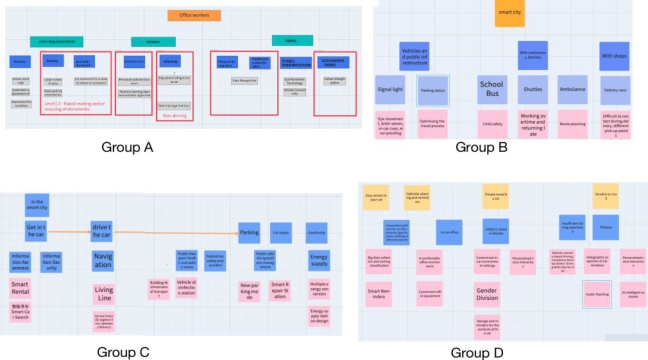
Figure 1: Four groups ’cards in first edition.
User Behavior Card’s Design Process The development of User-behavior has been undertaken in four iterations, the workshop was attended by 20 participants into 4 groups, who worked together to design and create cards in the form of an online co-creation. Par- ticipants were teachers and students from various universities. In the first phase, participants learned about and researched smart cabins, recorded the information they learned on small square cards and saved them in an online documents (as Figure 1 shows). In the second stage, the participants selected the topics they researched and created a scenario-vision card for the smart cabin. In the third stage, participants refined the scenarios by creating a per- sonalized card and a scenario-specific action flow card. In the fourth stage, participants organized the cards into user behavior cards.
First Edition of User-Behavior Cards Considering that the User- behaviors card aims at the cross-functional team, and participants come from different professions and do not have experience and knowledge of automotive interior design.
We start by presenting current design solutions and research trends for the intelligent cabin in autonomous driving technology. The focus was on understanding the qualifying conditions for intelligent cockpits at the L3 level, after which participants collected and analyzed information within the group and listed the topics of interest on the TEAMIND online co-creation platform.
From the literature review of research about card design, we consider user- behavior card followed the form like IDEO method card, with 9cm by 9cm in size, On the cards, the participants used different colors to mark the topics of interest or design opportunities. correct to On the cards, the participants used different colors to mark the topics of interest or design opportunities (Figure 2).
Intelligent Cabin Innovation Through User-Behavior Card Sorting Co-Creation Workshop 131
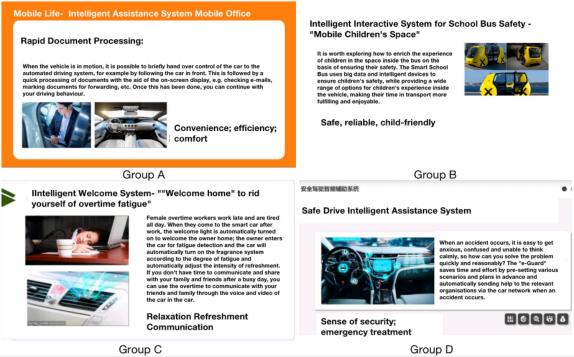
Figure 2: Four groups’ cards in second edition.
In particular, Group A conducted research on the needs of Daily commu- ters in cities, listing on a drawing board the different themes of their needs for work, leisure, and safety in the cabin.
Group B conducted research based on the relationship between vehicles and urban infrastructure and vehicles and institutions in a future smart city, which included design opportunity points in the context of vehicles and signals and vehicles finding parking scenarios under the Internet of Things. Colleagues investigated the school-van, work-shuttle and hospital-ambulance and looked for design opportunity points.
Group C researched the flow of a person’s journey and proposed design opportunities for the user from before getting into the car, to the scenario of the driving journey, as well as the problematic points of parking or using the vehicle, and the vehicle range for battery replacement.
Group D ‘s more attention was paid to the office needs of commuters in the intelligent vehicle compartment, and in particular they were also concer- ned about the problems they might encounter in disinfecting or checking QR codes in the intelligent vehicle compartment in the event of an epidemic.
Second Edition of User-Behavior Cards Before the second round of designs for the cards began, participants first chose themes of interest within their groups, and they spent 30-45 minu- tes discussing the themes they chose to leave behind and then created cards for these themes, in which participants proposed a theme for their activities within the Intelligent cabin and an explanation for the theme, and a vision of the experience they wanted the user to have within that theme.
Group A proposed a number of cards for in-car office scenes, office sce- nes and entertainment scenes, and designed cards for the second phase.while Group B proposed cards for four types of scenes: school bus safety scenes - “mobile children’s space”, in-car entertainment scenes, logistics and distri- bution scenes and Group C created a vision card for women’s safety, while
132 Xue and Zhaor
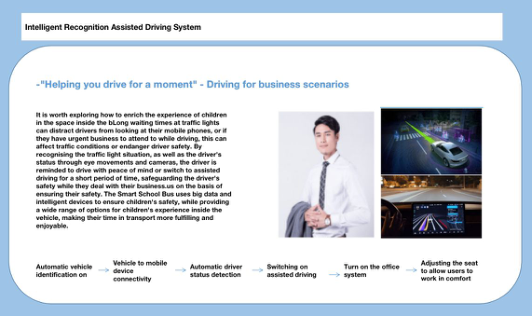
Figure 3: User’s character card and the interactive action description card.
Group D created a card on trust in vehicles for safety and the relationship between people and vehicles.
However, in the second round, only a small number of individual cards in the group presented a card design for a specific problem; the majority of the cards did not present a solution and a specific description of the user experience for a key problem Or if a scene contains many problem points and the amount of information for in-car interaction is difficult to carry on this one small card.
The interaction design is oriented towards user behavior and creating and supporting human activities through the mediating influence of the product. Physical object interaction constructs a new flexible approach to replace the traditional machinery interaction way. Users thought nature touch behavior or keypress-based behavior accomplish the operations and got the reflections more conforming to behavioral habituation.A designer constructs connecti- ons between the function, behavior, and structure of a design object through experience. Specifically, the designer ascribes function to behavior and derives behavior from the structure (Anon, n.d.) Analyzing user behavior in design is conducive to exploring the formation of interaction from the context of behavior and the process. The elements of user behavior might help the desi- gner and other stakeholders to better understand the interior’s interaction and generate ideation.
We propose that the design theme on the card can be materialized into a specific design problem, and that the characteristics of the design object (the user), the design theme and the specific actions under the design theme can be proposed for the specific problem, i.e. the behavioral flow of the user in it (Figure 3), in order to further clarify the interaction development and design goals in the vehicle cabin.
Third Edition of User-Behavior Cards After discussing with exports-two Ph.D. students and their advisor, Professor in the study on interaction design, a Ph.D. student about design, we found the brief explanation words on the cards were hard to let our teammates under- stand the User’s behaviors’ design purpose and intents to drive the scenario to build. With the increase of information on cards, the size has been enlarged to 12cm by 9cm.
In the Third round of card creation and design, the designer proposed descriptions of design opportunity points and vision keywords in a sliced time scenario. A character card and an interactive action description card were also proposed based on the design opportunity points. The descriptions and keywords were refined for the vision cards, and the character cards proposed
Intelligent Cabin Innovation Through User-Behavior Card Sorting Co-Creation Workshop 133
Figure 4: User’s – Behaviors card.
character descriptions and pain point transformations for the characters. And the action cards describe in detail the user’s actions from entering the cockpit to happening in the cockpit according to the user’s vision according to the chronological order.
But the cards with only words lead to many fuzzy in discussion teamwork. However, they were still confused about where all the actions happened and the relationship with design context. To recognize the subject through this version of cards also cost teammates lots of time. They needed to sort the card by categories first and then combine those cards that were already grouped by themselves to create a scenario.
The Final Edition of User-Behaviors Cards Refine the card design that tests best through three iterations, based on it we start the fouth iterations to optimize for cards. (1) To reduce the burden on the reading cards task, we grouped these cards into categories (2) Simplify the content and the explanation about users’ behaviors (3) Integrate picture to show the intention of user behavior and users. That information padded the size of cards; we decided to expand the scope of card again, finial the card size nod to 15cm by 12cm (Figure 4).
Therefore, we made a quick optimal design to restrict the card’s informa- tion form added more explanations about each concept on our cards to avoid vagueness. Based on the need found in previous work, we apply the conne- ction of a series of users’ behavior’s explanation with the extended time on the Card.
Then we filtered out all the duplicate cards, finally the User-Behavior Card comprises a set ofn cards and we also provide blank cards that can be per- sonalized by the participator. We invited a Ph.D. advisor who is focused on “emotional design”and “automotive modeling”, two Ph.D. design students to test cards’ information at this stage.
COMMENTS ON THE CARD “I felt that the cards really worked to define the scope of the concept in the existing limited assisted driving conditions and to make it more interesting.
134 Xue and Zhaor
(......) What worked for us was the wall to which each card was attached. Watching them combine to produce a result that is effectively useful.”
According to the interviews, the cards helped to stimulate creativity. Par- ticipants agreed that it was difficult for them to generate ideas for cockpit designs without cards. Participants also agreed that themed cards helped them to be creative and that using these cards to design objects helped to clarify design ideas in a step-by-step manner. Interestingly, participants felt that they needed more discipline to be more creative. This is consistent with the results of other card-based tools.
Support Guide The participants at least partially agreed that the tool provided guidance for developing new ideas.
The card workshop proved to be an effective process to support Intelligent Cabin design and idea generation. The results showed that in a very limited time, participants were able to design one or more augmented objects and use augmented objects in user stories that address specific problems and sce- narios; and reflect on and refine ideas and look at problems from a different perspective.
Creativity Throughout the Conceptualisation Process - Supporting Divergence and Convergence Participants were able to think freely and convergently to come up with ideas related to the cards. In the second round, the theme and vision cards helped to stimulate creativity in the process of selecting and combining elements, although some participants wanted to take a more constrained approach, for example when dealing with whether the conditional autopilot qualification was met. On the other hand, participants were fully aware of the possibilities offered by smart cockpits in the context of new technologies and the different aspects of the experience they might bring to the user.
CONCLUSION
Our cards were designed to provide tools to support the co-exploration of smart cockpit interactions and spaces in the face of complex systems and to make the overall process easy and enjoyable. We developed 88 cards, divided into four categories, and conducted three workshops with stakeh- olders, during which we provided concrete implementation processes and co-creation of content to enable non-design expert stakeholders to generate ideas about the Intelligent cabin The results showed that the cards were a valuable source of inspiration in the creation of the Smart Cockpit and that the cards helped to generate a large number of ideas and build smart cockpit scenarios in a short period of time. And they can help to analyse problems in the context of assisted driving technology. In our user study, the cards were very useful in suppor- ting creative thinking and critical analysis of design results, and in guiding non-experts to quickly generate ideas for smart cockpit scenario concepts.
Intelligent Cabin Innovation Through User-Behavior Card Sorting Co-Creation Workshop 135
In addition, the cards facilitated clear thinking and collaborative strategies between participants.
ACKNOWLEDGMENT
This research is supported by Paradigm Construction and Theoretical Boun- dary of Design Research, National Social Science Foundation (20BG103).
REFERENCES
Brandt, E. and Christiansson, J. (2004) Facilitating collaboration through design games. Clatworthy, S. (2011) Service Innovation Through Touch-points: Development of an
Innovation Toolkit for the First Stages of New Service Development. International Journal of Design, 5, pp. 15–28. Deng, Y., Antle, A. and Neustaedter, C. (2014) Tango cards: a card-based design tool for informing the design of tangible learning games. Conference on Designing Interactive Systems, [Online] Available from: doi.org/10.1145/2598510.2598601. Halskov, K. and Dalsgaard, P. (2006) Inspiration card workshops. Lucero, A. and Arrasvuori, J. (2010) PLEX Cards: a source of inspiration when
designing for playfulness. In: Fun and Games ‘10. Mora, S., Gianni, F. and Divitini, M. (2017) Tiles: A Card-based Ideation Toolkit for the Internet of Things. Conference on Designing Interactive Systems, [Online] Available from: doi.org/10.1145/3064663.3064699. Mueller, F. et al. (2014) Supporting the creative game design process with exertion
cards. CHI, [Online] Available from: doi.org/10.1145/2556288.2557272. Müller, C. and Weinberg, G. (2011) Multimodal Input in the Car, Today and Tomorrow. IEEE MultiMedia, 18(1), pp. 98–103. Sheikh, J., Fields, B. and Duncker, E. (2010) Cultural Representation by Card Sorting.
In: pp. 215–220. The situated function–behaviour–structure framework - ScienceDirect. Avai- lable from : https://www.sciencedirect.com/science/article/abs/pii/S0142694X 03000735 [Accessed 12/11/21]. Vaajakallio, K. and Mattelmäki, T. (2014) Design games in codesign: as a tool, a mindset and a structure. CoDesign, 10(1), pp. 63–77. Zeng, Q. and Hu, M. (2020) Mood Board Tool - An Innovation Method in Veh-
icle HMI Design. In: Streitz, N. and Konomi, S. (eds.) Distributed, Ambient and Pervasive Interactions. Lecture Notes in Computer Science. Cham: Springer International Publishing, pp. 138–149.
LISTED IN THE AHFE DIGITAL BOOKSTORE CATALOGUE
Explore the complete digital volume
Ergonomics In Design
Read this individual research paper free through the original publisher, or explore the full digital proceedings book.
ISBN 978-1-958651-23-0
Explore this ISBN in the AHFE Bookstore ↗Listed in the July 2026 bookstore catalogue; search by ISBN to confirm current availability · Digital book purchase optional