Junchun Chen, Tie Ji, Jian Peng, Bin Wang (2022). An AI-Assisted Design Method for “Huayao Cross-stitch” Patterns Based on Semantics. In: Design for Inclusion. AHFE Open Access, vol. 45, pp. 24–36. https://doi.org/10.54941/ahfe1001866
Huayao cross-stitch is one of the first intangible cultural heritage in China, providing a rich source of aesthetic and cultural connotations for creative design.Construction of a database serves as an effective measure to strengthen the protection and inheritance of intangible cultural heritage. However, the effective reuse of the digital resources relies on the explorations and investigation of their cultural elements. Based on the cultural background of “pictorial artworks from Chinese traditional patterns all have meanings intended”, this paper takes “Huayao cross-stitch” patterns as an example to analyze their aesthetics. It proposes a transformation path for AI-assisted design and establishes a pattern semantic segmentation system and uses word2vec algorithm to strengthen the search system, uses pix2pix model and random algorithm to color and intelligently generate images, and explores the method of AI-assisted design without losing the traditional charm of “Huayao cross-stitch” patterns. This study can provide new ideas for the reuse of digital cultural resource and promote the value of ethnic patterns in modern times.
With the rapid development of modern technologies such as big data, cloud computing, internet of things (IoT) and artificial intelligence (AI), the protection and regeneration of cultural heritage presents a new eco- logy. The establishment and development of cultural database provides a data foundation and a new path for inheritance and innovation of cultural heritage, by which cultural sustainability becomes possible. For the utili- zation and regeneration of cultural digital resource, creative design is an effective way for the reuse of cultural heritage. Huayao cross-stitch is one of the first intangible cultural heritage in China, which is of great arti- stic and cultural value. Transforming the rich connotations and aesthetic value of Huayao cross-stitch into creative design and establishing an AI- assisted design method with the help of emerging technologies to improve the design efficiency are beneficial to the activation and inheritance of cultural heritage.
An AI-Assisted Design Method for “Huayao Cross-Stitch” Patterns Based on Semantics 25
STATUS QUO OF CONSTRUCTION OF CULTURAL RESOURCE DATABASE AND AI-ASSISTED DESIGN In recent years, the construction of cultural resource database has flouri- shed all over the world. For example, the “Europeana Collections” project of the European Union has realized the digital integration of cultural resou- rces across institutions, and collected many kinds of cultural resources such as ancient European books and works of art. The “American Memory” pro- ject has digitalized American history and culture, and provided free access right to resources such as texts and photos, audio and video files, maps and animation;Google Arts & Culture has cooperated with museums around the world to provide high-resolution images and videos of artworks from more than 500 cultural organizations around the world. The Asia-Pacific Cultural Centre for UNESCO (ACCU) has established the Asia-Pacific Database on Intangible cultural heritage, which has realized the unlimited use of resources through regional cooperation and resource sharing. At present, the digital exploration of China’s cultural heritage has also made some achievements. For example, Beijing Palace Museum has established digital resource data- base of cultural relics, providing functions such as public visit and academic search. For the sake of vulnerable ethnic groups, Taiwan has built “Cultural Digital Archive and Media Database of Orchid Island”, by which Tao (Yami) ballads, folk culture, cultural artifacts and ecological images of Orchid Island are digitalized, and local people are invited to update its contents and enrich its collections with the user participation mechanism; “Digital Dunhuang” has made use of Huayao Cross-stitch resources. The research and practice of cultural resources digitization is conducive to the protection and digital technology to “permanently preserve” Dunhuang treasures and allow virtual roaming of cultural preservation of cultural heritage. However, the existing cultural resources database still focuses on the fields of collection and dissemi- nation of cultural resources, and there is little discussion on how to utilize and regenerate the cultural digital resources by using the cultural data platform.
In the field of design-driven cultural data reuse, Hunan University’s “New Channel” project has built a cultural database of regional design knowledge based on cultural ecology by exploring endogenous resources in villages, and put forward a classification system of cultural resources for creative design, which enables designers to get quicker access to cultural knowledge and pro- motes the inheritance and innovation of traditional culture (Li et al. 2016); Zhejiang University has established a digital standard system, such as cul- tural relics knowledge database and database specification to meet creative design needs through interdisciplinary cooperation, providing designers with a system that cultural resources can be efficiently retrieved (Luo and Dong, 2017); “Wen Zang”, as an open source database of Chinese traditional pat- terns, has greatly improved designers’ inspiration and performance, and laid a solid foundation for creative design derivations of cultural data.
The development of intelligent technology has promoted the creative design of traditional patterns. Gao and Jiao (2019) used convolutional neu- ral network to fuse the Taolie patterns commonly used on bronzes with
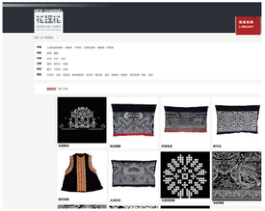
Figure 1: Digital museum of Huayao cross-stitch.
existing images, and generated new patterns with the characteristics of Tao- lie patterns. Indraprastha et al. (2013) used fractal algorithm to extract and reconstruct the patterns in the original Aceh decorations, and designed the pattern generator to have promoted the process of architectural crea- tive design. Zhao et al. (2011) put forward the method of primitive gene generation, which deformed and expanded the primitives of Xinjiang ethnic patterns, so as to generate new ethnic patterns on the basis of maintaining the characteristics of the original ethnic patterns. Tian et al. (2019) proposed an automatic generation method of batik flower patterns based on fractal geometry technology, which enriched the forms of batik patterns. Jia et al. (2013) developed a two-level generative shape grammar for the aided design of embroidery patterns of Zhuang ethnic groups. These studies explored ways to enable new technologies to assist the design of traditional patterns, impro- ved the design efficiency, and made a beneficial attempt for the inheritance and development of traditional patterns. However, there is little discussion on how to apply these intelligent technologies to the redesign of cultural resources on the platform of cultural resources database.
This paper attempts to take Huayao cross-stitch patterns as the research object, relying on Huayao cross-stitch digital museum established in the early stage of the “New Channel”project of the School of Design of Hunan Univer- sity (see Figure 1), to make an in-depth study of Huayao cross-stitch cultural prototype, to translate its artistic and cultural information into the cultural representation rules needed by intelligent design, to explore a new interdi- sciplinary method to cross boundaries between creative design and computer engineering based on semantics, to establish the thinking logic and interactive mode of AI-assisted design, and to create a semantics-based assisted design path for Huayao cross-stitch pattern, which can provide new ideas and fea- sible schemes for technology-enabled art design and reuse of digital cultural heritage.
SEMANTIC FEATURES OF HUAYAO CROSS-STITCH PATTERNS Decorative Semantics of Huayao Cross-Stitch Patterns
As intuitive visual symbols, traditional patterns are the epitome of ethnic cul- ture, with rich cultural connotations. They not only have visual implications but also have deep cultural semantics (Sun, 2017). Huayao is an ancient tribe
An AI-Assisted Design Method for “Huayao Cross-Stitch” Patterns Based on Semantics 27
located in Huxing Mountain area, Longhui Country, Hunan Province. Hua- yao Minority does not have a written language, Huayao cross-stitch patterns are the carrier of Huayao people’s life records. Huayao people directly repre- sent what they see, hear and think on the cross-stitch patterns, and put their love for life and yearning for a better future in them. Huayao cross-stitch patterns become a symbol of Huayao people’s wishes and ideals. Therefore, Huayao cross-stitch patterns are an important material carrier of Huayao culture. As an important part of traditional patterns, they have complex and rich semantic implications. Taking the the pattern of Beigayo as an example, ancestors of Huayao found this neatly-arranged circular pattern on Hualu Rock, and they innovated and improved this pattern, forming what it is today which can be used to decorate clothes. Because of its round shape, the pat- tern of Beigayo has the meaning of beauty and completeness. Besides, it is said that a year when dense and clear patterns can be seen on the Hualu Rock is always a year of bumper harvest, so this pattern symbolizes celebration and harvest. In addition, peony pattern means blooming and wealth; pattern, cross(十) pattern, Shou (Chinese character “寿”, meaning longevity) pattern, etc symbolize the pursuit of good fortune and avoidance of disaster.
Traditional patterns have the characteristics of dual semantic attributes, namely, explicit semantics and tacit semantics (Cui, 2017). Because of the complex semantic and tacit characteristics of traditional patterns, it is a kind of “ineffable” tacit knowledge (Zhang, 2015). Creative design of traditional patterns tends to focus on the external visual forms of patterns while ignoring the deeper and broader semantic connotations of patterns themselves, thus restricting the active inheritance of traditional patterns. Semantic collection of traditional patterns often requires in-depth and long-term research on regi- onal culture. In order to obtain the intrinsic semantics of traditional patterns, designers often need to do a lot of preliminary research and analysis, which greatly reduces the design efficiency.
Color Semantics of Huayao Cross-Stitch Patterns Chinese traditional colors have relatively fixed symbolic meanings and cul- tural connotations. The Chinese ancestors formed a five-color system on the basis of the traditional concept of five elements (mental is white; wood is green; water is black; fire is red; earth is yellow), which is an important gene in Chinese traditional culture (Chen, 2003; Liu, 2016). For example, red has rich cultural meanings ranging from the first thought of removing evil spi- rits to the later symbol of joy and auspiciousness. According to its unique regional environment and folk culture, Huayao Minority has been develo- ping for a long time, and has worked out a unique color pattern suitable for itself out of the five-color system. Due to the geographical environment where Huayao people live, Huayao people have been in nature for a long time. Therefore, the colors of Huayao cross-stitch works derived from the flowers and wild animals in the mountains, with bright and warm colors which demonstrated strong contrast. Under the influence of unique cultural environment, Huayao cross-stitch colors have also developed into a unique form on the basis of the traditional color concept. For example, as symbols
of auspiciousness, red umbrellas, red paper, red lines, etc are used by Huayao people to express joy and happiness; during the wedding ceremony, friends and relatives smeared the black putty at the bottom of the pot on each other’s faces to express their joy. This kind of color semantics is also reflected in Hua- yao cross-stitch patterns. Huayao people stitches the traditional five colors of green, yellow, red, white and black on the clothing, which reflects the unique ethnic characteristics.
SEMANTICS-BASED RESEARCH ON THE TRANSFORMATION PATH OF AI-ASSISTED DESIGN OF HUAYAO CROSS-STITCH PATTERNS Aesthetic Characteristics of Huayao Cross-Stitch Patterns
Based on the data collected by the field trips in the early stage of the pro- ject, and according to the cultural research framework proposed by Leong (Clark and Leong, 2003), the aesthetic characteristics of Huayao cross-stitch patterns are analyzed from three levels: the external formal level, the middle behavioral level and the internal spiritual level.
The external content is presented in the objective world as perceptual and intuitive artistic images, and the emotional response of the aesthetic sub- ject is stimulated by formal beauty. Therefore, at this level, the author have summarized the classification, colors, patterning methods and composition principles of Huayao cross-stitch patterns. For the classification of patterns, the themes of Huayao cross-stitch are rich and varied, ranging from animals and plants to historical stories and myths and legends, all of which show Hua- yao people’s desire for harmony, beauty, harvest and prosperity. In terms of colors, Huayao cross-stitch patterns showcase a contrasting but harmonious color scheme, which reflects a color view of being simple and gorgeous, bright and warm. With regard to patterning methods, Huayao cross-stitch doesn’t need to molds. Craftspeople rely on their years of experience in cross-stitching to weave patterns along the warp and weft of fabrics by hand. They follow the concept of freestyling in stitching patterns, and like to use the methods such as simplicity, exaggeration and completeness to express the aesthetic taste of purity and simplicity. When it comes to composition principles, according to their emotions and understanding of beauty, the craftspeople have fol- lowed the principles such as symmetry and balance, condense and rhythm, change and unity over the years, and organized the picture with a multi-spot perspective.
The behavioral level represents the aesthetic beauty of behavior through ingenious process of Huayao cross-stitching. The author tries to summarize this level from the process characteristics and usage scenarios of Huayao cross-stitching craftsmanship. As shown in Table 1, in terms of craftsman- ship, Huayao cross-stitching uses “cross” or “one” stitches in the mesh formed by the intersection of warp and weft of fabric, and has a unique stitching process. On the usage scenarios, Huayao people will use different cross-stitch works according to different color schemes and usage scenarios.
The behavioral level represents the aesthetic beauty of behavior through ingenious process of Huayao cross-stitching. The author tries to summarize this level from the process characteristics and usage scenarios of Huayao
An AI-Assisted Design Method for “Huayao Cross-Stitch” Patterns Based on Semantics 29
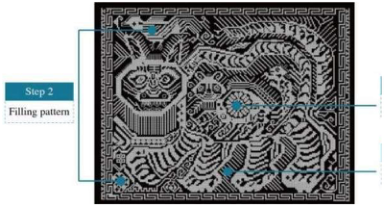
Figure 2: Pattern composition and procedures of Huayao cross-stitch.
cross-stitching craftsmanship. As shown in Table 1, in terms of craftsman- ship, Huayao cross-stitching uses “cross” or “one” stitches in the mesh formed by the intersection of warp and weft of fabric, and has a unique stitching process. On the usage scenarios, Huayao people will use different cross-stitch works according to different color schemes and usage scenarios.
The spiritual level reflects the spiritual beauty of purity and simplicity of Huayao minority. The author sorts it out from two categories: aesthe- tic characteristics and emotions. As shown in Table 1, in terms of aesthetic characteristics, Huayao people combine their observation of the objects in life with their pursuit of a better life to attach their feeling to the Huayao cross-stitch works. Reality and romance complement each other. Emotionally and spiritually, each Huayao cross-stitch piece is the material carrier of Hua- yao people’s emotions, which has unique cultural implication and embodies Huayao people’s unique spiritual sustenance and their yearning for beauty.
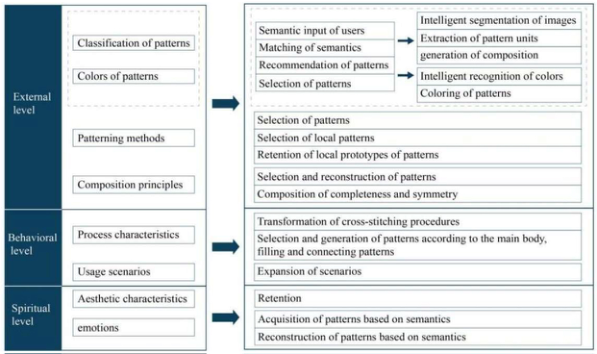
Construction of a Transformation Path for AI-Assisted Design of Huayao Cross-Stitch Patterns This paper tries to construct a transformation path for AI-assisted design of Huayao cross-stitch patterns on the basis of retaining their aesthetic chara- cteristics. The data collected through the field trips and desktop research of Huayao in the early stage of the “New Channel” project of the School of Design of Hunan University has been sorted and summarized. Based on the data of Huayao cross-stitch museum, the digital resources of patterns are semantically marked. The stitching procedures (see Figure 2) are taken as the basis of stylized AI-assisted design, and the cultural connotation of cross- stitching is converted by semantic means. According to semantic search, users choose their desired main patterns, filling patterns and connecting patterns in turn, and finally the the system recombines those patterns.
In terms of patterning, many complex and irregular unit shapes can be seen in cross-stitch patterns, so there are few attempts to redesign such patterns. Therefore, this study attempts to deconstruct cross-stitch patterns, and users choose their favorite local patterns, and the selected patterns are segmen- ted and extracted intelligently by the system. The most special cross-stitch patterns are made through the use of symmetrical composition, and the pat- terns are characterized by the beauty of “completeness”. Therefore, in the construction of an AI-assisted design path of Huayao cross-stitch patterns,
Figure 3: A Semantics-based transformation path for AI-assisted design of Huayao cross-stitch patterns.
the technique of symmetry is retained, the composition of “completeness” is continued, composition rules are set, and local patterns selected by users are reconstructed. In terms of colors, typical colors are extracted from traditi- onal cross-stitch patterns, and they are arranged and combined in different ways to form a color library. Different color combinations are marked accor- ding to the semantics of the original cross-stitch patterns, and the system can select corresponding color groups according to the semantic input of users to color the generated patterns. The semantics-based transformation path for AI-assisted design of Huayao cross-stitch patterns (see Figure 3).
SEMANTICS-BASED IMPLEMENTATION OF AN AI-ASSISTED DESIGN METHOD OF HUAYAO CROSS-STITCH PATTERNS Semantic Similarity Search in Database
In order to find a pattern whose tag meaning is similar to the words or sente- nces input by users from Huayao cross-stitch database, this paper proposes to collect a large number of unstructured user retrieval texts from material websites to train vector space, segment words in texts by jieba Text Segmen- tation, carry out one-hot coding, and then use word2vec algorithm to train these texts. In this paper, CBOW (continuous bag-of-words) model is used for training, that is, the word vector corresponding to the words in the target word context is input to predict the word vector corresponding to the target word.
Using this algorithm training to get a word vector space, words with simi- lar meanings will be very close in the word vector space. Therefore, we can characterize the user’s input content as a corresponding word vector through this word space, then compare the distance with the word vector correspon- ding to the tag in Huayao cross-stitch database, set a threshold, and find out patterns whose meaning are close to and lower than the threshold value from the database.
An AI-Assisted Design Method for “Huayao Cross-Stitch” Patterns Based on Semantics 31
Segmentation and Extraction of Local Huayao Cross-Stitch Patterns Due to the small sample size of Huayao cross-stitch patterns, this paper proposes that the user can circle the intended area to extract patterns by a computer mouse. Firstly, the system obtains the pixel points of the image corresponding to the mouse click position, connects the selected pixel points to form a polygon area, and fills it into a rectangular area, then uses the boundary tracking method with topological analysis ability to extract featu- res without reconstructing the image to obtain the pattern (Suzuki, 1985). By determining the boundary surrounding relationship of binary image, that is, determining the outer boundary, hole boundary and their hierarchical relati- onship, different boundaries are given different integer values, and the outer boundary and hole boundary respectively have a one-to-one correspondence with the connected domain of pixel value of 1 and with the hole of pixel value of 0. This algorithm can mark each boundary with a unique mark instead of the same mark for each boundary, through which we can extract the boundary surrounding relationship and then extract the corresponding local pattern.
This algorithm first needs to set up a starting point to scan the checked area from left to right, from top to bottom, to find the starting point of the boundary, and to conduct two steps for every pixel where f(i, j) is not equal to 0:Step 1. When f(i, j−1) = 0 and f (I, j) = 1, it is determined that f (i, j) is the starting point of the outer boundary. Step 2. when f(i, j) > = 1 and f (i, j + 1) = 0, it is determined that f (i, j) is the starting point of the hole boundary. Then mark the elements on the boundary from the starting point, and assign a unique identifier to a newly-discovered boundary, which is marked as NBD. The initial NBD = 1, and 1 is added every time a new boundary is found. When f(p,q) = 1 and f (p, q + 1) = 0, set f (p, q) to -NBD, which is the termination point.
Intelligent Generation of Innovative Patterns of Huayao Cross-Stitch Patterns Based on Semantics In terms of composition, because the main pattern in the composition rule is preset as a single pattern in this paper, firstly, the filling pattern is repeatedly sampled; secondly, the pattern size is adjusted according to the composition rule and the overall picture area, and the appropriate areas of each diffe- rent pattern are counted. Finally, random positions are selected for different main patterns and filling patterns in the counted appropriate areas by using a random algorithm. After the arrangement of the main body and filling pat- terns are completed, search algorithm is used to query the areas with large gaps between patterns, and connecting patterns are used to fill them. In this paper, the generated image is used to generate a mirror image through rever- sed abscissa, and then the two parts are connected together to form the final image.
In recent years, the research of deep learning in the field of image coloring has made great progress, and features can be extracted according to the gray values of gray-scale pictures and the classification of objects in the images, so as to color the gray-scale pictures with expected colors (Anwar et al. 2020).
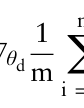
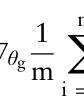
Algorithm: Conditional generative adversarial network The initialized generator parameter is θg, the discriminator parameter is θd, the realistic colored image is y, the batch size is m and the learning rate is a
For training GAN loop iteration number: do For training discriminator loop iteration number: do Sampling black and white binary samples of one batch size and realistic colored sample pair {(x1,y1),…,(xm,ym)}
Sampling random noise of one batch size {z1,…,zm}
Update the discriminator through adam
m X [log ( D (x,y) + log (1 −D (x,G (x,y)))] ∇θd
Equation reproduced from the original PDF.
m X [log ( D (x,y) + log (1 −D (x,G (x,y)))] + ϕ ∇θg
1
y - G (x,z)
Equation reproduced from the original PDF.
However, in this paper, it is the black-and-white binary image to be colored, so we can’t distinguish the coloring content according to the gray value. Here, pix2pix model (Isola et al. 2017) is used to extract the morphological features of different patterns in pictures and distinguish the differences among diffe- rent morphological features, and color patterns and backgrounds according to morphological features.
Conditional generative adversarial network, which is composed of gene- rator and discriminator, guides image generation by adding conditional information. In this paper, black and white images are used as conditions, color images are used as targets, and the generator adopts U-Net network structure (Ronneberger et al. 2015) which is divided into encoder and deco- der. The encoder can well extract the morphological features and background features of patterns in pictures, and then connect each layer of the encoder to the decoder by jumping connection so as to fully combine the mapping relationship between the extracted morphological features and colors to gene- rate the colored image of the corresponding target. The discriminator uses patchGAN to judge each patch of the input image to determine whether each image area is true or false, that is, to distinguish whether the genera- ted image can be colored according to the morphological features in each area. The input through the discriminator is a pair of images (black-and- white binary image and colored image), in which the black-and-white binary image and its corresponding realistic colored image are positive sample pairs,
An AI-Assisted Design Method for “Huayao Cross-Stitch” Patterns Based on Semantics 33
while the black-and-white binary image and the colored image generated by the generator are negative sample pairs. As shown in the following diagram: The purpose of the generator is to as far as possible generate images that are the same as the black and white binary images and have the same color as colored patterns, so that the discriminator cannot distinguish the differe- nce between the real sample pair and the generated sample pair, while the discriminator’s goal is to distinguish the difference between the realistic sam- ple pair and the generated sample pair as much as possible. The concept of GAN models is the adversarial game “played” between the generator and the discriminator (Goodfellow et al. 2020), and finally enable the generator bet- ter color the black-and-white binary images. In order to reconstruct a more realistic image, l1 distance is used to constrain the difference between gene- rated images G(x, z) and y. The whole training process can be regarded as the minimum-maximum problem:
log (1 −D (x, G (x,y)))
log (D (x, y))
+ Ex,z
min max Ex,y + ϕEx,y,z[
1]
y −G (x, z)
Where x represents the black-and-white binary image, y is the realistic colored image, z is the random noise, G is the generator and D is the discriminator.
In the aspect of algorithm implementation, this paper is based on Pyto- rch deep learning framework, and uses the prepared paired black-and-white binary images and colored images as data sets to train the generative adversarial model.
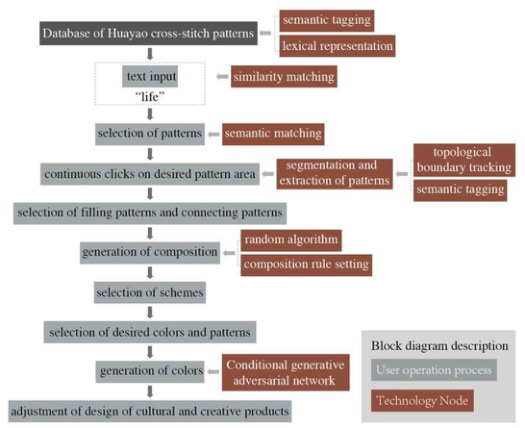
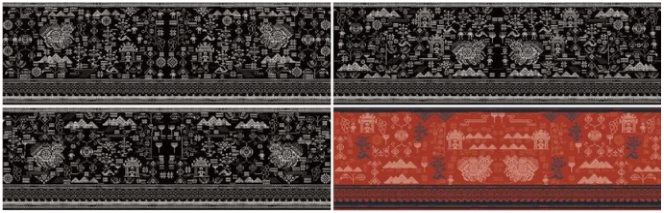
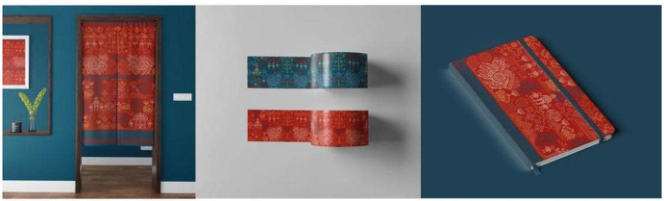
EXPERIMENT AND APPLICATION OF SEMANTICS-BASED AI-ASSISTED DESIGN METHOD OF HUAYAO CROSS-STITCH PATTERN In this paper, the semantics-based AI-assisted design method of Huayao cross- stitch patterns is used for creative practice The systems engineering team relies on each branch to assist in analyzing customer requirements (see Figure 4). First, the user input the text “life” to search for patterns in Huayao cross- stitch database, and the system conducted semantic matching. Take Huayao cross-stitch pattern “A Pregnant Tiger”as an example (see Figure 2). The user continuously clicked the local pattern of “the small tiger” as the main pat- tern with the computer mouse, and the system intelligently segmented and extracted this pattern. Then, the user continued to select filling patterns and connectingpatterns in the searched patterns, and then the system automa- tically typeset the patterns selected by the user to generate creative design schemes (see Figure 5). If the generated schemes do not meet the require- ments, they can be regenerated for many times. Finally, the user chose the desirable scheme for the adjustment of design of cultural innovation produ- cts,In this paper, the semantics-based AI-assisted design method of Huayao cross-stitch patterns is used for creative practice The systems engineering team relies on each branch to assist in analyzing customer requirements (see Figure 6).
Figure 4: Practical flow and technical path.Figure 5: Generated partial designs.Figure 6: Cultural innovation product design of Huayao cross-stitch.
CONCLUSION
The rapid advances in technology have opened up new vectors which are feasible and broad for the thinking framework and method system of tradi- tional designs. How design helps the inheritance and innovation of cultural heritage present a new type of intelligent business. In this paper, technologies
An AI-Assisted Design Method for “Huayao Cross-Stitch” Patterns Based on Semantics 35
such as artificial intelligence are applied to the AI-assisted design of Hua- yao cross-stitch patterns, the aesthetic characteristics of Huayao cross-stitch are sorted out and the transformation path of AI-assisted design based on semantics is proposed. The technical methods of pattern extraction, pattern generation and intelligent coloring are studied to realize AI-assisted genera- tion of design based on semantics. Semantics-based AI-assisted design method of Huayao cross-stitch patterns is used to design cultural and creative pro- ducts. The semantics-based AI-assisted design method can effectively assist designers in cultural and creative design without losing the semantic conno- tation of cultural prototypes, reduce designers’ repeated design operations, improve the efficiency and quality of creative design, and provide new ideas for technology-enabled creative design of traditional culture. However, due to the uniqueartistic characteristics of Huayao cross-stitch patterns, in the process of creative design of their prototypes, how to choose the aesthetic elements out of the prototypes to meet the modern aesthetic needs while bet- ter retaining their original styles and connotations is what needs to be studied in the future.
ACKNOWLEDGMENT
This research was supported by the National key research and development plan subject(2019YFB1405702), National Social Science Fund Art Science Key Project(20AG011), The authors would like to thank all those who participated in this study.
REFERENCES
Anwar, S., Tahir, M., Li, C., Mian, A., Khan, F. S., and Muzaffar, A. W. (2020), “Image colorization: A survey and dataset.” arXiv preprint arXiv: 2008.10774. Cui,Y. P. (2007), “Semantic Analysis of Traditional Chinese Symbolic Patterns.”
Hundred Schools in Arts, (A02), 81–83. Chen, X. H. (2003), “The Origin of Chinese Traditional Color Aesthetics.”Jiangxi Social Sciences, (12), 205–206. Cui, J., Tang, M. X. (2013), “Integrating shape grammars into a generative system for
Zhuang ethnic embroidery design exploration.” Computer-Aided Design, 45(3), 591–604. Gao, F., Jiao Y. (2019), “Aided Creative Design Based on Artificial Intelligence.”Zhuangshi, 11. Goodfellow, I., Pouget-Abadie, J., Mirza, M., Xu, B., Warde-Farley, D., Ozair, S.,
... and Bengio, Y. (2020), “Generative adversarial networks.” Communications of the ACM, 63(11), 139–144. Indraprastha, A., Sahputra, Z., and Suharjono, A. (2013), “Preserving local ornament through algorithm.” Jurnal Ilmu Komputer dan Informasi, 6(2), 52–58. Isola, P., Zhu, J. Y., Zhou, T., and Efros, A. A. (2017), “Image-to-image translation
with conditional adversarial networks.” In Proceedings of the IEEE conference on computer vision and pattern recognition (pp. 1125–1134). Li, H., He, R.K., and Xiao, D.H. (2016), “Regional Culture Digital Resource DatabaseDesign-oriented.” Packaging Engineering, 37(18), 86–91. Luo, S.J., Dong, Y.N. (2017), “Classifying Cultural Artifacts Knowledge for Creative
Design.” Journal of Zhejiang University (Engineering Science), 51(1), 113–123.
Liu, Y. (2016), “A study on the color in chinese folk art (Doctoral dissertation,” shandong university). Leong, B. D., Clark, H. (2003), “Culture-based knowledge towards new design
thinking and practice—A dialogue.” Design Issues, 19(3), 48–58. Ronneberger, O., Fischer, P., and Brox, T. (2015), “U-net: Convolutional networks for biomedical image segmentation.” International Conference on Medical image computing and computer-assisted intervention (pp. 234–241). Springer, Cham. Sun, H. D. (2017), “The Combination of the Traditional Design of Ethnic Minorities
and the Art of Visual Communication Design.” Guizhou Ethnic Studies, 38(4), 119–122. Suzuki, S. (1985), “Topological structural analysis of digitized binary images by border following.” Computer vision, graphics, and image processing, 30(1), 32–46. Tian, G., Yuan, Q., Hu, T., and Shi, Y. (2019), “Auto-generation system based on
fractal geometry for batik pattern design.” Applied Sciences, 9(11), 2383. Zhao, H.Y., Yang, Y.F., and Xu, G.M. (2011), “Design method for Xinjiang folk art pattern.” Computer Systems and Applications, 20(7), 94–99.
LISTED IN THE AHFE DIGITAL BOOKSTORE CATALOGUE
Explore the complete digital volume
Design for Inclusion
Read this individual research paper free through the original publisher, or explore the full digital proceedings book.
ISBN 978-1-958651-21-6
Explore this ISBN in the AHFE Bookstore ↗Listed in the July 2026 bookstore catalogue; search by ISBN to confirm current availability · Digital book purchase optional