Huai Cao, Xiuling Wang, Kaixuan He (2022). Influence Mechanism of Air Humidifier Product Color and Shape on User Preference Based on Eye Tracking. In: Usability and User Experience. AHFE Open Access, vol. 39, pp. 161–167. https://doi.org/10.54941/ahfe1001704
Eye tracking realizes the tracking of eye movement by tracking the position of the eye's gaze point or the movement trajectory of the eyeball. It objectively shows the user's real experience of a certain product in a scientific experimental way; according to the literature, the eye The research and application of motion tracking technology in air humidifiers are few; based on this, this article takes air humidifier products as the research object, and through the method of eye movement test experimental psychology, the influence mechanism of color and shape in the field of humidifier products Conduct research to measure the user experience of consumers. Based on the eye movement method, we will conduct experimental research. The independent variables are the different colors and shapes of the air humidifier products. Dependent variables include first fixation time, first fixation duration, total fixation time, second fixation time and subjective evaluation. It is estimated that X subjects will participate in the experimental test. Through the test data analysis of the subjects, this research mainly explores the following conclusions: (1) Whether the different colors of the air humidifier products can cause significant differences in the eye movements of users (2) Whether the shape of the air humidifier product causes a significant difference to the user's eye movement attention. In addition, this research provides a reference value method for consumer decision-making for industrial design optimization in related product fields; based on quantitative analysis of eye tracking technology, explores user experience, so as to better grasp the visual preferences of target consumers and clarify products Design, development and upgrade direction, accurate market positioning.
In the standard of air purifiers, the intelligent mode automatically adjusts the running speed of the machine according to the monitoring data of the particle sensor to ensure that the indoor air quality is always clean and healthy. Ning Juan (2012) extended the evaluation system to the field of commercial websites, studied the evaluation methods of e-commerce web- sites, and established the evaluation system of e-commerce websites by using AHP. Gu Lipei and Xing Baojun (2014) used the factor analysis method to establish an evaluation system for group buying websites on the basis of subjective evaluation, including the web interface link. Dr. 1eer. p01. Ute Rohbock (2011) analyzed and compared the online stores of two different magazine websites through eye-tracking technology research, compared their browsing trajectories and subsequent evaluations, and obtained a practi- cal comparison of the two websites. Lohse (1997) examined the user’s eye movement behavior when browsing phone yellow page advertisements; Liu Ying (2001) found that the visual search time is mainly related to the target location.
Table 1. The population distribution and proportion of the 45 subjects.
Table available in the original PDF paper.
Gender Male Female 15 people (33.33%) 30 people (66.67%)
Age 18-25 years old 25-30 years old 30-35 years old 20 people (44.44%)
16 people (35.56%) 9 people (20.00%)
Education Bachelor degree or below
bachelor degree Master’s degree and above 12 people (26.67%)
15 people (33.33%)
18 people (40.00%)
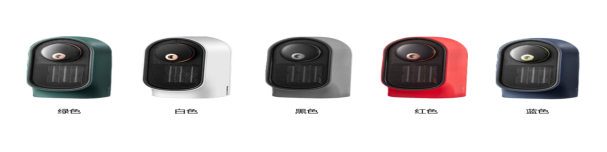
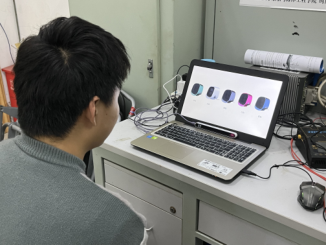
Figure 1: The experimental stimuli in experiment 1.Figure 2: Participant in the experiment and the environment in experiment 1.
RESEARCH METHODS This paper discusses the influence mechanism of different color and shape ratio of humidifier products on consumers’ visual attention and purchase intention. In this experiment, a desktop eye tracker was used to record the eye movements of 45 subjects when they watched pictures of humidifier pro- ducts of different colors and shapes. At the same time, the 45 subjects were classified according to age, gender and educational attributes, as shown in Table 1.
Experiment 1: The influence mechanism of different colors of humidifier on eye movement.
Influence Mechanism of Air Humidifier Product Color and Shape on User Preference 163
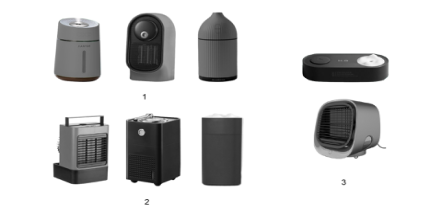
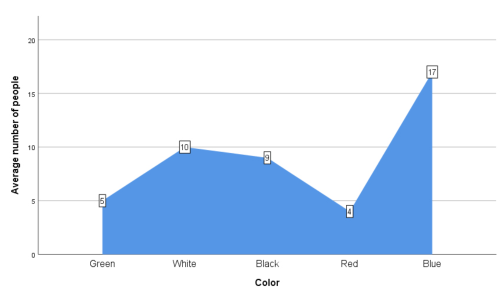
Figure 3: The experimental stimuli in experiment 2.Figure 4: 1 Overall selection of 45 subjects.
1) Experimental scheme: The independent variable of the experiment is the color of the well-known brand-humidifier product in the market.
The experimental dependent variables were objective eye movement colle- ction data and subjective choice.
2) Experimental samples: eight groups of color samples (5 colors) of well- known brand humidifier products on the market.
Experiment 2: The influence mechanism of different shapes of humidifier on eye movement.
1) Experimental scheme: The independent variable of the experiment is the shape ratio of the well- known brand-humidifier products in the market.
The experimental dependent variables were objective eye movement colle- ction data and subjective choice.
2) Experimental samples: modeling features of common humidifier pro- ducts on the market in 3.
ANALYSIS OF RESULTS Experiment 1: Overall analysis
The color choices of the 45 subjects are shown in the picture above: 5 people in green, 10 people in white, 9 people in black, 4 people in red, and 17 people in blue.
Table 2. Total duration of fixation.
Table available in the original PDF paper.
Green White Black Red Blue Age 18-25 years old 2.59 3.46 3.19 2.56 3.68 25-30 years old 2.54 2.35 3.91 2.29 3.85 30-35 years old 4.39 1.83 5.09 2.65 4.04
Table 3. Time to first fixation.
Table available in the original PDF paper.
Green White Black Red Blue Age 18-25 years old .29 .30 .23 .28 .26 25-30 years old .30 .23 .27 .27 .27 30-35 years old .34 .27 .32 .29 .34
Table 4. Duration of first fixation.
Table available in the original PDF paper.
Green White Black Red Blue Age 18-25 years old .25 .23 .19 .23 .24 25-30 years old .27 .22 .31 .24 .31 30-35 years old .27 .26 .20 .31 .27
The Effect of Age on Subjects’ Subjective Choice on Humidifier From the above data, it can be found that in terms of age parameters, the subjects in the 18-25 age group have the longest total fixation time on the blue humidifier, while the subjects in the 25-30 and 30-35 age groups are in The performance of the black humidifier was longer in gaze time.
It can be seen from the chart data that for the subjects in the age group of 18-25, the black humidifier can quickly attract the eyes of the subjects. For the subjects in the age group of 25-30 and 30-35 In other words, white can get attention more quickly.
In terms of the performance of the duration of first fixation, subjects of different age groups have different performances. Different from the total fixation duration and the first fixation time, from the perspective of age para- meters, the subjects of different age groups have different performances in the first fixation There was no strong correlation between fixation duration.
Influence of Gender on Subjects’ Subjective Choice on Humidifier Similarly, in the same way as the above analysis, in the gender classification, men are the first to be attracted by tough shapes, but the shape that pays the longest attention is round, while women are the first to be attracted by small shapes, but in tough shapes. The attention time is longer; in the public perception, men prefer tough products and women prefer round products, but the conclusion drawn in this experiment is the opposite, indicating that in the design of humidifier products, It is necessary to find the preferences of the group at a deeper level and not blindly follow.
Influence Mechanism of Air Humidifier Product Color and Shape on User Preference 165
Figure 5: 2 Overall selection of 45 subjects.
The Effect of Age on Subjects’ Subjective Choice on Humidifier Subjects with a bachelor’s degree or below are the first to pay attention to small shapes, but the first fixation duration and total fixation duration are the longest on tough shapes; subjects with a bachelor’s degree are the first to pay attention to small shapes and their first fixation lasts. The longest time, but the total attention time on the tough shape is longer; while the subjects with a graduate degree or above are the first to pay attention to the tough shape, but in terms of duration, they show a love for the round shape.
Experiment 1 Summary Judging from the subjective selection of this experiment, the 45 subjects sele- cted the largest number of blue humidifier products as a whole, and the overall selection ratio of blue was higher, from the dimensions of age, gender and education. Here are some conclusions:
(1) The subjects in the 18-25-year-old age group paid more attention to black in the total fixation duration; the subjects in the 25-30-year-old age group were more inclined to the total fixation duration and the first fixation duration. Black; both age groups have a clear preference for black in the data.
(2) Both men and women showed a certain preference for black and blue in total fixation duration and first fixation time; in terms of total fixation time, subjects with different educational backgrounds also showed a preference for blue and black products. choice tendency.
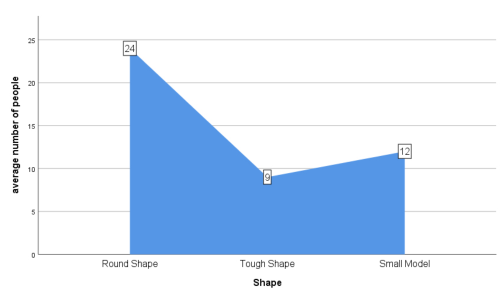
Experiment 1:Overall analysis The analysis method of experiment 1 is the same as that of experiment 1. The analysis of eye movement data in experiment 2 will not be described in detail.Judging from the subjective selection of this experiment, the 45 sub- jects selected the largest number of round humidifier products as a whole, and the overall selection ratio for the round shape was higher, from the per- spective of age, gender and educational background. There are the following conclusions:
(1) 18-25-year-old subjects have obvious preference for round shape, while 25-30-year-old and 30-35-year-old subjects pay more attention to tough shape; (2) Men’s preference for rounded shapes is more obvious, while women are more inclined to tough shapes; (3) Those with a bachelor’s degree or below and those with a bachelor’s degree paid the longest attention to tough styling, while those with a graduate degree and above preferred rounded styling.
CONCLUSION
Traditional user testing methods and performance measurements may indi- cate a problem or impediment for users, but they don’t explain the “why” or reveal how to fix the problem, which eye tracking does. From the data analy- sis results of the above eye movement experiment, among the 45 subjects, 37.8% of the subjects chose blue, and 53.3% of the subjects chose the round shape. The analysis found that there was a certain correspondence between the subjects’ subjective choices and the total duration of fixation. From this the following conclusions can be drawn: (1) In terms of the color preference of humidifier products, the subjects have the highest acceptance of blue, followed by black.
(2) In the selection of the proportion of the shape, the shape of the rounded proportion is more popular among users.
(3) The total duration of fixation and the duration of the first fixation can reflect the real psychological experience of the subjects to a certain extent.
In the process of designing this experiment, there are certain limitations in the arrangement of experimental materials, and the interference of material ordering on the subjects cannot be minimized. Therefore, the accuracy of eye movement data may be further improved. space, which is one of the limitations of this study. It is hoped that the psychology of humidifier product users can be more comprehensively analyzed in future research.
ACKNOWLEDGMENT
First of all, I would like to express my deep gratitude to my supervisor, Mr. Cao Huai. From the topic selection and structure of the thesis, the teacher gave me careful guidance, and he took time out of his heavy work to hold meetings and discussions with me many times. At the same time, I would like to thank Professor Fang from China University of Geosciences for lending me the eye tracker to complete the experiment, as well as the 45 subjects who participated in this experiment for taking time out of their busy schedules to participate in the eye-tracking experiment of this paper. I am deeply grateful for this!
REFERENCES
Juan Ning. Analysis and Evaluation of E-commerce Website Evaluation System [D].
Changsha: Hunan University, 2012.
Influence Mechanism of Air Humidifier Product Color and Shape on User Preference 167
Cu Lipei, xing Baojun. Group·–buying Navigation Website User Satisfaction stuar[J].
Journal of Modem Information, 2006(1): 81–84. BarnabyJ. Dixsonand Wayne L. Linklater. Eye Tracking of Men’S Preferences for Waist-to-Hip Ratioand Breast Size of Women [J]. Original Paper, 2011, 40:43—50. Chen Maodan. Research of phone gesture interaction design [D].Wuhan University
of Technology, 2013. 4. Li Xueqin, Zhao Ningxi, Wang Chunzhao, etc. A Preliminary Study on the Application of Eye Tracker to the Iconic Landscape of Campus Tourism—Taking the North Building of Nanjing University as an Example [J]. cta Agricultume JiaIIgxi, 2011, 23(6):148–151. Zhao Jianchun. The research of tourism online advertising effect evaluation on the
basis ot consUlller psychology [D]. Qingdao: Ocean University of China, 2012. Jenny Preece, Yvonne Rogers, Helen Sharp. Interaction Design. Wiley, 2002. Jenny Preece, lvonne Rogers, Helen Sharp. Interaction Design Beyond Human- Computer Interaction. John Wiley & Sons, 2003. Thanh An Nguyen, Yong Zeng. A physiological study of relationship between
designer’s mental effort and mental stress during conceptual design [J]. Computer- Aided Design, 2013, 54:3–18. Egon P.Koster, Jozina Mojet.From mood to food and from food to mood: A psychological perspective on the measurement of food-related emotions inconsumer research [J]. Food Research International, 2015, 76(2):180–191. Lisa Knorzer, Roland Brünken, Babette Park. Facilitators or suppressors: Effects [23]
Thanh An Nguyen, Yong Zeng. A physiological study of relationship between designer’s mental effort and mental stress during conceptual design [J]. Computer- Aided Design, 2013, 54:3–18.
LISTED IN THE AHFE DIGITAL BOOKSTORE CATALOGUE
Explore the complete digital volume
Usability and User Experience
Read this individual research paper free through the original publisher, or explore the full digital proceedings book.
ISBN 978-1-958651-15-5
Explore this ISBN in the AHFE Bookstore ↗Listed in the July 2026 bookstore catalogue; search by ISBN to confirm current availability · Digital book purchase optional