Huai Cao, Xinyue Gong, Kaixuan He (2022). Multi-Scenario Design of D Enterprise's Agent Driving Products Based on QFD. In: Usability and User Experience. AHFE Open Access, vol. 39, pp. 441–448. https://doi.org/10.54941/ahfe1001740
The advent of the new consumer era has led to rapid changes in order fulfillment scenarios and consumer needs. Merchants have also begun to expand multi-scenario and flexible real-time delivery services to meet different scenarios and consumer needs in a cost-effective manner. The rise of the "lazy economy" of the Z generation has also made instant delivery the "sweet pastry" in the Internet industry. In the past ten years, the agent driving market has flourished under the impetus of Chinese Internet companies, and with the changes in user needs, it has also extended to travel agent driving, business agent driving and other agent driving scenarios. However, with the normalization of the epidemic and the continuous changes in user needs, the agent driving industry is also facing considerable challenges. The specific problems are as follows: (1) In recent years, contemporary young people have changed their night lifestyles, the culture of workplace wine bureaus have become indifferent, and national control under the epidemic has caused KTV, bars and other entertainment venues to shut down one after another. The decline in the total market for drinking and drinking has forced the agency driving industry, which is dominated by the business of drunk driving, to find a second growth curve. (2) The driving products of various platforms are gradually becoming the same to a certain extent, and it is difficult to experience product differentiation. (3) With the substantial growth of the luxury car and new energy car market, the consumption level of head users of car-on-demand services has risen, and the existing car service market is showing a disconnection of the service link, which is in urgent need of digital transformation. Head users also put forward multi-scenario service requirements for on-demand driving. Therefore, broadening the service scenarios of the agent driving business, reversing the minds of users about driving on behalf of the drunk, and meeting the needs of users on behalf of the scene is the current research focus of scholars. Enterprise D is a global outstanding mobile travel platform, and its agent driving business is a branch of its business. The company’s current agent driving business is gradually being squeezed by a crowd of competing products due to its high service quality and high cost. The user's mind on the brand is still stuck in drunk driving, which makes it difficult to achieve breakthrough growth in GMV . This research takes D enterprise’s agent driving products as the research object, and conducts product expansion planning and research on its agent driving business through QFD theoretical methods. First of all, conduct scenario analysis and hierarchical decomposition of D enterprise’s customer needs. According to the principle of user demand analysis method KANO , analyze the current consumption needs and characteristics of D enterprise’s customers and potential customers, and determine the importance of user needs. Spend. Secondly, it analyzes the rising luxury car market and the new energy car market in the current automotive market, and uses QFD theory to transform user needs into a product development direction that can be used as a proxy driving platform to achieve GMV growth. It also analyzes the competitiveness of D enterprise, obtains the usability weight of the product expansion direction, and determines the key direction of D enterprise driving business scenario expansion. Finally, the product function upgrade and interactive interface optimization of the existing functions of the D enterprise’s agent driving platform will provide direction planning for the D enterprise’s agent driving business to achieve the second growth curve, reverse the user’s single mind on agent driving products, and enhance corporate competition ability.
The essence of designated-driven driving is that consumers exchange time with the chauffeured driver through money, and the chauffeured driver drives the consumer’s vehicle to a preset destination. In recent years, with the chan- ges in the lifestyle of contemporary young people at night, the indifference of workplace wine bureau culture and the national control under the epidemic, entertainment venues such as KTV and bars have been closed down one after another. The decline in the total amount of the drinking consumption market has forced the driving industry, which is dominated by the driving business after drinking, to find a second growth curve. The driving products of vari- ous platforms are becoming more and more similar to a certain extent, and it is difficult to experience product differentiation.
With the rise of the lazy economy, instant delivery has become a “sweet pastry”in the Internet industry. China’s takeaway service scene has also chan- ged from a single scene of food delivery by takeaways in the past, and now
takeaways can be completed according to the needs of users. Multiple sce- narios for express delivery, purchasing items on behalf of others, etc. This also provides a very valuable idea for the business scenario expansion of the chauffeur service.
With the substantial growth of the luxury car and new energy vehicle mar- ket, the consumption level of the leading users of chauffeur-driven services has risen, and the existing car service market is showing a disconnection of service links, and digital transformation is urgently needed. Head users also put forward multi-scenario service requirements for chauffeur driving, such as surrogate maintenance, surrogate charging, etc.
Designated-Driven App D Enterprise is a world-renowned mobile travel platform, and the chauffeur service is a branch of its business. Due to its high service quality and high cost, the company’s current chauffeur-driven business is gradually being squeezed by a number of competing products, and users’ minds about the brand are still stuck in driving after drinking, so it is difficult to achieve breakthrough growth in GMV. Based on the perfect driver training system, chauffeur service system and strong brand endorsement of D company, D company has good conditions to expand business scenarios. This research takes the v products of enterprise D as the research object, and conducts product expansion planning and research on its chauffeur-driven business.
In recent years, other small and medium-sized travel companies in China have successively launched designated-driven products, but most of them focus on price advantages. In order to consolidate users, some car service companies and insurance companies have also launched services such as annual inspections, car washes, etc., but due to factors such as total user volume, service quality, and brand promotion, the results are modest. But it can also be seen that major companies have a trend of developing in the direction of multi-scenario driving.
RESEARCH METHODS Kano Model
The KANO model is a useful tool invented by Noriaki Kano, a professor at Tokyo Institute of Technology, to classify and prioritize user needs. linear relationship. According to the relationship between different types of quality characteristics and customer satisfaction, Professor Kano divided the quality characteristics of products and services into five categories: Must-be quality, One-dimensional quality Attractive quality, Indifferent quality and Reverse quality Satisfaction Index
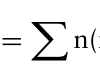
Customer Satisfaction Index (CSI) can be divided into increasing satisfaction index (SII) and decreasing dissatisfaction index (DDI), and the calculation formula is as follows. The smaller the absolute value of the two is, the smaller the impact on the user is; on the contrary, the greater the impact
Multi-Scenario Design of D Enterprise’s Agent Driving Products Based on QFD 443
Table 1. Primary user requirements.
Table available in the original PDF paper.
Primary User Requirements
On behalf of washing
On behalf of parking
A1 A2 A3 A4 A5 A6 A7 On beh- alf of charging
On beh- alf of refueling
On behalf of maintai- ning
On behalf of picking up children
On beh- alf of annual car inspection
Table 2. Questionnaire score table.
Table available in the original PDF paper.
Function Dislike Accept It doesn’t matter Deserved Like Provide 1 2 3 4 5 Do not provide 5 4 3 2 1
Equation reproduced from the original PDF.
QFD Model Quality function deployment was proposed by Japanese quality management master Yoji Akao in 1966. It can transform user needs into design require- ments, calculate key design requirements, optimize resource allocation, and design products that satisfy users. Its characteristics are that it pays attention to market research, obtains user needs through investigation, uses quality matrix to decompose user needs into various stages of product design, and promotes cooperation between departments related to products to jointly ensure product quality.
RESEARCH PROCESS Demand Research
Through market research and face-to-face interviews with chauffeur drivers, the new requirements of current private car owners (including fuel vehicles and new energy vehicles) for designated-driven product functions are col- lected. Seven first-level user requirements are obtained through sorting are shown in Table 1.
Questionnaire Design The questionnaire is divided into two parts. The first part is the basic informa- tion of the user, and the second part is the Kano questionnaire. According to the first-level user demand table, the respondents are asked questions from the positive and negative aspects of a single demand to determine the user importance of the demand. Each evaluation has 5 options, labeled 1-5, as shown in Table 2. Substitute the results into the Kano evaluation table to get each requirement are shown in Table 3.
Table 3. Kano model evaluation table.
Table available in the original PDF paper.
Function Like Deserved It doesn’t matter Accept Like Like Q A A A O Deserved R I I I M It doesn’t matter R I I I M Accept R I I I M Dislike R R R R Q
In the end, a total of 103 valid questionnaires were recovered. Among them, 33.18% used chauffeurs more frequently, and the ratio of fuel vehicle owners to new energy vehicle owners was 6.6:3.4.
Demand Importance Calculation According to Kano’s demand classification, the calculation formula of the user satisfaction index Ti is as formula (3). According to formula (1) and (2), it is derived that when the SII value or DDI value tends to 0, the demand for this demand is relatively high. The smaller the impact of user satisfaction; the greater the impact when it tends to 1.
Ti = max(|SII||DDI). (3) Then, using the 5-order Likert scale (1 means the least satisfied, 5 means the most satisfied), each tested user is asked to rate the current state of sati- sfaction and the target state, and the average value is taken as the current state. Satisfaction Si and target satisfaction S0, the calculation formula of the target improvement rate Vi of user demand satisfaction is as formula (4).
Vi = Si/S0. (4) In order to more accurately determine the importance of the user’s needs, an adjustment coefficient k is introduced, with values 0, 0.5, 1, and 1.5, cor- responding to indifference quality, must-be quality, one-dimensional quality and attractive quality, respectively. In formula (3) (4), the demand adjustment improvement rate IRi can be calculated, such as formula (5).
IRi = (1 + Ti)k · Vi. (5) Each user scores the weight Hi of each requirement, and the score ranges from 1 to 5, where 1 represents the least important, 5 represents the most important, and the average is used as the final score of the user’s requirement weight. On the basis of the demand adjustment improvement rate IRi, combi- ned with the user demand weight Hi, the importance LRi of the chauffeured user demand can be calculated, as shown in formula (6).
LRi = IRi · Hi. (6) According to the product function requirements data of 103 car owners on the driving APP, the Kano classification of each user’s needs is calculated
Multi-Scenario Design of D Enterprise’s Agent Driving Products Based on QFD 445
Table 4. List of the final improtance (LRi) of user needs.
according to Table 3, and then the final importance LRi of the user’s needs is calculated according to formulas (3)-(6). The Carnot analysis results of the functional design of APP products are shown in Table 4.
House of QDF Matrix Convert the needs of chauffeur users and car owners (potential users) into design requirements, use the KJ method to sort out the design requirements, fill in the sorted design requirements into the quality function expansion matrix table, and determine the design requirements and the requirements of chauffeur users. See The relationship yj, requires users to rate the degree of correlation between the two on a scale of 1, 3, and 5. The higher the cor- relation, the higher the score. Based on the LRi in formula (6) obtained from the House of Quality expansion matrix, formula (7) can be used to obtain the design requirement importance Wi, and then the key design requirements are determined according to the size of the important Wi values of the design requirements.
Equation reproduced from the original PDF.
Based on the design requirements of the driver app user interface for- mulated by professional designers within D company based on experience, and according to the quality function development matrix and enterprise development goals, the user needs are now transformed into initial design requirements, and then they are summarized and graded. , so as to obtain 4 first-level design requirements and 11 second-level design requirements in Table 5.
RESEARCH RESULTS Questionnaire Results
The results of the questionnaire show that among the 7 product functional requirements, 1 requirement is attractive demands: A1, 3 requirements are One-dimensional Quality: A4, A5, A6, and 3 requirements are Indifferent Quality: A2, A3, A7. The highest absolute value of SII is A1 and A5, which means that the better the APP does in these three aspects, the higher the user satisfaction. The absolute values of DDI are A4 and A6 respectively,
Table 5. The design requirements of the designated driver.
Table available in the original PDF paper.
Primary Design Requirements The Secondary Design Requirements Serial Number Information architecture Information classification a Interface navigation b
Visual Design
Character size c Picture size d Color combination e Function Design Recommended design for nearby stores f Commonly recommended design g
Value perception
Privacy h Preferential strength i Membership service j
Table 6. Relation matrix of APP design requirements and user needs.
which means that when the APP does not do well in these two aspects, user satisfaction will drop rapidly.
Kano-QFD Matrix
Table 6 presents a matrix diagram of the relationship between user require- ments and design requirements. As can be seen from the matrix diagram, user privacy, interface guidance, and image size are the top three design points in order. Privacy, price and efficiency are the most important things that users value when using chauffeured products, so they need to be paid attention to in the design of the entire experience link. Ranked fourth and fifth are interface colors and discounts. Content design belongs to the content layer, including distance information, price concessions, and operational pictures. Information architecture belongs to the structural layer, focusing on whether the information presented to users is reasonable and meaningful, which is a key factor in enhancing user experience.
DESIGN POINTS Based on the above data and conclusions, combined with the brand advan- tages and product tone of D enterprise, the design points of the driving app are drawn.
Multi-Scenario Design of D Enterprise’s Agent Driving Products Based on QFD 447
1. Improve the function of transparent transmission of the billing card on the home page.
The tab stream is added on the top of the billing card to display the transpa- rent transmission of business information such as driving, annual inspection, and parking, so that users can know the addition of new functions at the first time. When users have such needs, they only need to switch the function mode on the billing card. The launch of new functions requires a lot of inve- stment in development resources. Therefore, effective function transparent transmission is very important. If the function module is hidden too deeply, the user will be unaware of the new function, and it is not conducive to the collection of effective data feedback in the later stage.
According to the analysis of the QFD model, the demand for agency annual inspection, agency maintenance and agency parking is the highest. Therefore, these three functions can be launched first, and users’ feedback on the functi- ons of universal replacement products can be observed after half a year of launch, and then optimized in a timely manner. upgrade. When the feedback of the current three types of functions is good, the charging function can be launched in a targeted manner. Because this function requires a certain pro- portion of new energy vehicles and high-income white-collar users, first-tier cities such as Beijing, Shanghai, Shenzhen and Hangzhou can choose to open the pilot function.
2. Optimize the link for users to issue orders. For functions such as car washing, charging, and refueling, users will only place orders when there is such a demand at the moment. Therefore, shor- tening the user’s billing path will help improve the final order completion rate. In the service product content display area, recommendation rules can be added: if the old user has a purchase record, match whether the current location is a store that has been visited, and sort based on the order, location, and last purchase time. For new users, refueling, car washing, charging, and maintenance stores are sorted based on the user’s current location, allowing users to quickly select categories and place orders on the homepage.
3. Increase the protection of the owner’s vehicle privacy and security. For agency products, the car owner needs to hand over the car and car keys to the platform driver, and the driver replaces the car owner to com- plete the corresponding needs. Therefore, some users will inevitably have certain concerns. Therefore, in the head operation poster area of the home- page, the quality of the platform drivers and the amount of accident claims will be transparently transmitted to users to provide users with psychological protection.
Secondly, after the order-receiving link of the driver-end App, the vehi- cle inspection link is added: the driver needs to take a video of the owner’s vehicle, check the current interior items with the owner, etc., and when the owner’s key is delivered during the vehicle change phase, the owner coope- rates with the driver to conduct vehicle inspections. , to avoid unnecessary accidental losses. If there is any loss, you can immediately report the problem to the customer service through the reporting function, and let the platform solve it.
CONCLUSION
This paper first uses the kano model to qualitatively analyze the user requi- rements, and then uses the QFD model to quantify the requirements, sort the design points, and provide guidance for App design. Although price is a sensitive factor affecting user consumption, service quality is still the most important for chauffeured products, especially for the head users who contribute the most GMV to chauffeured products. At present, domestic multi-scenario driving is still a blue ocean market, and there is no price advan- tage in the initial stage of promotion. Therefore, in order to improve product revenue, it is necessary for enterprises to strengthen cooperation with relevant enterprises to reduce costs.
ACKNOWLEDGMENT
The authors would like to acknowledge myself and my team.
REFERENCES
Chapanis, A. (1996). Human factors in systems engineering. Wiley Series in. Chowdhury, M. and Quaddus, M. (2016). A multi-phased QFD based optimization approach to sustainable service design. International Journal of Production Economics, 171, pp. 165–178. Kuo, Y. (2004). Integrating Kano’s Model into Web- community Service Qua-
lity. Total Quality Management & Business Excellence, 15(7), pp. 925–939. Sireli, Y., Kauffmann, P. and Ozan, E. (2007). Integration of Kano’s Model Into QFD for Multiple Product Design. IEEE Transactions on Engineering Management, 54(2), pp. 380–390. Tang, Z., Long, Y. (2012). Research on acquisition method of personalized require-
ments based on Kano model. Soft Sci. 26(02), 127–131. (in Chinese). Tontini, G. (2007). Integrating the Kano Model and QFD for Designing New Products. Total Quality Management & Business Excellence, 18(6), pp. 599–612. Wang, J., Xiong, W. (2014).Research on the evaluation model of product innovation
design scheme based on QFD. Technology Management Research, 34(10), 53–57 (in Chinese). Yu, H. and Ko, H. (2012). Integrating Kano model with strategic experiential modules in developing ICT-enabled services. Management Decision, 50(1), pp. 7–20. Zhang, M., Bai, S., Guo, Y. (2007). The application of entropy-based QFD in the
development of aviation weapons.Industrial Engineering,10(4):4 (in Chinese).
LISTED IN THE AHFE DIGITAL BOOKSTORE CATALOGUE
Explore the complete digital volume
Usability and User Experience
Read this individual research paper free through the original publisher, or explore the full digital proceedings book.
ISBN 978-1-958651-15-5
Explore this ISBN in the AHFE Bookstore ↗Listed in the July 2026 bookstore catalogue; search by ISBN to confirm current availability · Digital book purchase optional