Matteo Zallio, Takumi Ohashi (2022). The Evolution of Assistive Technology: A Literature Review of Technology Developments and Applications. In: Human Factors in Accessibility and Assistive Technology. AHFE Open Access, vol. 37, pp. 85–93. https://doi.org/10.54941/ahfe1001646
The term “Assistive Technology” (AT) has evolved over the years and identifies equipment or product systems, whether acquired, modified, or customized, that are used to increase, maintain, or improve functional capabilities of individuals with disabilities. Considering the advances that have been made, what trends can be identified to provide evidence of the evolution of AT as devices that foster accessibility and empower users with different abilities? Through a systematic literature review, we identify research items that offer evidence of the evolution of the meaning, purpose, and applications of AT throughout the history. This paper provides evidence that AT evolved from products to improve functional capabilities of individuals with disabilities toward enabling technologies that facilitate tasks for people with different needs, abilities, gender, age, and culture. This evolution will lead to a positive demystification of the meaning and applications of AT toward broader usage acceptance among mainstream users.
The term “Assistive Technology” (AT) has been widely used over the years and within various domains. One of the first official definitions of AT was included in the Technology-Related Assistance for Individuals with Disa- bilities Act, which was first passed in 1988, reauthorized in 1994, and reproposed in 1998 (Golden, 2011). According to the act, the term AT iden- tifies any item, piece of equipment, or product system, whether acquired commercially, modified, or customized, that is used to increase, maintain, or improve functional capabilities of individuals with disabilities (American Congress, 1988). Additionally, there is an emphasis on the term AT service, which refers to any service that directly assists an individual with a disability in the selection, acquisition, or use of an AT device (Alper and Raharinirina, 2006). As technology has become one of the primary engines for econo- mic activity, education, and innovation, the substantial progress made in the development of AT has significantly benefited individuals with disabilities of all ages (American Congress, 1998). The Assistive Technology Act of 2004
amends the previous act of 1998 by embracing the definition of AT as a service consisting of expanding the availability of access to technology, inclu- ding electronic and information technology to individuals with disabilities (American Congress, 2004). The advancement of the scope of AT over the past three decades highlights a significant evolution of the definitions and applications of products and services in the AT domain by embracing people with different capabilities who could benefit from them (Zallio et al. 2021; Kelly et al. 2019). In recent years, more technologies have been developed and certain ones initially developed for specific users including individuals with mild or moderate impairments, or older adults, evolved as augmenta- tive products for mainstream users (Zallio et al. 2019). By looking at this evolution of the definitions and applications of AT, a question arises. What trends and applications of AT can be identified across the scientific literature to provide evidence of the growth of AT as devices that foster accessibility and empower users with different abilities? In this paper, we aim to iden- tify the trends in the evolution of the meaning, purpose, and applications of AT with the aim of defining perspectives of AT that consider current trends through a systematic literature review.
STATE OF THE ART: HISTORY AND CONTEXT AT was recently defined by ISO standard 9999:2016 as a group of tech- nologies including devices, equipment, instruments, and software, especially produced or generally available, used by or for persons with disabilities for different purposes (ISO, 2016). Although this recent definition seems to be the broadest to date, there are different examples, dating back to centuries ago, of early developments of AT that refer to such a definition and are rela- ted to different applications. From simple technological innovations such as eyeglasses, developed in Italy around 1200 (Ilardi, 1993), to wheelchairs first developed in China in the 5th century (Kamenetz, 1969), a large variety of items can be classified under the term AT. To help identify some examples of AT as products or equipment to support people with disabilities, it is important to refer to the International Classification of Functioning (ICF), which defines different capabilities, including vision, hearing and speech communication, mobility, and cognition and learning skills (World Health Organization, 2001). Some instances of AT to support vision abilities could refer to products that augment visual capability, allowing for better perfor- mance of certain Activities of Daily Living (ADLs). Braille displays allow people who have moderate or severe visual impairments to access spaces and understand how to use certain objects (Zhou et al. 2011). Magnifiers offer great support for people who have minimal or mild visual impairments to see images, read text, and identify meaningful information more clearly (Aju- won et al. 2016). Text-to-speech systems and screen-reading software are supporting technologies that aim to support a wide variety of people with minimal, moderate, or severe visual impairments (Smith et al. 2009). Regar- ding hearing and speech communication, there have been a number of devices developed specifically for deaf or hard-of-hearing people, including AT used to support ADLs (Frush, 2019). Some of the most common examples are
The Evolution of Assistive Technology: A Literature Review of Technology Developments 87
personal amplification systems for older adults or people with hearing loss. Mobility, comprising upper and lower body mobility, includes different tech- nologies developed throughout the centuries (Cowan et al. 2012). In recent years, several technologies to support cognitive and learning skills have been developed to allow people with different levels of skills to perform daily routi- nes at home or in the community (O’Neill and Gillespie, 2014). These are just some examples of AT developed to address different challenges as described by the ICF, and it is possible to identify a pattern that shows different levels of specifications that AT has used to solve precise challenges that different peo- ple experience. In this non-exhaustive list, several products were specifically developed for people with severe impairments and more recently it appears that the same products have become more mainstream and appreciated by a wider audience. This observation of trends generates a hypothesis to be verified.
RESEARCH METHODOLOGY Data Collection
To provide evidence-based support for the hypothesis, we propose a syste- matic literature review of scientific publications to understand the type of technology developed, its application in terms of users and capabilities, its evolution and adoption over time, and what trends have emerged across a consistent number of research projects. The systematic literature review was conducted based on the PRISMA model (Liberati et al. 2009) and was run on October 22, 2021, using the Web of Science Core Collection database. The literature review search focused only on English-language articles and followed different steps. The first phase was articulated with the following search query: [(TI = (assistive technology)) AND TI = (vision impair* OR near-blind OR partially sighted OR visually challenged OR hearing impair* OR hard of hearing OR deaf OR mobility impair* OR cognitive impair* OR cognitive disorder)]. This search resulted in a collection of 1635 papers. The literature review included articles from the engineering-related field; thus, the first narrowing down of papers consisted of selecting the following areas of engineering in the Web of Science search engine, resulting in 1197 papers. We then narrowed down papers by selecting original and open-access jour- nal papers. The resulting 173 articles were examined by reviewing their titles and abstracts. Two authors reviewed them independently to identify studies focusing on AT development and application, including design, prototype, and user-test, and studies that performed data collection and data analysis were included in the search. Articles in which the two authors disagreed on inclusion/exclusion were discussed until a consensus was reached between them, resulting in 90 papers. Further, four works were excluded based on full-text screening, and a final pool of 86 research articles was determined for full literature review in this study.
Descriptive Analysis Descriptive analysis was conducted on the 86 selected papers to describe AT development trends in the literature. The analysis counted the number
88 Zallio and Ohashi
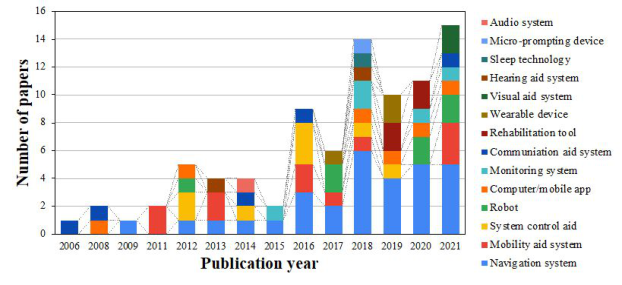
Figure 1: Groups of type of technology studied and developed over the years.
of papers from the following three perspectives. First, the types of techno- logy the papers developed were examined. An initial open coding performed by the second author elicited a total of 24 codes associated with develo- ped technology in each article. Some of them were relatively similar (e.g., “web interface” and “GUI”), whereas others had precise and distinct mea- nings (e.g., navigation system). Then, second-order coding was performed by discussion among two authors to review the initial coding and title/abstract of the papers. This process elicited 14 codes used to categorize the papers in this study. Secondly, users’ skills/capabilities, which the ATs aimed at suppor- ting, were examined and classified into vision, hearing (hearing and speech communication), mobility, and cognition (cognition and learning skills), as discussed in Section 2. Thirdly, a categorization regarding main-stream tech- nologies was made. Whereas ATs have been traditionally defined as devices specifically developed for people with disabilities, which implicitly means for a certain number of individuals, mainstream technologies are intended for more generalized use by a broader population, rather than for use entirely or primarily by people with disabilities (America, 2007).
RESULTS AND DISCUSSION
The literature review provided insightful results that allowed for the crea- tion of evidence-based findings on developments and applications of ATs. The constant growth of AT development was found predominantly in navi- gation systems (30 papers) such as a wear-able navigation device (Tachiquin et al. 2021), marker detection using machine learning techniques (Elgendy et al. 2021), and mobility aid systems (11 papers) such as a smart walker (Mostofa et al. 2021). Other types of developed technologies that are worth mentioning are visual aid, hearing aid and audio, computer, and mobile app systems to improve accessibility. Fig. 1 shows the evolution of different types of technology developed over time and reported in selected articles.
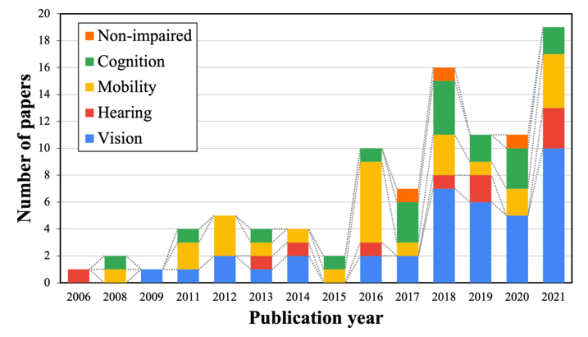
Fig. 2 shows the variability of publications reporting AT developed to address different users’ capabilities/skills. Around 39 papers focused on addressing visual capabilities, 26 mobility capabilities, 19 cognitive capabilities, and 10 hearing capabilities. The diagram shows a growth in the
The Evolution of Assistive Technology: A Literature Review of Technology Developments 89
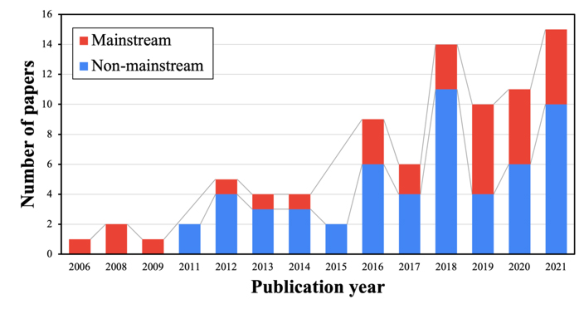
Figure 2: Publications reporting AT developed to address different users’ capabilitie- s/skills.Figure 3: Evolution of the trend of AT developed by using mainstream technologies (red) and non-mainstream technologies (blue).
number of publications over the years, as well as a growth of studies for the development of AT to solve visual capability issues. Different patterns can be identified regarding the area of mobility or cognitive capabilities where the growth is not constant, as for visual capabilities. This trend may be attribu- ted to more interest from the scientific community, more attention from a regulatory perspective, or more awareness of actual challenges to solve for the community.
Fig. 3 shows the trend of AT development in relation to mainstream or non-mainstream technologies. Mainstream technologies are those currently popular among a broader population and can be used, with some adaptati- ons, to support people with different level of abilities. Non-mainstream refers to technologies developed specifically for a limited number of individuals with certain needs.
Although the percentage of articles that reported research projects utili- zing non-mainstream technology was higher than those utilizing mainstream technology, growth of the use of mainstream technology appears in recent
90 Zallio and Ohashi
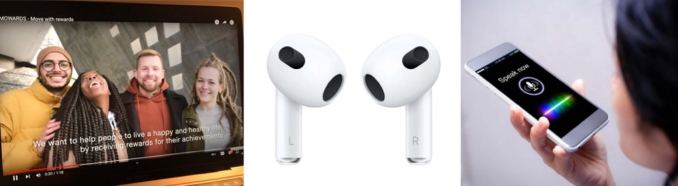
Figure 4: Examples of early developments of Assistive Technology that has now become mainstream.
years. Over the years, particularly from 2016, the number of products deve- loped and tested in the selected papers based on mainstream technologies is growing. This dataset highlights a trend that will potentially impact the development of future AT and will lead to allowing AT to become more accepted and used by mainstream consumers. Based on the results of the literature review, there is a strong focus on technologies developed to answer visual, hearing, and mobility challenges, which can vary from a severe impair- ment to a less severe or mild impairment. Notwithstanding the high number of technologies conceptualized and developed in the analyzed papers belon- ging to the category of AT, growth in the use of mainstream technologies can be highlighted as enabling the development of new AT. On the other side, the influence that AT has on mainstream technology appears evident. Some of them be-came widely used by mainstream users. This mutual effect might bring added value when developing technologies for a diverse range of people and the use of mainstream technologies can influence the deve- lopment of AT and vice versa. To reinforce this evidence with examples from daily technologies, three supporting devices that help to achieve cer- tain tasks today were developed years ago as AT. Closed captioning service is a clear example of a digital technology that was born as an AT, to pro- vide support for people who are deaf or hard of hearing (Gernsbacher, 2015). Captions became particularly beneficial for people watching videos in their non-native language, for children and adults learning to read, and in general to facilitate the understanding of a topic in a video. Assistive listening devices refer to various types of amplification equipment designed to improve the communication of individuals who are hard of hearing to enhance the accessibility to speech signals when individual hearing instru- ments are not sufficient (Kim and Kim, 2014). Among them, noise-canceling headphones are these days among the most popular offerings of technology manufacturers.
Speech recognition systems and devices have proved to be enormously beneficial for people with physical disabilities, having the potential to pro- vide a fast and easy-to-use means of input for computer access and control of the home environment (Hawley, 2002). These days every smartphones, tablets, and computers have such capability and billions of users around the world are making use of the potential of the speech recognition systems. This is a further example of how an AT became more used as a mainstream technology.
The Evolution of Assistive Technology: A Literature Review of Technology Developments 91
CONCLUSIONS AND FUTURE VISION In this paper, we completed a systematic literature review that identified a growing trend of the evolution of certain AT as mainstream technologies. It was identified that some of the major applications of these developments are having a significant impact on human capabilities such as mobility, hearing, and vision. While AT has been defined as a term over the years that specifi- cally focuses on products developed for people with special needs, we argue that such products may have a broader use across mainstream users.
This research also provides evidence of the value of Inclusive Design in AT development. AT design is a clear example of an approach that allows for the design of products for users with specific needs, which can then be easily extended to meet the needs of a broader population. The examples mentioned in this paper clarify with evidence the relevance of designing with a specific goal in mind, that is, not to limit the creative process to solve a limited number of needs identified across a sample population that doesn’t represent the diversity of people, their capabilities, age, gender, language, and culture, but rather to go beyond the mainstream concept of designing for the “many” and start to include in the design process diverse groups of people (Zallio et al. 2020). This process will lead to the creation of products that are not only classified as AT but can serve a similar purpose of enabling all people, regardless of their age, gender, ability, and culture to be equal participants in the consumer world (Zallio and Ohashi, 2022).
ACKNOWLEDGMENT
This project received funding from Horizon 2020: EU Programme for Rese- arch and Innovation under the Marie Skłodowska-Curie grant agreement No. 846284 and was partly supported by the Center of Innovation Program of the Japan Science and Technology Agency (Grant No. JPMJCE1309). The authors equally contributed to the conception, data analysis, development, and writing of this research article.
REFERENCES
Ajuwon, P.M., Meeks, M.K., Griffin-Shirley, N., Okungu, P.A. (2016). Reflections of teachers of visually impaired students on their assistive technology competencies. J. Vis. Impair. Blind. 110(2), 128—134. Alper, S., Raharinirina, S. (2006). Assistive Technology for Individuals with Disa-
bilities: A Review and Synthesis of the Literature. Journal of Special Education Technology, 21(2), 47–64. doi:10.1177/016264340602100204 America, I. o. M. U. C. o. D. i. (2007). The Future of Disability in America (Vol. 7).
Washington (DC). National Academies Press (US). American Congress (1988). 2561 – 100th Congress: Technology-Related Assistance for Individuals With Disabilities Act of 1988. American Congress (1998). 2432 – 105th Congress: Assistive Technology Act of
1998. American Congress (2004). 4278 – 108th Congress: Assistive Technology Act of
2004.
92 Zallio and Ohashi
Cowan, R.E., Fregly, B.J., Boninger, M.L., Chan, L., Rodgers, M.M., Reinkensmeyer, D.J. (2012). Recent trends in assistive technology for mobility. J Neuroeng Rehabil. 9(1), 20. doi:10.1186/1743-0003-9-20 Elgendy, M, Sik-Lanyi, C, Kelemen, A. (2021). A Novel Marker Detection System
for People with Visual Impairment Using the Improved Tiny-YOLOv3 Model. Comput. Methods Programs Biomed. doi:10.1016/j.cmpb.2021.106112 Frush, H. (2019). Assistive Hearing Technology for Deaf and Hard-of-Hearing Spoken Language Learners. Educ. Sci. 9(2), 153. doi:10.3390/educsci9020153 Golden, D.C. (2011). Assistive Technology. In: Kreutzer, J.S., DeLuca, J., Caplan, B.
(eds.), Encyclopedia of Clinical Neuropsychology, pp. 265--268. New York, NY: Springer New York. Gernsbacher, M.A. (2015). Video Captions Benefit Everyone. Policy Insights Behav.
Brain Sci. 2(1), 195–202. doi:10.1177/2372732215602130 Hawley, M.S. (2002). Speech Recognition as an Input to Electronic Assistive Technology. Br. J. Occup. Ther. 65(1), 15–20. doi:10.1177/030802260206500104 Kamenetz, H.L. (1969). A Brief History of the Wheelchair. J. Hist. Med. Allied Sci.,
XXIV(2), 205–210. doi:10.1093/jhmas/XXIV.2.205 Kelly, P., Zallio, M., Duarte, B., Berry, D. (2019). Design for Enabling Technologies. A Framework to Empower Multi-level User Engagement. In: Di Bucchianico, G. (ed.) Advances in Design for Inclusion. AHFE 2018. Advances in Intelligent Systems and Computing, vol. 776. Springer, Cham. doi.org/10.1007/978-3-319- 94622-1_7 Kim, J.S., Kim, C.H. (2014). A Review of Assistive Listening Device and Digi-
tal Wireless Technology for Hearing Instruments. Korean J Audiol. 18(3), 105. doi:10.7874/kja.2014.18.3.105 Ilardi, V. (1993). Florence’s Leadership in the Development of Eyeglasses in the Fifteenth Century. Arte Lombarda, Metodologia della ricerca orientamenti attuali: Congresso internazionale in onore di Eugenio Battisti (105/107), pp. 2–4. International Standards Organization (2016). ISO 9999:2016 Assistive products for
persons with disability - Classification and terminology. Geneva, CH. Liberati, A., Altman, D.G., Tetzlaff, J., Mulrow, C., Gøtzsche, P.C., Ioannidis, J.P.A., Moher, D. (2009). The PRISMA Statement for Reporting Systematic Reviews and Meta-Analyses of Studies That Evaluate Health Care Interventions: Explanation and Elaboration. PLoS Med. 6(7) doi:10.1371/journal.pmed.1000100 Mostofa, N., Feltner, C., Fullin, K., Guilbe, J., Zehtabian, S., Bacanli, S.S., Boloni,
L., Turgut, D. A (2021). Smart Walker for People with Both Visual and Mobility Impairment. Sensors. doi:10.3390/s21103488 O’Neill, B., Gillespie, A. (2014). Assistive Technology for Cognition. Psychology Press. Smith, D.W., Kelley, P., Maushak, N.J., Griffin-Shirley, N., Lan, W.Y. (2009). Assi-
stive technology competencies for teachers of students with visual impairments. J. Vis. Impair. Blind. 103(8), 457—469. Tachiquin, R., Velazquez, R., Del-Valle-Soto, C., Gutierrez, C.A., Carrasco, M., De Fazio, R., Trujillo-Leon, A., Visconti, P., Vidal-Verdu, F. (2021). Wearable Urban Mobility Assistive Device for Visually Impaired Pedestrians Using a Smartphone and a Tactile-Foot Interface. Sensors. https://doi.org/10.3390/s21165274 World Health Organization (2001). International classification of functioning, disa-
bility and health: ICF. Geneva, CH.
The Evolution of Assistive Technology: A Literature Review of Technology Developments 93
Zallio, M., Berry, D., Leifer, L.J. (2019). Meaningful Age-Friendly Design. Case Studies on Enabling Assistive Technology. In: Ahram, T., Falcão, C. (eds.) Adva- nces in Usability and User Experience. AHFE 2019. vol. 972. Springer, Cham. doi.org/10.1007/978-3-030-19135-1_76 Zallio, M., Kelly, P., Cryan, B., Berry, D. (2021). A Co-Design Approach for a Smart
Cooking Appliance. The Application of a Domain Specific Language. In: Ahram T.Z., Falcão C.S. (eds.) Advances in Usability, User Experience, Wearable and Assistive Technology. AHFE 2021. Lecture Notes in Networks and Systems, vol. 275. Springer, Cham. https://doi.org/10.1007/978-3-030-80091-8_59 Zallio M., Berry D., McGrory J. (2020). How to Democratize Internet of Things Devices: A Participatory Design Study to Improve Digital Literacy. In: Di Bucchi- anico G., Shin C., Shim S., Fukuda S., Montagna G., Carvalho C. (eds.) Advances in Industrial Design. AHFE 2020. Advances in Intelligent Systems and Computing, vol. 1202. Springer, Cham. https://doi.org/10.1007/978-3-030-51194-4_19 Zallio, M., Ohashi, T. (2022). The Evolution of Assistive Technology: A Lite-
rature Review of Technology Developments and Applications. Available at: https://arxiv.org/abs/2201.07152 Zhou, L., Parker, A.T., Smith, D.W., Griffin-Shirley, D. (2011). Assistive technology for students with visual impairments: Challenges and needs in teachers’ preparation programs and practice. J. Vis. Impair. Blind. 105(4), 197–210.
LISTED IN THE AHFE DIGITAL BOOKSTORE CATALOGUE
Explore the complete digital volume
Human Factors in Accessibility and Assistive Technology
Read this individual research paper free through the original publisher, or explore the full digital proceedings book.
ISBN 978-1-958651-13-1
Explore this ISBN in the AHFE Bookstore ↗Listed in the July 2026 bookstore catalogue; search by ISBN to confirm current availability · Digital book purchase optional