Matteo Zallio, Taihe Huang, Yutaka Osaki, Shiqi Hong, Xiaomin Chang, Wei Liu, Takumi Ohashi (2024). The Ethics of Immersion: A Scoping Review of VR and AR Technologies. In: Accessibility, Assistive Technology and Digital Environments. AHFE Open Access, vol. 121, pp. 91–101. https://doi.org/10.54941/ahfe1004617
Immersive technologies such as augmented reality (AR), virtual reality (VR), mixed reality (MR), and extended reality (XR) are rapidly evolving, presenting significant opportunities for enhancing user experiences. Nevertheless, their widespread adoption introduces substantial ethical challenges that necessitate thorough exploration. This research conducts a comprehensive investigation into the ethical considerations associated with these technologies, employing a methodical literature review and synthesis approach. Utilizing the PRISMA-ScR framework alongside the KJ method, this study analyzes 34 pertinent articles, uncovering 189 unique ethical concepts that are subsequently organized into 15 coherent categories. The analysis illuminates critical ethical concerns, including the protection of user rights within virtual spaces, the dichotomy between real and virtual worlds, the imperative for inclusive and equitable access, the necessity to ensure user safety and well-being, and the call for the establishment of robust ethical governance frameworks. The derived findings propose a future research agenda that accentuates the importance of navigating ethical dichotomies, enhancing inclusivity, advocating for user-centric development practices, instituting strong governance measures, and bolstering ethical awareness. By tackling these identified ethical dimensions, the present study seeks to promote a judicious and ethical advancement of immersive technologies, aiming to enable society to leverage their profound benefits responsibly while adhering to ethical standards and mitigating potential risks.
Immersive technologies, including augmented reality (AR), virtual reality (VR), mixed reality (MR), and extended reality (XR), are transforming user experiences across various domains. However, their rapid advancement and adoption have raised critical ethical concerns that demand rigorous exam- ination and addressing. As users engage with virtual environments and digitally-augmented realities, a multitude of ethical issues emerge, such as protecting user rights and privacy, ensuring inclusive and equitable access,
and mitigating potential physiological and psychological impacts (Brey, 1999; Heimo et al., 2014; Steele et al., 2020; Zallio and Clarkson, 2022; Zallio and Clarkson, 2023, Zallio and Korn, 2023).
Despite the growing recognition of these ethical challenges (Zallio et al., 2023), there is a lack of comprehensive frameworks and guidelines to navi- gate the complex ethical landscape of immersive technologies. This research aims to fill this gap by systematically investigating the ethical considerations surrounding AR, VR, MR, and XR through a rigorous literature review and synthesis process.
By employing established methodological frameworks, including the PRISMA-ScR for scoping reviews and the KJ method for data analysis and integration, this study provides a holistic examination of the ethical challenges and considerations associated with immersive technologies. The findings will contribute to the ongoing discourse, informing developers, researchers, policymakers, and users about critical ethical issues that demand attention.
Moreover, this research will outline a future agenda and recommendations to guide the responsible development and deployment of immersive tech- nologies. By addressing their ethical dimensions, this study seeks to foster a balanced and responsible approach, enabling society to harness the trans- formative potential of these technologies while upholding ethical values and minimizing potential risks or unintended consequences.
RESEARCH METHODOLOGY This study employs a comprehensive methodology designed to explore the ethical dimensions of immersive technologies, including Augmented Real- ity (AR), Virtual Reality (VR), Mixed Reality (MR), and Extended Reality (XR). Our approach is anchored in a structured review process, utilizing the PRISMA-ScR framework for scoping reviews (Tricco et al., 2018), and employs the KJ method (Kawakita, 1984; Scupin, 1997) for the analysis and integration of findings.
To ensure a thorough investigation, we conducted our literature search on October 27, 2023, using the Web of Science All Database. The search strategy was meticulously crafted to capture a wide array of studies focusing on user experience, immersive technology, and their ethical implications. Our search string was as follows: TS=(“user experience*” OR UX OR “user interface*” OR UI OR “user- centered design” OR usability OR “user satisfaction” OR “interaction design” OR “user research” OR “cognitive ergonomics” OR “human- computer interaction” OR HCI OR “experience design” OR “user journey” OR “user test*”OR “heuristic evaluation”OR “affordance”) AND TS=(AR OR “augmented realit*” OR VR OR “virtual realit*” OR MR OR “mixed realit*” OR “extended realit*” OR XR OR “immersive technolog*” OR “digital twin*”) AND TS=(ethic* OR moral OR responsibilit*).
The initial search yielded a robust set of articles, which were then narrowed down through the application of inclusion and exclusion criteria detailed in Table 1. These criteria focused on journal papers, conference papers, and
The Ethics of Immersion: A Scoping Review of VR and AR Technologies 93
review papers that were open access and written in English. The title and abstract screening were performed by the first and last authors to identify relevant studies for further analysis. After the initial screening, the second to fifth authors, under the guidance of the sixth and last authors, conducted a thorough full-paper review. This process included detailed examination of each paper, with specific focus on sections related to the ethical dimensions of immersive technologies. Using open coding techniques, the team system- atically identified and recorded these ethical insights on Miro, an online collaborative whiteboard platform, enabling a comprehensive analysis by the research group.
Table 1. An overview of the screening criteria.
Table available in the original PDF paper.
Inclusion criteria Exclusion criteria
Public report, abstract only, commentary
Journal articles, conference papers, and review articles that are available through open access
Written not in English
Paper mentions the use of immersive technologies such as AR, VR, MR.
Papers mentions in the paper only about the ‘approval of the ethical review committee’
Paper mention ethical aspects of immersive technologies; including research participant selection.
The extracted data, represented as sticky notes on Miro, underwent analysis through the KJ method (Kawakita, 1984; Scupin, 1997). This methodological approach, designed for organizing fragmented information and generating cohesive insights, proved instrumental in synthesizing the eth- ical dimensions of immersive technologies. The process encompassed four major steps:
1. Label Making: Every selected paper underwent a thorough reading, from which ethical considerations and implications related to immersive tech- nologies were extracted using open coding. These extracted factors were then documented on sticky notes in Miro. 2. Label Grouping: The sticky notes were then grouped according to emerg- ing themes, forming concepts. These concepts were further aggregated into broader categories, facilitating a hierarchical organization of the data. 3. Chart Making: The relationships between grouped categories were visu- alized through the creation of a chart, mapping out the dynamic inter- play of ethical considerations. This visual representation served as a preliminary model for our conceptual framework. 4. Written Explanation: Based on the visual chart, we articulated the nar- rative interconnections between the ethical considerations, interpreting and integrating the implications of our findings.
The iterative process of label grouping, chart making, and written expla- nation was refined through peer debriefing (Janesick, 2015), enhancing the reliability and credibility of our analysis. This collaborative effort among the
research team allowed for the construction of a robust conceptual framework that accurately reflects the ethical landscape of immersive technologies.
By adopting the PRISMA-ScR framework for our scoping review and employing the KJ method for data analysis, this study provides a systematic and comprehensive exploration of the ethical aspects of immersive technolo- gies. The methodology outlined not only ensures a rigorous review of the literature but also facilitates a nuanced understanding of the ethical consid- erations in the design, development, and deployment of AR, VR, MR, and XR technologies.
RESULTS
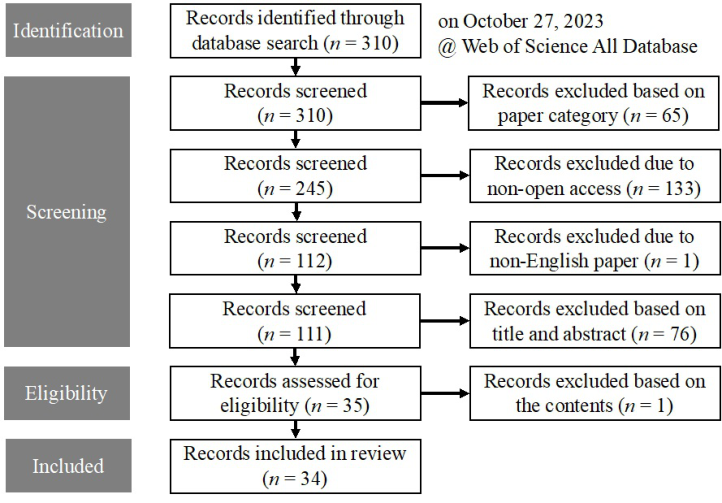
Figure 1 illustrates the PRISMA-ScR flowchart for the scoping review pro- cess. An initial search in the Web of Science All Databases identified 310 articles. This number was narrowed down to 111 after applying filters for journal, conference, and review papers that are in English and available as open-access articles.
The first and last authors independently reviewed the titles and abstracts of these articles to select papers discussing ethical implications within immersive technologies, resulting in the selection of 35 papers. One additional article was excluded after a full-text review due to its lack of relevant ethical content. The remaining 34 papers were subjected to an in-depth literature review using the KJ method in this study.
Figure 1: A schematic of the PRISMA-ScR flowchart.
Our scoping review, utilizing open coding, identified 189 distinct concepts within the literature on immersive technologies. These concepts were
The Ethics of Immersion: A Scoping Review of VR and AR Technologies 95
meticulously organized into 15 categories using the KJ method, reflecting a broad spectrum of ethical concerns as summarized in Table 2.
Table 2 reveals that the ethical consideration of “Protecting the Rights in Virtual Environments” was the most addressed, with 21 papers, followed by “Addressing Ethical Concerns through Study Design and Contents” with 19 papers, and “Ethical Governance Framework for Immersive Technologies” with 14 papers. In contrast, topics such as “Addressing Ethical Concerns by People Surrounding Users” with 3 papers, “Safe Immersion Protocols” with 2 papers, and “Ethical Balancing in Immersive Technologies” with 2 papers received significantly less attention. This distribution suggests a pronounced emphasis on safeguarding user rights in virtual environments, research design considerations, and governance frameworks, with less focus on the roles of individuals surrounding the users, safety protocols, and balancing risks and benefits. The numerical trends indicate varying levels of emphasis on differ- ent ethical concerns within the domain of immersive technology research, highlighting areas that may benefit from further exploration and analysis.
To illustrate the complex interrelationships among these ethical concerns, the following narrative offers a detailed exploration of the ethical landscape in immersive technologies. The core categories are indicated by Bold Fonts.
The examination of the Ethical Dichotomy between Real and Virtual Worlds lays the groundwork for an in-depth understanding of the ethical con- siderations within immersive technology research. This process starts with the pivotal role of Protecting the Rights in Virtual Environments, underscoring the need for clear informed consent, strong privacy measures, and adherence to ethical norms to counteract manipulation and copyright infringements.
Digging deeper, the dedication to Inclusive and Equitable Research in Immersive Technology comes to the forefront, illustrating the imperative to remove obstacles that limit broad engagement and guarantee that research mirrors a wide range of societal perspectives. This effort is further high- lighted by the drive for Inclusive Immersion Accessibility, ensuring everyone has access regardless of economic or physical challenges.
Attention then shifts to the critical need for Safe Immersion Protocols that protect users as they interact with the combined realms of virtual and physical existence. Immersive applications carry the potential risk of causing Physio- logical and Psychological Negative Effects to users, like cybersickness and sensory overload. Furthermore, there exists Moral Concerns on the Applica- tion of Immersive Technology, including the risk of unethical engagements and misuse by stakeholders, as well as inappropriate contents that may blur moral lines between real and virtual worlds.
Such observations bring to light the need for Addressing Ethical Concerns through Device Elaboration, with a focus on ensuring user autonomy and incorporating human factors in technology design. This is further supported by the role of (Addressing Ethical Concerns by) People Surrounding Users in guaranteeing immersive experiences are managed ethically, thus improv- ing well-being and engagement. Within the realm of immersive technologies, User-centric Technology Development places a premium on safety and ethi- cal considerations, bolstered by Addressing Ethical Concerns through Study Design and Contents to create environments conducive to mental health and emotional well-being.
Table 2. Ethical considerations in immersive technology research.
Table available in the original PDF paper.
Description
Generated category (# of papers) Protecting the Rights in Virtual Environments (21) Ensuring user rights in virtual spaces requires obtaining informed consent, safeguarding privacy, preventing information breaches, and adhering to ethical standards against manipulation and copyright violations. Addressing Ethical Concerns through Study Design and Contents (19)
Ensuring the well-being of users and participants in immersive technologies requires ethical research designs and content that consider potential emotional manipulation and promote mental health. Ethical Governance Framework for Immersive Technologies (14)
The rapid growth of immersive technologies necessitates an overarching ethical governance framework encompassing explicit guidelines, regulations, and global policy efforts to address ethical concerns around privacy, manipulation, bias, and decision-making processes, while ensuring consistency between virtual and real-world norms. Ethical Dichotomy between Real and Virtual Worlds (9)
Virtual and real-world interactions necessitate separate ethical frameworks due to distinct identities formed by avatars, which can reinforce stereotypes and influence real-world values and behaviors. Inclusive and Equitable Research in Immersive Technology (7)
Immersive technology research must overcome socioeconomic and physical barriers, ensuring diverse participant selection and addressing biases for genuine inclusivity and reproducibility. Physiological/psychological Negative Effects (7)
Immersive technologies can induce physiological issues like cybersickness and psychological effects, including sensory overload, impacting human behavior negatively. User-centric Technology Development (7)
Immersive technologies demand prioritizing user safety, considering long-term impacts and unintended risks on behavior, and requiring ongoing assessment and adaptation for ethical development. Essential Researcher Conduct in Immersive Technology Ethics (7)
In immersive technology, researchers should focus on ethical awareness, engage users in ethical decision-making, and encourage public discourse to establish community-centric ethical guidelines. Integrated Ethical Framework for Immersive Technologies (7)
To ensure sustainable development, focus must extend beyond technical aspects to the ethical, social, and political impacts of immersive technologies, advocating for comprehensive research and development. Inclusive Immersion Accessibility (6)
Not all individuals can access immersive technologies equally due to costs, health histories, physical traits, age, technological literacy, etc., highlighting the need for inclusive design and equity. Moral Concerns on the Application of Immersive Technology (6)
Immersive technologies, including VR, may propagate misinformation, manipulate behaviors, encourage unethical engagements, and blur moral lines between real and virtual worlds, highlighting the need for agreed-upon ethical standards.
(Continued)
The Ethics of Immersion: A Scoping Review of VR and AR Technologies 97
Table 2. Continued.
Table available in the original PDF paper.
Description
Generated category (# of papers) Addressing Ethical Concerns through Device Elaboration (6) Some research focus on ethical challenges by ensuring user autonomy, integrating human factors for safety and reliability, and designing accessible systems for diverse users. Addressing Ethical Concerns by People Surrounding Users (3)
Surrounding individuals, including caregivers and staff, play a crucial role in managing immersive experiences by ensuring ethical considerations are met, enhancing user well-being and engagement. Safe Immersion Protocols (2)
Immersion users can impact and be impacted by their real-world surroundings, necessitating protective measures and adequate space for safe, natural interactions with external entities. Ethical Balancing in Immersive Technologies (2)
Immersive technologies offer significant benefits, necessitating a careful balance between risks and rewards. Ethical considerations involve ensuring equitable benefit distribution and informed consent, especially in vulnerable populations like children.
Note: The numbers in parentheses indicate the number of corresponding papers. Since multiple concepts can be generated from the same paper, summing the numbers in parentheses does not yield the total number of papers.
Essential Researcher Conduct in Immersive Technology Ethics under- lines the necessity for ethical awareness and active participation in ethical decision-making, fostering a conversation to set community-centric ethical norms. Here, the Integrated Ethical Framework for Immersive Technologies becomes vital, broadening the scope beyond just technical innovations to include the wider ethical, social, and political ramifications of immersive technologies.
The need for the creation of Ethical Governance Frameworks for Immersive Technologies is addressed, as it has come to a point that the fast-paced growth of immersive technologies should be developed under clear guidelines and policy initiatives to maintain ethical uniformity across virtual and real-world standards.
Finally, Ethical Balancing in Immersive Technologies draws attention to the intricate equilibrium between leveraging the profound advantages of immersive technologies and reducing potential risks. This highlights the essential nature of ethical considerations to guarantee fair benefit distribu- tion and informed consent, especially for vulnerable groups, thus continu- ing the conversation on the ethical evolution and utilization of immersive technologies.
DISCUSSION
Our exploration of the ethical landscape surrounding immersive technolo- gies highlights key areas that require focused attention from researchers,
developers, and policymakers. Addressing the ethical dichotomy between real and virtual worlds (Scarle et al., 2012) is a fundamental challenge that demands innovative solutions. Future research should investigate approaches to harmonize virtual and physical identities, promote ethical norms within virtual environments (Carruth and Hill, 2015), and mitigate the potential negative impacts of avatar-based interactions on real-world behaviors and values (Carr et al., 2020; Reeves, 2018).
Ensuring inclusivity and accessibility is crucial for the equitable distri- bution of the benefits of immersive technologies (Kaimara et al., 2022; Rueda and Lara, 2020). Researchers should prioritize the development of inclusive design frameworks that consider diverse user needs, socioeconomic factors, and physical abilities. Additionally, rigorous assessments of the socioeconomic impacts of these technologies are necessary to identify and address potential disparities in access and adoption. User-centric develop- ment practices are essential for safeguarding the safety and well-being of users (Mystakidis et al., 2021). Future research should focus on identifying and mitigating physiological and psychological risks associated with pro- longed immersion, such as cybersickness and sensory overload (Kaimara et al., 2022; Kourtesis and MacPherson, 2021). Developing robust proto- cols for safe immersive experiences, including guidelines for user monitoring and intervention (Rueda and Lara, 2020; Waycott et al., 2022), is a pressing need.
Establishing a comprehensive ethical governance framework is vital for ensuring consistency and accountability in the development and deployment of immersive technologies (Han, 2022; Kaddoura and Al Husseiny, 2023). This framework should encompass clear guidelines, regulations, and global policy initiatives to address ethical concerns related to privacy, data pro- tection, manipulation, bias, and decision-making processes. Potential areas of focus include developing industry-wide ethical standards, establishing independent oversight bodies, and fostering international collaboration for harmonized global standards (Pataranutaporn et al., 2021; Scarle et al., 2012). Enhancing ethical awareness and education among all stakeholders, including developers, providers, and users, is imperative for fostering a cul- ture of ethical responsibility in the immersive technology ecosystem (Scarle et al., 2012; Vlahovic et al., 2022). Future research should investigate the design and implementation of ethical education programs tailored to specific stakeholder groups. Additionally, fostering public discourse and engagement can contribute to the development of community-centric ethical guidelines and best practices (Carr et al., 2020; Reeves, 2018).
By addressing these key areas through focused research efforts, the immer- sive technology community can navigate the complex ethical terrain, harness the transformative potential of these technologies, and contribute positively to society and individual experiences while upholding ethical principles and minimizing potential risks or unintended consequences.
CONCLUSION
The rapid advancement of immersive technologies such as AR, VR, MR, and XR presents vast opportunities while also posing significant ethical
The Ethics of Immersion: A Scoping Review of VR and AR Technologies 99
challenges. Our study has meticulously mapped the ethical landscape of these technologies, identifying numerous areas that necessitate careful consideration.
By conducting a scoping review and applying the KJ method, our anal- ysis emphasizes the critical importance of protecting user rights in virtual environments, the ethical distinctions between real and virtual realms, and the need for inclusive access to these technologies. The findings highlight the urgency of ensuring user safety, addressing physiological and psycho- logical impacts, and developing robust ethical governance frameworks for responsible technology deployment.
Our proposed future research agenda provides direction for the immersive technology community, calling for adaptable ethical frameworks, improved inclusivity, user-centered development practices, and heightened ethical awareness. Focusing on these areas will enable us to navigate the ethical complexities and ethically harness the benefits of immersive technologies.
This research underlines the necessity for a balanced, responsible approach to the advancement of immersive technologies. By confronting the identi- fied ethical issues, stakeholders can guarantee that the development of these technologies aligns with societal values and emphasizes user inclusivity and well-being.
As these technologies become more deeply embedded in various aspects of our lives, ongoing dialogue and collaboration among researchers, devel- opers, policymakers, and users are essential. Cultivating a culture of ethical awareness and accountability will foster the responsible evolution of immer- sive technologies, ultimately delivering benefits to individuals and society as a whole.
ACKNOWLEDGMENT
This work was supported in part by the World Research Hub (WRH) Program of the International Research Frontiers Initiative, Tokyo Institute of Technology, the Sustainable Ethics for Inclusive Digital Environments (SEIDE) initiative at the Digital Education Futures Initiative at Hughes Hall, University of Cambridge, the Metavethics Institute, the Department of Archi- tecture and the Engineering Design Centre, Inclusive Design Group from the University of Cambridge.
The authors utilized OpenAI’s ChatGPT and Anthropic’s Claude for draft- ing assistance, subsequently refining the output to guarantee coherence and precision. Thus, full accountability for the publication’s content lies with the authors.
Brey, P., 1999. The ethics of representation and action in virtual reality. Ethics Inf.
Technol. 1, 5–14. https://doi.org/10.1023/A:1010069907461 Carr, M., Haar, A., Amores, J., Lopes, P., Bernal, G., Vega, T., Rosello, O., Jain, A., Maes, P., 2020. Dream engineering: Simulating worlds through sensory stim- ulation. Conscious. Cogn. 83, 102955. https://doi.org/10.1016/j.concog.2020. 102955 Carruth, A. D., Hill, D. W., 2015. Identity and distinctness in online interaction:
encountering a problem for narrative accounts of self. Ethics Inf. Technol. 17, 103–112. https://doi.org/10.1007/s10676-015-9364-y Han, J., 2022. An Information Ethics Framework Based on ICT Platforms. Information 13, 440. https://doi.org/10.3390/info13090440 Heimo, O. I., Kimppa, K. K., Helle, S., Korkalainen, T., Lehtonen, T., 2014.
Augmented reality - Towards an ethical fantasy?, in: 2014 IEEE International Symposium on Ethics in Science, Technology and Engineering. Presented at the 2014 IEEE International Symposium on Ethics in Engineering, Science, and Tech- nology (ETHICS), IEEE, Chicago, IL, USA, pp. 1–7. https://doi.org/10.1109/ET HICS.2014.6893423 Janesick, V. J., 2015. Peer Debriefing, in: The Blackwell Encyclopedia of Sociology.
John Wiley & Sons, Ltd, Oxford, UK. https://doi.org/10.1002/9781405165518. wbeosp014.pub2 Kaddoura, S., Al Husseiny, F., 2023. The rising trend of Metaverse in education: challenges, opportunities, and ethical considerations. PeerJ Comput. Sci. 9, e1252. https://doi.org/10.7717/peerj-cs.1252 Kaimara, P., Oikonomou, A., Deliyannis, I., 2022. Could virtual reality applications
pose real risks to children and adolescents? A systematic review of ethical issues and concerns. Virtual Real. 26, 697–735. https://doi.org/10.1007/s10055-021- 00563-w Kawakita, J., 1984. Hasso-Hou. Chuokoron-Shinsha, Tokyo. Kourtesis, P., MacPherson, S. E., 2021. How immersive virtual reality methods may meet the criteria of the National Academy of Neuropsychology and American Academy of Clinical Neuropsychology: A software review of the Virtual Real- ity Everyday Assessment Lab (VR-EAL). Comput. Hum. Behav. Rep. 4, 100151. https://doi.org/10.1016/j.chbr.2021.100151 Mystakidis, S., Berki, E., Valtanen, J.-P., 2021. Deep and Meaningful E-Learning with
Social Virtual Reality Environments in Higher Education: A Systematic Literature Review. Appl. Sci. 11, 2412. https://doi.org/10.3390/app11052412 Pataranutaporn, P., Danry, V., Leong, J., Punpongsanon, P., Novy, D., Maes, P., Sra, M., 2021. AI-generated characters for supporting personalized learning and well-being. Nat. Mach. Intell. 3, 1013–1022. https://doi.org/10.1038/s42256- 021-00417-9 Reeves, C., 2018. The virtual simulation of child sexual abuse: online gameworld
users’ views, understanding and responses to sexual ageplay. Ethics Inf. Technol. 20, 101–113. https://doi.org/10.1007/s10676-018-9449-5 Rueda, J., Lara, F., 2020. Virtual Reality and Empathy Enhancement: Ethical Aspects.
Front. Robot. AI 7, 506984. https://doi.org/10.3389/frobt.2020.506984
The Ethics of Immersion: A Scoping Review of VR and AR Technologies 101
Scarle, S., Arnab, S., Dunwell, I., Petridis, P., Protopsaltis, A., De Freitas, S., 2012.
E-commerce transactions in a virtual environment: Virtual transactions. Electron. Commer. Res. 12, 379–407. https://doi.org/10.1007/s10660-012-9098-4 Scupin, R., 1997. The KJ Method: A Technique for Analyzing Data Derived from Japanese Ethnology. Hum. Organ. 56, 233–237. https://doi.org/10.17730/humo.56.2.x335923511444655 Steele, P., Burleigh, C., Kroposki, M., Magabo, M., Bailey, L., 2020. Ethical Considerations in Designing Virtual and Augmented Reality Products—Virtual and Augmented Reality Design With Students in Mind: Designers’ Perceptions. J. Educ. Technol. Syst. 49, 219–238. https://doi.org/10.1177/0047239520933858 Tricco, A. C., Lillie, E., Zarin, W., O’Brien, K. K., Colquhoun, H., Levac, D.,
Moher, D., Peters, M. D. J., Horsley, T., Weeks, L., Hempel, S., Akl, E. A., Chang, C., McGowan, J., Stewart, L., Hartling, L., Aldcroft, A., Wilson, M. G., Garritty, C., Lewin, S., Godfrey, C. M., Macdonald, M. T., Langlois, E. V., Soares-Weiser, K., Moriarty, J., Clifford, T., Tunçalp, Ö., Straus, S. E., 2018. PRISMA Extension for Scoping Reviews (PRISMA-ScR): Checklist and Expla- nation. Ann. Intern. Med. 169, 467–473. https://doi.org/10.7326/M18-0850 Vlahovic, S., Suznjevic, M., Skorin-Kapov, L., 2022. A survey of challenges and methods for Quality of Experience assessment of interactive VR applications. J. Multimodal User Interfaces 16, 257–291. https://doi.org/10.1007/s12193-022- 00388-0 Waycott, J., Kelly, R. M., Baker, S., Barbosa Neves, B., Thach, K. S., Lederman,
R., 2022. The Role of Staff in Facilitating Immersive Virtual Reality for Enrich- ment in Aged Care: An Ethic of Care Perspective, in: CHI Conference on Human Factors in Computing Systems. Presented at the CHI ‘22: CHI Conference on Human Factors in Computing Systems, ACM, New Orleans LA USA, pp. 1–17. https://doi.org/10.1145/3491102.3501956 Zallio M., Clarkson P. J. (2022). Designing the Metaverse: A study on Inclusion, Diversity, Equity, Accessibility and Safety for digital immersive environments, Telematics and Informatics, 2022, 101909, ISSN 0736-5853, https://doi.org/10. 1016/j.tele.2022.101909 Zallio, M., Clarkson, P. J., 2023. Metavethics: Ethical, integrity and social impli-
cations of the metaverse. Presented at the Intelligent Human Systems Integration (IHSI 2023) Integrating People and Intelligent Systems. https://doi.org/10.54941/ ahfe1002891 Zallio, M., Korn, O., 2023. Perceptions on Digital, Virtual Environments and the Metaverse. An Exploratory Study with Younger Users. Presented at the 14th Inter- national Conference on Applied Human Factors and Ergonomics (AHFE 2023). https://doi.org/10.54941/ahfe1003930 Zallio, M., Ohashi, T., Clarkson, P. J., 2023. Designing the Metaverse: A Scoping
Review to Map Current Research Effort on Ethical Implications. https://doi.org/ 10.48550/arXiv.2303.12293
LISTED IN THE AHFE DIGITAL BOOKSTORE CATALOGUE
Explore the complete digital volume
Accessibility, Assistive Technology and Digital Environments
Read this individual research paper free through the original publisher, or explore the full digital proceedings book.
ISBN 978-1-958651-97-1
Explore this ISBN in the AHFE Bookstore ↗Listed in the July 2026 bookstore catalogue; search by ISBN to confirm current availability · Digital book purchase optional