Guilherme Nunes a Álvaro Sampaio, Paulo Simões (2022). Surgical Pathologist’s Workstation Ergodesign. In: Advances in Ergonomics In Design, Usability & Special Populations: Part III. AHFE Open Access, vol. 20. https://doi.org/10.54941/ahfe1001342
There are many concerns about fatigue and musculoskeletal injuries associated with the postures a Surgical Pathologist is exposed to during the daily routine tasks. These professional’s tasks circle around data analysis based on the viewing of slides in a microscope, taking notes and compiling reports. Most of the time this is made seated on a desk which leads to bad postures and subsequently to postural malfunctions. The study is based on a three-step methodology: Literature Review, Field Research Procedures and Data Processing. The first step concerns a review of research in scientific literature. The review focus is the Surgical Pathology in general, and also in specific points such as the workflow and equipment related to this profession. The second step is centered in tests in a real environment, performed by Surgical Pathologists during their daily working routines in order to gather practical information. The data from the tests were captured both written and videotaped. From the theory and practical data acquired the information was processed in order to produce infographics that illustrates all the issues surrounding the Surgical Pathologist’s workstation. The final information will be used to design a new workstation that improves the working routines of the Surgical Pathologist.
Health related issues are amongst the most studied subjects by the scientific community and also one of the top concerns of the actual population. It’s an area where professionals should bring their best performances because of the high responsibilities associated, for that the conditions of the workspace should be designed and play an important role in order for them to give their best performance. A medical failure or a wrong diagnostic can bring serious issues to a patient. The subject of this study converges with this idea, aiming to study the workstation of a Surgical Pathologist in order to redesign it and to improve their working conditions.
There are a lot of concerns on the exposure to fatigue and musculoskeletal injuries, associated with the postures a Surgical Pathologist is exposed to during the daily routine tasks, mainly because of the sedentary side of it. This professional’s tasks loop around from data analysis based on the viewing of slides in a microscope, taking notes about the observation and compiling reports. Most of the time this is done seated on a desk which leads to postural malfunctions.
In a desk based workstation the Surgical Pathologist has to work with multiple devices such as a microscope, glass slides, paperwork, a computer, a telephone and a recorder, which are not always correctly positioned and organized in the desk ending up to useless effort between the switch of tasks that need different devices, which also contributes to the accumulation of stress and fatigue.
All these issues combined lead up to a high risk of contracting long term musculoskeletal injuries that will affect the quality of the service provide by the subject. As this is noticed it suggests the urgency of an intervention to make a user based workspace and to improve the workflow of the daily activities.
This study is a preliminary research in order to validate and better understand the issues surrounding the Surgical Pathologist's workstation and workflow. With this work we were able to obtain the relevant data that will serve, in the future, to complete a much comprehensive survey which will be the foundation for a much intensive study witch will have, as result, the design of a product that discards all the negative issues.
LITERATURE REVIEW
The Surgical Pathologist’s work is based on image interpretation with a very repetitive workflow. These professionals work typically on a desk with the following objects:
Microscope;
Paperwork;
Glass Slides;
Computer;
Recorder;
Telephone.
In “Working at the microscope: analysis of the activities involved in diagnostic pathology” (Randell, Ruddle, Quirke, Thomas, & Treanor, 2012) there was made a study about the workflow and main tasks during the process of data analysis made by a pathologist. It was identified that the most time a pathologist spent is viewing slides, taking notes and dictating reports. Another pattern observed is the overlapping of activities, mainly noticed in the dictation which was combined usually with reading paperwork and viewing slides.
According to Krupinski (2009) there are human factors issues related to the organization of this specific workstation being divided in two main fields: Equipment and Environment? In terms of Equipment there is the furniture, the microscope and the computer devices (keyboard, mouse and/or trackballs, display, etc.). When it comes to Environment there is the noise and heat (sometimes produced by the equipment) and the environmental light.
The repetitive workflow between microscope and the computer associated with the issues related to the workstation environment can lead to postural and physic alterations which can lead up to Musculoskeletal injuries.
Sillanpää, Nyberg, & Laippala (2003) points to ergonomics as one of the solutions to prevent the high increased risk that microscope workers are exposed. In the study one hundred workers were submitted to a survey to determine the body main injured parts. The most common problems are located within the shoulder, neck and back areas.
Nielen (2000) mentions the three main fields where ergonomics can intervene in this specific workstation as being the chairs, the tables and the microscopes. This is also reinforced in “A new table for work with a microscope, a solution to ergonomic problems” (Sillanpää et al., 2003) where they go further stating also that the furniture is an easy subject to intervene because of the investment associated.
Robertson et al. (2009) states that the Work Related Musculoskeletal Injuries are becoming a major issue captivating a lot of interest from researchers nowadays specially on the computer based stations. Brewer et al. (2006) points to the major alterations related to this subject as being eye discomfort, sustained pain in the neck and upper extremities and regional disorders, such as wrist tendonitis, epicondylitis and trapezius muscle strain.
Ellegast et al. (2012) indicates that chair design should perform an important role aiming to reduce the musculoskeletal injuries associated with the seating posture. Vos, Congleton, Steven Moore, Amendola, & Ringer (2006) states that the issues surrounding this question should consider three different variables: Personal Factors, Postural Factors and Chair Design Factors.
The Personal Factors are directly related to anthropometrics of the user and Postural Factors related to the physiological condition. The Chair Design Factors are the way researchers think the problem can be solved or at least reduced pointing to some variables that should be considered such as: seat cushioning, seat fabrics, seat pan designs, backrest designs, back rest and seat pan adjustability angles, lumbar support, and seat height.
M. M. Robertson, Ciriello, & Garabet (2013) lift up an important subject regarding the ergonomic interventions that are the training programs that should follow the workstation changes pointing that as an effective way to increase the productivity of the workers and also reduce the health issues.
Norros (2013) adds also another important issue pointing to the objects usability as also another way to increase the performance of the systems. This is reinforced by Han & Kim (2003) that state that usability should be considered an obligatory feature in all the products designed/developed nowadays. According to González, Lorés, & Granollers (2008) Usability is a product attribute that stands that a product should be easy to use and easy to learn so that the users can achieve goals with effectiveness, efficiency and satisfaction.
FIELD STUDY DESIGN AND PROCEDURES In order to better understand the complexity of the issues pointed in the literature review, and also to confront the theory with real practical examples, the study went to the field and some observation were carried out. The observations were made in a Hospital with Pathologists performing their daily tasks.
This study featured two distinct approaches: Surveys and Observation.
The main goal of the surveys was to get a preliminary data on the workers point of view about their workstation and workflow. They were questioned about the quality of their working material, the difficulty of the tasks they have to perform and how these two combined have had an impact in their well-being.
After those surveys compiled the same operators were monitored in action. Those observations were recorded in order to understand the complexity of the tasks and to gather some knowledge on the time spent between tasks, the way the workflow is organized and also the postures assumed by the subjects.
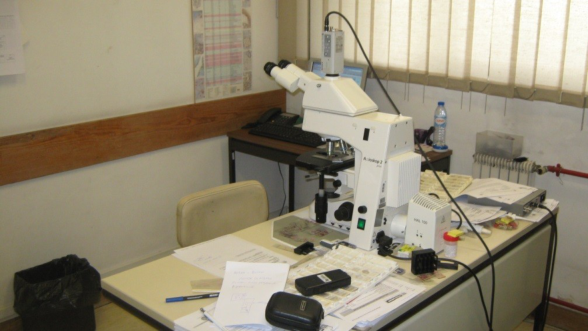
Participants After making some contacts two Surgical Pathologists agreed to collaborate with this study. Both were male with ages between 40 and 60, with more than 5 years performing as Surgical Pathologists, currently working in the Hospital where the study was conducted, for more than 10 years. The participants work nearly 30 hour per week as Surgical Pathologists in this Hospital Unit. In figure 1 a general overview of one of the workstations.
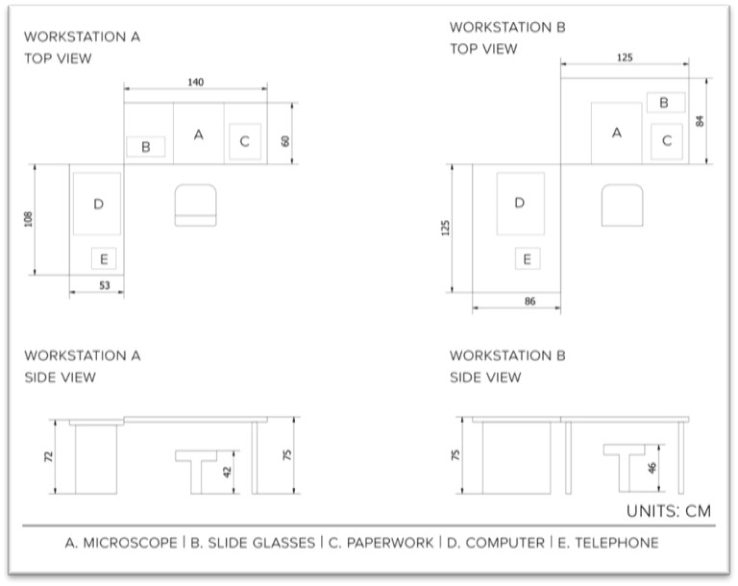
Workstation Layout The Alto Ave Hospital Center offered the access to the two workstations that were used for the study. Both were composed by one chair, two desks and the technical equipment necessary to perform their daily tasks. In one desk there was the observational equipment (microscope, tape recorder, papers and glass slides) and on the other desk the report equipment (computer and printer). The chair had wheels and was gyratory so that the workers can switch from one desk to the other. Figure 2 illustrates both the layouts and general dimensions of the workspaces.
Figure 2. Workstations Layout.
Tasks Each participant was asked to perform their regular tasks during one hour. After the time spent doing the regular job activities the participants were asked to do the same tasks in a specific order. The same process was done two times, one in each Workstation (A&B). All the tasks were recorded during all the process by two cameras positioned on the side of each desk as the figure 2 describes.
Results
After all the studies were completed the data was compiled and processed individually and collectively in order to find the major issues and the way they affect the different participants. The key aspects identified were the bad postures related to the equipment issues and also the workflow and material organization applied by the participants.
STUDY ANALISYS Based on the science there is a notorious concern about the working conditions of the Surgical Pathologists. The investigation on what has been studied and written about the subject was a very good start in order to define the problem and the main issues that should be studied.
By the review and research of literature related to the subject the problem was formed. All the data compiled by the analysis of the subject’s state of the art helped to design a methodology applied in the forward step where there were made some observations in a real context.
From a first look at the workstation it was obvious that there were no ergonomic concerns when they were placed within the office. Both the stations had a similar layout but different sizes in almost all the furniture. This problem was noticed by the participants, especially because in Station A both tables had different heights witch caused discomfort when switching between tasks, since the height of the chair was always the same. Station B was more consistent in this subject since it had all the tables had the same height.
As noticed on Figure 1 there was no place for all the material those professionals work with. This was a problem both the workstations had. The A desk was unorganized with all the paperwork shuffled and disorganized witch caused a lot of time wasted searching for documents during the workflow. In the B desk it was common for the participants to put the glass slides over the sheet where they took notes. Also in the organizational aspect it was important to understand that the right space near the microscope was the space where the non-observation tasks were performed. All the participants had that habit.
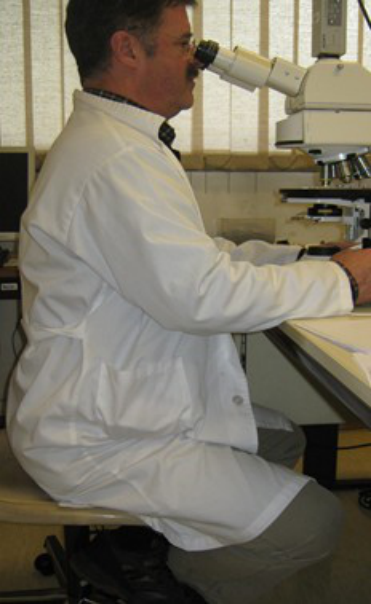
Figure 3. Participant A. Figure 4. Participant B.
It was possible to understand that there were some postural changes motivated by the equipment height specially between the Microscope an the Computer Monitor, considered by most of the participants as low. This issue is seen by the neck bending angle when the participants turned to the computer monitor to produce the reports. It was noticed that in both stations the chair’s height is related to the position of how the operator eyes interacted with the microscope, typically the desk and equipment they use the most during the daily tasks.
After all the theoretical and practical data was studied, the testimonials given by the participants also performed a relevant impact in pointing other small issues.
One of the questions asked in the surveys was about the musculoskeletal issues they suffered. As there was a 20 years span between the participants the younger one said he was not affected by any kind of disorders in that field. However it was noticed that the older one, which was in the 50-60 class had already some injuries and blame the working conditions as a key factor for them. The most common issues pointed were neck problems, sleepy fingers and back pain.
The participants were also asked about the main alterations they would make to improve their workstation pointing to some little details that should be considered. As already noticed by the observations the heights of the tables and equipment material should be improved in order to get them better postures. The lack of space to organize the work was a major requirement made by the participants, suggesting that eventually the desk should be all in one piece in order to have all the equipment necessary near, but maintaining the “L” format. One of the participants also noticed that there are too many obstacles on their way when they want to change from one desk to the other, such as the table legs, trash cans and drawers, so that should be considered in the redesign of the workstation.
CONCLUSIONS
With all the information and experience acquired from this preliminary approach to the subject, this study should evolve by expanding the quality and number of experiments in order to get enough data that will support the design of a new station based on the principals of three main areas: Design, Ergonomics and Usabillity. It was understood that the experiment should be conducted in other Clinics in order to have different workstation solutions availed and study their advantages and major issues. The feedback given by the professionals when they were given the opportunity to imagine how they could improve the station played an important role in detecting other issues to study.
The balance of this preliminary experience was positive as it has given some insights about the main features that should be analyzed and improved. It’s possible to point some preliminary guidelines that should be used in the design of the new workstation: The positions of the equipment should be corrected in order to perfect the postural features; the working area should be increased in order to have a much more organized position of the working tools; the workflow routes should be cleared from any obstacles to improve the transition between desks; the workers should be trained in order to understand the ergonomics of the space and the correct postures to assume during their daily work.
REFERENCES
Brewer, S., Van Eerd, D., Amick, B. C., 3rd, Irvin, E., Daum, K. M., Gerr, F., … Rempel, D. (2006). Workplace interventions to prevent musculoskeletal and visual symptoms and disorders among computer users: a systematic review. Journal of occupational rehabilitation, 16(3), 325–358. doi:10.1007/s10926-006-9031-6 Ellegast, R. P., Kraft, K., Groenesteijn, L., Krause, F., Berger, H., & Vink, P. (2012). Comparison of four specific dynamic office
chairs with a conventional office chair: Impact upon muscle activation, physical activity and posture. Applied Ergonomics, 43(2), 296–307. doi:10.1016/j.apergo.2011.06.005 González, M. P., Lorés, J., & Granollers, A. (2008). Enhancing usability testing through datamining techniques: A novel approach to detecting usability problem patterns for a context of use. Information and Software Technology, 50(6), 547– 568. doi:10.1016/j.infsof.2007.06.001 Han, S. H., & Kim, J. (2003). A comparison of screening methods: Selecting important design variables for modeling product
usability. International Journal of Industrial Ergonomics, 32(3), 189–198. doi:10.1016/S0169-8141(03)00063-5 Krupinski, E. A. (2009). Virtual slide telepathology workstation of thefuture: lessons learned from teleradiology. Human Pathology, 40(8), 1100–1111. doi:10.1016/j.humpath.2009.04.011 Nielen, K. (2000). Ergonomic microscope workstation. The Lancet,355(9202), 502. doi:10.1016/S0140-6736(00)82064-4 Norros, L. (2013). Developing human factors/ergonomics as a design discipline. Applied Ergonomics.
doi:10.1016/j.apergo.2013.04.024 Randell, R., Ruddle, R. A., Quirke, P., Thomas, R. G., & Treanor, D. (2012). Working at the microscope: analysis of the activities involved in diagnostic pathology. Histopathology, 60(3), 504–510. doi:10.1111/j.1365-2559.2011.04090.x
Robertson, M., Amick III, B. C., DeRango, K., Rooney, T., Bazzani, L., Harrist, R., & Moore, A. (2009). The effects of an office ergonomics training and chair intervention on worker knowledge, behavior and musculoskeletal risk. Applied Ergonomics, 40(1), 124–135. doi:10.1016/j.apergo.2007.12.009 Robertson, M. M., Ciriello, V. M., & Garabet, A. M. (2013). Office ergonomics training and a sit-stand workstation: Effects on
musculoskeletal and visual symptoms and performance of office workers. Applied Ergonomics, 44(1), 73–85. doi:10.1016/j.apergo.2012.05.001 Sillanpää, J., Nyberg, M., & Laippala, P. (2003). A new table for work with a microscope, a solution to ergonomic problems.
Applied Ergonomics, 34(6), 621–628. doi:10.1016/S0003-6870(03)00051-6 Vos, G. A., Congleton, J. J., Steven Moore, J., Amendola, A. A., & Ringer, L. (2006). Postural versus chair design impacts upon interface pressure. Applied Ergonomics, 37(5), 619–628. doi:10.1016/j.apergo.2005.09.002
LISTED IN THE AHFE DIGITAL BOOKSTORE CATALOGUE
Explore the complete digital volume
Advances in Ergonomics In Design, Usability & Special Populations: Part III
Read this individual research paper free through the original publisher, or explore the full digital proceedings book.
ISBN 978-1-4951-2108-1
Explore this ISBN in the AHFE Bookstore ↗Listed in the July 2026 bookstore catalogue; search by ISBN to confirm current availability · Digital book purchase optional