Juraj Sinay, Adrian Tompos, Slavomira Vargova, Frantisek Kalafut (2018). Integrated Security or Selective Risk Assessment?. In: Advances in Physical Ergonomics and Human Factors: Part I. AHFE Open Access, vol. 1. https://doi.org/10.54941/1003
The utilization of SMART technologies in various sectors of industrial technologies assumes the achievement of results that lead to competitive products popular with customers. These properties, achieved by technological processes, are subject to one of basic customer requirements associated with the Safety First imperative and Vision Zero philosophy – a safe final product. In this context, and in line with effective managerial activities, scientific and technical discussions should search for a way how to ensure fulfilling the requirements for effective prevention in all areas of machine/technology life and its consequences for society.
Solutions to occupational safety and health (OSH) issues are based on the basic assumption that the system is not functioning as it should, i.e. in compliance with specified technical conditions. At the end of a causal dependence leading to a negative phenomenon is an accident, injury or a malfunctioning machine / technology. Therefore, the system has to be modified in order to minimize or eliminate any adverse consequences.
Modification would be relatively simple, should the occupational safety and health be the only criteria. However, this change must occur without incurring unacceptable losses in achieving other objectives of the system. It is necessary to tackle risk management issues without imposing limitations on the system functions. If this objective is to be achieved, it is necessary to build a detailed model of the system, in order to identify its essential components and relations. The next question that arises is how the elements of the system will be assessed. Many problems in OSH persist because the measures that are defined as solutions do not take important determinants – human behavior and organizational support – into account.
SMART SYSTEMS (Self-Monitoring, Analysis and Reporting Technology) SMART manufacturing connects information, technology and human ingenuity to bring about a rapid development and application of manufacturing intelligence to every aspect of manufacturing technology. These processes fundamentally improve the way products are invented, manufactured, shipped and sold. They will also improve occupational safety and health and protect the environment by minimizing manufacturing emissions and incidents (Davis and Chand, 2012). SMART systems comprise a variety of management approaches and principles for given tasks on various levels of intelligence.
An automobile can serve as an example of the application of SMART technologies, being a representative of a mechatronic system with the following features:
Electronic brake light – cars equipped with the system can signal each other during emergency braking situations, with following cars illuminating dashboard lights to alert their drivers, even if they are around a bend;
Obstacle warning system which informs other road users of the presence, position and type of potentially hazardous objects on the road;
Traffic sign assistant which keeps the vehicle in contact with traffic control centers and allows access to the latest traffic updates for speed limits, temporary bans and diversions and also provides detailed information on current temporary and future permanent regulations, such as speed limits or yielding the right of way;
Public traffic management which provides traffic forecasts based on complex information and includes the identification of possible traffic scenarios and their influence on the route;
In-car internet access that allows drivers to receive information about available parking spaces, make a reservation and pay for parking (Crystal Vision, 2012).
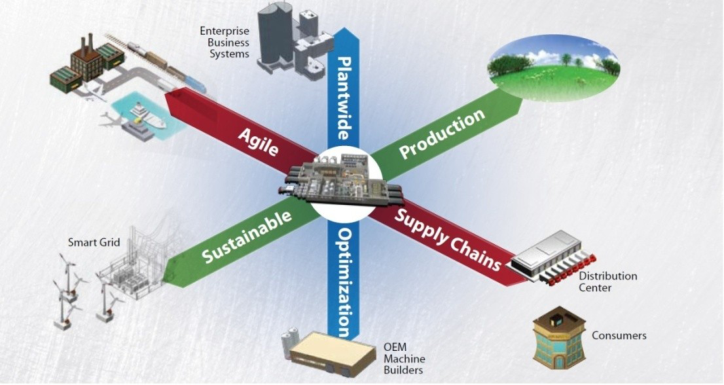
SMART processes (Fig. 1) represent new production methods that use all available resources and introduce smart manufacturing by optimizing operations in terms of sustainability of resources.
Figure 1. SMART processes (Davis and Chand, 2012).
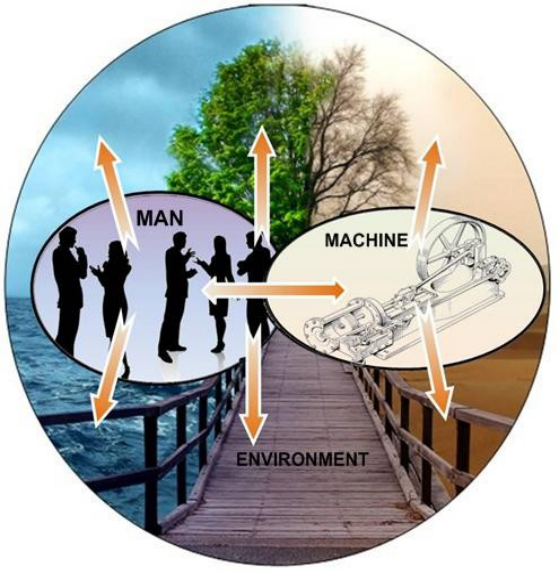
SMART technologies have been intensively incorporated into everyday life for several years and can therefore be a source of risk for their users. The development of new technologies and increased demands for risk minimization bring about new risks that must be dealt with. Not only the area of SMART technologies, but all areas of human life are interconnected in the man-machine-environment system and each of their activities occurs at a particular time and place and under certain conditions. (Rutter, 2006) A technical system generally comprises a configuration of a number of interrelated elements within the defined system. The system has a number of objectives and all risk minimizing activities must lead to them. The objectives include the need for a feedback mechanism by which the system compares its actual state with the state defined in the objectives, so that this process can be monitored and managed. An element of one system may be described again as a system on its own. One element can simultaneously be a part of several systems.
When producing the graphical definition of a system, the following questions arise:
Where is the best place to mark the boundary between the system and its surroundings?
What level of detail is the most suitable for the specification of system elements?
What is the nature of interactions in the system? Which relationships are the most important to be displayed and which can be omitted?
An important feature of systems is that they are not static. The goals that had been set have led to the development of systems, people have acquired new skills, organizations have grown or divided into subsystems. The environment of the systems is changing; similarly, systems undergo processes of internal changes – growth or decline.
Figure 2. Man-machine-environment system (Griffiths and Hunter, 2007) The elements of man-machine-environment system interact with each other in various ways:
the existence of the environment is independent of machines and/or humans; however, humans transform the environment and its properties,
the existence of humans is conditioned by the environment; it is not dependent on the operation of machines; however, they may affect humans positively (e.g. means of transport as a form of movement of people) and negatively (e.g. vehicle exhaust gases damage human health),
the creation and design of machines and their activity depends on the environment in which they are employed, and on humans who create, use and dispose of the machines,
a machine as an element of the system can affect humans as well as the environment negatively (e.g. accidents with hazardous material leaks) and positively (e.g. wind power plant, which uses a component of the environment and thus contributes to its protection).
Since systems are comprised of the abovementioned elements, also safety can be understood as the protection of the individual system components and then as a holistic (integrated) safety of the entire system consisting of safety of individual elements and minimization of risks in their mutual relationships. In such case, it is possible to speak of the concept as of holistic or integrated security.
"The issue of integrated safety lies not only in finding the risks of individual systems, but also in the evaluation of subsystems and their mutual relations, relations with their surroundings and the relations of the surrounding environment to the system itself." (Šenovský and Balog, 2009)
It follows that all activities and areas of human activity are interrelated, whether the connection is narrow or broad. The factors that affect individual activities may have originated from external sources (weather conditions, deliberate intervention) or from internal sources (material, machine/machine system, chemical substances). Their impact, positive or negative, may influence/compromise the quality of the product/service itself as well as the security of a wider range of employees or population as part of the environment. In their enterprises, employers try to maintain a safety culture based on the Safety First imperative and in accordance with the Vision Zero philosophy.
The philosophy of Vision Zero – no negative incidents – is based on a Swedish road traffic safety project (Vision Zero, 1997) which aimed to achieve a highway system with no fatalities or serious injuries in road traffic. A core principle of the vision is that life and health should never be exchanged for other benefits within the society.
Vision Zero is based on these principles:
Ethics: human life and health are paramount and take priority over any other factors in the man-machine- environment system,
Responsibility: providers are responsible for safety of products functioning as components of manufacturing technology and they share the responsibility with product users;
Safety: minimizing both the opportunities for occurrence of adverse events such as injuries and errors and damage to machine and systems or industrial technologies,
Mechanisms for change: providers of machines and systems, including human factor and complex technologies, must do their utmost to guarantee the safety of all citizens; they must be ready to perform changes to achieve safety. (Griffiths and Hunter, 2007) Although the philosophy of Vision Zero originated with a specific project, over the course of time, this concept has become a major policy element in businesses, organizations and states, and it is now commonly used as the idea of the lowest possible (zero approaching) level of risk.
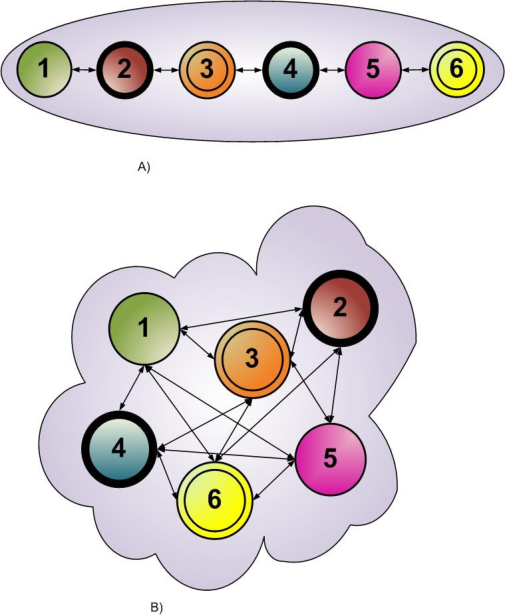
An important question related to minimization or elimination of risks remains unanswered: How should threats be assessed in specific systems? Figure 3 shows two different approaches to risk assessment. Individual components of the system can be assessed separately with regard to the risks they may pose. This process is easier; however, it does not consider possible relations existing within the system (Fig. 3 A) and does not provide objective information about actual risks in the given system. Figure 3 B shows the reciprocity among risks within the system, as well as their interactions, which may and often do lead to the emergence of new risks.
Figure 3. Methods of assessing elements within a system
It is necessary to identify threats in technological processes and thus minimize the risks they may pose to areas of both safety and security.
MODEL OF INTEGRATED SECURITY AS PART OF SMART TECHNOLOGIES As can be seen from Figure 3, the assessment of risk arising from complex industrial technologies (which form a part of complex systems) requires a precise definition of the system, individual processes within the system as well as the relationships between various system components. When applied to manufacturing technology, these include mainly:
- Material flows, - Manufacturing processes, - Individual machines and equipment, - Jobs and work environment, - Consideration of the possibility of security risks resulting from safety risks.
Experience shows that effective procedures in risk management of complex technologies include the following:
- Description of each technology, - Subdividing each technology into individual construction or logical units, - Analysis of the share and location of the human factor impact, - Analysis of all hazards and the resulting threats to safety and security, - Defining the set of risks as part of an integrated safety + security approach, - Risk assessment, - Implementation of corrective measures as part of an integrated approach, - Assessment of the acceptability of risks.
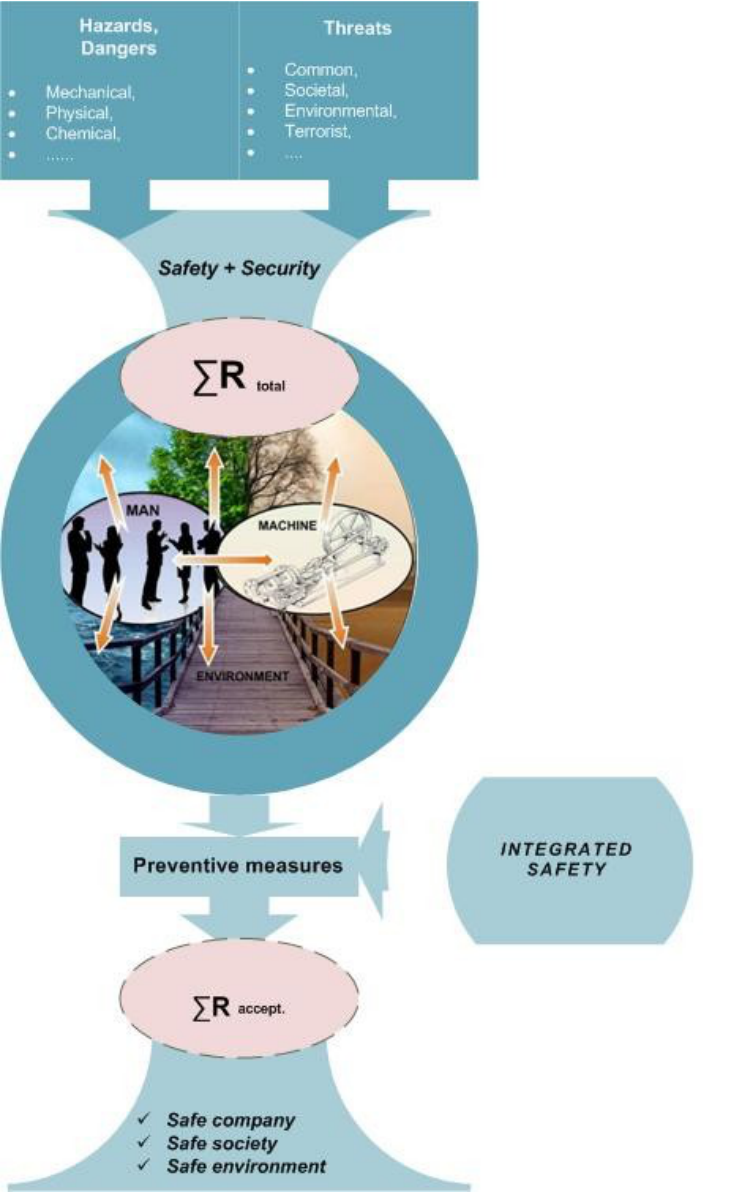
The model of integrated safety management in the man-machine-environment system is shown in Figure 4.
CONCLUSIONS
SMART technologies integrate information, technology and human ingenuity. The purpose of their intelligence is to improve manufacturing processes while increasing their safety by integrating several areas of technological knowledge. The integrated approach to risk management creates opportunities for development and application of methods of defining causal dependence related to safety (OSH + safety of technical systems) as well as security (civil security) at each stage of industrial technology life. After the identification of the dependencies and their potential overlaps or moments that initiate causal dependencies with consequences on security, methods for their discontinuation will be proposed. An effective way of preventing risks as part of an integrated safety applies methods of causal dependence discontinuation as early as in the initial part, within the Safety stage. The prevention of new and emerging risks (in this context, risks that arise in the part of Safety and initiate causal dependencies within Security are considered emerging risks) will benefit from the opportunities of new information technologies, such as simulation of actual conditions and related risks by using virtual reality. These procedures aim to achieve the ultimate goal, which is the safety of the man-machine-environment system and thus also safe conditions for producers, citizens, society, and the environment in the conditions of SMART technology. SMART technology and resulting products are examples of products designed not only to serve a particular purpose but also to give the user an added value – a higher level of safety and a lower level of risk. Therefore, not only technology specialists participate in its creation, but also a wide range of different professionals, such as designers, engineers, safety engineers, experts in the field of materials, quality management and human resources management specialists, chemists, physicists, etc.
A selective approach in risk management does not take into account all actual relations within complex industrial technologies. A holistic approach to effective prevention includes integrated safety management. A successful application of risk minimization procedures requires a multidisciplinary approach and teamwork. These procedures are the target of future practices within modern and effective safety management systems implemented in accordance with global challenges – Safety and Security First, and Vision Zero – and they remain challenging also in the area of research into safety and security.
Figure 4. Model of Integrated Safety
ACKNOWLEDGEMENT
This contribution is the result of the project Research of Integrated Risk Research into new and newly emerging risks of industrial technologies within integrated safety as a precondition for management of sustainable development, Nr. APVV - 0337 - 11.
REFERENCES
Crystal Vision (2012) „Ford testuje komunikačné technológie” in: Moto-Ring website, http://moto-ring.sk/novinky/992-fordtestuje-komunikane-technologie Davis J., Chand S., (2012) „What is smart manufacturing?“ in. Rockwell Manufacturing website http://www.rockwellautomation.com/resources/downloads/rockwellautomation/pdf/about-us/company-overview/ TIMEMagazineSPMcoverstory.pdf
Griffiths, S., Hunter, D. J. (2007) New Perspectives in Public Health, Radcliffe Publishing, ISBN 1-85775-791-2 Rutter H. (2006) „Transport „ in: New Perspectives in Public Health, Griffiths S., Hunter D.J. (Ed). ISBN 1-85775-791-2 p.
183
Šenovský, M., Balog, K., (2009) Integrální bezpečnost, SPBI Ostrava, ISBN 978-80-7385-076-0 Sinay, J. (2014) Safety management in a Competitive Business Environment, CRC Press, Taylor & Francis Group, USA, ISBN 978-1-4822-0385-1 p.24
LISTED IN THE AHFE DIGITAL BOOKSTORE CATALOGUE
Explore the complete digital volume
Advances in Physical Ergonomics and Human Factors: Part I
Read this individual research paper free through the original publisher, or explore the full digital proceedings book.
ISBN 978-1-4951-2104-3
Explore this ISBN in the AHFE Bookstore ↗Listed in the July 2026 bookstore catalogue; search by ISBN to confirm current availability · Digital book purchase optional