Jun yi Shi, Siguang Huo (2026). It’s a Life, Not a Medical Label: Balancing Fashion Rhetoric and Emotional Durability in Health Products. In: Usability and User Experience. AHFE Open Access, vol. 232, pp. 232–241. https://doi.org/10.54941/ahfe1008051
As the health industry shifts toward a "fashion-lifestyle" paradigm, health-assistive products are undergoing an ontological transformation from hidden functional tools into explicit carriers of personal narrative. This study addresses the dual ethical challenge of utilizing fashion rhetoric to destigmatize "disease identity" while ensuring emotional durability (Chapman, 2005) to prevent products from becoming fleeting trends. By proposing a Participatory Emotionally Durable Design (PEDD) framework and analyzing 480 interview samples from 80 target users, the research identifies that authentic emotional longevity stems from "gift contracts" and "autobiographical narratives" rather than preset marketing nodes. Applied to the brand Modobloom, this framework demonstrates how users negotiate sociocultural pressures to transition from "passive healers" to "co-builders of life meaning," offering a new methodological foundation for the perceptual governance of future health-related products.
As the health industry integrates into the fashion-lifestyle paradigm, health- assistive products are undergoing an ontological transformation from hidden functional tools to explicit carriers of personal narrative. This shift presents a dual ethical challenge: designers must use fashion rhetoric to destigmatize “disease identity,” while ensuring Emotionally Durable Design (EDD) to create lasting companions that transcend fleeting fashion cycles (Chapman, 2005).Current design practices often suffer from polarization: either pursuing ephemeral styles that exacerbate consumerist anxiety or overemphasizing functional rationality at the expense of user dignity. Both extremes lead to premature product abandonment and environmental waste. This paper argues that design should assume a moral leadership role through a “double rhetorical balance,” strategically embedding emotional durability into fashion narratives to facilitate product “de-medicalization.” This visual strategy aims to re-anchor health products within daily social norms, moving beyond mere aesthetic modification to address “social disintegration.”
It’s a Life, Not a Medical Label: Balancing Fashion Rhetoric and Emotional Durability 233 While existing waste-reduction paradigms focus on technology (LCA) or systems (PSS), this study adopts an emotion-oriented path by constructing the “extended self” (Belk, 1988) and “exclusive attachment” (Mugge, 2004). In the context of fashion-led non-clothing products, EDD faces a unique “aesthetic obsolescence paradox.” To bridge the gap between brand-led marketing and meaningful user inheritance, this study proposes a Participatory Emotionally Durable Design (PEDD) framework. By exploring how collaborative experiential practices build emotional memories, the framework seeks to transform users from “passive consumers” into “co-builders of emotional meaning,” providing a new methodological foundation for the global “meaning reconstruction” of fashion-led health brands.
LITERATURE REVIEW
Emotional enduring design was proposed by Jonathan Chapman to challenge consumerism. From a phenomenological perspective, products are the “Heidegger that gathers the world”, and the core of EDD is to delay “meaning failure”. Unlike functional centralism, EDD regards products as the “psychological assets” of individuals. For example, the “Fragile Aesthetics” proposed by Tsaknaki (2016) enhances personalized narratives through material evolution; Slow Design establishes a long-term connection beyond aesthetics by extending the interaction cycle. The life of a product should not end in the loss of function, but should be determined by the depth of the narrative it carries. The “nine-element framework” proposed by Haines- Gadd (2018) integrates 38 strategies. This framework transforms products into self-extension through the dimensions of “relationship” and “identity”, realizing the leap from physical durability to psychological durability; At the same time, use “evolution” and “material sense” to encourage users to leave traces of use, making products a carrier of life history. However, the “meaning reconstruction” of EDD in different cultural contexts is still a challenge, and it is necessary to activate sensory, memory and cultural resonance to achieve resonance in future contexts.
This study introduces an experiential approach, echoing the logic of “design is intervention”. By activating the “empathy mechanism” of the participants (Koskinen, 2003), the character game is strengthened through narrative at the key nodes of “first sight” and “re-selection”. The workshop combines a dual model: designers use the “nine-element tool” to set boundaries, and participants conduct “meaning co-creation” based on life history.
METHODOLOGY
Research Framework of Participatory Emotional Sustainable Design (PEDD) This study draws on Chapman’s Emotionally Durable Design (EDD) theory and integrates it into a participatory research framework composed of “educational intervention-social investigation-design transformation”. The framework aims to explore how Chinese Generation Z young people understand the emotional connection of overseas fashion brands after entering the local context, and identify the core driving forces that affect
234 Shi and Huo the product life cycle. Different from traditional consumer research, this framework emphasizes the role of “researcher is educator”, and embeds workshops into the design professional practice path. Through the intervention of structured tools, the role of participants is transformed from a simple potential user of the product to a dual-logic object that understands product design and has the ability to decode emotional value and construct future narratives at the same time. The research process is divided into three progressive stages: Deconstruction: The elements of brand narrative and emotional sustainability 9 tools are aligned with the needs of constructing “extended self” and “exclusive attachment”. Diffusion: A multi- dimensional interview on the Diffusion from design college students to the general public. Synthesis: Structured coding and design trend mapping of qualitative data. Workshop & Pedagogical Practice Background Scanning and Context Introduction The first stage of the research (Contextualization) focuses on the visual and cultural narratives of overseas brands in the initial stage of the Chinese market. The research team screened about 30 overseas cutting-edge fashion home furnishing brands that have recently entered the Chinese market, covering sustainable materials, fashionable classic home furnishing and niche designer brands. This section serves as the “Visual Cues” (Visual Cues) of the workshop, which aims to break the cognitive biases of the participants. The study invited 80 participants. They are young people of Generation Z from various provinces and regions in China, and they are pioneers in fashion consumption. Through in-depth reading and analysis of brand brochures, social media tweets and offline pop-up store materials, Establish a preliminary induction of the brand’s original fashion and emotional durability genes.
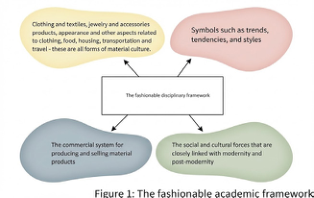
The “fashion” referred to in this article is a broad usage under the discipline concept. It not only refers to a certain material culture (clothing and textiles, jewelry and related accessories, consumer service products, etc.), but also refers to a certain set of symbol systems. It is not only a commercial system for producing and selling products (brands, systems, intermediary media, etc.), but also a social and cultural force closely linked with modernity and post-modernity. The stylish disciplinary framework is shown in Figure 1. As can be seen from Figure 1, objects and symbols jointly construct the “form” of fashion, and connect countless individuals and collectives through their own practice of production, consumption, distribution and reproduction.
Figure 1: The fashionable academic framework (Kawamura, Y. 2018; Agnès, R. 2015.)
It’s a Life, Not a Medical Label: Balancing Fashion Rhetoric and Emotional Durability 235 Application of Emotional Sustainability Toolkit (EDD9)
In order to make the abstract emotional experience have an operable analytical dimension, this study introduces nine dimensions of emotional sustainability design tools . At this stage, participants play the role of “emotional auditors”. Each participant needs to select a specific brand, use the EDD9 tool table to structurally sort out its promotional materials, and score 38 strategies on a scale of 1–5. As can be seen from Table 1, in this way, the participants have the judgment to analyze the emotional durability of fashion brand products. From the perspective of designers: “Does the emotional value promised by these brands have the ability to resist the erosion of time?” This process produced 80 evaluation reports on the potential of brand emotional durability based on the mixed perspective of designer thinking and consumer perception, which constituted the basic preliminary quantitative data of the study.
Table 1: Parameter table for the emotional sustainability performance of foreign fashion home brands.
Table available in the original PDF paper.
Socialized Inquiry In order to break the limitations of Generation Z young people, the research has entered a “ripple” diffusion stage. Each participant was asked to conduct in-depth interviews as a “junior researcher” with six friends of different backgrounds (covering different occupations, age groups, and aesthetic preferences) within their social network. As can be seen from Table 2.
Interview objective: To explore the real understanding of the “emotional durability” of fashion products by ordinary Chinese audiences.
Sample size: More than 480 (80 × 6) high-quality interview samples were finally recovered.
The role of media: By showing the interviewees the brand materials sorted out in the previous stage as a “conversation anchor”, the students guide the interviewees to reflect on: under what conditions are they willing to extend the impact of a fashion item? With longevity?
Table 2: Interview content statistics table.
Table available in the original PDF paper.
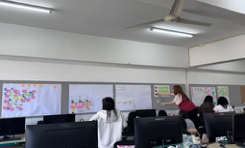
This “peer interview” mode reduces the defensive psychology of the interviewees, expands the coverage and richness of the interviewees, and captures a large number of localized narratives about “old object attachment”, “human-computer interaction” and “cultural identity” Details greatly enrich the depth of the research context. Data Collection & Analysis Integration of narrative materials Through workshops and social interviews, the study collected multimodal raw data, including: Brand decoding data: 80 EDD tool analysis tables for overseas brands. Emotional narrative corpus: More than 480 interview transcripts on fashion consumption and emotional durability. Visual mood boards: Design sketches and concept notes created by participants in practice based on interview feedback.As can be seen from Figure 2.
Figure 2: The participants created the problem analysis canvas based on the feedback from the interviews.
Three-Level Coding and Topic Extraction The research adopts the bottom-up Thematic Analysis method (Thematic Analysis), and uses NVivo software to process nearly 500,000 words of text data. Open Coding: More than 50 original nodes such as “second-hand resale psychology”, “family memory carrier”, “fast fashion fatigue”, and “cross- context symbol misreading” have been extracted. Axial Coding: Associates nodes to the core framework of emotional sustainable design, forming middle- level concepts such as “material degradation and emotional evolution”, “local reconstruction of cultural prototypes”, and “emotional compensation of technical intermediaries”. Selective Coding: It is finally summarized into three macro dimensions: “emotional resilience under cultural identity”, “design perception of sustainable narrative” and “sustainable experience in fashion context”. This kind of “participatory coding” ensures that the
It’s a Life, Not a Medical Label: Balancing Fashion Rhetoric and Emotional Durability 237 analysis process is not only sociological rigor, but also has the unique insight (Design Insight) of the design discipline, which provides a solid foundation for the subsequent construction of an emotional sustainable design strategy for overseas fashion brands in the global market support.
Findings Theme 1: “Narrative” and Consumption Alienation in Emotional Durability
Through the qualitative analysis of 480 interview samples, we found that whether fashion items can achieve “emotional sustainability” does not depend on their material life, but on their carrying capacity as memory containers. When discussing overseas fashion brands, participants repeatedly mentioned the tension between emotional projection and materialized consumption. The dislocation of the sense of ritual: a “special moment” materialized by the algorithm One of the keywords that appeared most frequently in the interview data was “sense of ritual”. Participant B (22 years old, college student) describes a narrative about “gifts”: “This watch was given to me by my dad on my 18th birthday, and it marks my independence.” However, when this sense of ritual is deconstructed by the brand’s large-scale digital marketing (such as holiday-limited, customized lettering services), the participants show obvious aesthetic fatigue. This phenomenon reveals the conflict between “man-made rituals” and “native memories”: when brands try to preset consumers’ “special scenarios” through industrial means, this emotional link is often fragile and perishable. Participants realized that true lasting emotions are often born in unplanned and accidental life moments, rather than marketing nodes set by brands.
The Weight of Gifts: Material Remains as Social Contracts A large number of interviews point to a core logic: “Who sent it” far determines the life cycle of the product more than “what”. Participant F mentioned that even an outdated overseas light luxury bag has obtained “immunity” beyond the fashion cycle because it is “a gift from my sister to celebrate my admission to university”. Here, fashion products evolve into a physical social contract. This “gift logic” confronts the “quick elimination” mechanism in the fashion industry. However, participants also expressed another dilemma: when a social relationship breaks, brand products that originally carried deep emotions will quickly transform into “negative assets”, leading to emotional dismantling. This shows that emotional sustainability is not only a positive bond, but also a risk game based on interpersonal relationships.
Theme 2: Globalization and Cultural Translation of Local Emotion This theme reveals the participants’ “cultural discomfort” and “emotional reconstruction” after overseas brands enter the Chinese market. The Disenchantment of Brand Myth and the Return of Local Subject In the early overseas brand recognition, participants are often influenced by the “Western narrative” behind the brand. However, in the workshop, the students found through the analysis of EDD tools that the “eternal classics” advertised
238 Shi and Huo by many brands seemed “empty and lacked echo” in the Chinese context. “Brands say this represents Parisian romance, but in my high-pressure daily life, this romance is not only unreachable, it even makes me feel estranged,” participant C points out, reflecting the dislocation of cultural capital. When overseas brands cannot enter the real Life-stream (Life-stream) of Chinese young people, they are just cold goods, not emotional extensions. What can touch the resonance is some common beautiful narratives, such as the long-term love constructed by the high-end “cyclamen” of the Dior brand as inspiration and the narrative intertwined with the trust of two generations of design directors. This emotion can be more cross-cultural and cross- media communication. “Performative Attachment” under the Shadow of Digital Social Communication In a survey centered on 80 Generation Z young people, it was found that a new type of “visual durability” is replacing “material durability”. Participant E said frankly: “I bought this brand’s product to complete a” self-curation “on social media. After taking the photo, its emotional value is completed.” This “one-time emotional projection” is the biggest challenge to the design of emotional sustainability. Fashion products are no longer long-term companions, but “snapshot props” for digital identity construction. Product designers through fashion cross-media lens eye to think about product design by more and more product designers attention.
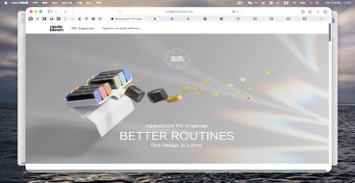
Practical Application of Design Ultimately, the results of this study are in collaboration with modobloom- Pill Organizer Reimagined, a fashion medical assistive product brand. Based on a shared vision and complementary strengths, the brand’s mission is to “make healthy tools that feel warm, not clinical.” This fits well with the focus of this study on fashion and emotional durability. The product should not only provide a well-designed product, but also provide a smooth, reliable and worry-free experience from start to finish. modobloom is designed only as a medication and supplement organizer to help with day-to-day storage and day-to-day management. Made of durable, recyclable Tritan™ plastic, the modobloom is designed for repeated, long-term use. At the end of its life cycle, users are encouraged to recycle products in accordance with local plastic recycling guidelines. modobloom works with manufacturing partners that meet environmental and compliance standards, including responsible waste disposal and controlled discharges. This study compensates the needs of the brand in its development from the aspects of the narrative design of the brand’s fashion lifestyle and the design dimension of the user’s emotional durability. The cooperation proves the application value of the research of theory and method in the transformation of design practice.As can be seen from Figure 3.
Figure 3: The product design embodies various scenarios of the fashionable lifestyle.
CONCLUSION
Through the in-depth analysis of gene deconstruction of 30 overseas fashion brands and 480 qualitative interview samples, this study explores the synergistic mechanism of fashion rhetoric and emotional sustainability in the “de-medical” design of health-related products. The study found that the “long-term life” of health-related products does not stem from the material’s resistance to damage, but depends on how it establishes a deep semantic suture between “medical intervention” and “life narrative”.
The specific research findings are as follows: First, fight against the materialization of algorithms and reshape the “original sense of ritual” of health-related products. According to the survey, the industrial rituals preset by the brand (such as social quotations on products, painting on specific festivals) can easily cause aesthetic fatigue among young users. Instead, true lasting emotional anchors are born in unplanned life moments. Therefore, product design should shift from “forcibly giving meaning” to “leaving blank space for empowerment”, and by reserving space for personalized interaction traces, the product should be transformed from a cold “compliance drug supervisor” to a record of individual health narratives “autobiographical container”. Second, introduce a “gift contract” to offset the social exclusion brought about by medical labels. Research confirms that “who gave it” gives a product more “immunity” than “the function of the product itself” to go beyond the fashion cycle. In the design of medical- related products, strengthening the social attributes of “mutual assistance” and “care”-for example, defining it as a social gift with warmth rather than
240 Shi and Huo a prescription accessory-can effectively use the risk game of interpersonal relationships to fight against The “quick elimination” mechanism of the product. This “gift logic” provides a barrier of social dignity for health products, transforming them from “physical evidence of disease” to “physical evidence of relationship” in social situations. Third, crack the “performative attachment” and find the real symbiosis under the shadow of digital social interaction. In view of the visual instantaneous attachment caused by the “self-curation” of Generation Z, the design of the medicine box needs to be alert to the tendency of excessive “filtering”. Design strategies should aim to create a “non-performative” material experience, that is, to guide users from fake snapshots of social media to real life experience through the transitory nature of materials (such as tactile sensations that change over time, traces of natural aging). This migration from “visual durability” to “tactile/emotional durability” is the key to solving the “meaning disability” of health products in the digital context. Fourth, bridge the “narrative suspension” and realize the cultural translation of global fashion aesthetics and local life flow. If the “narrative of the other” brought by overseas fashion brands cannot enter the real high-pressure life flow of Chinese users, there will be aesthetic barriers. The design of medical-related products should learn from the concepts of “long things” and “companionship” in local culture, and semantically connect the advanced rhetoric of overseas fashion brands with the persistent pursuit of “sense of normalcy” in East Asian society, so as to provide future health products. Emotional governance and ethical co-creation provide systematic methodological support.
ACKNOWLEDGMENT
Thanks to the 80 young participants, Uebin, Lia, and Solin, who participated in the entire research work, for their strong support.
REFERENCES
Agnès, R. (2015). Thinking through fashion: a guide to key theorists. New York: Bloomsbury Publishing. Arguin, C.J. (2010). Emotional durability is the new sustainability. Research Thesis
MA 3D Design Northumbria University. Bakker, C.A., Schuit, C.J. (2017). The long view: Exploring product lifetime extension. UN Environment. Bullock, J.N. (2012). Design principles for emotional durability. The US: University
of Cincinnati. Campbell, R.I., Bernabei, R.C. (2017). “Increasing product attachment through personalised design of additively manufactured products”, in: DS 87-5 Proceedings of the 21st International Conference on Engineering Design (ICED 17) Vol 5: Design for X, Design to X, Vancouver, Canada, pp. 071–079. Caudwell, C., Lacey, C., Sandoval, E.B. (2019). “The (Ir) relevance of Robot Cuteness:
An Exploratory Study of Emotionally Durable Robot Design”, in: Proceedings of the 31st Australian Conference on Human-Computer-Interaction, pp. 64–72. Ceschin, F., Gaziulusoy, I. (2016). Evolution of design for sustainability: From product design to design for system innovations and transitions. Design Studies, 47: 118–163.
It’s a Life, Not a Medical Label: Balancing Fashion Rhetoric and Emotional Durability 241 Chapman, J.M. (2008). Sustaining relationships between people and things.
Newcastle: Cambridge Scholars Publishing, pp. 47–65. Chapman, J.M. (2009). Design for (emotional) durability. Design Issues, 25(4): 29–35. Chapman, J.M. (2012). Emotionally durable design: objects, experiences and
empathy. New York: Routledge. Csikszentmihalyi, M., Rochberg-Halton, E. (1981). The Meaning of Things: Domestic Symbols and the Self. Cambridge: Cambridge University Press. Diefenbach, S., Jung, S., Diller, T., et al. (2018). The Secret of Self-Made: The
Potential of Different Types of Consumer Participation for Product Attachment and Commercial Value. Social Sciences, 7(4): 52–70. Edström, H. (2012). Emotionally Meaningful Homecare: Designing for good relationships between patients and devices. Sweden: National University of Art and Design. Green, W.S., Jordan, P.W. (2002). Pleasure with products: Beyond usability. London:
CRC Press. Haines-Gadd, M., Chapman, J., Lloyd, P., et al. (2017). “Design framework for emotionally durable products and services”, in: PLATE: Product Lifetimes And The Environment. IOS Press, pp. 154–160. Haug, A. (2019). Psychologically Durable Design – Definitions and Approaches. The
Design Journal, 22(2): 143–167. Hobson, K., Lynch, N., Lilley, D., et al. (2018). Systems of practice and the Circular Economy: Transforming mobile phone product service systems. Environmental Innovation and Societal Transitions, 26: 147–157. Kam, S.J. (2021). Three-Dimensional Printing Fashion Product Design with
Emotional Durability Based on Korean Aesthetics. Sustainability, 14(1): 240. Kawamura, Y. (2018). Fashionology: an introduction to fashion studies. New York: Bloomsbury Publishing. Kennedy Vance, I. (2016). Creating emotional durability: surface, narrative, and
ritual. ProQuest LLC. Ko, C.H. (2017). “The Association of Product Metaphors with Emotionally Durable Design”, in: 2017 6th IIAI International Congress on Advanced Applied Informatics (IIAI-AAI). IEEE, pp. 58–63. Koskinen, I., Battarbee, K., Mattelmaki, T. (2003). Professional Empathic Design:
User Experience in Product Design. IT Press. Lacey, E. (2009). Contemporary Ceramic Design for Meaningful Interaction and Emotional Durability: A Case Study. International Journal of Design, 3(2): 87–92. Mugge, R., Schoormans, J., Schifferstein, H.J. (2005). Design Strategies to Postpone
Consumers’ Product Replacement: The Value of a Strong Person-Product Relationship. The Design Journal, 8: 38–48. Nes, N.V., Cramer, J. (2005). Influencing product lifetime through product design.
Business Strategy and the Environment, 14: 286–299. Salvia, G. (2014). The satisfactory and (possibly) sustainable practice of do-ityourself: The catalyst role of design. Journal of Design Research, 1: 22–41.
LISTED IN THE AHFE DIGITAL BOOKSTORE CATALOGUE
Explore the complete digital volume
Usability and User Experience
Read this individual research paper free through the original publisher, or explore the full digital proceedings book.
ISBN 979-8-950676-08-6
Explore this ISBN in the AHFE Bookstore ↗Listed in the July 2026 bookstore catalogue; search by ISBN to confirm current availability · Digital book purchase optional