Takeshi Ona, Yohsuke Yoshioka (2026). The Effect of Wall Shapes on the Startle Reaction of Pedestrians on Half-Turn Staircases. In: Human Factors in Architecture, Sustainable Urban Planning and Infrastructure. AHFE Open Access, vol. 229, pp. 191–201. https://doi.org/10.54941/ahfe1007967
The present study investigated the influence of wall shape in half-turn staircases on startle reactions using a controlled virtual environment experiment.A virtual stairway model representing an ascent toward a landing was created in Unity. Participants viewed first-person walking footage through a head-mounted display (VIVE Pro Eye, HTC) while remaining seated, and their skin potential activity and walking continuation time were measured during the experiment. To simulate an unexpected encounter at the location where visibility is most restricted, a descending humanoid avatar appeared immediately before the participant reached the landing.Two experimental factors were manipulated: pedestrian presence (present/absent) and wall shape (four types). One full-height wall (2400 mm) and three handrail-wall configurations (700 mm, 900 mm, 1100 mm), each featuring a 1000 mm sloped coping, were tested. The results demonstrated that the inner wall configuration of a half-turn staircase significantly influenced both walking behavior and skin potential responses. Under the full-height wall condition, restricted visual information delayed the recognition of an approaching pedestrian. As a result, the decision to stop was delayed, leading to a longer walking continuation time. In contrast, under the handrail-wall configurations, improved visibility enabled earlier pedestrian detection and facilitated quicker avoidance decisions, resulting in a shorter walking continuation time. Furthermore, the presence of a pedestrian increased the startle response, and this effect was particularly pronounced under the full-height wall configuration, where visual occlusion was greater. By comparison, under the handrail-wall configurations, the increase in skin potential response associated with the pedestrian’s presence was relatively attenuated. Overall, these findings suggest that wall openness constitutes a meaningful architectural implication for improving psychological comfort and safety perceptions in circulation spaces.
Stairs are architectural elements for vertical circulation and are associated with a high risk of falls and injuries. They are commonly installed in both private residences and public facilities, such as stations, offices, and parks. Despite established dimensional standards, accidents continue to occur on stairs, and falls can lead to serious consequences, including fractures and
192 Ona and Yoshioka head injuries. Therefore, preventing these incidents is a major architectural challenge. Although users are expected to exercise caution regardless of age or physical ability, this issue may be addressed by improving the stairway environment. Preventing falls, tumbles, and near-misses before they occur is considered an effective countermeasure.
Unexpected encounters with other pedestrians on stairways can elicit startle reactions, particularly in half-turn staircase layouts, where inner-side blind spots limit a user’s ability to anticipate others approaching from the opposite direction. Although these reactions do not necessarily lead directly to accidents, they may increase psychological stress, reduce perceived environmental comfort, and potentially affect walking stability in real-world settings. Startle reactions are physiological responses triggered by sudden and unpredictable stimuli. When visual information is restricted, pedestrians may have less predictive control over their surroundings, thereby increasing the likelihood of such reactions.
Several studies have examined stairways. Yanase et al. (2011) investigated the influence of tread and riser dimensions on perceived comfort during stair walking using a full-scale model, revealing that, for both normal and emergency downhill walking, the recommended stair dimensions were a riser height and tread of 160–180 mm and 270–300 mm, respectively. Fuda et al. (2008) evaluated stair handrail installation height using an experimental staircase and proposed a method to calculate an appropriate handrail height for each user. Although previous studies have examined various elements of stairway design, little attention has been given to how wall geometry affects physiological startle responses.
In parallel, studies have investigated blind spots at intersections and corners in relation to pedestrian behavior. In participant-based experiments using virtual environment technology, Kobayashi et al. demonstrated that chamfering an external corner with a chamfer length of ≥1,000 mm significantly reduced psychological load. Therefore, improved visibility may reduce psychological stress in settings where pedestrian encounters occur. Nonetheless, comparable investigations have not been conducted in stair environments.
Although previous studies have examined staircases and the relationships between blind spots and pedestrians separately, no research to date has integrated these perspectives to investigate how wall-induced visual occlusion in stair environments influences physiological startle reactions during unexpected pedestrian encounters. Moreover, quantitative evaluation using physiological indicators remains limited in architectural studies of stair visibility. Accordingly, this study aimed to verify the relationship between the inner wall of a half-turn staircase and the startle reaction experienced by pedestrians descending stairs, using virtual environment technology and a skin potential meter. The former enabled the experiment to be conducted under controlled environmental conditions while restricting stimuli to visual information, whereas the latter allowed startle reactions to be measured objectively as quantitative physiological data. Quantitative analysis of the
The Effect of Wall Shapes on the Startle Reaction of Pedestrians on Half-Turn Staircases 193 experimental results was conducted to provide insights into wall designs that could reduce startle reactions.
METHOD
Experiment Overview The experiment was conducted in Room 510 of Building 10 at the Faculty of Engineering, Chiba University, Japan. The participants were 13 healthy university students in their twenties.
Participants viewed a video depicting walking up stairs while seated at rest. The experiment took approximately 20 min per subject. Before the experiment, a sample video of a half-turn staircase was presented through a head-mounted display to familiarize participants with the visual environment. Subsequently, headphones (Soundcore Life Q35; Anker) and a skin potential measurement device (TS02 SPL/R-AD; Techno Next) were fitted. Participants then viewed four video sets, each approximately 3 min in duration, depicting continuous ascent on a half-turn staircase. A rest period of approximately 1 min was provided between sets.
Virtual Environment A staircase-walking scenario was recreated using virtual environment construction software (Unity 2022.3.27f; Unity Technologies). Participants experienced the virtual environment while seated at rest via a head-mounted display (VIVE Pro Eye; HTC). Detected head tilt and rotation from the position-tracking sensors (VIVE Base Station [Valve]) were mapped to movements in the virtual reality (VR) environment, enabling participants to virtually recreate walking up a half-turn staircase.
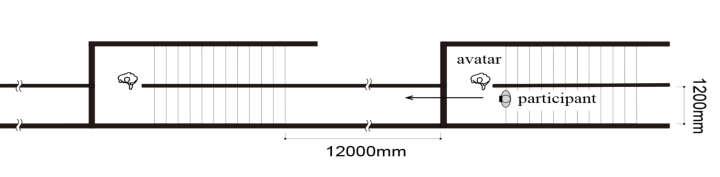
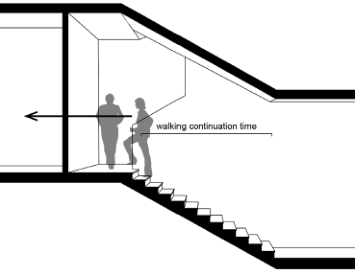
The half-turn staircase in the virtual space was set to 1200 mm in width, with a landing depth and ceiling height of 1200 mm and 2400 mm, respectively. The distance from the landing to the first step of the subsequent staircase was set to 12 m (Figures 1 and 2). During the experiment, the video playback speed was set to 0.6 m/s. For viewpoint height, a standard 1500 mm was adopted to prevent eye level variations caused by participants’ height differences.
To prevent VR motion sickness, the video depicted a continuous straight- line progression along a half-turn staircase. The design allowed participants to pass through the wall at the far end of the landing, creating a sense of continuous space. The videos experienced by the participants included additional footsteps. The experiment was conducted such that the video progressed or paused based on the participant’s operation, using the spacebar on the PC keyboard. Specifically, the video advanced while the participant pressed the space bar and paused it when it was released. During the instructions, participants were told, “Please operate carefully to avoid colliding with people,” thereby structuring the experience so that the caution required when walking in a real space could also be felt within the video.
Figure 1: A plan view of the experimental environment.Figure 2: A cross-sectional perspective view of the experimental environment.
Condition Two experimental factors were manipulated: pedestrian presence (three levels: absent and present at two walking speeds) and wall shape (four types). One full-height wall and three handrail-wall configurations (700, 900, and 1100 mm), each featuring a 1000 mm sloped coping, were tested (Table 1). The “full-height wall (2,400 mm)” was an interior wall with poor visibility, extending from the landing floor to the ceiling. The “handrail-wall” was an interior wall with a top surface. In this experiment, handrail-wall height was defined as the distance from the landing floor to the top surface. Additionally, a humanoid avatar was programmed to descend the staircase and cross the path when the participant reached the landing. The avatar walking speed on the landing was set to 0.9 or 1.3 m/s. However, this walking speed refers to the avatar’s speed when walking on the landing; when descending the steps, the speed was uniformly set to 0.9 m/s for both conditions. This was because, if the avatar’s walking speed had been consistently set to 1.3 m/s, the timing at which the avatar became visible to the participant over the handrail-wall while walking on the stairs would have differed from that at 0.9 m/s, potentially introducing inconsistencies between conditions. Therefore, although the humanoid avatar’s walking speed on the landing was set to two conditions (0.9 m/s or 1.3 m/s), the walking speed during stair descent was set to 0.9 m/s for both conditions.
Additionally, the experiment included two dummy conditions. While the humanoid avatar’s walking speed was 0.9 m/s, the avatar was programmed to appear on the landing when the participant was 5 or 10 steps away from
The Effect of Wall Shapes on the Startle Reaction of Pedestrians on Half-Turn Staircases 195 the landing of the half-turn staircase. These dummy conditions were included to reduce habituation to the stimulus conditions.
In this experiment, the “baseline condition” was defined as passing through a “full-height wall” with no humanoid avatar present. Participants experienced this condition multiple times (eight times owing to experimental allocation). Overall, 23 staircase sections (1 condition × 8 times) + (2 dummy conditions × 2 times) + (11 conditions × 1 time) were randomly selected with consideration of order effects and were divided into four trials for participants to complete.
Table 1: Differences in wall configurations and avatar visibility in the virtual environment.
Table available in the original PDF paper.
Wall-Height
700mm 900mm 1100mm 2400mm Two steps below the landing
One step below the landing Landing
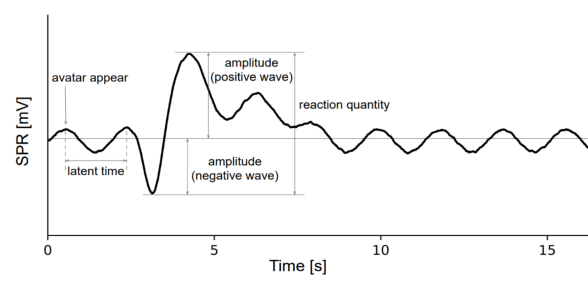
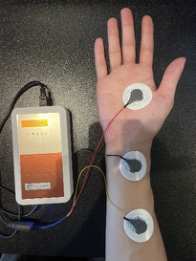
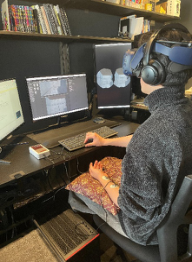
Electrodermal Activity (EDA) In this experiment, participants wore EDA recording equipment to measure skin potential response when they felt fear, anxiety, surprise, or similar emotions (Figure 3 and 4). EDA varies significantly among individuals and is susceptible to artifacts, making analysis using a single standard impossible. Therefore, here, measurements were conducted with participants seated to suppress artifacts (Figure 5). Additionally, the “response ratio” method for data analysis was employed, as in the approach used by Kobayashi et al. For the diphasic electrodermal response appearing within 3 s after the avatar crossed the landing area, the difference between the maximum and minimum values was calculated for each subject under each condition and defined as the reaction quantity RX. Subsequently, the difference between the maximum and minimum values within 3 s when the avatar did not appear and passed through the full-height wall was set as the baseline value, R0. Here, for R0, because the participants experienced the condition eight times, the median value across these trials was used as the baseline R0. Accordingly, RX/R0 was calculated for each skin potential response and defined as the skin potential response ratio. Moreover, a higher skin potential response
196 Ona and Yoshioka ratio indicated a greater startle reaction and was used as an evaluation metric for each experimental condition.
Figure 3: An example of electrodermal activity (EDA). SPR, skin potential response.Figure 4: EDA recording equipment.Figure 5: Overview of the experimental procedure.
The Walking Continuation Time Along with measuring the startle reaction, the time from when participants began walking until they stopped to avoid colliding with the humanoid avatar was measured. Situations requiring a person to stop while walking
The Effect of Wall Shapes on the Startle Reaction of Pedestrians on Half-Turn Staircases 197 are common in daily life. For example, consider walking at locations where people intersect, such as intersections or stations, and attempting to avoid a collision. Individuals would likely judge that continuing straight ahead would result in a collision, and proactively step left or right, slow down, or stop to avoid the collision in advance. The same principle applies to human-human interactions while walking up the stairs. While using stairs, if another person approaches from the direction of travel, a decision must be made whether to stop or avoid using the stairs. Therefore, to reproduce this situation in this experiment, participants were instructed, “Please stop if you are about to collide with the humanoid avatar,” before the experiment. This task enabled analysis of differences in the time taken to initiate collision avoidance across wall-shape variations and supported examination of how visibility differences affected the decision to stop walking. Here, the time to initiate collision-avoidance behavior was defined as “walking continuation time” (Figure 2). Specifically, the data captured the time when the subject stepped onto the first stair in the stimulus condition until they detected the avatar and stopped to avoid collision.
RESULTS
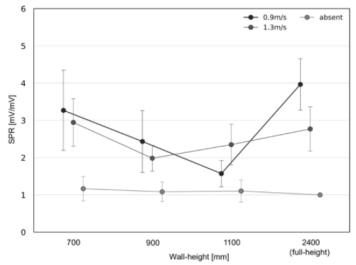
Electrodermal Activity A two-way ANOVA assessing wall configuration (four levels) and avatar condition (0.9 m/s, 1.3 m/s, or none) demonstrated significant main effects of wall configuration (F (3,36) = 3.952, p = .016) and avatar condition (F (2,24) = 6.131, p = .007). The interaction between wall configuration and avatar condition was not significant (F (6,72) = 1.793, p = .113).
Post hoc comparisons indicated that the full-height wall condition differed significantly from the 1100 mm condition (p = .024) and differed from the 900 mm condition (p = .059). No significant differences were observed among the remaining wall configurations. For the avatar condition, both walking- avatar conditions differed significantly from the no-avatar condition (0.9 m/s vs. none: p = .020; 1.3 m/s vs. none: p = .020), whereas no difference was observed between the two walking speeds. For reference, the mean response ratios for each condition are displayed in Figure 6.
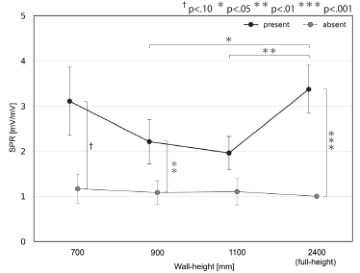
When the two avatar conditions (present vs. absent) were analyzed using a two-way repeated-measures ANOVA, a significant main effect of wall configuration was observed (F (3, 36) = 3.196, p = .035, η² = .028). Similarly, the main effect of avatar presence was significant (F (1, 12) = 10.453, p = .007, η² = .205). The interaction between wall configuration and avatar presence did not reach statistical significance (F (3, 36) = 2.476, p = .077, η² = .031), although a marginal trend was observed (Figure 7). Simple main effects analysis revealed that, when the avatar was present, wall configuration significantly influenced response ratios (F (1.83, 21.97) = 3.984, p = .037, η² = .087, Greenhouse- Geisser corrected). Multiple comparisons (Shaffer’s modified Bonferroni procedure) indicated that the full-height wall condition elicited significantly higher response ratios than did the 1100 mm (p = .010) and 900 mm (p = .026) conditions. No other pair-wise differences were observed. In the absence
198 Ona and Yoshioka of an avatar, the wall configuration did not significantly affect responses (F (1.66, 19.93) = 0.089, p = .883). Further analysis of avatar presence within each wall configuration demonstrated a marginal effect at 700 mm (F(1, 12) = 4.283, p = .061, η² = .189), a significant effect at 900 mm (F(1, 12) = 12.246, p = .004, η² = .146), and a significant effect in the full-height wall condition (F(1, 12) = 19.829, p < .001, η² = .452). No significant avatar presence effect was observed at 1100 mm (F (1, 12) = 2.637, p = .130).
Figure 6: Relationship between wall geometry and skin potential response ratio across three avatar conditions.Figure 7: Relationship between wall geometry and skin potential response ratio with and without avatar presence.
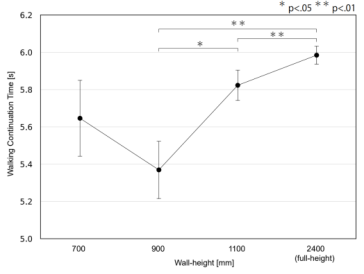
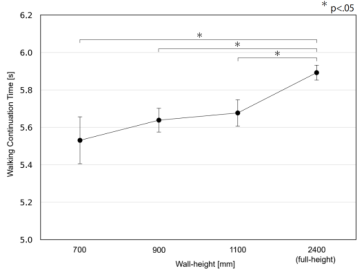
Walking Continuation Time At an avatar walking speed of 0.9 m/s (Figure 8), one-way ANOVA exhibited a significant effect of wall configuration on walking continuation time (F(1.59, 19.10) = 6.475, p = .010).
Post hoc comparisons indicated that the full-height wall condition differed significantly from the 900 mm (p = .007) and 1100 mm (p = .008) conditions. A significant difference was also observed between the 900 mm and 1100 mm conditions (p = .033). All other comparisons were not statistically significant.
Turning to the 1.3 m/s condition (Figure 9), a similar analysis revealed significant differences among wall configurations (F (1.80,21.55) = 6.491,
The Effect of Wall Shapes on the Startle Reaction of Pedestrians on Half-Turn Staircases 199 p = .008). The full-height wall condition differed significantly from the 700 mm (p = .022), 900 mm (p = .012), and 1100 mm (p = .012) conditions. No significant differences were observed among the handrail wall configurations.
Figure 8: Walking continuation time under the avatar walking speed condition of 0.9 m/s.Figure 9: Walking continuation time under the avatar walking speed condition of 1.3 m/s.
DISCUSSION
This study examined how wall configuration in a half-turn staircase influences physiological startle-related responses and walking behavior during unexpected pedestrian encounters. The results demonstrated that both wall configuration and avatar presence affected electrodermal responses, and that wall configuration significantly influenced walking continuation time.
First, avatar presence substantially increased skin potential responses. This finding suggests that the unexpected appearance of a descending pedestrian served as an effective stimulus across conditions. Importantly, the two avatar walking speeds did not differ significantly, suggesting that the mere presence of a pedestrian, rather than subtle variations in approach speed, primarily determined physiological activation under the present experimental settings.
Regarding the wall configuration, the full-height wall condition consistently exhibited higher electrodermal response ratios and longer walking continuation times than did the handrail-wall configurations. Under the full-height wall condition, participants had less advanced visual access
200 Ona and Yoshioka to the landing area. Consequently, physiological responses were higher when the avatar appeared, and stopping behavior was delayed relative to the more open configurations.
This pattern aligns with the possibility that reduced visibility may constrain anticipatory processing before the avatar becomes fully visible. When preview information is limited, pedestrians may have fewer opportunities to form expectations while approaching others. Consequently, an avatar’s appearance may require more rapid, reactive processing, leading to increased physiological activation. However, this experiment did not directly measure recognition timing or gaze behavior. Therefore, this mechanism should be viewed as a plausible explanation rather than a confirmed causal process.
Conversely, the handrail-wall configuration provided earlier partial visibility of the landing area. Under these conditions, electrodermal responses were generally lower, and walking was terminated earlier. One possibility is that greater visual openness enabled participants to detect the avatar earlier and adjust their behavior more gradually. This may have reduced the abruptness of the encounter and attenuated physiological arousal. Nonetheless, although the behavioral and physiological patterns align with this interpretation, additional measurements of perceptual and cognitive processes are needed to verify this mechanism.
Although the interaction between wall configuration and avatar presence did not reach statistical significance, differences among wall configurations were observed only when the avatar was present. This pattern suggests that the influence of wall design is more pronounced in socially interactive conditions than during stair traversal without an avatar. The absence of clear effects in the no-avatar condition further supports the interpretation that visibility primarily modulates responses to unexpected human encounters.
Collectively, these findings suggest that wall openness in half-turn staircases influences both behavioral decision timing and physiological responses during pedestrian encounters. Full-height walls that restrict visibility were associated with later stopping behavior and higher electrodermal responses. Conversely, handrail wall configurations were associated with earlier stopping and lower physiological activation. From an architectural perspective, greater visual openness may help reduce sudden startle reactions and support smoother pedestrian interactions in circulation spaces.
Nonetheless, this study had some limitations that must be acknowledged. The experiment was conducted in a seated VR environment with a limited field of view relative to natural human vision. Additionally, physiological responses were normalized using a response-ratio method, which reduces individual differences but may obscure effects on absolute response magnitude. Future studies incorporating devices with a wider field of view and direct measures of visual attention would help clarify the perceptual mechanisms underlying these findings.
CONCLUSION
Here, an experiment was conducted to examine how combinations of wall configurations and walking speeds, as well as the presence of an
The Effect of Wall Shapes on the Startle Reaction of Pedestrians on Half-Turn Staircases 201 avatar descending a staircase, influenced the startle reaction and the walking continuation time experienced during stair ascent. Analysis of the experimental results revealed the following findings:
Full-height walls limit visual information and delay pedestrian recognition, leading to a delayed decision to stop.
Handrail walls enable earlier stopping decisions to avoid contact with pedestrians.
The presence of a pedestrian increases startle reaction, and this effect is particularly pronounced under full-height wall conditions with substantial visual occlusion.
Compared with full-height wall conditions, handrail-wall conditions were more effective at suppressing surprise responses to the presence of pedestrians.
Thus, this study provides useful insights into wall configurations that may reduce pedestrians’ startle reaction in stairway design. However, the virtual environment was experienced using the VIVE Pro Eye, which has a horizontal field of view of approximately 110°, narrower than the human visual field (180–200°). Therefore, the visual conditions of real-world stair walking were not fully replicated. Future research should use head-mounted displays with wider fields of view and further refine the experimental conditions, including wall configurations and the timing of pedestrian appearances. These refinements may enhance ecological validity and enable a more detailed examination of surprise responses during stair walking, thereby supporting generalizable architectural design recommendations for stairway environments.
REFERENCES
Boucsein, W., Fowles, D. C., Grimnes, S., Ben-Shakhar, G., Roth, W. T., Dawson, M. E., & Filion, D. L. (2012) “Publication Recommendations for Electrodermal Measurements” Psychophysiology, 49(8), pp. 1017–1034. Hagiwara, I., & Kitago, A. (1992) “Design for Means of Escape from Underground
Space: Experimental Study on Continuous Ascending/Descending Stairs” Summaries of Technical Papers of Annual Meeting, Architectural Institute of Japan, pp. 1327–1328. Kobayashi, K., Mabuchi, D., & Yoshioka, Y. (2019) “Examination on Corner Shape for Reducing Mental Stress by Pedestrian Appearing from Blind Spot of Intersection” AIJ Journal of Technology and Design, 25(60), pp. 845–850. Nunota, K., Kato, M., & Setoguchi, T. (2008) “Study on the Height of Stair
Handrails” Transactions of the Japan Society for Interior Studies, 18, pp. 29–34. Sasaki, D., & Yanase, R. (2011) “Experimental Study About Stairs Inclination and Walking Speed in Descending the Staircases: The Relationship Between Dimensions of Stairs and Ratings of Impression with Walk (Part 2)” Journal of Architecture and Planning: Transactions of AIJ, 76(662), pp. 747–754. Suzuki, T., & Okazaki, J. (2002) “Fixation Behavior during Stair Walking at Subway
Station Entrances” Journal of Architecture and Planning: Transactions of AIJ, 67(558), pp. 151–158.
LISTED IN THE AHFE DIGITAL BOOKSTORE CATALOGUE
Explore the complete digital volume
Human Factors in Architecture, Sustainable Urban Planning and Infrastructure
Read this individual research paper free through the original publisher, or explore the full digital proceedings book.
ISBN 979-8-950676-05-5
Explore this ISBN in the AHFE Bookstore ↗Listed in the July 2026 bookstore catalogue; search by ISBN to confirm current availability · Digital book purchase optional