Karan Shah, Rene Kelpin, Alexander Steinmetz (2026). Stress-Aware Urban Mobility: Predicting User Comfort with Physiological and Geo-Semantic Features. In: Intelligent Human Systems Integration (IHSI 2026): Disruptive and Innovative Technologies. AHFE Open Access, vol. 200, pp. 168–177. https://doi.org/10.54941/ahfe1007076
Human comfort and stress in urban mobility are increasingly recognized as critical dimensions for designing adaptive and user-centered transport systems. While most mobility research focuses on efficiency, reliability, and safety, the experiential quality of travel remains underexplored. This study contributes to closing this gap by developing and empirically validating machine learning models capable of predicting passenger stress in real-world on-demand public transport scenarios through a unique integration of physiological, mobility and semantic geodata. A field study was conducted in Neustrelitz (Germany) with 18 participants to capture naturalistic mobility behavior. Trajectory data were collected using the DLR MovingLab smartphone app and synchronized with physiological signals recorded by Garmin smartwatch sensors. In addition, qualitative interviews and standardized stress inventories were conducted before, during, and after the trips to better understand daily mobility routines and to interpret the physiological measurements. After preprocessing, 28,831 data points were enriched with more than 70 features covering transport modes, weather conditions and semantically annotated geodata such as road categories, intersection density and land-use characteristics. Machine learning models, including XGBoost and neural networks, were applied to predict stress levels. Results showed that semantic environmental factors such as proximity to intersections, traffic signals, or commercial areas emerged as significant predictors, highlighting the value of semantic awareness in transport system design. By linking physiological stress markers with contextual geodata, this study establishes a foundation for stress-aware mobility services that adapt dynamically to human needs and support the design of healthier, more inclusive, and more sustainable transport environments.
Mobility systems are undergoing a paradigm shift from purely efficiency-ori ented designs toward approaches that recognize human experience and well-being as core dimensions of system performance. While advancements in automation, real-time analytics, and demand-responsive transport have improved reliability and throughput, the experiential quality of mobility i.e.
Stress-Aware Urban Mobility: Predicting User Comfort 169 how comfortable, safe, or stressful people feel while traveling, has often been overlooked. Recent developments in wearable sensing technologies, envi ronmental data analytics and human-centered system design provide new opportunities to integrate human comfort and stress awareness into trans port modeling. Understanding how travelers respond emotionally and phys iologically to their environments is increasingly critical for next-generation mobility systems. Passenger stress levels influence mode choice, perceived safety and willingness to adopt emerging mobility services (Birenboim et al., 2019; Bigazzi and Wong, 2022). For instance, even technically efficient trans port systems can experience low acceptance if passengers find the experience uncomfortable or stressful. Consequently, incorporating indicators of human comfort and affect into transport system design is essential to achieving a holistic perspective on sustainable mobility.
This study addresses this gap by developing and validating a stress-aware mobility modeling approach that combines physiological measurements, trajectory data and semantically enriched geospatial information. Through a field study conducted in Neustrelitz, Germany, we investigated how con textual and environmental factors influence passengers’ physiological stress responses during altered daily transport journeys. In the investigated region a retrograde of public transport offers is observed and cars play a major role in daily mobility routines. Therefore, participants were challenged with a new mobility offer to substitute their car-based trips, namely smartphone-based hail and ride shuttle services at virtual pick-up stations. Physiological sig nals captured through wearable devices were synchronized with mobility and environmental data derived from OpenStreetMap (Boeing, 2017) and weather databases. Our goal was twofold: first, to explore whether physio logical stress can be reliably predicted using machine learning methods; and second, to identify the environmental and operational features most strongly associated with stress responses.
The remainder of this paper is organized as follows. The next section reviews related work on physiological sensing, mobility experience analysis and semantic environmental modeling. This is followed by a detailed descrip tion of the study; data collection and analytical methods used to develop and evaluate the stress-prediction models. The subsequent sections present the results and discuss their implications for adaptive and user-centered mobility systems. The paper concludes by summarizing key findings and outlining directions for future research on stress-aware transport design.
RELATED WORK
Physiological Sensing and Stress Estimation Recent advances in wearable technologies have made it possible to capture physiological indicators such as heart rate variability (HRV), electrodermal activity (EDA) and skin temperature in real-world environments. These indi cators have been widely used to infer stress and emotional states (Healey and Picard, 2005; Kim et al., 2018; Shaffer and Ginsberg, 2017). HRV, in particular, has emerged as a robust proxy for autonomic nervous system
activity, enabling researchers to infer stress levels associated with different driving, cycling, and walking conditions (Bigazzi and Wong, 2022; Ma et al., 2025). While these studies demonstrate the feasibility of physiological stress sensing, most focus on active mobility modes such as walking or cycling. Fewer efforts have examined stress during passive mobility, such as public transport, where situational context and environmental semantics like road types, intersections or nearby amenities play a major role in shaping emo tional experiences.
Contextual and Environmental Modeling in Mobility Research Traditional transport analytics have primarily relied on quantitative indica tors like speed, congestion and travel time. However, environmental context, such as land use, street characteristics or urban density has been increasingly recognized as a determinant of perceived safety and comfort. Geographic Information Systems (GIS) and open data platforms such as OpenStreetMap (OSM) now provide a foundation for semantic modeling of the built envi ronment, allowing mobility data to be linked with features like road catego ries, traffic signals and points of interest. Recent studies have begun integrat ing such semantic geodata with behavioral and physiological information to build richer models of travel experience (Birenboim et al., 2019; Montanari et al., 2024). Nonetheless, there remains a methodological gap in linking environmental semantics at fine spatial scales with physiological stress sig nals collected in situ. The lack of standardized pipelines for such integration limits scalability and cross-city comparability.
Machine Learning and Human-Centered Mobility Analytics Machine learning has increasingly been applied to human-centered mobility analysis, offering tools for recognizing behavioral patterns, predicting user preferences and detecting emotional states (Pedregosa et al., 2011; Chen and Guestrin, 2016). Algorithms such as Random Forests, XGBoost and neural networks are capable of capturing nonlinear relationships among physiolog ical, behavioral and contextual variables. Prior works demonstrate that per sonalized models outperform general ones when predicting stress or comfort in mobility contexts (Lundberg and Lee, 2017). However, few studies have evaluated these approaches using real-world data collected from multiple sensors and enriched with environmental semantics. This study builds on these advancements by developing and validating a stress-prediction model that integrates physiological, mobility and semantic geodata while proposing a reproducible annotation pipeline for urban emotion research.
METHODOLOGY
Study Design and Participants A naturalistic field study was conducted in Neustrelitz, Germany to exam ine stress responses during daily public transport trips. The study involved 18 participants (10 female, 8 male) who were recruited locally, and were
Stress-Aware Urban Mobility: Predicting User Comfort 171 and represented a range of occupational and mobility profiles. A focus was laid on elderly people aged 65+. Each participant completed a standard ized mobility diary, semi-structured interviews based on the technology and acceptance model (TAM) and physiological monitoring during each of these trips. Within the group of participants two older adults have not made any smartphone experiences before the study participation.
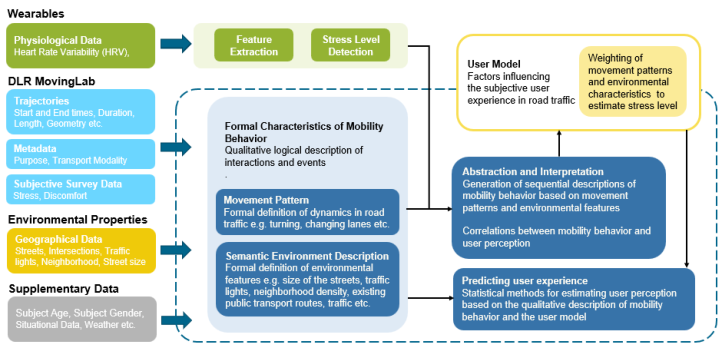
Figure 1: Overview of the mobility behaviour model.
All procedures complied with ethical research standards, and informed consent was obtained prior to data collection. Participants were instructed to travel according to their normal daily routines to ensure ecological validity.
Data Collection and Synchronization Mobility trajectories were recorded using the DLR MovingLab smartphone application, which continuously tracked GPS coordinates, timestamps, speed and mode of transport. Physiological data were captured using Garmin smartwatches, recording heart rate (HR), inter-beat interval (IBI) and heart rate variability (RMSSD) at one-second intervals. Technical data collections were framed by means of qualitative questionnaires, stress inventories and interviews before, during and after the trips. This information was used to interpret physiological data collected not only during the shuttle trips, but also while using smartphones to search for and to navigate to a virtual pick-up point.
To contextualize physiological responses, the mobility trajectories were synchronized with environmental and operational data like weather con ditions, temporal attributes like time of the day, weekday/weekend etc. and the transport mode (bus, cycling or walking) during the later process of data analyses. A total of 28,831 data points were obtained after synchronization and cleaning. Physiological anomalies caused by motion artifacts or miss ing data were filtered out using a rolling median and z-score thresholding method.
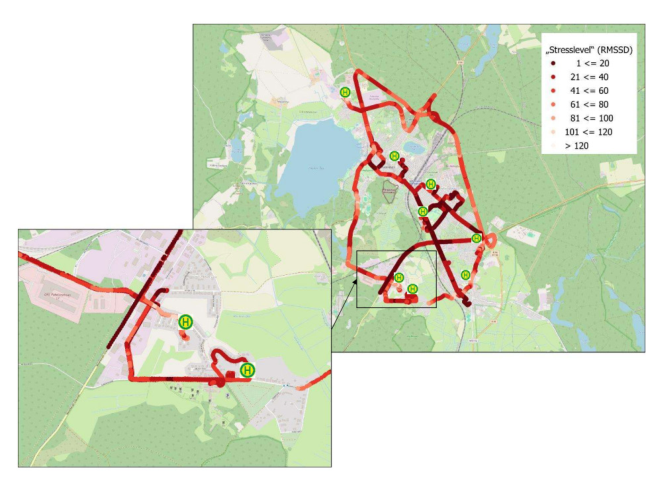
Figure 2: A sample participant data gathered during the study.
Semantic Geodata Enrichment The trajectories were enriched with semantic environmental features derived from OpenStreetMap (OSM) through the Python library OSMnx (Boeing, 2017). Each GPS coordinate was spatially joined with micro-environmental features within a 50-meter buffer radius, producing more than 70 contextual attributes per observation. These included:
Road infrastructure: type, width, intersection density, and speed limit,
Traffic control elements: proximity to crossings, roundabouts, and traffic signals,
Land use categories: residential, commercial, or green space,
Amenity density: presence of shops, schools, and public facilities.
This enrichment process created a semantically annotated mobility dataset that linked each physiological measurement to the surrounding urban con text, thus extending beyond traditional transport analytics based solely on motion variables.
Semantic information encompasses various attributes, such as the type of roads (e.g., highways, residential streets), land use (e.g., commercial, residen tial, industrial), points of interest (e.g., schools, hospitals, restaurants), and other contextual data that describe the purpose, function, and characteristics of geographic entities. This integration is achieved through the use of tags, which are key-value pairs attached to OSM elements like nodes, ways, and relations. For instance, a road might be tagged with “highway = residential” and “maxspeed = 50” to indicate its type and speed limit, respectively.
Stress-Aware Urban Mobility: Predicting User Comfort 173 Feature Engineering and Labeling
After preprocessing, all data sources were temporally aligned to a 1-second sampling rate. Derived features included acceleration, speed variance, stop frequency and transport segment duration. Physiological stress levels were inferred from RMSSD and normalized HR values using z-score scaling.
Stress labels were first categorized into three levels (low, moderate, high), following established HRV thresholds. However, to improve classifier robust ness and reduce ambiguity, the categories were merged into a binary classi fication scheme (normal vs. high stress) using also the self-perceived stress inventories by participant. This decision was supported by preliminary per formance evaluations and participant interviews that revealed difficulties in subjectively differentiating moderate from mild stress levels.
Machine Learning Models and Pipeline Machine learning experiments were implemented in Python 3.11 using pan das, scikit-learn, and XGBoost (Chen and Guestrin, 2016). The data were split into training (80%) and test (20%) sets using stratified sampling to preserve class balance. Four classifiers were evaluated:
Random Forest (RF): ensemble of 200 trees (n_estimators = 200, max_depth = 10, min_samples_split = 4, random_state = 42), Gradient Boosting (GB): (n_estimators = 250, learning_rate = 0.1, max_ depth = 6), XGBoost (XGBClassifier): (n_estimators = 300, learning_rate = 0.05, max_ depth = 8, subsample = 0.8, colsample_bytree = 0.8, gamma = 0.1), Multilayer Perceptron (MLP): feed-forward neural network with one hidden layer of 64 neurons, ReLU activation, adam optimizer, batch_size = 32, and max_iter = 300.
Hyperparameters were optimized via RandomizedSearchCV (10-fold cross-validation) over predefined parameter grids.
Evaluation Metrics Model performance was evaluated using accuracy, F1-score, and area under the ROC curve (AUC). Additionally, SHAP (SHapley Additive Explanations) values were computed for the XGBoost model to interpret feature impor tance and visualize the contribution of semantic and physiological variables (Lundberg and Lee, 2017).
From a theoretical perspective, the binary stress classification prob lem represents a low-signal, high-dimensional learning task, where physi ological and contextual noise can reduce separability. Applying Principal Component Analysis (PCA) constrains the hypothesis space by projecting correlated features into orthogonal components that maximize explained variance, thereby improving model generalization. Similarly, ensemble meth ods such as XGBoost and Gradient Boosting minimize convex surrogates of the 0-1 loss, providing theoretical guarantees of convergence toward the
Bayes-optimal classifier under convex risk minimization assumptions. These properties justify the use of dimensionality reduction and ensemble learning as synergistic strategies for small, real-world datasets such as the one anal ysed in this study.
RESULTS
Model Performance Both XGBoost and MLP neural networks outperformed baseline models. XGBoost achieved an accuracy of approximately 70% and an F1-score near 0.74, while the neural network achieved slightly higher overall predictive performance. The binary classification approach (normal vs. high stress) consistently yielded higher reliability compared to the three-class setup. The improvement in performance highlights the challenges of detecting nuanced emotional states in small real-world datasets. Nonetheless, the models demonstrated meaningful predictive capability, confirming the feasibility of integrating physiological and contextual features for stress estimation.
Feature Importance and Semantic Influences Feature importance analysis revealed that semantic environmental features significantly enhanced prediction accuracy compared to models using only motion or physiological data. The most influential predictors included:
Proximity to intersections and traffic signals,
Density of commercial land use, and
Frequency of stops or speed changes.
These variables often corresponded to transitions between transport modes or changes in traffic density conditions associated with increased stress levels. Interestingly, features such as average speed and trip duration were less predictive once semantic context was incorporated.
Subjective Evaluation from the Interviews Based on TAM The qualitative findings reveal that external variables such as age, health, gender, technological affinity, spatial context, and social influence strongly shape the stress response, alongside acceptance levels, of the app-based shut tle service. Age and technological affinity are closely intertwined, as older participants show lower digital confidence, which heightens the perceived effort and stress of app-based tasks like booking or navigation despite posi tive experiences with the shuttle ride itself. Over time, however, participants expect habituation and information support to mitigate this effort, improv ing perceived ease of use and lower stress levels. The service is generally viewed as flexible and inclusive, particularly for users with health-related mobility constraints, yet its perceived usefulness is overshadowed by the enduring symbolic and practical significance of private car ownership. This automobility orientation, reinforced by social norms and gendered differ ences, by men showing higher technological affinity and at the same time
Stress-Aware Urban Mobility: Predicting User Comfort 175 stronger attachment to cars, limits the intention to adopt the shuttle service. Consequently, while participants express cognitive acceptance and positive attitudes toward the concept, these remain largely hypothetical and condi tional on future mobility restrictions.
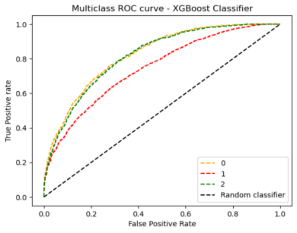
Figure 3: Comparison of the performance of the different mobility models.
The findings thus highlight how external variables, especially age, health, gender, and automobility orientation, moderate the relationships between perceived usefulness, ease of use, behavioral intention and stress response. These insights underline that stress in mobility is not merely a function of travel time or congestion but arises from an interplay between environmental semantics, operational factors, and personal perception, attitudes and tech nological backgrounds.
DISCUSSION
The integration of psychological perspectives, physiological sensing, mobility trajectories, and semantic geodata offers a promising approach to understand ing human experience in urban transport systems. The findings demonstrate that stress-aware modeling is both technically feasible and conceptually meaningful. From a methodological standpoint, this study contributes a reproducible semantic annotation pipeline that allows large-scale linking of environmental features to physiological data. Such pipelines can be reused for other applications, including pedestrian safety analysis, cyclist comfort evaluation or multimodal transport optimization.
Furthermore, the qualitative results demonstrate that acceptance of digital mobility services of older adults is intertwined with emotional and physiolog ical dimensions of stress. The findings indicate that perceived technological
complexity and low digital self-efficacy can act as stressors that negatively influence both perceived ease of use and behavioral intention. Conversely, familiarity, clear communication, and repeated exposure appear to function as stress-buffering mechanisms that enhance confidence and perceived con trol. This underscores the need to integrate psychological and affective fac tors, particularly in the context of older adults who may experience techno logical interaction as both enabling and demanding.
At the same time, several limitations must be acknowledged. The small sample size limits generalizability, and physiological stress signals may be influenced by factors unrelated to the mobility context (e.g., caffeine intake, personal stressors). Here, especially personal attitudes and technological knowledge play a major role when it comes to an acceptance of new (mobil ity) services and operations that might question well-established routines. Furthermore, the reliance on HRV-based stress indicators may overlook cog nitive or psychological dimensions of comfort. Even though with the inter views TAM-factors were included, the present study should be conducted in the future with a larger sample size.
CONCLUSION
This study presented an empirical validation of stress-aware urban mobility modeling through the integration of physiological sensing, mobility trajecto ries and semantically enriched geodata. By capturing and analyzing natural istic passenger behavior in a rural German setting, the research demonstrated that user stress can be effectively modeled using a combination of psycho logical, contextual, environmental and physiological features. The results provide several key insights. First, the combination of wearable-derived physiological data and semantic environmental attributes yields meaning ful predictive power for passenger stress estimation. Second, environmental semantics such as proximity to intersections, density of commercial land use and road type are influential predictors of stress, often surpassing traditional motion-based indicators. Third, supported by interview data, based on psy chological theory, stress response and acceptance rate can be contextualized. Finally, the machine learning results indicate that binary stress classification enhances reliability in small, real-world datasets, underscoring the need for robust feature selection and scalable annotation methods.
Importantly, the persistent dominance of the automobility dispositive sug gests that acceptance of shared or digitalized transport solutions cannot be understood in purely instrumental terms. For many participants, the car con tinues to embody independence, identity, and emotional security, values that mitigate perceived benefits of new mobility technologies. Consequently, pro moting behavioral change requires addressing these symbolic and habitual dimensions alongside usability improvements. Policies and service designs that provide low-threshold alternatives, such as phone-based booking options, adaptive interface design, or community-based onboarding, may help reduce stress and bridge the gap between attitudinal acceptance and actual adoption. In doing so, mobility innovations could better align with users’ everyday practices and emotional landscapes, fostering both accep tance and well-being in later life.
Stress-Aware Urban Mobility: Predicting User Comfort 177 Future work will expand on these findings by scaling data collection across larger and more diverse urban contexts, integrating additional bio logical signals and testing adaptive feedback mechanisms in operational set tings. The methodological approach developed here provides a foundation for advancing stress-aware transport systems that respond intelligently to human needs, contributing to healthier, more inclusive and sustainable urban mobility environments.
ACKNOWLEDGMENTS
The author gratefully acknowledges the Deutsches Zentrum für Luft- und Raumfahrt (DLR) for providing infrastructure, supervision, and technical support for this research. Special thanks are extended to the MovingLab team for facilitating data collection and to the study participants in Neustrelitz, Germany for their time and cooperation. This work benefited from valuable feedback provided by other project colleagues and reviewers within the DLR.
REFERENCES
Bigazzi, A.Y. & Wong, K. (2022) Physiological markers of traffic-related stress during active travel: A review. Transportation Research Part F: Traffic Psychology and Behaviour, 89, 441–467. Birenboim, A., Dijst, M., Ettema, D. & Poelman, M. (2019) Wearables and location-
tracking technologies for mental-state sensing in outdoor environments. The Professional Geographer, 71(3), 449–461. Boeing, G. (2017) OSMnx: New methods for acquiring, constructing, analyzing, and visualizing complex street networks. Computers, Environment and Urban Systems, 65, 126–139 Chen, T. & Guestrin, C. (2016) XGBoost: A scalable tree boosting system. Proceedings
of the 22nd ACM SIGKDD International Conference on Knowledge Discovery and Data Mining, 785–794. Healey, J.A. & Picard, R.W. (2005) Detecting stress during real-world driving tasks using physiological sensors. IEEE Transactions on Intelligent Transportation Systems, 6(2), 156–166. Kim, H.-G., Cheon, E.-J., Bai, D.-S., Lee, Y.H. & Koo, B.-H. (2018) Stress and heart
rate variability: A meta-analysis and review of literature. Psychiatry Investigation, 15(3), 235–245. Lundberg, S.M. & Lee, S.-I. (2017) A unified approach to interpreting model predictions. Advances in Neural Information Processing Systems (NeurIPS 2017). Ma, S., Wang, X., He, Q. & Goulias, K.G. (2025) Assessing pedestrian stress with
biometric sensing and stated preferences. Transportation Research Part F: Traffic Psychology and Behaviour, 104, 236–252. Montanari, A., et al. (2024) Urban environment influences on stress, autonomic reactivity and circadian rhythm: Protocol for an ambulatory study of mental health and sleep. Frontiers in Public Health, 12, 1175109. Pedregosa, F., Varoquaux, G., Gramfort, A., et al. (2011) Scikit-learn: Machine
learning in Python. Journal of Machine Learning Research, 12, 2825–2830. Shaffer, F. & Ginsberg, J.P. (2017) An overview of heart rate variability metrics and norms. Frontiers in Public Health, 5, 258.
LISTED IN THE AHFE DIGITAL BOOKSTORE CATALOGUE
Explore the complete digital volume
Intelligent Human Systems Integration (IHSI 2026): Disruptive and Innovative Technologies
Read this individual research paper free through the original publisher, or explore the full digital proceedings book.
ISBN 978-1-964867-76-2
Explore this ISBN in the AHFE Bookstore ↗Listed in the July 2026 bookstore catalogue; search by ISBN to confirm current availability · Digital book purchase optional