Andrea Reindl, Philipp Graf, David Knapp, Wolfgang Schildorfer (2024). How carsharing services in residential housing impacts modal split and car usage – a multi-method investigation including legal challenges. In: Human Factors in Architecture, Sustainable Urban Planning and Infrastructure. AHFE Open Access, vol. 153, pp. 72–84. https://doi.org/10.54941/ahfe1005340
This study investigates the complex interplay between environmental concerns, urban mobility challenges, and legal intricacies associated with car ownership with a focus on Austria, Germany, and Switzerland. Carsharing (CS) emerges as a key element in transport systems, particularly in residential areas, aiming to reduce car dependency, reduce parking spaces, promote increased public transport usage, and reducing traffic congestion.The study explores whether CS induces a modal shift, how many cars can be replaced with a CS-vehicle, if developers can save parking spaces and thus construction costs through CS services, and what the legal landscape for parking and CS is in Austria. The research uses a multimethod approach, including a systematic literature review, semi-structured interviews, desktop research on existing carsharing projects in residential housing, and an examination of legislative aspects in Austria.Findings suggest that around 25% of analysed papers explore the connection between CS and housing. Interviews highlight key enablers for CS, including good public transport access, strategic placement of CS hubs, and the availability of e-cars. Experts specializing in the carsharing field suggest on average 12 cars can be replaced by one CS vehicle. Projects implemented in Austria, Switzerland, and Germany, where CS costs are shared among tenants or mobility fees are incorporated into rent, indicate the viability of this approach. Additionally, projects in Switzerland that regulate car ownership in lease contracts suggest the potential for reducing parking spaces by offering adequate alternative mobility options. CS is explicitly addressed only in Vienna's garage law, permitting the reduction of mandatory parking spaces. In other Austrian federal states, it is generally subject to case-by-case evaluations.Therefore, carsharing is integrated into housing developments, but faces challenges like parking limitations and legal complexities (Caruso, 2023). Austria's complex legal landscape, governed by individual states, adds intricacies to car-sharing feasibility in residential complexes. Navigating this legal terrain to realize practical mobility solutions is challenging due to limited documentation on actual projects. The study explores whether carsharing induces a modal shift. Additionally, it investigates whether developers can save parking spaces and construction costs through carsharing services, evaluating literature and practical experiences for potential reductions in parking spaces (Caruso 2023). To address the research questions, a multimethod approach was employed. Initially, a systematic literature review was undertaken to investigate whether the implementation of car sharing in residential developments could induce a modal shift, reduce private car ownership, and consequently decrease the required number of parking spaces. Using a defined search string, 188 results were initially identified, and after a rigorous elimination process, 45 papers remained for in-depth analysis. To gain insights into the practical implementation of mobility in housing, semi-structured interviews were conducted with 13 experts, project managers, funding experts, and residential developers and operators. Additionally, desktop research on existing housing projects was carried out, evaluating currently more than 25 projects in Austria, Germany and Switzerland. The legislative aspects, involving parking space regulations, mobility contracts and building codes in Austria's nine federal states, were examined through desk research and interviews, comparing them with regulations in Germany and Switzerland. This multimethod approach allowed for a practical exploration of the research questions, by complementing all results of literature, project research, interviews, and legislative background within a master matrix. The study, concluding in January 2024, provides findings from its literature review, revealing that around 25% of the analysed papers explore the connection between carsharing and housing. Preliminary findings from interviews, emphasize that key enablers for carsharing include good public transport access and city bicycle networks, strategically placed carsharing hubs with recognizable branding, and the availability of e-cars for mobility assurance. This study gives a policy overview of the current state in Austria and lays a foundation for future research.
How Carsharing Services in Residential Housing Impacts Modal Split and Car Usage 73
societies. As cities expand and the need for sustainable living becomes more acute, understanding the dynamics of urban mobility, particularly in rela- tion to car ownership and usage, becomes increasingly vital. The urgency of addressing these issues is underscored by the significant environmental impact of the built environment and transportation sector. The built environ- ment accounts for approximately 30% of total energy-related greenhouse gas emissions in the EU (Lausselet et al., 2021), while transportation contributes to 24% of the EU’s total greenhouse gas emissions, with a notable 46% ema- nating from passenger vehicles, including buses and cars (Hannah Ritchie and Max Roser, 2023). One of the most visible manifestations of the trans- portation challenge in urban areas is the increasing prevalence of private car ownership. This trend has led to multifaceted urban issues such as parking demands, traffic congestion, and air pollution, all of which degrade the qual- ity of urban life (Wang et al., 2021). CS has emerged as a promising solution in this context. It is increasingly recognized as a viable alternative to pri- vate car ownership, capable of reducing car-dependency, traffic congestion, emissions, and resource consumption while fostering sustainable transporta- tion practices (Tao et al., 2021). An innovative approach involves placing shared cars in proximity to residential areas, where a significant proportion of trips begin and end (Caruso, 2023). This integration of housing development and mobility planning presents an opportunity to enhance urban liveability through more efficient spatial utilization. However, the implementation of CS within living communities is not without its challenges. Practical con- straints, such as parking space limitations, and legal complexities need to be addressed to facilitate the successful integration of CS schemes in residential areas. Therefore, a multi-method approach is applied to answer the following research questions (RQ).
RQ1: How can CS, when implemented in the mobility concept of housing, effect a modal shift?
RQ2: How many private owned cars can be replaced by one CS-car?
RQ3: How can CS models when implemented in housing reduce the number of parking spots needed?
RQ4: What are the legal drivers and barriers for the implementation of CS in the context of housing in Austria?
Through this study, we aim to contribute to a deeper understanding of CS’s role in urban mobility and its potential in creating sustainable, efficient, and liveable cities.
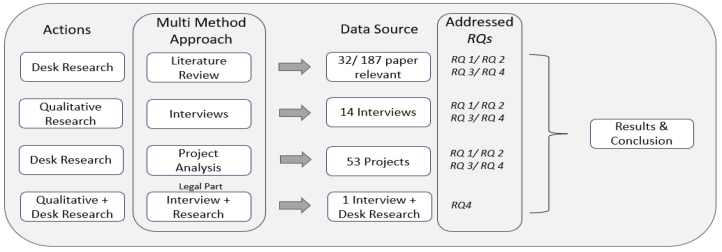
MULTI METHOD APPROACH In this study a multi method approach, following the triangulation model from P. Rothbauer (Given, 2008) was applied to address the research ques- tions. Figure 1 illustrates our overall research approach and the model we employed, tailored to fit our study. A structured literature review, analysis from real life projects, qualitative interviews with experts and an overview of the legal aspects in Austria form the base of this research. The findings of
each part are first described on their own and then these results are compared to give an overall combined answer to the RQ.
For the literature review the authors drew from the four-phase model of the PRISMA statement by Liberati et al. (Liberati et al., 2009). The model proposes structuring information flow within an identification, screening, eli- gibility, and inclusion phase, to improve the reporting of the systematic review (Liberati et al., 2009). For collecting literature, the database Scopus and the search engine Primo of the University of Applied Sciences Upper Austria were used.
Figure 1: Research approach.
Primo covers the following databases: ACM, Belz Juventa, EBSCO Busi- ness Source Elite, Emerald Collections, Hanser E-books, IEEE/IEL, Nomos eLibrary, OECD, Sage Humanities and Social Science Package, ScienceDi- rect College Edition, SpringerLink Portal, Taylor and Francis, UTB-Studi- E-Book, publishing house Austria E-Library, and Wiley-Online Library. The search string for SCOPUS composed of (TITLE-ABS-KEY ((housing OR “building*” OR “Residential Building” OR “domestic architecture” OR “dwelling” OR “smart City” OR “urban mobility”)) AND TITLE- ABS-KEY ((“car sharing” OR “CS”)) AND TITLE-ABS-KEY (chang* OR behav* OR “shift” OR “share” OR “split”)) whilst for PRIMO it was slightly changed due to other input conditions to Schlagwort enthält which means keywords contain (housing OR “building*”OR “Residential Build- ing” OR “domestic architecture” OR “dwelling” OR “smart City” OR “urban mobility”) UND Schlagwort enthält (“car sharing” OR “CS”) UND Schlagwort enthält (chang* OR behav* OR “shift” OR “share” OR “Split”). The found titles were downloaded on the 19th of September 2023. Having the search string defined 187 studies were retrieved. After filtering dupli- cates, the abstracts of these studies were screened to identify if the paper is further relevant for the research. After the screening 29 papers remained, which were read to retrieve relevant information from them. Further during the additional desk research three more papers have been added to the list, since these papers had relevant information to us, but they have not been found with the above-mentioned query string.
The interview part consisted of 14 interviews, utilizing semi-structured for- mats for depth and flexibility. Experts were selected across various domains,
How Carsharing Services in Residential Housing Impacts Modal Split and Car Usage 75
including CS-operators, funding experts, city officials, project developers, consultants, and representatives of housing cooperatives. The interviews were conducted between September and December 2023.
For the project analysis 53 CS initiatives (project titles in references) within residential housing have been investigated. The initial phase consisted of an extensive online search aimed at identifying relevant projects within the Ger- man speaking countries (Germany, Austria, Switzerland). Various platforms, databases, and subject-related repositories were explored to compile a list of potential projects. The data collection process involved gathering general project information specialized on parking and CS however, certain criti- cal details, such as precise figures on parking space reductions, financing specifics, declarations of car abandonment and penalties for non-compliance, posed challenges in terms of accessibility online.
For the legal part of this study initially, extensive online research focused on examining and comparing parking regulations in Austria’s nine federal states. This method gathered diverse and up-to-date information from the Austrian Law Information System (RIS). Subsequently, a semi-structured interview was conducted with an expert involved in creating mobility contracts. Open- ended questions were designed to explore the practical implications and nuances of mobility contracts, providing qualitative data that complemented the desktop research.
LITERATURE REVIEW RESULTS In this part the results from the Literature Review are described. Table 1 and Table 2 give an overview of the sub-topics on which we analyzed the paper, to gather relevant information to help answer the RQ. An “x” indicates that the sub-topic was sufficiently mentioned in the respective paper.
Table 1. Literature review results part 1.
Table available in the original PDF paper.
Paper Nr. 1 2 3 4 5 6 7 8 9 10 11 12 13 14 15 16 17 18 Difficulties/ barriers x x x x x x x x x x x x x x x x Private car reduction x x x x x x x x x x x Legal aspects x x x x x x x x x x Parking spot saving x x x x x x x x x Modal shift x x x x x x x x x x x Environmental impact x x x x x x x x x x x x
Table 2. Literature review results part 2.
Table available in the original PDF paper.
Paper Nr. 19 20 21 22 23 24 25 26 27 28 29 30 31 32 Sum Difficulties/ barriers x x x x x x x x x x 26 Private car reduction x x x x x x x x x x x 22 Legal aspects x x x x x x x x 18 Parking spot saving x x x x x x x 16 Modal shift x x x x x x x x 19 Environmental impact x x x x x x x x x 21
Effect on private car ownership: From the 32 analysed studies 22 included general information about the potential of CS to reduce the number of pri- vate cars. The literature indicates variation in both the replacement rates and the impact of CS on private car ownership, although the exact number of cars replaced by one single CS vehicle can vary widely depending on the context and location. Station based CS is ideally suited for residents of a neighbourhood for their daily commutes. By providing vehicles that can be shared by multiple users, the station based CS model reduces the need for individuals to own a vehicle (Rosa-Jiménez and Prados-Gomez, 2022). In order to substitute private cars with station based CS, vehicles need to be near users’ home (Namazu et al., 2018). Martin and Shaheen’s found that in north America one CS car replaces nine to thirteen private cars (Martin et al., 2010). The concept of car-sharing-facilitating neighbourhoods, where CS is integrated into residential planning, the reliance on private vehicles can be reduced and neighbourhood quality improves. A study from Philadelphia in the United States shows that every CS vehicle replaces 15.3 private cars (Safdar et al., 2022). In England and Wales, CS potentially replaces an aver- age of 8.6 private vehicles (Safdar et al., 2022). In 35 German cities where station based CS is offered a study shows that one CS car replaces an average of nine private cars (Kolleck, 2021). Exact numbers of how many private cars can be replaced by one CS-vehicle remain scarce in the literature, though it was frequently mentioned within 22 papers, that CS has the potential to do so.
Difficulties and legal aspects: Twenty-six studies have identified challenges in implementing CS, encompassing operational, legal, and policy aspects. Key operational challenges include vehicle and station placement, fleet size man- agement, and reservation system (Shams Esfandabadi et al., 2022). Diverging supply and demand affect user acceptance (Thigpen, 2018), with longer wait- ing times leading to decreased CS usage (Safdar et al., 2022). Resistance to changing established commuting habits and skepticism about the reliabil- ity and convenience of CS services can be significant barriers for CS-User adaption (Rosa-Jiménez and Prados-Gomez, 2022).
Urban areas exhibit higher CS demand due to challenges associated with car ownership, such as parking shortages. CS providers prioritize efficient station locations in densely populated regions (Safdar et al., 2022). Neighbor- hoods with detached housing tend to favor personal vehicle ownership due to laxer parking regulations and lower fees, potentially reducing CS interest (Hjorteset et al., 2021). Pricing, accessibility, time savings, and vehicle vari- ety significantly influence resident acceptance, with lower pricing increasing participation (Wang et al., 2021). Regulatory hurdles, such as those related to insurance, liability, and vehicle safety standards, can be significant for CS- operators (Hjorteset and Böcker, 2020). Since regulations for CS differ all over, standardized regulations have not been found.
Parking spot saving: Sixteen of the analyzed studies highlight CS’s impact on parking spot savings, especially in urban areas, where private cars remain parked for up to 95% of the time (Safdar et al., 2022). Well implemented station-based CS in residential building context could significantly reduce the need for traditional parking spaces (Wang et al., 2021). In Toronto,
How Carsharing Services in Residential Housing Impacts Modal Split and Car Usage 77
Canada, CS reduced residential building parking needs by 50% (Te and Lianghua, 2020). In the US, oversupply is common, with a case study in Davis, California, suggesting that 45% of parking spaces could be more effi- ciently used by CS (Svennevik et al., 2021). In high-cost urban regions like Malmo, Sweden, CS initiatives reduced parking norms for residents (Sven- nevik et al., 2021). CS not only reduces parking needs but also limits private car usage, fostering its expansion. Therefore CS and parking policies comple- ment each other to decrease vehicle ownership (Hjorteset and Böcker, 2020). Even though the studies mentioned that parking spots can be saved through CS, concrete numbers of how many parking spots can be saved remained scarce.
Environmental impact and modal shift: Twenty-one paper contained infor- mation on environmental impacts of CS whilst nineteen referred to the topic of Modal Shift. Station-based CS reduces the need for passenger cars, lead- ing to lower greenhouse gas emissions (Shams Esfandabadi et al., 2022). CS-vehicles are newer and more fuel-efficient, resulting in reduced fuel con- sumption and emissions during operation (Rabbitt and Ghosh, 2016). CS addresses issues like air pollution, traffic congestion, and decreased vehicle travel (Safdar et al., 2022). In Ulm, Germany, CS shifts lead to an aver- age reduction of 146–312 kg CO2 per year per member (Te and Lianghua, 2020). CS also reduces total car production and driving distance, promot- ing environmental sustainability (Svennevik et al., 2021). CS is shifting urban transportation away from personal vehicle ownership (Mavlutova et al., 2023), users combine CS with public transport, cycling, and walking, contributing to sustainable mobility (Hjorteset and Böcker, 2020).
INTERVIEW RESULTS Emerging trends have been identified in the interviews including a strong focus on e-mobility, the integration of various sharing vehicles (like scooters, cargo-bikes and e-bikes) in mobility hubs, and the significant role of station- ary CS with extensive networks. The synergy between public transport and CS was also noted as a critical trend.
Key insights pointed to the importance of the CS provider’s indepen- dence from housing developers and the significance of parking space location (above ground, accessible, visible). The necessity of local amenities and con- tinuous promotion is emphasized. Operational models, user base size, and economic viability are highlighted as crucial for the sustainability of CS services. Common mistakes included inadequate communication leading to reduced user engagement and system acceptance. Financial challenges due to insufficient funding and short project durations are noted. The importance of accessible and well-located CS stations is underscored, alongside techni- cal challenges in some infrastructure setups. Vandalism, inadequate public transport support, technical issues, and the difficulty of implementing CS in existing housing compared to new developments were among the problems cited.
Effective models included comprehensive citywide networks of stationary CS and interoperability of different systems through shared platforms. The
importance of having a variety of tariff systems to cater to different user preferences was highlighted.
CS works best when complemented by robust public transport. The need for diverse vehicle types and ongoing communication and marketing strategies was underscored. Decoupling parking spots from apartments and targeting a mix of business and private customers were suggested as effective practices.
Users were found to be price-sensitive, particularly those unfamiliar with ongoing car costs. Suggestions included integrating fixed CS costs into apartment operating costs and using renewable energy sources for charging.
Interview partners said that CS led to a reduction in car ownership, particu- larly in urban areas. Users tended to shift towards more sustainable transport modes over time. However, data on these behavioral changes were noted to be limited. On average, one CS vehicle can replace approximately 12 private cars, though this varies based on location and usage patterns. Further it was found that CS has the potential to significantly reduce the need for parking spaces, with estimates varying from replacing 4 to 5 parking spots per CS vehicle to even higher figures.
Interviewees suggested legislative changes, including adapting parking reg- ulations, reducing mandatory parking spots, and establishing specific CS laws. The need for dedicated funding streams for e-carsharing, encompassing both acquisition and operational expenses, was emphasized.
PROJECT ANALYSIS RESULTS This chapter describes the results found from 53 projects in which CS is an integral part in residential housing. The majority of projects (43%) are sit- uated in Austria, with Vienna being the most prominent location. Germany and Switzerland account for 32% and 25% of projects, respectively.
Parking spaces per unit and CS-vehicles per unit: Throughout the projects the average of the parking spaces provided per unit is 0.42, whereof the high- est ratio in Austria is found in the project “Bäumlequartier” in Vorarlberg, AT with 1,5 parking spaces per unit and the lowest in Austria is 0,1 parking spaces per unit found in the project “Autofreie Mustersiedlung Floridsdorf” in Vienna, AT. In addition, 42.4% of projects disclosing their number of CS-vehicles operate a single car. The average ratio of units per CS-vehicle is 77, calculated after excluding the three highest and lowest values as they significantly distort the average.
Financial details: For housing projects incorporating CS are often undis- closed (83% of 53 projects). Among disclosed information, notable funding approaches include driving credits, municipality-covered fees, developer- financed parking, and EU project-backed low rates, with some projects exempting parking costs for car abstainers. The direct pass-through of CS costs to the tenants could be found in some projects - for example: In GER, Hamburg, the “DOCK” project uses a €0.14/sq.m. monthly fee to fund a mobility concept, supporting CS and transit passes, while a €145 parking fee contributes to the fund (VCD - Dock71, 2023). In AT, Salzburg, the project “Wir Inhauser” allocates €25 from rent specifically for CS, including 50 free
How Carsharing Services in Residential Housing Impacts Modal Split and Car Usage 79
km. (Heimat Österreich, 2023; Lüftenegger, 2021). In CH, Bern, “Hueber- gass” charges 20 CHF per unit monthly, directing surplus funds to support a mobility fund (Plattform Autofrei/Autoarm wohnen, 2023).
Mobility plans: 79% of residential buildings projects had mobility plans, which indicates that comprehensive mobility considerations were made. Usu- ally, in addition to CS, efforts were made in areas such as bike infrastructure, walkability, and public transport. Considerations were also given to local amenities and services.
Car abandonment and parking spot reduction: 23% of projects implement car abstinence agreements, primarily in Switzerland. 11% have penalties for violating car-free living rules. 14 of the projects claimed that they were able to reduce parking spaces, whereof a concrete reduction was given by 6 of the projects. The reduction ranges from a 90% reduction to a 30% reduction in parking spaces. The average reduction in mandatory parking spots is 58%.
In conclusion, the results of the project analysis underscore the significance of integrating CS into residential developments. With notable variations in parking spaces provided, count of CS vehicles, and financial models across the projects, key insights emerge. The prevalence of mobility plans, car absti- nence agreements, and substantial reductions in parking spaces suggest a growing trend toward sustainable and efficient urban mobility solutions.
LEGISLATIVE COMPARISON RESULTS This chapter provides an analysis of the legal framework governing CS in Austria researched in the Austrian Law Information System (RIS), empha- sizing the variation in parking regulations across the nine different federal states and the role of mobility contracts. Due to the legal regulations in Aus- tria, there is no overall law regarding CS, but there are individual laws in the federal states that are relevant for CS. In Vorarlberg the maximum number of parking spaces can be reduced if there is good public transport connectivity. A compensatory levy is used for public parking spaces and/or public transport. In Tyrol the maximum number of parking spaces depends on various factors such as the size of the municipality, public transport connectivity, and popu- lation density. Municipalities can set a minimum number through their own parking space ordinances. In Salzburg municipalities can determine the min- imum number of parking spaces in their own ordinances. Maximum limits can be set through development plans. Adjustments to the number of parking spaces are made according to local conditions and interests. A compensatory levy supports public transport, non-motorized individual transport, or the construction of public parking spaces. In Upper Austria a “sufficient” num- ber of parking spaces must be constructed, with specifics provided by state ordinance. A municipal parking ordinance is not envisaged. In Lower Aus- tria the determination of the minimum number is specified by state ordinance and partly by municipal ordinances or development plans. Here too, the com- pensatory levy is earmarked for public parking spaces and public transport. Minimum number of parking spaces varies depending on the type of building use. Municipalities are allowed to enact their own parking space ordinances.
A reduction in parking spaces is possible depending on the degree of pub- lic transport accessibility, the presence of a traffic concept, and proximity to supply and care facilities. There is no compensatory levy, but builders must bear the costs of replacement parking spaces. In Burgenland and Carinthia there are no specific regulations regarding the number of parking spaces. In Vienna regulations for parking spaces can be adapted considering various fac- tors such as accessibility by public transport, traffic and environmental policy objectives, existing parking facilities, and the use of public traffic areas for social, urban ecological, and health purposes.
The City of Graz in Styria, AT introduced mobility contracts in response to urban development and increasing population to offer a unique approach to managing space and mobility. Under §89 Abs3 of the Styrian Building Act, residential buildings are required to have at least one parking space per unit, but this can be adjusted by municipalities. Graz, utilizing an exemption in §89 Abs4, allows deviations from this norm by offering a comprehensive mobility concept which also includes CS and therefore reduce required parking spaces.
In Vienna with a new parking regulation, a zone plan is introduced, which establishes zones based on proximity to public transportation, particularly the subway network. In zone one only 70% of the parking regulation needs to be fulfilled and in zone 2 80% and in zone 3, which is the rest of the city 100% remains. Beyond zoning parking spots can be reduced by CS. One CS space can replace 5 mandatory parking spaces. However, the CS agreement must be disclosed to the city, a corresponding legal obligation must be recorded in the land register, and discontinuation of the CS space operation may result in a retrospective replacement fee, as indicated in the explanations (Pawkowicz, 2023; WKO, 2023).
CONCLUSION AND ANSWER TO THE RESEARCH QUESTIONS In the outset of this study, our primary aim was to identify challenges the implementation of CS in residential construction faces. Through an in-depth exploration and analysis using a mixed method approach an attempt was made to address this problem. In this concluding section, the results of the four previous sections are combined to answer the stated Research Questions.
Answer to RQ1: Modal shift: In summary, the research findings indicate that station-based CS in residential areas has a significant impact on the modal split and can lead to a modal shift towards more sustainable trans- portation options. Users of CS services tend to change their total mobility behaviour, reducing their reliance on private car ownership and favouring greener modes such as public transport, biking, and walking. Housing devel- opments that incorporate CS services and robust public transport and biking infrastructure have witnessed residents giving up their cars in favour of these more sustainable options. Specific data from projects in Darmstadt, Germany, and Vienna, Austria, highlight the success of such initiatives, with a notable percentage of residents increasing their CS usage or relinquishing car own- ership. Overall, these findings suggest that CS in housing developments can effectively influence the modal split and contribute to a shift towards more sustainable modes of transportation.
How Carsharing Services in Residential Housing Impacts Modal Split and Car Usage 81
Answer to RQ2: Car replacement factor: In conclusion, the research find- ings provide a range of replacement factors for private cars by one CS vehicle. These factors vary depending on the context, with different studies and sources reporting figures between 5 and 20 replaced private cars per CS car. However, there seems to be a consensus that, on average, one CS vehicle can replace approximately 9 to 12 private cars in urban settings, while in resi- dential complexes with a minimum of 80 units, the replacement factor may increase to around 80 to 150 residents per CS vehicle for sustainable financial operation. This variability underscores the importance of considering loca- tion and specific circumstances when assessing the impact of CS on private car ownership.
Answer to RQ3: Parking space reduction: CS in residential buildings reduces parking spaces as suggested by literature, CS interviews and projects. CS models, when integrated into housing developments, offer a multifaceted approach to reducing the need for parking spots. The ability of CS in diminishing parking requirements stems from its ability to provide residents with access to shared vehicles, thereby lessening the necessity for individ- ual car ownership. This reduction in personal vehicles directly translates to a decreased demand for parking spaces. The literature found rates up to 50% of possible (Te and Lianghua, 2020) saved parking spots through CS in housing, whilst with regulations in Vienna parking spots can be reduced by 5 parking spots per CS-vehicle (max. 10%). The success of CS in minimizing parking spaces is enhanced when combined with comprehensive public transporta- tion networks, the availability of bicycle infrastructure, and the promotion of walkable communities.
Answer to RQ4: Legislative Comparison: The results underscore the importance of establishing well-considered legal frameworks to promote and facilitate car-sharing initiatives in residential buildings across Austria, along with the necessity of securing adequate funding. The legal framework in Aus- tria is highly heterogeneous, with different regulations prevailing in various federal states. Suggestions from interviewees included the nationwide imple- mentation of mobility contracts. In general, it can be deduced that clear guidelines would provide greater planning certainty, particularly for property developers.
LIMITATIONS AND FUTURE RESEARCH This study is limited by insufficient real-project data on car replacement, modal shift, parking space reduction, and relinquished car ownerships. Projects are often unassessed or lack publicly available data. Evaluations, both pre- and post-carsharing implementation, are rare, leaving a notable research gap in this area. Future research must prioritize implementing prac- tical mobility solutions in residential developments to gather specific, tangible data. Strengthening collaborations with operators is essential for comprehen- sive insights. It’s crucial to move beyond pilot projects and establish stable, all-encompassing systems. Research should assess project status before execu- tion and provide ongoing support throughout carsharing service operational years.
REFERENCES
Project list: 1. Autofrei Mustersiedlung Floridsdorf, 2. Bäumlequartier am See, 3.
Biotop City, 4. Burgunderstraße, 5. Cambium, 6. Cohousing Pomali, 7. DOCK71, 8. Domagkpark München, 9. EinViertel, Winterthur, 10. Erlenmatt Ost, 11. Gartensiedlung Weißenburg, 12. Gartenstadt Farmsen, 13. Gartenstraße, 14. Gemeinschaft BROT Pressbaum, 15. Giesserei Winterthur, 16. Gleis 21, 17. GWG Mobilitätsstation Ramersdorf, 18. Hafencity Hamburg, 19. Haufgasse, 20. Hopfenstraße, 21. Huebergass, 22. Hunziker Areal, 23. In der Wirke, 24. Kalkbreite, 25. Leutschenbach, 26. Lincolnsiedlung, 27. Marktgemeinde Wiener Neudorf, 28. Mauerseglerei, 29. Mitte Altona, 30. Oberbillwerder, 31. Oberfeld Ostermundigen, 32. Oleandergasse, 33. Perfektastrasse 58, 34. Pilotsiedlungen Nassauische Heimstätte, 35. Prinz-Eugen-Park, 36. Rhomberg Bau, St. Ger- hardstraße, 37. Seestadt Aspern, 38. Siedlung Burgunder, 39. Sihlboden, 40. Sonnengarten Limberg, 41. Sonnwendviertel Ost, 42. Stellwerk, 43. Uferwerk Werder, 44. Vauban, 45. Waldmüllerpark, 46. Walgauhaus Nüziders, 47. Wasen- straße, 48. Waterkant, 49. Weststadt, 50. Wir inHauser, Friedrich Innhauser, 51. Wohnanlage Bruno-Marek-Allee, 52. Wohnanlage ERnteLAA, 53. Wohnprojekt Wien Praterstern. Caruso (2023) Mobilitätsumfrage 2023 [Online]. Available at https://carusocarsharing.com/wp-content/uploads/2023/05/carusocarsharing.com- caruso-mobilitaetsumfrage-2023-mini-praesentation-umfrage-2023.pdf (Accessed 20 November 2023). Given, L. M. (2008) The Sage encyclopedia of qualitative research methods, Los Angeles Calif., Sage Publications. Hannah Ritchie and Max Roser (2023) ‘Cars, planes, trains: where do CO2 emis-
sions from transport come from?’, Our World in Data [Online]. Available at https://ourworldindata.org/co2-emissions-from-transport. Heimat Österreich (2023) Friedrich-Inhauser-Straße | Heimat- Oesterreich [Online]. Available at https://www.heimat- oesterreich.at/de/Unternehmen/Referenzen/Friedrich-Inhauser-Strasse_rf_1386 (Accessed 11 December 2023). Hjorteset, M. A. and Böcker, L. (2020) ‘Car sharing in Norwegian urban areas’, Transportation Research Part D: Transport and Environment, vol. 84, p. 102322. Hjorteset, M. A., Böcker, L., Røe, P. G. and Wessel, T. (2021) ‘Intraurban geogra-
phies of car sharing supply and demand in Greater Oslo, Norway’, Transportation Research Part D: Transport and Environment, vol. 101, p. 103089. Kolleck, A. (2021) ‘Does Car-Sharing Reduce Car Ownership? Empirical Evidence from Germany’, Sustainability, vol. 13, no. 13, p. 7384. Lausselet, C., Lund, K. M. and Brattebø, H. (2021) ‘LCA and scenario analysis of a
Norwegian net-zero GHG emission neighbourhood: The importance of mobility and surplus energy from PV technologies’, Building and Environment, vol. 189, p. 107528. Liberati, A., Altman, D. G., Tetzlaff, J., Mulrow, C., Gøtzsche, P. C., Ioannidis, J. P.
A., Clarke, M., Devereaux, P. J., Kleijnen, J. and Moher, D. (2009) ‘The PRISMA statement for reporting systematic reviews and meta-analyses of studies that eval- uate health care interventions: Explanation and elaboration’, Annals of internal medicine, vol. 151, no. 4, W65-94. Lüftenegger, P. (2021) Friedrich-Inhauser-Straße – Zero Carbon Refurbishment [Online]. Available at https://www.stadt-salzburg.at/smartcity/handlungsfeld- wohnprojekte/friedrich-inhauser-strasse-zero-carbon-refurbishment/ (Accessed 13 November 2023).
How Carsharing Services in Residential Housing Impacts Modal Split and Car Usage 83
Martin, E., Shaheen, S. A. and Lidicker, J. (2010) ‘Impact of Carsharing on Household Vehicle Holdings’, Transportation Research Record: Journal of the Transportation Research Board, vol. 2143, no. 1, pp. 150–158. Mavlutova, I., Atstaja, D., Grasis, J., Kuzmina, J., Uvarova, I. and Roga, D. (2023)
‘Urban Transportation Concept and Sustainable Urban Mobility in Smart Cities: A Review’, Energies, vol. 16, no. 8, p. 3585. Namazu, M., MacKenzie, D., Zerriffi, H. and Dowlatabadi, H. (2018) ‘Is carsharing for everyone? Understanding the diffusion of carsharing services’, Transport Policy, vol. 63, pp. 189–199. Pawkowicz, A. P. (2023) Das neue Stellplatz-Regulativ in Wien “Zuckerbrot und Peitsche” | LinkedIn [Online]. Available at https://www.linkedin.com/pulse/das-neue-stellplatz-regulativ-wien- zuckerbrot-und-pawkowicz/?originalSubdomain=de (Accessed 11 December 2023). Plattform Autofrei/Autoarm wohnen (2023) Bern, Huebergass [Online]. Available at https://wohnbau-mobilitaet.ch/beispiele/neubau/ch-siedlungen- bestehend/grossstadt-zentrale-lage/bern-huebergass/ (Accessed 10 November 2023). Rabbitt, N. and Ghosh, B. (2016) ‘Economic and environmental impacts of organ-
ised Car Sharing Services: A case study of Ireland’, Research in Transportation Economics, vol. 57, pp. 3–12. Rosa-Jiménez, C. and Prados-Gomez, C. (2022) ‘Smart Multi-Functional Micro- Hub for Neighborhoods: Sustainable Mobility and Environmental Restoration Inhigh-Density Social Neighborhoods’, Architecture and Engineering, vol. 7, no. 4, pp. 36–48. Safdar, M., Jamal, A., Al-Ahmadi, H. M., Rahman, M. T. and Almoshaogeh, M.
(2022) ‘Analysis of the Influential Factors towards Adoption of Car-Sharing: A Case Study of a Megacity in a Developing Country’, Sustainability, vol. 14, no. 5, p. 2778. Shams Esfandabadi, Z., Diana, M. and Zanetti, M. C. (2022) ‘Carsharing services in sustainable urban transport: An inclusive science map of the field’, Journal of Cleaner Production, vol. 357, p. 131981. Svennevik, E. M., Dijk, M. and Arnfalk, P. (2021) ‘How do new mobility practices
emerge? A comparative analysis of car-sharing in cities in Norway, Sweden and the Netherlands’, Energy Research & Social Science, vol. 82, p. 102305. Tao, Z., Nie, Q. and Zhang, W. (2021) ‘Research on Travel Behavior with Car Sharing under Smart City Conditions’, Journal of Advanced Transportation, vol. 2021, pp. 1–13. Te, Q. and Lianghua, C. (2020) ‘Carsharing: Mitigation strategy for transport-related
carbon footprint’, Mitigation and Adaptation Strategies for Global Change, vol. 25, no. 5, pp. 791–818. Thigpen, C. G. (2018) ‘Giving parking the time of day: A case study of a novel parking occupancy measure and an evaluation of infill development and carshar- ing as solutions to parking oversupply’, Research in Transportation Business & Management, vol. 29, pp. 108–115. VCD - Dock71 (2023) Dock 71 in Hamburg | Wohnen und Mobilität [Online].
Available at https://intelligentmobil.de/dock-71 (Accessed 5 December 2023).
Wang, J., Dane, G. Z. and Timmermans, H. J. P. (2021) ‘Carsharing-facilitating neighbourhood choice: A mixed logit model’, Journal of Housing and the Built Environment, vol. 36, no. 3, pp. 1033–1054. WKO (2023) Stellplatzverpflichtung in Wien [Online]. Available at https://www.wko.at/wien/verkehr-betriebsstandort/stellplatzverpflichtung-in- wien#heading_Wie_viele_Stellplaetze_muessen_hergestellt_werden_ (Accessed 11 December 2023).
LISTED IN THE AHFE DIGITAL BOOKSTORE CATALOGUE
Explore the complete digital volume
Human Factors in Architecture, Sustainable Urban Planning and Infrastructure
Read this individual research paper free through the original publisher, or explore the full digital proceedings book.
ISBN 978-1-964867-29-8
Explore this ISBN in the AHFE Bookstore ↗Listed in the July 2026 bookstore catalogue; search by ISBN to confirm current availability · Digital book purchase optional