Yichen Li (2024). The Transformation of Design Strategy for Triple Ecological Methodology of Smart City. In: Human Factors in Architecture, Sustainable Urban Planning and Infrastructure. AHFE Open Access, vol. 153, pp. 108–118. https://doi.org/10.54941/ahfe1005343
Since the concept of smart city was launched in 2008, the development of smart city in China has made great breakthroughs, but there are still problems in the development. The current interpretation and research of smart city mostly focus on technology application and top-level design, which is insufficient from the perspective of humanities and social sciences. This paper does not adopt the current mainstream view of technology application regarding smart city issues, or the perspective of top-level design operability under government governance objectives. Instead, it reinterprets the philosophical dimensions from the perspective of humanistic and social ethics. Before the research, this paper conducts an analysis of the current situation of China's smart cities and theoretical reflection on this. The research is divided into two aspects: 1. Trace and analyze of the ecological philosophy of Pierre-Félix Guattari: The philosophical perspective of triple ecology is an important assertion for the current development of society and capitalist globalization, which is directly related to the issue of sustainable development. This paper introduces the philosophical concept of triple ecology of Guattari as a perspective in the field of smart city research and analyzes its triple characteristics. 2. Research on strategy application: It refers to research on strategic application of triple ecological methodology, with individual practice in China, From the perspective of contemporary ecological crisis, this paper systematically reflects on the current development of smart cities regarding value and ethics, critically corrects the development, and points out the possibility of practical connection. By reshaping the concept of philosophical perspective of triple ecology at the methodological level, this paper proposes a triple ecological philosophical design strategy of "strategic research in the context of environmental ecology", "strategic research in the context of social ecology" and "strategic research in the context of individual spiritual ecology".
The term “smart city” first appeared around 2005 to describe a series of new application of information and communication technology in cities. In 2008, IBM officially introduced the concept of “smart cities” in “A smart planet: The next leadership agenda” (Palmisano, 2008), followed by a “Smarter
The Transformation of Design Strategy for Triple Ecological Methodology of Smart City 109
Cities Challenge” in approximately 100 cities of developed and develop- ing countries to promote IBM’s technological solutions for improving urban management and services.
In the past 20 years, as the concept of “smart cities” becomes more popular and and related supporting technologies have been developed, intel- ligent living and the transformation of urbanization have been witnessed in smart cities of China. At the end of 2012, Ministry of Housing and Urban- Rural Development issued Jian Ban Ke [2012] No. 42, which provided a three-level and five-layer system of indicators. In 2013, 103 cities, includ- ing Beijing Economic-Technological Development Area, were designated as national experimental smart cities. In 2014, with the approval of the State Council, the National Development and Reform Commission (NDRC), the Ministry of Industry and Information Technology, and the Ministry of Sci- ence and Technology issued Fa Gai Gao Ji [2014] No. 1770, which proposed to build a group of distinctive smart cities by 2020, to make a difference in improving living standard of citizens. Based on the 13th Five Year Plan, smart cities in China have entered into a new stage of development. At of the end of 2017, over 500 cities have clearly proposed or are currently constructing smart cities. In 2018, smart cities came into the golden age of development. In 2021, relevant statements were also made in the 14th Five Year Plan, such as “new smart cities in different categories will be developed” and “building smart cities and digital villages”.
From IBM’s “Smarter Cities Challenge” to MIT’s Sensible City Lab and the city operations center in Rio de Janeiro, Brazil, a series of relevant prac- tices have been carried out by corporations, universities and governments, from assisting government in management to helping residents in achieving autonomy. Many smart products have been launched, including innova- tions of virtual platforms and infrastructure. Some projects have achieved extraordinary success, while others are just failures.
BACKGROUND AND SIGNIFICANCE: CURRENT SITUATION OF SMART CITY DEVELOPMENT IN CHINA Despite of the booming development of smart city in China, there are still some issues arising from imbalance of development. At present, smart cities in China is being developed mainly in the eastern coastal areas and emerging in the central and western regions, with significant differences in construc- tion level and infrastructure investment. There are three main reasons for the differences.
Firstly, the choice of construction paths is different: given that the theo- retical research on Chinese smart cities has not conducted for a long time, there are currently three approaches, namely the perspective of urban oper- ation mode, the perspective of urban development and the perspective of system theory (see Table 1). However, all of these perspectives start from the construction activities by governmen at the upper level, so there is a lack of consideration for the urban residents.
110 Yichen
Table 1. Three common research perspectives of smart cities (collated by the author 2023).
Table available in the original PDF paper.
Research perspective Specific viewpoints Representative institution or researcher IBM, China Unicom et al.
From the perspective of urban operation mode
Use new information technology to promote intelligent urban planning, construction, management, and service. Emphasize the support of information technology and intelligent means. The purpose is to achieve industrial upgrade, efficient management, and people’s livelihood assurance.
The combination of intelligent digital cities and the Internet of Things produces smart cities.
Smart city is a new model for the harmonious development of urban economy, society, and nature.
Niu Wenyuan, Li Chongzhao et al.
Li Deren, Wu Hequan, Zhang Yongmin et al. From the perspective of urban development Li Chunjia et al.
The basic approach and content of urban development are citizens’ knowledge, technological intelligence, and environmental intelligence.
China Communication Society, Ning Jiajun, Shan Zhiguang et al.
Smart city is a comprehensive development strategy that integrates urban operation management, industrial development, public services, and administrative efficacy. It is a high-end form of modern urban development.
From the perspective of system theory
A smart city is a new urban ecosystem supported by new technologies which encompasses citizens, businesses, and governments.
Huawei et al.
Hangzhou Municipal Government, Li Bohu et al. A smart city is a digital network management of complex systems such as urban geography, resources, ecology, environment, population, economy, and society. It is an information system, with functions of service and decision-making, which comprehensively digitalizes all aspects of infrastructure and life development.
Xia Haoxiang, Wang Zhongtuo et al.
Contemporary city is a complex system which covers physical systems, social systems and information technology systems, with a focus on the processing capabilities of data, information, and knowledge.
Secondly, while relevant regulations become more comprehensive, insuffi- cient resource seems to be a problem. Departments of the State Council have launched several policies to improve the construction of smart cities in China, including Jian Ban Ke [2012] No. 42 (December 2012), “National Smart City Pilot Indicator System” (December 2012), and “National New Urbani- sation Planning (2014-2020)”(March 2014), Fa Gai Gao Ji [2014] No. 1770 (August 2014). Subsequently, according to the National Information Centre (Sisi et al., 2020), from 2018 to 2019, more than ten documents were issued, including the State Council [2018] No. 26, GB/T 37971-2019 and GB/T 38237-2019. However, there is imbalance in resource allocation among dif- ferent regions in terms of urban infrastructure resources, data resources, and human resources (including network infrastructure construction, the set-up of urban databases and geographic information databases, access to resident
The Transformation of Design Strategy for Triple Ecological Methodology of Smart City 111
data, daily life supervision, and talent management). Thus, it may result in different practical problems.
Thirdly, evaluation system is rather simple and incomplete. In 2013, “Research on China’s Smart City Standard System”, written by the National Technical Committee for Digital Standards of Intelligent Buildings and Resi- dential Areas (SAC/TC426), elaborated in detail on the definition, system, functional characteristics, key directions for construction and other con- tent of the evaluation of “smart cities”. In June 2015, the Standardization Administration, the Central Cyberspace Administration and NDRC issued Guo Biao Wei Gong Er Lian [2015] No. 64. In December 2018, NDRC issued Fa Gai Ban Gao Ji [2018] No. 1688, proposing the basic principles of overall planning, step-by-step implementation, demonstration promotion, and continuous improvement. It encourages to make full use of the coordina- tion mechanism of national smart city standardization work. Special priority will be given to support the development of core and critical standards, basic standards and international standards in key areas. However, there is a lack of standardized third-party institutions in China to develop clear construc- tion standards, and the direct result of which is an incomplete evaluation system.
Although there are different understanding of smart cities, research on smart city has something in common. The correlation between residents, tech- nology, and infrastructure has led to six main research directions in China and abroad: research on definition, dimension and infrastructure system, con- struction system, technology system, intelligent application system, security evaluation system and challenges encountered by smart cities. Most of the studies are focused on top-level planning. Based on the lack of humanistic reflection and the inadequacy of theoretical research, this article chooses to discuss the study of smart cities from a philosophical perspective, reshape philosophical concepts into design strategy methodology and propose possi- ble applications. The attitude towards technology and the challenges faced by smart cities are the focus of this article in the perspective of triple ecological philosophy.
THE TRIPLE ECOLOGY: THEORY OF ECOLOGICAL PHILOSOPHY AND TRANSFORMATION OF ITS METHODOLOGY The triple ecological philosophy emphasizes the interrelationship and mutual influence among the environment, society, and individual spirit. After being transformed into methodology, this philosophy stress that environmental problems is an inevitable result of social ecological problems, and the solution to social ecological problems requires a thorough reflection of the individual spiritual ecology in the context of society. As mentioned earlier, research on smart cities in China today lacks a perspective of humanity. The triple nature of the triple ecology can be used to discard the previous way of studying envi- ronmental ecological problems on single dimension, which was solving the problem only by technology.
112 Yichen
In response to the threat from natural environment, Guattari (1989) criticized the traditional solution to ecological problems since it only con- sidered the technology. It simplified a revolution that should have integrated politics, society, and culture by only using technological means to solve industrial pollution problems. This revolution should require the collective participation of social labour based on profit economy and power relations, not only involving large-scale visible relationships but also considering the invisible fields (such as wisdom, sensibility, desire). To clarify the issues related to the revolution, he utilized the ethical and political connection between the three ecological registers, namely ecosophy. And these three ecological registers are: environment, social relations, and spirit (human subjectivity).
Of course, Guattari’s discussion of ecological philosophy is not limited to deal with natural environment crisis. For instance, the impact of human accident like Chernobyl is more than just negative influence on the natural environment, His interpretation of the term “ecology” is not limited to the field of zoology and the discussion of ecological imbalance cannot be limited to the natural environment.
The practical application of urban ecological dimensions is not uncom- mon. Ecological Urbanism (Mostafavi and Doherty, 2016), as a collec- tion on the integration of ecological philosophy and urbanism by archi- tects, planners, and urban researchers, discusses the definition of eco- logical urbanism from several aspects such as expectations, senses, pro- duction, and interaction. Scholars, such as Sheng (2014), Jinhua and Wei (2017), Haoxiang and Zhongtuo (2017), have also linked smart cities with ecological cities. However, these studies still appear to be partially limited to a single dimension of ecology. Therefore, this arti- cle once again introduces ecological philosophy into the field of smart cities, not only to make up for the lack of attention to the ecological environment, but, more importantly, to demonstrate the application of the triple ecological methodology as an analytical tool to the research on smart cities.
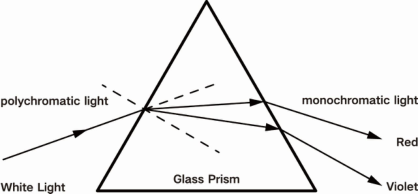
Due to the requirements of ethical aesthetics in ecological philosophy and the differences among practical paths, the methodology has to distinguish the three dimensions in the triple ecology, namely social ecology, spiritual ecology, and environmental ecology. It can be explained by referring to the dispersion and refraction of light in a prism. When there is a problem with one dimension of ecology, it will be mapped to the other two dimensions (Figure 1). But this methodological model is also somewhat different from the prism. From the perspective of the triple ecological philosophy, there is no clear definition of “edge”. If three dimensions are directly separated, “triple” becomes “three types”, then it loses the overall thinking in the way of eco- logical philosophy. After being transformed into methodology, the so-called “boundaries” of different ecological parts only exist as guidance for practi- cal paths. Differences between the research scope and practical guidance of the Triple Ecology involve the triple nature of Triple Ecology, the context of which is the end of binary opposition and the rise of various subjective viewpoints (Guattari, 1989).
The Transformation of Design Strategy for Triple Ecological Methodology of Smart City 113
Figure 1: Glass prism, dispersion of light (by the author 2023).
The triple nature of ecology is different from thinking about one single dimension of ecology. In the past, solving industrial pollution in smart cities only by technology ignored the fundamental crisis of natural environment and the necessity of multi-dimensional solutions, resulting in a clear trend of technological bureaucracy. The introduction of Guattari’s “triple ecology” philosophy and its methodology is a critical supplement. By understanding the subjective spiritual world and objective society in the context of an eco- logical philosophy, we can have a correct understanding of the environmental crisis. Only by using ecological philosophy to think of the environment from multiple dimensions, can we analyse the spiritual or social reasons for the crisis.
Of course, such a simple description is not the entire content of triple ecological philosophy. For a broader discussion of Guattari’s ecological phi- losophy, readers can refer to “The Ecosophic Object” in Chaosmosis (1992). The emergence of the triple ecology itself can demonstrate that it is more than simple causal relationship among spirit, society and environment. The correct way of understanding the triple ecology and ecological philosophy is through subjectivity, which is the root of ecological philosophy. Therefore, the methodology adopted from the triple ecological philosophy can help to make design strategies applicable in smart city.
DESIGN STRATEGY: DESIGN STRATEGY OF SMART CITY TRIPLE ECOLOGICAL METHODOLOGY The triple nature of ecological philosophy requires its application not to be based on a single dimension, but the differences in practice require separate consideration of the environment, society, and individual spirit. Given that elements of the triple ecosystem cannot be separated and require the inte- gration of those elements, methodology and its strategic application should also have triple nature. Here, the author elaborates on the overall prob- lem through the three dimensions of the triple ecology one by one, and then reflects on the transformation of methodology used in design strategy regarding the research of smart city.
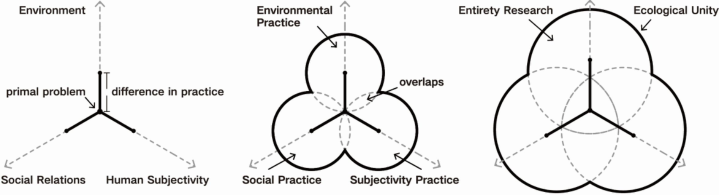
Figure 2 explains the relationship between three-dimension ecology and the overall ecology. When the research of the three directions infinitely expands, the areas which originally distinguish them tend to be infinitely small, and in the end almost completely overlap. It is not hard to imagine
114 Yichen
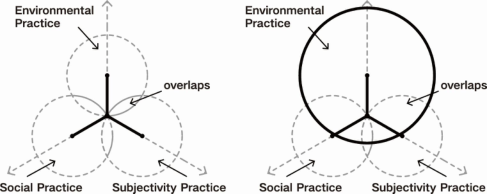
that the areas will turn into a complete circle. In practice, when there is exces- sive emphasis on one dimension, the other two ecosystems will inevitably be involved in consideration, as shown in Figure 3. This methodology can be transformed into a design strategy called “multiple analysis, multi-dimension practice, and multi-dimension evaluation”. As we can see from the figures, there is always a correlation regardless of a single dimension moving forward, backward, and opposition.
Figure 2: The triple interpretation of ecological strategies (by the author 2023).Figure 3: The relationship between three-dimension practice and ecological unity (by the author 2023).
The Design Strategy of Environmental Ecology Antoine Picon left a question about intelligence bringing challenges to energy, sustainability, and “green”concept at the end of his book Smart Cities: A Spa- tialized Intelligence (2015). Regarding the design strategy in environmental ecology, this article takes Copenhagen, the capital of Denmark, as an exam- ple to explain its various applications, and analyzes the social and spiritual ecological assistance to the reconstruction of Amager Resource Centre.
United Nations Conference on Environment and Sustainable Development first discussed global environmental and sustainable development issues in 2014. In 2007, the European Union proposed a series of goals for smart city construction and had its own evaluation criteria. Copenhagen’s goal of zero carbon emissions has created a number of innovations to address urban envi- ronmental and ecological challenges. In 2019, Copenhagen Airport achieved carbon neutrality and is trying to achieve zero emission by 2030. It represents
The Transformation of Design Strategy for Triple Ecological Methodology of Smart City 115
the strict control of pollution and emissions by the Copenhagen govern- ment. Moreover, the construction of public-shared spaces in the city, from the essence of social biology, meets people’s social needs and enhance social participation. The mandatory requirements for interactive communication among the infrastructure have stimulated the level of social collaboration among residents.
Maria Kaika and Erik Achille Marie Swyngedouw mentioned that “clean city” requires the technology networks in the city to be relocated to non- public areas that are not visible to citizens. Waste treatment plants, as a shameful flaw of the city, should be ignored because they directly negate the beautiful fantasy of the city from multiple senses. But the deodorization and removal of waste cannot be simply solved by classification or transportation. The problem of waste is a practical environmental and ecological challenge.
The Amager Resource Centre, designed by the Copenhagen government and BIG Studio, is a waste incineration power plant which the public can see and visit. Now it has also been used as the Copenhagen extreme sports venue. In October 2019, copenhill was officially opened to the public. Although the cold weather in late autumn partially obscured the unpleasant smell of garbage, the waste burning smell that comes from the ski slope heating sys- tem still impressed a lot. This is a piece of evidence showing Copenhagen’s response to the crisis of garbage, as well as the transformation of design strategies of environmental ecology. The strange smell reminds people that this is a garbage incineration plant, and also warns people that urban waste is destined to bring some deeper crisis.
As a case of smart city which has a design strategy from the perspective of environmental ecology, the Ameer Resource Center is a good example of the triple ecological methodology mentioned earlier and represents an appli- cation of it. However, if we find solution of environmental problems only by technology, we will return to the original problem which Guattari’s writing on triple ecology stressed. There is a question of whether these “authori- tative” innovations in practice truly involve diverse spiritual entities. To be more specific, how to satisfy the individual spiritual ecology in the social ecology by infrastructure construction. Ameer Resource Center provides ref- erence to this question, although there is a lack of consideration regarding the knowledge economy of the creative class.
The Design Strategy of Social Ecology Guattari emphasized the necessity of consensus among various social classes, from management to intellectuals, in the practice of the triple ecosystem, despite being challenged by moral standards. What kind of city is intelligent without technology and natural environment? This emphasis on collective wisdom can lead to another discussion in smart cities, which is the intro- duction of design strategies that involve social ecology. This article takes the tourism economy or smart tourism industry promoted by Harbin, the capital city of Heilongjiang Province in Northeast China, as an example.
In May 2022, Harbin issued the “Development Plan for the City of Ice and Snow Culture (Ice and Snow Economy) (2022–2030)”. By 2025, the
116 Yichen
total value of the ice and snow industry is estimated to reach RMB 75 billion yuan, accounting for more than a quarter of the province GDP. By 2030, it will exceed RMB 150 billion yuan, accounting for more than one-third of the province GDP. In January 2023, the China Tourism Academy released the “The Development Report of Harbin Ice and Snow Tourism (2023)”, which stated that, as a representative region with a concentration of ice and snow resources in China, Harbin has gone through the preliminary stage of facilitating transportation with ice and snow and entered into an advanced stage of using ice and snow resources to drive urban development.
According to Harbin Daily, “On January 14, 2024, Harbin Taiping Inter- national Airport guaranteed 482 flights to take off and land, transporting 74,629 passengers. The number of flights broke the record of 479 on Decem- ber 31, 2023, and the passenger volume exceeded the record number of 73,757 on January 27, 2023, both reaching a new high in history since the opening of the airport. Till the third day of the New Year holiday in 2024, Harbin has received a total of 3.05 million tourists and achieved a total tourism revenue of RMB 5.91 billion yuan for this new year. The number of tourists and the total tourism revenue reach a historical peak.
What happened in Harbin can bring us to the discussion of the relation- ship between knowledge economy and traditional manufacturing industry. Can cities in the post-industrial era become vital again by no more infras- tructure construction? Can underdeveloped areas rely on the creative class to connect with modern intelligence? Harbin, as a traditional industrial city in Northeast China and one of the first national heavy-industry bases built in China, provides the referencing answer of “smart tourism” to such issues. However, if consensus is the ultimate pursuit of smart city, Pyongyang or Dharavi can be interpreted as the smartest city in the world, which is obvi- ously not true. Thus, it falls into the trap of a broad explanation of smart city, ignoring the necessary role of technology or infrastructure in improving living standards in cities.
The Design Strategy of Spiritual Ecology The design of spiritual ecology includes the necessity of cultivating new individual thinking. The control of social discourse by mass media requires individuals to have the ability to critically review social issues. For the impact of artistic activities on spiritual ecology and its correlation with environ- mental ecology, this article takes Venice and La Biennale di Venezia as an example.
According to Greenpeace, the pollution level of the Laguna Veneta is cur- rently the most severe in the world. The La Biennale di Venezia utilizes the collective wisdom of the “creative class” - the artistic wisdom from a group of artists to revive this aging city which has been severely damaged by floods, sinking, air and water pollution. Multi-dimensional thinking of spiritual ecol- ogy produced by the artists links environmental ecology with social ecology. Ironically, the 58th La Biennale di Venezia was affected by floods starting in November 2019, resulting in an early closure of six national pavilions and the cancellation of some biennial events in the center of Venice. This is a
The Transformation of Design Strategy for Triple Ecological Methodology of Smart City 117
typical case in ecological philosophy, where environmental ecology, with its unshakable position, represents the most serious crisis of city life and shows its impact on the other two ecology systems.
Such practice should not be limited to the creative class, nor should it be narrowed down to the artists themselves. The existence of both groups of people does not stand for the uniqueness of spiritual ecology, but should become a starting point for the creation of social value. Due to the lack of historical notion in the study of smart cities, this essay criticizes the excessive exaggeration of the reliance on future technology in existing design strategy. If designers are just a group of technology-driven players, the authorita- tive class who control the technological process will undoubtedly control the social ideology of the spiritual ecology from a social ecological per- spective. A moral code which only benefits a certain group of people will be created.
CONCLUSION: THE COMBINATION OF MULTIPLE ANALYSES AND MULTI-DIMENSIONAL PRACTICES Although the development of China’s smart city has made great break- throughs, there are still many problems. Some important reasons are: the construction approach is different; the relevant regulations tend to be perfect but there are insufficient resources; the management system and evaluation system are unclear or overly simple. Based on the analysis of these prob- lems, this essay combines the analysis of triple ecology from the perspective of humanities to address those problems.
This article proposes a design strategy of “multiple analysis, multi- dimensional practice, and multi-dimensional evaluation” based on the methodology of the triple ecological philosophy. Firstly, multiple analysis: insufficient solutions to environmental ecology issues in the past research of smart city require us to re-examine the multiple reasons for crisis in smart cities. Next, multi-dimensional practice: Only by avoiding absolute top-to- down “control theory” and absolute bottom-up “anarchism” can we ensure the feasibility of process management and practical control, and then maxi- mize the enthusiasm of residents to participate in city life construction. Lastly, multi-dimensional evaluation: by setting up a system of multi-dimensional evaluation, we can avoid insufficient or excessive interpretation of the concept of smart cities.
The application of technology does not necessarily mean the entirety of smart city research. The analysis of multiple ecological dimensions and the design perspective guided by the triple ecological philosophy can provide a clearer guidance for multi-disciplinary designers. Everything we do is for a highly sustainable future for humanity, whether using “technological percep- tion”, “human consensus”, or “ecological philosophy theory”as a means. As Oscar Wilde once said, “a world map without Utopia is not worth looking at”. We shall always adopt a better approach, such as triple ecology, in the research of smart city and try to find a better solution to address those issues for mankind.
118 Yichen
ACKNOWLEDGMENT
Thanks to Mr. Jiao Shaoqing for correcting the English spelling of this article and for his support during the writing of this article.
REFERENCES
Guattari, Félix. Les trois écologies. Vol. 70. Paris: Galilée, 1989. Kaika, M. and Swyngedouw, E., 2000. Fetishizing the modern city: The phantasmagoria of urban technological networks. International journal of urban and regional research, 24(1), pp. 120–138. Mostafavi, M. and Doherty, G. eds., 2016. Ecological urbanism. Zurich: Lars Müller. Palmisano, S. J., 2008. A smarter planet: the next leadership agenda. IBM. November,
6, pp. 1–8 Picon, A., 2015. Smart cities: a spatialised intelligence. John Wiley & Sons. 唐斯斯, 张延强, 单志广, 王威and 张雅琪, 2020. 我国新型智慧城市发展现状, 形势 与政策建议. 电子政务, 4, pp. 70–80. 住房城乡建设部办公厅关于开展国家智慧城市试点工作的通知.
[online] Available at: https://www.mohurd.gov.cn/gongkai/zhengce/zhengcefilelib /201212/20121204_212182.html [Accessed 18 Jan. 2024]. 发展改革委工业和信息化部科学技术部公安部财政部国土资源部住房城乡 建设部交通运输部关于印发促进智慧城市健康发展的指导意见的通知关 于促进智慧城市健康发展的指导意见__2015年第2号国务院公报_中国政府网. [online] www.gov.cn. Available at: https://www.gov.cn/gongbao/content/2015/co ntent_2806019.htm [Accessed 18 Jan. 2024]. “‘十四五’期间智慧城市如何发展?”-国家发展和改革委员会. [online] Available
Human Factors in Architecture, Sustainable Urban Planning and Infrastructure
Read this individual research paper free through the original publisher, or explore the full digital proceedings book.
ISBN 978-1-964867-29-8
Explore this ISBN in the AHFE Bookstore ↗Listed in the July 2026 bookstore catalogue; search by ISBN to confirm current availability · Digital book purchase optional