Jing Peng, Meiyu Zhou (2025). Design of Camping Bathing System Based on Kano Modeling. In: Human Factors in Design, Engineering, and Computing. AHFE Open Access, vol. 199, pp. 311–318. https://doi.org/10.54941/ahfe1006843
With the growing popularity of outdoor activities and nature appreciation in recent years, the camping economy is experiencing unprecedented growth. This trend not only drives the rapid expansion of the camping products market, but also demands higher standards for the design and quality of camping products. To meet the diverse needs of camping users, this paper adopts a research method based on the Kano model to delve deeply into the real needs and experiences of camping users. In terms of research methods, this paper combines literature research, web crawler, sentiment analysis, and Kano questionnaire survey to deeply explore the real needs and experiences of camping users, and takes showering facilities as an example to propose design strategies for camping showering facilities. The research findings of this paper are of great significance for enhancing the design quality of camping products, meeting user needs, and promoting the healthy development of the camping economy. By understanding user needs deeply and enhancing product design quality, we can better meet user expectations and needs, enhance user satisfaction and loyalty. At the same time, it also helps to drive the sustainable development of the camping economy and inject new vitality and impetus into the camping industry.
Camping has gained widespread popularity as an outdoor recreation that connects people with nature and offers respite from urban pressures (Gao, Li, & Liu, 2011). In China, the camping economy continues to expand, with rising participation and ongoing product innovation (Tan, 2015). Nonetheless, many products remain functionally limited and insufficiently personalized, highlighting the need to precisely capture user needs and translate them into design.
Historically, camping evolved from a survival practice in late-19th-century Europe and North America into a mainstream leisure activity (Gao et al., 2011). Recent domestic growth has been driven by supportive local policies and the establishment of diverse campsites (Li, 2023). In China, campsite types can be classified by environmental features and site type (see Table 1) as well as by camping styles.
Table 1: Classification and characteristics of camping (illustrated by the author).
Table available in the original PDF paper.
Subclass Definition Core Features
Classification Dimension
Quiet, primitive ecology
environment type forest camping Located in densely wooded areas such as forest parks Beachside camping Offshore or beach area Influence of tides and temperature differences lake camping lakeshore or wetland
Water resources, fishing activities alpine camping high altitude mountainous areas
Isolation and physical demands country camping Suburban countryside Original ecology, self-equipped
Farming experience, folk culture Venue type wild camping Visitors bring their own equipment and arrive on foot or by car Convenient and safe
campground camping
Complete commercial facilities
RV camping Using RV as carrier Flexible and versatile, with diverse attractions
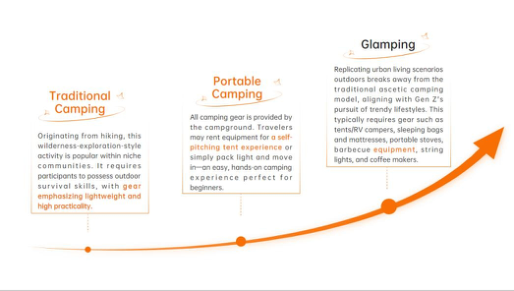
In China, the evolution of camping styles has progressed from traditional camping, emphasizing self-prepared equipment and basic outdoor survival, to portable camping, which offers standardized facilities for greater convenience, and finally to glamping, integrating comfort, aesthetics, and diverse services such as dining and leisure (Sun & Xu, 2023). This prone reflects compressor’s growing pursuit of comfort, personalization, and enhanced experiential quality (Li, 2023) (see Figure 1).
Figure 1: Camping product industry chain (illustrated by the author).
Design of Camping Bathing System Based on Kano Modeling 313
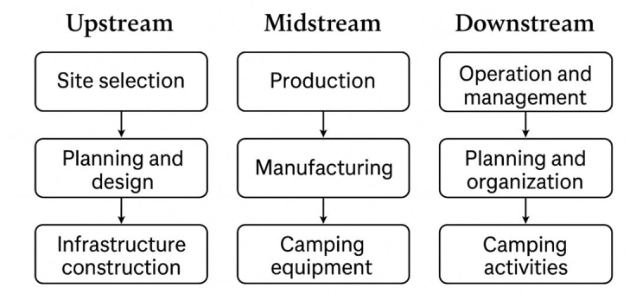
From an industrial-chain perspective, camping products span upstream (site selection, planning and design, basic infrastructure), midstream (equipment manufacturing such as tents, sleeping bags, mats, cookware, lighting), and downstream (campsite operation and activity organization). Visitor experience and service quality are critical in downstream operations. Figure 2 illustrates the Industrial Chain of Camping Products.
Figure 2: Camping product industry chain (illustrated by the author).
Core market categories include hardware, auxiliary equipment, camping food, and apparel, with tents, sleeping bags, cookware, and lighting among top sellers (Tan, 2015). Development trends emphasize premiumization, smart technology, and environmental sustainability (Li, 2023; Sun & Xu, 2023). These trends, coupled with the need for user-cantered design, provide the context for this study’s focus on bathing facilities.
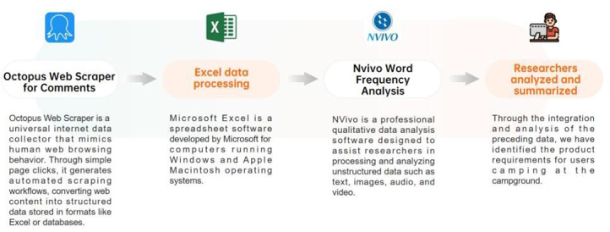
User Demand Acquisition for Glamping Based on the Kano Model We employed a mixed approach using Octopus, Excel, and NVivo (Ye, Yao, & Yang, 2023). The overall workflow is shown in Figure 3.
Figure 3: User demand mining approach based on online review platforms (dianping).
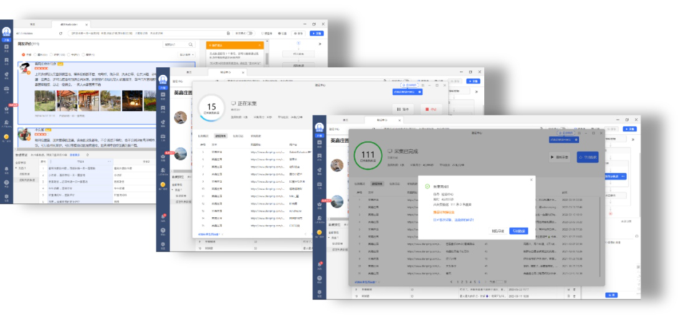
Taking Yingjia Manor as a case, 111 Dianping reviews were scraped and 110 valid reviews retained after removing one blank entry (see Figure 4).
314 Peng and Zhoui
Figure 4: Comment on the data acquisition process.
NVivo auto-coded sentiments indicated mostly mixed reviews; manual screening in Excel retained 40 “problem feedback” comments, re-coded by two researchers. Four core issue categories emerged: campsite service issues, pricing issues, natural-environment issues, and infrastructure issues. Given the salience of infrastructure problems—particularly bathing and toilet facilities—this study selects bathing facilities as the entry point. Rather than relying on temporary prefabricated units, campsites should leverage intelligent infrastructure (Ye et al., 2023). We therefore translate user needs into functional requirements to design an intelligent bathing system characterized by humanized service, streamlined processes, and enhanced experience.
The Kano questionnaire, originated by Noriaki Kano, was used to classify user needs and prioritize functions (Ye et al., 2023). We extended the analysis to other campsites (e.g., Once-a-Month Camping), transforming problems into needs across the service chain, interaction chain, and product chain, and then into functional requirements. Questionnaire contents comprised: demographic information, preferences on usability, emotional experience, and service completeness. Four professional designers proposed candidate functions. A pilot revealed unclear wording and inconsistent classifications; revisions produced the final version with reliability (Cronbach’s α = 0.819) and validity (KMO = 0.66). Surveys were distributed online via Wenjuanxing to 18–34-year-old Xiaohongshu camping bloggers and offline via on-site QR codes. Data analysis was performed using SPSSAU, an automated statistical platform offering ∼400 algorithms:descriptive statistics, hypothesis testing, clustering, regression, reliability/validity, visualization, survival analysis, comprehensive evaluation, time series, logistic/curve regression, econometrics, and machine learning (Shen, Li, & Xie (2023).
Design of Camping Bathing System Based on Kano Modeling 315
Figure 5: Questionnaire content outline. (Illustrated by the author).
Design Strategies for Camping Bathing Facilities Multiple methods were used: online questionnaires, field surveys, and social-media analysis (Zhou, Chen, & Li, 2023). The Kano-based survey covered functional, emotional, and potential future needs and targeted university students, experienced campers, and office workers aspiring to camp (Wu, Gong, & Tang, 2024). The questionnaire comprised four parts: demographic information, professionalism, usability, and emotionality.
A total of 47 valid responses were collected. 78.72% were female and 74.47% were aged 18–24, indicating that young women constitute a primary demographic (Gao & Wang, 2024). All participants expected bathing facilities; usability and simplicity were most valued (with usability ensured, 63.83% “liked it very much”; without it, 23.4% “disliked it”). SPSSAU analyses included frequency distributions, cross-tabulations, and chi- square tests; NVivo content analysis of open responses identified detailed expectations and suggestions (Zhou et al., 2023).
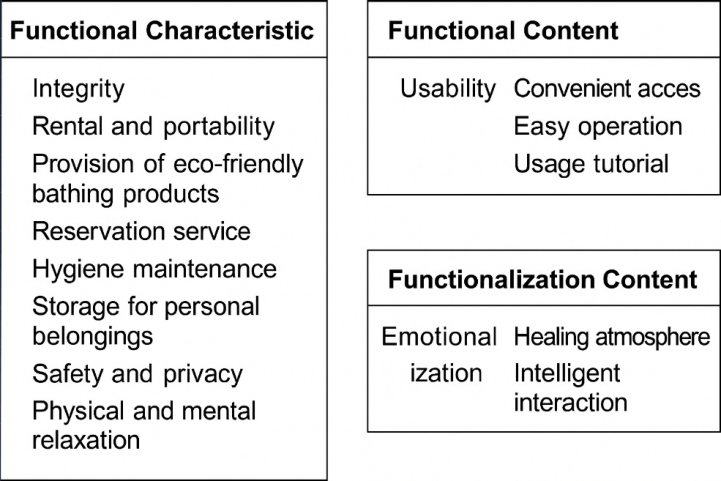
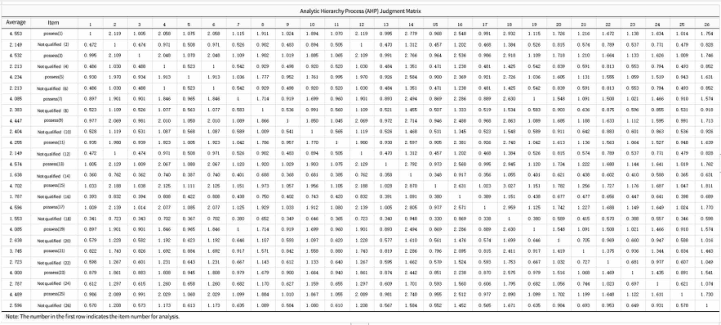
To reduce subjectivity and prioritize needs, we applied the entropy weight method (objective weights via information entropy) and the Analytic Hierarchy Process (AHP) to determine objective and relative importance of user requirements (Shen, Li, Xie, & Li, 2023; Wang & Feng, 2023). Combined results established core priorities for bathing-facility design, ensuring a balance between empirical data and expert judgment (Deng, Li, Lu, & Li, 2023). User needs were grouped into three primary categories: usability, professionalism, and emotionality. Usability included ease of access, operation simplicity, and clear tutorials; professionalism involved equipment rental, disposable products, reservations, hygiene maintenance, personal
316 Peng and Zhoui
storage, safety/privacy, relaxation, and fatigue detection; emotionality encompassed healing atmosphere and intelligent interaction. As shown in Figure 6, usability (0.25), operation simplicity (0.20), and safety/privacy (0.18) ranked highest (Deng et al., 2023).
Figure 6: Questionnaire data - demand weighting analysis chart.
Findings were then translated into tangible design elements, including spatial layout optimization, energy-efficient water systems, emotional design through colour, lighting, and materials, and sustainable development practices such as solar heating and eco-friendly materials (Wu, Gong, & Tang, 2024; Zhou, Chen, & Li, 2023). Key strategies included modular design—combining basic shower and advanced spa modules to enhance adaptability and user satisfaction—and energy conservation and environmental protection, featuring solar hot water systems, low-flow showerheads, and wastewater recycling (Hua, Wang, Liao, Liang, & Dai, 2021; Kraemer, Chalhoub, Webb, & Flechais, 2023). intelligent control (mobile control of temperature/flow; usage-data feedback), emotional experience design (nature-harmonizing materials/colours, aromatherapy, soft lighting), and safety and comfort (non-slip floors, emergency calls, insulation, card-based access for privacy).
Design Strategy Set for Camping Bathing Facilities Flexibility and scalability enable custom combinations of components—from basic showers, changing rooms, and simple toilets to add-on sauna, hot- tub, and premium dressing modules. Modules operate independently or in combination to span basic-to-premium experiences, improving adaptability and easing maintenance and upgrades. This strategy supports rapid, seasonal deployment, boosts resource utilization and user satisfaction, and reduces logistics costs and environmental impact. Evidence indicates modular design enhances market responsiveness and production efficiency for campsite operations.
To address unstable or unavailable grid power in remote locations, facilities integrate rechargeable batteries and solar panels for energy autonomy. Daytime solar harvesting charges high-performance batteries
Design of Camping Bathing System Based on Kano Modeling 317
to power night-time use; LED lighting and low-power appliances further reduce consumption. The approach strengthens independence and mobility, enabling flexible deployment without external power while advancing green operations (Lu & Zhang, 2022).
Emotion-centric design uses warm palettes, natural materials (wood, stone), soft lighting, and natural soundscapes (e.g., flowing water, birdsong) to create restorative environments. Smart features—adjustable aromatherapy and music—allow personalization, reducing fatigue and stress and elevating satisfaction. Thus, bathing spaces evolve from purely functional units into key contributors to overall camping experience (Yin, Cai, Wang, Zhang, Luo, & Ma, 2022).
CONCLUSION
Through the research and design proposals presented in this study, we have conducted an in-depth exploration of design strategies for camping bathing facilities, with the dual aim of enhancing the camping experience while ensuring environmental sustainability. As camping continues to gain popularity as a leisure activity, the demand for facilities is steadily increasing—particularly for bathing facilities, which directly influence campers’ satisfaction and loyalty. Accordingly, the design strategies proposed in this study focus not only on the feasibility of technological implementation but also on the comprehensiveness and depth of user experience. The three strategies—shared modular design, mobile charging design, and emotional experience design—together form a holistic and multi-level design framework. This framework not only meets basic functional requirements but also enhances usability and experiential value through intelligent and personalized elements. Particularly against the backdrop of growing environmental concerns, the implementation of these strategies will facilitate the transition of campsites toward greener and low-carbon modes of operation.
Moreover, the research and design recommendations in this study provide campsite operators with practical and actionable solutions to address increasingly complex market demands and pressing environmental challenges. Evidence suggests that by comprehensively considering user needs and environmental factors, and by adopting innovative design approaches, it is possible to effectively enhance overall camper satisfaction while strengthening the market competitiveness of campsites. Future research may further investigate the long-term effects of these design strategies, especially their adaptability and sustainability across different cultural and geographical contexts. In addition, as technology advances and user needs evolve, new design concepts and technologies will continue to emerge. Continuous updating and optimization of design strategies to better serve campers will thus remain an essential direction in the development of camping facility design.
318 Peng and Zhoui
REFERENCES
Deng, Z., Li, W., & Lu, C. (2023). Shared emergency robot design based on FKANO- EWM-FAST. Packaging Engineering, 44(22), 72–81. Gao, L., Li, B., & Liu, J. (2011). Camping tourism development in Europe and
America and its implications for China. Human Geography, 26(5), 24–28. Gao, S., & Wang, J. (2024). Camping equipment design from a user-experience perspective—A case study of tents. Industrial Design, (3), 23–26. Hua, D., Wang, J., Liao, W., Liang, T., & Dai, H. (2021). Site selection of self-driving
and recreational vehicle camps in China using AHP and entropy methods. Journal of Traffic and Transportation Engineering (English Edition), 8(5), 762–777. Kraemer, M. J., Chalhoub, G., Webb, H., & Flechais, I. (2023). “It becomes more of an abstract idea, this privacy”—Informing the design for communal privacy experiences in smart homes. International Journal of Human-Computer Studies, 180, 103138. Li, B. (2023). The aesthetic fatigue of the camping industry. Liberation Daily,
2023–10-24(007). Lu, Q., & Zhang, Y. (2022). A multi-objective optimization model considering users’ satisfaction and multi-type demand response in dynamic electricity price. Energy, 240, 122504. Shen, Z., Li, H., & Xie, H. (2023). A multi-user evaluation system integrating
neural networks and entropy-weight methods. Journal of Nanjing University of Aeronautics and Astronautics, 55(6), 1055–1064. Sun, Z., & Xu, J. (2023). A cultural perspective on the rise of glamping among Chinese youth. China Youth Research, (6), 103–111. Tan, Y. (2015). SWOT analysis of Chinese automobile camping based on China-US
comparison. China Market, (11), 98–100. Wang, C., & Feng, Y. (2023). Lighting design research based on AHP-entropy method. Industrial Design, (3), 155–157. Wu, G., Gong, Y., & Tang, F. (2024). Innovative camping tea set design based
on Kansai engineering and improved EW-AHP. Packaging Engineering, 45(6), 356–366 + 382. Ye, J., Yao, M., & Yang, C. (2023). Research on innovative design of camping chairs integrating Kano-QFD and FBS models. Furniture & Interior Decoration, 30(7), 11–15. Yin, S., Cai, X., Wang, Z., Zhang, Y., Luo, S., & Ma, J. (2022). Impact of gamification
elements on user satisfaction in health and fitness apps: A comprehensive approach based on the Kano model. Computers in Human Behaviour, 128, 107106. Zhou, T., Chen, Z., & Li, L. (2023). Research on urban camping behaviour characteristics and green space demand based on big data analysis. Guangdong Landscape Architecture, 45(6), 60–65.
LISTED IN THE AHFE DIGITAL BOOKSTORE CATALOGUE
Explore the complete digital volume
Human Factors in Design, Engineering, and Computing
Read this individual research paper free through the original publisher, or explore the full digital proceedings book.
ISBN 978-1-964867-75-5
Explore this ISBN in the AHFE Bookstore ↗Listed in the July 2026 bookstore catalogue; search by ISBN to confirm current availability · Digital book purchase optional