Osita Odunze, Elijah Ballou, Abdul Kanu, Andrew Kelly, Eric Void, Naja A Mack (2025). Inclusive Gaming Through Brain-Computer Interfaces: The Mind Mastery Experience. In: Human-Computer Interaction & Emerging Technologies. AHFE Open Access, vol. 195, pp. 363–372. https://doi.org/10.54941/ahfe1006255
The gaming industry continues to evolve, yet accessibility barriers persist, affecting 91% of gamers with disabilities. Mind Mastery, a Brain-Computer Interface (BCI) game developed in Unity 3D, addresses these challenges by enabling hands-free gameplay through electroencephalography (EEG) signals, gyroscopic head movements, and blink detection. Utilizing the Muse 2 EEG headset, the system reduces hair-related interference and optimizes signal filtering for improved accuracy. EEG data is streamed in real-time via MuseLSL and integrated into Unity 3D using LSL4Unity, ensuring responsive and adaptive gameplay. Players interact through gyroscopic head tilts, blink detection, and concentration-based controls, enabling actions such as jumping, shrinking, growing, and force-falling without traditional input devices.Developed with an emphasis on real-time signal processing and adaptive feedback, Mind Mastery incorporates gyroscopic calibration, blink detection, and dynamic difficulty adjustment to enhance user experience. A usability study with 22 participants demonstrated Mind Mastery's potential while highlighting areas for improvement, including error handling, blink calibration, and increased challenge variability. In response, levels have been refined, and blink calibration and error-handling enhancements are in progress.Future development will integrate advanced motor imagery detection for thought-based commands, alongside an intelligent conversational agent that provides real-time guidance and adaptive feedback based on player performance. Additionally, Mind Mastery will expand to include educational components with gamification elements, where players develop cognitive skills while earning rewards for brain-activity control and completing educational challenges. This educational integration will transform Mind Mastery into a comprehensive tool for cognitive development, valuable in therapeutic and educational settings while maintaining its core mission of breaking traditional barriers in gaming accessibility. By advancing EEG-based interaction and real-time BCI integration, Mind Mastery demonstrates the potential of neurotechnology in fostering inclusivity in interactive experiences.
traditional handheld controllers. Mind Mastery addresses this challenge by utilizing brain-computer interface (BCI) technology, providing hands-free control through a combination of gyroscopic head movements and EEG signals. The foundation of this system is the Muse 2 headset, equipped with four strategic electrodes (AF7, AF8, TP9, and TP10) that monitor real-time EEG data, enabling players to interact naturally with the game environment. Within Mind Mastery, users navigate through obstacle course- style environments that engage both their cognitive and physical capabilities as they encounter various challenges.
Our comprehensive usability evaluation demonstrated that participants found Mind Mastery both enjoyable and highly interactive, underscoring the significant potential of BCI technology in gaming applications. The frequent requests for additional levels and challenges from study participants highlights the game’s successful immersive design and its capacity to extend cognitive engagement while delivering a satisfying experience. By showcasing how BCI-based systems can enhance accessibility and transform traditional gameplay, Mind Mastery contributes to creating a more inclusive future for interactive entertainment. This research addresses a fundamental barrier to participation while demonstrating how thoughtful design can produce more equitable and engaging experiences for players of all abilities.
Related Works Mind Mastery builds upon a growing body of interdisciplinary research at the intersection of accessibility, BCIs, and human-centered gaming design. Previous studies underscore the urgent need for more inclusive technologies: a recent survey revealed that 91% of gamers with disabilities encounter barriers that limit their participation in gaming (Baltzar et al., 2023). In line with AHFE’s focus on ergonomics and inclusive design, this project responds to these challenges by harnessing BCI technologies to foster broader accessibility in interactive digital environments. Despite the promise of BCIs, their adoption remains limited, largely confined to niche applications (Prapas et al., 2022). Mind Mastery aims to bridge this gap by demonstrating practical, scalable applications of EEG-based interfaces in gaming while raising public awareness of their potential.
Existing BCI systems are not without limitations. Notably, signal acquisition inconsistencies, especially in individuals with diverse hair textures, have raised concerns about bias and exclusion in BCI usability (Jackson et al., 2022). Addressing these disparities is central to Mind Mastery’s design philosophy, which emphasizes fairness and ergonomic adaptability for a wide range of users. Recent advancements in EEG-based BCIs have shown the potential for non-invasive, hands-free control by translating neural activity into actionable input. Motor imagery, a frequently explored paradigm, allows users to issue commands by mentally simulating movement, and has been implemented in real-time systems using affordable headsets like the Muse 2 (Taheri et al., 2021 & Prapas et al., 2022). Techniques such as bandpass filtering and Linear Discriminant Analysis (LDA) have been critical to achieving reliable classification of motor signals.
Inclusive Gaming Through Brain-Computer Interfaces: The Mind Mastery Experience 365
Other research (Lahane et al., 2019 & Shukla et al., 2018) highlights the value of pre-processing methods such as Independent Component Analysis (ICA), to mitigate noise from involuntary actions like blinks and muscle movements, enhancing signal clarity in real-time applications. In parallel, EEG-based systems that leverage attention and concentration as input signals have emerged. For instance, (Paszkiel et al., 2021) developed ‘Neuroball,’ a game where difficulty levels adapted dynamically to users’ concentration, as measured by the Emotiv Epoc headset. (Arora et al., 2019) extended this idea to immersive VR environments using alpha and beta wave analysis. Still, these systems face challenges in distinguishing voluntary from involuntary activity. To address this (Putman et al., 2014) proposed the theta-beta ratio as a biomarker of attentional engagement, an approach that continues to inform concentration-based EEG design.
Mind Mastery contributes to this evolving field through a hybrid interaction framework that combines gyroscopic input with EEG signals. This multimodal control scheme enhances both responsiveness and user adaptability. A notable feature is its gyroscopic calibration process, which tailors control sensitivity to each user’s physical range of motion, promoting ergonomic comfort and reducing fatigue, an essential consideration in prolonged gaming sessions. Additionally, by integrating amplitude-based blink thresholds, the system more accurately distinguishes intentional from reflexive blinks, thereby improving interface precision. These enhancements position Mind Mastery as a forward-thinking contribution to human- centered BCI design, with implications for both accessibility and long-term usability in digital gaming environments.
SYSTEM OVERVIEW Human-Centered System Architecture
Mind Mastery is a cognitively engaging, hands-free obstacle course game that integrates neuroadaptive technologies to support diverse user needs. Developed using C# in Unity, the system embodies key human factors principles: intuitive interaction, ergonomic comfort, and adaptive control. The Unity engine was selected for its flexibility and strong support for real- time interactivity, which is critical when designing neuroergonomic systems that must respond instantly to user intention. At the core of the interface is the Muse 2 EEG headset (Figure 1), a lightweight and non-invasive BCI device designed for the monitoring of brain activity. Its dry EEG sensors are positioned over the frontal lobe, making it suitable for measuring signals related to concentration. Muse 2 was chosen for its accessibility, affordability, and precedent in interactive BCI research (Prapas et al., 2022)—key criteria when designing inclusive technologies for diverse user populations.
EEG signals are acquired continuously during gameplay and routed through a pre-processing pipeline implemented in Python. The pipeline reduces noise via notch and bandpass filters and extracts features using power spectral density (PSD) and band power computations. These metrics, calculated across Delta, Theta, Alpha, and Beta bands, serve as interpretable proxies for cognitive states, such as concentration (Arora et al.). For
performance efficiency and system modularity, the EEG signal processing is decoupled from the game engine: Python handles all computational tasks, while Unity governs game logic and interaction design. To synchronize EEG data between Python and Unity, Mind Mastery uses LSL4Unity for temporal alignment, supplemented by socket-based communication for delivering derived features (e.g., blink detection, band power metrics). This design ensures low-latency feedback critical for user immersion and cognitive flow, while maintaining a clear separation between signal analytics and game rendering.
Figure 1: An image of the Muse 2 EEG headset, a portable, multi-sensor device designed for capturing brainwave activity.
Figure available in the original PDF paper.
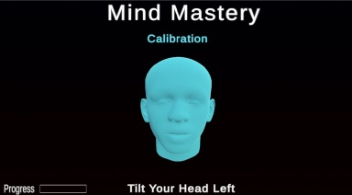
Interface Ergonomics and Calibration To accommodate different physical capabilities, the system introduces a calibration module (Figure 3) where users perform head tilts in four directions—up, down, left, and right. These gestures are captured via the Muse 2’s built-in gyroscope and used to establish individualized movement thresholds. This step enhances ergonomic precision, reducing physical strain and cognitive workload by adapting controls to each user’s range of motion.
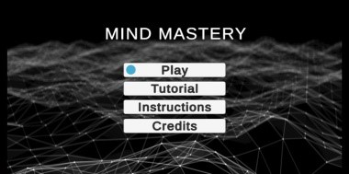
Figure 2: Main menu where users control the blue cursor with head tilts and make selections via intentional blinks.
Navigation within the interface is entirely hands-free. As shown in Figure 2, users move a cursor vertically by tilting their heads. Once an option is highlighted—such as “Play,” “Tutorial,” or “Instructions”—users confirm selections via deliberate eye blinks, filtered through amplitude thresholds to reduce false activations. This hybrid interaction approach provides a multimodal control schema, aligned with inclusive design principles and the AHFE focus on minimizing user effort.
Inclusive Gaming Through Brain-Computer Interfaces: The Mind Mastery Experience 367
Figure 3: Gyroscopic calibration screen that records and averages directional tilts to personalize control thresholds.
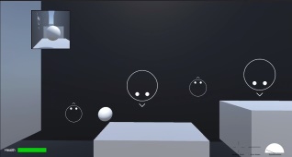
Cognitive Gameplay Design The game design of Mind Mastery emphasizes cognitive engagement and adaptive challenge. Users can engage with an interactive tutorial (Figure 4) designed to teach navigation within the virtual environment using head tilts and cognitive focus. The system leverages the theta/beta ratio (TBR) as a reliable indicator of attention (Putman et al., 2014), allowing modulation of in-game speed based on the user’s mental concentration.
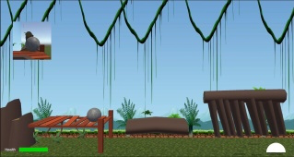
Figure 4: Mind mastery tutorial.Figure 5: Mind mastery level one.
During gameplay, upward tilts trigger jumps, downward tilts cause rapid descents, left tilts shrink the avatar, and right tilts enlarge it, each mapped to discrete actions for intuitive, body-centric interaction. As players focus mentally, TBR-modulated concentration boosts movement speed, allowing smoother obstacle navigation and quicker task completion. The first playable environment (Figure 5) is set in a stylized jungle, where players collect a golden artifact while negotiating environmental hazards. Each level builds on this framework, integrating increasingly complex stimuli that challenge attention, memory, and motor planning. Importantly, the game scaffolds learning through progressive feedback, helping players adapt and succeed regardless of their motor abilities or prior gaming experience.
Methodology
The Mind Mastery user study was designed to evaluate how well the system works, how easy it is to use, and what users think of it overall. We wanted to gather helpful feedback that considers both the technical aspects and user experience. Participants completed several tasks including navigating menus with head movements, selecting options using blink detection, going through the calibration process, completing the tutorial, and finishing the first game level. After using the system, participants filled out a System Usability Scale (SUS) survey and took part in interviews where they shared their thoughts. This approach helped us collect practical information about any challenges users faced, how naturally they interacted with the system, and their overall satisfaction.
Study Setup and Process We conducted the study in two separate rooms to keep the gameplay and feedback parts distinct. The Gameplay Room contained all the necessary equipment including the Muse 2 headset, a computer running Mind Mastery, and recording devices. We designed this room to be free from distractions so participants could focus completely on their tasks. The Post-Study Room provided a comfortable space where participants could complete the SUS questionnaire and have a conversation with the researcher about their experience.
Table 1: Mind mastery usability study tasks.
Table available in the original PDF paper.
# Task # Participants
1 Move the cursor through all menu options
22
(navigate up and down)
2 Use blink detection to select menu items and
22
choose tutorial/game
3 Complete the calibration process with head
22
tilts/rotations 4 Complete the tutorial following the correct route 22 5 Finish Level 1 and collect the required power-up 22
Before starting, participants signed up through an online form that helped us collect important information and confirm they were eligible to participate. The form had three main parts:
1. an informed consent form, 2. a section for personal details like name, email, age, and gender, and 3. questions about their previous experience with BCIs, gaming, and any accessibility needs. This included questions like “Have you used a BCI device before?” and “Do you have any disabilities or impairments?”
When the 22 participants arrived, they were welcomed by a greeter who checked their scheduled 30-minute time slot, made sure all forms were completed, and showed them to the Gameplay Room. Each session was divided into two parts: 15 minutes for playing the game and 15 minutes for
Inclusive Gaming Through Brain-Computer Interfaces: The Mind Mastery Experience 369
providing feedback afterward. In the Gameplay Room, someone introduced participants to the Mind Mastery system, helped them put on the Muse 2 headset, and explained how to complete the tasks listed in Table 1.
All participants successfully completed the five tasks. Afterward, they filled out the SUS questionnaire and participated in an interview where they shared what they liked and didn’t like about the system, as well as suggestions for improvements. This approach gave us a good mix of numerical ratings and detailed feedback in the participants’ own words.
RESULTS
The usability study provided valuable insights into how participants interacted with Mind Mastery, revealing both system strengths and areas for improvement.
System Usability Scale Assessment The average SUS score across participants was 78.64, placing Mind Mastery in the “Good” usability category according to (Lewis, 2018) and exceeding the industry standard of 68. Analysis by gender showed consistently positive ratings, with male participants (n = 16) reporting a mean score of 80.0 (SD = 9.64) and female participants (n = 6) reporting 78.33 (SD = 7.16), as shown in Table 2.
Table 2: Average SUS scores by gender.
Table available in the original PDF paper.
Gender Number (N) SUS Mean (M) Standard Deviation (SD) Male 16 80.0 9.64 Female 6 78.33 7.16
Table 3: Task completion rates by assistance level.
Table available in the original PDF paper.
Task No Help (N) Minimal Help (N) Significant Help (N) Menu Navigation (Blink) 36% (8) 45% (10) 18% (4) Calibration 23% (5) 54% (12) 23% (5) Tutorial 82% (18) 18% (4) 0% (0) Level 1 (Obstacle Course) 68% (15) 23% (5) 9% (2)
Table 4: Task completion times.
Table available in the original PDF paper.
Task Name Min Time (mm:ss)
Max Time (mm:ss)
Avg Time (mm:ss) Main Menu Navigation (Cursor) 00:19 03:10 01:12 Main Menu Navigation (Blink 00:41 06:39 01:59
Task Performance All participants completed the assigned tasks, though with varying levels of assistance and completion times as detailed in Tables 3 and 4. The menu navigation task using head movements was successfully completed on first attempt by 86.36% (n = 19) of participants, with an average time of 1 minute 12 seconds. For blink-based menu selection, 81.82% (n = 18) succeeded on their first try, though completion times varied widely from 41 seconds to over 6 minutes. Calibration proved the most challenging task, with only 63.64% (n = 14) completing it on first attempt. Many participants confused tilt and rotation movements or struggled with maintaining a neutral head position. Some experienced accidental triggering from unintended blinks, requiring system resets and contributing to longer completion times (average 2 minutes 34 seconds). Tutorial completion showed improvement, with 77.27% (n = 17) of participants navigating it successfully on first attempt. Some initially struggled to differentiate between movement commands, particularly jump versus shrink actions. For Level 1 gameplay, 59.09% (n = 13) completed it independently, while others needed assistance primarily because they missed the required collectible item.
During testing, several patterns emerged. Many participants initially hesitated with head movements before adapting to the gyroscopic controls. Blink detection was inconsistent for some users, who needed to adjust their blink intensity for reliable recognition. Despite these challenges, most participants adapted quickly after a few attempts, showing engagement throughout the session.
Post-study interviews revealed that participants particularly appreciated the intuitive head movement controls and the personalized calibration process. The visual cues in the tutorial received positive feedback for helping guide movements. Common suggestions for improvement included enhancing blink detection reliability through dedicated calibration, adding back navigation options to prevent “dead ends,” and increasing gameplay complexity through additional interactive elements. Several participants also expressed interest in expanded control options like eye tracking to create a more dynamic experience.
The combination of high task completion rates and above-average usability scores demonstrates Mind Mastery’s potential as an accessible gaming alternative, while participant feedback highlights specific areas for refinement in future iterations. This aligns with trends identified by (Guzsvinecz, 2024) regarding enhanced accessibility in modern gaming interfaces, and supports the framework for concentration-based EEG applications proposed by (Putman et al., 2014).
FUTURE WORK
Building upon insights from our usability study, several enhancements are planned to improve the robustness and inclusivity of Mind Mastery. Users experienced intermittent disconnections with the Muse 2 headset,
Inclusive Gaming Through Brain-Computer Interfaces: The Mind Mastery Experience 371
occasionally necessitating full system restarts. To mitigate this, we intend to implement connection monitoring coupled with automated reconnection protocols, which improves the reliability of the system. Additionally, the current interface lacks flexible navigation options; unintended blinks can prematurely trigger calibration sequences, leading to user frustration. Future iterations will incorporate dedicated navigation controls, enabling users to revisit instructions or recalibrate settings without losing progress. Recognizing variability in blink intensity among users, we plan to introduce a personalized blink calibration process, akin to our existing gyroscopic calibration, to improve input precision and user comfort.
Beyond these technical refinements, we aim to expand Mind Mastery’s capabilities to foster a more engaging and educational experience. Integrating additional control signals, such as focus, relaxation, and motor imagery, will diversify gameplay interactions, accommodating a wider range of cognitive and physical abilities. Employing Linear Discriminant Analysis (LDA), these signals will facilitate more nuanced in-game controls. New levels will be designed to challenge players cognitively and physically, testing the system’s scalability and adaptability. User interface enhancements, including improved calibration visuals and clearer instructions, will contribute to a more cohesive and immersive experience. In response to educational challenges identified in Baltimore, particularly low social studies proficiency rates among middle school students, where only one city school had more than half of its students proficient scores (Leckrone, 2023), we plan to incorporate curriculum- aligned content into Mind Mastery. By embedding historical narratives and social studies themes into gameplay, we aim to create an interactive platform that not only entertains but also educates. This approach seeks to address academic disparities by using hands-free, engaging technology to reinforce core curriculum content, particularly in underserved communities.
CONCLUSION
Mind Mastery demonstrates the potential of combining gyroscopic head movements with EEG signals to create an immersive, hands-free gaming experience that prioritizes accessibility and inclusivity. By transforming cognitive and physical inputs into intuitive gameplay controls, the system lowers barriers for individuals with motor impairments, offering an equitable alternative to conventional controllers. Findings from the usability study directly informed several key system improvements, including more intuitive object control, enhanced blink detection, and clearer calibration guidance. These refinements underscore a commitment to user-centered design, ensuring that feedback loops continuously inform development. Planned upgrades such as robust Muse 2 connectivity, blink calibration, and flexible navigation aim to further enhance responsiveness, usability, and user comfort.
Importantly, Mind Mastery is positioned not only as an accessible entertainment platform, but also as a potential educational tool. With future versions incorporating history-themed gameplay tailored to address low proficiency rates in Baltimore City schools, the system could serve as an
engaging vehicle for curriculum-aligned learning (Leckrone, 2023). This educational integration reflects a broader vision for the platform: to harness BCI technology not only for interaction, but also for cognitive development and academic reinforcement, particularly in under-served communities. As the platform evolves through iterative design and expanded functionality, Mind Mastery stands as a promising model for inclusive BCI-driven applications. It exemplifies how accessible technology can simultaneously support entertainment, education, and empowerment—bridging gaps in both digital play and digital learning.
REFERENCES
Arora, H., Agrawal, A. P., & Choudhary, A. (2019). Conceptualizing BCI and AI in Video Games. In Proceedings of the ACM Virtual Reality and Games Conference. Baltzar, P., et al. (2023). It’s Easier to Play Alone: A Survey Study of Gaming With
Disabilities. Journal of Electronic Gaming and Esports. Guzsvinecz, T. (2024). Video Game Accessibility in the Top-Level Genres. Universal Access in the Information Society. Hassan, L. (2023). Accessibility of Games and Game-Based Applications: A
Systematic Literature Review. New Media & Society. Jackson, J., Lee, S., & Peters, C. (2022). Hair Me Out: Highlighting Systematic Exclusion in Psychophysiological Methods and Recommendations to Increase Inclusion. Frontiers in Human Neuroscience. Lahane, P., Jagtap, J., & Inamdar, A. (2019). A Review of Recent Trends in EEG-
Based Brain-Computer Interfaces. Journal of Neuroinformatics and Applications. Leckrone, B. (2023). Maryland schools struggle with absenteeism, social studies proficiency, state report cards say. WYPR. Retrieved from https://www./ wypr.org/wypr-news/2023-12-13/maryland-schools-struggle-with-absenteeism-/ social-studies-proficiency-state-report-cards-say (Accessed: 2025-05-16). Lewis, J. R., & Sauro, J. (2018). Item Benchmarks for the System Usability Scale
(SUS). Journal of Usability Studies, 13(3), 158–167. Paszkiel, S., Rojek, R., Lei, N., & Castro, M. (2021). A Pilot Study of Game Design in Unity Environment Using NeuroGaming Based on BCI Technology to Improve Concentration. International Journal of NeuroGaming and Applications. Prapas, G., Glavas, K., Tzallas, A. T., Tzimourta, K. D., Giannakeas, N., &
Tsipouras, M. G. (2022). Motor Imagery Approach for BCI Game Development. In Proceedings of the ACM Conference on Brain-Computer Interfaces. Putman, P., Verkuil, B., Arias-Garcia, E., et al. (2014). EEG Theta/Beta Ratio as a Potential Biomarker for Attentional Control and Resilience Against Deleterious Effects of Stress on Attention. Cognitive, Affective, & Behavioral Neuroscience. Rodriguez, M., Kim, D., & Wang, L. (2021). Design and Evaluation of a Hands-
Free Video Game Controller for Individuals with Motor Impairments. Frontiers in Computer Science. Shukla, P. K., & Chaurasiya, R. K. (2018). A Review on Classification Methods Used in EEG-Based Home Control Systems. IEEE Transactions on Biomedical Engineering. Taheri, A., Weissman, Z., & Sra, M. (2021). Design and Evaluation of a Hands-
Free Video Game Controller for Individuals With Motor Impairments. Frontiers in Computer Science, 3. Frontiers. Timmons, K., Green, B., & Johnson, A. (2021). Systemic Racism in EEG Research: Considerations and Potential Solutions. Journal of Neuroscience Methods.
Read this individual research paper free through the original publisher, or explore the full digital proceedings book.
ISBN 978-1-964867-71-7
Explore this ISBN in the AHFE Bookstore ↗Listed in the July 2026 bookstore catalogue; search by ISBN to confirm current availability · Digital book purchase optional