Large Language Models (LLMs) have offered unprecedented writing assistance, significantly improving the quality of writing outcomes. However, this assistance often relegates users to passive reviewers rather than active creators, potentially compromising their creative engagement and subjective experience in the writing process. To enhance users' writing engagement and agency while preserving the benefits of AI assistance, we propose a novel flipped interaction framework called Guided-Writing for human-LLM collaborative writing. Unlike the traditional Prompt-Generate mode, where users prompt LLMs to generate content, the Guided-Writing mode features controlled questioning from the LLM, guiding users to stay focused on their writing while leveraging the LLM's strengths in creative inspiration and text editing. Through a within-subjects experiment comparing both modes, our findings demonstrate that the Guided-Writing mode significantly enhances users' independent writing engagement and strengthens their sense of agency, ownership, self-achievement, and self-expression, while maintaining comparable mental workload. Moreover, users in the Guided-Writing mode exhibited greater willingness to take responsibility for their writing outcomes, with two-day post-experiment assessments indicating higher perceptions of content authenticity and reproducibility. This study demonstrates the practical benefits of the flipped interaction framework in enhancing users' writing experience and offers valuable insights for the future design of user-centric LLM-assisted writing tools.
Writing is a complex cognitive activity that facilitates both individual expression and content creation in the digital era (Flower & Hayes, 1981). Recent advancements in Large Language Models (LLMs) have offered unprecedented writing assistance through their unparalleled capabilities in language understanding and generation (Li et al., 2024; Noy & Zhang, 2023). Various LLM-powered writing assistance tools have emerged and found widespread application across different writing tasks (Lee et al., 2024; Wan et al., 2024). LLMs are being actively integrated into writing workflows, fundamentally transforming traditional writing practices.
Despite the proven efficacy of LLMs in enhancing the quality of writing outcomes, there are growing concerns about their negative impact on users’ writing experience. LLMs’ fluid text generation capabilities and high adaptability to user prompts make it easy for users to become overly dependent on model outputs, potentially diminishing their creative engagement and independent thinking (Cardon et al., 2023; Zhou & Sterman, 2024). Moreover, users often struggle to break free from the content frameworks generated by LLMs (Noy & Zhang, 2023; Zhou & Sterman, 2024), and may even alter their beliefs (Jakesch et al., 2023). Consequently, users experience a significant decline in their sense of control and ownership over writing (Biermann et al., 2022; Draxler et al., 2024; Li et al., 2024; Mieczkowski & Hancock, 2022), leading to potential abdication of responsibility for writing-related issues (e.g., misinformation) (Li et al., 2024) and diminishing the intrinsic value of writing (e.g., self-expression) (Zhou & Sterman, 2024).
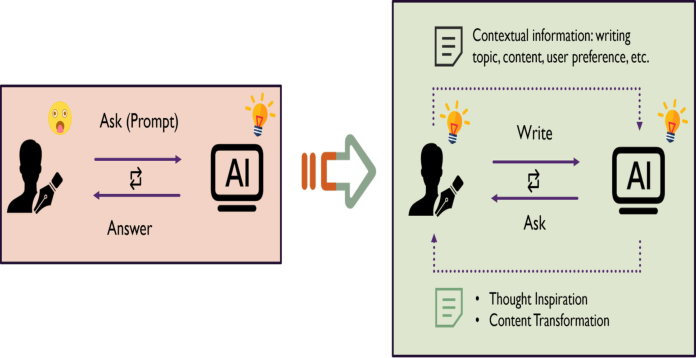
Recent research has begun to emphasize and explore methods to enhance users’ experience in the LLM-assisted writing process. For instance, research showed that presenting suggestions as lists, rather than through continuous generation, more effectively promotes users’ writing agency and ownership (Lehmann et al., 2022). Additionally, modifying LLM suggestions by introducing moderate imperfections can stimulate users’ rewriting behaviour, thereby enhancing engagement and reflection (Zhou & Sterman, 2024). Personalized writing assistant designs have also been shown to improve the writing experience (Yeh et al., 2024). Despite these advancements, most studies still rely on LLMs to “write” content directly, which often relegates users to merely evaluating or modifying LLM-generated text rather than engaging in independent writing. Our study explores methods to avoid having LLMs directly generate the written content, enabling human writers to stay focused on the writing process itself, while still benefiting from LLM assistance. Specifically, we propose a novel human- LLM collaborative writing framework, flipping the conventional “human prompt, LLM generate” (Prompt-Generate) mode into an “LLM ask, human write” (Guided-Writing) mode. Figure 1 illustrates these two interaction modes:
Prompt-Generate (see Figure 1(a)): This represents the most prevalent and natural human-LLM collaborative writing mode in practice, where users interact directly with unmodified LLMs through prompts to complete writing tasks. Users can maintain independent writing or rely on LLM-generated content to varying degrees.
Guided-Writing (see Figure 1(b)): In this mode, the LLM does not directly generate content based on user prompts. Instead, the LLM functions as a questioner, generating contextually relevant and thought-provoking questions and offering creative suggestions when necessary. Users retain their role as primary writers, selectively respond to the questions posed by the LLM based on their preferences and expertise. Upon request, the LLM transforms the draft into a polished, coherent version tailored to the user’s preferred style, which users can further modify and refine.
LLM Asks, You Write: Enhancing Human-AI Collaborative Writing Experience 287
The new framework serves a dual purpose: enhancing user engagement and agency in the writing process while leveraging LLM capabilities for creative inspiration and text editing.
In this study, we investigate the differences in users’ objective behaviours and subjective experiences between the two interaction modes through a within-subjects writing experiment. By analysing the experimental results, we aim to provide valuable insights for enhancing the user writing experience in future LLM-assisted writing applications.
Figure 1: Two human-LLM collaborative writing modes.
THEORETICAL BACKGROUND AND HYPOTHESES While LLMs facilitate fluid text generation and reduce writing barriers, they may simultaneously alter users’ authentic writing experiences. A key challenge in designing LLM-powered writing tools is enhancing user autonomy and experience during the writing process. In this study, we focus on multiple aspects of user experience in human-LLM collaborative writing, including sense of agency, ownership, writing experience (e.g. self- expression), and profit-responsibility attribution, leading to our research hypotheses. We also investigated additional factors, such as mental workload. The questionnaire design for these measures is presented in Supplementary Materials.
Sense of Agency Synofzik et al. (2013) define sense of agency as “the registration that I am the initiator of my actions.” It represents an individual’s perception of control and dominance over their actions. Previous research has demonstrated the crucial role of sense of agency in human-AI collaborative tasks and its correlation with individuals’ dependence on AI systems. For instance, Draxler et al. (2024) found that participants exhibited a greater sense of agency when independently writing or editing AI-generated greeting
cards. Robertson et al. (2021) found that users experienced a stronger sense of agency when manually inputting text rather than accepting AI suggestions. Additionally, Mieczkowski & Hancock (2022) discovered that users’ increased reliance on AI systems in situations where they lack expertise led to a decreased sense of agency. In the Guided-Writing mode, users are expected to engage in more independent writing and thinking. Based on this, we hypothesize that: H1: Users will experience a higher sense of agency in the Guided-Writing mode compared to the Prompt-Generate mode.
Sense of Ownership Unlike authorship, which emphasizes creative rights and responsibilities, ownership focuses on the sense of control and possession over creative works (Draxler et al., 2024). As the proportion of text generated by the LLM increases, users’ sense of ownership typically diminishes (Lee et al., 2022; Li et al., 2024). In addition, sense of ownership can be strengthened through creation and control processes (Pierce et al., 2003). Therefore, we hypothesize that:
H2: Users will experience a higher sense of ownership in the Guided- Writing mode compared to the Prompt-Generate mode.
Writing Experience Writing experience encompasses both emotional and cognitive responses during the writing process, with sense of self-achievement, self-expression, and self-improvement emerging as three key dimensions (Park & Lee, 2021). Increased independent writing involvement may enhance users’ recognition of their self-efficacy. In addition, excessive AI intervention may dilute users’ individuality, particularly in the Prompt-Generate mode, where dependence on LLM-generated content could lead to a diminished sense of self-expression (Zhou & Sterman, 2024). Furthermore, sense of self-improvement is closely linked to the effort invested in the writing process. Therefore, we propose three hypotheses:
H3-1: Users will experience a higher sense of self-achievement in the Guided-Writing mode compared to the Prompt-Generate mode.
H3-2: Users will experience a higher sense of self-expression in the Guided- Writing mode compared to the Prompt-Generate mode.
H3-3: Users will experience a higher sense of self-improvement in the Guided-Writing mode compared to the Prompt-Generate mode.
Profit-Responsibility Attribution In human-AI collaboration, the distribution of profits and responsibilities plays a crucial role in shaping individuals’ perceptions of both the collaborative process and its outcomes. Research has shown that individuals assign a higher subjective value to rewards obtained through their own efforts compared to those acquired through intermediaries (Bobadilla-Suarez et al., 2017). Moreover, the involvement of AI may “dilute” human responsibility in decision-making processes. Li et al. (2024) has found that people who
LLM Asks, You Write: Enhancing Human-AI Collaborative Writing Experience 289
receive AI-generated content assistance exhibit a reduced willingness to take responsibility for criticisms of the final writing outcome. In the Guided- Writing mode, users are expected to invest more independent writing time while reducing the LLM’s contribution to content creation. Based on these considerations, we propose the following hypotheses: H4-1: Users will attribute less profit to the LLM in the Guided-Writing mode compared to the Prompt-Generate mode.
H4-2: Users will attribute less responsibility to the LLM in the Guided- Writing mode compared to the Prompt-Generate mode.
Other Factors We explored several other aspects related to user experience. First, participants’ mental workload during writing task was measured using the NASA Task Load Index (NASA-TLX) questionnaire. Furthermore, we conducted a follow-up evaluation two days post-experiment to examine participants’ retrospective perceptions of their written content, focusing on content familiarity, authenticity, reproducibility.
METHODOLOGY
Participants We recruited 16 participants (6 male, all Chinese) from Tsinghua University to participate in the experiment. Their average age was 23.6 years old (SD = 2.6). All participants reported prior experience with LLMs, and 13 participants indicated previous use of LLMs in their writing process. All participants provided informed consent and received compensation for their participation.
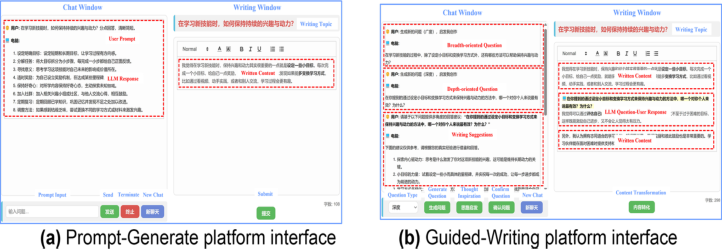
Figure 2: User interface layouts for the two Human-LLM collaborative writing platforms.
Human-LLM Collaborative Writing Platforms We developed two interactive platforms designed to facilitate human-LLM collaborative writing: the Prompt-Generate platform and the Guided-Writing platform. As illustrated in Figure 2, both platforms share a similar interface layout and integrate a well-known Chinese LLM (Qwen-max-20240919).
Notably, the Guided-Writing platform implements its functionality primarily through predefined prompts. Please refer to the Supplementary Materials for the detailed functions and implementations of the two platforms.
Experimental Task and Procedure This study employed a within-subjects design where each participant collaborated with a LLM on two different platforms to complete writing tasks on specific topics. Each writing task was limited to 10 minutes (minimum 5 minutes), with a word limit of 1000 characters (minimum 200 characters) for the final content. We selected 10 writing topics covering both personal and interpersonal dimensions (5 topics each), addressing common life themes that required participants to draw upon real-life experiences, as shown in the Supplementary Materials.
Prior to the experiment, participants completed a demographic questionnaire and selected their two most preferred topics from the pool of 10 options. Participants rated their level of interest and expertise for the two selected topics using scales provided in the Supplementary Materials. Participants then underwent platform training to ensure familiarity with the features of both platforms.
In the formal experiment, participants completed writing tasks sequentially on both platforms. Topics were randomly assigned to platforms, and platform order was counterbalanced. After completing each writing task, participants filled out the subjective experience questionnaire.
Two days after the experiment, we sent participants their written content for review, asking them to reread and respond to follow-up questions regarding factors such as content familiarity and authenticity.
RESULTS
This section presents the experimental results. For data analysis, paired t-tests were employed when data met normality assumptions; otherwise, Wilcoxon signed-rank tests were used. We denote M (SD)P and M (SD)G as the mean (standard deviation) of measurements under Prompt-Generate and Guided-Writing modes, respectively. In addition, the Wilcoxon signed-rank test results indicated no significant differences in participants’ interest levels and expertise across topics between the two platforms, allowing us to control for these variables.
Objective Behaviours We tracked dynamic changes in character count within the right-side writing window in the platforms, with each variation recorded as an operation. Operations were categorized into two types: writing-dominant operations and editing-dominant operations. This classification aligns with the two- level control (i.e. WRITING a postcard and EDITING a postcard) in Draxler et al. (2024) and the two writing phases of AI-assisted writing in Lee et al. (2022). In the Supplementary Materials, we provide an explanation of the criteria used to classify operation types. Additionally, the time interval between character count changes defined the operation time. For consecutive
LLM Asks, You Write: Enhancing Human-AI Collaborative Writing Experience 291
character count changes interrupted by other operations (e.g., button clicks), we standardized the operation time to two seconds as an approximation.
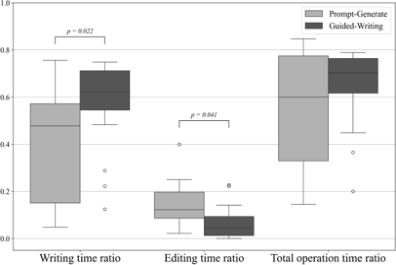
Figure 3: Three time ratios between the two collaboration modes.
For each writing task, the writing time ratio (WTR) and editing time ratio (ETR) represent the proportion of time spent on writing- dominant and editing-dominant operations, respectively, relative to the total task duration. Their sum equals the total operation time ratio (TOTR) in the right-side writing window. Figure 3 compares the three time ratios between the two modes. Results revealed that participants in the Guided-Writing mode exhibited significantly higher WTR (M (SD)p = 0.39 (0.25) vs. M (SD)G = 0.57 (0.19) , p = 0.022)and lower ETR (M (SD)p = 0.15 (0.10) vs. M (SD)G = 0.08 (0.08) , p = 0.041) compared to the Prompt-Generate mode. The TOTR showed no significant difference between the two modes (M (SD)p = 0.54(0.25) vs. M (SD)G = 0.65(0.17), p = 0.104).
As shown in Table 1, the experimental results revealed significant differences between the two modes across multiple dimensions of subjective experience. Firstly, participants reported significantly higher levels of sense of agency (M (SD)p = 5.24(0.66) vs. M (SD)G = 5.79(0.57), p = 0.011), ownership (M (SD)p = 3.47(0.92) vs. M (SD)G = 4.19(0.68), p = 0.01), self-achievement (M (SD)p = 3.12 (0.79) vs. M (SD)G = 3.94 (0.60) , p = 0.002), and self-expression (M (SD)p = 2.90(0.89)vs. M (SD)G = 3.48(0.82), p = 0.008) in the Guided-Writing mode. Although participants reported higher perceived self-improvement in the Guided-Writing mode (M (SD)p = 3.03 (0.74) vs. M (SD)G = 3.25(0.71), p = 0.071), this difference did not reach statistical significance.
Secondly, results showed that in the Guided-Writing mode, participants tended to attribute less profits (M (SD)p = 37.94 (24.36) vs. M (SD)G = 25.12(18.53), p = 0.018) and responsibilities (M (SD)p = 37.12(24.46) vs. M (SD)G = 23.00(10.96), p = 0.024) to the LLM. Finally, results indicated no significant differences in either overall workload (M (SD)p = 35.52(10.91) vs. M (SD)G = 34.95(7.88), p = 0.528)
or its six sub-dimensions between the two modes. In addition, participants scored significantly higher in the Guided-Writing mode than in the Prompt-Generate mode on content authenticity (M (SD)p = 68.94(11.35) vs. M (SD)G = 76.50(11.94), p = 0.008) and reproducibility (M (SD)p = 53.06(15.68)vs. M (SD)G = 64.38(20.47), p = 0.006). However, the difference in content familiarity (M (SD)p = 69.31(14.96) vs. M (SD)G = 75.94(10.21), p = 0.078) did not reach statistical significance.
Table 1: Comparison of the two interaction modes on the main dependent variables. (significance markers: * for p < 0.05, ** for p < 0.01).
Table available in the original PDF paper.
Test Statistic
p-value Related Hypothesis
Guided- Writing M (SD)
Dependent Variable Prompt- Generate M (SD) Sense of agency 5.24 (0.66) 5.79 (0.57) t=–2.90 0.011* H1 (√) Sense of ownership 3.47 (0.92) 4.19 (0.68) t=–2.93 0.010* H2 (√) Sense of
Equation reproduced from the original PDF.
self-improvement
Equation reproduced from the original PDF.
Profit attributed to AI 37.94 (24.36)
25.12 (18.53)
Responsibility
Equation reproduced from the original PDF.
attributed to AI
37.12 (24.46)
23.00 (10.96)
DISCUSSIONS Research Findings
The experimental results revealed significant differences in participants’ writing behaviour between the two collaborative modes. Under the Guided- Writing mode, participants demonstrated higher levels of independent writing engagement. This finding supports the design objectives of the Guided-Writing mode, enabling participants to dedicate more cognitive resources to the writing process itself.
In addition, the Guided-Writing mode effectively enhanced participants’ writing experience. Firstly, the Guided-Writing mode significantly increased participants’ sense of agency (H1) and ownership (H2), correlating with greater independent writing effort. Correlation analyses further indicate that participants’ level of control during the writing process influence their perceived sense of ownership, which align with previous research (Draxler et al., 2024; Mieczkowski & Hancock, 2022; Zhou & Sterman, 2024). Secondly, the Guided-Writing mode significantly enhanced participants’ sense of self-achievement (H3-1) and self-expression (H3-2) upon completing their writing tasks. This enhancement correlates strongly with increased independent writing engagement, suggesting that the Guided-Writing mode minimizes the devaluation of the writing process itself. However, no significant difference was observed in participants’ sense of self-improvement
LLM Asks, You Write: Enhancing Human-AI Collaborative Writing Experience 293
(H3-3) between the two modes. This might be attributed to the relatively short experimental duration, as self-improvement typically results from sustained effort. Future research could examine experiential differences over extended writing periods.
Finally, regarding profit and responsibility attribution, participants in the Guided-Writing mode attributed lower levels of both to the LLM, confirming hypotheses H4-1 and H4-2. Mean attribution scores consistently remained below 50, indicating participants’ tendency to claim greater profits and actively assume potential responsibilities. Additional correlation analyses revealed significant positive correlations between sense of agency and ownership and participants’ willingness to assume responsibility for negative outcomes. This further emphasizes the importance of enhancing users’ sense of control over their writing (Li et al., 2024).
Implications and Limitations This study makes both theoretical and practical contributions. While existing research has primarily focused on the outcomes of human-LLM collaborative writing (e.g., content coherence), our study delves deeper into user interaction behaviours and subjective experiences during the writing process. Additionally, we proposed an innovative flipped interaction framework that has been experimentally validated to enhance users’ writing experience across multiple dimensions. This study also offers valuable insights for the future design of human-LLM collaborative writing systems. System design can enhance users’ writing agency by providing guiding questions and creative inspiration without directly writing the content. Future research should explore how to effectively and non-intrusively utilize LLMs, developing intelligent writing tools that enhance users’ expressive abilities and creative intentions.
This study has several limitations. First, the functionalities of the Guided-Writing platform primarily depend on predefined prompts, and the current prompt design might not be optimal, potentially affecting system performance. Additionally, the personalization features adapting to individual users need enhancement, which is crucial for user experience. Third, our exploration of the mechanisms influencing user experience remains limited. Future research could benefit from a more in-depth analysis of user-LLM interaction dynamics.
CONCLUSION
This study presents a novel framework for human-LLM collaborative writing, called Guided-Writing, which aims to enhance user engagement and subjective experience during the writing process. The proposed framework encourages the human writer to remain at the centre of the writing process, maintaining control over the content while leveraging the LLM for creative inspiration and text editing. Through a within-subjects experiment on human-LLM collaborative writing, we demonstrate the effectiveness of this flipped interaction framework in enhancing users’ writing experience.
Overall, this study provides valuable insights for the future design of user- centric LLM-assisted writing tools.
SUPPLEMENTARY MATERIALS For detailed information on the experimental platforms, subjective scales, writing tasks, and experimental results, please refer to: https://drive. google.com/file/d/1pjMQPdbIrpTkFPRT2aUjvHeqe2aOmTdc/view?usp= sharing.
ACKNOWLEDGMENT
We appreciated the support from the National Natural Science Foundation of China (Grant Nos. 72192824).
REFERENCES
Biermann, O. C., Ma, N. F., & Yoon, D. (2022). From Tool to Companion: Storywriters Want AI Writers to Respect Their Personal Values and Writing Strategies. Designing Interactive Systems Conference, 1209–1227. https://doi.org/ 10.1145/3532106.3533506 Bobadilla-Suarez, S., Sunstein, C. R., & Sharot, T. (2017). The intrinsic value of
choice: The propensity to under-delegate in the face of potential gains and losses. Journal of Risk and Uncertainty, 54(3), 187–202. https://doi.org/10.1007/s11166- 017-9259-x Cardon, P., Fleischmann, C., Aritz, J., Logemann, M., & Heidewald, J. (2023). The Challenges and Opportunities of AI-Assisted Writing: Developing AI Literacy for the AI Age. Business and Professional Communication Quarterly, 86(3), 257–295. https://doi.org/10.1177/23294906231176517 Draxler, F., Werner, A., Lehmann, F., Hoppe, M., Schmidt, A., Buschek, D., & Welsch,
R. (2024). The AI Ghostwriter Effect: When Users do not Perceive Ownership of AI-Generated Text but Self-Declare as Authors. ACM Transactions on Computer- Human Interaction, 31(2), 1–40. Q1. https://doi.org/10.1145/3637875 Flower, L., & Hayes, J. R. (1981). A Cognitive Process Theory of Writing. College Composition & Communication, 32(4), 365–387. https://doi.org/10.58680/ ccc198115885 Jakesch, M., Bhat, A., Buschek, D., Zalmanson, L., & Naaman, M. (2023).
Co-Writing with Opinionated Language Models Affects Users’ Views. Proceedings of the 2023 CHI Conference on Human Factors in Computing Systems, 1–15. https://doi.org/10.1145/3544548.3581196 Lee, M., Gero, K. I., Chung, J. J. Y., Shum, S. B., Raheja, V., Shen, H., Venugopalan, S., Wambsganss, T., Zhou, D., Alghamdi, E. A., August, T., Bhat, A., Choksi, M. Z., Dutta, S., Guo, J. L. C., Hoque, M. N., Kim, Y., Knight, S., Neshaei, S. P., … Siangliulue, P. (2024). A Design Space for Intelligent and Interactive Writing Assistants. Proceedings of the CHI Conference on Human Factors in Computing Systems, 1–35. https://doi.org/10.1145/3613904.3642697 Lee, M., Liang, P., & Yang, Q. (2022). CoAuthor: Designing a Human-AI
Collaborative Writing Dataset for Exploring Language Model Capabilities. CHI Conference on Human Factors in Computing Systems, 1–19. https://doi.org/ 10.1145/3491102.3502030
LLM Asks, You Write: Enhancing Human-AI Collaborative Writing Experience 295
Lehmann, F., Markert, N., Dang, H., & Buschek, D. (2022). Suggestion Lists vs. Continuous Generation: Interaction Design for Writing with Generative Models on Mobile Devices Affect Text Length, Wording and Perceived Authorship. Mensch Und Computer 2022, 192–208. https://doi.org/10.1145/ 3543758.3543947 Li, Z., Liang, C., Peng, J., & Yin, M. (2024). The Value, Benefits, and
Concerns of Generative AI-Powered Assistance in Writing. Proceedings of the CHI Conference on Human Factors in Computing Systems, 1–25. https://doi.org/ 10.1145/3613904.3642625 Mieczkowski, H., & Hancock, J. (2022). Examining agency, expertise, and roles of AI systems in AI-mediated communication. OSF Preprints. https://files.osf.io/v1/resources/asnv4/providers/osfstorage/ 62d1e312f66a94273e230192?action=download&direct&version=1 Noy, S., & Zhang, W. (2023). Experimental evidence on the productivity effects of generative artificial intelligence. Park, D.-H., & Lee, S. (2021). UGC sharing motives and their effects on UGC sharing
intention from quantitative and qualitative perspectives: Focusing on content creators in South Korea. Sustainability, 13(17), 9644. https://doi.org/10.3390/ su13179644 Pierce, J. L., Kostova, T., & Dirks, K. T. (2003). The State of Psychological Ownership: Integrating and Extending a Century of Research. Review of General Psychology, 7(1), 84–107. https://doi.org/10.1037/1089-2680.7.1.84 Robertson, R. E., Olteanu, A., Diaz, F., Shokouhi, M., & Bailey, P. (2021).
“I Can’t Reply with That”: Characterizing Problematic Email Reply Suggestions. Proceedings of the 2021 CHI Conference on Human Factors in Computing Systems, 1–18. https://doi.org/10.1145/3411764.3445557 Synofzik, M., Vosgerau, G., & Voss, M. (2013). The experience of agency: An interplay between prediction and postdiction. Frontiers in Psychology, 4, 127. https://doi.org/10.3389/fpsyg.2013.00127 Wan, R., Gebreegziabhe, S., Li, T. J.-J., & Badillo-Urquiola, K. (2024). CoCo Matrix:
Taxonomy of Cognitive Contributions in Co-writing with Intelligent Agents. Creativity and Cognition, 504–511. https://doi.org/10.1145/3635636.3664260 Yeh, C., Ramos, G., Ng, R., Huntington, A., & Banks, R. (2024). GhostWriter: Augmenting Collaborative Human-AI Writing Experiences Through Personalization and Agency (No. arXiv:2402.08855). arXiv. https://doi.org/ 10.48550/arXiv.2402.08855 Zhou, D., & Sterman, S. (2024). Ai.llude: Investigating Rewriting AI-Generated
Text to Support Creative Expression. Creativity and Cognition, 241–254. https:// doi.org/10.1145/3635636.3656187
Read this individual research paper free through the original publisher, or explore the full digital proceedings book.
ISBN 978-1-964867-71-7
Explore this ISBN in the AHFE Bookstore ↗Listed in the July 2026 bookstore catalogue; search by ISBN to confirm current availability · Digital book purchase optional