Minqian Yang, Mingyuan Zhu, Pei-Luen Patrick Rau (2026). Impact of Stress Induced by Public Health Emergency on Human-AI Interaction: Effects on Subjective Trust, Decision-Making Behavior, and Brain Activity. In: Neuroergonomics and Cognitive Engineering. AHFE Open Access, vol. 207, pp. 151–160. https://doi.org/10.54941/ahfe1007404
Public health emergencies are events that occur suddenly and cause strong stress to human, which likely compelled people to minimize close social interactions while increasing their engagement with artificial intelligence (AI) systems. This paper investigated how stress induced by public health emergency events would influence people’ s interaction with AI advisors. A between-group experiment was conducted where thirty-six participants made decisions with a designed AI advisor in daily scenarios under three levels of stressed state (low, medium, and high) induced by public health emergency events. Participants’ decision results, subjective trust, and the brain activities in the prefrontal cortex (PFC) by fNIRS were recorded and analyzed. The results showed that participants under high-stress conditions exhibited significantly lower subjective trust in the AI advisor compared to those in the low-stress condition. Larger active brain areas in the PFC were found in participants under high-stress condition compared to participants in low-stress condition, indicating that stress treatment significantly activated participants’ prefrontal lobe. But the brain activity of participants in the low-stress condition became stronger than in the high-stress condition when making decisions with AI advisors. Although no significant difference was found in decision results, a trend of behavioral pattern was indicated from participants’ post-experiment interview: When the decision was only relevant to themselves, participants were more likely to stick to their own choices. In contrast, when decisions involved the benefit of others, participants in a stressed state tended to alter their original choices and adopt the AI’s advice.
Public health emergencies are defined as sudden and unpredictable events that can overwhelm a community’s routine capacities and pose significant threats to human survival (Nelson et al., 2007). The COVID-19 pandemic exemplifies such an emergency, with profound and lasting impacts on public mental health and daily life. In response, research has increasingly explored how emerging technologies, particularly artificial intelligence (AI), can support human decision-making during crises and pandemics. For instance, AI-based decision support systems have been applied to diagnose and predict
infections (Rasheed et al., 2020) and assist in pandemic management (Barbieri et al., 2021). In addition, digital tools such as health code applications, real- time pandemic data platforms, and online AI-based medical consultation systems have been widely adopted to facilitate information management and healthcare access. However, public health emergencies often produce prolonged stress due to widespread social disruptions (Association, 2020), which may influence how people use such technologies. Heightened stress and anxiety can increase vigilance while simultaneously impairing cognitive functioning, leading to reduced performance and lower willingness to engage with technological systems (Sarsenbayeva et al., 2019). For example, Pickering (2021) noted that stress may leave individuals feeling confused and vulnerable when interacting with AI technologies during public health crises. Therefore, understanding how stress induced by public health emergencies influences people’s use of AI technologies is critically important.
Previous studies have shown that stress can reduce users’ trust in and reliance on intelligent systems (Satterfield et al., 2017; Litaker and Mayhorn, 2020). These effects can be explained by the psychological and physiological responses triggered by stress. Stress arises when environmental demands exceed an individual’s regulatory capacity (Koolhaas et al., 2011). Such conditions produce a range of cognitive, emotional, and physiological reactions. First, stress disrupts neural circuits involved in cognition, decision-making, and emotion, often resulting in heightened vigilance, fear, and anxiety (McEwen et al., 2012). Second, stress activates cortisol responses, leading to physiological changes such as increased heart rate and skin conductance (Gossett et al., 2018). Third, stress can impair brain regions responsible for working memory, attention regulation, and self-control (Jiang and Rau, 2017; Zhang et al., 2019). Neuroimaging findings further illustrate these effects. Some studies show that stress induced by task conditions (such as time pressure or negative feedback) can suppress activity in the prefrontal cortex, weakening reasoning and decision-making abilities (Al-Shargie et al., 2017). In contrast, when individuals recall stressful experiences, increased oxygenated hemoglobin levels have been observed in the left dorsolateral prefrontal cortex (DLPFC), indicating heightened neural activation (dos Santos et al., 2022).
This study investigates how stress induced by public health emergencies affects individuals’ decision-making when assisted by an AI advisor. The COVID-19 pandemic was selected as the experimental context due to its global impact and shared public experience. Based on the literature reviewed above, we hypothesize that individuals under higher stress will report lower subjective trust in the AI advisor and be less likely to adopt its recommendations when these differ from their initial choices. In addition, we examine how stress influences neural activity during AI-assisted decision-making.
METHODS
Experiment Design and Tasks. The experiment employed a between-group design in which participants were randomly assigned to one of three stress conditions (low, medium, or high) induced by public health emergency scenarios. The COVID-19 pandemic served as the contextual background.
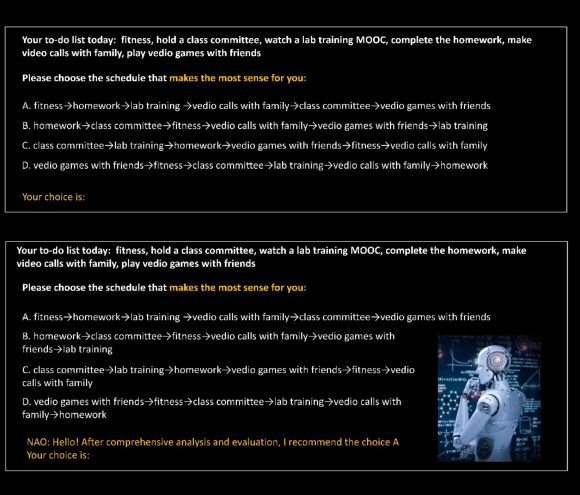
Impact of Stress Induced by Public Health Emergency on Human-AI Interaction 153 A virtual AI agent named “NAO” was introduced as the advisor, and participants were told that it could provide professional recommendations using advanced machine-learning algorithms. The experiment consisted of two stages. The first stage aimed to induce stress. Participants were asked to read a short text describing a COVID-19–related emergency scenario and imagine themselves in the situation for three minutes. The severity of the described events varied across groups to induce different stress levels. The second stage involved decision-making tasks. Participants were instructed to maintain the induced mental state while completing three types of tasks related to life in quarantine: (1) arranging a schedule, (2) stocking supplies for him/herself, and (3) stocking supplies for a group. Each task included five single-choice problems with four alternatives, and no objectively correct answers. Participants first selected their preferred option, after which NAO provided a recommended choice. They could then choose to accept or reject the recommendation. The order of the tasks was randomized across participants. The experiment program was implemented using the PyQt5 package in Python (version 3.8). An example task is shown in Figure 1.
Figure 1: Examples of the ‘Arranging a schedule’ task in the independent section (top) and in the NAO-assisted section (bottom).
Measurements and Apparatus. During the stress-induction stage, three types of data were collected: emotional responses, skin conductance, and brain activity. First, participants’ subjective emotional states were assessed using the Positive and Negative Affect Schedule (PANAS) (Watson et al., 1988), administered before and after the stress-induction procedure. Second, skin conductance level (SCL) was recorded using a BIOPAC MP150 system. Third, brain activity in the prefrontal cortex (PFC) was measured
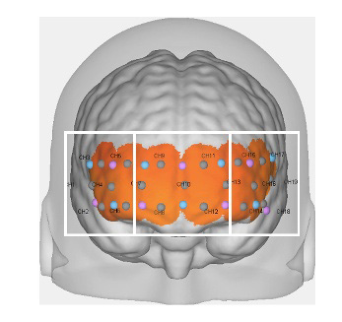
using an fNIRS device (NirSmart, Huichuang Co., China), which captures neural activity associated with cognitive and emotional processes such as reasoning and decision-making. Nineteen channels were used: channels 1–6 measured signals from the right dorsolateral PFC, channels 7–13 from the orbitofrontal region, and channels 14–19 from the left dorsolateral PFC (see Figure 2). Data were sampled at 15 Hz, and real-time concentrations of oxygenated hemoglobin (HbO) were recorded. Before the experiment, participants rested quietly for three minutes to establish baseline fNIRS measurements. During the decision-making stage, three additional types of data were collected: decision outcomes, subjective trust, and brain activity. Participants’ decisions were recorded through mouse clicks using a Python- based program. Subjective trust was measured using the 12-item Trust Assessment Scale (CTPA) (Jian et al., 2000) rated on a 7-point Likert scale from “strongly disagree” to “strongly agree.” Brain activity continued to be recorded using the same fNIRS configuration as in the stress-induction stage. Finally, post-experiment interviews were conducted to gain deeper insight into participants’ decision-making processes. Participants were asked under what circumstances they would accept or reject NAO’s recommendations when they differed from their own choices.
Figure 2: Signal channels for fNIRS in the experiment.
Participants. Thirty-six participants (twenty-one males and fifteen females) were recruited in this experiment, aged from 18 to 32 years (M = 22.88, SD = 3.50). Each of the three groups had twelve participants (five females each). All participants were right-handed and in good health. Informed consent was obtained from each participant before the experiment began. After the experiment, each participant was paid about $8. This study involving human participants was reviewed and approved by the Institutional Ethic Board (Approval No. THU-04-2025-1106).
Data analysis. For the fNIRS data, preprocessing was done using the NirSpark tool (Huichuang Co., China). Using this tool, motion artifacts were identified and corrected (input parameters: STDthresh = 10, AMP-thresh =
Impact of Stress Induced by Public Health Emergency on Human-AI Interaction 155 0.5), as well as a band-pass filter (0.5 Hz for low-pass filter and .01 Hz for high-pass filter) to remove other possible signal noises. Then, concentration changes in HbO (ΔHbO= HbOmax- HbObaseline, mmol/L*mm) of all the nineteen channels for each participant was calculated using the modified Beer-Lambert law for the three main fNIRS processes as marked in Figure 2. Data were then analyzed by R (4.3.2) with a significance level of α = 0.05. For each type of data, the Shapiro-Wilk and the Levene tests were firstly conducted to test the normality and variance homogeneity (α=0.5). Then t-tests, ANOVA analysis or Kruskal-Willas tests were conducted, as well as post-hoc tests with Bonferroni adjustment for p-value.
RESULTS
Effectiveness of the stress treatment. Firstly, the subjective stress levels were assessed by comparing changes in participants’ emotion scores in the PANAS. The difference between each participant’s average negative emotion score after (N1) and before (N0) the stress treatment was calculated to get the negative emotion changes (ΔN = N1-N0). One-sided t-tests showed that the increase of negative emotion in the high stress group (M = 10.167, SD = 6.648; t(11) = 5.289, p < 0.001, r2 = 0.847) and the medium stress group (M = 4.500, SD = 5.839; t(11) = 2.670, p = 0.011, r2 = 0.627) were significant, while the changes in the low stress group were not significant. Secondly, for the skin conductance level data, the mean value of the three-minute period data before (S0) and after (S1) the stress-inducing process was calculated separately (μS) to obtain the changes in participants’ SCL (ΔS = S1-S0). One-sided t-tests showed that the changes in SCL for the participants in the high stress group were significant (t = 3.678, p = 0.021, r2 = 0.743), but the changes were not significant for both medium and the low stress group. It suggested that the high-level stress treatment by COVID-19 events significantly aroused the reactivity of participants’ sympathetic nerve-adrenal myeloma system. These results indicated that our stress treatment significantly elevated stress levels in the high-stress group compared to the low-stress group. Participants in the medium-stress group experienced a moderately significant level of stress.
The effect of stress on subjective trust level and decision-making behavior. The subjective trust level was obtained from the trust questionnaire, which consisted of twelve questions with five reversed ones. The validity of the questionnaire was firstly checked (Cronbach’s α = 0.85), as well as the normality and variance homogeneity. Then, the average score of these items of each participant was calculated, respectively. The results of one-way ANOVA analysis showed that difference among the three groups were significant (F (2, 33) = 3.76, p = 0.034, ω2 = 0.133). Post-hoc test showed that the subjective trust level of participants in the high-stress group (M = 3.694, SD = 0.784) was significantly lower than that of the low-stress group (M = 4.661, SD = 0.782, p = 0.030, d = 1.153), as shown in Figure 3. As for decision-making behavior, for each task, we first counted the number of problems in which a participant’s initial choice differed from NAO’s recommendation, denoted as N. Among these cases, the number of times
participants changed their choice to follow NAO’s recommendation was recorded as A. The acceptance rate was calculated as A/N, representing the participant’s willingness to adopt the AI’s advice. Shapiro–Wilk tests indicated that the decision data did not follow a normal distribution; therefore, Kruskal–Wallis tests were conducted to compare acceptance rates across the three stress groups. The results showed no significant differences among the groups. But a descriptive pattern emerged in Figure 3. In the “stocking supplies for a group” task, participants in the high-stress condition showed a relatively high acceptance rate (M = 0.553, SD = 0.367), whereas those in the low-stress condition showed a lower rate (M = 0.303, SD = 0.314). Further, we found a trend of behavioral pattern from participants’ post-experiment interview: when decisions involved the welfare of others, participants in a stressed state tended to alter their original choices and adopt the AI’s advice. For instance, a participant in the high stress group said that, ‘When I was stocking up my own supplies, NAO’s advice didn’t really matter to me. But for the group situation, I felt unsure of myself, so I almost always followed its advice, thinking that since its choices are based on algorithms, they must be better than mine.’ Five other participants in the high-stress group echoed this sentiment, stating they were more likely to consider NAO’s suggestions for team supplies, because they thought NAO must be more reliable than themselves in figuring out what most people need and commonly use. This pattern was not observed among participants in the low-stress group.
*: p<0.05; **: p<0.01; ***: p<0.001 Figure 3: The subjective trust and the acceptance rate in decision-making tasks for the three groups.
The effect of stress on PFC brain activity. One-sided t-tests were conducted to assess changes in oxygenated hemoglobin (ΔHbO) across nineteen channels participants under three stress conditions. Significant results indicate activation in the brain regions corresponding to those channels. For clarity, this section reports only the results for the high- and low-stress groups (see Figure 4). During the stress-induction stage, the high-stress group showed significant increases in ΔHbO in 10 of the 19 channels (p < 0.05), mainly in
Impact of Stress Induced by Public Health Emergency on Human-AI Interaction 157 the dorsolateral prefrontal and orbitofrontal regions. In contrast, the low- stress group showed significant increases in only five channels, primarily in the orbitofrontal region. This suggests that participants in the high-stress condition exhibited broader activation in the prefrontal cortex (PFC) during stress induction. A similar pattern appeared during independent decision- making. The high-stress group exhibited nine significantly active channels, again mainly in the dorsolateral and orbitofrontal regions, whereas the low-stress group showed activation in only three channels, indicating that participants in the high-stress condition remained in a stressed state. However, during NAO-assisted decision-making, the number of active channels in the high-stress group decreased to four, suggesting reduced PFC activity. In contrast, the low-stress group showed an increase to seven active channels.
*: p<0.05; **: p<0.01; ***: p<0.001 Figure 4: The average ΔHbO (mmol/L) of the participants for the three processes.
DISCUSSION
This study examines how stress induced by public health emergencies influences decision-making processes in human-AI interactions. The results showed that participants under high-stress conditions exhibited significantly lower subjective trust in the AI advisor (p < 0.05) compared to those in the low-stress condition. Consistent with previous research results, participants tend to show a ‘fight or flight’ behavior pattern (Jansen et al., 1995) under stress, leading to decreased trust and reliance on automated AI (Litaker and Mayhorn, 2020). The decline in subjective trust in AI under high-stress conditions underscores the critical need for sustainable intelligent systems that can effectively support decision-making while addressing human psychological states. By integrating stress-responsive design principles, future AI systems could enhance user trust and reliability during crises, thereby contributing to the resilience and well-being of individuals and communities. No significant results were found on decision-making behavior. But through post-experiment interviews we found a notable behavioral trend: participants under high stress condition prioritized ensuring that their decisions benefited
the majority, leading them to seek suggestions from the AI, even though they rated their subjective trust in the AI relatively low. These intriguing results aligns with Duque et al. (2022)’s conclusion that stress tend to increase people’s prosocial decision-making. The observed behavioral patterns suggest that AI-based systems could be leveraged to enhance cooperative decision- making, addressing challenges related to diversity, fairness, and inclusion in increasingly digitalized and telework-driven environments. Future study work could explore whether the task type (only related to oneself or need consideration for others) would influence decision-making results.
Also, fNIRS results indicated that stress treatment significantly activated participants’ prefrontal lobe, aligning with findings in previous studies (dos Santos et al., 2022; Schaal et al., 2019). When making independent decisions, participants in the high-stress condition exhibited stronger PFC activation than those in the low-stress condition, consistent with their initial mental state following the stress treatment. However, this activation diminished when decisions were made with the AI advisor. Conversely, the brain activity of participants in the low-stress condition became stronger when making decisions with AI advisors. This may provide evidence for participants’ lower subjective trust level in a high-stressed state, also consistent with previous research indicating that stressed individuals are less willing to engage with intelligent systems (McCabe et al., 2001; Rilling et al., 2004). The findings contribute to the theoretical understanding of how stress may impact brain activity, particularly in decision-making contexts involving human-AI interaction.
This study has several limitations. Firstly, the chosen task scenarios were constrained. The three tasks were chosen based solely on observations of life in quarantine, lacking a theoretical foundation for their selection. This limitation may have contributed to the insignificance effects of stress on decision- making behavior in this study. Secondly, the AI was represented only as a virtual computer agent in this experiment. Thirdly, the method used to induce stress was inadequate in our study, relying only on participants’ imagination according to text. This was reflected in the nearly insignificant differences found between the medium and low-stress groups. Future work could expand the formations of AI agent, as well as incorporating multi-sensory stimuli of stress inducing, such as images, videos, or AR and VR-based scenarios.
CONCLUSION
Stress is a ubiquitous challenge in modern work environments, especially during disruptions such as public health emergencies. This study provides valuable insights into the complex dynamics between stress, trust, and AI interactions, offering several insights for human-centered technologies. The findings underscore the importance of designing AI systems that are sensitive to users’ stress conditions and capable of supporting reliable decision- making under pressure. Such insights are particularly relevant for developing resilient AI-assisted tools for public health emergencies and other high-stress environments. Overall, this study contributes to the growing literature on human–AI interaction by highlighting the role of psychological states in shaping trust, cognition, and collaboration with AI systems during crises.
ACKNOWLEDGMENT
This work was supported by the National Natural Science Foundation of China (71942005).
REFERENCES
Al-Shargie, F., Tang, T. B. & Kiguchi, M. 2017. Assessment of mental stress effects on prefrontal cortical activities using canonical correlation analysis: an fNIRS-EEG study. Biomedical optics express, 8, 2583–2598. Association, A. P. 2020. Psychological impact of COVID-19: know the signs of
anxiety, panic attacks, depression, and suicide. Diunduh dari https://www. apa. org/topics/covid-19/psychological-impact. Barbieri, D., Giuliani, E., Del PRETE, A., Losi, A., Villani, M. & Barbieri, A. 2021.
How artificial intelligence and new technologies can help the management of the COVID-19 pandemic. International Journal of Environmental Research and Public Health, 18, 7648. Dos Santos, F. R., Bazan, P. R., Balardin, J. B., De Aratanha, M. A., Rodrigues, M., Lacerda, S., Negi, L. T. & Kozasa, E. H. 2022. Changes in Prefrontal fNIRS Activation and Heart Rate Variability During Self-Compassionate Thinking Related to Stressful Memories. Mindfulness, 1–13. Duque, A., Cano-López, I. & Puig-Pérez, S. 2022. Effects of psychological stress
and cortisol on decision making and modulating factors: A systematic review. European Journal of Neuroscience, 56, 3889–3920. Gossett, E. W., Wheelock, M. D., Goodman, A. M., Orem, T. R., Harnett, N. G., Wood, K. H., Mrug, S., Granger, D. A. & Knight, D. C. 2018. Anticipatory stress associated with functional magnetic resonance imaging: Implications for psychosocial stress research. International Journal of Psychophysiology, 125, 35–41. Jansen, A. S., Van Nguyen, X., Karpitskiy, V., Mettenleiter, T. C. & Loewy, A. D.
1995. Central command neurons of the sympathetic nervous system: basis of the fight-or-flight response. Science, 270, 644–646. Jian, J.-Y., Bisantz, A. M. & Drury, C. G. 2000. Foundations for an empirically determined scale of trust in automated systems. International journal of cognitive ergonomics, 4, 53–71. Jiang, C. & Rau, P.-L. P. 2017. Working memory performance impaired after
exposure to acute social stress: The evidence comes from ERPs. Neuroscience Letters, 658, 137–141. Koolhaas, J. M., Bartolomucci, A., Buwalda, B., De Boer, S. F., Flügge, G., Korte, S. M., Meerlo, P., Murison, R., Olivier, B. & Palanza, P. 2011. Stress revisited: a critical evaluation of the stress concept. Neuroscience & Biobehavioral Reviews, 35, 1291– 1301. Litaker, K. & Mayhorn, C. B. Influences of Stress on Interactions with Decision
Support. Proceedings of the Human Factors and Ergonomics Society Annual Meeting, 2020. SAGE Publications Sage CA: Los Angeles, CA, 1886–1890. Mccabe, K., Houser, D., Ryan, L., Smith, V. & Trouard, T. 2001. A functional imaging study of cooperation in two-person reciprocal exchange. Proceedings of the national academy of sciences, 98, 11832–11835. Mcewen, B. S., Eiland, L., Hunter, R. G. & Miller, M. M. 2012. Stress and anxiety:
structural plasticity and epigenetic regulation as a consequence of stress. Neuropharmacology, 62, 3–12.
Nelson, C., Lurie, N., Wasserman, J. & Zakowski, S. 2007. Conceptualizing and defining public health emergency preparedness. American Public Health Association. Pickering, B. 2021. Trust, but verify: informed consent, AI technologies, and public
health emergencies. Future Internet, 13, 132. Rasheed, J., Jamil, A., Hameed, A. A., Aftab, U., Aftab, J., Shah, S. A. & Draheim, D. 2020. A survey on artificial intelligence approaches in supporting frontline workers and decision makers for the COVID-19 pandemic. Chaos, Solitons & Fractals, 141, 110337. Rilling, J. K., Sanfey, A. G., Aronson, J. A., Nystrom, L. E. & Cohen, J. D. 2004. The
neural correlates of theory of mind within interpersonal interactions. Neuroimage, 22, 1694–1703. Sarsenbayeva, Z., Van Berkel, N., Hettiachchi, D., Jiang, W., Dingler, T., Velloso, E., Kostakos, V. & Goncalves, J. 2019. Measuring the effects of stress on mobile interaction. Proceedings of the ACM on Interactive, Mobile, Wearable and Ubiquitous Technologies, 3, 1–18. Satterfield, K., Baldwin, C., De Visser, E. & Shaw, T. The influence of risky
conditions in trust in autonomous systems. Proceedings of the Human Factors and Ergonomics Society Annual Meeting, 2017. SAGE Publications Sage CA: Los Angeles, CA, 324–328. Schaal, N. K., Hepp, P., Schweda, A., WOLF, O. T. & KRAMPE, C. 2019. A functional near-infrared spectroscopy study on the cortical haemodynamic responses during the Maastricht acute stress test. Scientific reports, 9, 13459. Watson, D., Clark, L. A. & Tellegen, A. 1988. Development and validation of brief
measures of positive and negative affect: the PANAS scales. Journal of personality and social psychology, 54, 1063. Zhang, W., Hashemi, M. M., Kaldewaij, R., Koch, S. B., Beckmann, C., Klumpers, F.
& Roelofs, K. 2019. Acute stress alters the ‘default’brain processing. Neuroimage, 189, 870–877.
LISTED IN THE AHFE DIGITAL BOOKSTORE CATALOGUE
Explore the complete digital volume
Neuroergonomics and Cognitive Engineering
Read this individual research paper free through the original publisher, or explore the full digital proceedings book.
ISBN 978-1-964867-83-0
Explore this ISBN in the AHFE Bookstore ↗Listed in the July 2026 bookstore catalogue; search by ISBN to confirm current availability · Digital book purchase optional