Ronghan Wang, Wenjing Li, Dehe Yao (2025). Feasibility and Conceptual Design of Portable Nanofiber Membrane Water Purification Tablets. In: Sustainable Construction in the Era of the Fourth Industrial Revolution. AHFE Open Access, vol. 187, pp. 13–23. https://doi.org/10.54941/ahfe1006556
This study investigates the feasibility and design of portable nanofiber membrane water purification tablets, emphasizing filtration efficiency, scalability, and adaptability in resource-limited and emergency scenarios. Key factors such as membrane pore size, water quality improvement, durability, and cost-effectiveness are analyzed for optimal performance. The proposed design aims to address challenges related to traditional water purification systems by offering a lightweight, portable, and effective solution for clean water needs.
The global challenges of water scarcity and water pollution are becoming increasingly severe, making access to safe drinking water a worldwide concern. While many households have addressed daily drinking water safety through home water purification systems, data from the Water Quality Association (2019) indicates that approximately 40% of American households use some form of water treatment system (Water Quality Association, 2019). At the same time, governments worldwide are actively promoting the widespread adoption of purified tap water. For example, by 2023, 62.79% of rural households in India had access to treated tap water supplies (Sheel et al., 2024). However, in extreme conditions—such as wilderness expeditions, earthquake-affected areas, or resource-limited regions—access to safe drinking water remains a significant challenge. The health risks associated with water pollution pose serious threats to people’s lives and survival (Rosdian et al., 2022).
This paper proposes lightweight, biodegradable nanofiber membrane water purification tablets, enabling rapid deployment in extreme environments for clean drinking water. The tablet features three layers: filtration for pollutant removal, support for stability, and protection for durability. Compared to activated carbon and reverse osmosis, nanofiber membranes offer superior filtration, energy efficiency, and portability, ideal for emergency and outdoor use.
This paper aims to explore the feasibility and practical application potential of portable nanofiber membrane water purification tablets through theoretical analysis and parameter optimization. By combining existing literature data for feasibility verification, we propose a practical and implementable portable water purification solution, offering a new perspective and direction for the advancement of emergency water resource assurance technologies.
LITERATURE REVIEW
Activated Carbon in Water Purification Activated carbon is widely used in water purification in forms such as Granular Activated Carbon (GAC), Powdered Activated Carbon (PAC), Activated Carbon Fibers (ACF),and Carbon Cloths, each known for excellent adsorption properties, particularly in removing organic pollutants. Some advanced variations, such as copper nanoparticle-doped activated carbon, further enhance adsorption efficiency for organic contaminants (Madhusha et al., 2023).
However, activated carbon is less effective against inorganic pollutants like salts and heavy metals, with adsorption efficiency highly dependent on optimal pH (5.5) and contact time (30 minutes) (Seyedein et al., 2018). Over time, adsorption capacity decreases as the material becomes saturated, requiring frequent replacement or regeneration. While bamboo sawdust- based activated carbon has shown stability over five regeneration cycles, this process remains impractical for long-term applications (Wakejo et al., 2023). In practical use, PAC often requires specialized filtration equipment, while Activated Carbon Fiber Felt (ACFF) demonstrates faster adsorption rates compared to other forms (Balanay et al., 2011). These characteristics make activated carbon more suitable for stationary systems rather than portable water purification solutions.
As a result, activated carbon materials are more suitable for stationary water purification systems rather than portable applications. Overall, activated carbon demonstrates significant advantages in water purification, especially in removing organic pollutants. However, its limitations in removing inorganic pollutants, regeneration efficiency, and portability restrict its potential applications in extreme environments and portable water purification devices.
Reverse Osmosis (RO) Technology Reverse Osmosis (RO) is a widely applied water purification technology that utilizes a semi-permeable membrane under high pressure to separate impurities from water. This membrane effectively blocks solutes, particles, bacteria, endotoxins, and other harmful substances, producing high-purity drinking water (Ahuchaogu et al., 2018). RO technology plays a crucial role in household drinking water systems, industrial water treatment, and seawater desalination. One of the key advantages of RO technology is its high filtration efficiency, capable of removing most organic pollutants,
Feasibility and Conceptual Design of Portable Nanofiber Membrane 15
inorganic salts, heavy metal ions, and bacteria, resulting in almost pure water quality. Additionally, RO systems are highly versatile and can be applied across various fields, including seawater desalination, industrial wastewater treatment, and household water purifiers.
However, RO technology also faces significant limitations in practical applications. Firstly, RO systems require high pressure to force water through the semi-permeable membrane, a process that demands substantial energy consumption, especially in large-scale water treatment plants (Chao et al., 2022). Secondly, the high operating costs associated with the continuous operation of high-pressure pumps and the maintenance of semi-permeable membranes can pose challenges, particularly in resource-limited areas or regions with underdeveloped infrastructure. Moreover, during the filtration process, a portion of water is discharged as brine or wastewater, resulting in a low water utilization rate.
Overall, RO technology excels in stationary water treatment facilities, making it suitable for urban water supply systems, industrial water treatment plants, and seawater desalination facilities. However, its high energy consumption, high operating costs, and limited portability restrict its application in extreme environments or mobile scenarios. Therefore, there is a pressing need for a low-energy, lightweight, and easy-to-maintain water purification technology to compensate for these shortcomings.
Nanofiber Membrane Water Filtration Technology Nanofiber membrane water filtration technology represents an advanced water purification method that leverages its unique nanofiber structure to achieve enhanced filtration efficiency and reduced energy consumption. With a high porosity of approximately 80%, nanofiber membranes ensure high water flux while effectively blocking contaminants, demonstrating excellent filtration performance, especially in the removal of organic compounds and microorganisms (Ji et al., 2023; Ma & Hsiao, 2018; Chao et al., 2022).
Studies indicate that nanofiber membranes can achieve a bacterial removal efficiency exceeding 99% and exhibit significant adsorption capabilities for organic solvents and heavy metal ions (Wakejo et al., 2023; Balanay et al., 2015). Furthermore, these membranes offer high customization potential, allowing them to be tailored for various filtration levels, including microfiltration, ultrafiltration, nanofiltration, and even reverse osmosis, making them widely applicable in municipal water supply systems, industrial wastewater treatment, and seawater desalination (Kamrani & Nosrati, 2018; Ma et al., 2023; Ahuchaogu et al., 2018). Compared to traditional filtration technologies, nanofiber membranes consume less energy during operation, offering significant cost efficiency in large-scale water treatment systems. Additionally, they maintain stable filtration performance even under high flow rates (Kamrani & Nosrati, 2018; Ji et al., 2023; Chao et al., 2022).
However, despite their outstanding filtration efficiency and energy- saving characteristics, nanofiber membranes have relatively low mechanical strength, making them prone to damage under high-pressure conditions or during frequent operational cycles (Ma & Hsiao, 2018; Ji et al., 2023;
Balanay et al., 2011). Some studies have suggested enhancing the mechanical performance of nanofiber membranes through the integration of polymer composite materials or nanofiller reinforcement technologies (Kamrani & Nosrati, 2018; Ma et al., 2023).
Overall, nanofiber membranes demonstrate remarkable potential in the water purification sector due to their high filtration efficiency, broad applicability, and low energy consumption. However, addressing their mechanical limitations remains a critical challenge that future research must focus on to overcome this technological bottleneck (Ahuchaogu et al., 2018; Wakejo et al., 2023).
Table 1: Comparison of water purification technologies.
Filtration using semi-permeable membrane under high pressure
Removes bacteria,
Pollutant Removal
particles, organic
Removes most organic pollutants,
Efficiency
Effective for organic pollutants and odors; limited
pollutants, and some heavy metals
inorganic salts, heavy metals, and
for inorganic salts bacteria and heavy metals
Low energy consumption;
High filtration efficiency; versatile
Key Advantages Cost-effective; good adsorption of applications organic pollutants lightweight; customizable Key Limitations Requires frequent
High energy consumption; high
replacement or
Low mechanical strength; prone to damage under high
operational costs;
regeneration;
pressure
low water utilization rate
limited effectiveness for inorganic pollutants
Optimal
Stationary water
Emergency water
purification
Application Scenarios
systems
Urban water supply systems; industrial water
purification; portable water treatment; filters; resource-limited
seawater desalination
areas
Research Gap While activated carbon and reverse osmosis (RO) technologies are widely used in water purification, both have limitations in extreme environments. Activated carbon, particularly in powdered form, effectively removes organic pollutants but struggles with inorganic contaminants like salts and heavy metals. Its frequent need for replacement and challenges in transportation
Feasibility and Conceptual Design of Portable Nanofiber Membrane 17
limit its suitability for disaster relief and remote scenarios (Seyedein et al., 2018; Wakejo et al., 2023). RO systems, though highly effective at removing a wide range of contaminants, are energy-intensive, costly to maintain, and reliant on high-pressure systems, making them unsuitable for portable or emergency applications (Ahuchaogu et al., 2018; Chao et al., 2022). In contrast, nanofiber membranes offer low energy consumption, high filtration efficiency, and lightweight design, making them ideal for emergency water purification. However, their low mechanical strength affects durability under prolonged or high-pressure use (Ma & Hsiao, 2018; Ji et al., 2023).
To overcome these challenges, this study proposes a portable nanofiber membrane water purification tablet with an integrated protective shell to enhance mechanical strength, while maintaining filtration performance and portability. This design provides a reliable and efficient solution for emergency and extreme environments.
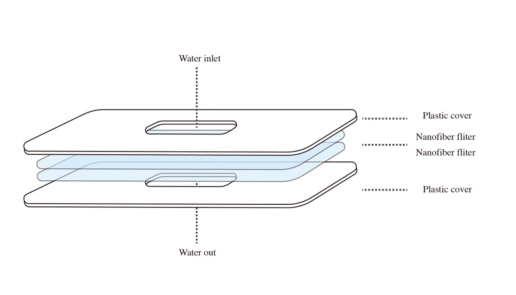
Figure 1: Structural diagram of the nanofiber membrane water purification device.
DESIGN AND FEASIBILITY ANALYSIS Design Concept and Structural Description
This study proposes a portable water purification tablet using nanofiber membrane materials to address drinking water safety challenges in extreme environments, such as disaster relief, outdoor emergencies, and resource-limited areas. The design focuses on being lightweight, efficient, biodegradable, and sustainable, ensuring the quick provision of safe drinking water under limited resources and time constraints. The tablet features a three-layer structure: a filtration layer, a support layer, and a protective layer. The filtration layer removes particles, bacteria, and organic pollutants from water, ensuring water quality and safety. Thanks to the high porosity and large surface area of nanofiber membranes, this layer delivers excellent filtration performance. The support layer provides mechanical strength and structural stability, preventing damage or deformation during use. The protective layer enhances durability, protecting the tablet from physical
damage during transport and operation. This three-layer design balances filtration efficiency with mechanical stability, improving reliability in real- world applications. Overall, the tablet fliter combines effective filtration with portability, making it suitable for rapid deployment and consistent performance in emergency situations, while offering a practical solution for ensuring safe drinking water in challenging conditions.
This diagram illustrates the basic structure of the portable nanofiber membrane water purification device, consisting of plastic protective layers and multiple layers of nanofiber membranes. Water enters through the inlet at the top, passes through multiple nanofiber membranes for efficient filtration to remove bacteria, particles, and organic pollutants, and exits through the outlet at the bottom.
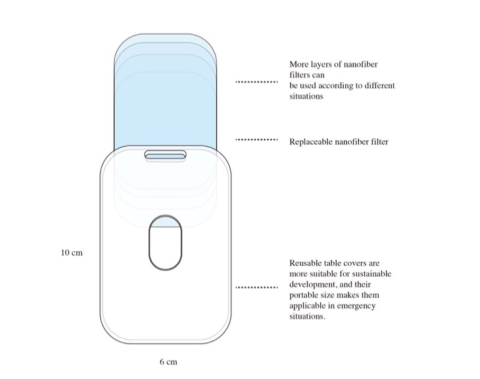
Figure 2: Dimensions and functional features of the portable nanofiber membrane water purification device.
Plastic Protective Layers: Provide external support and mechanical protection, preventing damage during transport and use.
Nanofiber Membrane Layers: Act as the core filtration layer, featuring high porosity and fine filtration precision for effective contaminant removal.
Multi-Layer Design: Enhances filtration performance and mechanical stability, allowing adaptability to different water quality and usage scenarios.
This diagram presents the overall dimensions (10 cm length × 6 cm width) and modular design of the device.
Expandable Nanofiber Filter Layers: The number of nanofiber membrane layers can be adjusted according to different water quality and usage scenarios to optimize filtration efficiency.
Replaceable Nanofiber Filter: The filter membranes are detachable and replaceable, extending the device’s lifespan and reducing long-term operational costs.
Feasibility and Conceptual Design of Portable Nanofiber Membrane 19
Portability and Reusability: The compact design makes the device easy to carry, suitable for emergency rescue, outdoor activities, and resource- limited areas, while supporting sustainable development principles.
Theoretical Parameter Optimization To ensure stable filtration performance under various operating conditions, this study optimizes key parameters based on existing literature data and theoretical analysis. First, regarding porosity, theoretically, higher porosity in nanofiber membranes leads to greater water flux and enhanced filtration efficiency. However, excessively high porosity may increase the risk of contaminant penetration. Research indicates that a porosity of 80% strikes the optimal balance between high water flux and effective filtration (Ji et al., 2023). Second, membrane thickness directly affects filtration precision and mechanical strength. A membrane that is too thin risks breaking under high pressure, while one that is too thick may result in increased water flow resistance. According to existing studies, a membrane thickness between 50–100 µm achieves the best balance between filtration efficiency and mechanical stability (Kamrani & Nosrati, 2018). Additionally, filtration area is a critical parameter influencing filtration speed and water treatment capacity. Considering the limitations of portable devices, a filtration area controlled between 50–100 cm2 is deemed appropriate, offering a good balance between portability and purification efficiency (Ma & Hsiao, 2018). In terms of material selection, the filtration layer is made from high-efficiency nanofiber membranes to ensure effective contaminant removal; the support layer uses mechanically robust materials, such as polyester fibers, to enhance overall structural stability; and the protective layer is constructed from resilient elastic materials to prevent physical damage during transport and use. Through the comprehensive optimization of these parameters, the filtration tablet achieves a theoretical balance in key performance indicators, including pollutant removal efficiency, water flux, and mechanical stability, providing reliable technical support for practical applications.
Feasibility Verification Based on Literature Data Since this study did not involve the creation of physical prototypes or experimental validation, the feasibility analysis relies mainly on existing literature data and theoretical models. In terms of contaminant removal, nanofiber membranes have shown excellent performance in filtering out bacteria, particles, and organic pollutants. Research indicates that under different water conditions, nanofiber membranes can achieve a pollutant removal rate of up to 99%, demonstrating strong water purification capabilities (Ji et al., 2023; Kamrani & Nosrati, 2018).
For water flow and resistance, theoretical analysis suggests that nanofiber membranes with high porosity can filter larger amounts of water in less time while maintaining low water resistance. This makes them highly efficient in emergency situations, providing clean drinking water quickly and effectively (Ma & Hsiao, 2018). When it comes to mechanical strength, the support and protective layers play an essential role in improving the durability and
structural stability of nanofiber membranes. This reduces the risk of damage during use, ensuring consistent performance over time (Balanay et al., 2011). Practical examples have shown that nanofiber membrane technology has already been successfully used in emergency drinking water systems. These cases highlight its advantages in energy efficiency, effective filtration, and portability, proving its potential for real-world applications (Wakejo et al., 2023). Overall, supported by data from previous studies and theoretical models, the portable nanofiber membrane water purification tablet presented in this study demonstrates promising feasibility in key performance areas, including contaminant removal efficiency, water flow rate, and structural durability. These findings provide valuable theoretical support and data validation for its future practical use. Based on the data and parameter optimization discussed above, the design of this portable nanofiber membrane water purification tablet shows strong theoretical feasibility and meets expectations across several key performance indicators.
TECHNICAL COMPARISON AND SCENARIO ANALYSIS Technical Parameter Comparison
In water purification technology, activated carbon, reverse osmosis (RO), and nanofiber membranes are three commonly used methods, each with its own strengths and weaknesses. Activated carbon relies on its large surface area and strong adsorption capacity, making it effective at removing organic pollutants and unpleasant odors. However, it performs poorly in removing inorganic salts and heavy metals, and its effectiveness decreases once it becomes saturated, requiring frequent replacement (Seyedein et al., 2018). Reverse osmosis (RO) technology uses high pressure to force water through a semi-permeable membrane, efficiently removing organic pollutants, inorganic salts, and heavy metals, resulting in high water purity. However, this method consumes a large amount of energy, involves high costs, and has a low water recovery rate, which limits its application in portable water purification systems (Mayer et al., 2022). In contrast, nanofiber membrane technology offers several advantages. Its high porosity and large surface area allow it to maintain high water flow rates while effectively removing bacteria, particles, and organic contaminants. Additionally, nanofiber membranes are energy-efficient, lightweight, and customizable, making them particularly suitable for portable water purification systems (Ji et al., 2023; Kamrani & Nosrati, 2018).
Overall, when considering factors such as portability, energy efficiency, and filtration performance, nanofiber membrane technology stands out as a more suitable choice for emergency water purification in extreme environments.
Feasibility and Conceptual Design of Portable Nanofiber Membrane 21
Scenario Analysis The portable nanofiber membrane water purification tablet, with its lightweight design, efficient filtration, and ease of deployment, demonstrates significant potential across various scenarios.
Post-Disaster Relief In natural disasters like earthquakes and floods, water supply systems are often compromised, creating an urgent need for safe drinking water. The tablet’s rapid deployment and effective filtration capabilities help prevent waterborne diseases in affected areas (Wakejo et al., 2023).
Outdoor Emergencies For outdoor adventures, field research, and military missions, the tablet’s lightweight and portable design make it an ideal tool for quickly providing clean drinking water without requiring complex equipment.
Resource-Limited Areas In remote or underdeveloped regions with insufficient water treatment infrastructure, the tablet offers a low-cost, easily deployable solution to improve water quality and reduce health risks associated with contaminated water sources.
Short-Term Emergency Reserves During sudden water contamination events or supply disruptions, the tablet serves as an effective emergency reserve, ensuring a temporary supply of safe drinking water for households or communities.
This versatile applicability highlights the adaptability and practicality of nanofiber membrane water purification technology in addressing global water safety challenges across diverse environments.
CONCLUSION
This study proposes a portable water purification tablet based on nanofiber membrane materials to address drinking water safety challenges in extreme environments, with practical applications in post-disaster relief, outdoor emergencies, resource-limited areas, and short-term emergency reserves. Through theoretical design and parameter optimization, factors such as porosity, membrane thickness, filtration area, and material selection were analyzed to balance filtration efficiency, water flux stability, and mechanical strength.
Backed by literature data and theoretical models, nanofiber membranes demonstrate up to 99% pollutant removal efficiency, low water resistance, and structural stability, while maintaining low energy consumption and portability. This enables rapid deployment for safe drinking water in demanding conditions. The three-layer structural design—comprising a filtration layer, support layer, and protective layer—enhances filtration performance and durability, addressing the mechanical weaknesses of traditional nanofiber membranes. This innovation bridges gaps in portability,
rapid deployment, and energy efficiency, making it suitable for both emergency response and daily water purification needs. Future research should focus on improving mechanical strength, degradability, and cost efficiency. Field tests and smart sensor integration will enhance reliability and monitoring capabilities.
In conclusion, this portable nanofiber membrane water purification tablet offers a lightweight, efficient, and cost-effective solution for global water safety challenges, with the potential to make a significant impact in emergency scenarios and resource-limited environments.
REFERENCES
Ahuchaogu, A. A., Chukwu, O. J., Obike, A. I., Igara, C. E., Chidi, N. I., & Echeme, J. O. (2018) ‘Reverse Osmosis Technology, its Applications and Nano-Enabled Membrane’, International Journal of Advanced Research in Chemical Science, 5, pp. 20–26. Balanay, J. A., Crawford, S. A., & Lungu, C. T. (2011) ‘Comparison of toluene
adsorption among granular activated carbon and different types of activated carbon fibers (ACFs)’, Journal of Occupational and Environmental Hygiene, 8(10), pp. 573–579. doi:10.1080/15459624.2011.613346. Balanay, J. A., Floyd, E. L., & Lungu, C. T. (2015) ‘Breakthrough curves for toluene adsorption on different types of activated carbon fibers: Application in respiratory protection’, The Annals of Occupational Hygiene, 59(4), pp. 481–490. doi:10.1093/annhyg/meu105. Chao, K., Rozenbaoum, E., & Hyung, H. (2022) ‘Design strategies for reducing energy and total costs for large-scale seawater reverse osmosis plants’, Water e-Journal. Ji, K., Liu, C., He, H., Mao, X., Wei, L., Wang, H., Zhang, M., Shen, Y., Sun, R.,
& Zhou, F. (2023) ‘Research Progress of Water Treatment Technology Based on Nanofiber Membranes’, Polymers, 15(3), p. 741. doi:10.3390/polym15030741. Kamrani, H., & Nosrati, A. (2018) ‘Fabrication of nanofiber filtration membranes using polyethylene terephthalate (PET): A review’, Journal of Membrane Science and Technology, 8(02). Ma, H., & Hsiao, B. S. (2018) ‘Current Advances on Nanofiber Membranes for
Water Purification Applications’. Madhusha, C., Jayasundara, T. B., Munaweera, I., Perera, C., Wijesinghe, G. K., Weerasekera, M., Sandaruwan, C., Meiyazhagan, A., Robles Hernández, F. C., Ajayan, P. M., & Kottegoda, N. (2023) ‘Synthesis and structural characterization of copper nanoparticles doped activated carbon derived from coconut coir for drinking water purification’, Materials Today Chemistry. Rosdian, R., Ikbal, I., & Kekka, A. (2022) ‘Fulfillment of the Right to Clean Water
for Post-Disaster Communities in Gumbasa District, Sigi Regency’, Administrative and Environmental Law Review. Seyedein Ghannad, S. M. R., & Lotfollahi, M. N. (2018) ‘Preparation of granular activated carbons from composite of powder activated carbon and modified β-zeolite and application to heavy metals removal’, Water Science and Technology: A Journal of the International Association on Water Pollution Research, 77(5–6), pp. 1591–1601. doi:10.2166/wst.2018.036. Sheel, V., Kotwal, A., Dumka, N., Sharma, V., Kumar, R., & Tyagi, V. (2024) ‘Water
as a social determinant of health: Bringing policies into action’, Journal of Global Health Reports.
Feasibility and Conceptual Design of Portable Nanofiber Membrane 23
Wakejo, W. K., Meshesha, B. T., Kang, J., & Demesa, A. G. (2023) ‘Bamboo sawdustderived high surface area activated carbon for remarkable removal of paracetamol from aqueous solution: Sorption kinetics, isotherm, thermodynamics, and regeneration studies’, Water Practice & Technology. Water Quality Association. (2019) 2019 Water Quality Industry Statistics. Water
Quality Association. Available at: https://www.wqa.org.
LISTED IN THE AHFE DIGITAL BOOKSTORE CATALOGUE
Explore the complete digital volume
Sustainable Construction in the Era of the Fourth Industrial Revolution
Read this individual research paper free through the original publisher, or explore the full digital proceedings book.
ISBN 978-1-964867-63-2
Explore this ISBN in the AHFE Bookstore ↗Listed in the July 2026 bookstore catalogue; search by ISBN to confirm current availability · Digital book purchase optional