Jeffrey Mahachi (2025). Long-term performance assessment of houses built with Innovative Building Technologies: Insights from housing innovation hubs in South Africa. In: Sustainable Construction in the Era of the Fourth Industrial Revolution. AHFE Open Access, vol. 187, pp. 37–46. https://doi.org/10.54941/ahfe1006558
The durability and resilience of houses constructed with Innovative Building Technologies (IBTs) play a pivotal role in ensuring sustainable and cost-effective housing solutions. This study evaluates the long-term performance of houses built approximately 20 years ago at housing innovation hubs in South Africa. These houses, constructed using various IBTs such as prefabricated modular systems, Sandwich Insulated Panels (SIPs), and compressed earth blocks, were deliberately left unmaintained in some cases to assess their natural deterioration over time. This research aims to analyse these technologies' performance under real-world conditions and provide insights into their viability as sustainable housing solutions. Key objectives include identifying critical performance attributes, evaluating maintenance's role, and highlighting certification's relevance in ensuring long-term resilience. The findings underscore the importance of Agrѐment South Africa as a certification authority. Certified technologies demonstrated superior resilience, while uncertified technologies exhibited significant deterioration, often reaching unacceptable levels. Environmental factors such as temperature variations, humidity, and moisture penetration emerged as critical determinants of long-term performance, affecting structural integrity and habitability. This study recommends integrating long-term performance evaluations into the certification process for IBTs, emphasizing attributes such as resistance to environmental stresses and lifecycle durability. Furthermore, it advocates for regular monitoring and maintenance protocols to enhance the longevity of innovative housing solutions. The findings also highlight the need to incorporate lessons from these performance assessments into the design and implementation of future housing technologies to ensure sustainable and resilient built environments. Examining the successes and shortcomings of existing IBTs, this research provides valuable insights for policymakers, industry practitioners, and researchers, contributing to the advancement of sustainable housing practices in South Africa and beyond.
resilient housing. Characterized by advancements such as prefabricated modular systems, Sandwich Insulated Panels (SIPs), and compressed earth blocks, these technologies offer the potential to improve construction efficiency, reduce environmental impact, and provide cost-effective alternatives to traditional building methods. In South Africa, adopting IBTs has gained significant traction, supported by initiatives like housing innovation hubs, which serve as testbeds for these technologies’ implementation and development (Goebel, 2007). Despite the promise of IBTs, their long-term performance under real-world conditions remains a critical area of inquiry, particularly in low-maintenance or maintenance- deprived environments often characteristic of affordable housing projects.
The durability and resilience of IBTs directly influence their viability as sustainable housing solutions (Conradie, 2014; Oyedele et al., 2019; Dube et al., 2019; Chikara et al., 2019; Ede and Ugwuoke, 2020). Long- term performance assessments provide valuable insights into how these technologies withstand environmental stresses, usage conditions, and ageing over time. Such evaluations are essential for ensuring that IBTs fulfil their promise of providing durable and habitable spaces, particularly in the context of South Africa’s varied climatic conditions, ranging from arid regions to areas prone to high humidity. Furthermore, the role of certification in validating the quality and resilience of these technologies is underscored, as certified IBTs are expected to meet stringent performance standards and offer enhanced reliability. However, gaps in understanding how certified and uncertified IBTs compare in long-term performance present challenges to stakeholders, including policymakers, practitioners, and researchers, in confidently adopting these solutions at scale.
This study investigates the long-term performance of IBT houses constructed approximately 20 years ago at two housing innovation hubs in South Africa: the Eric Molobi Housing Innovation Hub in Pretoria and the Wellington Housing Innovation Hub in Cape Town. The research explores the performance of these houses, including those deliberately left unmaintained to assess natural deterioration, to address critical questions about the durability, maintenance requirements, and resilience of IBTs. Its objectives include identifying key performance attributes, evaluating how maintenance contributes to extending the lifespan of IBT structures and emphasizing the importance of certification in ensuring long-term resilience. The findings seek to provide evidence-based insights into the strengths and limitations of IBTs, informing sustainable housing practices and supporting their refinement and wider adoption in South Africa and beyond.
LITERATURE REVIEW
Innovative Building Technologies (IBTs): Definitions and Examples Innovative Building Technologies (IBTs) are Modern Methods of Construction (MMC) and materials that offer enhanced efficiency, sustainability, and cost-effectiveness compared to traditional construction practices (Gitau, 2020). These technologies encompass a diverse range of systems, including prefabricated modular units, lightweight steel frames
Long-Term Performance Assessment of Houses Built 39
(Mahachi, 2013), Sandwich Insulated Panels (SIPs), compressed earth blocks, 3D-printed concrete structures and advanced concrete materials (Alabi & Mahachi, 2021; 2022). IBTs are often designed to address challenges such as high construction costs, environmental degradation, and the need for rapid housing delivery (Conradie, 2014; NHBRC, 2024; South African Government, 2024).
Prefabricated modular systems, for example, involve factory-assembled building components transported to construction sites for assembly. This approach minimizes on-site labour, reduces construction timelines, and ensures high-quality finishes. SIPs, comprising two layers of structural board and an insulating foam core, provide excellent thermal insulation, reducing energy consumption in residential and commercial buildings. Compressed earth blocks, on the other hand, leverage locally available soil stabilized with small amounts of cement or lime, creating eco-friendly and affordable construction materials.
Adopting IBTs aligns with global efforts to enhance construction sustainability and efficiency. In South Africa, these technologies are increasingly recognized as essential tools for meeting the demand for affordable housing while addressing environmental challenges. However, despite their potential, the long-term performance of IBTs under real- world conditions remains underexplored, particularly in the context of low-maintenance housing environments.
Housing Innovation Hubs: Role and Contributions in South Africa Housing innovation hubs serve as critical platforms for testing, showcasing, and refining IBTs in South Africa. These hubs provide controlled environments to assess the performance of various construction technologies under simulated or real-world conditions. Notable examples include the Eric Molobi Housing Innovation Hub in Pretoria and the Wellington Housing Innovation Hub in Cape Town. These facilities are instrumental in evaluating IBTs’ suitability for addressing South Africa’s housing challenges, such as rapid urbanization, limited resources, and varying climatic conditions.
The Eric Molobi Housing Innovation Hub, established by the National Home Builders Registration Council (NHBRC), is a flagship centre for promoting innovative construction practices (NHBRC, 2024). It enables stakeholders to study the structural integrity, thermal performance, and durability of IBTs over time. Similarly, the Wellington Housing Innovation Hub has provided valuable insights into the practical implementation of prefabricated and modular construction systems, emphasizing affordability and sustainability.
These hubs also facilitate collaboration among policymakers, industry practitioners, and researchers. Through workshops, demonstrations, and pilot projects, they contribute to the knowledge base on IBTs, fostering confidence in adopting these technologies for large-scale housing projects. Despite their significant contributions, challenges such as limited funding and inadequate long-term monitoring hinder the comprehensive assessment of IBTs’ performance in South Africa.
40 Mahachi
Challenges and Opportunities in Long-Term Performance of IBTs The long-term performance of IBTs is influenced by various factors, including environmental conditions, material quality, construction practices, and maintenance regimes. One of the primary challenges is the lack of longitudinal studies that track the deterioration and resilience of IBTs over decades. This gap in knowledge often results in scepticism among stakeholders regarding the durability and reliability of these technologies (Mehlomakulu & Marais, 1999; Zunguzane et al., 2012; Nkado & Mbachu, 2003). Environmental factors such as temperature fluctuations, humidity, and moisture penetration significantly affect IBTs (Mahachi, 2019). For example, Sandwich Insulated Panels may experience delamination or loss of thermal efficiency in humid climates. Similarly, compressed earth blocks may deteriorate if not adequately sealed against moisture ingress. Maintenance is another critical determinant of performance. Structures left unmaintained are prone to accelerated degradation, highlighting the need for regular inspections and repairs to ensure longevity.
Despite these challenges, IBTs offer substantial opportunities for addressing South Africa’s housing deficit (Mahachi, 2019). Their rapid construction timelines, reduced material wastage, and potential for energy efficiency make them attractive alternatives to conventional methods. Furthermore, integrating digital tools such as Building Information Modelling (BIM) and advanced manufacturing techniques, including 3D printing, can enhance the precision and scalability of IBTs, driving innovation in the construction sector (Mahachi, 2021).
Certification and Regulatory Frameworks Certification plays a vital role in ensuring the quality, safety, and long-term performance of IBTs. In South Africa, Agrèment South Africa is the leading certification authority for innovative construction products and systems (Agrèment, 2015). The organization evaluates IBTs against stringent criteria, including structural integrity, thermal performance, water resistance, and fire safety, providing stakeholders with assurance regarding their reliability.
Certified IBTs typically demonstrate superior resilience and durability compared to uncertified alternatives. For instance, Agrèment-certified prefabricated systems are more likely to withstand environmental stresses and maintain their structural integrity over time. Certification facilitates market acceptance and compliance with National Building regulations and South African National Building Standards (SANS 10400, 2012).
However, the certification process can be time-consuming and resource- intensive, posing barriers for small-scale innovators. To address this, Agrèment South Africa has introduced initiatives to streamline the evaluation process and promote the adoption of certified technologies in affordable housing projects. The organization also advocates for incorporating long- term performance assessments into the certification framework, ensuring IBTs meet durability and resilience benchmarks under real-world conditions.
Long-Term Performance Assessment of Houses Built 41
RESEARCH METHODOLOGY This section outlines the methodology employed in this research to assess the long-term performance of houses constructed using Innovative Building Technologies (IBTs). The methodology is structured around a case study approach, involving the analysis of two housing innovation hubs in South Africa—the Eric Molobi Housing Innovation Hub and the Wellington Housing Innovation Hub. The methodology also includes data collection and analysis strategies designed to comprehensively evaluate the structural and functional performance of IBTs.
Case Study Approach This research employs a case study approach, which is well-suited for examining complex, real-world phenomena within their natural context. Focusing on two distinct housing innovation hubs facilitates an in-depth exploration of IBTs under diverse environmental, social, and maintenance conditions. This method enables a comparative analysis of certified and non-certified technologies, offering valuable insights into their long-term durability and sustainability.
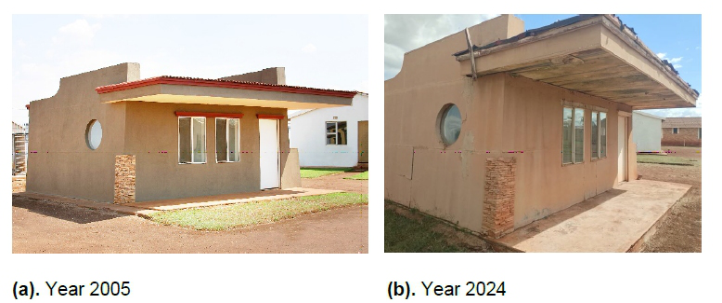
Selection of Study Sites: Eric Molobi Housing Innovation Hub The Eric Molobi Housing Innovation Hub, established in 2005 at Thorntree View (Soshanguve A) in Pretoria, South Africa, represents a collaborative effort by the Department of Housing, the National Home Builders Registration Council (NHBRC), and the financial institution ABSA Bank. The hub was developed to address challenges in the housing sector, including improving housing quality, affordability, and delivery efficiency. A typical example of a house built at the hub is shown in Figure 1.
Figure 1: IBT house built at Eric Molobi Housing Innovation Hub (source: author).
Key objectives of the Eric Molobi Housing Innovation Hub include:
1. Understanding Customer Needs: The hub aims to identify customer preferences and needs, enabling the development of innovative housing solutions tailored to modern buyers and renters.
42 Mahachi
2. Adopting New Technologies: The hub facilitates the adoption of advanced construction technologies that enhance efficiency, quality, and sustainability. 3. Improving Sustainability: Research at the hub explores methods to create energy-efficient and environmentally sustainable housing. 4. Enhancing Asset Management: The hub provides insights into building performance and identifies areas for improvement, contributing to optimized property management. 5. Stimulating Economic Growth: The hub promotes economic growth in the housing industry and accelerates the delivery of houses to address social development goals.
The hub features 19 different innovative housing systems, including government low-income and affordable houses constructed using non- standardized materials and methods. These systems include both certified and non-certified IBTs, enabling comparative performance analysis.
Selection of Study Sites: Wellington Housing Innovation Hub The Wellington Housing Innovation Hub, located in the Western Cape, shares objectives similar to those of the Eric Molobi Housing Innovation Hub but strongly emphasises energy efficiency. With 25 houses, this hub showcases IBTs designed to reduce energy consumption and promote sustainability. Houses constructed at this hub provide a comparative perspective, particularly in evaluating the role of energy-efficient technologies in enhancing long-term performance.
Data Collection Methods and Analysis The research employs multiple data collection methods to comprehensively evaluate the IBTs. These include field assessments, reviewing certification records and maintenance histories, and a desktop study of relevant literature.
This research utilizes a multifaceted approach to evaluate IBTs, incorporating field assessments, certification record reviews, maintenance histories, and a desktop study of relevant literature. Field visits at the Eric Molobi and Wellington Housing Innovation Hubs assessed housing conditions, focusing on structural integrity, durability, and environmental impact. At Eric Molobi, houses left unmaintained revealed natural deterioration over time, while occupied houses at Wellington demonstrated the role of routine maintenance in enhancing durability.
Certification records from Agrèment South Africa and NHBRC provided insights into performance benchmarks and maintenance histories, highlighting the impact of certification on IBT longevity. A desktop review of global and local literature on IBTs and Modern Methods of Construction (MMC) contextualized findings, examining environmental resilience, certification standards, and best practices in sustainable housing.
Data analysis combined qualitative and quantitative methods, including comparative performance evaluations, thematic categorization of degradation patterns, and correlations between environmental factors and structural wear. These findings informed recommendations for improving
Long-Term Performance Assessment of Houses Built 43
certification processes, integrating long-term performance assessments, and optimizing maintenance strategies to enhance IBT sustainability.
RESULTS AND DISCUSSIONS Overview of Housing Systems
The Innovation Hubs are a platform to showcase and evaluate innovative building systems for low-cost housing. Over time, the hubs have accumulated various systems to address critical housing needs, including durability, thermal efficiency, cost-effectiveness, and user acceptance. These systems can be broadly categorized into three key groups based on material use and performance attributes: lightweight panel systems, hybrid and reinforced wall systems, and alternative construction methods.
1) Lightweight Panel Systems Lightweight panel systems focus on speed of construction, thermal insulation, and ease of assembly. These systems often incorporate materials such as expanded polystyrene (EPS), polyurethane, and prefabricated panels. The key attributes of these systems include:
High thermal efficiency, which reduces energy demands for heating and cooling;
Lightweight construction, making them suitable for areas with challenging logistics; and
Agrèment certification for many systems, ensuring compliance with durability and performance standards.
However, maintenance is critical to ensure longevity, as issues such as condensation can arise if installations are not done correctly.
2) Hybrid and Reinforced Wall Systems This group blends traditional and modern materials to balance structural strength and affordability. Common features include the use of:
Reinforced concrete infill within modular or interlocking systems, enhancing load-bearing capacity;
Steel or timber frames combined with eco-friendly materials such as sandbags or lightweight mortar; and
Durable finishes, including plaster or cementitious coatings, providing a robust, solid feel preferred by many beneficiaries.
These systems demonstrate superior performance in terms of durability, often meeting the 50-year design life expectancy, provided regular maintenance is undertaken.
3) Alternative Construction Methods Non-conventional systems emphasize innovation in material use and construction techniques, often leveraging localized resources. These include:
Interlocking blocks made from unconventional materials, such as fibre- reinforced polymers or soil stabilized.
Modular systems designed for rapid assembly, ideal for emergency or temporary housing solutions.
44 Mahachi
Experimental systems using arched steel tubing or dry-stacking methods to reduce dependency on traditional mortars and adhesives.
While these methods offer cost and resource efficiency, they frequently face certification and long-term user acceptance challenges.
Key Observations and Findings The following key observations were made:
1. Durability and Certification: Agrèment-certified systems consistently outperform uncertified alternatives, particularly in structural integrity and resistance to environmental factors. Certified systems show greater user acceptance due to their perceived reliability and compliance with industry standards. 2. User Preferences: Beneficiaries often prefer systems that mimic traditional masonry or concrete finishes, which are associated with stability and durability. Systems that lack this aesthetic appeal are less likely to be adopted, even when technically superior. 3. Maintenance Requirements: Lightweight and alternative systems demand meticulous installation and regular upkeep. Failures in these areas often lead to issues such as condensation, structural degradation, and reduced lifespan.
Lessons Learned From Case Studies and Implications for Sustainable Housing Practices The assessment of the long-term performance of houses constructed using innovative building technologies (IBTs) reveals several important lessons with significant implications for sustainable housing practices and policies. One key finding is that integrating advanced construction techniques can significantly enhance the sustainability of housing projects. These technologies offer advantages in terms of reducing construction time, minimizing material waste, and lowering overall costs, all while ensuring energy efficiency and reducing the environmental footprint of housing development.
Furthermore, the research underscores the importance of collaboration between industry stakeholders, including government agencies, technology developers, and academic institutions, in fostering the adoption of IBTs. Housing innovation hubs, such as those supported by the NHBRC and financial institutions, demonstrate the value of multi-sector partnerships in promoting the diffusion of sustainable technologies. These hubs not only facilitate the practical implementation of new construction methods but also provide a platform for knowledge transfer and capacity building, essential for the long-term success of these technologies in the housing sector.
The study also highlights the critical need for policies that support the widespread adoption of IBTs while addressing the socio-economic challenges of the populations served by these innovations. Housing policies must incentivize using sustainable technologies, ensuring they remain affordable and accessible to low- and middle-income households. At the same time, these
Long-Term Performance Assessment of Houses Built 45
policies should promote resilience to climate change, integrating strategies that improve the durability and energy efficiency of homes built with IBTs.
Finally, the long-term success of houses built with IBTs depends heavily on developing a skilled workforce capable of effectively implementing these technologies. This requires establishing robust training and certification programs tailored to the needs of the local construction industry. Training initiatives should focus on equipping professionals with the knowledge and practical skills necessary to navigate the complexities of IBT implementation, ensuring that these innovations deliver on their promise of sustainability.
The lessons learned from this assessment underscore the critical role of technological innovation, collaborative efforts, policy support, and workforce development in sustaining the long-term performance of homes built with IBTs. These findings emphasize that sustainable housing practices and policies require a holistic approach, one that integrates technological, economic, and social considerations to achieve durable, environmentally responsible, and economically viable housing solutions.
CONCLUSION AND RECOMMENDATIONS The findings from this study underline the critical need to enhance the certification process for Innovative Building Technologies (IBTs) to ensure their long-term resilience and suitability as sustainable housing solutions. Certified IBTs demonstrated markedly better performance than uncertified alternatives, emphasizing the role of Agrèment South Africa in safeguarding quality and durability. To build on this, certification protocols should integrate long-term performance assessments as a core component, focusing on key attributes such as resistance to environmental stresses and lifecycle durability. Such integration would enable certification authorities to evaluate technologies under conditions that simulate real-world use, ensuring that only robust and resilient systems gain market acceptance. This process must also include feedback mechanisms incorporating post-certification performance data, fostering an adaptive approach that aligns with evolving environmental and societal needs.
The study underscores the importance of embedding long-term performance considerations into IBT design and establishing comprehensive monitoring and maintenance protocols. Designing IBTs with a lifecycle perspective is crucial, ensuring resistance to climatic variations, moisture penetration, and other environmental factors that affect structural integrity. Digital monitoring tools and standardized maintenance guidelines would enable stakeholders to address performance issues proactively, extending the lifespan of IBT structures. These findings should inform policy and practice, driving revisions to building codes and the creation of incentives that encourage the adoption of resilient and sustainable IBTs. Aligning certification, design, maintenance, and policy frameworks with the insights from this study can establish a solid foundation for advancing innovative and sustainable housing solutions in South Africa and beyond.
46 Mahachi
REFERENCES
Agrèment South Africa Act. (2015), Government Gazette 41186, 20 October 2017, Pretoria, South Africa. Alabi, S. A. & Mahachi, J. (2021). On the development of sustainable and strong
concrete. Materials Today: Proceedings. Vol. 38, pp. 918–922. Alabi, S. A. & Mahachi, J. (2022). Mechanical properties of sustainable concrete made with ceramic and sandcrete block wastes. Materials Today: Proceedings. Vol. 62, pp. S44–S48. Chikara, H., Sharma, S. K., & Mehta, S. (2019). Indigenous Knowledge Systems for
Sustainable Building Practices in India. International Journal of Civil Engineering and Technology, 10(5), 655–663 Conradie, D. C. U. (2014). The performance of Innovative Building Technologies in South Africa’s climatic zones. In Green Building Handbook, The Essential Guide, Vol. 6. Dube, A., Adeyeye, O., & Ogunbiyi, O. (2019). Sustainability of Indigenous Building
Materials and Techniques in the Construction of Low-Cost Houses in South Africa. Journal of Building Engineering, 24, 100758. Ede, A., Nwoji, C., & Ugwuoke, F. (2020). Indigenous Knowledge and Sustainable Housing Construction in Nigeria: A Review. International Journal of Engineering and Technology, 12(2), 172–179. Gitau, M. W., Kibwage, J. K., & Rukwaro, R. W. (2020). A Review of Indigenous Building Techniques and Materials in Kenya. International Journal of Architecture, Engineering and Construction, 9(2), 118–132. Goebel, A. (2007). Sustainable urban development? Low-cost housing challenges in
South Africa. Habitat International, 31(3/4), pp. 291–302. Mahachi, J. (2013). Design of structural steelwork to SANS 10162. Xsi-tek. South Africa. Mahachi, J. (2019). Challenges in implementing Innovative Building Technologies:
Housing case studies in South Africa, Sustainable Urbanisation of the South African Sweden Universities Forum (SASUF) 2019 Symposium, pp. 240–253. Mahachi, J. (2021). Innovative Building Technologies 4.0: Fast-tracking housing delivery through 3D printing, South African Journal of Science, Vol. 117, Issue 11–12, pp. 1–5. Mehlomakulu, T. & Marais, L. (1999). Dweller perceptions of public and self-
built houses: Some evidence from Mangaung (Bloemfontein). Journal of Family Ecology and Consumer Sciences, 27(2), pp. 92–102. NHBRC. (2024). National Home Builders Registration Council, 20 November 2024, www.nhbrc.org.za. [Accessed 20 November 2024]. Nkado, R., & Mbachu, J. (2003). Comparative Analysis of the Performance of
Built Environment Professionals in Satisfying Clients Needs and Requirements. Construction Innovation and Global Competitiveness, – The Organisation and Management of Construction, pp. 408–425. Oyedele, L., Owolabi, H. A., Ajayi, S. O., & Akinade, O. O. (2020). Sustainable Building Materials and Technologies in Nigeria: A Review. Journal of Sustainable Development, 13(3), 66–82. SANS 10400. (2012): The application of the National Building Regulations, SABS,
Pretoria, Republic of South Africa. South African Government. (2024). Department of Human Settlements, https://ww w.dhs.gov.za. [Accessed 10 November 2024]. Zunguzane, N., Smallwood, J. & Emuze, F. (2012). Perceptions of the quality of low-
income houses in South Africa: Defects and their causes. Acta Structilia, 2012: 19(1).
LISTED IN THE AHFE DIGITAL BOOKSTORE CATALOGUE
Explore the complete digital volume
Sustainable Construction in the Era of the Fourth Industrial Revolution
Read this individual research paper free through the original publisher, or explore the full digital proceedings book.
ISBN 978-1-964867-63-2
Explore this ISBN in the AHFE Bookstore ↗Listed in the July 2026 bookstore catalogue; search by ISBN to confirm current availability · Digital book purchase optional