Randal Mccarthy (2025). Human Factors Engineering and User-Focused Design Principles in the Design and Development of Device Combination Products for Special Patient Populations. In: Healthcare and Medical Devices. AHFE Open Access, vol. 171, pp. 39–49. https://doi.org/10.54941/ahfe1006189
Publisher statistics will load when you open Metrics.
AHFE OPEN ACCESS OPEN ACCESS CONFERENCE PROCEEDINGS PAPER
Human Factors Engineering and User-Focused Design Principles in the Design and Development of Device Combination Products for Special Patient Populations
The US Food and Drug Administration (US FDA) is a global leader in the regulation of device combination products and founded the Office of Combination Products (OCP) in December 2002, Combination products range from physical or chemical combinations to products packaged together and separately packaged products that need to be used together. The OCP has developed many policies and guidance, in particular, the US FDA Human Factor Guidance, the regulatory lens for this paper (1, 2). In the Combination Product Human Factors component, the US FDA, similar to other leading agencies, in Europe, China, Japan, and WHO, stresses the importance of usability studies in medical device combination product design to promote patient ease of use and error reduction. This guidance further emphasizes the physical safety features of the device when used by the end-user. Device design flaws can cause injury to the end user and prescription compliance to the patient. End-users refer to healthcare practitioners: pharmacists, nurses, doctors administering the drug to the patient, or the patient administering it to oneself (4, 5). The 2024 US FDA draft and China’s National Medical Products Administration (Final, Oct. 2024) guidance are closely aligned in requiring manufacturers to use user-focused design principles in the design and development of new drug delivery devices and recommend specifications based on rigorous usability research rather than technical properties of device components (6, 7). New pharmaceutical products are generally developed for most of the population and largely exclude the special segments of the population which include pediatrics, geriatrics, and people with debilitating diseases or specific physical impairments. (1) Geriatric Population: Impaired vision, cognitive decline, motor sensory challenges.(2) Pediatric Population: Pediatric drug delivery systems repurposed from adult formulations and devices are difficult to administer, leading to compliance issues. Off-label use, physician- directed and Adult devices are difficult to use in pediatrics, i.e. Nasal, meter-dose, and dry powder inhalers. (3) Patient disabilities such as hand dexterity, and color blindness.(4) Patients with specific illness or disability: Rheumatoid Arthritis - Did you test your device or container closure with an arthritic glove; Schizophrenia - Very sensitive to any change in drug product appearance or design. There is a case for including Human Factor Engineering-led user-centric design principles and usability research in designing and developing device combination products targeting these special patient populations (8, 9, 10, 11).References1. Lauritsen, K. J., & Nguyen, T. (2009). Combination products regulation at the FDA. Clinical Pharmacology & Therapeutics, 85(5), 468-470.2. Tian, J., Song, X., Wang, Y., Cheng, M., Lu, S., Xu, W. & Zhang, X. (2022). Regulatory perspectives of combination products. Bioactive Materials, 10, 492-503.3. Schillinger., D. C. (2004). The office of combination products: its roots, its creation, and its role. 4. Jackson, J. (2022, July 11). FDA “hit list” of highest priority medical device for human factor guidance, Blogarithmic Thinking, Starfish Medical.5. World Health Organization. (2022, July). WHO global model regulatory framework for medical devices including in vitro diagnostic medical devices6. Food and Drug Administration. 2024. , Guidance for Industry and FDA Staff. Purpose and Content of Use: Related Risk Analyses for Drugs, Biological Products, and Combination Products. Rockville: Food and Drug Administration.7. ClariMed. (2024, Aug). New NMPA Human Factors Guidelines for Medical Devices in China: What Manufacturers Need to Know.8. Espinoza, J., Shah, P., Nagendra, G., Bar-Cohen, Y., & Richmond, F. (2022). Pediatric medical device development and regulation: current state, barriers, and opportunities. Pediatrics, 149(5).9. Djukic et al., 2020). Training improves the handling of inhaler devices and reduces the severity of symptoms in geriatric patients suffering from chronic obstructive pulmonary disease.10. Schneider, A., Richard, P., Mueller, P., Jordi, C., Yovanoff, M., & Lange, J. (2021). User-Centric Approach to Specifying Technical Attributes of Drug Delivery Devices: Empirical Study of Autoinjector- Cap Removal Forces. Patient preference and adherence, 159-168.11. Randal McCarthy, R & Li, Z (2024, Feb.). The Role of Human Factors in the Design of Drug Delivery Systems to Optimize Patient and Heath Care Provider Use and Compliance, US Annual Medical Device Human Factors and Usability Engineering Conference, Boston.
The US FDA stresses the importance of human factors and usability studies in medical device combination product design to advance end-user and patient ease of use and ensure drug compliance through error reduction. This is
consistent with the guidance of leading global agencies in Europe, China, Japan, and the WHO. This guidance emphasizes the requirement for device functionality to meet the end-user’s needs. An additional responsibility is to reduce device design flaws, which can cause injury to the end user. End-users refer to healthcare practitioners: pharmacists, nurses, doctors administering the drug to the patient, or the patient administering it to themselves (Jackson, 2022; McCarthy, 2024; WHO, 2022). Within healthcare teams, the challenges in integrating human factor-driven usability studies are recognized due to the lack of human factor engineering expertise in the clinical setting and the difficulty of recruiting representative users (Kandaswamy et al., 2024).
New pharmaceutical products are generally developed for a target population and largely exclude the special segments of the population, including pediatrics, geriatrics, and people with debilitating diseases or specific physical impairments. Geriatric Population with impaired vision, cognitive decline, motor sensory challenges, Pediatric Population where drug delivery systems repurposed from those developed for adults, Off- label use, or physician-directed. Adult devices not designed for Pediatric users, such as nasal, meter-dose, and dry powder inhalers, are challenging for these patients. Patients with specific illnesses or disability were not considered in the device design; for example, the device was not tested with an arthritic glove. Patients with schizophrenia are very sensitive to any change in the drug product’s appearance or design. There is a case for including Human Factor Engineering-led user-focused design and usability research in the development of device combination products targeting special patient populations (Espinoza, 2022; Djukic et al., 2020; McCarthy & Li, 2024; Schneider et al., 2021).
New pharmaceutical product development and human factors usability studies typically focus on the target population as well as the target disease- patient population. However, they often exclude special and challenged segments of the population, including pediatrics, geriatrics, and individuals with debilitating diseases or specific physical impairments. An evaluation conducted by the author of representative health industry device developers and manufacturing institutions revealed that special populations are generally not included in design control studies unless they are the intended target users of the device and combination product. Some companies stop at caregivers and healthcare providers in the study, neglecting any input from patients, including healthy volunteers. This oversight adds complexity to device combination product design, reducing patient prescription adherence compliance and increasing healthcare costs.
Driven by the shift in the pipeline toward complex and emerging drug classes, peptides developed for targeted biological effects, monoclonal antibodies, growth factors, cytokines, and vaccines are primarily formulated as injectables, as oral formulations exhibit poor biocompatibility and pharmacokinetics. The healthcare institutional intravenous bag, manual setup, and self-administration with vial and syringe have evolved into the next generation of prefilled syringes, followed by autoinjectors, enhancing the
Human Factors Engineering and User-Focused Design Principles in the Design 41
patient experience through self-management outside traditional healthcare settings (DeGrazio, 2016; Jameel et al., 2020).
Human Factors Engineering can play a vital role in driving the development of innovative device combinations and product solutions designed for the needs of special population users (Lemke et al., 2020). The FDA defines human factors as “the application of knowledge about human behavior, abilities, limitations, and other characteristics of medical device users to the design of medical devices, including mechanical and software- driven user interfaces, systems, tasks, user documentation, and user training, to enhance and demonstrate safe and effective use (FDA, 2016).”
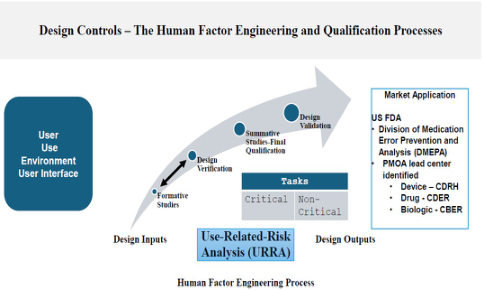
METHODOLOGY AND HUMAN FACTORS APPROACH Initially, companies submit a Primary Mode of Action (Primary for US FDA: Principal for EMA) to classify the mode of action (MOA) as a drug or device. US FDA Office of Combination Products (OCP) classifies products as drugs, devices, biological, or combination products and assigns an FDA centre based on Primary Mode of Action (PMOA) (21 CFR 4.2). Europe refers to this as the Principal Mode of Action, and China has a comparable approach to the US FDA (Pelayo et al., 2021).
PMOA is a preliminary step that identifies the drug or device as the primary mode of action. It is critical in defining user needs, intended uses, and the use environment.
Application for Design Controls occurs under the guidance of FDA 21 CFR 820.30, 2025. Design Controls in product and device development are mandatory cGMP methodologies that regulate the design process, ensure quality in the design, and integrate Human Factors and related expertise throughout the development process.
Human Factors Engineering and Use-Related Risk Analysis (URRA) are essential for continuous risk management. They are crucial early in the Design Control process to identify critical tasks and user needs, ultimately informing Design Inputs through Formative Human Factor studies, see Figure 1. The company is expected to initiate the URRA early in the product development
42 McCarthy
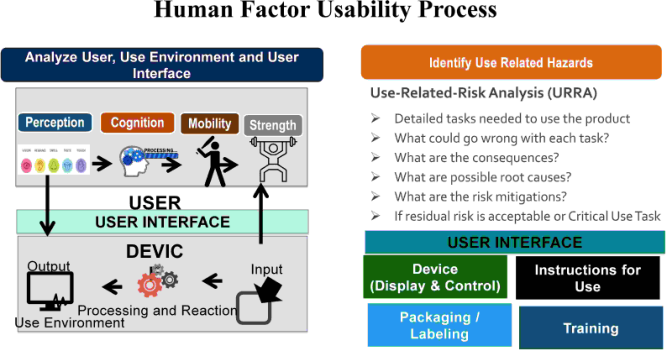
phase. The methodology that drives the design inputs and outputs is the interactive Human Factors and URRA approach, see Figure 2 (FDA, 2024).
The Human Factors Usability Process outlines a model that describes the interactions between a user and a device, the processes each undertakes, and the user interface connecting them. When developing the URRA, the sponsor should consider the product’s intended use, its users, and the contexts in which it will be utilized. The User refers to the patient’s caregiver or health care professional. The User Interface (UI) is defined uniformly across various guidelines, encompassing all points of contact between the user and the product. These hazards (or critical tasks) may arise from aspects of the user interface design that hinder the user’s ability to perceive, read, interpret, understand, or act on the information needed to operate the device effectively.
Figure 2: Human factors usability process (adapted from Randal McCarthy and Zhonghai (John) Li, The role of human factors in the design of drug delivery systems to optimize patient and health care provider use and compliance).
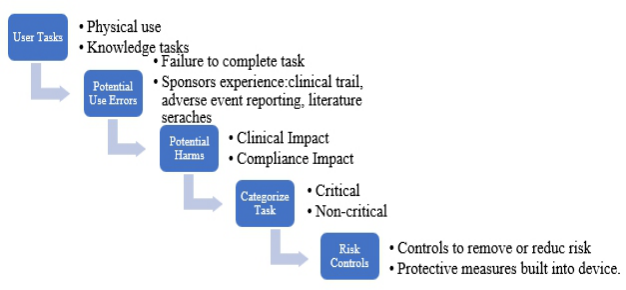
The patient populations must be identified and expanded beyond the normal healthy volunteers, targeting the treatment population to include special groups facing device challenges. The URRA is a risk tool, supported by failure mode and effects analysis (FMEA) and fault tree analysis (FTA) methods to recognize potential use-related hazards and corrective actions to mitigate those risks. In addition to identifying risks, they can be addressed through root cause analysis and establishing risk controls, or eliminated through improved product user interface design. A URRA encompasses each of the following steps see Figure 3.
The URRA identifies a list of tasks necessary for using the product, followed by an assessment of use errors and potential risks to patient care. Additionally, tasks are derived from the sponsors’ experiences with products during clinical trials, literature reviews, adverse event reports, and other sources. These tasks are categorized into critical and non-critical tasks based on the degree of potential harm, the impact on prescription drug compliance within the target treatment patient population, and the challenges faced
Human Factors Engineering and User-Focused Design Principles in the Design 43
by special patient populations. The risk controls to mitigate critical task use errors are evaluated for effectiveness through iterative formative studies followed by ongoing design verification, as shown in Figures 2 and 3 (FDA, 2024).
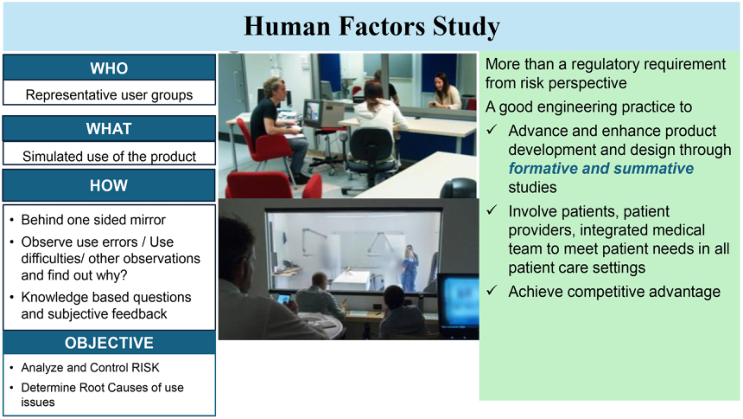
Figure 3: URRA stepwise process (adapted from US FDA draft guidance, July 2024).Figure 4: Human factors and usability studies (adapted from Randal McCarthy and Zhonghai (John) Li, The role of human factors in designing drug delivery systems to optimize patient and health care provider use and compliance).
Defined as human factors (HF) studies, defined by the US FDA or Usability Studies (EMA), are performed to challenge the device design concerning user interface identification through root cause analysis, direct observation, and feedback on use errors and use-related problems through observation of user groups and collecting feedback from the same user groups. This also involves knowledge task assessments to gauge users’ ability to understand the information in the packaging and labelling. Formative human factor studies with a prototype device and user interface (UI) are
44 McCarthy
performed iteratively during the product development process. The results of HF studies, including root cause analysis of use errors, play an important role in use error mitigation through design changes to the device’s or user interface’s design. These design changes are followed by design verification. Furthermore, summative and HF validation studies assess whether the final device can be used safely by intended users for the intended uses under expected use conditions, as shown in Figure 4. Studies are formal and structured (a) based on the degree of information needed for device design, (b) on the complexity of the design, and (c) on the target and special populations’ patient needs. Additionally, results from these patient-centered HF studies may be reviewed by the US Food and Drug Administration (FDA) in investigational and marketing applications (FDA, 2016; Linnane et al., 2024).
DESIGN CONTROLS, URRA’S, AND HUMAN FACTOR STUDY DEVICE DESIGN Design control and human factors applications for special populations begin with understanding the user, the user environment, and the user interface. The special patient populations discussed here are selected to illustrate how design controls and human factors studies influence the development of drug delivery systems in addressing user needs, particularly those of the target population being treated and patients with special needs.
PEDIATRIC RESPIRATORY DISEASE-ASTHMA The Pediatric population falls into the special needs category, with an increasing incidence of asthma and COPD, who experience difficulties in the use of inhalation devices, exacerbated by the complex device design, lack of appropriate instruction in the instructions for use, and inadequate patient-healthcare professional interface (CDC, 2023). After oral delivery systems, inhaler drug delivery systems are the most used, with a presumption by healthcare professionals that patients will follow simple instructions. In addition to complex device designs, an increasing number of inhaler devices have unique instructions. For example, a pMDI will require a slow inspiratory flow rate versus rapid inhalation required for a DPI device. For the Pediatric population, confusion across devices can lead to a reduction in drug inhalation (Fink et al., 2005).
AUTOIMMUNE DISEASE-RHEUMATOID ARTHRITIS Patients with autoimmune disease and related co-morbidities experience difficulties with the use of currently approved devices. Autoimmune diseases include Rheumatoid Arthritis, a systemic, inflammatory disease leading to hand deformities, pain, loss of hand function, and difficulty performing daily activities. Many patients experience a barrier to self-injection due to dexterity and pain linked to inflammation in the hands as well as reduced confidence in self-injection (Doma´nska et al., 2018; Poole, 2019).
Human Factors Engineering and User-Focused Design Principles in the Design 45
Table 1: Special population user needs.
Table available in the original PDF paper.
USER USER NEEDS
Disease Category
Special Populations
The target Disease States
Device Combination Products
General Challenge associated with the Device
Other challenges for the special patient population Respiratory Asthma, COPD
1. Coordination of actuation, with inhalation. 2. Inhalation only
For both devices, remember to hold inhalation for ten seconds.
Barriers to self-injection: poor dexterity, hand function, strength, and vision impairment
Rheumatoid arthritis leads to significant hand deformities and pain affecting hand function and daily activities.
APPLICATION OF DESIGN CONTROLS AND URRAS Case Study I
The pharmaceutical company, a leader in the treatment of asthma and chronic obstructive pulmonary disease, is considering expanding its treatment options from its traditional fast-acting bronchodilator to a formulation with a long-acting steroid, the mainstay of maintenance therapy for asthma. To date, the company’s inhaler experience has been with the pressurized metered dose inhaler (pMDI). The company is evaluating the benefits of a dry powder inhaler (DPI) versus a metered dose inhaler as the device delivery system, particularly in the more challenged Pediatric population. The challenge for pediatrics (also seen with geriatrics) is the coordination of actuation and inhalation in the pMDI. The DPI, which is breath-actuated, does not require coordination with actuation (Grant et al., 2015). The company acknowledges that having different devices can confuse this patient population. However, based on the preliminary evaluation of the user, the user environment, and the interface, the focus is shifting towards the DPI. They will assess the new device through the Design Control Process, as shown in Figure 1. The company is also aware that a significant number of patients (28–68%) do not use their pMDI and DPI inhalers properly to benefit from their prescribed medication and correlating to this, 39–67% of doctors, nurses, pharmacists, respiratory therapists are unable to describe the critical steps of inhaler use. Clinicians’ ability to use inhalers properly is usually 5–8 years beyond market introduction (Fink & Rubin, 2005). The company is also aware that switching devices can increase treatment non-compliance, requiring a detailed treatment plan for the patient and a significant focus on patient education by clinicians and pharmacists (Thomas et al., 2009). Table 2 describes this case study’s limited Use-Related Risk Analysis using a template adapted from the USFDA Draft Guidance, July 2024.
46 McCarthy
Table 2: Use-related risk analysis for a proposed dry powder inhaler.
Table available in the original PDF paper.
Risk Control Mitigations URRA Evaluation Methods
Potential Use Errors
Critical Task Y/N
Special Patient Population
Potential Hazards/Clinical Harm and Severity
Task No./User Task Description
Y Patient education is critical for the DPI
Error rates were shown to increase if patients were switched from one inhaler to another.
1. Switching from the traditional pMDI to a DPI inhaler
Pediatric Studies show that treatment is unsuccessful when devices are changed (Thomas et al., 2009)
URRA Formative StudiesVer- ification Post mitigation- evaluated in human factors validation study in use scenario, Figure 4
Reduce the drug available for inhalation.
Instructions for using DPI device at the appropriate literacy level for the patient. Training to include Proper orientation of the device, priming of the dose, and inhalation of the dose by breath actuation (Fink & Rubin, 2005) 2. Use of Spacers with DPIs.
The DPI device will not include spacers (Fink & Rubin, 2005).
URRAFormative StudiesVer- ification Figure 4.
N Remove the spacer typically supplied with the company’s pMDI from the proposed DPI.
Pediatric The accumulation of powder on the spacer is due to an electrostatic charge.
Adapted from FDA Draft Guidance (July 2024). Purpose and Content of Use-Related Risk Analyses for Drugs, Biological Products, and Combination Products. Guidance for Industry and FDA Staff.
Case Study II A pharmaceutical research and development company is developing a combination product for treating inflammatory diseases like rheumatoid arthritis. The company has completed phase 3 studies using vial and syringe SQ. In a review of use, user needs, and user environment, the company belatedly decided to commercialize the product as a single-use autoinjector, with a specific objective of at-home treatment, patient use, and prescription compliance. Early Design Control Use-Related Risk Analysis, Table 3, has identified that the user interface is different, and the patient population has distinct user needs related to rheumatoid arthritis-associated hand deformities and pain affecting hand function and daily performance of activities. The company will need to assess what additional HFE activities are needed to evaluate the user’s needs and risk for the autoinjector, Figure 2 (Schneider et al., 2021). Table 3 describes the limited Use-Related Risk Analysis for this case study, using a template (adapted from USFDA Draft Guidance, July 2024).
Table 3: Use-related risk analysis excerpt for a proposed auto-injector.
Table available in the original PDF paper.
Risk Control
Potential Use Errors
Mitigation URRA Evaluation Methods
Special Patient Population
Critical Task Y/N
Task No/User Task Description
Potential Hazards/Clinical Harm and Severity Autoimmune- rheumatoid arthritis The button is held for less than 10 seconds.
1. Press the colored button on the injection site and hold for 10 seconds.
A full dose is not injected, leading to potential decreased control of inflammation symptoms even with a single incidence.
Instructions for Use (IFU) Step #: Press and hold the colored button until a click sound is heard. (Page #) of IFU. Modified from FDA Draft, 2024, July.
Yes Based on input from Users, the design was developed with injection completion identified by an audible double click.
URRA Formative StudiesVer- ification Post mitigation- evaluated in human factors validation study in use scenario, see Figure 4 Continued
Human Factors Engineering and User-Focused Design Principles in the Design 47
URRA Formative StudiesVer- ification, see Figure 4
If the cap cannot be removed. The patient cannot take the dose.
The patient is unable to remove the safety cap
2. Removal of the autoinjector safety cap
yes Cap redesign for improved grip and ease of removal, reducing cap removal force (Schneider et al., 2021).
The user feedback indicated that the cap was easily removed at a lower cap removal force. However, as the cap removal force increased and patient dexterity impairment increased, the cap became more challenging to remove (Doma´nska et al., 2017) Adapted from FDA Draft Guidance (2024, July). Purpose and Content of Use-Related Risk Analyses for Drugs, Biological Products, and Combination Products. Guidance for Industry and FDA Staff.
The lateness of the auto-injector selection may result in issues not being identified because of an incomplete study that could have been avoided if the Human Factor risk assessment had been completed earlier in development. In this scenario, companies likely will need to perform additional design improvements based on post-market feedback through complaint and adverse event data and updates of URRA.
CONCLUSION
This paper highlights essential focus areas in device combination product development, specifically device design for patient use. Inadequate design control has led to limitations in device design, which create barriers for patients to self-administer their treatment. This issue affects patient flexibility and control, ultimately enabling treatment adherence.
There is recognition that the user interface of patient device combination product delivery is complicated and exacerbated by inadequate design control for special population patients with perception, cognitive, mobility, and strength challenges, Figure 2 (Grant et al., 2015).
As clinicians, healthcare professionals, and device research and development engineers, we must understand patient needs and design devices that optimize the user interface for all patients, including special populations with challenging needs. The entire healthcare team has a role and responsibility to ensure that the patient is supported with the tools required for effective treatment and self-management (Perry et al., 2021). Central to this integrated healthcare approach is the leadership of Human Factor Engineering (HFE) in the design of device combination products for special populations (Neadle, 2023). As patient-care advocates, we must educate administrators and legislators about the importance of allocating time for teaching and providing resources, ensuring that proper education becomes the norm rather than the exception (Fink & Rubin, 2005).
48 McCarthy
REFERENCES
Centers for Disease Control and Prevention, 2023. ClariMed., 2024, Aug. New NMPA Human Factors Guidelines for Medical Devices in China: What Manufacturers Need to Know. https://clarimed.com/ resources/blog/chinese-nmpa-human-factors-guidance-vs-fda2016-human-factors- guidance. Accessed: March 11, 2025. DeGrazio, F., 2016. A QbD Approach to Mitigating Risk in Prefilled Syringes, PDA
Letter LII (8), pp. 28–43. Djukic et al., 2020. Training improves the handling of inhaler devices and reduces the severity of symptoms in geriatric patients suffering from chronic obstructive pulmonary disease. Doma´nska, B., Stumpp, O., Poon, S., Oray, S., Mountian, I. and Pichon, C.,
2018. Using patient feedback to optimize the design of a certolizumab pegol electromechanical self-injection device: Insights from human factors studies. Advances in Therapy, 35, pp. 100–115. Espinoza, J., Shah, P., Nagendra, G., Bar-Cohen, Y. and Richmond, F., 2022.
Pediatric medical device development and regulation: Current state, barriers, and opportunities. Pediatrics, 149(5). Fink, J. B. and Rubin, B. K., 2005. Problems with inhaler use: A call for improved clinician and patient education. Respiratory care, 50(10), pp. 1360–1375. Grant, A. C., Walker, R., Hamilton, M. and Garrill, K., 2015. The ELLIPTA® dry
powder inhaler: Design, functionality, in vitro dosing performance and critical task compliance by patients and caregivers. Journal of aerosol medicine and pulmonary drug delivery, 28(6), pp. 474–485. Food and Drug Administration, 2024. 21 CFR 4.2: Subpart A Current Good Manufacturing Practices for Combination Products. Available at: https://www.ecfr.gov/current/title-21/chapter-I/subchapter-A/part-4/subpart-A/ section-4.2. Accessed March 11, 2025. Food and Drug Administration, 21 CFR 820.30, (a & b): Design Controls.
Available at: https://www.ecfr.gov/current/title-21/chapter-I/subchapter-H/part- 820/subpart-C/section-820.30. Accessed January 5, 2025. Food and Drug Administration, 2016. Applying human factors and usability engineering to medical devices: Guidance for industry and Food and Drug Administration staff. Food and Drug Administration: Rockville, MD, USA. Food and Drug Administration, 2024. Essential Drug Delivery Outputs for Devices
Intended to Deliver Drugs and Biological Products Guidance for Industry. Draft Guidance. Jackson, J., 2022. FDA “hit list” of highest priority medical device for human factor guidance, Blogarithmic Thinking, Starfish Medical. Jameel, F., Skoug, J. W. and Nesbitt, R. R. eds., 2020. Development of biopharmaceutical drug-device products. Springer. Kandaswamy, S., Williams, H., Thompson, S. A., Dawson, T. E., Muthu, N. and
Orenstein, E. W., 2024. Realizing the Full Potential of Clinical Decision Support: Translating Usability Testing into Routine Practice in Health Care Operations. Applied Clinical Informatics, 15(05), pp. 1039–1048. Lauritsen, K. J. and Nguyen, T., 2009. Combination products regulation at the FDA.
Clinical Pharmacology & Therapeutics, 85(5), pp. 468–470. Lemke, M. R. and Broky, D. B., 2020. Chapter 31: Human factors regulations and standards in combination product development: IEC 62366 and FDA guidance documents. In Development of Biopharmaceutical Drug-Device Products (pp. 741–766). Cham: Springer International Publishing.
Human Factors Engineering and User-Focused Design Principles in the Design 49
Linnane, A., Lau, M., Miranda, P. and Elliott, S., 2024. Formative and validation human factors studies of a new disposable prefilled injection device for subcutaneous delivery of acthar gel (repository corticotropin injection). Expert Opinion on Drug Delivery, 21(8), pp. 1263–1278. McCarthy, R., 2024. Defining the role of HFE in Device Combination Product Design and Qualification, 15th International Conference on Applied Human Factors and Ergonomics (AHFE). McCarthy, R. & Li, Z., 2024. The Role of Human Factors in the Design of
Drug Delivery Systems to Optimize Patient and Health Care Provider Use and Compliance, US Annual Medical Device Human Factors and Usability Engineering Conference, Boston. Neadle, S. ed., 2023. The Combination Products Handbook: A Practical Guide for Combination Products and Other Combined Use Systems. CRC Press. Pelayo, S., Marcilly, R. and Bellandi, T., 2021. Human factors engineering for medical
devices: European regulation and current issues. International Journal for Quality in Health Care, 33(Supplement_1), pp. 31–36. Perry, S. J., Catchpole, K., Rivera, A. J., Parker, S. H. and Gosbee, J., 2021. ‘Strangers in a strange land’: Understanding professional challenges for human factors/ ergonomics and healthcare. Applied ergonomics, 94, p. 103040. Poole, J. L., 2019. Hand function in rheumatoid arthritis. Hand Function: A Practical
Guide to Assessment, pp. 73–82. Schneider, A., Richard, P., Mueller, P., Jordi, C., Yovanoff, M. and Lange, J.,
2021. User-centric approach to specifying technical attributes of drug delivery devices: Empirical study of autoinjector-cap removal forces. Patient preference and adherence, pp. 159–168. Schillinger, D., 2005. The office of combination products: Its roots, its creation, and its role. Tian, J., Song, X., Wang, Y., Cheng, M., Lu, S., Xu, W., Gao, G., Sun, L., Tang, Z.,
Wang, M. and Zhang, X., 2022. Regulatory perspectives of combination products. Bioactive Materials, 10, pp. 492–503. Thomas, M., Price, D., Chrystyn, H., Lloyd, A., Williams, A. E. and von Ziegenweidt, J., 2009. Inhaled corticosteroids for asthma: Impact of practice level device switching on asthma control. BMC Pulmonary Medicine, 9, pp. 1–10. World Health Organization, 2022. WHO global model regulatory framework for
medical devices, including in vitro diagnostic medical devices.
LISTED IN THE AHFE DIGITAL BOOKSTORE CATALOGUE
Explore the complete digital volume
Healthcare and Medical Devices
Read this individual research paper free through the original publisher, or explore the full digital proceedings book.
ISBN 978-1-964867-47-2
Explore this ISBN in the AHFE Bookstore ↗Listed in the July 2026 bookstore catalogue; search by ISBN to confirm current availability · Digital book purchase optional