Stephanie Daphne Prado-jimenez, Rosa Rosales-cinco, Carlos Aceves-gonzalez, Alexandra Lang (2025). Self-monitoring of blood glucose: The perception of physicians who care for older adults in a health service in Mexico. In: Healthcare and Medical Devices. AHFE Open Access, vol. 171, pp. 105–111. https://doi.org/10.54941/ahfe1006196
This paper presents the perception of the process of glucose self-monitoring by older adults diagnosed with type 2 diabetes mellitus. The study was conducted in a health service in Mexico using semi-structured interviews to physicians and it was based on the behavioural model. Diabetes mellitus type 2 (DM2) is one of the 3 main causes of death in Mexico. The self-monitoring of blood glucose (SMBG) behaviour is one of the most valuable tools in controlling of diabetes. In health care, it is common for interventions to be developed, implemented or evaluated to promote healthier lifestyle behaviours for patients; however, these interventions are often designed without an analysis or diagnosis to determine what needs to be changed to change the behaviour. This work focuses on the perception of people working in Mexican health services that provide medical care to the older adult population diagnosed with T2DM. The objectives of this research were: (1) Identify the organizational aspects that influence or affect the use of the blood glucose meter (BGM) in elderly patients with T2DM; (2) define the barriers and enablers for older adults to use the BGM detected by clinician in patients with T2DM and whether these characteristics differ with the rest of the population diagnosed with T2DM and; (3) understand the importance of the BGM for the treatment of T2DM in an elderly patient. Six semi-structured interviews with clinicians with specialization in Family Medicine (FM) of the first level of the Mexican Social Security Institute (IMSS) were undertaken. The interviews were divided into five aspects: (a) Clinicians’ background, (b) context and support by IMSS, (c) glucose meter in home and use, (d) information that patients receive, and (e) barriers and enablers to use the BGM. A thematic analysis of the qualitative data collected in the interviews with the clinicians was carried out to identify, analyze and report the patterns. The coding of the themes was based on the theory of the COM-B model. As a result of the interviews, it was identified that SMBG is composed of three different behaviours and that each behaviour requires different capabilities, motivations and opportunities. In order to perform the SMBG behaviour, clinicians considered 12 physical capacities necessary, 22 psychological capabilities, seven physical opportunities, three social opportunities, five reflective motivations and two automatic motivations. Physicians consider that older people have barriers to achieving the behaviour. The study further demonstrated that the target behaviour of SMBG use is not only the interaction with a single medical device; rather the older adult is required to interact with four medical devices to achieve SMBG.
In Mexico, Type 2 Diabetes mellitus (T2DM) is a public health problem. According to the National Institute of Public Health, the prevalence of diabetes in Mexico is 18.3%, with 22.1% prediabetes (Basto-Abreu et al., 2023). The disease affects Mexicans at an earlier age and lower Body mass index (BMI) compared to Caucasians (Bello-Chavolla et al., 2017). The self- monitoring of blood glucose (SMBG) behaviour is one of the most valuable tools in controlling of diabetes (Olczurk & Priefer, 2018; Meléndez-Herrada et al., 2007; Mexican Diabetes Federation, 2017). SMBG is a procedure conducted using a medical device known as a blood glucometer (BGM). In health care, it is common for interventions to be developed, implemented or evaluated to promote healthier lifestyle behaviours for patients (Michie et al., 2011). However, Michie et al. (2011) mention that these interventions are often designed without an analysis to determine what needs to be changed to improve the impact of the behaviour. The COM-B model provides for a behavioural analysis, with a goal of identifying what needs to be changed (Michie et al., 2011). The COM-B considers three conditions necessary for
behaviour to be performed, these three conditions are: capability -physical and psychological-, opportunity -physical and social-, and motivation - autonomous and reflexive- (Michie et al., 2011). Incorporating ergonomic principles into device design has been shown to improve usability, reduce risk, and increase market success (Hearne, 2004; Wiklund, 2024). Capturing user requirements is challenging due to diverse user groups, however, a variety of research methods can be used throughout development to help capture requirements (Martin et al., 2006).
This work focuses on the perception of people working in the Mexican health services who provide medical care to the older adult population diagnosed with T2DM. The objectives of this research were: (1) Identify the organizational aspects that influence or affect the use of the blood glucose meter (BGM) in older adults patients with T2DM; (2a) Define the barriers and enablers for older adults to use the BGM detected by clinician in patients with T2DM, (2b) Establish whether these characteristics differ with the rest of the population diagnosed with T2DM and; (3) Understand the importance of the BGM for the treatment of T2DM in an older adult patient.
METHODOLOGY
This study is part of a wider research project, which explores the expectations of older adults on the behaviour of SMBG. In this study only the data obtained with physicians are presented. Studies by Uzun & Kahraman (2024) emphasize the need to consider both clinicians and end-users in the design of medical devices, ensuring that they are intuitive and effective for patients and their families, but also considering appropriate use in actual clinical practice.
A non-probability sample of six clinicians with specialization in Family Medicine (FM) with an average of 6.1 years of experience in family medicine was selected. None of the participants worked in private health care.
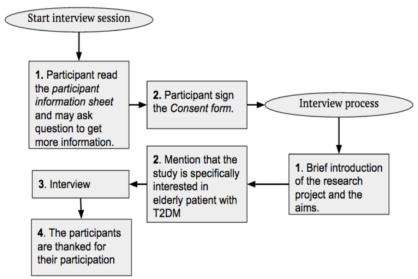
Six in depth semi-structured interviews with clinicians with specialization in Family Medicine (FM) of the first level of the Mexican Social Security Institute (IMSS) were undertaken. and the interviewing process is described in Figure 1. The interviews were divided into five aspects: (a) Clinicians’ background, (b) context and support by IMSS, (c) glucose meter in home and use, (d) information that patients receive, and (e) barriers and enablers to use the BGM.
Figure 1: Interview process.
Self-Monitoring of Blood Glucose: The Perception of Physicians 107
RESULTS
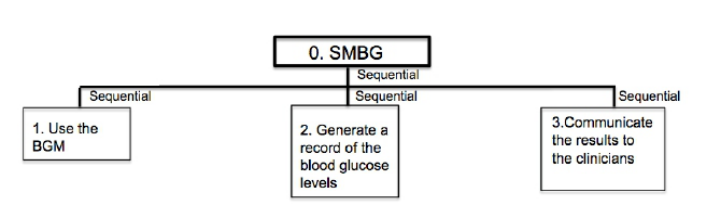
A thematic analysis of the qualitative data collected in the interviews with the clinicians was carried out to identify, analyze and report the patterns. Braun and Clarke (2006) proposal was used for the thematic analysis. The coding of the themes was grounded in the theory of the COM-B model. As a result of the interviews, it was identified that SMBG is composed of three different behaviours and that each behaviour requires different capabilities, motivations and opportunities, see Figure 2.
Figure 2: Self-monitoring of blood glucose behaviour.
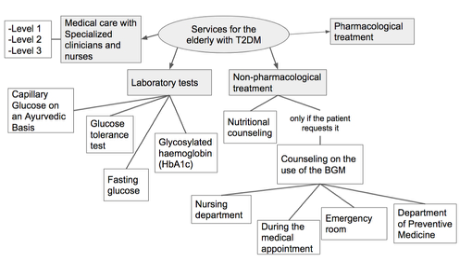
Clinicians specialising in FM indicated that they regularly interact with older adults with T2DM on a monthly basis with a scheduled appointment of 30 minutes, which may be less depending on the doctor’s workload. The aim of the appointment is to manage the disease and provide pharmacological treatment. In Mexico, the public health system, such as the IMSS, does not provide the medical equipment needed to carry out SMBG, but the IMSS does provide services for elderly people with T2DM, as shown in Figure 3, which is a result of the issues raised by the clinicians during the interviews. Regarding SMBG, see Figure 3, physicians mentioned that counselling on the use of BGM is offered in the emergency department, in the nursing department and in the preventive medicine department, but only if the older adult or a family member requests it; FMs can also advise the patient on this behaviour during the appointment, but the choice and availability is in the hands of each physician.
Figure 3: Services for the elderly with T2DM in the IMSS.
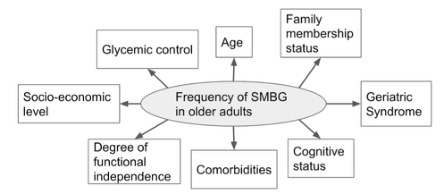
The clinicians expressed during the interviews that the frequency recommended for older patients with T2DM is not the same frequency as that recommended for younger patients, to decide the recommended frequency, the characteristics of each patient are taken into account, these characteristics are shown in the Figure 4.
Figure 4: Characteristics that influence the frequency recommended by doctors to older adults with T2DM.
The results of the interviews with the six doctors, organised according to the COM-B model, are described in Table 1. They also reported the mistakes they had observed patients making. The most common mistakes they had seen were as follows: (a) incorrect placement of the blood sample on the test strip; (b) failure to record glucose levels properly, (c) forgetting to bring records to medical appointments, and (d) using devices with manuals in English, complicating comprehension.
Table 1: Main barriers to the implementation of SMBG in older adults with T2DM, as perceived by clinicians specialising in FM.
Table available in the original PDF paper.
Category Barrier Impact Physical and Cognitive Declining fine motor skills Difficult handling of Capabilities glucometer and test strips Physical and Cognitive
Vision impairment Errors in reading glucometer
Capabilities display Physical and Cognitive
Cognitive decline Forgetting steps in SMBG
Capabilities process Physical and Cognitive
Lack of knowledge on
Incorrect interpretation of
Capabilities
glucometer use
results Physical and Social High cost of test strips Limited frequency of SMBG Opportunities due to financial constraints Physical and Social No provision of medical Reduced accessibility to SMBG
Opportunities
supplies in the public system devices Physical and Social Dependence on family
Inconsistent SMBG practice
Opportunities
members for SMBG
due to lack of assistance Physical and Social
Lack of standardized training
Lack of structured guidance
Opportunities
for glucometer use
for older adults Motivation Poor adherence to treatment Inconsistent SMBG practice Motivation Misconceptions about SMBG Older adults fail to see SMBG
benefits
as beneficial Motivation Lack of established SMBG Irregular monitoring of glucose
habits
levels
Self-Monitoring of Blood Glucose: The Perception of Physicians 109
CONCLUSION
Self-monitoring of blood glucose (SMBG) is a crucial component in diabetes management, particularly for insulin-treated patients (Hirsch et al., 2008). SMBG provides real-time information about glycemic excursions and immediate feedback on treatment effects (Boutati & Raptis, 2009). Technological advancements have improved SMBG devices’ accuracy and usability over the past decades (Clarke & Foster, 2012; Kuo et al., 2012); however, challenges persist. This study highlights the importance of improving the current design of SMBG to meet the needs of older adults and exploring design solutions to address the barriers faced by this population. The findings suggest that SMBG in older adults with T2DM is a complex process influenced by physical, cognitive and economic barriers. Lack of health system provision and lack of structured training strategies limit the uptake of this practice. This study found that older adults with higher socioeconomic status and strong family support were more likely to adhere to SMBG. In addition, education and awareness of the importance of glycaemic control improved adoption of the practice. From an ergonomic perspective, the design of blood glucose meters is not adapted to the needs of older adults, which affects their correct use. The development of more accessible devices is recommended, with larger screens, instructions in accessible formats and more ergonomic lancing mechanisms. It is also important to increase health education to improve adherence and awareness of the importance of SMBG. Family support programmes and structured training are suggested to optimise uptake of SMBG in this population. The results of this study provide a behavioural analysis of SMBG that would help the Mexican health system to develop strategies and redesign BGM. Medical device ergonomics is crucial for patient safety, product efficacy, and user satisfaction (Hearne, 2004; Wiklund, 2024) and to develop strategies based on scientific evidence in real contexts and with real users. It is important to note that this project is part of a larger project that is considering including the end-user perspective as a next step to understand the barriers and facilitators of SBGM behaviour using a medical device, thus taking a much broader view.
DISCUSSION
To change a behaviour, it is necessary to understand and diagnose it (Michie et al., 2011). The results of these studies contribute to an improved understanding of the behaviour of the SBGM in the older adults in Mexico. This new knowledge will help to generate evidence-based behaviour change strategies and improve the behavioural adherence of older adults to this personal health monitoring task. Certain elements found in this study are consistent with other studies conducted in older people. One of the most critical factors is the size and visibility of the screen. Research by Rasche et al. (2020) indicates that many commercially available glucometers do not feature screens with adequate contrast and size, which poses a significant challenge for users with age-related vision impairments. Another crucial aspect is the ease of handling. Li & Li (2024) found that glucometers with small buttons and complex interfaces often lead to frustration among
elderly users, reducing their adherence to blood glucose monitoring routines. Moreover, the integration of glucometers with smart devices has been shown to improve usability. Ahn et al. (2024) demonstrated that continuous glucose monitoring (CGM) systems are highly accepted among older adults, provided that the user interface is intuitive and easy to navigate. However, another challenge lies in the cognitive load associated with data interpretation. Pinelli et al. (2022) found that some older adults experience difficulties in understanding their glucose readings due to excessive or overly complex information presented by the device, which can lead to misinterpretation and reduced adherence. While technological advancements have introduced more sophisticated monitoring systems, various barriers—such as visual impairments, motor difficulties, cognitive overload, and complex device interfaces—continue to hinder their effective use. Addressing these challenges requires a user-centered approach that prioritizes accessibility, ease of use, and seamless integration into daily routines.
ACKNOWLEDGMENT
The authors would like to thank all the doctors interviewed. In particular, the doctor Carmen Vianey Jimenez Amezcua, who helped to disseminate the call to doctors.
REFERENCES
Ahn, J., Yang, Y., & Park, G. (2024). Advancing elderly diabetes care: Exploring the usability and acceptance of continuous glucose monitoring (CGM). Geriatric Nursing. Retrieved from https://www.sciencedirect.com/science/article/ pii/S019745722400185X. Basto-Abreu, A., López-Olmedo, N., Rojas-Martínez, R., Aguilar-Salinas, C. A., Moreno-Banda, G. L., Carnalla, M., Rivera, J. A., Romero-Martinez, M., Barquera, S., & Barrientos-Gutiérrez, T. (2023). Prevalencia de prediabetes y diabetes en México: Ensanut 2022. Salud publica de Mexico, 65, s163–s168. https://doi.org/10.21149/14832 Bello-Chavolla, O. Y., Rojas-Martinez, R., Aguilar-Salinas, C. A., & Hernández-
Avila, M. (2017). Epidemiology of diabetes mellitus in Mexico. Nutrition reviews, 75(suppl 1), 4–12. https://doi.org/10.1093/nutrit/nuw030 Boutati, E., & Raptis, S. A. (2009). Self-Monitoring of Blood Glucose as Part of the Integral Care of Type 2 Diabetes. Diabetes Care, 32, S205–S210. Braun, V., & Clarke, V. (2006). Using thematic analysis in psychology. Qualitative
Research in Psychology, 3(2), 77–101. https://doi.org/10.1191/1478088706q p063oa Clarke, S. F., & Foster, J. R. (2012). A history of blood glucose meters and their role in self-monitoring of diabetes mellitus. British Journal of Biomedical Science, 69, 83–93. Hearne D. (2004). Ergonomically sound medical devices. Medical device technology,
15(4), 32–33. Hirsch, I. B., Bode, B. W., Childs, B. P., Close, K. L., Fisher, W. A., Gavin, J. R., Ginsberg, B. H., Raine, C. H., & Verderese, C. A. (2008). Self-Monitoring of Blood Glucose (SMBG) in insulin- and non-insulin-using adults with diabetes: Consensus recommendations for improving SMBG accuracy, utilization, and research. Diabetes technology & therapeutics, 10(6), 419–439. https://doi.org/ 10.1089/dia.2008.0104
Self-Monitoring of Blood Glucose: The Perception of Physicians 111
Kuo, C., Ho, C., Su, T., Wu, Mh, Wang, C., Slingerland, R., Groenier, K., Houweling, St, Bilo, H., Hinnen, D., & Wagner, R. (2012). Advanced Technologies and Treatments for Diabetes Self-monitoring of blood glucose. Li, X., & Li, H. (2024). Age-appropriate design of domestic intelligent medical products: An example of smart blood glucose detector for the elderly with AHP-QFD Joint KE. Heliyon. Retrieved from https://www.cell.com/heliyon/fulltext/S2405-8440(24)03418-2. Martin, J. L., Murphy, E., Crowe, J. A., & Norris, B. J. (2006). Capturing user
requirements in medical device development: the role of ergonomics. Physiological Measurement, 27, R49–R62. Mele’ndez-Herrada, E., Sa’nchez, G., Rami’rez D. M., Cravioto A., & Cervantes E.
(2007). Diabetes mellitus: Aspectos modernos de la problema’tica. Revista de la Facultad de Medicina UNAM, 50, 121–124. Mexican Diabetes Federation. (2017). Llega a México Freestyle. Retrieved December 10, 2017, from https://fmdiabetes.org/llega-a-mexico- freestyle-libre- el-revolucionario-sistema-flash-de-monitoreo-de- glucosa/. Michie, S., van Stralen, M. M., & West, R. (2011). The behaviour change wheel: A new method for characterising and designing behaviour change interventions. Implementation science: IS, 6, 42. https://doi.org/10.1186/1748-5908-6-42 National Institute of Statistics and Geography & National Institute of Public Health.
(2021). National Health and Nutrition Survey de 2021. Olczurk, D., and Priefer, R. 2018. A history of continuous glucose monitors (CGMs) in self-monitoring of diabetes mellitus. Diabetes & Metabolic Syndrome: Clinical Research & Reviews, 12 (2), 181–187. Pinelli, M., Lettieri, E., Boaretto, A., Casile, C., Citro, G., & Ranzani, C. (2022).
Glucometer usability for 65+ Type 2 diabetes patients: Insights on physical and cognitive issues. Sensors, 22(16), 6202. Retrieved from https://www.mdpi.com /1424-8220/22/16/6202. Rasche, P., Choe, P., Theis, S., Wille, M., & Bröhl, C. (2020). Usability evaluation of blood glucose meters for elderly diabetic patients. In Cross-Cultural Design. Applications in Health, Learning, Communication, and Creativity (pp. 689– 701). Springer. Retrieved from https://link.springer.com/chapter/10.1007/978-3- 319-40093-8_68. Uzun, S., & Kahraman, M. Y. (2024). Current status of the curricula of physiotherapy
schools in Türkiye in terms of the usage of new rehabilitation technologies and measurement systems. Frontiers in Rehabilitation Sciences, 5, 1504509. Wiklund, M. E. (2024). Medical Device and Equipment Design.
LISTED IN THE AHFE DIGITAL BOOKSTORE CATALOGUE
Explore the complete digital volume
Healthcare and Medical Devices
Read this individual research paper free through the original publisher, or explore the full digital proceedings book.
ISBN 978-1-964867-47-2
Explore this ISBN in the AHFE Bookstore ↗Listed in the July 2026 bookstore catalogue; search by ISBN to confirm current availability · Digital book purchase optional