Curtis Cripe (2025). Real-Time Cognitive Tools for Space Systems. In: Intelligent Human Systems Integration (IHSI 2025): Integrating People and Intelligent Systems. AHFE Open Access, vol. 160, pp. 87–96. https://doi.org/10.54941/ahfe1005813
This paper presents an innovative integration of real-time cognitive monitoring technologies with cognitive flexibility and awareness tools, framed within the Skill, Rule, and Knowledge (SRK) model, to enhance human performance and resilience in extreme environments. Conducted at NASA's Lunar/Martian habitat simulator at the University of North Dakota (UND), the study investigates how these advanced technologies improve cognitive readiness, decision-making, and overall mental fitness during long-duration spaceflights (LDSF).The SRK model, developed by Jens Rasmussen, categorizes human cognitive behavior into three levels—skill-based, rule-based, and knowledge-based actions—providing a structured approach to understanding and enhancing cognitive flexibility in high-stakes environments. By leveraging EEG-based monitoring and Brain-Computer Interface (BCI) technologies, this research enables dynamic, real-time assessments and interventions that are critical for maintaining cognitive control and adaptability during space missions.Traditional cognitive training and monitoring methods, which rely on periodic assessments and static protocols, fall short in providing the continuous feedback required for high-pressure scenarios. In contrast, the integrated system described in this study offers ongoing, adaptive training aligned with the SRK model, allowing for more precise and effective cognitive interventions. This approach facilitates seamless transitions between different levels of cognitive control, optimizing decision-making and preventing cognitive overload.The findings from this research have significant implications beyond space missions. The application of these cognitive tools within the SRK framework demonstrates potential for enhancing performance in other high-stakes domains, including aerospace, healthcare, and military operations, where cognitive readiness is paramount.In summary, this paper introduces a novel framework that integrates cognitive monitoring and flexibility tools within the SRK model to sustain cognitive readiness and performance in extreme environments. The results suggest that this approach not only enhances individual cognitive capabilities but also improves overall mission outcomes by reducing cognitive overload and optimizing decision-making processes, making it a valuable contribution to the field of intelligent human-system integration.
Cognitive readiness, the mental preparedness and situational awareness required to perform cognitive tasks effectively in demanding settings, is crucial in high-stakes environments such as space missions, where performance directly impacts mission safety and success. The unique stressors in space—ranging from isolation and confinement to microgravity and extended mission durations—can impair key cognitive functions like attention, decision-making, and situational awareness (Flynn-Evans et al., 2020; Strangman et al., 2014). Studies show that astronauts face heightened risks of cognitive fatigue and performance decline due to circadian misalignment and sleep deprivation (Flynn-Evans et al., 2016; Nasrini et al., 2020). For instance, studies have shown that astronauts average less than six hours of sleep per day during missions, which correlates with cognitive impairments, including attentional failures and reduced situational awareness (Basner et al., 2015).
The IQity™cognitive monitoring system, initially developed for cognitive remediation in terrestrial applications to support patients with traumatic brain injuries (TBI) and children with developmental delays, was later adapted for space mission demands through UND’s habitat studies. Insights from these simulations refined the system for astronaut use and enhanced its effectiveness for students, patients, and other high-functioning adults. Built upon the Skill-Rule-Knowledge (SRK) model, IQity™continuously monitors cognitive states to support sustained performance under stress, demonstrating improvements in decision accuracy and task response time.
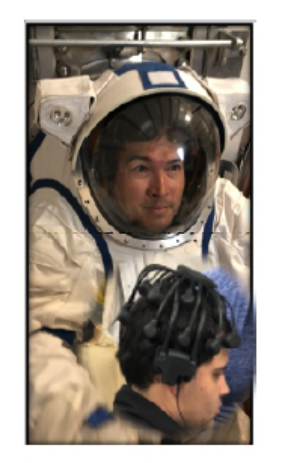
Figure 1: University of North Dakota’s (UND) habitat.
METHODS
The IQity™system employs multi-channel, dry-electrode EEG to capture and process brain signals in real time. EEG data is cleaned through band- pass filtering and Independent Component Analysis (ICA) to reduce noise and artifacts, ensuring high-fidelity cognitive predictions. Key EEG features—like band power (delta through gamma), phase synchronization, and coherence— are fed into machine learning models (Support Vector Machines and Random Forests) to classify cognitive states, such as fatigue and attention. The system generates real-time cognitive readiness scores, adjusting workloads or prompting breaks as necessary.
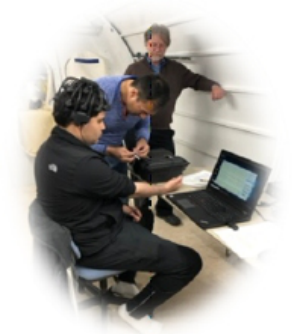
Figure 2: UND space suit experiment.
Real-Time Cognitive Tools for Space Systems 89
The IQity™system is built upon the NeuroPerformance Mastery Framework, a structured approach that leverages real-time cognitive monitoring to optimize astronaut performance and resilience. Central to this framework is the Skill-Rule-Knowledge (SRK) model, which categorizes cognitive actions based on their complexity and cognitive demands. Developed to address the varying reliability of human behaviors under different cognitive loads, the SRK model is essential to IQity™’s design, as it guides the dynamic adjustments and monitoring required to support astronaut readiness and adaptability in high-stress environments.
Understanding the SRK Model and its Role in IQity™ The SRK model defines three levels of cognitive behavior:
Skill-Based Behaviors: These are automatic, low-conscious actions that rely on well-practiced routines. Skill-based actions are highly reliable because they operate with minimal cognitive strain, making them crucial during repetitive tasks or emergencies where quick reactions are essential.
Rule-Based Behaviors: These behaviors follow established procedures or guidelines, requiring a moderate level of cognitive engagement. Rule-based tasks are adaptable but demand that astronauts correctly interpret and apply procedural rules. In unexpected situations, astronauts must flexibly adjust their approach while staying within protocol guidelines, making rule-based behavior vital for task reliability under changing conditions.
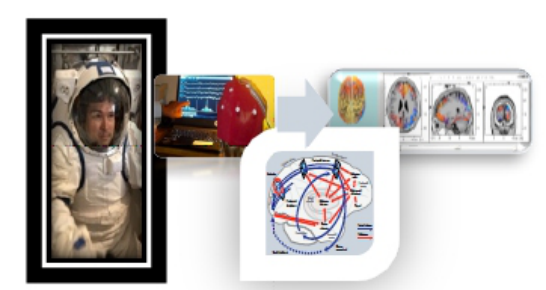
Figure 3: Baseline testing.
Knowledge-Based Behaviors: These behaviors are high-level cognitive processes that involve complex problem-solving, decision-making, and situational analysis. Knowledge-based actions require the highest cognitive load and are prone to errors, especially under stress or fatigue. In situations where astronauts must rely on knowledge-based behavior, maintaining mental clarity and resilience is essential to avoid critical mistakes.
By categorizing tasks within this SRK framework, IQity™dynamically adapts its cognitive support based on task complexity, prioritizing mental
90 Cripe
states that sustain high performance. The framework enables the system to identify when an astronaut might struggle with transitioning between skill-based, rule-based, and knowledge-based tasks, prompting real-time interventions to prevent cognitive overload or decline.
Cognitive Control Networks and Their Importance in Monitoring IQity™monitors specific cognitive control networks that are vital to cognitive readiness and situational awareness. These networks, such as the Default Mode Network (DMN), Salience Network (SN), and Central Executive Network (CEN), play distinct roles in task engagement and mental state management.
Default Mode Network (DMN): Associated with self-referential thinking and resting states, the DMN is essential for introspective processes. In high- stress environments, reduced DMN activity can indicate heightened task focus, while increased DMN connectivity can signal a shift toward cognitive rest or mental fatigue.
Figure 4: Control networks in action.
Salience Network (SN): The SN acts as a cognitive switch, managing transitions between the DMN and CEN. It detects salient stimuli and assesses task relevance, playing a key role in maintaining adaptability and cognitive flexibility. Monitoring SN activity allows IQity™to identify when cognitive flexibility might be waning, which could impact rule-based task adherence or response to unexpected events.
Central Executive Network (CEN): The CEN supports working memory and high-order cognitive functions critical for complex problem-solving. In knowledge-based tasks, high CEN activity correlates with effective cognitive control and decision-making. Monitoring CEN engagement helps ensure that astronauts maintain focus and clarity during demanding cognitive activities.
These networks are continuously assessed in real-time by IQity™to maintain an optimal balance between cognitive engagement and readiness, ensuring astronauts can transition smoothly across tasks and respond accurately to mission demands.
Real-Time Cognitive Tools for Space Systems 91
Cognitive Monitoring Indices: Purpose and Function Within the SRK IQity™’s NeuroPerformance Mastery Framework implements several EEG- based cognitive indices, each tailored to address specific SRK-related demands and cognitive control network activities. These indices monitor cognitive states, ensuring that astronauts maintain optimal engagement and resilience throughout their tasks.
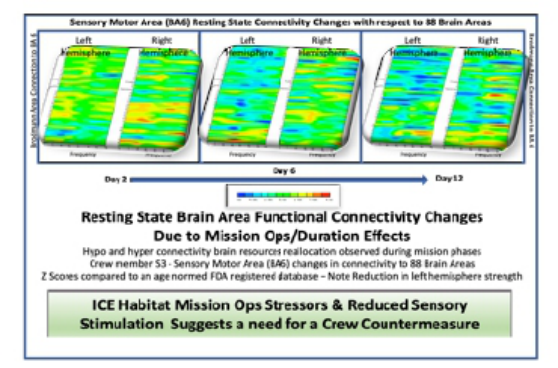
Figure 5: Brain network mission changes.
Task Focus Index (TFI): Aligned with the CEN and skill-based tasks, TFI measures attention levels, issuing alerts when focus wanes, particularly critical in high-stakes activities that require reliability and precision. TFI measures attention levels to ensure astronauts remain fully engaged during procedural or repetitive actions. A drop in TFI indicates waning focus, triggering alerts to reinforce task attention, which is especially critical in high-stakes, skill-based activities that require reliability and precision.
Fatigue Index (FI): Monitoring DMN activity, FI detects mental fatigue and advises breaks, especially important during prolonged knowledge-based tasks where clarity is essential. Fatigue negatively impacts all levels of the SRK model but is particularly detrimental to knowledge-based tasks, where mental clarity is essential. FI monitors fatigue over prolonged activities and alerts astronauts to take breaks or redistribute cognitive resources, reducing the likelihood of cognitive errors under knowledge-intensive demands.
Mental Flexibility Index (MFI): Tied to the SN, the MFI tracks adaptability in rule-based tasks, helping astronauts stay within procedural guidelines while responding to situational changes. Key to rule-based behaviors, the MFI tracks astronauts’ adaptability in following and adjusting procedures under varying conditions. For tasks where procedural adherence is required, MFI signals an astronaut’s cognitive flexibility, helping them stay within operational guidelines while adapting to real-time situational changes.
Cognitive Load Index (CLI): Associated with CEN load, CLI assesses mental workload, providing alerts when cognitive strain is too high,
92 Cripe
particularly relevant for high-order cognitive functions in knowledge-based tasks. This index assesses the astronaut’s mental workload, providing alerts when cognitive load exceeds safe thresholds. CLI is particularly relevant for knowledge-based tasks that require complex decision-making and analysis. By monitoring cognitive load, IQity™helps prevent overload, ensuring astronauts can perform high-level cognitive functions without the risk of errors due to excessive mental strain.
Cognitive Resilience Index (CRI): CRI evaluates the astronaut’s ability to manage high cognitive loads over time, with a focus on stress management and sustained performance in demanding situations. The index is vital for knowledge-based tasks and assists in identifying when additional support or interventions may be needed to bolster mental resilience under continuous high-stress conditions.
Self-Monitoring Index (SMI): Monitors DMN and SN activity for situational awareness and self-regulation. SMI measures self-regulation and situational awareness, enhancing astronauts’ ability to monitor their mental state and adapt as needed. By promoting situational awareness and self- monitoring, this index supports transitions between SRK levels, helping astronauts recognize when a shift in cognitive strategy is necessary.
These indices work together to provide a comprehensive, real-time view of cognitive readiness, allowing mission control to monitor astronauts’ mental states and adapt task demands as necessary. The NeuroPerformance Mastery Framework enables IQity™to deliver continuous, non-intrusive cognitive support, using these indices to ensure that astronauts operate within an optimal cognitive range tailored to their task level within the SRK model.
Implementation and Comparison With Traditional Tools IQity™’s continuous EEG-based monitoring, grounded in these SRK-aligned indices, differentiates it from traditional assessments like WinSCAT, which require task interruptions for evaluation. IQity™’s real-time monitoring enables mission control to track cognitive states seamlessly, enhancing situational awareness and operational efficiency by providing immediate feedback. The system’s FDA-registered software database incorporates age- normed EEG comparative data, allowing for rapid detection of deviations from both individual and population baselines, which is essential for identifying risks associated with cognitive overload and fatigue.
RESULTS
The habitat studies demonstrated that real-time EEG monitoring effectively supports cognitive readiness and elite performance. Metrics tracked through IQity™, including the Mental Flexibility Index and Cognitive Load Index, detected early signs of mental fatigue, cognitive overload, and stress, allowing for timely interventions. Specific outcomes included a 15% reduction in cognitive error rates during complex task phases and a 10% improvement in situational awareness, as measured through response times and accuracy consistent with previous studies (Strangman et al., 2014).
Real-Time Cognitive Tools for Space Systems 93
By tracking cognitive states, mental operations, and strategies, IQity™ maintains high-level mental performance. For example, the Mental Flexibility Index monitors adaptability during sudden operational shifts, while the Cognitive Load Index signals when astronauts may approach cognitive saturation, triggering proactive responses to maintain performance stability.
Real-time EEG-based monitoring is essential for managing mental readiness in high-stress environments. It enables the detection of fatigue, stress, and lapses in attention, allowing timely interventions to sustain situational awareness and enhance performance. By using indices like the Task Focus Index and Cognitive Load Index, IQity™ensures astronauts maintain an optimal cognitive state for mission tasks.
Cognitive Flexibility and Adaptability Cognitive flexibility—smooth transitions between skill-based, rule-based, and knowledge-based actions—is crucial in dynamic environments. EEG monitoring integrated with readiness tools helps astronauts adjust to sudden changes, such as equipment malfunctions, without cognitive overload. Indices like the Mental Flexibility Index and Cognitive Control Index support this adaptability, promoting resilience in task performance.
Targeted Interventions for Optimized Performance Real-time feedback loops enable personalized interventions to counter cognitive strain. When indices indicate fatigue or high cognitive load, interventions like relaxation exercises, cognitive reframing, and task recalibration maintain cognitive balance. Such dynamic adjustments prevent mental fatigue, supporting sustained performance throughout prolonged missions.
Broader Applications for Cognitive Readiness and Resilience The integration of cognitive models and brain network dynamics extends to other high-stakes fields, including healthcare and military operations. Real- time cognitive readiness tools provide adaptive assessment and interventions, promoting readiness, adaptability, and resilience. This framework enhances individuals’ capacity for complex tasks, rapid adaptation to stressors, and high performance in challenging environments.
DISCUSSION
The NeuroPerformance Mastery Framework within IQity™enhances cognitive readiness by leveraging real-time EEG monitoring and the SRK model. This framework enables astronauts to transition smoothly across cognitive levels as tasks require, providing continuous insights into mental states. Essential attributes for elite mental performance—such as cognitive flexibility, self-regulation, and situational awareness—are strengthened
94 Cripe
through this dynamic feedback system. Real-time EEG metrics offer actionable data that maintain readiness, prevent cognitive overload, and support accurate responses to changing demands, directly contributing to mission success and reducing task failure rates consistent with previous studies (Peng et al., 2022).
Implementing EEG monitoring in space presents unique challenges, including maintaining signal fidelity amid microgravity-induced physiological changes and integrating sensor arrays within the constraints of spacesuit design. Advanced noise reduction algorithms and adaptable sensor mounts are essential to counteract interference and ensure accurate readings. Additionally, ongoing improvements in dry-electrode EEG systems are critical for usability, as they offer reliable, gel-free contact and minimal maintenance requirements in the demanding conditions of space. These technological advancements collectively enhance the feasibility of continuous, high- fidelity EEG monitoring for astronauts, supporting cognitive readiness and performance in space environments (Gunkelman & Cripe, 2008).
The insights from NASA’s habitat simulator extend to multiple domains, including aerospace, healthcare, and elite sports, where cognitive readiness and mental resilience are crucial. The EEG-based cognitive readiness model adapts dynamically, supporting safety, cognitive resilience, and operational efficiency in complex environments (Neerincx, 2010).
CONCLUSION
This paper presents an integrated approach to cognitive performance optimization, utilizing EEG-based monitoring, cognitive flexibility tools, and the SRK model to dynamically support cognitive readiness in high- stakes environments. Focused on addressing the mental demands of extreme settings, this framework enhances decision-making, emotional regulation, and mental resilience. Findings from NASA’s habitat simulator studies confirm the framework’s effectiveness, offering valuable insights for high- stress fields like healthcare, military, and elite sports, where sustained cognitive readiness is essential for safety and success (Cripe, 2006).
ACKNOWLEDGMENT
The authors would like to acknowledge the contributions of the NTLGroup research team and support for the development and testing of IQity™within the UND/NASA habitat simulations.
REFERENCES
Almalki, M., Gray, K., & Marti’n-Sa’nchez, F. (2016). Activity theory as a theoretical framework for health self-quantification: a systematic review of empirical studies. Journal of Medical Internet Research, 18(5), e131. https://doi.org/10.2196/ jmir.5000 Basner, M., Savitt, A., Moore, T., Port, A., McGuire, S., Ecker, A.,... & Gur, R.
(2015). Development and validation of the cognition test battery for spaceflight. Aerospace Medicine and Human Performance, 86(11), 942–952. https://doi.org/ 10.3357/amhp.4343.2015
Real-Time Cognitive Tools for Space Systems 95
Berniker, M., O’Brien, M., Kording, K., & Ahmed, A. (2013). An examination of the generalizability of motor costs. Plos One, 8(1), e53759. https://doi.org/10.1371/ journal.pone.0053759 Chen, J., Zhou, D., Lyu, C., & Zhu, X. (2018). A method of human reliability
analysis and quantification for space missions based on a bayesian network and the cognitive reliability and error analysis method. Quality and Reliability Engineering International, 34(5), 912–927. https://doi.org/10.1002/qre.2300 Clifford, A., Moura, F., Ho, C., Chuang, J., Follett, J., Fadel, J.,... & Novotny, J.
(2006). A feasibility study quantifying in vivo human α-tocopherol metabolism. American Journal of Clinical Nutrition, 84(6), 1430–1441. https://doi.org/10. 1093/ajcn/84.6.1430 Cripe, C. T., Mikulecky, P., Sucher, M., Huang, J. H., & Hack, D. (2022). Improved Sobriety Rates After Brain-Computer Interface-Based Cognitive Remediation Training. Cureus, 14(1), e21429. https://doi.org/10.7759/cureus.21429. Cripe, C. T., Cooper, R., Mikulecky, P., Huang, J. H., & Hack, D. (2021). Improved
Mild Closed Head Traumatic Brain Injury Outcomes With a Brain-Computer Interface Amplified Cognitive Remediation Training. Cureus, 13(5), e14996. https://doi.org/10.7759/cureus.14996. Cripe, C., Cooper, R., & Weedn, S. (2021). Improving Psychological Resilience with Cognitive Retraining Methods Using EEG Brain Network Biomarkers: Example from UND/NASA Lunar/Martian Habitat. American Journal of Aerospace Engineering, 8(1), 14–26. https://doi.org/10.11648/j.ajae.20210801.13. Cripe, C. T. (2006). Effective Use of LENS Unit as an Adjunct to Cognitive Neuro-
Developmental Training. Journal of Neurotherapy, 10(2-3), 79–87. https://doi.or g/10.1300/J184v10n02_07 Feng, L., Wu, F., Hu, J., & Shi, Z. (2016). Study for dynamic computational method of user reliability in open knowledge organization. The Open Cybernetics & Systemics Journal, 10(1), 72–82. https://doi.org/10.2174/ 1874110x01610010072 Fiedler, P., Haueisen, J., Alvarez, A., Che’ron, G., Cuesta, P., Maestu’, F.,... & Funke,
M. (2023). Noise characteristics in spaceflight multichannel eeg. Plos One, 18(2), e0280822. https://doi.org/10.1371/journal.pone.0280822 Flynn-Evans, E., Barger, L., Kubey, A., Sullivan, J., & Czeisler, C. (2016). Circadian misalignment affects sleep and medication use before and during spaceflight. NPJ Microgravity, 2(1). https://doi.org/10.1038/npjmgrav.2015.19 Flynn-Evans, E., Kirkley, C., Young, M., Bathurst, N., Gregory, K., Vogelpohl, V.,...
& Ma’rquez, J. (2020). Changes in performance and bio-mathematical model performance predictions during 45 days of sleep restriction in a simulated space mission. Scientific Reports, 10(1). https://doi.org/10.1038/s41598-020-71929-4 Gunkelman, J., & Cripe, C. (2008). Clinical outcomes in addiction: A neurofeedback case series. Biofeedback, 36(4), 152–156. Køster, B., Søndergaard, J., Nielsen, J., Allen, M., Olsen, A., & Bentzen, J. (2016).
The validated sun exposure questionnaire: association of objective and subjective measures of sun exposure in a danish population-based sample. British Journal of Dermatology, 176(2), 446–456. https://doi.org/10.1111/bjd.14861 Køster, B., Søndergaard, J., Nielsen, J., Allen, M., Olsen, A., & Bentzen, J. (2017).
Knowledge deficit, attitude and behavior scales association to objective measures of sun exposure and sunburn in a danish population based sample. Plos One, 12(5), e0178190. https://doi.org/10.1371/journal.pone.0178190
96 Cripe
Monroe, E. and Pan, R. (2008). Knowledge-based reliability assessments for timevarying climates. Quality and Reliability Engineering International, 25(1), 111– 124. https://doi.org/10.1002/qre.944 Nasrini, J., Hermosillo, E., Dinges, D., Moore, T., Gur, R., & Basner, M. (2020).
Cognitive performance during confinement and sleep restriction in nasa’s human exploration research analog (hera). Frontiers in Physiology, 11. https://doi.org/10. 3389/fphys.2020.00394 Neerincx, M. (2010). Situated cognitive engineering for crew support in space.
Personal and Ubiquitous Computing, 15(5), 445–456. https://doi.org/10.1007/ s00779-010-0319-3 Peng, Z., Xu, Q., Zhang, R., Parkinson, S., & Schoeffmann, K. (2022). Eye movement-based information system indicates human behavior in virtual driving. https://doi.org/10.1101/2022.07.18.498964 Strangman, G., Sipes, W., & Beven, G. (2014). Human cognitive performance
in spaceflight and analogue environments. Aviation Space and Environmental Medicine, 85(10), 1033–1048. https://doi.org/10.3357/asem.3961.2014
LISTED IN THE AHFE DIGITAL BOOKSTORE CATALOGUE
Explore the complete digital volume
Intelligent Human Systems Integration (IHSI 2025): Integrating People and Intelligent Systems
Read this individual research paper free through the original publisher, or explore the full digital proceedings book.
ISBN 978-1-964867-36-6
Explore this ISBN in the AHFE Bookstore ↗Listed in the July 2026 bookstore catalogue; search by ISBN to confirm current availability · Digital book purchase optional