Hsin-rong Hsieh, Ying-Chia Huang, Yu-jen Chen, Peng-cheng Hsu, Ya-chun Chang, Jui-yun Hung (2024). Evaluation of the Learning Effectiveness of a Smart TRX and Functional Fashion Workshop. In: Human Factors in Design, Engineering, and Computing. AHFE Open Access, vol. 159, pp. 674–681. https://doi.org/10.54941/ahfe1005634
This study evaluates the learning effectiveness of a TRX and smart clothing-based workshop delivered to 25 student participants. It assesses various dimensions of learning effectiveness, including TRX experience, design thinking, functionality, product evaluation, and market analysis. To achieve this, a combination of quantitative research methods were employed; i.e., questionnaires, in-class tests, and teaching evaluations. The results revealed the TRX experience significantly enhanced students' design capabilities with regard to the development of functional clothing. However, for students from non-textile related disciplines, explanations of clothing-related terms were necessary, suggesting future workshops should incorporate relevant explanations to facilitate learning. According to student feedback, affective (about 50%) and cognitive (about 49%) aspects were developed, while skills development was minimal (about 1%). Replacing traditional textbook theory with hands-on TRX exercises was a crucial benefit of the workshop, leading to high levels of student engagement and positive experiences, as was generating a deeper understanding of core muscle group training methods. This had a positive impact and inspired the product design process.
Rapid changes within society brought about by modernity require that traditional production and business models navigate numerous challenges. To address the resulting challenges, this study integrates the Ministry of Education’s Incubation Program to cultivate interdisciplinary talent to facilitate design oriented thinking, focusing on industries that are essential for social innovation. Implementing project-based and problem- oriented practical design, it examines design thinking integrated into campus education to foster students’ independent thinking and problem- solving abilities (Ministry of Education Global Information Network, 2024).
Evaluation of the Learning Effectiveness of a Smart TRX 675
This study drew on Henriksen’s (2017) theoretical model of an X-shaped workshop following the steps of empathy, problem definition, and solution ideation.
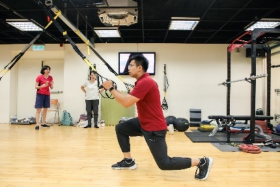
Undertaking hands-on experience with TRX training, will ensure students will be able to apply the X-shaped thinking model of the double diamond approach to apparel design. At the beginning of the course, students experienced the TRX exercise program personally, to build their understanding of muscle activation points. Subsequently, professional instructors explained the human muscular-skeletal structure and conveyed relevant information related to sports injuries.
TRX was originally designed by U.S. Navy SEALs to assist in battlefield training, and has since become a popular exercise for improving fitness and strength. Domestic brands such as Mollifix and ArexSport have since developed products specifically for TRX training. Chang (2005) conducted TRX training for windsurfers, noting significant improvements on the second day of a seven-day training program, with optimal effects observed by the third day. Seiler, Skaanes and Kirkesola (2006) conducted a nine-week, twice- weekly suspension training program for young golfers, concluding that such training can enhance the explosive power of rotational movements.
Luo (2021) indicated that Tim Brown, in the 2008 Harvard Business Review, defined design thinking as a human-centered design approach that integrates considerations of human needs and behavior with the feasibility of technology and business. The course aims to assist students in defining problems during the exploration phase and discovering multiple potential solutions, thereby enhancing their problem-solving skills. The study also combines TRX performance with functional apparel design, launching an interdisciplinary workshop that encourages collaboration between participants from various fields. This approach further promotes the integration of innovative thinking with design practice, ultimately enhancing students’ learning experience and outcomes.
METHODS
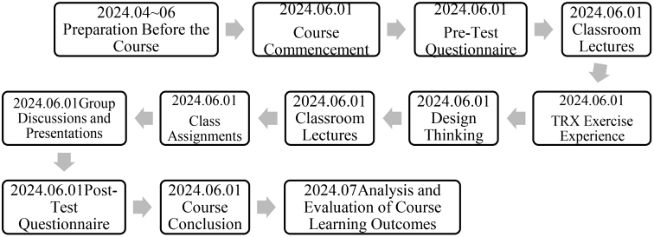
This course comprised the twelve implementation steps shown in Figure 1, including pre-class preparation, course commencement, pre-course questionnaire, classroom lecture, TRX exercise experience, design thinking, classroom lecture, classroom assignments, group discussion and presentation, post-course questionnaire, course conclusion, and course learning outcomes analysis and evaluation.
Figure 1: The twelve steps in the course implementation.
The 45 item questionnaire was integrated with the workshop teaching and administered twice, both as a pre-test and a post-test. At both time points, the researcher collected and analyzed data from five key dimensions based on the sportswear design indicators proposed by Chen and Chen (2007; 2010). These dimensions were design creativity, color and pattern, functionality, production evaluation, and market analysis, and provided the main content of the learning effectiveness questionnaire. The Likert style ratings scale was as follows: 1 indicating strong disagreement, 2 disagreement, 3 neutral/no opinion, 4 agreement, and 5 strong agreement.
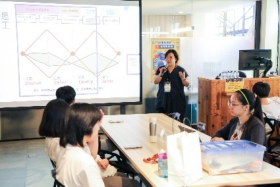
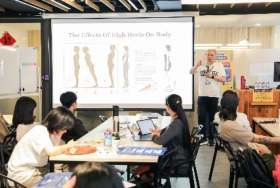
The course included twelve components: course introduction, team building, TRX design thinking, TRX exercise experience, PBL (Problem- Based Learning) in design thinking, explanation of exercise muscles, TRX sportswear design, finalization of design sketches, group discussion, presentation of results and critique. During the workshop, the students gained an understanding of the application of the double diamond model to the design thinking process through lectures delivered by Professor Huang Ying-Chia, learned correct TRX exercise postures from Instructor P.C. Hsu, and received insights from Professor Y.J. Chen on the connection between sports injuries and clothing from a physical therapy perspective. Industry designer J.F. Yang provided a detailed explanation of specific design elements unique to sportswear. Finally, with guidance from workshop host Professor Y.C. Huang, the students completed design sketches, and engaged in group discussions. They were then critiqued by judges, gaining comprehensive insights into issues affecting their products, and completing cross-disciplinary exploration, definition, and development framework of the workshop.
According to the post-test data, referring to missing value data 2, the four dimensions that originally had a mode of 1 showed demonstrably significant improvement, with at least a two-level increase. In the Special Cuts dimension, the mode increased by 2 points, the mean by 0.76 points, and the CV value by 0.27 points. In the Accuracy of Design Drafts dimension, the mode increased by 3 points, the mean by 0.8 points, and the CV value by 0.20 points. In the Accuracy of Pattern Proportions dimension, the mode increased by 2 points, the mean by 0.84 points, and the CV value by 0.24 points. In the Appropriateness of Manufacturing Methods dimension, the mode increased by 2 points, the mean by 0.64 points, and the CV value by 0.16 points.
Evaluation of the Learning Effectiveness of a Smart TRX 677
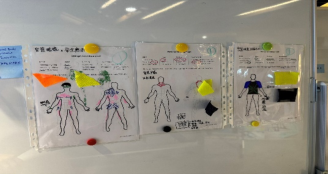
Figure 2: TRX explanation of sports postures.Figure 3: Design thinking PBL.Figure 4: Human injury.Figure 5: Photos of the final design sketches.
Compared to the pre-test data, the post-test data showed that all dimensions improved at least one level, and the mode data generally reflected agreement and strong agreement, meaning it did not fall below 3 points. In the pre-test data, the mean did not reach 4 points, but in the post-test, six dimensions reached 4 points, namely: comfort, durability, breathability, moisture-wicking, insulation, dryness, and course feedback.
Of the 46 dimensions tested in both assessments, 2 dimensions had means below 3 points: Abrasion Resistance (2.92 points) and Clothing Sizes and Sections (2.96 points). In the Abrasion Resistance dimension, the mean value fell.
Student Feedback
Figure 6: Draping thoughts and analyses.
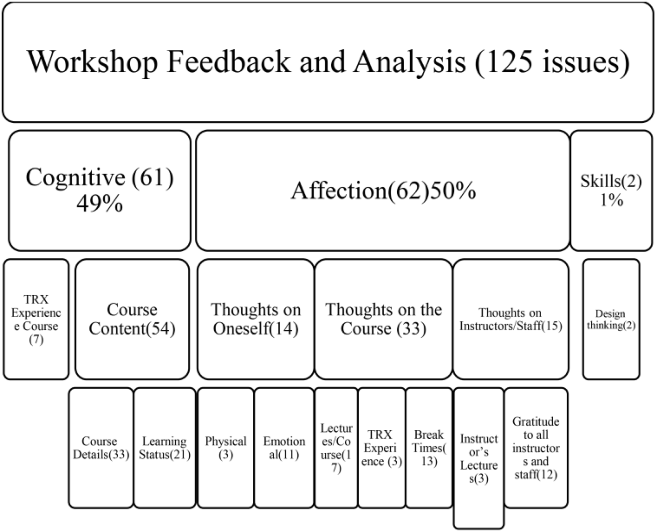
This study summarized and analyzed course feedback from the 38 students who participated in the workshop, exploring it in detail from three perspectives: cognitive, affective, and skill-related aspects. The students offered a total of 125 items of feedback in the workshop, with 61 responses (49%) related to cognition, 62 responses (50%) to affect, and 2 responses (1%) to skills.
In terms of cognitive feedback, the responses were mainly divided into two categories: the TRX course experience and course content:
TRX Course Experience (7 responses): Among these, three responses indicated the TRX course experience had helped the students through the provision of feedback regarding the specific details of product design. Thus, the TRX experience was deemed beneficial for related apparel product design. Additionally, a further response noted that the course afforded an understanding of proper exercise techniques, muscle activation and composition, as well as a desire to integrate wearable
Evaluation of the Learning Effectiveness of a Smart TRX 679
devices into the experience, and a desire for more time to experience the elements covered in the course.
Course Content (54 responses): Of the 33 responses related to course content, 12 students indicated that they had gained a preliminary understanding of smart clothing, functional apparel, and fashion design. Six responses noted that the course was enriching; four indicated a preliminary understanding of TRX, the integration of textiles and technology, and knowledge related to the human body and core exercises. Two responses reflected an understanding of design issues and planning, and knowledge of the human body and core exercises. In the 21 responses related to learning conditions, six non-related field students expressed concerns: three wished for more explanations of textile/clothing terminology, and three wanted more instructions or explanations when drawing fashion sketches. Three responses covered the promising prospects of the field, meeting new friends, and expressing hopes for the future. Among the three responses in the hope category, students expressed a desire for more advanced workshops, continued promotion of the field, and future related workshops. Two responses praised the high professionalism of the instructors, and one appreciated the instructors’ integration of personal experience into the course content.
The affective feedback was divided into three major categories, including thoughts about themselves, the course, and the instructors/staff:
Thoughts About Themselves (14 responses): This was further subdivided into two aspects: body and emotions. In the feedback related to their bodies, two responses mentioned physical fatigue. In the emotional feedback, positive comments indicated that the students greatly benefited from the course (five responses), felt happy (four responses), and enjoyed this learning mode (one response). One negative response was from a particular student who had not wanted to be separated from their friends in group assignments.
Thoughts About the Course (33 responses): This was divided into three main categories: lectures/courses, TRX experience, and breaks. In the lectures/courses feedback, students provided positive feedback (eight responses), mentioned that the course was well-organized (four responses), wished for more enriching afternoon sessions (two responses), and noted that the workshop was suitable for its audience, full of energy, and that the group introductions were efficient (one response each). In the TRX experience category, nine responses were received: two individuals appreciated the experience, one wished for more time to study on the course. Regarding the breaks, 12 responses were received: 10 students were satisfied with the meals provided, and two suggested that the music played during the breaks could be quieter.
Thoughts About the Instructors/Staff (15 responses): Of these, 12 responses were expressions of gratitude to all participants. The remaining three responses comprised feedback from the instructors, with two
appreciating the instructors’ thorough explanations, and one commenting on the professionalism of the presentations.
In the skill-related feedback, two responses indicated the students used design thinking acquired on the course to provide feedback related to the course.
CONCLUSION
This study utilized quantitative analysis to evaluate the learning outcomes of the course based on the students’ pre-test, post-test, and feedback. The evaluation revealed three main findings:
The Need to Provide Workshop-Specific Terminology for Students with Different Professional Backgrounds: From the students’ background information, we learned that participants in this workshop came from various fields, including pharmacology, physical education, and textiles. In their feedback, some students mentioned they had no prior exposure to clothing-related knowledge, which made the specialized terminology used in the class challenging. Based on this feedback, we recommend future workshops consider the needs of such students. Specific measures could include annotating key terms with simple explanations on the PowerPoint slides, or providing brief explanations during the lecture to ensure all the students can keep up with the course. Additionally, offering a basic glossary of specialized terms at the beginning of the workshop could help the students to reference these terms throughout the course, thereby enhancing their learning outcomes and engagement.
Course Content Suggestions: Feedback data showed there is room for improvement in the areas of durability and garment sizing and grading. To enhance students’ understanding and skills in these areas, the course could incorporate additional case studies or hands-on activities. For example, presenting the results from the abrasion resistance tests for different fabrics and allowing the students to conduct and observe these tests themselves could deepen their understanding of the importance of durability. Similarly, including practical exercises in garment sizing and grading, such that students could experience how to correctly measure and adjust sizes, would better prepare them to apply this knowledge to facilitate the design and production process in the future. These enhanced training sessions would not only improve students’ performance during the course, but also increase their practical skills and competitiveness professionally.
TRX Course Experience: The majority of the students were primarily interested in participating in the experiential aspects of the course, while the lecture components generated relatively less enthusiasm. It is recommended that future iterations of the course extend the experiential time, or include training in different TRX exercise techniques. This approach would not only deepen the students’ impression of the exercise experience, but may also boost their overall engagement and learning outcomes.
Evaluation of the Learning Effectiveness of a Smart TRX 681
REFERENCES
Chang, F. Y. (2005). A Study of Unstable Suspension System to Increase Balance Ability for Windsurfing Athletes. Sports & Exercise Research, Volume 7, No. 1, pp. 223–233. Chen, W. L. & Chen, T. H. (2007). The Establishment and Analysis of Evaluation
Index in Sportswear Design. Journal of Design, Volume 12, pp. 79–95. Chen, W. L. & Chen, T. H. (2010). A Study of Contestants Selection for Clothing Design Division of the National High School Talent Competition. Journal of Design Science, Volume 13, pp. 25–42. Department of Information and Technology Education, Ministry of Education.
(2024, July 5th) “Cross-Domain Innovation Begins with Teachers—Ministry of Education’s Design Thinking Cross-Domain Talent Cultivation Nursery Plan.” Website: https://proj.moe.edu.tw/design-thinking/cp.aspx?n=4289. Henriksen, D., Richardson. C., Mehta, R. (2017). Design thinking: A creative approach to educational problems of practice. Thinking skills and creativity, Volume 26, pp. 140–153. Luo, J. L. (2021). Challenges and Solutions of Design Thinking in Curriculum
Teaching. Taiwan Educational Review Monthly, Volume 10, No. 12, pp. 82–86. Seiler, S., Skaanes, P., and Kirkesola, G. (2006). Effect of sling exercise training on maximal clubhead velocity in junior golfers. Medicine and Science in Sports and Exercise, Volume 38, p. 286.
LISTED IN THE AHFE DIGITAL BOOKSTORE CATALOGUE
Explore the complete digital volume
Human Factors in Design, Engineering, and Computing
Read this individual research paper free through the original publisher, or explore the full digital proceedings book.
ISBN 978-1-964867-35-9
Explore this ISBN in the AHFE Bookstore ↗Listed in the July 2026 bookstore catalogue; search by ISBN to confirm current availability · Digital book purchase optional