Romeo Nickel, Sharon Hsiao (2024). Creative Collaborator: AI-facilitated UI for Creating Engaging and Insightful Memes. In: Human Factors in Design, Engineering, and Computing. AHFE Open Access, vol. 159, pp. 168–171. https://doi.org/10.54941/ahfe1005579
Memes have become a prevalent part of digital culture, transcending their origins as simple internet jokes to become powerful tools for communication, social commentary, and even education. Their social and cultural use is diverse, serving as a universal language for expressing complex ideas, fostering community, and providing a platform for social critique. Studies such as Tidy et al. (2024) and Brown (2020) have highlighted the educational potential of memes in STEM fields, demonstrating their effectiveness in simplifying complex concepts and engaging students. Platforms for meme creation have the potential to develop an environment that boosts the meme-making process.Existing platforms (i.e. imgflip.com, an online free memes generator) rely entirely on user input and do very little to guide the users in memes creation. Traditional user interfaces of memes generators are simple and easy to operate, but no contextual authoring support, which may limit the creative potential and content construction. Thus, we hypothesize that AI can expedite the creative process by presenting relevant meme templates, and generating suggested captions, acting as a “creative collaborator” for users. In this work, we explore utilizing OpenAI’s GPT-3.5 to facilitate the creation of educational and engaging memes, leveraging its ability to generate humorous and informative content.To evaluate the effectiveness of our approach, we conducted a comparative case study with Imgflip’s free online meme generator. Participants created waste management related memes using both tools, and we assessed their productivity, creativity, and satisfaction. Qualitative feedback revealed the AI tool's LLM capabilities, hints, and instructions as key drivers of its enhanced performance. These findings highlight the potential of AI to revolutionize meme creation and inform the development of future user interfaces that leverage AI to enhance creativity, engagement, and educational impact.
Memes have evolved from simple internet humor to potent tools for communication, social commentary, and even education. Their universal language transcends cultural barriers, fostering community and providing a platform for social critique. Studies have highlighted the educational potential of memes, particularly in STEM fields, demonstrating their effectiveness in simplifying complex concepts and boosting student engagement (Tidy et al., 2024; Brown, 2020).
Creative Collaborator: AI-Facilitated UI for Creating Engaging and Insightful Memes 169
Existing meme generators, while user-friendly, often lack the contextual support needed to truly unleash creativity. We hypothesized that AI could revolutionize this process by acting as a “creative collaborator,” suggesting relevant templates and captions to accelerate and enhance meme creation. In this research, we leverage OpenAI’s GPT-3.5 to explore how AI can facilitate the generation of educational and engaging memes across a wider range of topics, potentially boosting both creativity and educational impact.
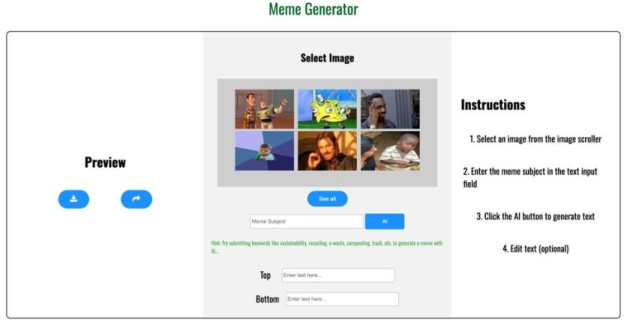
Figure 1: AI-facilitated UI for generating memes.
Key Questions We Explore:
Can AI expedite the creative process by intelligently suggesting meme templates and captions?
Does AI’s vast knowledge base expand the range of topics users can create memes about, including educational content?
Can AI-generated memes be effectively tailored for educational purposes, simplifying complex ideas and promoting critical thinking?
This research examines these questions through a comparative user study with Imgflip, a popular online meme generator, and our AI-facilitated tool. By analyzing user experiences and outcomes, we aim to uncover the potential of AI to transform meme creation into a more engaging, educational, and collaborative endeavor.
CASE STUDY A qualitative user study was conducted to compare the user experience and output of Imgflip’s free online meme generator with an AI-facilitated alternative. Two college students volunteered to participate in the study. Neither student was a computer science major, and their knowledge of sustainability was limited to common concepts like “reduce, reuse, recycle.” One student was assigned to use Imgflip’s meme generator, while the other was given access to the Creative Collaborator (CC) tool. Each participant was
170 Nickel and Hsiao
tasked with creating as many waste management-related memes as possible within a 10-minute timeframe.
Quantitative results showed a drastic difference in productivity: the AI- facilitated tool produced 42 memes (7 times more than Imgflip’s 6) and had a meme creation rate of 4.2 per minute, seven times faster than Imgflip’s 0.6 per minute.
The qualitative feedback aligned with the quantitative data. The Imgflip user reported limitations due to the need for external information gathering, the presence of a watermark, and a less streamlined download process. Conversely, the AI-facilitated tool was praised for enhancing creative capabilities, even with limited subject knowledge. The AI’s instructions, hints, and language model capabilities were identified as key factors in simplifying the creative process and reducing user stress.
A third-party evaluation, conducted by two college students with similar backgrounds to the original participants, revealed that the memes generated by the CC exhibited a level of sophistication that could be attributed to human creation. The captions were not only contextually relevant to the waste management theme but also cleverly integrated with the visual elements of the images. Furthermore, a subjective assessment of humor, rated on a scale of 1-10, yielded an average score of 7.1 for the CC memes, surpassing the average score of 5.5 for the Imgflip memes. The evaluators attributed the lower humor rating of the Imgflip memes to their perceived lack of creativity and depth.
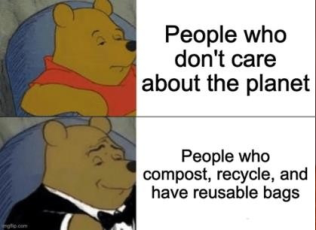
Figure 2: Meme created with Imgflip (left) vs. CC (right) during user study.
Beyond its efficiency benefits, the AI-facilitated meme generator holds potential for educational applications. By providing access to information and generating relevant humor, it could facilitate engagement with complex topics. Memes have proven to be a powerful tool for communication and information dissemination, particularly among younger generations. The AI’s ability to quickly generate contextually relevant and humorous content could make learning more enjoyable and accessible. Further research could explore the potential of AI-facilitated meme generators in classrooms, workshops, or online learning environments to enhance knowledge retention and spark interest in various subjects.
Creative Collaborator: AI-Facilitated UI for Creating Engaging and Insightful Memes 171
While this study was limited to two participants, the results illustrated a promising approach for the AI-facilitated meme generator in terms of efficiency and user satisfaction. The qualitative feedback provides valuable insights into the specific features driving this improvement. Future research with a larger sample size could further validate these findings and explore the potential for enhancements to both meme generators, such as addressing the need for occasional text editing in the AI tool and expanding the range of meme templates.
CONCLUSION
This preliminary study provides compelling evidence for the potential of AI to revolutionize meme creation. The AI-facilitated meme generator’s superior performance in terms of both quantity and quality suggests that AI can act as a powerful creative collaborator, empowering users to generate more engaging and diverse memes with greater efficiency. This aligns with the growing interest in memes as a form of communication and cultural expression, as evidenced by increasing search trends since 2010.
While the small sample size limits the generalizability of these findings, the qualitative feedback offers valuable insights into the user experience and highlights the potential of AI to enhance creativity and engagement in meme creation. Future research should investigate the impact of AI-facilitated meme generators in various contexts, such as education, social media, and marketing, to fully understand their potential and limitations.
This study serves as a starting point for further exploration into the intersection of AI and creativity, opening new possibilities for how we create, share, and consume digital content. It highlights the transformative potential of AI not just as a tool for automation, but as a collaborator that can augment human creativity and unlock new forms of expression.
REFERENCES
Brown, J. D. (2020). What do you meme, professor? An experiment using “memes” in pharmacy education. Pharmacy, 8(4), 202. Imgflip. (n.d.). Imgflip. https://imgflip.com/ Peirson V, A. L., & Tolunay, E. M. (2018). Dank Learning: Generating Memes Using
Deep Neural Networks. arXiv preprint arXiv:1802.00440. Sadasivam, A., Gunasekar, K., Davulcu, H., & Yang, Y. (2020). memeBot: Towards Automatic Image Meme Generation. arXiv preprint arXiv:2004.14571v1. Tidy, H., Bolton-King, R. S., Croxton, R., Mullen, C., Nichols-Drew, L.,
Carlysle-Davies, F., … & Irving-Walton, J. (2024). Enchaning the student learning experience through memes. Science & Justice, 64(3), 280–288. Wan, R., Gebreegziabher, S., Li, T. J., & Badillo-Urquiola, K. (2024). CoCo Matrix: Taxonomy of Cognitive Contributions in Co-Writing with Intelligent Agents. In Creativity and Cognition (C&C ’24), June 23–26, 2024, Chicago, IL, USA.
LISTED IN THE AHFE DIGITAL BOOKSTORE CATALOGUE
Explore the complete digital volume
Human Factors in Design, Engineering, and Computing
Read this individual research paper free through the original publisher, or explore the full digital proceedings book.
ISBN 978-1-964867-35-9
Explore this ISBN in the AHFE Bookstore ↗Listed in the July 2026 bookstore catalogue; search by ISBN to confirm current availability · Digital book purchase optional