The dumper vehicle is essential for carrying out material handling activities and they are the primary cause of fatal accidents at both construction and mining sites. According to earlier studies, the vast majority of these incidents are caused by the operator’s behaviour. On other side, it is evident that dumper operators are often taking awkward postures and most of them are subjected to high and medium levels of musculoskeletal disorders.Due that fact, the aim of this paper is directed towards preventing accidents and/or incidents in dumper’s operations that originate from the operator’s error and which could be mitigated by the ergonomic adjustment. Specifically, the purpose of this study is to utilize artificial neural networks in order predict the probability of incidents and accidents on the basis of dumper operators’ workplace ergonomic intervention.In this research 40 dumper’s operators participated. Survey started with the 39-item checklist, which is based on prior research and there has been noticed that questions with lowest percent of positive answers are questions related to seat and armrests, so factors such as the seat height adequacy, the seat height adjustability, the seat be horizontal adjustment, the seat back support, the seat lumbar support, armrests availability, armrests height, armrests adjustability, vibrations through the seat, vibrations from the equipment through the floor, vibrations from the equipment through the control devices, the seat attachment to the sub cabin, and possibility to recline and rotate the seat are considered as primary factors in the investigation of the ergonomic adjustment of the dumper operators’ workplace. Poor working conditions originating from organizational factors are also recognized as one of the important focuses of this research. The obtained data were statistically analysed. Surveyed dumper operators came from various age groups and with varied work experience periods in the current study. The research revealed that the average age and height of dumper operator is 36.33 years and 178.35 centimetres, respectively. Moreover, despite the fact that their average weight is 90.33 kg, these body measurements, unlike the others which followed a Gaussian distribution, regardless of the average value indicate that a substantial proportion of operators are overweight and weigh more than 110 kg. In addition, the vast majority of operators in this survey had less than ten years of experience. Regarding the machines, the age of examined dumpers was less than ten years.In order to reduce the likelihood of accidents/incidents and injuries at work resulting from poor seat design, this study uses questions that covers the most significant factors affecting the quality of the working conditions related to the seat and armrests in dumper’s cabin. Furthermore, neural network was trained to predict the likelihood of injuries based on 14 different responses related to the seat and armrest, as indicated by the research's finding that the questions to which respondents provided the worst responses concerned the cabin's seat and armrest. The training dataset consisted of 80% of the obtained data, while 10% was allocated for validation and the remaining 10% was reserved for testing purposes. Used network has one hidden layer with 12 neurons. The neural network underwent training for a total of 16 epochs. The correct classification of 92.5 percent of the data demonstrates a high degree of accuracy in predicting potential accidents/incidents on sites where dumpers operate.Conclusions from the study indicate the need for additional research into an ergonomically optimized workspace for dumper operators in terms of the possibility of resolving identified issues through the further anthropometric surveys and possible application of modern information technologies, such as the installation of sensors, monitoring, and similar solutions.The sample size is a limitation of this study, and additional data collection is ongoing. The proposal for additional research is to collect additional data to increase the reliability of the analysis, and possibly investigate other types of mining machines to determine if similar problems occur with them.
Mining as a long recognized high-risk sector still has a relatively high rates of fatalities and injuries according to accident statistics (Noraishah Ismail et al., 2021). Additionally, the effects of post-mining accidents have a negative impact on the environment and landscape change (Bian et al., 2010; Mirzaei Aliabadi et al., 2020; Noraishah Ismail et al., 2021).
Accidents in mining industry are caused mainly by operator’s faults and human faults jointly (Kumar et al., 2014). Over 90% of mining accidents reportedly involve human error due to the lack of ergonomic consideration in the design of mining machinery and equipment (Foster et al., 2004; Simpson et al., 2009). Certain authors add that risk-taking behaviour of dumper drivers is influenced by situational circumstances, such as site safety regu- lations or the actions of other workers, as well as a general culture that puts productivity over safety (Bohm et al., 2010).
Ergonomic concerns, evidently, have frequently been disregarded in the past when designing mining equipment. Issues like poor control design and placement, difficult entry and egress, and inaccurate population stereo- types not only have an impact on safety directly, but also on efficiency
and performance standards (Foster et al., 2004). Evidently, mining has paid considerably less attention to and implemented ergonomics less than other sectors, such manufacturing (Dempsey et al., 2018).
The dumper vehicle is essential for carrying out material handling activities in the mining industry (Ramar et al., 2023) and they are the primary cause of fatal accidents at both construction and mining sites (Bohm et al., 2012; Duarte et al., 2021). According to earlier studies, the vast majority of these incidents are caused by the operator’s behaviour (Bohm et al., 2012). More than 50% of absences for medical reasons are attributable to musculoskeletal issues as a result of these challenging and dynamic environments, and there are no set guidelines that apply to everyone (Apud, 2012). Also, it is well known about positive effects of participative ergonomics application in terms of workers’ increased productivity and comfort (Leber et al., 2018; Vink et al., 2006).
Due those facts, the aim of this paper is to investigate the causes of the occurrence of undesired events (accidents and/or incidents) among dumper operators that originate from the ergonomic adjustment of the workplace to the needs of dumper operators and can lead to the occurrence of human error (e.g. poor visibility, vibrations, noise, air pollution by exhaust gases, maladjusted controls, lack of lumbar support, etc.). The goal of the research is to understand the influencing factors on the occurrence of human error among dumper operators, which originate from the ergonomic adjustment of the workplace, to prevent future unwanted events (accidents and/or incidents) on this heavy machinery.
The paper is structured as follows: an overview of previous research in order to investigate the key factors that influence an ergonomically adjusted workplace for dumper operators, generation of a survey questionnaire, data analysis: descriptive statistics and trained artificial neural network to forecast the likelihood of an accident by analysing the operator’s feedback pertain- ing to the ergonomics of the cabin seat„ and drawing conclusions about the potential for better ergonomic adjustment of the dumper operator’s workplace.
PREVIOUS RESEARCH Although dampers are primary cause of accidents in mining industry, with a human error as the most frequent reason of accidents, there is not enough attention paid to ergonomics issues there.
Mandal and Srivastava (2010) evidenced that operators of dumpers are subject to whole-body vibration and in terms of root mean square accel- eration, with magnitude along the prominent Z-axis ranged from 0.644 to 1.82 m/s2 and consequently with low back pain (85%), neck (37.5%), shoul- der (30%), and ankle (37.83%) pain and lower quality of life. Upadhyay et al. (2022) add that the majority of dumper operators were taking awkward postures and 58–74% of them were subjected to high and medium levels of musculoskeletal disorders. Ramar et al. (2023) investigated the dumper oper- ator discomfort during operations such as material-loading, loaded-travel, material-unloading and unloaded-travel, and found that study population is more likely to have neck pain and back pain due to the demand for a large
Dumper Operator’s Workplace Risks: Preliminary Study 51
number of operation cycles and proposed to optimize the performance of seat design by using computational learning technique support vector machine classifier.
Kunar et al. (2021) claim that according to data gathered for the RULA and REBA assessments, the actions carried out by dumper drivers put them at a high risk of injuring their muscles and skeleton, and the inappropriate position they assume when loading and unloading could have an adverse effect on their wrists and neck. Kar et al. (2023) also pay attention to postural risk of dumper operators and their findings showed that 20% of the driving postures used by dumper operators are associated with a medium risk of musculoskeletal diseases at work. Eger et al. (2008) analysed dumper mining vehicles and found that operators drove with their necks rotated greater than 40 degree over 89% of the time. Mandal et al. (2020) show analysis of seat vibrations of two different types of dumpers in opencast mines and include the six operators in their study. Village et al. (1989) included in their study 11 vehicles and 8 dumper oper- ators and found that driving full and empty was faster than mucking and dumping in the x and z directions and exceed the ISO exposure limit for health or safety. Therefore, while developing future exposure standards for dumper operators, it is important to take into account the role that non- neutral working postures and whole-body exposure play in the development of musculoskeletal injuries.
It is evident that research in the field of this paper is rare. Also, sample sizes in all previously mentioned studies were small, beside study Mandal and Sristava (2010), so future research on larger samples, containing over 30 operators in the sample, is needed.
METHODOLOGY AND RESULTS Spasojevic Brkic et al. (2023) proposed the 39-item checklist, which is based on prior research, and demonstrated the validity of its using 102 transport, construction, and mining machines as a sample. These machines included cranes, excavators, bucket wheel excavators, bulldozers, loaders, graders, backhoe loaders, trenchers, dumpers, and scrapers.
The aforementioned list was used in the research and 40 dumper opera- tors were surveyed in order to collect data on the ergonomic adjustment of the workplace to their needs. Table 1 provides descriptive statistics of the research sample.
Table 1. Descriptive statistics of the research sample.
Table available in the original PDF paper.
Age (years) Height (cm) Weight (kg) Work experience (years)
Age of the machine (years) Mean value 36.33 178.35 90.33 11.93 5.93 Standard deviation 8.53 5.45 17.57 10.03 3.85 Median 36.00 178.00 86.50 10.00 6.00 Maximum 54.00 188.00 135.00 38.00 12.00 Minimum 19.00 166.00 60.00 1.00 1.00
52 Papi´c et al.
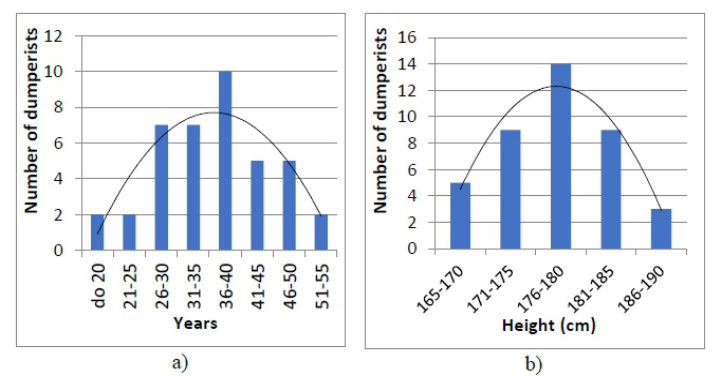
In order to see the age pyramid of the sampled dumper operators, age groups were generated and a normal distribution can be observed in the research sample, Figure 1a. A similar distribution is also present in the pyramid according to the height of the dumper operators, Figure 1b.
Figure 1: a) Age pyramid of dumper operators b) the height of dumper operators.
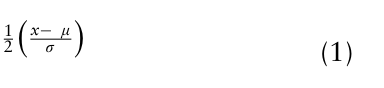
Normal distributions, represented with (1) by age and height of dumper operators indicate that we a relevant research sample regarding these vari- ables, which can provide us with reliable results when examining the depen- dence between the factors of ergonomic adjustment of the workplace to the needs of dumper operators and the aforementioned variables.
Equation reproduced from the original PDF.
σ
2π e
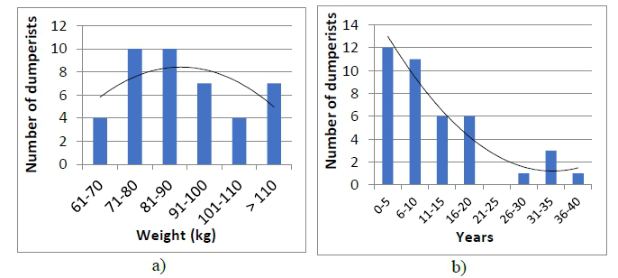
f (x; λ) = λe−λx; x > 0, λ > 0 (2) Regarding the pyramid of distribution by variables, the weight of the dumper operators and the years of work experience of the dumper opera- tors, no normal distribution was recorded, Figure 2a and 2b. Regarding the weight of dumper operators, we have deviations in the category over 110 kg, that is, more dumper operators with excessive body weight, while with years of work experience we have an exponential dependence, represented with (2), which indicates a greater representation of dumper operators with fewer years of work experience.
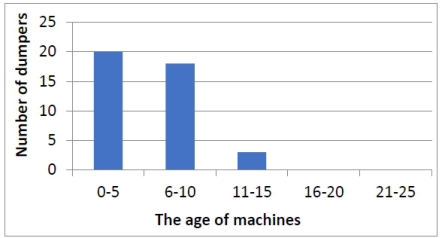
In total, the sample included 40 dumpers (each examinee gave answers for his work machine). Generating the graph of the age distribution of the machines age also shows an exponential dependence, which speaks in favour of the fact that the research sample is represented mostly by newer generation machines, Figure 3.
Dumper Operator’s Workplace Risks: Preliminary Study 53
Figure 2: a) Weight of the operators b) years of dumper operators’ work experience.Figure 3: The age of the dumper truck.
Results of survey showed, that questions with lowest percent of positive answers are questions related to seat rotation and armrests and they can be considered primary factors in the investigation of the ergonomic adjust- ment of the dumper operators’ workplace. Additional conclusions refer to the absence of objections to vibrations, temperature in the cabin, poor visibility, which can be related to the age of the observed dumpers (average age of the machines is 5.93 years). Poor working conditions originating from organi- zational factors are also one of the important conclusions of the research. Results are shown in Table 2.
Table 2. Ranked factors of unfavourable working conditions of dumper operators.
Table available in the original PDF paper.
Question Percentage share of the observed factor
85.00%
The seat cannot be rotated 92.50% There are no armrests 85.00% Frequent absences from work due to poor working conditions
62.50%
The armrests are not adjustable 80.00% The armrests are not at the right height 80.00% Machine failures occur due to human error or organizational factors
54 Papi´c et al.
Furthermore, a trained artificial neural network was utilized to forecast the likelihood of an accident by analysing the operator’s feedback pertaining to the ergonomics of the cabin seat. Table 3 lists the questions that the operators responded to.
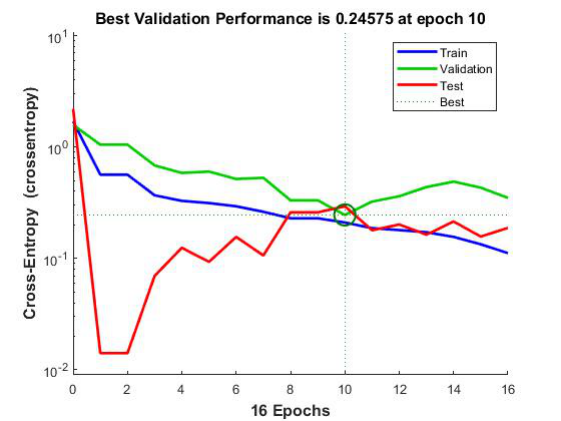
The training dataset consisted of 80% of the obtained data, while 10% was allocated for validation and the remaining 10% was reserved for testing purposes. Used network has one hidden layer with 12 neurons. The neural network underwent training for a total of 16 epochs. Notably, the 10th epoch yielded the best validation performance, as depicted in Figure 4.
Table 3. Questions used as input to the artificial neural network.
Table available in the original PDF paper.
Question Is the seat height adjustable? Can the seat be adjusted horizontally? Is the seat set at the correct height? Does the seat have back support? Does the seat have lumbar support? Are there armrests? Are the armrests adjustable? Are the armrests placed at the appropriate height? Do you feel vibrations through the seat? Do you feel vibrations from the equipment through the floor? Do you feel vibrations from the equipment through the control devices? Is the seat firmly attached to the sub cabin? Can the seat be reclined? Can the seat rotate?
Figure 4: Neural network performances.
Dumper Operator’s Workplace Risks: Preliminary Study 55
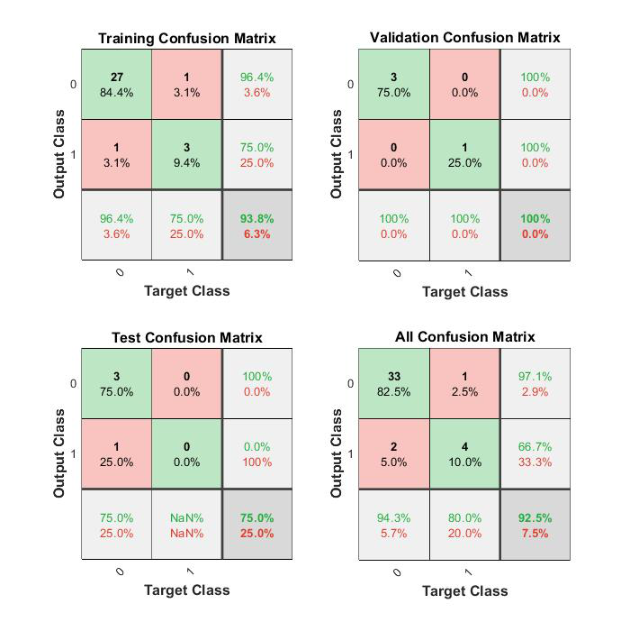
Regarding the outcomes, they are quite favorable. Training accuracy is 93.8%, validation 100%, and test 75%, resulting in an overall training accu- racy of 92.5% on the dataset used. The data within the green diagonal of the confusion matrix represents instances that were correctly classified by the neural network. Conversely, the red regions outside the diagonal indicate cases that were misclassified by the neural network (Figure 5). Additionally, it is important to note that in the confusion matrix, a value of 1 indicates the presence of the possibility of an accident/incident occurring.
Figure 5: Confusion matrices.
CONCLUSION
Previous research show that the occurrence of human error among dumper operators often originates from the absence of ergonomic adjustment of the workplace and that this topic is very current and unexplored.
In the presented research, a large sample of 40 surveyed dumper opera- tors belonging to different age groups and with different work experience was considered. The research used a survey instrument that contained 14 questions that covered the key influencing factors on the quality of the working conditions related to cabin seat of dumper operators in order to
56 Papi´c et al.
prevent possibility of accidents/incidents at the workplace caused by poor seat ergonomics.
The study revealed that the average age of dumper operator is 36.33 years old, and their height is 178.35 centimetres. In addition, despite the fact that their average weight is 90.33 kg, these body measurements, unlike the oth- ers which followed a Gaussian distribution, regardless of the average value indicate that there are a large number of operators who are overweight and weigh more than 110 kg. Furthermore, the vast majority of operators have less than ten years of experience in this domain. Regarding the machinery, most dumpers have less than 10 years.
Given that the results of the research showed that the questions to which the respondents had the worst answers related to the seat in the cabin, as well as the armrest, an artificial neural network was trained that predicts the possibility of accidents/incidents based on 14 different answers related to the seat and armrests. The correct classification of 92.5% of the data indicates a high prediction accuracy of predicting possible accidents/incidents.
The research conclusions point to the need for further research into an ergonomically adjusted workspace for dumper operators in terms of the possibility of overcoming the identified problems in further anthropomet- ric studies and by applying modern information technologies such as the installation of sensors, monitoring and similar solutions.
A limitation of this study is the sample size, and additional data collection is ongoing. The proposal for further research is to gather additional data to make the analysis even more reliable, and perhaps examine other types of mining machines and determine if similar problems occur with them.
ACKNOWLEDGMENT
This research was supported by the Science Fund of the Republic of Serbia, #GRANT No. 5151, Support Systems for Smart, Ergonomic and Sustainable Mining Machinery Workplaces – SmartMiner and the Ministry of Science, Technological Development and Innovations contract no. 451-03-47/2023- 01/200105 from 03.02.2023. The authors also thank the respondents who filled out the questionnaires for their kind cooperation.
REFERENCES
Apud, E. (2012). Ergonomics in Mining: The Chilean Experience. Human Factors, 54(6), 901–907. doi: 10.1177/0018720812456701. Bian, Z., Inyang, H. I., Daniels, J. L., Otto, F., & Struthers, S. (2010). Environmen-
tal issues from coal mining and their solutions. Mining Science and Technology (China), 20(2), 215–223. doi: 10.1016/S1674-5264(09)60187-3. Bohm, J., & Harris, D. (2010). Risk Perception and Risk-Taking Behavior of Construction Site Dumper Drivers. International Journal of Occupational Safety and Ergonomics, 16(1), 55–67. doi: 10.1080/10803548.2010.11076829. Bohm, J., & Harris, D. (2012). Hazard Awareness of Construction Site Dumper
Drivers. International Journal of Occupational Safety and Ergonomics, 18(3), 363–373. doi: 10.1080/10803548.2012.11076939.
Dumper Operator’s Workplace Risks: Preliminary Study 57
Dempsey, P. G., Kocher, L. M., Nasarwanji, M. F., Pollard, J. P., & Whitson, A. E.
(2018). Emerging Ergonomics Issues and Opportunities in Mining. Interna- tional Journal of Environmental Research and Public Health, 15(11), 2449. doi: 10.3390/ijerph15112449. Duarte, J., Marques, A. T., & Santos Baptista, J. (2021). Occupational Accidents Related to Heavy Machinery: A Systematic Review. Safety, 7(1), 21. doi: 10.3390/safety7010021. Eger, T., Stevenson, J., Callaghan, J. P., Grenier, S., & VibRG. (2008). Predic-
tions of health risks associated with the operation of load-haul-dump mining vehicles: Part 2—Evaluation of operator driving postures and associated pos- tural loading. International Journal of Industrial Ergonomics, 38(9), 801–815. doi: 10.1016/j.ergon.2007.09.003. Foster, P., & Burton, A. (2004). Virtual reality in improving mining ergonomics. Journal of the Southern African Institute of Mining and Metallurgy, 104(2), 129–133. doi: 10.10520/AJA0038223X_2873. Kar, M. B., Aruna, M., & Kunar, B. M. (2023). Fuzzy Logic-Based Rapid
Upper Limb Assessment: A Novel Approach to Evaluate the Postural Risk of Dumper Operators. Journal of The Institution of Engineers (India): Series C. doi: 10.1007/s40032-023-00986-1. Kumar, R., & Ghosh, A. K. (2014). The accident analysis of mobile mine machinery in Indian opencast coal mines. International Journal of Injury Control and Safety Promotion, 21(1), 54–60. doi: 10.1080/17457300.2012.755551. Kunar, B. M., Aruna, M., & Kar, M. B. (2021). Postural analysis of dumper operators
and construction workers - a case study. Journal of Mines, Metals & Fuels, 69(6), 180–185. Leber, M., Bastic, M., Moody, L., & Schmidt Krajnc, M. (2018). A study of the impact of ergonomically designed workplaces on employee productivity. Advances in Production Engineering & Management, 13(1), 107–117. doi: 10.14743/apem2018.1.277. Mandal, B. B., & Srivastava, A. K. (2010). Musculoskeletal disorders in dumper
operators exposed to whole body vibration at Indian mines. International Journal of Mining, Reclamation and Environment, 24(3), 233–243. doi: 10.1080/17480930903526227. Mandal, Bibhuti B, Bhattacharjee, A., Prajapati, S., & Hussain, S. A. (2020). A comparative study of transmissibility factors of traditional and pneumatic dumper seats using one-third octave band analysis. Noise & Vibration Worldwide, 51(10), 167–175. doi: 10.1177/0957456520924816. Mirzaei Aliabadi, M., Aghaei, H., Kalatpour, O., Soltanian, A. R., & Nikravesh, A.
(2020). Analysis of human and organizational factors that influence mining acci- dents based on Bayesian network. International Journal of Occupational Safety and Ergonomics, 26(4), 670–677. doi: 10.1080/10803548.2018.1455411. Noraishah Ismail, S., Ramli, A., & Abdul Aziz, H. (2021). Research trends in mining accidents study: A systematic literature review. Safety Science, 143, 105438. doi: 10.1016/j.ssci.2021.105438. Ramar, K., Kumaraswamidhas, L. A., Balaji, P. S., & Agasthian, A. (2023).
Whole Body Vibration Impact Assessment on Dumper Operator Using Compu- tational Learning Technique. International Journal of Precision Engineering and Manufacturing, 24(2), 219–238. doi: 10.1007/s12541-022-00732-0. Simpson, G., Horberry, T., & Joy, J. (2009). Understanding Human Error in Mine Safety (1st ed.). London: CRC Press. doi: 10.1201/9781315549194.
58 Papi´c et al.
Spasojevi´c Brki´c, V., Misita, M., Periši´c, M., Brki´c, A., & Veljkovi´c, Z. (2023). Validating Measurement Structure of Checklist for Evaluating Ergonomics Risks in Heavy Mobile Machinery Cabs. Mathematics, 11(1), 23. doi: 10.3390/math11010023. Upadhyay, R., Jaiswal, V., Bhattacherjee, A., & Patra, A. K. (2022). Role of whole-body vibration exposure and posture of dumper operators in mus- culoskeletal disorders: A case study in metalliferous mines. International Journal of Occupational Safety and Ergonomics, 28(3), 1711–1721. doi: 10.1080/10803548.2021.1932111. Village, J., Morrison, J. B., & Leong, D. K. N. (1989). Whole-body vibration in
underground load-haul-dump vehicles. Ergonomics, 32(10), 1167–1183. doi: 10.1080/00140138908966888. Vink, P., Koningsveld, E. A. P., & Molenbroek, J. F. (2006). Positive outcomes of participatory ergonomics in terms of greater comfort and higher productivity. Applied Ergonomics, 37(4), 537–546. doi: 10.1016/j.apergo.2006.04.012.
LISTED IN THE AHFE DIGITAL BOOKSTORE CATALOGUE
Explore the complete digital volume
Human Factors and Systems Interaction
Read this individual research paper free through the original publisher, or explore the full digital proceedings book.
ISBN 978-1-964867-30-4
Explore this ISBN in the AHFE Bookstore ↗Listed in the July 2026 bookstore catalogue; search by ISBN to confirm current availability · Digital book purchase optional