Yu Liu, Izzy Yi Jian, Yangyang Pan, Baokang Wang, Peter Hasdell (2024). Visualizing the Development and Trend of Sustainability Science and Social-ecological System Research. In: Social and Occupational Ergonomics. AHFE Open Access, vol. 152, pp. 141–149. https://doi.org/10.54941/ahfe1005329
Over the years, sustainability science (SS) and social-ecological systems (SES) research have emerged as important domains under the umbrella of sustainability research, each advancing interdisciplinary collaboration and sharing a similar purpose of fostering sustainability. However, the illegibility of their relationship and contribution to each field remain unclear. Few papers visualize the pathways and apply data-driven methods in the fields of SS and SES research. We aim to demystify this relationship by identifying research pathways and archetypes of the development of both SS and SES research, and hence illuminating patterns, trends, and connections that suggest promising directions for further research.To achieve this goal, we applied a mixed-method approach that combines citation network analysis with archetype analysis, to study SS and SES research. The roles of both research pathways were elucidated to identify and characterize existing synergies. Our findings highlight the significant role of SESs to SS as a bridging research model and underscore previously unrecognized potentials within the sustainability research domain. As a conclusion, this study not only clarifies the relationship between SS and SESs but also visualizes the pathways of each domain with a data-driven approach.
The growing magnitude of human activity has sparked an ongoing dis- cussion on sustainability research and related fields, taking into account various multi-, inter-, and transdisciplinary fields of knowledge. Multi-, inter-, and transdisciplinary knowledge have a significant impact on enabling sustainability research. Among those, sustainability science (SS) and social- ecological systems (SESs) incorporate cross-cutting knowledge from interdis- ciplinary efforts and transdisciplinary approaches that seek to understand human-environment intervention and address the sustainability challenges facing the world today, hence two concepts were paired to be compared and analyzed.
SS and SESs both developed, advanced the collaboration of different disci- plines, and shared a similar purpose to foster sustainability research. Multiple agents, stakeholders, and researchers from both fields are involved in the practice of ‘meeting human needs while conserving the earth’s life support systems and reducing hunger and poverty’ (Clark & Dickson, 2003).
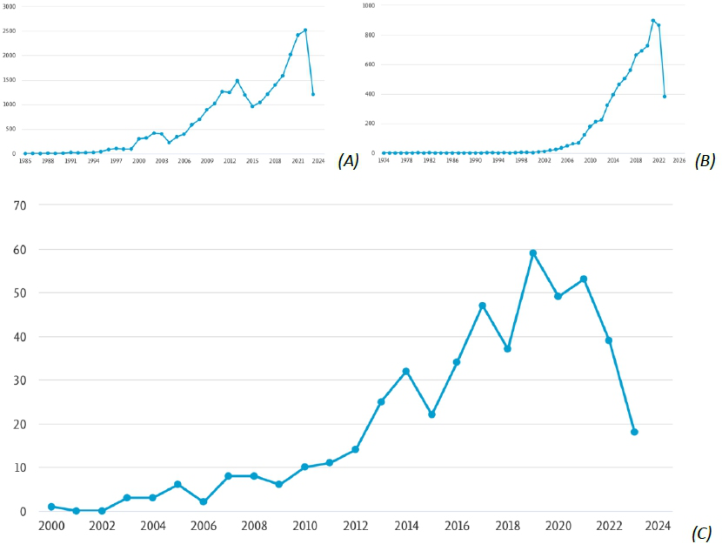
Figure 1: Paper count, the keyword of the (A) picture is ‘sustainability science’ and the (B) is ‘social-ecological system’. The (C) is the ‘sustainability science and social- ecological system’ (from www.scopus.com).
However, they seem to follow distinct approaches to foster sustainability research. As revealed in the aforementioned figure, SES has been recog- nized for many years, predating SS. Besides that, their origins are different. Although both show a similar upward trend, socio-ecological systems (SES) serve as a comprehensive analytical and methodological framework, while sustainability science (SS) represents one of the sub-disciplines within sustain- ability. SES has been widely adopted in other disciplinary, and subsequently applied to sustainability research (Schlüter et al., 2012). On the other hand, SS emerged as a transdisciplinary knowledge domain specific to the sustainability field (Kates et al., 2001).
Current debates lie on the illegibility of their relationship and contri- bution to each field, as shown in the above figure. Some authors argued that the common sense of SS and SES leads to solutions for sustainable development. For example, the thirst for interdisciplinary knowledge has led to multi-party cooperation and promoted sustainability research. How- ever, some researchers believe that there is a huge divergence between them, resulting in different impacts and contributions to sustainable research
Visualizing the Development and Trend of Sustainability Science 143
(Horcea-Milcu et al., 2020; Kajikawa et al., 2014). For example, SES the- oretically improved and completed the understanding of knowledge of SS (Redman, 2014; West, 2016) in terms of collaboration, (legislative and regulatory) measures, increased methodological pluralism and frameworks considering social-ecological interactions (Diepenmaat et al., 2020; Fischer et al., 2015). Hence, the delineations of the pathway could be significant to describe the development of knowledge in the fields of SS and SESs. The iden- tification and delineation of the pathway with corresponding synergies can contribute to building academic consensus and may accelerate the production of knowledge toward sustainability.
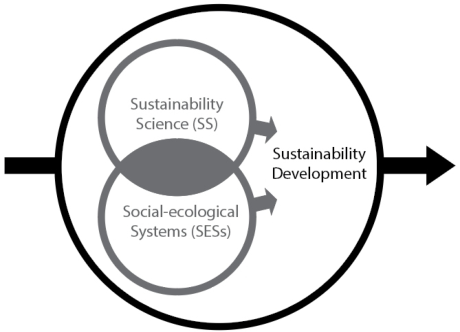
Figure 2: The relationship between SS, SESs, and sustainability research (made by author).
To our knowledge, there are a few papers to visualize the pathway of the development of sustainability research to demonstrate the importance of SES for sustainability science and to analyze the trend of sustainability science. The majority of current literature reviews about the SS and SESs utilized the traditional review with limitations in processing power or storage capacity, and the pathway of both concepts has mainly remained at a conceptual level without detailed explanation (Bettencourt & Kaur, 2011; Kajikawa et al., 2007; Quental et al., 2011; Zhu & Hua, 2017). On the other hand, a few researchers have applied data-driven methods, including archetypes and cita- tion networks, to the field of sustainability. The citation networks enable researchers to validate the knowledge and assess the impact (Horcea-Milcu et al., 2020; Kajikawa et al., 2007; Zhu & Hua, 2017), and archetypes enable researchers to visualize the research pathways and to identify and visualize patterns, trends, and connections (Miller, 2013). Nevertheless, the untapped possibilities of this analysis have yet to be explored.
Therefore, this research will utilize data-driven methods to delve into sustainability science and social-ecological systems research in order to: (i) Determine and describe the roles of both research paths and existing syner- gies based on the visualization of research networks; (ii) Identify and discuss the potentials of the specific knowledge of fields and shed light on areas for future study.
METHODOLOGY
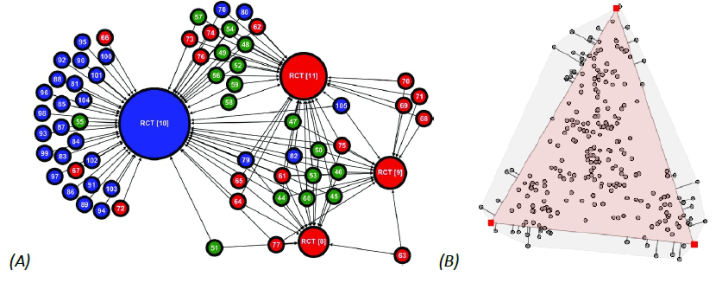
Data-driven methods refer to statistical techniques and approaches that rely on analyzing and making decisions, including keyword co-occurrence network, and archetypes analysis.
Figure 3: The visualization of methods, including (A) keyword co-occurrence net- works (Leng, 2018), and (B) archetypes analysis (Gimbernat-Mayol et al., 2021; Mair & Brefeld, 2019).
Hence, to delineate and visualize the pathway of research, the whole methodology could be divided into three steps.
Step 1 Dataset Construction To identify the relevant papers on related research, we intended to build the datasets by collecting the records from the Core Collection in the Web of Science, namely SCIE/SSCI/CPCI-S/CCR, hence we used the terms presented in Table 1 as search strings to search for the relevant literature on both fields and transdisciplinary field.
Table 1. Search terms used to identify the relevant literature on both fields (it is worth mentioning that, the search string includes many synonyms to prevent confusion or omission as in the following table).
Table available in the original PDF paper.
Research packages Search string Sustainability science research Sustainability science Social-ecological system research Social-ecological system*, human-environment system*, human-nature system* Sustainability science & Social-ecological system research (SS AND SES)
The search was applied to the title, keywords, and abstract of publication before Aug 2023. The search also limited the criteria to the Journals only and themes to the environmental science/ environmental studies/ green sus- tainable science technology/ energy fuels/ engineering environmental/ water resources/ engineering civil.
Visualizing the Development and Trend of Sustainability Science 145
In step one, 83,484 publications related to sustainability science research, 18,481 publications related to social-ecological systems research, and 4,694 publications related to keywords of both fields have been gathered.
Step 2 Network Visualization In step two, we then processed data in the dataset. However, the raw data should be preprocessed before analysis, including the data selection, data cleaning, and map depiction.
Step 3 Archetypical Analysis In step three, we generated the network visualization separately by using the software Citespace and sought to interpret the cluster maps, the keyword co- occurrence network timeline maps as archetypes of research as well as the export summary terms to analyze.
RESULTS
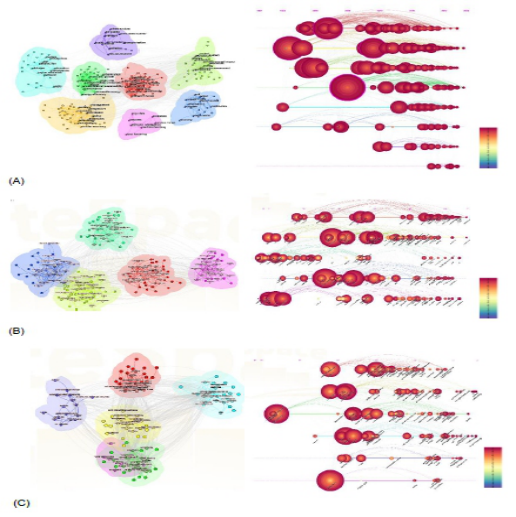
There are two sets of graphs for each package, namely cluster maps with burst detection of keywords, and keywords co-occurrence timeline maps. We created six networks from three packages individually to compare and analyze.
Figure 4: Metrics of network maps, of (A) sustainability science research (SS), (B) social-ecological systems research (SES), and (C) joint research from sustainability science and social-ecological systems research (SS AND SES). The three maps on the left are cluster maps with burst detection of keywords, and the right three are keywords co-occurrence timeline maps.
In CiteSpace-generated maps, terms are depicted as nodes, and the size of each node represents the frequency of the corresponding word in pub- lications. The colors within the circles indicate the period of publication. Additionally, connections between nodes (edges) reflect the frequency of term pairs occurring together, with the strength of the link representing the num- ber of papers in which the keywords appear together. The circles surrounding the nodes in the graph are called Citation Tree-Rings, which correspond to specific publication periods. These rings are color-coded to represent dif- ferent time periods, and their thickness and divisions indicate the number of citations. Thicker rings indicate a higher number of citations during the respective period.
CiteSpace clusters publications by assigning significant keywords that have co-occurrences. The clusters were as follows:
Table 2. Clusters for three research packages. The size represents the number of terms in the cluster. The mean year represents the mean number of burst periods. We also selected the top five terms in the label column.
Table available in the original PDF paper.
Label (LLR)
Research packages
No. Theme Size Mean Year
0 climate change
48 2012 climate change; ecosystem services; remote sensing; land use; life cycle assessment
Sustainability science research
1 sustainability transitions
46 2015 corporate social responsibility; circular economy; sustainability transitions; financial performance; green innovation 2 environmental impact
35 2013 life cycle assessment; environmental impact; sustainability assessment; carbon footprint; lca 3 urbanization 32 2016 economic growth; co2 emissions; environmental sustainability; carbon emissions; renewable energy 4 Social adaptation
27 2018 higher education; physical activity; quality of life; consumer behavior; motivation 5 Air pollution 22 2011 adsorption; heavy metals; biochar; carbon dioxide; nitrogen 6 Risk assessment
29 2012 climate change; central plains; socio-economic status; social resilience; isotopic analysis; 3 Policy 27 2015 ecosystem services; community resilience; impact assessment; human wellbeing index; traditional knowledge 4 Adaptive transition
16 2015 regime shifts; social equity | adaptive capacity; polycentric institutions; social justice; multilayered institutions; 5 modeling 7 2014 human systems model; population modeling; selective harvest; complex systems; natural resource management
These terms are grouped into clusters, each containing only one type of item (i.e., keywords). The individual main themes represent the clusters, different themes contain many different research directions.
CONCLUSION
Many authors have done basic research on sustainability research using In conclusion, numerous authors have conducted research on sustainability sci- ence using data-driven methods. Kajikawa et al. (2007) provide 15 main research clusters of sub-domains in sustainability science research. Betten- court & Kaur (2011) summarized the evolution of sustainability science in terms of geographic distribution and collaboration networks. Quental & Lourenço (2012) and Butler & Van Raan (2013) identified and investigated the influential research and their orientation. Zhu & Hua (2017) utilized the citation network with burst detection in chronological order. They have identified research clusters, studied geographic distribution and collaboration networks, investigated influential research, and utilized citation networks to contribute to the understanding of sustainability science. Building upon their work, our research adds evidence and detailed classification to better inter- pret the similarities and differences between sustainability science (SS) and social-ecological systems (SESs).
Both sustainability science (SS) and social-ecological systems (SESs) have a common goal of promoting sustainability through the examination of social and natural interactions. SS focuses on understanding the dynamics between society and the environment, which informs the development, execution, and evaluation of interventions for sustainability (Kates et al., 2001; Clark & Dickson, 2003; Bettencourt & Kaur, 2011). Likewise, SESs research aims to gain insights into the interactions between humans and the environment,
generating knowledge to address sustainability challenges (Carpenter et al., 2012; Leslie et al., 2015). Despite being transdisciplinary fields, there are differences in the research pathways and approaches of SS and SESs. Sustainability science places emphasis on practical knowledge derived from real-world practices, with a focus on creating, differentiating, and integrating actionable contextualized knowledge. Conversely, social-ecological systems research aims to find practi- cal applications and solutions for sustainability challenges (Clark & Dickson, 2003).
REFERENCES
Bettencourt, L. M. A., & Kaur, J. (2011). Evolution and structure of sustainability science. Proceedings of the National Academy of Sciences, 108(49), 19540–19545. https://doi.org/10.1073/pnas.1102712108 Clark, W. C., & Dickson, N. M. (2003). Sustainability science: The emerging research
program. Proceedings of the National Academy of Sciences, 100(14), 8059–8061. https://doi.org/10.1073/pnas.1231333100 Diepenmaat, H., Kemp, R., & Velter, M. (2020). Why Sustainable Development Requires Societal Innovation and Cannot Be Achieved without This. Sustainabil- ity, 12(3), Article 3. https://doi.org/10.3390/su12031270 Fischer, J., Gardner, T. A., Bennett, E. M., Balvanera, P., Biggs, R., Carpenter, S.,
Daw, T., Folke, C., Hill, R., Hughes, T. P., Luthe, T., Maass, M., Meacham, M., Norström, A. V., Peterson, G., Queiroz, C., Seppelt, R., Spierenburg, M., & Tenhunen, J. (2015). Advancing sustainability through mainstreaming a social– ecological systems perspective. Current Opinion in Environmental Sustainability, 14, 144–149. https://doi.org/10.1016/j.cosust.2015.06.002 Gimbernat-Mayol, J., Montserrat, D. M., Bustamante, C. D., & Ioannidis, A. G.
(2021). Archetypal Analysis for Population Genetics (p. 2021.11.28.470296). bioRxiv. https://doi.org/10.1101/2021.11.28.470296 Horcea-Milcu, A.-I., Martín-López, B., Lam, D., & Lang, D. (2020). Research pathways to foster transformation: Linking sustainability science and social-ecological systems research. Ecology and Society, 25(1). https://doi.org/10.5751/ES-11332- 250113 Kajikawa, Y. (2008). Research core and framework of sustainability science. Sustain-
ability Science, 3(2), 215–239. https://doi.org/10.1007/s11625-008-0053-1 Kajikawa, Y., Ohno, J., Takeda, Y., Matsushima, K., & Komiyama, H. (2007). Creating an academic landscape of sustainability science: An analysis of the citation network. Sustainability Science, 2(2), 221–231. https://doi.org/10.1007/s11625- 007-0027-8 Kajikawa, Y., Tacoa, F., & Yamaguchi, K. (2014). Sustainability science: The chang-
ing landscape of sustainability research. Sustainability Science, 9(4), 431–438. https://doi.org/10.1007/s11625-014-0244-x Kates, R. W., Clark, W. C., Corell, R., Hall, J. M., Jaeger, C. C., Lowe, I., McCarthy, J. J., Schellnhuber, H. J., Bolin, B., Dickson, N. M., Faucheux, S., Gallopin, G. C., Grübler, A., Huntley, B., Jäger, J., Jodha, N. S., Kasperson, R. E., Mabogunje, A., Matson, P., … ·斯维丁乌诺. (2001). Sustainability Science. Science, 292(5517), 641–642. https://doi.org/10.1126/science.1059386 Leng, R. (2018). A network analysis of the propagation of evidence regarding the
effectiveness of fat-controlled diets in the secondary prevention of coronary heart disease (CHD): Selective citation in reviews. PLOS ONE, 13, e0197716. https: //doi.org/10.1371/journal.pone.0197716
Visualizing the Development and Trend of Sustainability Science 149
Mair, S., & Brefeld, U. (2019). Coresets for Archetypal Analysis. Neural Information Processing Systems. https://www.semanticscholar.org/paper/Coresets-for-Archety pal-Analysis-Mair-Brefeld/df7a4c6c35daf496213a65f4b1b81aa77cdd9a63. McPhearson, T., Pickett, S. T. A., Grimm, N. B., Niemelä, J., Alberti, M., Elmqvist, T.,
Weber, C., Haase, D., Breuste, J., & Qureshi, S. (2016). Advancing Urban Ecology toward a Science of Cities. BioScience, 66(3), 198–212. https://doi.org/10.1093/ biosci/biw002 Miller, T. R. (2013). Constructing sustainability science: Emerging perspectives and research trajectories. Sustainability Science, 8(2), 279–293. https://doi.org/10. 1007/s11625-012-0180-6 Quental, N., Lourenço, J. M., & da Silva, F. N. (2011). Sustainability: Character-
istics and scientific roots. Environment, Development and Sustainability, 13(2), 257–276. https://doi.org/10.1007/s10668-010-9260-x Redman, C. L. (2014). Should sustainability and resilience be combined or remain distinct pursuits? Ecology and Society, 19(2). https://doi.org/10.5751/ES-06390- 190237 Schlüter, M., Mcallister, R. R. J., Arlinghaus, R., Bunnefeld, N., Eisenack, K.,
Hölker, F., Milner-Gulland, E. j., Müller, B., Nicholson, E., Quaas, M., & Stöven, M. (2012). New Horizons for Managing the Environment: A Review of Cou- pled Social-Ecological Systems Modeling. Natural Resource Modeling, 25(1), 219–272. https://doi.org/10.1111/j.1939-7445.2011.00108.x West, S. (2016). Meaning and Action in Sustainability Science: Interpretive approaches for social-ecological systems research. https://urn.kb.se/resolve?urn=urn: nbn: se: su: diva-135463 William. (1992). 生态足迹和适当的承载能力: 城市经济学遗漏了什么. https://jour nals.sagepub.com/doi/10.1177/095624789200400212 Zhu, J., & Hua, W. (2017). Visualizing the knowledge domain of sustainable devel-
opment research between 1987 and 2015: A bibliometric analysis. Scientometrics, 110(2), 893–914. https://doi.org/10.1007/s11192-016-2187-8
LISTED IN THE AHFE DIGITAL BOOKSTORE CATALOGUE
Explore the complete digital volume
Social and Occupational Ergonomics
Read this individual research paper free through the original publisher, or explore the full digital proceedings book.
ISBN 978-1-964867-28-1
Explore this ISBN in the AHFE Bookstore ↗Listed in the July 2026 bookstore catalogue; search by ISBN to confirm current availability · Digital book purchase optional