Marek Bures, Alena Lochmannová (2024). Use of virtual reality for crime scene investigation training by security forces. In: Human Factors in Virtual Environments and Game Design. AHFE Open Access, vol. 137, pp. 20–29. https://doi.org/10.54941/ahfe1004983
Virtual reality is a legitimate tool to complement the range of conventional exercising and training across a variety of disciplines. In the long term, virtual reality has its use in the industrial field, from where it is gradually moving into the environment of education and training in healthcare, services, and other fields. Its use across security forces is relatively new, bringing the potential of training in a safe environment without the additional logistical burden of demanding exercise planning, for which it can serve as a supplement. Within a virtual reality simulation in terms of prepared scenarios and developed applications, trainees are free to explore and explore their environment from any angle, including dangerous and inaccessible locations. This allows users to experience circumstances in the virtual world in a way that would otherwise be difficult or impossible. Among the characteristics of virtual reality as a didactic method, it is necessary to highlight the multiple cognitive and pedagogical advantages that allow to improve the understanding of processes, performance and learning experience of the trainees, the improvement of their ability to analyse problems and explore new concepts, the multitude of scenarios that can be created, the high capacity of interaction and the ease of learning that this technology offers. This paper presents the use of virtual reality for training security forces in crime scene investigation scenarios for different types of model situations. The purpose of the applications is to introduce a standardized procedure to new police officers while conducting refresher training for existing officers in terms of setting standards across the discipline and activity. This paper presents selected scenarios, including models, that have been developed for training security forces, as well as the technological background of fully autonomous training that overcomes the shortcomings of conventional training and thus becomes an important complement to it. The scenarios presented represent the environment of the home in which the police officer as a trainee is located. He/she gradually walks through the dwelling unit, familiarizes them with the scene he/she has entered through the headset, and performs crime scene examination tasks in the role of a police officer. His/her task is to inspect the crime scene and document specific findings that will be filed as essential components for the follow-up investigation. The purpose of implementing virtual reality within security forces is, among other things, to minimize the potential physical strain compared to conventional training in the same scenario. For the implementation of a scenario that is exposed both in terms of standard procedure and in terms of emotional load, the preparatory phase is important, not only in terms of scenario development and validation, but especially in terms of measuring the probands' reactions to the given load. For this reason, the scenario preparation mode, and the partial outcomes of the measurement of police officers, quite specifically the measurement of cognitive load (specifically heart rate, respiration, and skin conductance) in relation to the virtual reality simulation, will also be presented.
Use of Virtual Reality for Crime Scene Investigation Training by Security Forces 21
INTRODUCTION
Three-dimensional computer modelling and interactive virtual reality (VR) simulations are proven teaching techniques used in all disciplines. Immersive VR learning tools provide a more positive experience for trainees and increase their motivation (Stepan et al., 2017). Within the VR simulation, trainees are free to explore their environment from any angle, including dangerous and inaccessible locations. This allows users to experience circumstances in the virtual world in a way that would otherwise be difficult or impossible in real- ity (Hoffman, Vu, 1997). The use of simulation games in conjunction with user coaching has proven to be an effective way to learn new knowledge and skills. The primary purpose of simulation games is to educate participants with elements serving as motivation for play-learn approach. In the case of simulation games in virtual environments, the effectiveness of learning is fur- ther enhanced by immersion and a high level of user presence in the game. With simulations in a virtual environment, real situations can be induced and the user learns to react to them. In recent years, simulation games have already been used for training of healthcare professionals (Lochmannová et al., 2022), teachers or security forces (Lisanne Kleygrewe et al., 2023). This is due to some of the advantages of such training - situations can be repeated in a virtual environment virtually anytime and anywhere. In the case of a large number of trainees and a lack of opportunities for on-the-job training, it is thus possible to provide training in the necessary skills under the same conditions to a large number of people. The virtual environment is also a risk-free environment (Alrehaili, Osman, 2020).
Security forces are no exception to VR training, which not only overcomes the barriers and challenges of training in a real environment in terms of logistics, staffing and economics, but at the same time VR provides great opportunities for police officers to train decision-making and acting DMA in cognitively demanding and stressful situations. In terms of training, police forces need to be prepared for situations that are inherently complex and stressful to deal with. Simulation-based training can be considered an effec- tive way of training police officers in this regard. It has the benefit of allowing active practice in the application of what the trained individuals have learned, while at the same time exposing these individuals to the perceptual, motor and cognitive deficits associated with high levels of stress (Zechner et al., 2023). Stress can affect several aspects of the human organism. It reflects on the individual’s experience when it induces negative psychological states such as worry, fear or threat. It can also affect the motor system, e.g. through increased muscle activity or impaired motor coordination. It can also affect cognitive function by causing changes in thought processes, changes in decision-making or poorer adaptation to the environment. In physiological functions, it can cause changes in breathing and heart rate, sweating, weaken- ing of the immune system, and sleep disturbances (Abualrub, Alzaru, 2008). The feeling of stress occurs only at the moment of exceeding the stress thresh- old and the psychological capacity of the individual, which are set differently for each person. Thus, it can be argued that it is the capacity to accept stress and to respond appropriately to stressors. In the case of an event causing
22 Bureš and Lochmannová
immediate stress, e.g. a murder/suicide scene, it is the ability to think ratio- nally, to make the right next steps and decisions and to overcome emotional tension.
INNOVATIVE SYSTEM USING VIRTUAL REALITY AND SIMULATED MODEL SECURITY CASES TO FACILITATE TRAINING AND RESPONSE OF POLICE OFFICERS IN RISKY SITUATIONS As part of the preparation of the Police of the Czech Republic in the field of training and reactions in risk situations using virtual reality, an application was created with two basic modules that simulate real situations in the activi- ties of the Police of the Czech Republic. The first module is always a training of procedures leading to more efficient course of service interventions and criminalistic procedures. The second, follow-up module is testing the mas- tery of correct behaviour in selected security situations. At the same time, the system is capable of measuring and recording the physiological reactions of officers undergoing training. The software allows to simulate different types of scenarios and variants of the event with regard to the current developments in the criminal world.
The initial application, which has been prepared in a number of modifi- cations, is a module focused on crime scene examination, where a team of criminologists consisting of an investigator, a technician and an operative usually operates at the crime scene. The homicide application is aimed at training the user on the correct procedure for examining a crime scene where a human death has occurred. The user will find himself/herself in the role of an investigator who is tasked with finding as many clues as possible to solve the case. These clues are randomly generated and each scenario is therefore unique. Thanks to these clues, it is possible to conclude what type of death is involved, and in a given application there are cases of murder, suicide, and sudden death from initially undetected causes. It is the choice of which act was involved that is the final step for the user of the application, with the choice being made by clicking on a simple panel located outside the apart- ment. Both the training and testing applications are derived from the same scenarios mentioned above. The main difference between these applications is that with the training application the user is guided and it is not possible to make a mistake, whereas in the test version mistakes are possible and the user has to rely on himself/herself and on the knowledge he/she has memo- rized from the training version. Both versions start in the same place, namely before entering the apartment, where there is a member of the first patrol describing the current situation and giving basic information. The goal of these applications is to find all the clues needed to detect the type of death. The scenarios in these applications are randomly generated and so are the rooms, which are generated to make each application specific. For this rea- son, multiple variations of the placement of objects in the rooms and multiple variations of the textures of the objects were created, making it less likely that a user would walk through the same apartment with the same appearance multiple times.
Use of Virtual Reality for Crime Scene Investigation Training by Security Forces 23
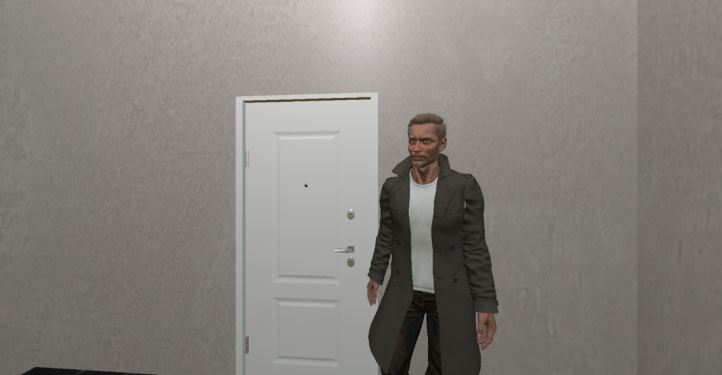
In total, eight scenarios were created for the respective application, and the start for all of them is exactly the same. The trainee starts in the hallway outside the apartment where the crime occurred. There is a member of the first patrol unit who relays to the user the initial information about what happened at the scene. This information is derived from a randomly gener- ated scenario. The start button is used to start the application, which makes the whole application start and the avatar located in front of the apartment zooms the user in on what has happened and what the information about the situation is so far. After that, the user, since he has gloves on from the beginning of the application, can take the handle and enter the apartment. After touching the handle, the user moves to the hallway where he/she can start searching the crime scene. In some scenarios, it is possible that some clues to the case will already be located here. In the sample application, there are no clues in the corridor and after the user has searched all the corners, it is possible to move to the next room using the teleporter. In the next room there is already a dead body and some clues that should make it possible to determine what type of death it is. At this point, the user must grab his/her camera and take a picture of anything that looks like a clue leading to the investigation of the crime. In the training version, all clues are highlighted and the user can practically not make a mistake. The training version also does not end until the user has found all the clues. In the testing part of this scenario, the clues can be hidden to create a more realistic idea of what it might look like at a real crime scene. In this version, the objects that hide the clues must then be removed before the clue related to the case can be photographed. The relevant modifications to the scenarios usually concern the manner of death of the subject, where the creators have based their work on, among other things, the situational context pursuing the possible cause of death, the location of the dead body in a specific room, the sex of the dead subject, the type of the killing instrument and its location, as well as partial traces. Furthermore, the modification is evident at the level of the entrance to the dwelling unit and its possible damage.
The whole application is designed in such a way that the user moves around the rooms as if in real space. For this reason, it is necessary that in the real environment the user stands in a free space, for example in the training room, in order to reach all corners of the virtual room. A minimum of 4x4 meters of free space needs to be provided. The application is designed to always start in the middle of the room in which it is possible to move around. Movement between rooms is then mediated by a teleport, which is represented by a table with buttons for each room. To ensure that the user always starts from the middle of the room, this table is only displayed at this point. In addition, this location is represented by footprints on the ground. The main objec- tive of the training application is to teach the user how to proceed correctly when searching a crime scene, what to look for and what are the basic rules and principles of searching. The user will learn how to behave, what can be touched and what all needs to be searched in order to make a correct decision about the crime scene. The sub-goals are that the user will learn the sequence of actions at a crime scene, learn to sort and prioritize the clues found, learn to use the camera and tape recorder to document important clues, and learn
24 Bureš and Lochmannová
to determine the type of crime based on the information obtained. In the training version, the user is guided through the entire scenario using various cues. He/she is thus trained to go through the application and complete all the tasks correctly. In addition to the correct investigation procedure, he/she also learns the orientation in VR and the control of the application. The main clues used in the training are the arrows and the highlighting of objects that show clues from the crime scene. Another aid is a soundtrack that introduces the activities to be completed during the examination. The main objective of the test application is to verify the acquired knowledge on how to properly proceed during a crime scene search, what to look for and how to locate and document clues. The application is also intended to verify the method of recording the traces found. The key is then the final summary of the sit- uation and the decision on what kind of crime took place at the scene. The sub-objectives are that the user verifies that he/she knows the sequence of actions at the crime scene, can sort and prioritize clues, can take pictures of everything important to solve the case, and can determine the type of crime. In the test version there are no more hints and the user goes through the apartment completely at his/her own discretion. The only common element is the introduction, where the avatar describes to the user what happened in the apartment and what the current information is. After that, the user has to go inside the apartment himself/herself and starts searching the crime scene. All the time he/she uses the experience he/she has learned in the training application.
Figure 1: Avatar in front of the flat.
The first step of any project is to create models and environments. Blender software was used to create the 3D models, which is user-friendly and meets all the requirements for creating models for virtual reality. Blender is a power- ful open source software for 3D creation, often used in the gaming, animation and film industries. Its free, multi-platform nature and wide range of tools for 3D modeling, animation, rendering and video editing make it a popular
Use of Virtual Reality for Crime Scene Investigation Training by Security Forces 25
tool. Character Creator software was used to create avatars in scenes, which creates specific avatars using predefined libraries. In this software, it is possi- ble to modify the character, appearance, hair, clothing, and virtually anything that adds realism for a given avatar. The avatar thus created can then be mod- ified in other software to match real-life situations, for example by making a hole in the head resemble a bullet hole from a gun. In our case, Blender software was again used for this purpose. Furthermore, the iClone software was used to animate the avatars, which is from the same company as Char- acter Creator and is therefore compatible for backward editing of the avatar after animation. For the actual creation of the application, Unity3D software was used, which is one of the most used engines for creating virtual real- ity applications. This software is based on C# programming language and is compatible with different platforms. Launched in 2005, this multi-platform engine is widely used for creating computer games. It was developed by Unity Technologies and is used for developing PC, console, mobile, VR devices and web applications. In recent years, however, the use of the engine has shifted from the gaming sector, where it was once most popular, to other industries. In particular, in combination with virtual reality, it is used in the automotive industry for modelling new cars and training workers, but it is also used in other industries such as engineering and construction. The next step in the process of creating the murder app was to create scripts for randomly generat- ing rooms, textures and furniture layouts. This was created in Visual Studio, which is linked to Unity3D. The next step was to create a so-called manager, which simplified the generation of tracks for the application. This manager is designed to make it easier to add new tracks and simplify the placement of these tracks in the scene. The user simply presets a few locations where tracks can occur and then simply moves these locations into this manager, which randomly selects one of these locations. It was then necessary to cre- ate a location and create a script to store the audio tracks directly from the glasses, where the user uses the built-in microphone in the glasses as their dictaphone, where they describe all the information about the scene.
The pilot validation was conducted on a sample of Czech Police officers, who were tested for the possibility of measuring cognitive load, namely heart rate, respiration and skin conductance in relation to a virtual reality sim- ulation. The actual experiment was designed to simulate a situation that may induce higher levels of psychological distress. Participants were asked to work within two crime scene search situations, one a probable homicide case, the other a probable suicide case. The situational context of the scene has been described above. At the same time, the participants were timed, which was intended to induce a stressful situation, as the perception of the scene itself varied between participants based on the initial information gath- ering, whereby, in the experience of many participants, the situation was one with a degree of stress, but for others, the crime scene procedure was a rou- tine, fully professional affair, i.e. it was not possible to rely solely on the situational context and the scene, which may (or may not) be perceived as stressful in itself. Before the experiment began, the room was regularly ven- tilated to create suitable conditions for the experiment to take place and all participants signed an informed consent form. The actual measurement then
26 Bureš and Lochmannová
took place in a dedicated training room. Prior to the start of the measurement to capture the output data for the project evaluation, a pilot measurement was carried out to test the functionality of the applied measurement equip- ment, including the individual settings on the equipment for the experiment. As this was a pilot experiment serving as the basis for the setup of a larger study, the authors focused on answering several key questions. Initially, they focused on whether it is possible to apply a combination of the selected mea- surement devices to assess the psychological distress caused in a virtual reality experiment. The measurement technique chosen was the GSR logger sensor NUL-217, a NeuLog product that measures skin conductance, particularly at the finger joints of the upper extremities. The skin conductivity changes based on a pulse in response to subconscious emotional effects such as sud- den noise, touch, smell or visual activity. Sweat glands are controlled by the nervous system, which releases a moderate amount of sweat when a stimu- lus is perceived. By this principle, the sensor can demonstrate a link between mental activity and sweat gland activity.
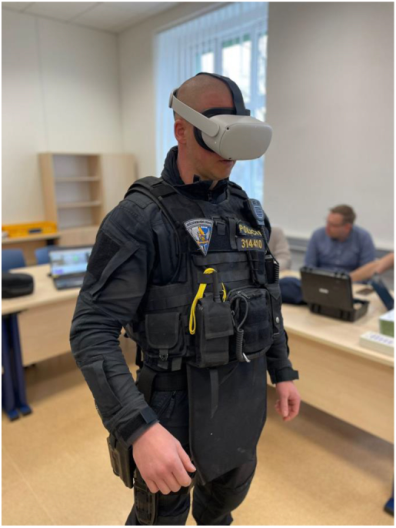
Figure 2: An example of measurements on a sample of police officer.
The heart rate in the practical part was measured using a smart watch and a chest strap. Polar products were selected for the heart rate measurement. The GSR sensor was found to be very suitable for measuring mental strain as it is very sensitive and easily mirrors the activity and response of the body to external influences, making the outliers in the output data noticeable. The heart rate equipment did not show such significant biases for all the sub- jects in the experiment. Furthermore, the authors focused on the interactions
Use of Virtual Reality for Crime Scene Investigation Training by Security Forces 27
between the parameters. The correlation between the data obtained from the GSR sensor and the heart rate measurement device was verified using Pearson’s correlation coefficient. The Pearson correlation coefficient value of rxy = 0.336 demonstrates a slight positive correlation between the GSR and HR outputs. Based on the calculated values of this coefficient, it can be argued that there is a partial linear relationship between the measured out- puts, as at least a minimal positive correlation was demonstrated in 8 out of 10 participants. An important aspect to set the future research design and to test the effect of the virtual reality environment on the performance of police officers during crime scene searches was to determine if there is an increase in stress levels as the end of the time allotted for the experiment approaches.
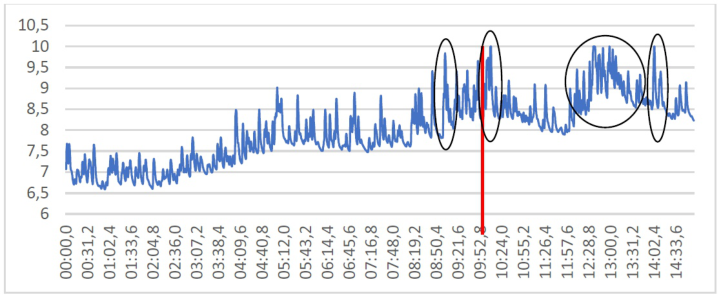
Figure 3: Output from the GSR of one of the participants.
All participants with this characteristic experienced an increase in the average heart rate and skin conductance values of the test portion of the experiment. The outliers of the values in each graph were mainly due to the moments when the participants were told the last minute of the sub- phase of the experiment. Furthermore, when they were exposed to more pronounced sensations in the application in terms of active interaction with the environment supported by sound effects.
CONCLUSION
Police forces are no exception in using virtual reality to train their members. It is a tool that complements the conventional type of training to ensure that police officers are able and ready to perform routine tasks, often in a very stressful environment. To this end, a virtual reality application focused on crime scene examination was designed and developed. Taking into account the very nature of the situation and respecting the individual level of stress perception, a pilot measurement was carried out on a sample of police offi- cers, where the aspect of time burden was added. The aim was to test the measurement technique’s ability to record stress levels within a virtual reality application.
28 Bureš and Lochmannová
The purpose of the testing was to test the use of measuring devices for virtual reality applications. At moments of higher stress, stress and intense experience increase, and when designing scenarios targeting not only expe- rience but also memorization, these perceptions need to be appropriately distributed over time. In the follow-up work, further sub-measurements will be carried out to iterate the prepared applications in order to evenly distribute the stressors in the virtual environment so as not to disturb the cognition and not to affect the error and memorability rates that will be evaluated as aspects.
Work stress is also problematic for psychological health and well-being and, in the case of chronic stress, for the physical health of employees; the police are no exception. Hence the use of virtual environments that are perceived to be safe, but at the same time there is a partial regulated and influential exposure of the individual to stressors, which not only leads to a gradual increase in the individual’s frustration tolerance, but also in their abil- ity to make decisions in stressful situations, of which crime scene investigation is certainly one.
ACKNOWLEDGMENT
The article was created within the project VK01020196 entitled " Innova- tive system of virtual reality and simulated model cases of security character facilitating training and treatment of police officers in risky situations". This project is implemented with the financial support of the Ministry of the Inte- rior of the Czech Republic as part of the program called Open Challenges in Security Research 2023 – 2029 (OPSEC).
REFERENCES
Abualrub, R., Alzaru, I. (2008). Job stress, recognition, job performance and intention to stay at work among jordanian hospital nurses. Journal of Nursing Management, 16(3), 227–236. Alrehaili, E. A., Osman, H. A. (2020) A virtual reality role-playing serious game
for experiential learning. Interactive Learning Environments [online]. 1–14 [cit. 2020-05-07]. doi: 10.1080/10494820.2019.1703008. ISSN 1049–4820. Hoffman, H., Vu, D. (1997). Virtual reality: Teaching tool of the twenty-first century.
Academic Medicine, 72(12), 1076–1081. https://doi.org/10.1097/00001888- 199712000-00018 Lisanne Kleygrewe, R. I. Vana Hutter, Matthijs Koedijk, Raôul R. D. Oudejans (2023): Virtual reality training for police officers: A comparison of train- ing responses in VR and real-life training, Police Practice and Research, doi: 10.1080/15614263.2023.2176307. Lochmannová, A.; Šimon, M.; Hoˇrejší, P.; Bárdy, M.; Reichertová, S.; Gillernová,
K. (2022) The Use of Virtual Reality in Training Paramedics for a Mass Casualty Incident. Appl. Sci., 12, 11740. https://doi.org/ 10.3390/app122211740
Use of Virtual Reality for Crime Scene Investigation Training by Security Forces 29
Stepan, K., Zeiger, J., Hanchuk, S., Del Signore, A., Shrivastava, R., Govindaraj, S., & Iloreta, A. (2017). Immersive virtual reality as a teaching tool for neuroanatomy. International Forum of Allergy & Rhinology, 7(10), 1006–1013. https://doi.org/ 10.1002/alr.21986 Zechner, Olivia, Lisanne Kleygrewe, Emma Jaspaert, Helmut Schrom-Feiertag, R.
I. Vana Hutter, and Manfred Tscheligi. 2023. “Enhancing Operational Police Training in High Stress Situations with Virtual Reality: Experiences, Tools and Guidelines”. Multimodal Technologies and Interaction 7, no. 2: 14. https://doi.or g/10.3390/mti7020014
LISTED IN THE AHFE DIGITAL BOOKSTORE CATALOGUE
Explore the complete digital volume
Human Factors in Virtual Environments and Game Design
Read this individual research paper free through the original publisher, or explore the full digital proceedings book.
ISBN 978-1-964867-13-7
Explore this ISBN in the AHFE Bookstore ↗Listed in the July 2026 bookstore catalogue; search by ISBN to confirm current availability · Digital book purchase optional