Zhiwei Wang, Shun Liu, Jiawen Mi, Huimin Wang, Yuyang Jiang, Dongliang Xu, Ze Gao (2024). Exploring the Healing Potential of Tie-dye Art Therapy Using a Younger Generation of College Students' Workshop as an Example. In: Human Factors in Communication of Design. AHFE Open Access, vol. 136, pp. 49–64. https://doi.org/10.54941/ahfe1004968
In the post-pandemic era, as social life and development gradually resume in an orderly manner, there has been a rapid increase in the number of individuals experiencing depressive emotions within the context of continuing work, school, and production. This paper provides a brief description of utilizing an innovative art therapy system to analyze objectively and research stress relief issues among individuals with post-epidemic depressive emotions. Creative art therapy uses China's traditional tie-dye intangible cultural heritage as a therapeutic medium, explicitly exploring the aspects of tie-dye that can be absorbed and used for art therapy. The aim is to enhance the influence and innovative dissemination of China's outstanding intangible cultural heritage, assisting individuals with post-epidemic depressive emotions in effectively releasing stress and alleviating negative emotions. Selecting the tie-dye technique as an innovative art therapy medium holds excellent practical significance for developing and constructing art therapy and harmonious society. It also presents a prospect for combining Chinese intangible cultural heritage with art therapy.
In ancient times, people began to depict symbols such as lines and shapes on stone walls or the ground to record life and pray for peace and pros- perity. The Tibetan people in China also use sand painting within mandalas for prayer and pain relief. Art therapy has a long history in human civiliza- tion. Research on art therapy began in the late 19th and early 20th centuries,
with reports emerging from European psychiatric hospitals about patients engaging in spontaneous art creation.
In the National Health Service (NHS) established in 1946 in the United Kingdom, art therapy was incorporated into national mental health services, and the first position dedicated to art therapy was established, marking its formal application in psychological treatment. Art therapy as a discipline originated in the 20th century, coined by the artist and psychotherapist Judith Rubin, integrating art and therapy. Subsequently, with the development of medicine and psychology, many scholars, artists, and healthcare profession- als both domestically and internationally recognized its healing capabilities. The achieved numerous research results through practice and case analysis.In its practical application, art therapy has also evolved into a part of social ser- vices, education, and other independent sectors, such as rehabilitation centers and volunteer organizations.
The relationship between art and life, and the cultural connection that per- meates throughout, is eloquently explored by Caroline Case in her book “The Handbook of Art Therapy.”“Art therapy refers to the use of various artistic mediums by clients to express and resolve the underlying issues that brought them to therapy. In this process, the therapist and the client work together to understand the art process and the specific outcomes of each therapeutic ses- sion (Case & Dalley, 2014).” In art therapy, artworks serve as a medium through which clients can easily connect with their therapists. For many clients, art pieces are a more accessible way to establish a connection with the therapist. Moreover, the appreciation of artworks not only helps clients who are emotionally troubled to express their inner experiences but also indi- rectly assists art therapists in discovering desires and personality traits in the individual’s subconscious through their behaviors during art appreciation. In other words, it can be used as an adjunctive diagnostic tool for mental ill- nesses (Xiaoguang Yang et al., 2005). Therefore, to better accommodate and express the experiences of clients, art therapists, and researchers bear the task of continuously innovating art therapeutic media. With the continuous devel- opment of art therapy, the media used in art therapy have already included but are not limited to forms such as music, painting, and theater. For exam- ple, Hacmun (2018) et al proposed a theoretical framework for using virtual reality technology VR in art therapy, and suggested that the characteristics of VR media may enhance and elevate the clinical practice of art therapy. Kimport and Robbins (2012) found that art therapy using clay as a medium can alleviate emotional distress; Lee et al. (2016) conducted art therapy in the form of appreciating famous paintings, which help anxiety and depres- sion in cancer patients; Rencong Xiang et al. (2021) argued that abstract art, as a medium for art therapy, can harness its inherent psychological healing functions.
Some scholars argue that there is a cultural orientation difference between Chinese culture, which emphasizes introspection and spiritual exploration, and Western material culture, oriented towards exploring the external world. This fundamental difference in cultural orientations between the East and the West determines their divergent paths of exploration (Jing Wu, 2020). Con- sequently, there are also differences in artistic and cultural practices between
Exploring the Healing Potential of Tie-Dye Art Therapy Using a Younger Generation 51
China and the West. The core artistic ideology in ancient Chinese culture is the belief in the unity of nature and humanity. In artistic creation, humans are perceived as being born from nature and an integral part. This inspires us to incorporate China’s social realities and rich traditional culture when applying and developing art therapy.
With the continuous development of society, the number of individuals suf- fering from depression, anxiety, and other emotional disorders is increasing. People are becoming increasingly concerned about their own mental health, and the Chinese government is accelerating the promotion of mental health construction. The 20th National Congress of the Communist Party of China proposed the plan for building a healthy China, emphasizing the need to give prominence to developmenting mental health and mental hygiene construc- tion. In the post-pandemic era, more and more practitioners have begun to recognize the value of art therapy in promoting people’s mental health. In the new era, there is a demand for continuous innovation in the techniques and mediums of traditional art therapy. Therefore, combining the background of the era and the national conditions, it is essential to innovate and develop art therapy and its mediums to maximize its effectiveness. The innovation of mediums must apply every aspect of art therapy.
Medium Innovation - Tie-Dye Building upon the innovation of traditional art therapy mediums, the tie-dye technique, a representative intangible cultural heritage, has been chosen to delve into a profound innovation. Under China’s 5,000 years of cultural her- itage, numerous outstanding traditional cultures are continuously inherited and innovated. During its millennium-long development, the tie-dye tech- nique has evolved into various categories, such as wax-resist dyeing, pattern dyeing, indigo dyeing, and botanical eco-printing. Not only has it provided us with numerous possibilities for exploring the fusion of tie-dye and art ther- apy, but it has also offered clients seeking art therapy more opportunities for diverse choices. The long-standing traditional craftsmanship can transform various plants into a wide range of natural dyes, offering tie-dye a greater variety and possibilities in artistic therapy expressions.
Among the five senses through which humans perceive the world, the most direct way is vision, and color, as the most immediate element in visual per- ception, has an undeniable impact on human psychology (Shuohui Yuan, 2007). In color psychology, colors are generally divided into warm tones, including red, orange, and yellow, and cool tones, including green, cyan, blue, and purple, with green being the dividing line. Black, gray, and white are considered intermediate tones. Colors also have variations in terms of tem- perature and weight, and other colors can have different psychological effects (Biyun Zhang, Guisen Feng, 2019). The art of tie-dye includes many healing colors, which can provide clients with positive psychological suggestions.
In the wax-resist dyeing, batik is a technique derived from traditional Chinese dyeing craft. Due to its ability to control specific shapes and rela- tively shorter duration, batik is a suitable medium for group art therapy. The long-term art therapy process facilitates the development of trust and a safe
environment between clients and therapists. Within this atmosphere, clients can fully explore and express themselves, leading to insights about psycho- logical issues and important topics, as well as receiving support from other members.
Furthermore, innovatively incorporating tie-dye as a medium for art ther- apy and integrating elements of Chinese intangible cultural heritage, the rich Chinese traditional culture is combined with psychological treatment. This promotes the localization of art therapy and also serves as a better platform for showcasing traditional Chinese intangible cultural heritage to the world, thereby enhancing the influence of Chinese culture.
Art therapy operates differently from traditional talk therapy, as it is suit- able for addressing psychological issues that are difficult to express verbally. Art therapists assume the role of guides and helpers, aiding clients throughout the therapeutic process. They provide a suitable environment and materials for creative expression, without intervening excessively in the client’s creative process. This non-verbal therapeutic mechanism aligns well with the tie-dye craft, as it is easy to manipulate. Under the guidance of the therapist, clients can fully experience the spontaneous coloring and controllable expressive patterns of tie-dye creation, thus gaining a sense of involvement and control. Through hands-on activities, clients not only develop their manual dexterity, but also derive pleasure from the creation process, experiencing the beauty of traditional Chinese crafts while releasing stress during the therapy.
There is a strong correlation between innovative art therapy mediums and their therapeutic efficacy. The specific therapeutic approaches vary depend- ing on the chosen medium. Tie-dye as a craft can simultaneously fulfill the non-verbal therapeutic mechanism of art therapy and serve as a means of expressive emotional communication. Using tie-dye as a creative medium in art therapy enhances clients’ self-awareness and emotional recovery by expe- riencing the creative process, interpreting tie-dye images, and resonating with the emotions projected in the artwork.
Depression and Interpersonal Relationship Difficulties in College Students Depression is a prevalent mental health issue among university students. It is characterized by abnormally low mood and unpleasant negative emotional states, hindering individual psychological adjustment (Qian Shuhong, Cao Ying, Huang Shiwei, 2019). Depression also significantly impacts academic performance and daily life of university students, potentially leading to self- harm and suicidal thoughts and behaviors. Previous epidemiological studies suggest that the prevalence of depressive symptoms among university stu- dents may be as high as 30% (Cui Qingxia, Wang Zaixiang, 2014). This may be associated with the critical life transition that university students undergo, experiencing changes in their environment and identity, and an increase in academic and career-related stress.
Wang et al. (2020) conducted a meta-analysis of 21 literature studies. They found that effectively managing interpersonal relationships and var- ious other factors have a significant impact on the emotional well-being
Exploring the Healing Potential of Tie-Dye Art Therapy Using a Younger Generation 53
of university students. The stressor vulnerability model is one of the clas- sic theories in studying the etiology of depression. This theory emphasizes the combined influence of external factors and internal individual factors in the occurrence of depression (Qiu Bingsheng, Wang Jisheng, 2000). There are many external factors that influence the occurrence of depressive emo- tions among college students, among which interpersonal relationships are an essential aspect. Interpersonal relationships refer to the patterns of con- nection and interaction between individuals and are an essential component of one’s life, playing a significant role in personal development. Interpersonal psychology theories suggest that interpersonal relationships have substan- tial impacts on the onset, treatment, and prognosis of depression. College students are in a critical period of seeking intimacy, with a strong need for emotional connections. If there are issues in their interpersonal relationships, it is more likely to lead to adverse emotional problems. A study conducted by Qingxia Cui and ZaiXiang Wang (2014) confirmed the above theory. The researchers identified four statistically significant risk factors from the survey, including interpersonal relationships and relationship status. The worse the interpersonal relationships are, the greater the risk of developing depression. Additionally, college students who are not in a romantic relationship face a higher risk of developing depression. Several recent studies have also shown a significant positive correlation between interpersonal difficulties and depres- sive symptoms among college students (Yuanguang Ma, 2022; Lini Lin et al., 2021; Xi Lei et al., 2018; Shegang Zhou et al., 2021). Therefore, addressing the depressive emotions arising from interpersonal relationship issues among college students is a task within the realm of mental health work.
In addition, there have been studies indicating that art therapy can help individuals improve their interpersonal relations. For example, Bin Wang et al (2011) found that art therapy group counseling successfully assisted first-year students in enhancing their interpersonal relationships; The art therapy team led by Jiao Huang, Yeying Wei, and Hansong Dong (2019) helped college students reduce social anxiety in interpersonal communication and enhance their mental health level; The experimental research conducted by Jun Jiao (2016) on art therapy groups revealed that expressive art therapy groups were more effective than spiral group counseling in improving self-affirming behavior in interpersonal relationships among high school students.
As a new medium of art therapy, therapy techniques require therapists to design and adjust treatment plans based on the characteristics of this group. College students are in the stage of early adulthood, a developmental con- cept proposed by the American psychologist Prof. Arnett about the period between the ages of 18 and 25. The central task of the first adult manifesta- tion period is to explore the possibilities of relationships, love affairs, careers, and worldviews. Therefore, when the art therapist uses tie-dye as a thera- peutic medium, they take into account the characteristics of the adult’s first manifestation period and the needs of the client to provide a suitable tie-dye medium. Any part of the tie-dye process is the client’s creation, and the thera- pist pays close attention to the client’s emotional changes during each session and makes adjustments accordingly.
Exploring the Feasibility of Using Tie-Dye as an Art Therapy Based on Practical Applications “Colorful Expression of Healing the Soul” through Tie-Dyeing.As a bril- liant treasure of Chinese traditional intangible cultural heritage, the tie-dye technique embodies the rich historical and cultural background of China for thousands of years. The tie-dye technique boasts an immensely diverse range of colors. Over thousands of years of cultural heritage, the diligent and wise ancestors of China discovered that different parts of various plant species could be used to create other fabric dyes. These dyes are natural, environ- mentally friendly, and have strong colorfastness. Other pigment molecules can be combined with fabric fibers during the production of vegetable dyes, thus changing the original color of the fibers. And the changed color is dif- ficult to be removed even after repeated use, so it is called dye rather than pigment.
Clients experiencing low moods often harbor suppressed pain, sadness, and discomfort deep within, along with other intricate mental processes. Healing colors can aid in improving their depressive emotions by regulat- ing and cathartically expressing these feelings through colors. Therefore, colors can be integrated with tie-dye techniques as a concise form of art ther- apy, utilizing healing colors to offer positive psychological suggestions for clients. The tie-dye technique, through various dyeing methods, can provide a range of healing color options, enabling clients with depressive emotions to experience the diversity of choices available to them.
Controllability Expressed Through Tie-Dye Technique “Expressing Emo- tions Through Patterns.”
“Using patterns to represent emotions” means the process in art therapy where clients’ emotions are visualized and made tangible. In the controlled process of expressing emotions through pattern dyeing, college students who are trapped by interpersonal relationships and are unwilling to express their negative emotions and untold emotional stories may unconsciously project suppressed content onto their creative works when releasing their depressive feelings. During the discussion and exchange of these artworks, clients often reveal the hidden pressures of their conflicts, distress, and confusion buried deep within their hearts.
Batik is a branch derived from the pattern dyeing technique and originated in the southwestern region of China. The general method involves melting and heating wax, then using a wax knife to dip into the wax and apply it to the fabric. During this process, clients can freely control the patterns and designs created by the wax. Afterward,the fabric is immersed in a dyeing vat. Later, the fabric is taken out and boiled in clean water to melt the wax, leaving behind a white base color on the cloth. This technique is then utilized in art therapy for creative treatment of individuals with depressive emotions. Transforming clients’ emotions into patterns is an exercise in patience for the operator. In a quiet and meticulous atmosphere, clients can enter a calm state of mind, expressing the emotional stories embedded in their subconscious, and completing the narrative of their creation.
Exploring the Healing Potential of Tie-Dye Art Therapy Using a Younger Generation 55
Apart from batik dyeing, another derivative technique called “pattern dyeing” also allows creators to control the shape patterns. Pattern dyeing technique is more suitable for group collaboration, where therapists only guide the clients in mastering the skills of pattern dyeing. Clients collaborate in group, starting with carving the pattern on a master board. The specific creative design is determined by using a knife instead of a brush. The carved pattern is then evenly coated with tung oil on both sides of the cowhide paper and allowed to air dry, creating a resist agent. The resist agent is used to dye the pattern, and once dried, the dyeing process begins.
Case Analysis and Justification of Art Therapy Using Tie-Dye Techniques Case Study 1 In the first session of art therapy, a 21-year-old college student, who had been experiencing depression for six months due to misunderstandings in interper- sonal relationships, participated in tie-dye art therapy. Initially, she displayed unstable emotions, alternating between moments of joy and sadness dur- ing the session. While dyeing, she remained silent with her head bowed in the back row, and the therapist refrained from intervening excessively. After the first activity concluded, she mentioned not having particularly profound impressions.
In the second session, the therapist paired her with another female student for resist-dyeing art therapy. They collaborated on creating the resist pat- terns and applying the resist paste, and she described her artwork during the sharing session.
During the final session, the therapist instructed the participants to express their interpretation of the theme “A message to myself” using batik art- work. She chose a meaningful phrase and candidly expressed her inner feel- ings during the artwork presentation, revealing struggles with interpersonal relationships and the underlying causes of her depressive emotions.
Subsequent follow-up sessions revealed that she had made new friends in her physical education class and was no longer afraid of social interactions. Through art therapy, she bravely addressed her issues and found motivation and confidence to confront her challenges through creative expression.
This case demonstrates the effectiveness of tie-dye art therapy in helping individuals with depression release emotions, explore internal issues, and pro- mote personal growth. Through artistic creation, she was able to express her inner turmoil and found the drive and confidence to overcome difficulties.
Case Study 2 Case study two, a male student, in his first year of college, 19 years old. He experienced depressive feelings due to issues in his intimate relation- ship, which in turn affected his academic and personal life. His unresolved problems with intimacy in his romantic relationship prevented him from adequately addressing his previous close relationship.
He participated in a total of three art therapy sessions. In the first session, he engaged in simple tie-dye art and only used shades of grass green, light
pink, orange, and yellow dyes. The second session was a guided marbling technique. There were six participants in the therapy session, and he took a long time to ponder over his design. At first, he carved a complex pattern, and he ended up completely carving off the pattern on the parchment paper. Instead, he carved a large and neatly-shaped heart. When the group work was exchanged after the coloring, he listened carefully to the narratives of the other group members’ work, and for his work, he said that he wished he could have such a signigicant share of love instead of only giving.
During the third session in group, the therapist suggested a themed tie- dye artwork with the theme “Tomorrow.” The art studio provided a large piece of fabric, and the group members had to discuss and collaborate to complete the tie-dye-themed artwork. He actively participated in discussions with other group members throughout the process and quickly decided on the patterns to be depicted in the artwork. The final presentation showed a massive figure of a running person surrounded by various objects, such as a crown, an ice cream cone, a palm, and others. He shared with the therapist about his experience in a past intimate relationship where he constantly gave but did not feel loved in return. Through expressive art therapy, he started to reflect on the past relationship instead of solely experiencing pain and depression.
EXPERIMENTAL PROCEDURES AND DATA Participants
A total of 20 participants were involved in the experimental art therapy pro- gram. All clients were university students who met the requirements for art therapy experiments and voluntarily participated. Among them, there were six males and 14 females. Among the 20 individuals, 2 were first-year stu- dents, 8 were sophomores, and 10 were juniors. The average age was 20 years old.
Experimental Procedures In the experimental process of the innovative art therapy program, utilizing tie-dye as the therapeutic medium, three treatment sessions were developed as one phase. The entire program lasted for three weeks, with one session per week. Each session lasted approximately 3 hours, allowing for adjustments based on the participants’ reactions during the activity.
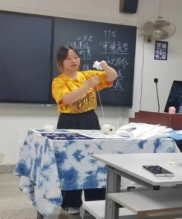
In the first session, the traditional indigo dyeing process was used, fol- lowing these steps: Firstly, the clients participating in the course experiment were met for the first time. After ensuring the confidentiality of their per- sonal information, each client filled out the Beck Depression Inventory questionnaire truthfully and objectively. The therapist first provided detailed explanations of the “cloud pattern” and “deer fetus knot” in the tie-dye pro- cess to the 20 clients. They demonstrated and explained the entire production method and process of the traditional craft (as shown in Figure 1). Without intervening too much, the clients started hands-on art therapy. First, they
Exploring the Healing Potential of Tie-Dye Art Therapy Using a Younger Generation 57
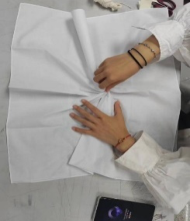
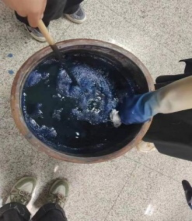
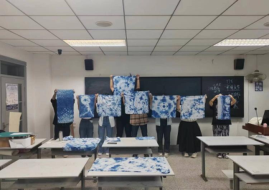
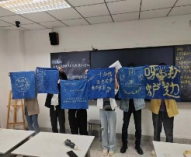
folded a piece of white fabric according to the techniques of the “cloud pat- tern” and “deer fetus knot.” They tightly tied it with cotton thread, and the more the thread was wrapped, the more white areas would be after dye- ing. Otherwise, there would be more blue areas (as shown in Figure 2). Soak the tied fabric in clean water until it gets wet, and then immerse it into the indigo dye vat fermented with Banlangen (Isatis root) for dyeing (as shown in Figure 3). After dyeing for five minutes, take out the fabric, cut the cotton thread, and rinse it with clean water. After drying, a traditional indigo tie-dye artwork was made (as shown in Figure 4)Clients. Due to entirely different in the steps of thread wrapping and folding, the work ended up producing a dif- ferent pattern, and under the guidance of the therapist, each client described the step in tie-dye that they remembered the most and articulated the impact of their step on their work. A group photo was taken without showing their faces.
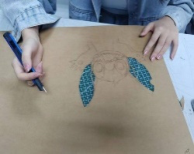
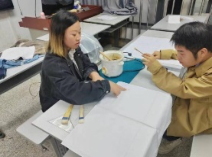
Figure 1: Crafting process explanation.Figure 2: Folding the fabric.Figure 3: Dyeing.Figure 4: Presenting and exchanging of works.
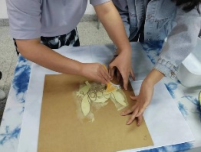
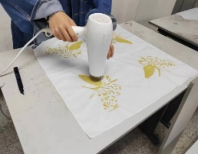
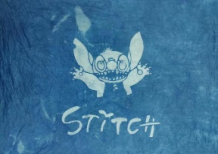
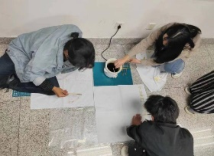
In the second session, the pattern dyeing technique was conducted. The steps are as follows: the therapist engages in conversation with the clients, discussing recent events around them. With the therapist’s guidance, partici- pants are informed that they have control over the specific patterns in dyeing and emphasize that there are no theme requirements for the patterns, allow- ing them to express their creativity. Clients first drew their desired patterns or words on a prepared sheet of leather paper, then used a carving knife to hollow out the patterns or words (as shown in Figure 5). Next, place the newly made block on a piece of white fabric and evenly apply resist paste (made from glutinous rice and lime water) to cover the hollowed-out areas (as shown in Figure 6), and then gently remove the block. Use a hairdryer to thoroughly dry both sides of the fabric coated with resist paste on the white cloth. Ensure that it is scorched (as shown in Figure 7). Wet the fabric with resist paste using clean water, then immerse it in a dye vat for dyeing. After 5 minutes, take it out and rinse it in clean water to remove excess dye and resist paste. The areas covered with resist paste are the base color of the white fab- ric, while the rest are indigo blue (as shown in Figure 8). Finally, the clients described the patterns or text in their works, and talk about the meaning behind expressing these patterns or text.
Figure 5: Engraving.Figure 6: Applying ant.
Exploring the Healing Potential of Tie-Dye Art Therapy Using a Younger Generation 59
Figure 7: Drying.Figure 8: Artworks show.
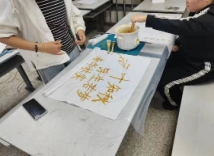
In the third session, it was on the batik technique in tie-dye, with the following steps: The therapist starts by chatting with the clients, discussing recent events happening around them. Under the guidance of the therapist, the traditional batik process and the detailed demonstration and explanation of using the wax and the wax knife (a specific drawing tool dipped in wax on white cloth) are shown (as shown in Figure 9). The clients were told that the theme of this art therapy session is “A Letter to Myself.” Start by melt- ing the wax block and then heat the tip of the wax knife in the wax for one minute. Dip the wax knife into the wax and write a sentence for yourself on the white cloth. Due to the nature of the wax knife, it is advisable not to write too fast and to ensure that the wax completely penetrates through the fabric (as shown in Figure 10). After finishing the writing, wait for the wax to cool and solidify (Figure 11). Soak the fabric in clean water, then immerse it in the dyeing vat for 5 minutes. After dyeing, remove the cloth and boil it in water until the wax that has solidified on the fabric melts. The parts covered by wax are the base color of the cloth, and the rest is indigo blue (as shown in Figure 12). Subsequently, each client described the contents of the words they wrote to themselves in their artwork, and discussed why they chose to write that specific phrase.
Figure 9: Instructing & explaining technique.Figure 10: Writing with a wax knife.Figure 11: Drying.Figure 12: Works exchange display.
Experimental Data and Conclusion Pre-intervention participants were surveyed using Beck’s Depression Scale, as shown in Table 1 and Table 2. The results showed that the mean value of members’ scores was 20.200 ± 3.381. Out of which, 11 (55%) showed mild depressive mood, 8 (40%) showed moderate depressive mood, and 1 (5%) showed severe depressive mood. Whereas, in the post-intervention survey, the mean score of the subjects was 17.550 ± 3.137. 2 (10%) of them had gotten rid of their depressive mood, 12 (60%) still showed mild depressive mood, 6 (30%) showed moderate depressive mood, and none of them showed symptoms of severe depressive mood. Comparison results showed that art therapy had some improvement in different degrees of depressed mood.
Item Pre-Test(M±SD) Post-Test(M±SD) t Sad 1.100±0.447 0.650±0.587 3.327** Sad and disappointed 0.850±0.671 0.750±0.444 0.567 Past failures 0.950±0.686 0.900±0.447 0.295 Optimism and satisfaction 1.300±0.657 0.950±0.510 3.327**
(Continued)
Exploring the Healing Potential of Tie-Dye Art Therapy Using a Younger Generation 61
Table 1. Continued Item Pre-Test(M±SD) Post-Test(M±SD) t
Table available in the original PDF paper.
Guilty conscience 0.950±0.686 0.850±0.489 1.000 Be punished 0.850±0.366 0.750±0.444 -0.809 Self-loathing 0.650±0.489 0.800±0.523 -0.767 Self-scrutinizing 0.90±0.553 0.75±0.444 0.900 Suicidal ideation 0.90±0.553 0.80±0.523 0.698 Weeping 1.20±0.616 0.95±0.605 1.228 Tension and anxiety 1.05±0.686 1.20±0.523 -0.900 Loss of interest 0.80±0.616 1.20±0.523 -2.373* Hesitancy 0.75±0.444 0.90±0.553 -0.900 Self-existent value 1.15±0.671 0.80±0.410 2.100*
Depression Level Frequency % Non-depressed 0 0 Mild depression 11 55 Moderate depression 8 40 Severe depression 1 5
Table 3. Pre-test and post-test comparison of each item.
Table available in the original PDF paper.
Depression Level Frequency % Non-depressed 2 10 Mild depression 12 60 Moderate depression 6 30 Severe depression 0 0
(Note: *:p < 0.05;**:p < 0.005;***:p < 0.001)
Table 4. Comparison of total depression scores pre-test & post-test.
Table available in the original PDF paper.
Pre-test(M±SD) Post-test(M±SD) t 20.200±3.381 17.550±3.137 5.490***
(Note: *:p < 0.05;**:p < 0.005;***:p < 0.001) The results of paired t-tests conducted on each item indicate that, among the factors affecting the development of depressive mood, art therapy demon- strates significant effects compared to interventions targeting other factors,
specifically in alleviating sadness, promoting optimism and satisfaction, enhancing perception of self-worth, reducing loss of interest, and improving concentration and energy levels.
As shown in Table 4, a paired samples t-test was conducted to compare the pre-test and post-test scores on the Beck Depression Inventory (BDI), with a significance level of p<0.05 indicating statistical significance. The results revealed a significant difference between the mean depression levels after intervention treatment (M = 17.550, SD = 3.137) and the mean depression levels before intervention (M = 20.200, SD = 3.381) (t = 5.490, p<0.001). This indicates that art therapy utilizing dyeing as a medium has a significant intervention effect on the depressive state of the participants.
CONCLUSION
Art therapy has been increasingly recognized for its role in helping college students express their untold emotional stories, which often cause them pain and depression. Not only does it aid in healing, but it also serves as an outlet for emotional release, triggering reflections on life and deep contempla- tion, thereby offering assistance to more individuals in distress. Against the backdrop of the post-pandemic era, art therapy is poised to play an actively constructive role.
China’s traditional tie-dyeing intangible cultural heritage, supported by its robust cultural heritage, not only possesses a healing color system but also provides opportunities for controlled pattern expression and creation, cater- ing to the needs of art therapy. The choice of tie-dyeing craftsmanship as an innovative medium for art therapy has promoted the innovative application of China’s traditional intangible cultural heritage, injecting new vitality into the art therapy industry. In an era of constant progress, this innovation not only meets the needs of modern society but also revitalizes traditional Chinese culture in the field of art therapy.
We should uphold the highest spirit of humanitarian care and implement the Healthy China policy, helping those still troubled by depressive emo- tions after the pandemic to overcome their difficulties and embrace new life. Through the case study method, we can gain a deeper understanding of the actual impact and role of art therapy in individual lives.
REFERENCES
Bing Wang, Siyu Zhang, Xuemei Zhong, Junxia Du (2011). The Effects of Expressive Arts Therapy Group Counseling on College Freshmen’s Interpersonal Relation- ships. China Urban Economy (20). Bingsong Qiu, Jisheng Wang (2000). A Review of Quality Stress Theories in
Depression Research. Psychological Science (03). Blomdahl, C., Gunnarsson, A. B., Guregård, S., & Björklund, A. (2013). A realist review of art therapy for clients with depression. The Arts in Psychotherapy, 40(3), 322–330. Blomdahl, C., Gunnarsson, B. A., Guregård, S., Rusner, M., Wijk, H., & Björklund,
A. (2016). Art therapy for patients with depression: expert opinions on its main aspects for clinical practice. Journal of Mental Health, 25(6), 527–535. Case, C. & Dalley, T. (2014). The handbook of art therapy. Routledge.
Exploring the Healing Potential of Tie-Dye Art Therapy Using a Younger Generation 63
Chenguang Wang. (2017). An Intervention Study of Drawing Therapy on College Students’ Depressed Mood. Master’s thesis, Nanchang University Hacmun, I., Regev, D., & Salomon, R. (2018). The principles of art therapy in virtual
reality. Frontiers in Psychology, 9, 2082. Jiao Huang, Yeying Wei, Hansong Dong. (2019). An Intervention Study of Expressive Arts Therapy on College Students’ Interpersonal Relationships. Research on Contemporary Educational Practice and Teaching (02). Jing Wu (2020). Resources, Concepts and Processes of Indigenous Psychotherapy in
China Doctoral Dissertation, Jilin University. Jun Jiao (2016). Intervention study of group counseling on high school students’ interpersonal relationships Master’s thesis, Northwest Normal University. Körlin, D., Nybäck, H., & Goldberg, F. S. (2000). Creative arts groups in psychiatric
care development and evaluation of a therapeutic alternative. Nordic Journal of Psychiatry, 54(5), 333–340. Kimport, E. R., & Robbins, S. J. (2012). Efficacy of creative clay work for reducing negative mood: A Randomized controlled trial. Art Therapy: Journal of the American Art Therapy Association, 29(2), 74–79. Lee, J., Choi, M. Y., Kim, Y. B., Sun, J., Park, E. J., Kim, J. H.,... & Koom, W. S.
(2017). Art therapy based on appreciation of famous paintings and its effect on distress among cancer patients. Quality of Life Research, 26, 707–715. Lihui Yuan (2007). A Preliminary Study on the Corroboration of the Five-Color Theory of Chinese Medicine in Modern Color Psychology and Therapy. Journal of Zhejiang University of Traditional Chinese Medicine (01). Lini Lin, Mei Liu, Jiawang Kuang, Huanqing Zhu, Jiang Nan (2021). The Effects of
Negative Life Events on College Students’ Depression: Chain-Mediated Effects. Chinese Journal of Health Psychology (06). Qingxia Cui, Zaixiang Wang. (2014). Survey on Current Situation of Depression Among College Students and Research on Influencing Factors. China Health Career Management (08). Rencong Xiang (2021). New Perspectives on Abstract Art: An Exploration of the
Psychological Healing Function of Abstract Art Doctoral Dissertation, Central Academy of Fine Arts. Shanshan Zhang, Hong Chang, Yuping Wang, Yun Miao (2018). The Impact of Group Art Behavior Therapy on Anxiety and Depression in Epilepsy Patients. Chinese Nursing Management (12). Shegang Zhou, Haoran Guo, Pingping Yang, Mingyang Wang, Xiaoxian Liu,
Xiaosheng Ding (2021). The Impact of Family Environment on Depression in College Students: the Chain Mediating Effect of Cognitive Emotion Regulation Strategies and Interpersonal Relationships in Dormitories. Special Education in China (12). Shengde Liao, Wenhao Yao, Qiang Zhu, Yi Xie (2015). Efficacy of Painting Art Therapy on Post-sSchizophrenic Depression. Chinese Journal of Health Psychology (01). Suhong Qian, Ying Cao, Shiwei Huang (2019). Relationship Between Depressive
Symptoms and Neuroticism and Online Social Activities Among College Students. Chinese Journal of Mental Health (12). Thyme, K. E., Sundin, E. C., Wiberg, B., Öster, I., Åström, S., & Lindh, J. (2009). Individual brief art therapy can be helpful for women with breast cancer: a randomized controlled clinical study. Palliative & supportive care, 7(1), 87–95. Weisman, Markovich, Gerald, et al. Interpersonal Psychotherapy Theory and
Practice. Beijing: World Book Publishing Company, 2010.
Xi Lei., Jingqun Wang, Yuan Zhang, Baojuan Ye, and Cuicui Liu (2018). The Eeffect of Core Self-Evaluation on College Students’ Depression: the Chain-Mediated Role of Coping Styles and Interpersonal Relationship Distress. Chinese Journal of Clinical Psychology. Xiangguang Yang, Yueji Sun, Jun Wu, Shuhua Jia, Chao Zhang (2005). Concept,
Development and Education of Art Therapy. Medicine and Philosophy(03), 57- 58+64. Yuanguang Ma (2022). The Effect of Interpersonal Relationships on Depression: Chain-Mediated Effects of Life Satisfaction and Meaning in Life. Chinese Journal of Health Psychology (10).
LISTED IN THE AHFE DIGITAL BOOKSTORE CATALOGUE
Explore the complete digital volume
Human Factors in Communication of Design
Read this individual research paper free through the original publisher, or explore the full digital proceedings book.
ISBN 978-1-964867-12-0
Explore this ISBN in the AHFE Bookstore ↗Listed in the July 2026 bookstore catalogue; search by ISBN to confirm current availability · Digital book purchase optional