Juha-Matti Torkkel, Heikki Lahtinen, Heikki Ruohomaa, Vesa Salminen (2024). Virtual technologies and digital twins for logistics hub development. In: Human Factors, Business Management and Society. AHFE Open Access, vol. 135, pp. 268–275. https://doi.org/10.54941/ahfe1004953
With the development of global trade and the lengthening of supply chains, logistics has new challenges in addition to delivery reliability, cost efficiency, and speed. The importance of sustainable development and the emphasis on environmental values in terms of function and image has increased in the logistics chain. The need for adaptivity to quickly create new, more efficient routes and services has also become a cornerstone of effective management of global supply chains.Central to the efficiency of logistics chains are logistics hubs (nodal points) and their operation and ability to renew themselves in rapidly changing situations. In logistics and supply chain management, data plays the most central role, which is a prerequisite for competitiveness, and which is generally recognized. Similarly, at logistics hubs, the importance of data and new technology is central to controlling material flows.However, the utilization of new technology (AR; VR XR) at logistics nodes has received less attention. and building nodes into digital twins. Modeling logistics hubs with virtual technologies and the digital twin of hubs would enable new effective ways of training personnel, planning logistics centers, and visualizing entities in an easily understandable form and for guidance.The article examines the logistics hub, where virtual technologies and digital twins are used to enhance operations in training and the physical development of the hub and new service development. The article examines issues related to the cooperation of different actors in the collection, ownership, sharing, and utilization of data
The increase in the amount of data and new ICT-based technologies create new opportunities to make business more efficient by developing new services and products, new supply chains, and new business models. The new supply chains made possible by the technological revolution enable even faster global transport.
The demand for fast delivery in global trade applies to the entire supply chain, and in particular, it challenges logistics nodes to greater efficiency, flexibility, and delivery reliability.
New ICT-based technologies can significantly influence the planning and production of logistics hubs, as well as customer service. New technologies
Virtual Technologies and Digital Twins for Logistics Hub Development 269
that utilize data, e.g virtual technology and digital twins, become more popular in daily life solutions.
A logistics hub is a centralized location that serves as a hub for the logistic- s/transportation, storage, and distribution of goods. It is a crucial component of supply chain management and can help streamline operations, reduce costs, and improve overall efficiency.
Digital twins are virtual replicas of physical assets, processes, and systems that allow for real-time monitoring, analysis, and optimization. By creating a digital twin of a logistics hub, developers can gain insights into its opera- tions, identify bottlenecks and inefficiencies, and make data-driven decisions to improve its performance.
Virtual technologies and digital twins are increasingly being used for logis- tics hub development to enhance efficiency, optimize operations, and improve decision-making.
Virtual technologies refer to computer-generated environments that sim- ulate real-world experiences. This includes virtual reality (VR), augmented reality (AR), and mixed reality (MR). These technologies offer opportuni- ties for immersive and interactive experiences, enabling users to explore and engage with digital representations of physical objects and spaces. Virtual technologies provide a foundation for creating digital twins.
Digital twins are virtual replicas of physical objects, systems, or processes. They are computer-based models that mimic the behavior and characteris- tics of their physical counterparts in real-time. Digital twins are created by integrating real-time data from sensors, IoT devices, and other sources to pro- vide a holistic view and enhance understanding, monitoring, and prediction of physical assets or systems. In the context of logistics hub development, digital twins can represent various aspects such as infrastructure, operations, supply chain processes, and resource management.
The development of logistics hubs with data-based technology is made challenging by the fact that data is needed from a large number of operators. Logistics have to be smooth for everyone. In the logistic chain, the actors are very dependent on each other.
Operators can have quite different interests in terms of the development and use of the logistics hub, but also from the perspective of the operators’ own business. In practice, the development of logistics hubs may even require competitors to work together and share their data with competitors. The key issue is the data-related question and “rules of the game”, as well as trust building.
Combining virtual technologies and digital twins in the context of logis- tics hub development offers several potential benefits. It enables stakeholders to visualize and simulate different scenarios, assess the impact of changes or disruptions, and make data-driven decisions for better planning, design, and resource allocation. Real-time monitoring and analysis of digital twins can help identify bottlenecks, optimize workflow, predict maintenance needs, and enhance overall operational performance. Additionally, virtual technologies provide training and educational opportunities for logistics hub personnel, enabling them to gain practical experience and develop skills in a virtual environment.
THEORETICAL FRAMEWORK The theoretical framework revolves around three main perspectives: virtual technologies, digital twins, and logistics hub development. When looking at all three perspectives, the central and common feature is that there are many actors, many kinds of interests, and many kinds of data present in all of them, because of that all issues/viewpoints must be structured harmoniously so that the whole works without problems. From this point of view, one of the key challenges is common operational goals and common aspects of data sharing, collection, and utilization. The central challenge is creating common “rules of the game” and developing the ecosystem.
‘Users can attend personalized training through a VR application through an AR application without being immersed in any metaverse. It is assumed, that any meaningful engagement in the metaverse needs to draw on some type of XR environment, such as AR or VR’ (Dwivedi et al., 2022).
The results’ accuracy of the digital twin of the warehouse environment is directly impacted by the ability of the model to accurately represent the physi- cal system. Furthermore, although the data exchange between the virtual and physical model is central to the operation of a DT. It is not only a question of identifying the relevant data to be integrated into the model but also of char- acterizing them in terms of quantity, quality, and precision’ (Bélanger et al., 2023). ‘Warehouse operations can be digitized via a Digital Twin (DT), which retrieves data from the real-world industrial process, mimics its behavior, and feeds specific inputs back to the real-world process, after elaboration from the simulation-based digital model’ (Ferrari et al., 2023).
‘While AI offers advantages such as accessibility, scalability, personaliza- tion, and non-judgemental interactions, its ability to teach is limited by an intrinsic lack of contextual and experiential knowledge, comprehension, and ways to teach implicit skills and dispositions. Though there are concerns about plagiarism and the replacement of human jobs, a more productive way forward is for educators to focus on demystifying AI, emphasizing the learning process over the final product, honoring learner agency, orchestrat- ing multiple sources of motivation, cultivating skills that AI cannot easily replicate, and fostering intelligence augmentation (IA) by building human-AI partnerships. Through these approaches, educators can harness the benefits of AI while nurturing the unique abilities of humans to tackle big challenges in the 21st century’ (Cao & Dede, 2023).
The advancement of digital technologies and the rapid development of cyber-physical systems (CPS), integration of 5G, Internet of Things (IoT), augmented reality (AR), and other smart and intelligent technologies have brought an emerging need for future Industry 4.0 and metaverse development (Tang et al., 2023).
A digital twin is a vital part of today’s Industry 4.0 because of the virtual entity supported by AI, IIOT, and the abundance of industrial big data in creating a digital representation of physical objects, as well as supporting industrial efficiency (Hinduja et al., 2020).
Virtual Technologies and Digital Twins for Logistics Hub Development 271
AI and virtual technologies are becoming gatekeeper technologies that uniquely hold the key both to the potential for the exponential advancement of human wellbeing and to possibilities for the emergence of significant risks for society’s future (Leslie, 2024).
OBJECTIVES AND RESEARCH QUESTIONS The The main objective of this applied research has been to analyze how virtual technologies and digital twin to enhance operations and training and the physical development of the hub. The main research questions are:
How the virtual technology and digital twin can be used in improving and making the logistics hubs more efficient?
How the data from partners in logistic networks can be used in developing hub functionality?
How can the developed virtual environment be used in all types of service development?
The virtual hub concept is based on literature analysis and previously con- ducted pilots and practical situations. The case study environment is built according to the data gathered from many companies involved with the development of virtual hubs.
The article examines the logistics hub, where virtual technologies and digital twins are used to enhance operations in training and the physical development of the hub and new service development. The article exam- ines issues related to the cooperation of different actors in the collection, ownership, sharing, and utilization of data.
DIGITAL ECOSYSTEM IN LOGISTIC HUB DEVELOPMENT A large number of different actors with different and sometimes conflicting interests are involved in the development of the logistics node. It requires the coordination of many different perspectives and interests. So, the goal can be considered the development of a common business ecosystem, the founder and complement of this is the digital ecosystem. The development of logistics hubs based on ICT technology requires the sharing and harmonization of data in technological solutions to form a functioning digital ecosystem.
Digital ecosystems in logistics hub development refer to the use of dig- ital technologies and platforms to enhance and optimize the operations and services within a logistics hub. These ecosystems involve the integra- tion and interconnectivity of various stakeholders, including logistics ser- vice providers, shippers, carriers, and government agencies, through digital platforms and technologies.
The key components of digital ecosystems in logistics hub development include several approaches that should be considered. This involves the devel- opment of digital platforms and infrastructure that enable the collection, processing, and sharing of data and information among the stakeholders. This includes cloud computing, Internet of Things (IoT), big data ana- lytics, and blockchain technologies. Thus, Digital ecosystems in logistics
hub development rely on the integration and analysis of data from various sources, including logistics operations, transportation, inventory, and cus- tomer demand. This allows for real-time monitoring, predictive analytics, and optimization of logistics processes and services. Based on that, the digital ecosystem enables seamless connectivity and collaboration among different stakeholders within the logistics hub. This includes real-time communica- tion, collaboration tools, and visibility of operations, allowing for better coordination and sharing of information.
Digital ecosystems in logistics hub development involve automation and digitization of various processes, such as order management, inventory tracking, and freight transportation. This reduces manual work, enhances efficiency, and minimizes errors. Digital ecosystems enable the development of customer-centric services and solutions, such as track and trace, real- time visibility, and on-demand delivery options. This improves customer satisfaction and enhances the overall logistics experience. It also facilitates collaboration among various stakeholders, such as owners, operators, sup- pliers, and customers. Through shared access to digital twins, stakeholders can collaborate on design, operation, and maintenance activities, leading to improved performance and reduced costs.
Digital ecosystems allow for the scalability of digital twin deployments. Organizations can easily add or remove digital twins as needed, depending on their requirements. This scalability ensures that digital twins can be applied to various assets, systems, and processes across different industries. Digital ecosystems foster innovation by providing a platform for experimentation, testing, and collaboration. This enables organizations to explore new ideas, technologies, and business models that can enhance the functionality and value of digital twins.
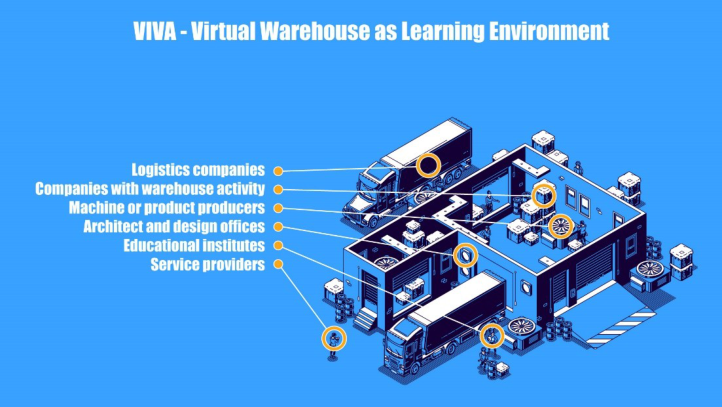
Figure 1: Different stakeholders at the logistic hub.
Virtual Technologies and Digital Twins for Logistics Hub Development 273
Benefits of digital ecosystems in logistics hub development include improved efficiency and cost optimization, enhanced visibility and trans- parency, better coordination and collaboration among stakeholders, faster and more accurate decision-making, and enhanced customer experience/
THE BENEFITS OF VIRTUAL TECHNOLOGY AND DIGITAL TWINS IN LOGISTICS HUBS The developed virtual environment can be used in all types of development in many ways. The benefits and perspectives of virtual technologies in logistics, from the operator’s point of view, can be divided into two main groups: design and operation.
The Use of Virtual Models and Digital Twins for Developing Logistic Hubs Digital twins can simulate and optimize the layout, flow, and resource allocation within logistics hubs. By creating virtual environments, logis- tics managers can identify bottlenecks, test different configurations, and optimize processes to enhance efficiency. Thus, digital twins can integrate with IoT devices and automation systems within logistics hubs. This allows for better coordination of operations, including smart bin replenishment, autonomous vehicles, and predictive routing, resulting in faster and more efficient processes.
The virtual environment can be used to design and test new services before they are implemented in the real world. This allows service developers to identify and rectify any issues or shortcomings in the service design, ensuring a better user experience.
The Use of Virtual Model and Digital Twins for Operations of Logistic Hubs Virtual technology can integrate with data analytics to forecast demand pat- terns accurately. By analyzing historical data and market trends, logistics hubs can optimize inventory levels, transportation routes, and workforce planning, reducing the likelihood of stockouts or overstocks. Virtual tech- nology enables real-time monitoring and control of logistics hubs. Managers can remotely access critical data, monitor performance, and adjust oper- ations as necessary. This capability increases responsiveness and reduces the need for physical presence. Also digital twins can monitor and analyze real-time data from logistics equipment and infrastructure. By predicting maintenance needs, logistics hubs can minimize downtime, reduce repair costs, and maximize the utilization of assets.
Virtual reality technology can provide immersive training and skill building for logistics hub staff. By simulating various scenarios, employees can gain hands-on experience, improving their operational skills, and reducing the risk of accidents or errors. Service developers can create realistic simulations of different service scenarios, allowing employees to practice and improve their skills in a virtual setting before interacting with real customers.
Virtual technology enables effective communication and collaboration among stakeholders within the logistics ecosystem. By providing a virtual platform, logistics hubs can interact with suppliers, partners, and customers in real-time, facilitating coordination and fostering efficiency.
BENEFITS FOR SERVICE POINT OF VIEW The data from partners in logistic networks can be used in developing hub functionality in several ways. By analyzing partner data, including histori- cal sales data, order patterns, and customer behavior, a hub can accurately forecast demand for inventory and resources. This helps in planning and opti- mizing operations, ensuring that the right amount of goods and resources are available at the hub to meet customer demand. So partner data on inven- tory levels, reorder points, and lead times can be leveraged to centralize and optimize inventory management at the hub. The hub can monitor partner inventory levels and make informed decisions on replenishment, redistribu- tion, and stock transfer to minimize stockouts, reduce excess inventory, and improve inventory turnover.
Partner data on shipping routes, transportation modes, and carrier per- formance can aid in route optimization. The hub can analyze this data to identify the most efficient and cost-effective routes, determine the optimal mode of transportation, and select reliable carriers to enhance the overall logistics process.
Performance monitoring and analysis: Partner data on key performance indicators (KPIs), such as delivery time, order accuracy, and transportation costs, can be used to monitor and analyze the performance of the hub and its partners. This data-driven approach helps identify bottlenecks, ineffi- ciencies, and areas for improvement, leading to better decision-making and operational enhancements.
Partner data on potential disruptions, such as delays, quality issues, or supply chain disruptions, can be integrated into the hub’s risk management system. The hub can proactively identify and mitigate risks by monitoring partner data, implementing contingency plans, and collaborating with part- ners to ensure business continuity. The virtual environment can be used to gather feedback from customers and involve them in the co-creation of new services. By immersing customers in a virtual environment, developers can understand their preferences, needs, and expectations, enabling them to tai- lor services accordingly. The virtual environment can be used to develop and deliver services remotely.
The virtual environment can generate vast amounts of data that can be analyzed to improve service performance. Developers can track user behav- ior, preferences, and trends within the virtual environment to optimize the service design, enhance customer satisfaction, and identify potential areas for innovation.
Overall, leveraging partner data in developing hub functionality empowers logistics hubs to make informed decisions, streamline operations, enhance collaboration, and optimize resources for efficient logistics.
Virtual Technologies and Digital Twins for Logistics Hub Development 275
CONCLUSION
Logistics hubs serve as critical nodes in transportation and supply chain networks, facilitating the movement and exchange of goods and services. They involve various activities including warehousing, distribution, trans- portation, and value-added services. The development of logistics hubs aims to optimize efficiency, minimize costs, and improve overall performance by enhancing operational processes, infrastructure, and collaborations. Virtual technologies and digital twins can contribute to this development by provid- ing tools and insights for planning, designing, monitoring, and optimizing logistics hub operations.
Digital ecosystems play a vital role in the development of logistics hubs by integrating and optimizing various stakeholders and processes through digi- tal platforms, digital twins, and virtual technologies. This enables improved efficiency, transparency, and customer-centric services, contributing to the overall growth and success of logistics hub development.
Real-time visibility and collaboration can be achieved by integrating part- ner data into the hub’s systems. The hub can have access to partner data on order status, shipment tracking, and delivery updates. This enables effec- tive coordination, synchronization, and communication among partners, ensuring smooth operations and timely execution of logistics activities.
The developed virtual environment provides a versatile platform for service development across various industries, enabling organizations to enhance their offerings, streamline operations, and deliver better experiences to their customers. Virtual technology and digital twins offer a range of opportuni- ties to optimize logistics hubs, improve operations, reduce costs, and enhance customer satisfaction.
REFERENCES
Bélanger, M-J., Pellerin, R., Lamouri, S. (2023) A Literature Review on Digital Twins in Warehouses. Elsevier, Procedia Computer Science, Volume 219, 2023, Pages 370–37. Cao, L., & Dede, C. (2023). Navigating A World of Generative AI: Suggestions
for Educators. The Next Level Lab at Harvard Graduate School of Education. President and Fellows of Harvard College: Cambridge, MA. Dwivedi, Y. et al. (2022) Metaverse beyond the hype: Multidisciplinary perspectives on emerging challenges, opportunities, and agenda for research, practice and pol- icy. International Journal of Information Management Volume 66, October 2022, 102542. https://doi.org/10.1016/j.ijinfomgt.2022.102542 Ferrari, A., Zenezini, G., Rafelee, C., Carlin, A. (2023) A Roadmap towards an
Automated Warehouse Digital Twin: current implementations and future devel- opments. Elsevier, Science Direct„ IFAC PapersOnLine 55–10 (2022) 1899–1905. Hinduja, H., Kekkar, S., Chourasia, S., Chakrapani, H. B. (2020) Industry 4.0: digital twin and its industrial applications, International Journal Science, Engineering and Technology Open Access J. 8 (4) (2020) 1–7. Leslie, D. (2024) AI, Ethics and Governance in Practice: AI Fairness in Prac-
tice.. Alan Turing Institute https://www.turing.ac.uk/research/research-projects/ai- ethics-and-governance-practice (read 11.02.2024). Tang, Y., Kuo, W., Lee C. K. M. (2023) Real-time Mixed Reality (MR) and Artificial Intelligence (AI) object recognition integration for digital twin in Industry 4.0. Internet of Things 23 (2023) 100753, Science Direct, Elsevier Publishing B. V., https://doi.org/10.1016/j.iot.2023.100753
LISTED IN THE AHFE DIGITAL BOOKSTORE CATALOGUE
Explore the complete digital volume
Human Factors, Business Management and Society
Read this individual research paper free through the original publisher, or explore the full digital proceedings book.
ISBN 978-1-964867-11-3
Explore this ISBN in the AHFE Bookstore ↗Listed in the July 2026 bookstore catalogue; search by ISBN to confirm current availability · Digital book purchase optional