Minna Takala, Taina Tukiainen, Vesa Salminen (2024). Strengthening Co-creation Competencies and Engaging Innovation Ecosystem Partners Through Ecosystem Games and Innovation Camps. In: Human Factors, Business Management and Society. AHFE Open Access, vol. 135, pp. 22–32. https://doi.org/10.54941/ahfe1004927
Since 2014, the EU has recommended Smart Specialisation (RIS3) as a strategic approach to regional development. This place-based approach emphasizes the identification of strategic sectors based on a region's unique strengths and potential, fostering innovation and economic growth. By creating enabling conditions, accelerating research and development, and supporting an entrepreneurial discovery process (EDP) with wide stakeholder involvement, RIS3 aims to enhance the prosperity of European regions. This outward-looking approach embraces open innovation ecosystems supported by effective monitoring mechanisms, enabling regions to actively participate in global innovation networks and harness the opportunities of a knowledge-based economy. In 2023, under the New European Innovation Agenda, the Regional Innovation Valleys (RIVs) emerged as a flagship initiative to harness the potential of innovation across the EU regions. With a goal of identifying up to 100 RIVs committed to enhancing their research and innovation practices, investment, and policies, the initiative aims to promote a thriving European innovation ecosystem. These RIVs are expected to collaborate on inter-regional innovation projects linked to key EU priorities, fostering knowledge exchange and joint initiatives across borders.This paper presents the findings of two participatory case studies that specifically aimed to enhance stakeholder participation and commitment to working together in innovation ecosystems. Innovation ecosystems, sustainable use of natural resources including forestry are key drivers of economic growth, sustainable development, and prosperity in the Häme Region and in Finland. The first project, "Häme Goes into Ecosystems", explored the effectiveness of participatory innovation ecosystem game sessions in building understanding among participants. These sessions covered a range of topics, including shared vision, stakeholder identification based on the quadruple helix principle (government, academia, business, and civil society), different development needs and rhythms of participants, new roles and responsibilities, and new participatory ways of working and processes required in open innovation ecosystems. Four game sessions were organized with regional development specialists, interested participants, and students, providing an opportunity for hands-on experience and feedback. The second participatory approach, a forest innovation camp, brought together a group of EU decision makers, top executives, and regional and municipal managers from across Europe to Finland. This unique forum facilitated top-level dialogue focused on current forest issues, providing a platform for exchange of knowledge and perspectives. The forest innovation camp strengthened the participants' understanding of the state of forests, carbon sinks, the bioeconomy, and the diverse uses of forests. The camp also highlighted the importance of monitoring the state of forests, the restoration of nature, and the innovative use of wood. By combining research, practical activities, experiences in the forests, and workshop sessions, the camp aimed to foster a shared vision for sustainable forestry in a European context.In conclusion, these case studies demonstrate the effectiveness of participatory approaches in enhancing stakeholder engagement and collaboration in innovation ecosystems. By bringing together diverse stakeholders from different sectors and fostering open dialogue, these approaches can foster a shared vision for the innovation ecosystem and promote the development of sustainable and resilient economies.
Since 2014, the EU has recommended Smart Specialisation (RIS3 ∼Regional Innovation Strategy for Smart Specialisation) as a strategic approach to regional development. This place-based approach emphasizes the identifica- tion of strategic sectors based on a region’s unique strengths and potential, fostering innovation and economic growth. By creating enabling conditions, accelerating research and development, and supporting an entrepreneurial discovery process (EDP) with wide stakeholder involvement, RIS3 aims to enhance the prosperity of European regions. This outward-looking approach embraces open innovation ecosystems supported by effective monitoring mechanisms, enabling regions to actively participate in global innovation networks and harness the opportunities of a knowledge-based economy (Asheim, 2019; Bianchi, 2024).
Strengthening Cocreation Competencies and Engaging Innovation Ecosystem Partners 23
In 2023, under the New European Innovation Agenda, the Regional Inno- vation Valleys (RIVs) emerged as a flagship initiative to harness the potential of innovation across the EU regions. With a goal of identifying up to 100 RIVs committed to enhancing their research and innovation practices, investment, and policies, the initiative aims to promote a thriving European innovation ecosystem. These RIVs are expected to collaborate on inter-regional inno- vation projects linked to key EU priorities, fostering knowledge exchange and joint initiatives across borders. New ways of more collaborative and sustainable ways of working are recommended across Europe (Bianchi, 2024). The EU’s Mission for Adaptation to Climate Change supports regions to by creating challenges that regions can solve through collaboration and innova- tion to achieve climate resilience, by attracting resources towards sustainable solutions and by encouraging knowledge sharing between regions and sec- tors to accelerate effective adaptation strategies by highlighting adaptation urgency.
Current world situation calls for systemic change – this has been addressed by EU and the Club of Rome in the launch of transformative systems hub in January 2024 (Dixson-Decieve, 2024). Paradigm shifts and operational models in multiple levels are needed for transformational change. Collabo- ration with different stakeholders is increasingly important. The European Green Deal addresses increasingly theme related to sustainability, climate change and biodiversity and this shifts focus event more to importance of bioeconomy and forests.
FRAMEWORK FOR REGIONAL INNOVATION ECOSYSTEMS AND TRANSFORMATIVE SYSTEMIC CHANGE Regional innovation ecosystem consist of the interconnected set of institu- tions – universities, corporations, government, start-ups, and investors – within a geographic region whose connectivity allows each organization and researcher in that region to leverage the knowledge, resources, and special- ized capabilities of other institutions and individuals within that location (Murray and Budden, 2017; Asheim et al., 2019). Innovation ecosystem main principles include shared vision involving everyone, from individuals to organizations, to share a common understanding of the desired future state and the goals of the innovation ecosystem. Collaboration is strengthened by common values, a set of core principles, like openness, and risk-taking, guid- ing the behaviour and decision-making within the ecosystem. The ecosystem should include a variety of entities, such as startups, universities, businesses, and government agencies, also NGOs and communities each contributing their unique strengths and perspectives. Diversity of stakeholders is elemen- tary important for systemic transformation (Guzman et al., 2023; Hoffecker, 2019; Ikävalko et al., 2022). Innovation ecosystem principles include shared vision and purpose among stakeholders this can be strengthened by actions supporting common direc- tionality (Könnölä et al., 2021) and shared values (den Ouden, 2012; Murray, 2017).
The 4-helix model of stakeholder participation emphasizes collaboration between four key stakeholder groups: government, industry, academia, and civil society. Each contributes their resources and expertise to drive inno- vation. This stakeholder-based approach to innovation policy necessitates a change in focus from traditional frameworks for regional innovation policy– engaging a much wider variety of local actors and enabling them to be part of the regional development process (Asheim, 2019; Carayannis, 2012).
The 5-helix model is an extension of the 4-helix model, which adds the environment as a crucial stakeholder, by explicitly recognizing the natu- ral environment as a critical stakeholder in the innovation process. This additional helix signifies the importance of integrating environmental con- siderations into all stages of innovation, aiming for solutions that are both innovative and sustainable. This model emphasizes the need for a holis- tic approach to innovation, where environmental considerations are not an afterthought but an integral part of the process. By fostering collaboration and knowledge exchange between all stakeholders, the 5-helix model aims to drive innovation that contributes to a more sustainable future (Carayannis, 2012). Innovation ecosystems require a balanced approach to different time- frames. While some advancements require long-term development cycles spanning decades, fostering foundational research and infrastructure devel- opment, the ecosystem must also embrace shorter-term cycles. This allows for rapid testing of pilots and experiments, enabling agile learning and course correction. This dual focus, encompassing both long-term vision and short- term experimentation, fosters an environment where innovation can flourish (Ikävalko, 2021; Könnölä et al., 2021; Ouden, 2012; Salminen et al., 2022).
To thrive, a sustainable innovation ecosystem requires strong connectivity between stakeholders. This includes open communication, information shar- ing, and collaboration across different levels. Effective ecosystems foster a culture of learning and knowledge exchange, allowing participants to exper- iment, share best practices, and celebrate successes. This iterative approach, combined with a focus on user needs and embracing failures as learning opportunities, ultimately accelerates innovation and drives the development of impactful solutions. This requires multi-level collaboration, encompassing strategy, development, and implementation (Ruohomaa, 2020; Takala and Tukiainen, 2023).
A thriving innovation ecosystem requires a robust support system to nur- ture ideas and solutions. This includes access to diverse funding sources, such as a mix of public grants, venture capital, and angel investors, which fuels the development and scaling of promising ventures. Shared infrastructure and resources, like facilities, equipment, and platforms, can significantly reduce costs and accelerate research and development efforts. Furthermore, incen- tive structures like tax breaks, subsidies, and intellectual property protection create an environment that encourages investment and participation in inno- vation. By combining these elements – diverse funding, shared resources, and well-designed incentives – innovation ecosystems can foster the collabora- tion of diverse skill sets and disciplines, equipping them to tackle complex
Strengthening Cocreation Competencies and Engaging Innovation Ecosystem Partners 25
challenges and deliver impactful solutions (Bianchi et al., 2024; Murray and Budden, 2017; Tukiainen and Hongisto, 2020; Takala and Tukiainen, 2023).
A foundational element for understanding successful innovation ecosys- tems lies in their core principles. Table 1 outlines these key principles, provid- ing clear descriptions and relevant references for further exploration. These principles offer a roadmap for fostering collaboration, knowledge sharing, and resource allocation within the ecosystem, ultimately driving sustainable innovation.
Table 1. The innovation ecosystem principles strengthening cocreation capabilities and engagement.
Hoffecker, 2019; Ikävalko, 2022; Könnölä et al., 2021; den Ouden, 2012
Shared visions and goals of the future by participating organizations – each organisation strategic goals needs to be somehow linked to shared vision of innovation ecosystem Directionality – shared purpose, dream - Agreements, Memorandum of understanding, roadmaps towards the future
den Ouden, 2012; Könnölä et al., 2021; Hoffecker, 2019; Murray, 2017
Shared values Values in different levels and dimensions – levels of value – society, ecosystems, organisations, and individuals Perspectives of values – economical, psychological, sociological, and ecological Culture and incentives
Carayannis, 2012; den Ouden, 2012; Könnälä et al., 2021; Murray, 2017; Tukiainen et al., 2020
Stakeholders Diversity of innovation ecosystem 4 –helix -stakeholders from public government, RDI organisations, private business and community. for sustainability 5 –helix Polycentricity – several leading actors committed to enhance collaboration in ecosystem Trust among stakeholders Roles and responsibilities Local, regional, national, and international participants Time scale and pace / rhythm of development Long term development cycles (over decades) combined with short term development cycles, testing pilots and experiments.
Könnölä et al., 2021; Salminen et al., 2022 Practices and ways of working
Könnölä et al., 2021; den Ouden, 2012; Hoffecker, 2019; Takala and Tukiainen, 2022
Connectivity among stakeholders, ways of working together, learning, sharing, Redundancy – enough of common themes of interest Portfolio of development projects – steering systems and practices Celebrate the progress publicly Resources and funding
Bianchi et al., 2024; Hoffecker, 2019; Murray, 2017
Combining different capabilities and skills, training activities, multi- and interdisciplinarity for complex challenges, supporting infrastructures and combining different funding instruments to address wide systemic challenges
HUMAN SYSTEMS INTEGRATION TOOLS TO SUPPORT INNOVATION ECOSYSTEMS This paper presents the findings of two participatory case studies that specifically aimed to enhance stakeholder participation and commitment to working together in innovation ecosystems. Innovation ecosystems, sustain- able use of natural resources including forestry are key drivers of economic growth, sustainable development, and prosperity in the Häme Region, in Finland and across Europe.
Innovation Ecosystem Game as a Participatory Action for Stakeholder Engagement The project, “Häme Goes into Ecosystems - HGiE”, explored the effec- tiveness of participatory innovation ecosystem game sessions in building understanding among participants. These sessions covered a range of topics, including shared vision, stakeholder identification based on the quadruple helix principle (government, academia, business, and civil society), different development needs and rhythms of participants, new roles and responsibili- ties, and new participatory ways of working and processes required in open innovation ecosystems. Four game sessions were organized with regional development specialists, interested participants, and students, providing an opportunity for hands-on experience and feedback.
Our paper presents the use of active participatory game sessions to enhance understanding and collaboration within innovation ecosystems. We discuss the challenges of addressing complex themes like innovation and ecosystems within a single game session. Drawing on in more detail a case study of game sessions conducted at the Finnish Scout’s Leaders’ Campfire Summit.
Innovation ecosystems, characterized by intricate networks of actors and interactions, are crucial for fostering innovation and economic growth. How- ever, effective collaboration and a shared understanding of the ecosystem’s purpose are critical challenges. This paper presents a novel approach – active participatory game sessions – to address these challenges.
The game sessions focus on key principles of innovation ecosystems, including:
Vision and Purpose: Defining the shared goals and aspirations of the ecosystem.
Values: Identifying the core values guiding interactions and decision- making.
Stakeholders: Exploring the roles and contributions of diverse stakehold- ers, including the five-helix model (government, industry, universities & research institutions, civil society, and nature).
Timescales and Rhythm: Establishing effective timelines and rhythms for collaboration.
Ways of Working: Identifying preferred methods of communication and interaction.
Resources and Funding: Exploring resource allocation strategies and funding mechanisms.
Strengthening Cocreation Competencies and Engaging Innovation Ecosystem Partners 27
International Collaboration: Envisioning strategies for fostering interna- tional partnerships.
These themes provide a framework for participants to develop a shared understanding of innovation ecosystem, fostering collaboration and driving action.
The game sessions utilize the Ketso workshop facilitation kit. This kit pro- motes inclusivity, fostering productive collaboration and learning through a creative and sustainable platform. Ketso ensures equal voice for all par- ticipants, maximizing group interaction efficiency and effectiveness. This approach is particularly well-suited for diverse groups, encouraging effective collaboration and learning. Notably, Ketso emphasizes themes of sustainabil- ity and circular economy principles, aligning with the increasing importance of these aspects within innovation ecosystems (Ketso, 2024).
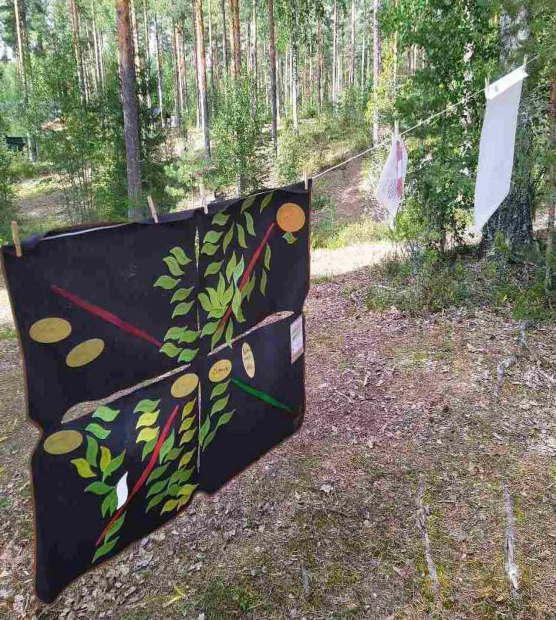
This case study builds on game sessions conducted at the Finnish Scout’s Leaders’ Campfire Summit held in August 2024 (Figure 1). These sessions targeted a diverse audience, including experienced innovation ecosystem pro- fessionals and individuals with no prior knowledge. The sessions began with a brief introduction to innovation ecosystems and the Ketso facilitation kit. Subsequently, group discussions focused on themes chosen by participants.
Figure 1: Innovation ecosystem game workshop at campfire summit at Evo, August 2023.
Participants in the game sessions arrived with a diverse range of expecta- tions. A strong desire for both personal and professional development was evident, with many seeking to quench their curiosity and expand their knowl- edge base (learning opportunities). Furthermore, fostering new ideas through creative exploration was a key motivator. The sessions also offered partic- ipants the chance to delve into the world of gamification and explore its potential applications. A focus on cross-disciplinary and multidisciplinary perspectives encouraged a holistic approach to understanding innovation ecosystems. Additionally, participants expressed interest in systems thinking and theoretical frameworks, seeking to build a strong foundation for com- prehending these complex systems. Ultimately, the game sessions aimed to equip participants with practical tools directly applicable to their professional endeavours. Finally, a desire to deepen their understanding of the “ecosys- tem” concept in various contexts underscored the participants’ commitment to applying these learnings across a broad spectrum of situations.
The game sessions highlighted several key challenges. The interconnected nature of innovation and ecosystems proved demanding to address within a single session’s timeframe. Facilitating a shift in participants’ mindsets, from established ways of thinking to embracing new perspectives, emerged as a significant concern. Another challenge involved encouraging participants to explore how Finnish innovation ecosystems could contribute to advance- ments on a global scale. Ensuring an inclusive environment for a diverse range of participants, with varying age groups, educational backgrounds, and professional experiences, required careful consideration. Finally, the sessions highlighted the need for strategies to sustain engagement. This included pro- viding resources for participants inspired by the game to delve deeper and potentially participate in future sessions.
The game targets a broad audience, including regional development pro- fessionals, individuals with general interest in innovation ecosystems and students developing future-oriented skills. Also, existing innovation ecosys- tem professionals could use the game for further development of their own ecosystems. According to participants feedback the game could be used to achieve the following:
Understanding Innovation Ecosystems: Equipping participants with a solid understanding of the core concepts and dynamics of innovation ecosystems.
Creating New Ecosystems: Guiding participants in establishing new inno- vation ecosystems, including stakeholder identification and collaborative working methods.
Developing Existing Ecosystems: Providing tools for existing ecosystem improvement, inspiring participation, and re-energizing stagnant ecosys- tems.
Innovation Camps as a Participatory Action for Stakeholder Capacity Development The Forest Innovation Camp presents a unique forum designed to culti- vate collaboration and propel sustainable forestry practices across Europe.
Strengthening Cocreation Competencies and Engaging Innovation Ecosystem Partners 29
This initiative convenes prominent EU decision-makers, top executives, and regional/municipal managers, fostering high-level dialogue on critical forest issues and facilitating the exchange of knowledge and perspectives (Rissola et al., 2017; Tukiainen and Hongisto, 2021; Bianchi et al., 2024).
The camp strengthens participants’ comprehension of forest health, car- bon sequestration, the bioeconomy, and the multifaceted uses of forests. It underscores the significance of forest monitoring, nature restoration, and innovative wood utilization. By combining research, practical activities, and firsthand forest experiences, the camp strives to establish a shared vision for achieving sustainable forestry throughout Europe. Innovation camps function as intensive programs equipping participants with the necessary knowledge, skills, and mindsets to confront complex problems and develop innovative solutions (Rissola et al., 2017).
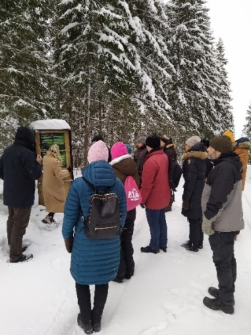
The case study focuses on the December 2024 Forest Innovation Camp held in North Karelia, Finland. The camp offered participants an introduc- tion to Finnish forestry practices, collaboration with SMEs and national government organizations, and immersive experiences within Koli National Park and the North Karelia Biosphere Reserve. These experiences showcased sustainable development models and fostered regional cooperation. A “forest observation walk”on the Vaikkojoki River provided practical perspectives on contemporary forest issues. Furthermore, the camp facilitated exploration of key themes such as biodiversity, carbon sinks, sustainable practices, wilder- ness recreation and wellbeing, cultural heritage, northern lights, darkness and astronomy (Figure 2).
Figure 2: Exploration of forest & wilderness innovation points: forest, carbon sinks, biodiversity, water bodies, kalevala roots, stars & Northern lights/astronomy by Vaikkojoki river, forest innovation camp, December 2024.
The camp fostered peer-to-peer discussions and presentations, allowing participants to challenge, refine, and develop innovative solutions. EU repre- sentatives from various countries explored themes outlined in the EU Forest Strategy through practical activities.
Sustainability serves as a core principle of the camp, with Finland and Sweden playing a leading role due to their prominence in sustainable forestry practices. The camp emphasizes forest monitoring, nature restoration, and innovative wood utilization. By combining research with practical expe- riences, the camp aims to steer Europe’s economy towards a sustainable future.
The European Committee of the Regions, the European Commission, the Finnish Forest Foundation, Luke (Natural Resources Institute Finland), and local forest sector operators in Eastern Finland collaborate to organize the camp. This collaboration fosters shared knowledge and paves the way for future iterations of the Forest Innovation Camp.
The Forest Innovation Camp serves as a valuable platform for advancing sustainable forestry in Europe. By bringing together key decision-makers and stakeholders, the camp fosters knowledge exchange, shared vision building, and the development of innovative solutions. The camp’s focus on sustain- ability aligns with Europe’s broader environmental goals and ensures the continued health and productivity of its vital forest resources.
CONCLUSION AND RECOMMENDATIONS Transformative innovation ecosystems are becoming increasingly important to solve complex and critical societal and environmental challenges. Our future depends on the capability of humans to collaborate and work together. This concern was recently highlighted in the launch session of Systems Trans- formation Hub by the Club of Rome and other stakeholders. The Systems Transformation Hub aims to provide strategic and systematic guidance, sup- porting the European institutions and Member States in policy analysis, development, policy learning, and agile decision support. The perma-crisis is the new reality. The only way to address wicked problems and com- plex challenges is to apply short and long-term systems logic to decision making followed by efficient implementation. In the future the regional inno- vation ecosystems must be equipped with adequate capabilities, skills, and resources to tackle emerging challenges in all levels from global to local (Dixson-Decieve, 2024).
In the face of climate change, fostering adaptation requires a multi-pronged approach. Missions driving large-scale adaptation efforts, coupled with pio- neering activities that explore innovative solutions, can spark widespread action. Encouraging this action necessitates a focus on multidisciplinarity, bringing together diverse expertise, and fostering community participation. By harnessing collective knowledge and engagement, we can effectively address the challenges of climate change.
In conclusion, these case studies demonstrate the effectiveness of participa- tory approaches in enhancing stakeholder engagement and collaboration in innovation ecosystems. By bringing together diverse stakeholders from dif- ferent sectors and fostering open dialogue, these approaches can foster a shared vision for the innovation ecosystem and promote the development of sustainable and resilient economies.
Strengthening Cocreation Competencies and Engaging Innovation Ecosystem Partners 31
ACKNOWLEDGMENT
The authors would like to warmly acknowledge all participants to innovation ecosystem game pilots and to forest innovation camp, as well as the European Commission, the Finnish Forest Foundation, the European Committees of Regions and LUKE Natural Resources Institute Finland and the Regional Council of Häme.
REFERENCES
Asheim, B. T., Isaksen A. Trippl, M. (2019) Advanced Introduction to Regional Innovation Systems. Cheltenham: Elgar. Bianchi, G., Matti, C., Pontikakis, D., Reimeris, R., Haegeman, K. H., Miedzinski, M., Sillero Illanes, C., Mifsud, S., Sasso, S., Bol, E., Marques Santos, A., Andreoni, A., Janssen, M., Saublens, C., Stefanov, R. and Tolias, Y., (2024) Innovation for place-based transformations, Bianchi, G. editor (s), Publications Office of the European Union, Luxembourg. doi: 10.2760/234679, JRC135826. Carayannis, E. G., Barth, T. D. and Campbell, D. F. (2012) The Quintuple Helix
innovation model: Global warming as a challenge and driver for innovation. J Innov Entrep 1, 2 (2012). doi: 10.1186/2192-5372-1-2. Dixson-Decieve, S. (2024) Systems Transfomation Hub – Launch Event (Presentation). Guzman, J., Murray, F., Stern, S. and Williams H. L. (2023) Accelerating
Innovation Ecosystems: The Promise and Challenges of Regional Innovation Engines. NBER National Bureau of Economic Research. Working Paper 31541 https://www.nber.org/system/files/working_papers/w31541/w31541.pdf. Hoffecker, E. (2019) Understanding Innovation Ecosystems. A Framework for Joint Analysis and Action. Cambridge. MIT D-Lab. Ikävalko, H., Mattila, L. and Tuokko, P. (2022) Ecosystem Game - Managing innova-
tion ecosystems. Aalto University Publication Series. Business + Economy 3/2022. ISBN 978-952-64-1096-8. Ketso (2024). https://ketso.com/ Accessed on 9.3.2024. Könnölä, T.; Eloranta, V., Turunen, T. and Salo, A. (2021) Transformative governance of innovation ecosystems. Technological Forecasting and Social Change. 173/2021 121106 Elsevier. Murray, F. and Budden, P., (2017) A systematic MIT approach for assessing
‘innovation-driven entrepreneurship in ecosystems (iEcosystems). Working paper Published by MIT’s Laboratory for Innovation Science & Policy. Ouden, E. (2012) Innovation Design - Creating Value for People, Organizations and Society. Springer. ISBN : 978-1-4471-2267-8. Rissola G., Kune H. and Martinez P. (2017), Innovation Camp Methodology Hand-
book: Realising the potential of the Entrepreneurial Discovery Process for Terri- torial Innovation and Development, EUR 28842 EN, Publications Office of the European Union, Luxembourg, ISBN 978-92-79-74613-0, doi: 10.2760/924090, JRC102130. Ruohomaa, H. (2020) Ecosystem-based development in the transition of fourth industrial revolution Academic dissertation. ACTA WASAENSIA 452. Salminen, V., Ruohomaa, H., Takala, M. (2022) Future Ecosystem Ensuring Com-
petitiveness in Continuous Co-Evolution. AHFE International Open Access Pub- lishing. Human Factors, Business Management and Society, Vol. 56/2022, 1–9 doi: 10.54941/ahfe1002245.
Takala, M. and Tukiainen, T. (2023) Anticipatory Innovation Governance Model and Regional Innovation Ecosystems Supporting Sustainable Development. AHFE International Open Access Publishing. Human Factors, Business Management and Society, Vol. 97/2023, 1–10. doi: 10.54941/ahfe1003877. Takala M. and Tukiainen T. (2022) Regional Innovation Ecosystems Foster-
ing Sustainable Development. AHFE International Open Access Publishing. Human Factors, Business Management and Society, Vol. 56, 2022, 17–24. doi: 10.54941/ahfe1002247. Tukiainen, T. and Hongisto, P. (2020) Sustainable Baltic Sea Region – Towards Economic Transformation by Smart Specialisation Strategies. Aalto University. Helsinki: Unigrafia.
LISTED IN THE AHFE DIGITAL BOOKSTORE CATALOGUE
Explore the complete digital volume
Human Factors, Business Management and Society
Read this individual research paper free through the original publisher, or explore the full digital proceedings book.
ISBN 978-1-964867-11-3
Explore this ISBN in the AHFE Bookstore ↗Listed in the July 2026 bookstore catalogue; search by ISBN to confirm current availability · Digital book purchase optional