Paolo Cicconi, Michele Trovato, Lorenzo Donati, Antonio Casimiro Caputo (2024). Defining the configuration of storage shelving in assembly workstations: an ergonomic tool for a parametric optimization. In: Ergonomics In Design. AHFE Open Access, vol. 129, pp. 23–33. https://doi.org/10.54941/ahfe1004807
The analysis and correction of working postures is an essential practice in industry. Discomforting postures and repetitive tasks could cause strain, fatigue, musculoskeletal disorders, pains, and injuries, reducing worker productivity. Several normative standards provide tools and methods for observation, evaluation, and solving critical ergonomic situations. The workstation assessment often requires the study of the actions and postures of each operator related to each task and each repetitive cycle. In the context of assembly line workstations, a common task is the material picking from storage shelving. The ergonomic evaluation of shelving for lineside temporary parts storage is focused on the layout, location of each part container, and picking frequencies. An ergonomic evaluation in the shelving design phase could reduce the risk of repetitive and poor working postures, producing benefits for the operators.The paper proposes a parametric optimization tool based on a Genetic Algorithm to reduce the ergonomic risks related to the picking phase from light shelves employed in assembly lines. RULA and OWAS methods are used to perform the ergonomic evaluation of different configurations of shelves during the optimization analysis. As a test case, the design of a light shelving is proposed considering the time and assembly cycle of fitness bikes.
Nowadays, small, and medium-sized enterprises still use manual picking from shelves along the production lines. The manual picking and handling pro- cesses are repetitive and exhausting processes that can lead to musculoskeletal diseases (Zhao et al., 2023). Generally, an incorrect ergonomic design of a workstation could increase the risk of injuries. The ergonomic analysis is an essential procedure to avoid work-related musculoskeletal disorders (WMSD) and work-related musculoskeletal injuries (WMSI). WMSD and WMSI refer to painful conditions affecting the muscles, tendons, and nerves, during regular and repetitive work activities (Liu et al., 2023). Moreover,
there is a relationship between poor ergonomics and losses in terms of productivity and assembly quality (Falck et al., 2010). All the negative effects of poor working postures increase costs for manufacturing compa- nies. However, the optimum ergonomic conditions do not often increase the productivity of a workplace (Iriondo Pascual et al., 2020a). The scope of ergonomics is to avoid health, physical, and psychological issues, combining safety and productivity (Naeini et al., 2013).
The ergonomic risk assessment can be evaluated using biomechanical parameters (Petrosyan et al., 2020). The operators’ motions can be described by parameters such as the angle of trunk flexion and extension, velocity, acceleration, spine patterns, and muscle forces to evaluate lower back disor- ders (Li et al., 2017). The study on ergonomic risk assessment using human kinematic data is a newly proposed method that is still in the research and discussion phase (Zhao et al., 2023).
The literature shows several observation-oriented methods and approaches to investigate workplace risks by examining the working postures, using direct observation, video, or photos. Classical observation-oriented meth- ods applied in posture analysis are RULA – Rapid Upper Limb Assessment (McAtamney et al., 1993), REBA – Rapid Entire Body Assessment (Hignett et al., 2000), OWAS – Ovako Working posture Assessment System (Karhu et al., 1981), and NIOSH – National Institute of Occupational Safety and Health Lifting Equation (NIOSH, 1981). All these methods provide scores to evaluate the ergonomic risk related to the static postures. Generally, low scores refer to acceptable postures.
RULA is used to determine the risk of musculoskeletal disorders linked to various work postures. It was created to evaluate the ergonomics of repet- itive tasks in a timely and qualitative manner, with a focus on the posture of the upper body such as neck, trunk, upper arm, lower arm, wrist, and hand. RULA and REBA are the most used because they consider each phys- ical part of the body. While RULA provides more attention to the upper limbs, REBA is focused on the position of the lower extremities of the worker (Hita-Gutiérrez et al., 2020). However, these approaches do not consider in detail frequencies and time. In this context, OWAS is the method used to evaluate postures adopted in each task, considering the related frequencies and time (Gajšek et al., 2021). NIOSH Lifting Equation is also another well- known ergonomic method in the literature; however, it is specific for load handling phases including vertical lifting and travel distance (Zare et al., 2016). Digital Human Modeling (DHM) tools are used to evaluate the ergonomic risk for workers in production, using a 3D analysis based on virtual manikins (Berlin et al., 2010). Some of these tools can also evaluate the Methods-Time Measurement (MTM) in production (Bortolini et al., 2017). Focusing on the only ergonomic evaluation, methods provided in most commercial tools are based on a static loading perspective.
The demand for a more efficient production requires the reduction of takt time avoiding WMSD and WMSI. This result can be achieved using a Multi-Objective Optimization (MOO) approach that minimizes the time in each manufacturing task and minimizes the ergonomic risk in each working
Defining the Configuration of Storage Shelving in Assembly Workstations 25
posture. In the literature, there are several papers focused on MOO con- sidering Evolutionary Algorithms and different objective functions. Genetic Algorithms (GA) are used in ergonomic design and many other fields due to their characteristic to support the search for optimal solutions within prob- lems with many combinations (Muramatsu et al., 2019). In (Dalle Mura et al., 2019), GA was developed using the MatLab® platform to optimize the ergonomic function based on energy expenditure and the assembly line bal- ancing. In (Harari et al., 2019) another similar MOO optimization approach was proposed, using GA and objective functions focused on the maximization of worker productivity while not exceeding the ergonomic thresholds.
A widespread solution in optimization studies is to assess the ergonomic risk using common evaluation methods such as REBA (Bortolini et al., 2017) and NIOSH Lifting Equation (Iriondo Pascual et al., 2020a). Another approach is to consider the evaluation of energy expenditure using Garg’s metabolic equation (Dalle Mura et al., 2019). The Garg model considers the total energy expenditure related to oxygen consumption in performing micro-movements (Garg et al., 1978).
Harari et al. (2019) used different ergonomic methods such as the Lower Back Compression Force (LBCF), RULA score, and VO2 (which evaluate the metabolic rate in ml/min). Moreover, they defined a threshold for each ergonomic score, and they also used a user-defined function that considers the rate between the ergonomic scores and the production rate. Generally, there is a need for the creation or adaptation of ergonomic evaluation methods for optimization analysis (Iriondo Pascual et al., 2020b).
Several optimization design frameworks are already proposed in the litera- ture to search for optimal ergonomic solutions. These platforms use Genetic Algorithms (GAs) tools, DHM analysis, and production simulations. The multi-disciplinary approach requires competencies in ergonomics, informat- ics, production, and CAD/CAE tools. However, most of these studies are concerned with changing the sequence of existing tasks to obtain a lower ergonomic risk.
This paper develops a methodology and a computer tool to optimize the shelf layout and the location of the containers on the shelves, inducing a sequence of working postures that minimizes the ergonomic effort given an assembly sequence.
The proposed workflow considers the list of components and their assem- bly frequencies as problem input, and geometrical parameters as variable parameters. A GA approach is used to find optimal parameter combinations according to objective functions based on ergonomic indexes and configura- tion constraints. As a test case, the shelving of a feeding line has been analyzed considering the production data to assemble fitness bikes. The part list of the fitness bike analyzed is reported in (Bozer et al., 1992).
The following section proposes the methodological approach. Subse- quently, the case study and the results are described. Finally, conclusions are reported.
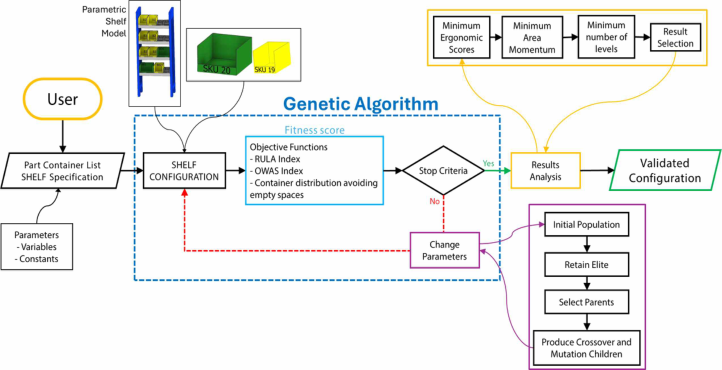
APPROACH The approach aims to search for an optimal configuration of the parts storage shelving by simultaneously determining the shelving layout (i.e. the num- ber and height of the shelves from the shop floor) and the location of parts containers on the shelves to reduce the ergonomic effort for a given pick- ing sequence. A GA-based tool supports the optimization workflow (see Figure 1).
Based on the assembly cycle to be performed, the user defines the input data including the list of parts to be stored and picked, the set of available containers and the associated physical dimensions, the type of container used for holding each part type, the parts picking frequencies, and the geometrical dimensions of the shelf (minimum and maximum height of shelves and their width). Please note that the picking frequency can be different for each part given that each part can have a distinct multiplicity in each assembly and that the choice of parts may depend on the assembled variant in multi-model or mixed model assembly lines. The decision variables set by the optimization algorithm are the height of each shelf level, the number of levels, and the position of each box. While each shelf level is variable, the shelf width has been considered constant.
Figure 1: The proposed method for optimizing temporary storage shelves in feeding lines.
In the proposed approach, a GA tool supports the multi-objective opti- mization. As reported in the literature (Ngatchou et al., 2005), the GA algorithm exploits the process of natural selection, in which the fittest indi- viduals have a higher chance of surviving, procreating, and passing on their advantageous traits to the following generation. The fitness score is based on the objective-functions used. Over multiple generations, the algorithm explores the solution space and converges toward optimal or near-optimal solutions. Starting from an initial population (individuals), GA evaluates the fitness score of the objective functions, quantifying the solution’s quality.
Defining the Configuration of Storage Shelving in Assembly Workstations 27
Subsequently, GA selects from the current population to serve as parents for the next generation and performs crossover and mutation, creating a new population. GA repeats the evaluation, selection, crossover, mutation, and replacement until a satisfactory solution is found. The best individuals represent the optimized solutions to the problem.
The decision variables used in this method are related to the position of each container. GA defines a new set of variables to allocate the contain- ers to different levels. In this context, feasibility constraints are defined to avoid unfeasible solutions. The maximum number of levels and their vertical positions are constant.
Three objective functions are considered in the proposed optimization approach:
Shelving Ergonomic Score (SES): a RULA-based index that considers a score weighted by the picking frequencies (min−1) as seen in Equation (1), also reported in (Cicconi et al., 2023).
OWAS score (OS): the index related to the OWAS method (Karhu et al., 1981), which aims at reducing the ergonomic impact related to the operator considering positions and frequencies.
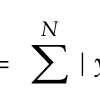
Sum of Momentum of Area (SMA): a function that evaluates the sum of each momentum of area calculated for each box at a “y” distance from the reference level (1000 mm), as seen in Equation (2).
The SES score, suggested here, combines RULA detail in assessing single postures of upper limbs (including positions such as wrist and neck, neglected in other methods) with the capability of OWAS to account for the task fre- quency. Equation (1) reports the SES score, based on the RULA index, and weighted by the picking frequencies (min−1). This ergonomic score is evalu- ated using the same metrics provided by the RULA assessment (McAtamney et al., 1993).
Equation reproduced from the original PDF.
=
Total Frequency (1) Equation (2) reports the SMA score that calculates the sum of each momen- tum of area related to the reference level (1000 mm), where each distance (mm) is evaluated with absolute value | yi | to enhance the position close to the reference level. The term Ai is the cross-section area of each box (evaluated in mm2).
Equation reproduced from the original PDF.
While the first two objective functions (SES and OWAS) aim at reducing the ergonomic risks of shelving, the last one (SMA) avoids empty spaces. The SMA function forces the GA tool to locate all containers as close to each other as possible, placed within the operator’s golden picking zone (at a level
of 1000 mm). Focusing on the objective functions of SES and OWAS, they are based on two ergonomic methods. The SES function is based on the RULA- index, one of the most used ergonomic methods due to its characteristic of considering the upper limbs with detail. Moreover, the SES function adds frequencies to the RULA approach. The OWAS function is another ergonomic method, here considered because it weights the ergonomic risk by frequency and class of risk.
An analytical model of the shelving has been integrated to calculate the value of each objective function and evaluate the feasibility constraints for each iteration. The feasibility constraints are necessary to guide the algo- rithm in classifying the results between feasible and unfeasible solutions. A first check verifies that the containers on each level do not exceed the maxi- mum shelf width. A second check requires that the minimum vertical distance between two adjacent shelf levels is greater than the height of the relative tallest container.
The strategy to select the optimal configuration from many possible solu- tions can be related to the specific test case. The user can define the criteria for the final solution. An example is reported in the Results section.
CASE STUDY A case study has been used to test and validate the proposed approach. The case study refers to the assembling line analyzed in (Bozer et al., 1992) to produce fitness cycles. In particular, the data analyzed here is related to Workstation type 6, which is replicated in three parallel workstations.
This workstation is dedicated to the assembly of the Seat, the Handlebar, and the Stabilizer Subassembly, considering 15 components (see Table 1). It is expected that the line assembles 320 fitness cycles each 8-hour shift, which is equivalent to 40 units per hour. The number of parallel stations reported in Table 1 suggests that each of them processes 13.3 subassemblies per hour. It is assumed that due to the particularly small size of some components, some withdrawals are taken simultaneously. The Stabilizer (SKU 2) and Handle- bar (SKU 29) components, having a size not compatible with the containers hypothesized, are assumed to be stored in special shelving and, therefore out- side the domain of the study. The result is the list of hourly withdrawals listed.
Table 1. List of components.
Table available in the original PDF paper.
Component SKU Qty Withdrawals /Hour
Parts per Container
Container Size
No. of Containers Stabilizer 2 2 13.3 - - - Plug 3 4 13.3 100 S 1 Carriage Bolt 4 4 13.3 100 S 1 Flange Nut 5 4 13.3 100 S 1 Carriage Bolt 18 3 13.3 100 S 1 Post Clamp 19 3 13.3 50 M 1
(Continued)
Defining the Configuration of Storage Shelving in Assembly Workstations 29
Table 1. Continued Component SKU Qty Withdrawals
Table available in the original PDF paper.
/Hour
Parts per Container
Container Size
No. of Containers Seat Post 20 1 13.3 30 L 1 Seat 21 1 13.3 7 L 3 Nut. Quick Adjust 22 1 13.3 100 S 1 Pivot Shaft 23 1 13.3 100 S 1 End Cap 24 4 13.3 100 S 1 Flange Nut 26 2 13.3 100 S 1 Grip 27 2 13.3 50 M 1 Plug 28 2 13.3 100 S 1 Handlebar 29 2 13.3 - - -
The objective of the case study is to define the position of the 15 containers related to the withdrawals list (see Table 1). The shelving analysed is a single- column one with an overall width of 750 mm. The height of each shelf level can vary from 525 mm to 1650 mm with a step of 125 mm. Therefore, 10 different levels of shelving can be considered during the optimization analysis. Three types of containers have been used (see Table 2).
Table 2. Classification and dimensions of the containers employed in this case study.
Table available in the original PDF paper.
Type Width (mm) Height (mm) Depth (mm) S – Small 150 115 230 M – Medium 210 200 350 L – Large 315 200 350
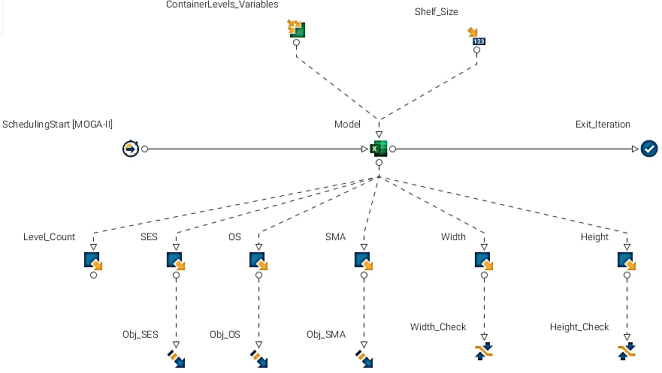
Figure 2: The workflow elaborated using ESTECO modeFRONTIER.
The approach has been implemented using the software tool ESTECO modeFRONTIER, adopting the Multi-Objective Genetic Algorithm II (MOGA-II) method as the optimization algorithm to minimize the three
objective functions. A graphical workflow has been defined with parameters, model, objectives, and constraints (see Figure 2). Considering the proposed test case, 15 decision variables have been used in the optimization analysis. Each decision variable can assume the vertical position related to one level. The analytical model of the virtual shelf has been developed by Microsoft® Excel and Visual Basic Application. This model calculates the values for each objective function and verifies the feasibility constraints.
RESULTS
The optimization analysis generated thousands of possible solutions in about 1 hour and 30 minutes; therefore, a criterion was necessary to select the opti- mal solution. The proposed search criterion is sequential. The first step is to order the results by the SES score to obtain a sub-set of solutions with mini- mum SES values. The second step is to order the obtained sub-set of solutions by the OS score to obtain a reduced sub-set of solutions with minimum SES and OS values. The third step is to order the last sub-set of solutions by the SMA score to obtain a third sub-set of solutions with the minimum values of SES, OS, and SMA. Finally, the optimal solution can be the configuration that minimizes each function within the third sub-set of solutions.
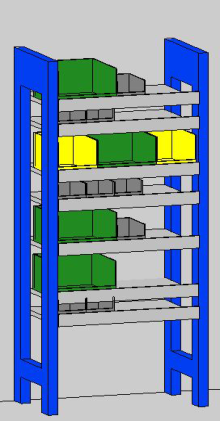
A worst-case scenario has been defined with seven levels of shelving (see Figure 3a) and maximum values for each objective function (see Table 3).
Table 3. One of the worst-case scenarios.
Table available in the original PDF paper.
SES OS SMA Num. of Levels
3.56 143 213871 7
The worst-case scenario has been compared with the optimal solutions. The optimal solutions have been filtered by the proposed searching criterion to define the final configuration (see Table 4). Configuration 1 identifies the optimal solution for the case study (see Figure 3b).
Table 4. The sub-set of optimal solutions achieved using the proposed approach.
Table available in the original PDF paper.
ID SES OS SMA Num. of Levels Configuration 1 3.02 110.25 161878 5 Configuration 2 3.17 112.82 172659 5 Configuration 3 3.17 112.82 175003 6 Configuration 4 3.285 130.76 186628 5 Configuration 5 3.33 158.97 164221 5 Configuration 6 3.41 105.12 172659 5
Defining the Configuration of Storage Shelving in Assembly Workstations 31
a) b)
Figure 3: a) One of the worst-case scenarios with seven levels; b) Configuration 1: the optimal configuration analyzed with five levels.
CONCLUSION
The proposed approach aims to reduce the ergonomic risks of storage shelv- ing for lineside temporary parts storage. The application regards the context of feeding the assembly lines workstations. The paper describes a method for optimizing the container distribution on the levels of shelving. The workflow has been implemented using commercial software. The employed objective functions are based on ergonomic methods and geometrical distribution. The MOGA-II method was used as GA to search the solutions while minimizing three objective functions.
A test case has been proposed to validate the approach. The results show the possibility of achieving a set of low-impact configurations. A criterion has been defined for selecting the optimal solution. One of the limitations of the test case is that the withdrawal frequencies of all parts are the same. Therefore, future works will consider customized products with different frequencies in the component list. As a future improvement, CAD model- ing will be integrated into the workflow to build the digital representation and check the feasibility constraints. Studies with virtual mannequins and different ergonomic scores will be considered.
ACKNOWLEDGMENT
Project ECS 0000024 Rome Technopole, Concession Decree No. 1051 of 23 June 2022 adopted by the Italian Ministry of University and Research, CUP B83C22002820006, Rome Technopole.
The authors would like to acknowledge ESTECO software company.
REFERENCES
Berlin, C., Kajaks, T. (2010). Time-related ergonomics evaluation for DHMs: a literature review. International Journal of Human Factors Modelling and Simulation, 1(4), 356. Bortolini, M., Faccio, M., Gamberi, M., Pilati, F. (2017). Multi-objective assembly
line balancing considering component picking and ergonomic risk. Computers & Industrial Engineering, 112, 348–367. Bozer, Y. A., McGinnis, L. F. (1992). Kitting versus line stocking: A conceptual framework and a descriptive model. International Journal of Production Economics, 28(1), 1–19. Cicconi, P., Trovato, M., Caputo, A. C. (2023). A CAD-Based Tool to Support the
Configuration of Parts Storage Shelving in Assembly Workstations. ASEC 2023. Dalle Mura, M., Dini, G. (2019). Optimizing ergonomics in assembly lines: A multi objective genetic algorithm. CIRP Journal of Manufacturing Science and Technology, 27, 31–45. Falck, A. C, Örtengren, R., Högberg, D. (2010). The impact of poor assembly
ergonomics on product quality: A cost–benefit analysis in car manufacturing. Hum Factors Ergon Manuf Serv Ind, 20, 24–41. Gajšek, B., Šinko, S., Kramberger, T., Butlewski, M., Özceylan, E., Ðuki´c, G. (2021).
Towards Productive and Ergonomic Order Picking: Multi-Objective Modeling Approach. Applied Sciences, 11(9), 4179. Garg, A., Chaffin, D. B., Herrin, D. G., 1978, Prediction of Metabolic Rates for Manual Materials Handling Jobs. The American Industrial Hygiene Association Journal, 39(8), 661–674. Harari, Y., Bechar, A., Riemer, R. (2019). Simulation based optimization method-
ology for a manual material handling task design that maximizes productivity while considering ergonomic constraints. IEEE Transactions on Human-Machine Systems, 49(5), 440–448. Hignett, S., McAtamney, L. (2000). Rapid Entire Body Assessment (REBA). Applied Ergonomics, 31(2), 201–205. Hita-Gutiérrez, M., Gómez-Galán, M., Díaz-Pérez, M., & Callejón-Ferre, Á.-J.
(2020). An Overview of REBA Method Applications in the World. International Journal of Environmental Research and Public Health, 17(8), 2635. Karhu, O., Härkönen, R., Sorvali, P., Vepsäläinen, P. (1981). Observing working postures in industry: Examples of OWAS application. Applied Ergonomics, 12(1), 13–17. Iriondo Pascual, A., Högberg, D., Syberfeldt, A., Brolin, E., Hanson, L. (2020a).
Application of Multi-objective Optimization on Ergonomics in Production – A Case Study. In: Di Nicolantonio, M., Rossi, E., Alexander, T. (eds) Advances in Additive Manufacturing, Modeling Systems and 3D Prototyping. AHFE 2019. Advances in Intelligent Systems and Computing, 975, 584–594. Iriondo Pascual, A., Högberg, D., Syberfeldt, A., Brolin, E., Hanson, L. (2020b).
Optimizing Ergonomics and Productivity by Connecting Digital Human Modeling and Production Flow Simulation Software. SPS2020. Li, X., Komeili, A., Gül, M., El-Rich, M. (2017). A framework for evaluating muscle activity during repetitive manual material handling in construction manufacturing. Automation in Construction, 79, 39–48. Liu, G., Dobbins, C., D’Souza, M., Phuong, N. (2023). A machine learning approach
for detecting fatigue during repetitive physical tasks. Personal and Ubiquitous Computing, 27(6).
Defining the Configuration of Storage Shelving in Assembly Workstations 33
McAtamney, L., Nigel Corlett, E. (1993). RULA: a survey method for the investigation of work-related upper limb disorders. Applied Ergonomics, 24(2), 91–99. Muramatsu, M., Kato, T. (2019). Selection guide of multi-objective optimization for
ergonomic design. Journal of Engineering, Design and Technology, 17(1), 2–24. Naeini, H. S., Mosaddad, S. H. (2013). The Role of Ergonomics Issues in Engineering Education. In: Social and Behavioral Sciences, 102, 587–590. Ngatchou, P., Zarei, A. El-Sharkawi, A. (2005). Pareto Multi Objective Optimiza-
tion. Proceedings of the 13th International Conference on, Intelligent Systems Application to Power Systems. NIOSH WPG (1981). “Work practices guide for manual lifting”. NIOSH Technical Report No. 81–122, U.S. Department of Health and Human Services, Public Health Service, Centers for Disease Control, National Institute for Occupational Safety and Health, Cincinnati, OH 45226. Petrosyan, T., Dunoyan, A., Mkrtchyan, H. (2020). Application of Motion Cap-
ture Systems in Ergonomic Analysis. Armenian Journal of Special Education, 4(2), 107–117. Zare, M., Malinge-Oudenot, A., Höglund, R., Biau, S., Roquelaure, Y. (2016). Evaluation of ergonomic physical risk factors in a truck manufacturing plant: case study in SCANIA Production Angers. Industrial Health, 54(2), 163–176. Zhao, Y. S., Jaafar, M. H., Mohamed, A. S. A., Azraai, N. Z., Amil, N. (2022).
Ergonomics Risk Assessment for Manual Material Handling of Warehouse Activ- ities Involving High Shelf and Low Shelf Binning Processes: Application of Marker-Based Motion Capture. Sustainability, 14(10), 5767.
LISTED IN THE AHFE DIGITAL BOOKSTORE CATALOGUE
Explore the complete digital volume
Ergonomics In Design
Read this individual research paper free through the original publisher, or explore the full digital proceedings book.
ISBN 978-1-964867-05-2
Explore this ISBN in the AHFE Bookstore ↗Listed in the July 2026 bookstore catalogue; search by ISBN to confirm current availability · Digital book purchase optional