Young Jun Han (2023). Future Image making in the era of Metaverse: Focus on Non-Fungible Tokens and the Future of Art. In: Augmented, Virtual and Mixed Reality Simulation. AHFE Open Access, vol. 118, pp. 217–226. https://doi.org/10.54941/ahfe1004456
The meaning of visual imagery encapsulates the essence of the era's aspirations. This meaning can vary across different cultures, and metaphorical expressions can also differ significantly. Throughout history, the evolution of images has experienced diverse transformations. In the present day, these images continue to undergo digitization, evolving their meanings through various markets and novel formats. As an illustration, the convergence of art, photography, and the implementation of smart contracts in the form of Non-Fungible Tokens (NFTs) has gained momentum alongside virtual currencies like Bitcoin, serving as a digital means of value exchange.Personal experiences contribute to elevating the value of images, and the subjective nature of value assessment criteria has spurred considerable discourse on valuation methods and problem-solving approaches. In a reality lacking precise standards, both significant and minor societal side effects arise. Moreover, challenges to sustainability and environmental threats have also emerged. In the realm of design, endeavors such as design thinking, speculative design envisioning future scenarios, and design futuring have been employed as alternative approaches to address these issues. These novel design attempts have garnered attention as methods for embracing uncertainties about the future and the consequent problem-solving efforts.Against this backdrop, this study aims to pose the question of how metaphoric images, particularly NFTs, will evolve in the future. As a means of seeking answers, the research intends to explore the value inherent in images by investigating prior studies on their meanings across the past, present, and future. Additionally, the metaphorical expressions embedded in these images will be examined for the implied significations they carry. Furthermore, the trajectory of these images from their origins to their current state will be traced, delving into the frequency of use across cultural and societal strata, as well as the utilization of digital imagery following its establishment in the digital realm.This research will not merely focus on the transformation of artists' and designers' creations into NFTs but will also scrutinize how digital images in the new era acquire value and meaning. Ultimately, it aims to comprehensively explore the implications of future metaphoric images, particularly in the context of NFTs and their connection to human culture. Additionally, the study will examine instances where societal institutions impact NFTs' digital images and reciprocally, where these images influence societal norms. This exploration will encompass the analysis of different nations, epochs, and the digital convergence era. In summation, the synthesized findings will categorize the meanings associated with these images and investigate how they can genuinely add value via historical research, or case studies.
Bauman (2000) insists that future expectations and possibilities about all things have been coversenced. Many parts of the reality we live in have been integrated through the environment of the Internet. The metaverse is com- monly known as a world or Internet environment that crosses both reality and virtuality, but even now the concept is ambiguous. It was first intro- duced in 2007 through the 1990s, but there is a tendency to refer to the platform set by some companies as a metaverse. The Future Acceleration Studies Foundation (ASF) is raising questions about the metaverse and is
currently proposing a human-centered, non-reality experience. Matthew Ball (2021) puts Metaverse refers to a 3D virtual world that is expandable and allows network members to communicate with each other, and is a space that can be expanded with convenient functions such as calls and payments. In the new environment called the metaverse, everyone accepted that something new had come, however, before that, the terms augmented reality, virtual reality, and extended reality (eXtended Reality: XR) came out. Currently, the term metaverse is being used more broadly and comprehensively. The first user of the term metaverse was Neal Stephenson, who first used it in his 1992 novel Snow Crash (Stephenson, 1993). In a word, Metaverse was a vir- tual world. As time passes, its meaning after 2020 will change. no, it expands When the metaverse began to be defined as a newly created world rather than an alternative to virtual reality, it suddenly created a wave not only in academia but also in the film, game, entertainment business, and design and art worlds.
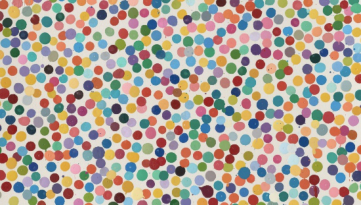
In this procedural study, how will the image of the future, the metaverse era, be created? Or, this study will focus on Non-Fungible Tokens and the Future of Art to see if it will be evaluated oppositely. First, I will look at the past and present of images, and look at previous studies on the future of image making. This is by looking at the value evaluation factors of NFTs, which are the form of images that will attract attention in the future. The characteristics of the image in the metaverse era can be said to be the basic characteristic communication of the image. Sometimes, it is not just the situa- tion of the metaverse era that one image conveys more content than words or brings empathy. The biggest feature of the metaverse era is the artistic inno- vation. With the support of the development of technology that enables art or images to enable the form of NFTs, augmented reality, and realistic experi- ences that have functioned as currency beyond artistic value, creative images have already gone beyond themselves. Many works of art in the past tried to contain the philosophical thoughts, landscapes, or stories of that era. Due to the development of photography, simple memories and moments seemed to disappear into the realm of photography rather than art, but photography also became a genre of art. Also, in the outstanding NFTs artwork, it may be an attempt to remember the memory of the moment or to remember the moment (Han and Nah, 2023). Damien Hirst work spot, an event was held to transfer the originality of the work to NFTs by burning the original in front of NFTs buyers (MacNeill, 2022). In the case of Beeple’s 5000 days, it is known as one NFTs work composed of the artist’s memories of 5000 days. As can be found in the examples of NFTs artworks mentioned above, each contains a description and a story. Works that tried to contain stories and narratives in contemporary art, such as Tracey Emin’s work tent, known as one of the Young British Artists, are drawn with the names of people who have been with her in memory and stimulate the emotions of the viewer.
Literature Review
Images show images of society and community (Zanker, 1988). Historically, history is recorded through images, but looking back at the history of images
Future Image Making in the Era of Metaverse: Focus on Non-Fungible Tokens 219
will be able to see the images of the present and the future in a developed form. An image may start from myself, but it can be seen as reconstructing this world through the gaze of the other. The gaze of the other sometimes collides with and sometimes overlaps with my memory and my gaze. In this process, some images bring sympathy from many people, has an aura that has artistic value (Hansen, 2008). It can be said that image works exist in such an intercourse.
The development of artistic images in the past can be largely classified as before and after the development of photography. In the history of the devel- opment of the artistic image, the popularization of photography was a major milestone. In the environment where portraits of the upper class were the main source of income for artists in the past, and the environment centered on the patronage of aristocrats and patrons, the development of photogra- phy was a threat to the artists at the time. However, paradoxically, against the development of photography, cubism and cubism appeared. Cubism, a resis- tance to expressing the same as the facts as resistance itself beyond realistic depiction, emerged. After that, the image began to be used as a philosophical or ideological means, and expanded to the commercial realm. Photography itself was a huge horizon, but photography itself became an art and expanded the realm of video art. Photography is said to have begun in 1820, and by the late 19th century it had moved from having artistic value to documenting life. Early photography was more like an experiment. Early art photography brought many changes to people’s perception of art and photography. When it comes to the function and role of portrait photography, naturalism pho- tography, documentary photography, and photojournalism, the debate about the artistic role of photography continues to this day, but an aura is felt in works with a strong presence like Walter Benjamin’s concept (Hansen, 2008). In other words, an aura is an original existence that exists in time and space and cannot be perfectly reproduced by a work of art.
It is no exaggeration to say that technology in art continues to change its history. With the development of blockchain technology, a craze for Bitcoin has been blowing. In that context, Non-fungible Tokens (NFTs) the financial world is an asset, the art world is an art object, and everything is being con- verged with smart contracts in the legal sector. It is not yet clear whether NFTs will go beyond fads and become a craze, but it seems certain that they are passing through a point in the art design world. Along with this, with the development of XR (experience-based tangible) technologies that started with augmented reality, an atmosphere has been formed that these technologies should be designed as human-centered.
Decentralized NFTs have also brought tremendous interest economically. Young and innovative artists, designers, and other celebrities scramble to cre- ate formal NFTs. Broadcasting stations such as CNN also digitize their data into NFTs. If there is a crate work that artists directly do for the produc- tion of NFTs artworks by themselves, metaverse art museums that display these digital arts will appear, and the function to buy and sell NFTs works will be added here. Like the picture, NFTs are also easy to copy and move, but they become unchangeable NFTs by using decentralized technology using blockchain technology.
220 Han
As a street artist, S/he works are not infinite. The works and characters of such street artists are becoming NFTs with the help of other designers. In addition, musicians, composers, and soccer players each create event-specific NFTs. Fashion brand Gucci has designs that only exist on the metaverse and sells them as fashion accessories for avatars. These attempts can still be seen as a chapter in opening a better Internet world called the metaverse.
Non-fungible tokens (NFTs), called the second Bitcoin, have had a huge impact on finance as well as the art world. As a result, Non-Fungible Tokens (NFTs) have become an attractive investment target even for capital forces called the financial sector. In addition, large law firms are scrambling to review laws related to NFTs and are waiting for collaboration with various fields. This can be seen as an extension of intellectual property rights disputes expected in the future.
Until now, there has been a lot of controversy, including in the art world, about the criterion for evaluating the value of an image. In the days when portraits were painted for the upper classes, the value standards of fine arts began to be set according to the subjects of the nobility or upper classes, so it did not take long for modern abstract art to be valued by some curators. As NFTs start to become active, it seems that this too is becoming immutable. Beeple’s 5000 days was sold at one of the highest prices, which was a surprise in the existing art world. The price of art and art images is set in a volatile manner based on the standards of each culture, country, and era. The cri- teria for evaluating the value of art generally include authenticity, mode of existence, materiality, and originality. We do not know exactly what criteria affect the value evaluation in the metaverse era, but we have determined a few factors. Based on this, I would like to analyze a case to see if it can be applied as an NFTs value evaluation factor.
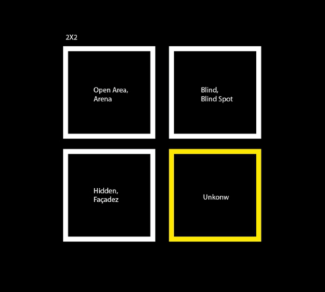
The JW model (Luft and Ingham, 1955) is a model created by American psychologists Joseph Luft and Harry Ingham in the 1950s and is a model for group dynamics investigation. Currently, it is a model that is widely used for self-awareness and improving soft skills cooperation, empathy, interpersonal relationships among groups, etc. Based on this model, I will analyze cases by substituting several important factors (Human-Nonhuman, Methaphor- allegory, and personal experience) in image evaluation.
Figure 1: The Johari window, a graphic model of interpersonal awareness.
Future Image Making in the Era of Metaverse: Focus on Non-Fungible Tokens 221
‘Metaphor’ and ‘Allegore’ try to convey the image of the image that comes to mind by comparing or utilizing the information inherent in the image, not the image, in different situations. This can be applied to communication the- ory, and I think it can be approached semiotically, but I will not mention it in this study. Metaphor is derived from the Greek metaphora (to change the meaning). It means changing meaning based on similarities in form or func- tion. In order for a metaphor to be established, first of all, the two objects being compared must belong to different categories, and it is important that the comparison has some degree of associative validity, persuasiveness, and unexpectedness. It is derived from the Greek allegoria. It means to person- ify an abstract idea or concept or to transform it into an animal or plant form. Broadly, it is similar to the concepts of metaphor, simile, and allegory, and narrowly refers to a figurative story like a fable. In my other thesis “A study on the relationship between individual experiences and memories on the evaluation and reinterpretation of visual images of NFTs” presented as a procedural study at the 2023 Copenhagen HCI Conference, “individual expe- riences play an important role in enhancing value”. It has been announced assuming that it will. Like Tracey Emin experimental work “Tent”or Beeple’s personal experience record, it became a work of art through NFTs and was sold at a price suitable for the most expensive art in the world. This it that it is necessary to look at convergence or fusion in real and virtual reality. As a new style, that is, a unique style, you should look at how unique it is in a new environment. General authenticity, way of being, materiality, originality, etc. should all go into this in the end, but I think the most important thing is convergence. Damien Hirst’s style of burning real works and turning them into NFTs is probably due to this.
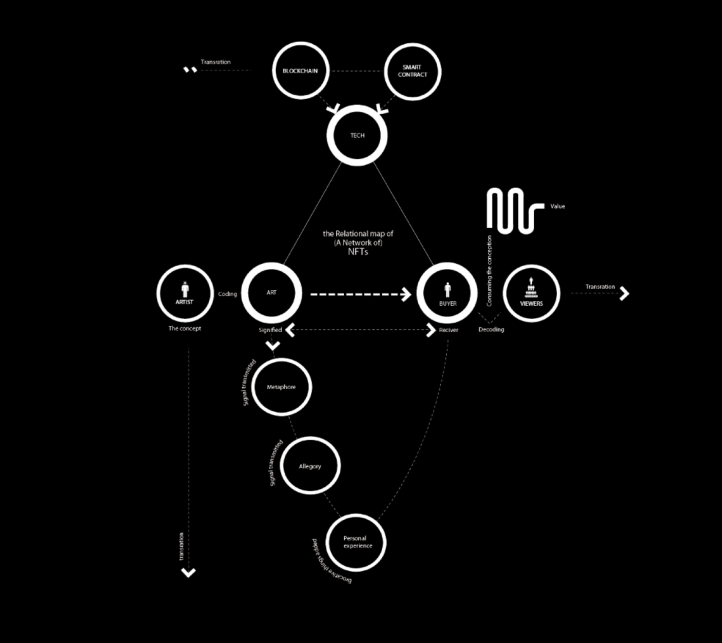
Numerous people have been conducting research on the study of image interpretation, expression of meaning, and its principles for several centuries (Claire, 2003). I picked some theories to design the process model. This ana- lytical model was created based on ANT and communication theory. I would like to see each factor as its own self and explain it through the relational map figure. When an artist creates a concept, it is incorporated into the work. This can be seen as a concept like signified in semiotics. A network is cre- ated when a buyer purchases this work. It is technology that helps to form a network, and here things like blockchain and smart contracts act. Buy- ers have receipts of NFTs through blockchain technology, and in addition to the original copies of the buyer, viewers also come into this network. The work usually melts metaphor, allegory, and personal experience. Both general NFTs and generative NFTs should be viewed as having a stronger network than the existing art market (Cheon and Kim, 2022). However, in the case of generative design, factors such as the buyer’s and the viewer’s rather than the artist’s concept, metaphor, allegory, and individual experience can be cited as factors.
Numerous people have been conducting research on the study of image interpretation, expression of meaning, and its principles for several centuries (Claire, 2003). I picked some theories to design the process model. This ana- lytical model was created based on ANT and communication theory. I would like to see each factor as its own self and explain it through the relational map
222 Han
figure. When an artist creates a concept, it is incorporated into the work. This can be seen as a concept like signified in semiotics. A network is created when a buyer purchases this work. It is technology that helps to form a network, and here things like blockchain and smart contracts act as a Western factor. Buyers have receipts of NFTs through blockchain technology, and in addition to the original copies of the buyer, viewers also come into this network. The work usually melts metaphor, allegory, and personal experience. Both general NFTs and generative NFTs should be viewed as having a stronger network than the existing art market (Cheon and Kim, 2022). However, in the case of generative design, factors such as the buyer’s and the viewer’s rather than the artist’s concept, metaphor, allegory, and individual experience can be cited as factors.
Figure 2: The relational map of NFTs (A network of NFTs).
Case Study In the case of NFTs made with generative design, according to the above pro- cess model, As the computer arbitrarily creates the concept the artist wants to convey, detailed factors will be displayed on the network. On the contrary, choosing an actual work or NFT format through the act of burning the work created by the artist, as in the case of Damien Hirst, creates another factor, which itself can bring about the strengthening of the network.
Future Image Making in the Era of Metaverse: Focus on Non-Fungible Tokens 223
None Human–Human (Network)
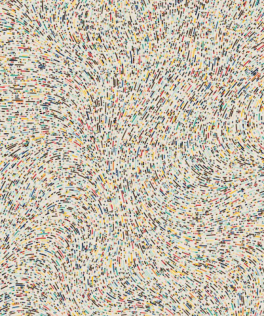
1. In the case of NFTs: Tyler Hobbs on Generative Art As a cryptocurrency, the volume of NFTs is growing in 2022 (Linares, 2023). Tyler Hobbs is a master and leader of the Generative Art movement. Create an image with an autonomous system using a computer algorithm. Hobbs’ series Fidenza is famous. With the concept of ‘flow fields’, images are a map, and this project starts with this concept, mapping density and velocity across space and time. These computational algorithms allow for the creation of a wide variety of possibilities through different scales, composi- tions, textures, and colors. His work is very unique. Because in his world of art, which starts with a mechanism that drops generative art on an art block, the art does not exist until the buyer “makes it.”Minting, the process of being made into a work of art, starts at the time when Art Blocks are announced. Advertising starts at a pre-announced time. For issuance, the buyer pays a predetermined price in ETH along with the required gas fee and receives the work upon creation. Because Fidenza takes up to 30 seconds. It is not easy to find metaphors and algorithms here, but the artist provides suitable NFTs to buyers. It can be said to be a good example of the commercialization of generative art by computer algorithms.
Figure 3: Images Fidenza #724, 2021. Minted on 11 June 2021 (Images from: christies.com).
2. An example of NFT “Forever Rose” by Kevin Abosch A digital photo of a red rose was sold for $1 million in crypto art on Valentine’s Day to a group of 10 collectors, splitting the cost equally in crypto. One of the highest prices ever paid for. Among the many virtual artworks, the reason why this project has been highly valued is because of that idea. “People have traditionally valued what they can see and feel. But some of the most valuable things, like love, can be felt but not seen,” Abosch said. “Art reduced to its core essence is about ideas.” He talked about it in a CNN interview.
Created by Kevin Abosch and GIFTO, a blockchain virtual gifting plat- form. Like traditional NFTs, it’s a technology that supports cryptocurrencies
224 Han
like Bitcoin, but in this case it’s hosting digital photos. It’s called crypto art, and it was created with the concept that you can’t touch or hang the art- work, but collectors can keep the ‘rose token’, sell it, or give it to someone for a special occasion.
Figure 4: The image of of NFT “Forever Rose” by Kevin Abosch (Image from: CNN).
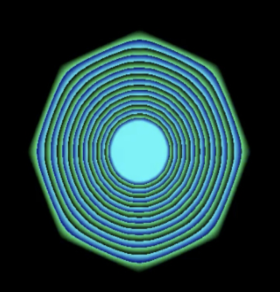
3. Quantum, 2014 by Kevin McCoy Kevin McCoy’s Quantum is a historical piece, becoming the first NFT issued on May 2nd, 2014. McCoy collaborated with technical expert Anil Dash to create this piece. They developed an early version of blockchain technology to establish the provenance of digital art works, in detail auto- matically created as a code base. It also features an image of a pixelated octagon. They also have fun names. “It’s exhausting and a bit weird, so we gave our creations ironic names. It’s a revenue-generating graphic.” Their ideas became historic creations.
Figure 5: Images of Quantum, 2014 by Kevin McCoy (Image from: sothebys.com).
Future Image Making in the Era of Metaverse: Focus on Non-Fungible Tokens 225
Human - Human (Network)
4. ‘The Spot’ series by Damien Hirst, who is called the world’s leading modern artist comes to mind when thinking of Britain.)
He has been referred to as one of the Young British Artists, along with Cor- nelia Parker, Christine Borland, Tracey Emin, Sarah Lucas, Michael Landy, and Gary Hume, as one of the leading artists of contemporary art. In 2001, he held an event to create NFTs with The Spot, a series of 10,000 paintings, at his gallery. Wearing silver pants, and a prepared costume, he performed a performance burning thousands of his works at a gallery located in Lon- don. I tried to show the movement of originality through the performance of burning the original in front of the buyers. It was a project in which buyers were asked which of the two formats (original or NFTs) they would like to own, and the other was burned. The buyer could have been a participant in the event rather than simply a buyer or spectator in this row itself.
Figure 6: Images of project name ‘currency’ by Damien (Images from: sky news).
Discussion and Limitations of the Study Forward Directions Inspired by the design thinking methodology, we created an analysis model by combining communication theory centered on matrix and ANT theory and analyzed widely known models of NFTs. I have analyzed various factors with only a few cases, and I plan to analyze more works through this model in the future and upgrade the model itself.
ACKNOWLEDGMENT
The author thanks Sun and Steve for advice on this study
REFERENCES
Ball, M. (2021). Framework for the metaverse, Jun. 29, [Online]. MatthewBall.vc, Website: https://www.matthewball.vc/the-metaverse-primer Bauman, Z. (2000). Liquid Modernity. Cambridge: Polity Press. Bloomfield, M. (1972). Allegory as Interpretation. New Literary History, Winter,
1972, Vol. 3, No. 2, On Interpretation: I, pp. 301–317. Chen, M.L & Kim, H.K.(2022), [ The Future and Prospects of NFT Art: On the basis of Actor-Network Theory]the journal of the Convergence on Culture Technology (JCCT) Vol. 8, No. 4, pp. 397–405.
226 Han
Christies, https://onlineonly.christies.com/s/beeple-first-5000-days/beeple-b-1981- 1/112924?ldp_breadcrumb=back, [accessed 2023/04/02]. Claire, H. (2003) Visual social semiotics: Understanding how still images make meaning. Claire Technical Communication, pp. 46–60 Davis, W. (1986) On the Origins of Image Making Vol. 27, No. 3, (Jun., 1986) Han, Y and NAh, K. (2023) A Study on the Relationship Between Individual Expe-
riences and Memories on the Evaluation and Reinterpretation of Visual Images of NFTs: International Conference on Human-Computer Interaction HCII 2023: Culture and Computing pp 391–401. Zanker, P. (1988). The power of images in the age of Augustus: University of Michigan Press. Hansen, M. B (2008). Benjamin’s Aura. Volume 34, Number 2 journals. UChicago. Hong, J. H. (2022) [‘The Ontological Significance of [Journal of Aesthetics and Science of Art, vol. 66, (June 2022) ], pp. 278–302. Lakoff, G and Johnson, M. (1980). Metatphores we live by. Chicago and London: The University of Chicago Press. Latour, B. (1996), On actor-network theory: A few clarifications: Source: Soziale
Welt, 47. Jahrg., H. 4 pp. 369–381 Published by: Nomos Verlagsgesellschaft mbH : Gaidar Institute Press. Latour, B. (2005). Reassembling the Social: An introduction to Actor-Network Theory. Oxford: Oxford University Press. Leary, D. (1990). Metaphors in the history of psychology. New York: Cambridge
University Press. Norman, D. (2013) The Design of Everyday Things Revised and Expanded Edition Basic Books, New York. PEIM, N. (2007) Walter Benjamin in the Age of Digital Reproduction: Aura in Edu-
cation: A Rereading of ‘The Work of Art in the Age of Mechanical Reproduction’ Journal of Philosophy of Education, Vol. 41, No. 3 Skynew (2022) Damien Hirst - The Currency: Artist starts setting fire to thousands of his spot paintings https://news.sky.com/story/damien-hirst-the-currency-artist- starts-setting-fire-to-thousands-of-his-spot-paintings-12717861, [2023/04/02] Skynew, (2022) Damien Hirst - The Currency: Is setting fire to millions of pounds
worth of art a good idea? https://news.sky.com/story/damien-hirst-the-currency- is-setting-fire-to-millions-of-pounds-worth-of-art-a-good-idea-12702712, [2023/04/02] Steen, G. (1999). Metaphor in cognitive linguistics. Library of Congress Catalogingin-Publication Data International. Theguardian, (2022) Flaming heck! Damien Hirst is setting his art on fire – and
he’s not the first https://www.theguardian.com/artanddesign/2022/aug/22/artists- who-burn-artworks-klf-damien-hirst, [2023/08/08]. Theguardian (2014) Tracey Emin’s tent rises up like a phoenix in Chapman Brothers homage. https://www.theguardian.com/artanddesign/2014/oct/24/tracey-emin- tent-chapman-brothers-hastings, [accessed 2023/04/02]. Theguardian (2022) Damien Hirst to burn thousands of his paintings to show art
as ‘currency https://www.theguardian.com/artanddesign/2022/jul/26/damien- hirst-to-burn-thousands-of-his-paintings-to-show-art-as-currency, [accessed 2023/04/02]. Turkle, S. (2007). Evocative objects: Things we think with Boston, Massachusetts Institute of Technology, The MIT Press Massachusetts January.
LISTED IN THE AHFE DIGITAL BOOKSTORE CATALOGUE
Explore the complete digital volume
Augmented, Virtual and Mixed Reality Simulation
Read this individual research paper free through the original publisher, or explore the full digital proceedings book.
ISBN 978-1-958651-94-0
Explore this ISBN in the AHFE Bookstore ↗Listed in the July 2026 bookstore catalogue; search by ISBN to confirm current availability · Digital book purchase optional