Matthew Ikuabe, Clinton Aigbavboa, Ayodeji Oke, Samuel Adekunle, Sibusiso Khambule (2023). Key Leadership Skills for Effective Project Delivery: Placing the Lens on Construction 4.0. In: Sustainable Construction in the Era of the Fourth Industrial Revolution. AHFE Open Access, vol. 107, pp. 114–120. https://doi.org/10.54941/ahfe1003098
The revolutionary drive ushered in by the fourth industrial revolution (4IR) is altering the traditional modes of delivering construction projects. This has influenced leadership skills which are portrayed as a fundamental tenet for the successful accomplishment of construction projects. Against this backdrop, this study evaluates the critical leadership skills necessary for effective project delivery in the era of 4IR. The study adopted a quantitative approach using data elicited from construction professionals, while the methods of data analysis were mean item score, standard deviation, and one-sample t-test. Findings from the study indicate that the most significant leadership skills aligning with 4IR for effective project delivery are creative and critical thinking, strategic problem-solving, and technological expertise. The outcome of this study contributes to the growing conversation of the digitalization of the construction industry as it fills the gap in knowledge of the requisite skills necessitated by leadership in the construction industry for optimum alignment with the digital revolution. Furthermore, it presents a solid theoretical base for future studies probing into leadership qualities required for improved construction project delivery.
Construction project delivery involves a chain of planned and unplanned tasks, which are conducted in anticipation of success with established pre- determined goals (Hetemi, 2020). The demand for delivering construction projects within a stipulated time frame, projected costs, outlined standards and abating site accidents, etc., have all posed increased challenges to pro- ject execution (Aghimien et al., 2022; Ikuabe et al., 2021). Notwithstanding the heralded pursuit of halting most of the challenges confronting constru- ction project execution, not much has been achieved with the conventional project delivery methods. Evidence from other sectors, such as health, manu- facturing, and banking, has shown the embrace of digital technologies while the construction industry is still on the back foot (Ikuabe et al., 2020). The uptake of these emerging technologies, propelled by the fourth industrial revolution (4IR), potentially reduces task time, cost savings, enhanced service
Key Leadership Skills for Effective Project Delivery: Placing the Lens on Construction 4.0 115
delivery, and optimized processes (Aghimien et al., 2021; Ikuabe et al., 2022). The incorporation of emerging technologies into construction processes for effective delivery and optimization of methods is called Construction 4.0 (Schonbeck et al., 2020). However, a vital element for incorporating digital technologies for project execution is the leadership skills required.
Leadership is a combination of skills, attitudes, responsibilities, positions, and behaviors that permits an individual or a group of individuals to pro- ject the best in others, and the best in an organization, in an articulate way (Vender, 2015). For the construction industry, leadership plays a germane role in the pursuant of steering projects to successful execution and com- pletion. Hence, the concept of seeking digital transformation is significantly influenced by leadership since it plays an important role in reaching strategic decisions (Guzman et al., 2020). Also, skill, which is the capacity to engage well in something, embodies mental and physical aptitude, which relates to the knowledge and understanding of the thing involved (Stanley and Willi- amson, 2017). Consequently, in a digital environment, leaders are saddled with the responsibility of adapting and enhancing the needed skills required to harness emerging technologies for effective delivery (Kane et al., 2019). On this basis, this study seeks to evaluate the key leadership skills required for driving construction 4.0 for effective and efficient delivery of construction projects.
LITERATURE REVIEW
The revolutionary change instigated by the 4IR has led to the alteration of methods and processes through the utilization of digital technologies, which helps improve project outcomes. For the construction industry, it is referred to as construction 4.0, and it entails the infusion of digital technologies into the processes of project execution. In steering this drive, leadership is essential due to its important role in constructive formation through the alignment of people and the set-up of direction with the requi- red strategies for attaining a vision (Oberer and Erkollar, 2018). However, leadership needs the requisite skills to transition methods and processes from the conventional set-up to a proper digitalized system. Through the process of learning and developing leadership skills, distinct attributes are usually pursued in making a distinction from the contemporary. According to Kelly (2018), the uptake and development of leadership skills are influe- nced by personal attributes in emotions control, temperaments, personalities, cognitive abilities, values, and identities emanating from personal experi- ence and cultural context. Also, for leadership to key into the dynamic purview of the digital age, an upscale of attributes that are aligned with team orientation, cross-hierarchical disposition, and cohesiveness of team members are required ingredients (Guzman et al., 2020). Furthermore, lea- dership should be accountable for a wide range of responsibilities covering value creation, regulation, and operations through effective communication (Peifer et al., 2022).
Mumford et al., (2007) outlined three-grouped leadership skills classifica- tions. These entailed cognitive skills, business skills, and interpersonal skills.
The top management hierarchy requires cognitive skills to understand com- pound behavioral patterns, hence demanding problem-solving mechanisms, creative thinking, and critical decision-making (Luoh et al., 2014). Busi- ness skills refer to the management and organization of material, financial and personal resources (Whitley, 2019). And interpersonal skills, which indi- cate goal-directed attitudinal dispositions, are used in relational dealings to attain anticipated outcomes (Kearns et al., 2015). For construction 4.0, these leadership attributes are necessary for a robust and all-inclusive pursuit of effective management of projects by leaders. Guzman et al., (2020) affirmed that the ability to evaluate given technologies, examine network communi- cations, and outline shortfalls that require prompt resolutions is imperative for a leader in the digital age. Also, it is important to set out a conducive environment that fosters collective decision-making, collaboration, and par- ticipation by team members, which drives innovation and the generation of ideas (Brem and Radziwon, 2017).
METHODOLOGY
The study examines the leadership skills required in the era of the 4IR for con- struction project delivery. Adopting a quantitative technique, the study used a questionnaire as a data collection instrument for eliciting responses from the target respondents. Responses were retrieved from construction profes- sionals in the Gauteng province of South Africa, which served as the study area. This choice of the study area is due to the large pool of professionals domiciled in it, and it also hosts many construction organizations. The popu- lation of the study were construction professionals in the Gauteng province of South Africa. While the sampling frame was arrived using the register of registered professionals with their professional registration bodies. A total of sixty-three respondents participated in the survey, which was achieved using convenience and snowball sampling techniques. The convenience sampling was adopted to select the appropriate respondents for the study in the first instance, and thereafter, using the snowball sampling technique, the identified respondents helped in identifying other respondents that would be beneficial to the study. The target respondents comprised architects, quantity surveyors, construction managers, construction project managers, and engineers. The methods of data analysis deployed were mean item score, standard deviation, and one-sample t-test. The test of the validity and reliability of the research instrument was also conducted using Cronbach’s alpha test. An alpha value of 0.879 was given, which affirms the credibility of the research instrument (Tavakol and Dennick, 2011).
RESULTS
The study identified fifteen skills that are required in the digital era by lea- ders in the construction industry. These skills were presented to respondents of the study via the research instrument for rating based on their significa- nce. Using a one-sample t-test as the method of data analysis, a hypothesis is formulated for the study. For the null hypothesis, it is noted that a skill
Key Leadership Skills for Effective Project Delivery: Placing the Lens on Construction 4.0 117
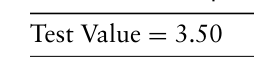
is insignificant when the mean value generated is less than or equal to the population mean (H0: U ≤U0); while for the alternate hypothesis, it is noted that a skill is significant when the mean value generated is greater than the population mean (Ha: U > U0). The population mean (U0) fixed for the study is 3.50, while the significance level set is 3.50. This portrays that a skill with a mean score above 3.50 is considered significant, while a skill whose mean score is less than or equal to 3.50 is deemed insignificant. The results of the identified skills with their accompanying two-tailed p-values, which indicate the significance, are presented in Table 1. Also, all the identified skills have a p-value less than 0.05 at a 95% confidence level, portraying that they are significant.
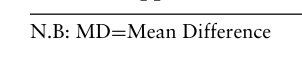
The result in Table 2 shows the ranking of the identified leadership skills required for the construction industry in the digital transformation era. It is revealed that all the leadership skills have a mean value greater than 3.50, which is the threshold. Consequently, affirming the alternate hypothesis postulated by the study, which states that a skill is signifi- cant when the mean value generated is greater than the population mean (Ha: U > U0). Furthermore, it is shown that the p-values the leadership skills at 95% confidence level are significant. They all have a p-value that less than 0.05. Also, the most significant leadership skills requi- red for construction 4.0 are creative and critical thinking (MIS = 4.53, sig.=0.000), strategic problem-solving (MIS = 4.48, sig.=0.000), Techno- logical expertise (MIS = 4.31, sig.=0.000). While the least significant leader- ship skills are visioning (MIS = 3.53, sig.=0.000), Negotiation (MIS = 3.57, sig.=0.000).
DISCUSSION OF FINDINGS Based on the responses gotten from the respondents of the study, and the analysis conducted on the retrieved data, it is shown that the most signi- ficant leadership skill required in the construction industry in the face of digital transformation is creative and critical thinking. This is affirmed by Luoh et al., (2014), who noted that critical thinking is a core requirement by the top hierarchy of the managerial cadre, whose intent is to aid in proffering solutions to challenges encountered during the process of project execution. For construction 4.0, which is characterized by the deployment of innovative technologies, it becomes imperative for organizational leadership to provide the needed creative thoughts that would underscore the need for innovative methods and processes. Also, for leadership to key into the dynamic purview of the digital age, an upscale of attributes that are aligned with team orien- tation, cross-hierarchical disposition, and cohesiveness of team members are required ingredients (Guzman et al., 2020). This affirms this study’s findings, which project strategic problem-solving as a significant leadership skill requi- red for construction project management in the digital era. Furthermore, the requirement of possessing technological expertise is shown to be significant. Guzman et al., (2020) affirmed that the ability to evaluate given technolo- gies, examine network communications, and outline shortfalls that require prompt resolutions is imperative for a leader in the digital age.
CONCLUSION
The digital transformation era is cutting across different sectors, and the con- struction industry is not left out. The study presented the outcome of the evaluation of the critical leadership skills needed for the construction industry in the era of the fourth industrial revolution. Through the review of extant literature, fifteen leadership skills were identified and presented to the target
Key Leadership Skills for Effective Project Delivery: Placing the Lens on Construction 4.0 119
respondents of the study for rating based on their significance using a que- stionnaire. The study’s findings showed that the most significant leadership skills required for construction 4.0 are creative and critical thinking, strategic problem-solving, and technological expertise. The role of top management in the drive for digital transformation in the construction industry cannot be overemphasized. Therefore, the ability to inculcate the requite skills for seamless management of the technical demands of infusing digital technolo- gies into construction management should serve as a cardinal basis of priority in construction project delivery. Hence, based on the outcome of this study, it is pertinent to state that the identified leadership skills from this study should serve as a benchmark for the appointment and placement of top managerial positions to create a shift from the conventional leadership dispositions to a more dynamic and fluid stand. This would help propagate the delivery of the benefits of the uptake of innovative technologies for construction project delivery.
REFERENCES
Aghimien, D., Ikuabe, M. O., Aghimien, L., Aigbavboa, C., Ngcobo, N. Yankah, J. (2022) PLS-SEM Assessment of the Impediments of Robotics and Automation Deployment for Effective Construction Health and Safety, JOURNAL OF FACILI- TIES MANAGEMENT [Ahead of Print] https://doi.org/10.1108/JFM-04-2022- 0037 Aghimien, D. O., Aigbavboa, C. O., Meno, T., Ikuabe, M. O. (2021) Unravelling the
risks of construction digitalisation in developing countries, CONSTRUCTION INNOVATION Volume 21, No. 3, pp. 456–475 https://doi.org/10.1108/CI-02- 2020-0026 Brem, A. and Radziwon, A. (2017) Efficient triple helix collaboration fostering local niche innovation projects – A case of Denmark, TECHNOLOGICAL FORECASTING AND SOCIAL CHANGE, Volume 123, pp. 130–141. Guzman, V., Muschard, B., Gerolamo, M., Kohl, H. and Rozenfeld, H. (2020) “Cha-
racteristics and skills of leadership in the context of industry 4.0”, 17th Global Conference on Sustainable Manufacturing (Procedia Manufacturing), Volume 43, pp. 543–550. Hetemi, E., Ordieres-Meré, J., Nuur, C. (2020) An institutional approach to digitalization in sustainability-oriented infrastructure projects: The limits of the building information model, SUSTAINABILITY Volume 12 No. 9, 3893. Ikuabe, M., Aghimien, D., Aigbavboa, C., Oke, A. and Thwala, W. (2021) “Site
accidents in the South African construction industry: cleaning the Augean stables”, (Eds) Kantola, J., Nazir, S. and Salminen, V. Advances in Human Factors, Business Management and Leadership. Proceedings of the AHFE 2021 Virtual conference, July 25-29, pp. 92–98. Ikuabe, M., Aigbavboa, C., Anumba, C., Oke, A. and Aghimien, L. (2022) “Confirmatory factor analysis of performance measurement indicators determining the uptake of CPS for facilities management, BUILDINGS Volume 12 No. 4, 466 https://doi.org/10.3390/buildings12040466 Ikuabe, M.O., Aghimien, D, O., Aigbavboa, C. O., and Oke, A. E. (2020) “Explo-
ring the adoption of digital technology at the different phases of construction projects in South Africa”, International Conference on Industrial Engineering and Operations Management, Dubai, UAE, March 10-12, pp. 1553–1561.
Kane, G., Philips, A., Copulsky, J. Andrus, G. (2019). How digital leadership is (not) different leading digital change companies, MIT Sloan Management Review and Deloitte, 11–16. Kearns, K., Livingston, J. and Scherer, S. McShane, L. (2015) Leadership skills as
construed by nonprofit chief executives, LEADERSHIP & ORGANIZATION DEVELOPMENT JOURNAL Volume 36, 712–727. Kelly, R. (2018). Constructing leadership 4.0: Swarm leadership and the fourth industrial revolution. Springer. Luoh, H., Tsaur, S. Tang, Y. (2014) Empowering employee: Job standardization and
innovative behaviour, INTERNATIONAL JOURNAL OF CONTEMPORARY HOSPITALITY MANAGEMENT Volume 26 No 7, pp. 1100–1117. Mumford, T., Campion, M. Morgeson, F. (2007) The leadership skills strataplex: Leadership skill requirements across organizational levels, THE LEADERSHIP QUARTERLY Volume 18, pp. 154–166. Oberer, B. and Erkollar, A. (2018) Leadership 4.0: Digital Leaders in the Age of
Industry 4.0, INTERNATIONAL JOURNAL OF ORGANIZATIONAL LEA- DERSHIP, Volume 7, pp. 404–412. Peifer, Y., Jeske, T. Hille, S. (2022) Artificial intelligence and its impact on leaders and leadership, 3rd International Conference on Industry 4.0 and Smart Manufacturing (Procedia Computer Science) Volume 200, pp. 1024–1030. Schonbeck, P., Lofsjogard, M. and Ansell, A. (2020). Qualitative review of con-
struction 4.0 technology presence in construction project research, BUILDINGS, Volume 10 No. 10, 173. Stanley, J. and Williamson, T. (2017). Skill, NOUS Volume 51 No. 4, pp. 713-726. Tavakol, M. and Dennick, R. (2011) Making sense of Cronbach’s Alpha, INTER- NATIONAL JOURNAL OF MEDICAL EDUCATION Volume 2, pp. 53–55. Vender, R. (2015) Leadership: An Overview, THE AMERICAN JOURNAL OF
GASTROENTEROLOGY, Volume 110 No. 3, pp. 362–367. Whitley, R. (2019) On the nature of managerial tasks and skills: their distinguishing characteristics and organization. In Managerial Work, 337–352, Routledge.
LISTED IN THE AHFE DIGITAL BOOKSTORE CATALOGUE
Explore the complete digital volume
Sustainable Construction in the Era of the Fourth Industrial Revolution
Read this individual research paper free through the original publisher, or explore the full digital proceedings book.
ISBN 978-1-958651-83-4
Explore this ISBN in the AHFE Bookstore ↗Listed in the July 2026 bookstore catalogue; search by ISBN to confirm current availability · Digital book purchase optional