Yuriko Imura, Yusaku Okada (2023). Expansion of the System for Collecting Information on Hospital Incidents - Aiming to revitalizing on-site management. In: Physical Ergonomics and Human Factors. AHFE Open Access, vol. 103, pp. 51–60. https://doi.org/10.54941/ahfe1003034
In medical facilities and general hospitals, a variety of information regarding incidents in patient care is collected and analysed. However, due to the large differences in knowledge and experience of on-site risk managers, previous studies have shown several problems with the data collected. Underlying these problems is the analyst's limited knowledge of human factors, IT, and management. However, it is very difficult to give more time and cost for safety training to on-site risk managers. Therefore, in this study, we decided to organize the results of past research on human error factor analysis from the perspective of on-site management. As a result, we were able to obtain a set of elements [elements for activation of on-site activities] for improving the ability of on-site risk managers to recognize, the willingness of on-site risk managers to participate in medical safety activities, and the management level of on-site risk managers. Based on the "Elements for Activation of On-Site Activities", we developed a prototype of an incident reporting support system.
In medical facilities and general hospitals, a variety of information regarding incidents in patient care is collected and analyzed. However, due to the large differences in knowledge and experience of on-site risk managers, previous studies have shown the following problems with the data collected.
Only information on the act of human error itself is collected. For example, “care lessness,” “vagueness,” “inattention,” “lack of confirmation,”etc.
Only factors observed only at the time of the incident (factors whose occurrence is rare) are extracted.
Information is biased.
The format is to assume the countermeasures first and then investigate the necessary factors.
Time required for collection is limited.
Too much emphasis is placed on interviews with the error actor. (In many cases, collection ends with only hearing information.)
Underlying these problems is the analyst’s limited knowledge of human factors, IT, and management. However, it is very difficult to give more time and cost for safety training to on-site risk managers. In particular, it is impos- sible for small and medium-sized hospitals to provide safety education in their own departments.
Therefore, to solve such issues, we developed a prototype system that support factor analysis by medical risk managers in this study.
BASICS OF SAFETY MANAGEMENT SYSTEM IN MEDICAL INSTITUTIONS In Japan, specific functional hospitals are required to establish a medical safety committee and have a medical safety manager in accordance with the regulations of the Ministry of Health, Labour and Welfare (MHLW). The medical safety manager is responsible for overseeing safety management acti- vities in each medical institution and appointing a medical risk manager for each department who reports to them. The primary responsibilities of the medical risk manager include:
Investigating the causes of medical accidents in the workplace and recom- mending preventive measures
Analyzing near-miss experience reports
Communicating the accident prevention and safety measures decided by the Committee to staff members
Encouraging employees to report near-miss incidents actively
Undertaking any other necessary tasks for preventing medical accidents Moreover, those appointed as risk managers are often considered as poten- tial candidates for executive positions in healthcare organizations. Therefore, in addition to their designated duties, department directors expect risk managers to:
Establish mechanisms and procedures for safety measures
Demonstrate leadership skills in their work
Manage department operations
Have the ability to influence the organization These findings suggest that department directors have diverse expectations from their risk managers, which go beyond the duties assigned by the medical safety managers. Risk managers are required to perform multiple roles, inclu- ding promoting and responding to safety activities, exhibiting leadership, and serving as a bridge between departments.
Rating Scale for Incident Factor Analysis In this study, Table 1 (Okada, 2023) is utilized to classify the ratings of the extracted factors from level 0 to level 5. The number of extracted factors for each level is defined as zk(k = 1, 2, 3, 4, 5).
To extract factors from multiple perspectives, this study utilized the 4M and SHEL classifications frequently employed in accident factor analysis to
Expansion of the System for Collecting Information on Hospital Incidents 53
Table 1. Guidelines for factors to be extracted.
Table available in the original PDF paper.
Measures to be planned
Level zk Evaluation Characteristics of Terminal Extraction Factors Level0 z1 Not allowed “Carelessness,” “Vagueness”
“Strengthening of consciousness”
“Inattention,” “Lack of confirmation”
“Reinforcement of attention,” “Daring to check” Level1 z2 Undesirable “Lack of skills or experience” “Review of materials,” “Review of manuals,” “Clear instructions, and thorough reporting”
“Thorough training and implementation” Level2 z3 “Insufficient materials,” “Inadequate manuals,” “Insufficient instructions,” “Poor communication” Level3 z4 Appropriate “Specific problems in the workplace” “Establishment of rules or prohibitions” Level4 z5 Ideal “Specific and detailed problems involved in the work”
“Work improvement,” “Business improvement,” “Environmental improvement,” “System improvement” Level5 z6 “Specific and detailed issues involved in the work”
“Cross-departmental measures,” “Measures that improve employee satisfaction”
Based on Yusaku Okada, “Human Error to keieisenryaku”(Okada, 2023) (Adapted from (Okada, 2023) and translate for this study.)
identify seven categories for factor classification. (Table 2) Each category was assigned a score, defined as xi (i = 1, 2, 3, 4, 5, 6, 7).
Using the classifications presented in Tables 1 and 2, a list was created to evaluate the extracted factors. The list is utilized to determine the categories and levels of the extracted factors. Factors were collected from Yukimachi and Nagata (2004) and Swain and Guttmann (1983) and keywords asso- ciated with them, which were then compiled into the list. The presence or absence of relevant keywords is used to determine whether the extracted factors are consistent with the listed factors.
Characteristics Required of Healthcare Professionals Analyzing incidents in healthcare facilities necessitates proficiency in analy- tical methods, medical information, and healthcare safety practices. On the
54 Imura and Okada
Table 2. Classification of factors.
Table available in the original PDF paper.
Name xi Meaning Liveware x1 Factors related to individual characteristics of field workers Software x2 Factors related to software such as procedures, manuals, etc. Hardware x3 Factors related to machine and human-machine interface Environment x4 Factors related to the work and work environment Team* Management x5 Factors related to team leader Organizational Design
Organizational Management
x6 Factors related to organizational structure and systems Regulations x7 Factors related to company and social regulations and rules *Team performing routine tasks
other hand, the World Health Organization (WHO) recommends that heal- thcare professionals have competencies (Sako et al., 2007). In particular, competencies are increasingly required of personnel who play a central role in medical safety. Risk managers, who are the subject of this study, will also be required to acquire such competencies in the future. Therefore, a compete- ncy map was created as shown in Table 3. The three axes of the competency map in this study are awareness, willingness to participate, and management skills (Hollnagel, 1998; Dekker, 2019). In creating the detailed competency map, we made sure to fully reflect the information from interviews with the safety managers and management of the medical institutions (Table 3).
The competency map presented in Table 3 demonstrates that “awareness” encompasses “imagination” and “insight,” “willingness to participate” com- prises “initiative” and “ability to act,” and “management” includes “power of expression,” “power of judgment,” and “communication skills” as factors.
Table 3. Competency map on risk managers proposed in this study.
Table available in the original PDF paper.
Key axis Characteristics yi Contents awareness imagination y1 Ability to assume imaginary people and things insight y2 Ability to understand the situation and circumstances around you willingness to participate
initiative y3 Ability to take initiative in carrying out tasks the ability to take action y4 Ability to set your own goals and take action expression y5 Ability to communicate one’s feelings and thoughts clearly to others management skills
judgment y6 Ability to respond prudently to unexpected situations communication skills y7 Ability to accurately share information with others
Expansion of the System for Collecting Information on Hospital Incidents 55
As “awareness,” “willingness to participate,” and “management” are critical abilities required for factor analysis, developing these abilities would enhance the analysis results. Therefore, increasing yj, which constitutes “awareness,” “imagination,” and “management ability,” will also improve the factor analy- sis results. Consequently, we assume that assessing the current value of yj, using xi and providing advice on how to increase yj,would enhance “awa- reness,” “willingness to participate,” and “management ability,” leading to improved factor analysis results.
We thus rated yj, on a scale of 0 to 5 points and developed advice data based on each score (Table 4).
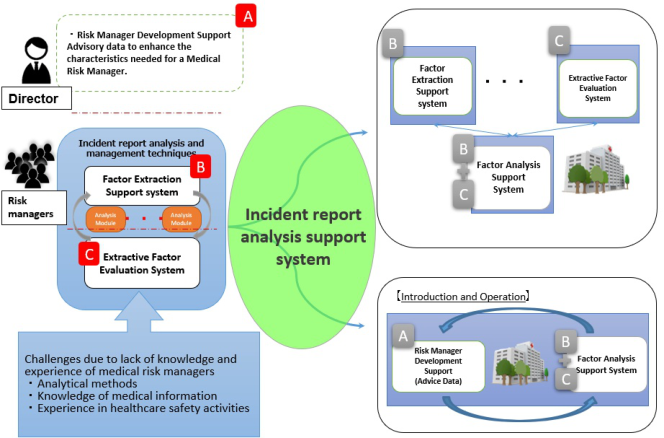
Incident Reporting Support System Specifications A prototype incident analysis support system was developed by utilizing the factor evaluation method and advisory data proposed in the previous section. The advisory data and the factor analysis support system were linked to com- plement the skills of the analysis method, knowledge of medical information, and experience in medical safety activities (see Figure 1).
The four functions that support incident analysis are as follows Function α: This function counts the number of factors in each of the seven categories listed in Table 2. It informs the analyst about the categories where the factors have not been fully extracted.
Function β: This function displays the list of factors extracted. It helps the analyst identify the factors that have not been extracted.
Function γ : This function separates and lists the incidents based on person- action. It organizes the flow of information leading up to the trouble and facilitates the collection of relevant information.
Figure 1: Overview of the in-hospital incident factor analysis support system developed in this study.
56 Imura and Okada
Continued
In addition to the
fictional work,
information about the
people around you is
also detailed from their
point of view.
In addition to a
description of yourself,
your surroundings, and
the equipment, there is a
detailed description of
the conditions related to
your daily life.
You are aware of the
problems involved in the
work and are able to
make new suggestions
regarding the work.
Based on actions and
current results, they are
modifying their goals as
they go along.
In addition to the
fictitious work,
information about the
people around you is
also written from their
point of view. However,
it lacks detail.
In addition to
descriptions of
themselves, their
surroundings, and their
equipment, there are
also descriptions of their
daily work situations.
However, it lacks detail.
You are working
independently with
some of their own ideas
for the work that is
given to them.
Under detailed goals,
they continue to take
action to achieve their
objectives.
In addition to the
fictitious work, the
description of one’s
surroundings is also
detailed.
In addition to the
description of
themselves and their
surroundings, there are
some descriptions about
the equipment.
However, many of the
description relate to
conditions at the time of
the accident.
You are interested and
proactive in the work
assigned to you.
You are taking action
based on detailed goals,
but it doesn’t last long.
In addition to the
fictitious work, there is
a description of the
people around him, but
no detailed information
about them.
There is a description of
the situation for you and
the people around you.
You understand the
significance of the work
you have been given and
are focused on it.
place, but you are not
linked to the work,so
you have not been
translated into action.
There is a description
for the fictitious work,
but no description of
anyone other than the
subject of the work.
You have an
understanding of the
situation concerning
yourself. but no
description of the
situation concerning
those around you.
In some tasks, they
work with a sense of
significance.
but lack detail. Detailed goals are in
regarding fictitious
work have not been
made.
of your
surroundings.
with a sense of
being made to do a
job that is all
predetermined and
given to you.
You can’t set goals
for myself. You have vague goals
Table 4. Advice data by score.
Table available in the original PDF paper.
Characteristics 0 1 2 3 4 5
imagination Assumptions
insight You are not aware
initiative You are working
the ability
to take
action
Expansion of the System for Collecting Information on Hospital Incidents 57
You can explain your
situation in a way that
all can easy to
understand.
You are able to make
decisions regarding
unexpected situations
from a variety of
perspectives.
You can share
information with people
in other departments.
You can explain your
situation in a way that is
easy to understand for
people in other
departments.
You are able to make
judgments about
unexpected situations
from the perspective of
others.
You are able to share
information with others
in your department.
You can give people in
other departments a
picture of your
situation.
Able to make decisions
from their own point of
view regarding
unexpected situations.
You are able to share
information with those
who are involved in
your work.
You can explain your
situation to others in the
same environment as
you.
You can make
judgments from others’
perspectives regarding
the situation you
envisioned.
You are able to share
information with some
people who are directly
involved in your work.
You can explain to
those directly involved
in your work.
Able to make decisions
from his/her own point
of view on a situation
he/she had anticipated.
You do not understand
the communication you
need and the
information is biased.
organize your
thoughts and
feelings and express
your emotions and
thoughts.
of responding to
actions outside of
the manual.
share information
with.
Table 4. Continued.
Table available in the original PDF paper.
Characteristics 0 1 2 3 4 5
expression You are unable to
judgment You are incapable
communication
skills You have no one to
58 Imura and Okada
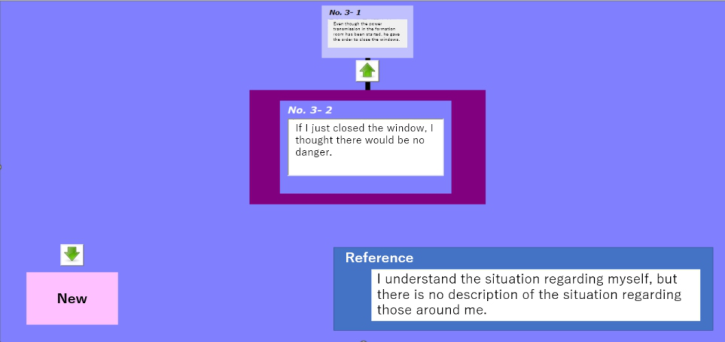
Function δ: This function provides factor analysis support. By entering the extracted factors in the given format, it evaluates the current characteristics (yj) of the risk manager and displays advice according to the value of yj. The analyst examines and scrutinizes the extracted factors based on this advice.
The algorithm for inputting, evaluating, and displaying advice data for factors is as follows.
(1) Extraction and input of factors This system uses “why-why analysis” to identify the root causes of failure events by repeatedly asking “why”(Hitoshi, 1997). The analyst can extract and input the factors by following a displayed format when analyzing a specific action from the extracted error actions.
(2) Factors are classified by category. (3) Calculation of xi For each level, level 0 was weighted 0, level 1 0.2, level 2 0.4, level 3 0.6, level 4 0.8, and level 5 1.0. The number of points xi for each category is calculated by summing the product of the number of pieces extracted zj for each level and the weights.
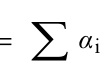
(4) Evaluation of yj The score yj for each force is evaluated by the score xi for each category. yj is calculated by the following formula.
Equation reproduced from the original PDF.
(5) Display of Advisory Data Display the advice data corresponding to Table 4 for the item with the lowest score among the calculated characteristic values yj (Figure. 2).
Evaluation The system described above was evaluated using actual test data. Specifically, one participant was given one hour to perform an incident factor analysis
Figure 2: Factor analysis execution screen.
Expansion of the System for Collecting Information on Hospital Incidents 59
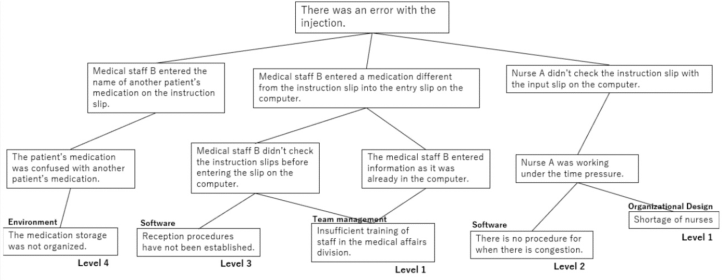
Figure 3: Factor analysis results for no support.
Figure available in the original PDF paper.
Figure 4: Results of factor analysis with support.
using the system. The results of the factor analysis conducted before utilizing the system, as well as the results of the analysis using the system, are presented in Figures 3 and 4, respectively.
After comparing the results obtained before and after the use of the system, it was found that the number of extracted factors increased significantly from 2 to 12, with a more detailed content for each factor. Moreover, the average factor level was also improved from 0 to 2.2 points, indicating that the post- assistance results presented a higher quality and more diverse set of factors compared to the pre-assistance results.
However, it was observed that not all categories of factors were extracted in the post-assist results, revealing a bias that needs to be addressed. The diversity of the results still needs improvement, and several factors may have contributed to this outcome. The following factors may have contributed to these results.
The display for function alpha shows category balance, but the factor extraction screen lacks information on factor categories, resulting in a loss of awareness regarding the extraction of factors in missing categories.
The variable xi, which determines yj, is determined by the weight of the factor level and the number of factors extracted. This means that a higher level of extracted factor may result in a larger value of xi, which may incorrectly determine a missing category as less important despite a small number of extracted factors.
There is insufficient data from past factor analysis to calculate αij.
60 Imura and Okada
CONCLUSION
In this study, a prototype of a factor analysis support system was developed to aid medical risk managers in extracting a diverse set of factors. Results from applying test data to the system confirmed its potential for improving the quality and quantity of factors. However, the diversity of factors extracted was not satisfactory. In future research, we aim to expand the target popula- tion and enhance the advice data and evaluation method to make the system more practical for on-site management. Our ultimate goal is to improve the awareness, participation, and management skills of medical risk managers, enhance the necessary qualities, and invigorate on-site management through the use of this system.
REFERENCES
Dekker, S. (2019). “Foundations of Safety Science: A Century of Understanding Accidents and Disasters (1st ed.). Routledge. Hitoshi, O. (1997) Why-Why Analysis Practice Guidance Thorough Strategy for On-
Site Troubles, Japan Institute of Plant Maintenance. Hollnagel E. (1998) “Cognitive Reliability and Error Analysis Method (CREAM)”, Elsevier. Swain A. D., and Guttmann H. G. (1983). “Handbook of Human Reliability Analysis
with Emphasis on Nuclear Power Plant Applications Final Report,” NUREG/CR- 1278, U. S. Nuclear Regulatory Commission. Okada, Yusaku, 2023. Humanerrortokeieisenryaku. Japan: Union of Japanese Scientists and Engineers. Sako T., Noro C., Ito K. (2007).”WHO Global Competency Model”, Mie Prefectural
College of Nursing Yukimachi T., Nagata M. (2004)” Reference List on Basis of GAP-W Concept and a Case Study”, 2004.
LISTED IN THE AHFE DIGITAL BOOKSTORE CATALOGUE
Explore the complete digital volume
Physical Ergonomics and Human Factors
Read this individual research paper free through the original publisher, or explore the full digital proceedings book.
ISBN 978-1-958651-79-7
Explore this ISBN in the AHFE Bookstore ↗Listed in the July 2026 bookstore catalogue; search by ISBN to confirm current availability · Digital book purchase optional