Takafumi Aoyagi, Yusaku Okada (2023). A Failure Event Virtual Learning Method that Replaces Field Experience and Its Effectiveness Measurement. In: Physical Ergonomics and Human Factors. AHFE Open Access, vol. 103, pp. 42–50. https://doi.org/10.54941/ahfe1003033
Its known that 95 % of occupational accidents are caused by unsafe human behavior. Therefore, in order to prevent occupational accidents, various human resource education is implemented in each company, but due to the rut that accompanies continuation, many of them are only aimed at preventing serious accidents in steady state. Furthermore, since it takes time and manpower to conduct education, there is also a problem that these educational methods are not effectively utilized in the field. For example, in recent years, a method of supporting risk prediction using VR in high-place work has been considered, but it costs a lot of money to introduce it, and people who have little experience in the first place have the problem that it feels like a game. Merely continuing such a stereotyped education will not improve learning through experience, and it will be difficult to develop outstanding human resources with awareness. Furthermore, for those who have little experience in the field, even if they acquire knowledge through classroom lectures and group work, it is difficult to use it in the field and predict danger. Developing experienced and excellent human resources who can notice on-site is an urgent issue for the future of the company. Therefore, in this research, by investigating various conventional educational methods and sorting out their strengths and weaknesses, we will clarify the reasons why these educational methods are not being used in the field, improve the weaknesses, and improve the actual field. We propose a failure event virtual experience-based l learning method that replaces the field experience.In this study, we decided to measure the effect of the proposed learning method from the degree of awareness in the accident prevention activities carried out in Japanese companies. The reason for this is that in order to further improve the effectiveness of current safety education, it is most practical to measure awareness during activities that are actually carried out in the field, and it is not possible to measure with paper tests or questionnaires. Therefore, based on the characteristics of on-site workers, we decided to examine methods to improve their awareness and willingness to participate in safety activities. Furthermore, we decided to conduct an analysis based on an evaluation experiment to see if the subject's awareness improved by receiving the proposed educational method prior to the safety activities.
When humans work on a new requirement, instead of creating a new wor- king solution from a blank slate, a similar design that derives a working solution by making use of specific cases experienced in the past and parti- ally modifying them. That is, the work is often guided by past examples and experience.
A knowledge-based approach is one of the techniques for humans to gene- rate working solutions from such concrete examples. This is a method of collecting specific past cases and inductively extracting knowledge from a large number of cases and reflecting it in the work. In addition, when solving an unknown problem, store typical cases, search for known problems similar to the problem, and transform the solution case for the known problem to
A Failure Event Virtual Learning Method that Replaces Field Experience 43
obtain the solution of the problem. The use of case-based reasoning is also often seen.
In order for the recollected experiential event to contribute to the appro- priate coping with the immediate situation, these approaches are based on the idea that the immediate situation and the recollected experiential event are not only superficially similar, but are highly sensitive. Recognizing that they are equivalent in the following relationships: In this way, while accumu- lating concrete experiences, humans need to abstract those experiences, go beyond superficial understanding, and acquire high-level learning. However, in actual company education, while there is substantial education in speci- fic cases such as OJT (on the job training) and new employee training, it is important to abstract the knowledge learned there and grasp the essence of things. However, many of them have not yet developed the skills that can be used in other situations. The purpose of this study is to form human resou- rces with such high conceptual skills, and to develop general skills that can be utilized in various tasks.
CONSIDERATION OF CONCEPTUAL SKILL DEVELOPMENT METHOD AND EFFECT MEASUREMENT METHOD Educational Effects Targeted in This Study
Among the workers working in the field, the field leader who brings toge- ther the entire organization is particularly required to have conceptual skills. By referring to the past literature on management science and organizational psychology, and sorting out the characteristics required of on-site leaders, the characteristics were classified into 4 major categories: work performa- nce, organizational behavior, management, and improvement, and 20 skills. (Table 1) In this study, we aim to expand the characteristics of work per- formance among the items classified into four categories. The reason for targeting work performance characteristics is that it is the most fundamental characteristics for on-site leaders to manage work, and in order to effecti- vely utilize the given situation to carry out work, It is essential to form a conceptual skill to grasp things as a whole (Table 2).
Task Requirement Definition Task requirements necessary to quantitatively evaluate work performance characteristics (five skills in Table 2) are summarized below. (Table 3) We thought that each subject’s competency would be conspicuously reflected in their behavior by performing tasks that meet the following requirements.
Design of the Experimental Task This study focuses on two skills: “situation awareness management skill” and “workload management skill”. The reason why these skills are targe- ted is because they are skills that are used not only in team task but also in individual task, so we judged that they are important skills in a wide range of work. As for the task content, the experiment is designed assuming the assembly task performed in the manufacturing industry and factories. It is
44 Aoyagi and Okada
Table 1. Characteristics required for on-site leaders.
Table available in the original PDF paper.
Characteristics Explanation Skills work per- formance Skills to effectively utilize all available resources (people, equipment, information, etc.), to combine the strengths of team members, and to improve team performance.
communication skills decision making skills workload management skills situational awareness management skills team formation/maintenance skills organizational behavior
personal assistance Honesty organization support behavior cleanliness professional consideration
Any action taken by an employee that is not a requirement of their formal job function and that facilitates the effective functioning of the organization. In other words, the consciousness and attitude to work on things other than what has been decided.
skin peeling experience in the transition to becoming a manager consciousness change in the transition to admin identity change dilemma for managers
management Findings about “challenges in the manager transition process” such as the dilemma of entrusting work to subordinates and the anxiety and rejection of becoming a manager, which are felt by excellent players.
problem finding and resolution collecting important information customer priority action organization and surrounding support behavior diligent behavior Ideas and Suggested Actions
improvement New ideas for the development of products and services necessary for companies to develop new markets, create new products and services, and improve existing systems to achieve further growth and development through management innovation. proposals for improvement and reform of production methods and regulations, and actions that give top priority to customer needs.
necessary to perform not only the actual process, but also the presumed and subsequent processes, and the need to grasp the situation of the part where you are not working. Since assembly task is set as the target task. The expe- rimental task is designed as follows so as to meet the requirement definition. (Table 4).
Creation of Reference Words and Checklists for Subject Behavior Based on the explanations written in past literature, we summarized how the elements of the two skills appear as descriptions and created reference words. Furthermore, based on the skill elements and reference words, we created a checklist of subjects’ behavior corresponding to each skill element so that it could be applied in this experiment (Table 5).
Consideration of Conceptual Skill Development Method In examining the Conceptual skill development method, we referred to safety management courses that are actually being conducted at railway operators
A Failure Event Virtual Learning Method that Replaces Field Experience 45
Table 2. Skills related to work performance characteristics.
Table available in the original PDF paper.
Skills Explanation communication skills Skills to convey and exchange information in order to communicate with staff, and to make appropriate claims and statements for safety. decision making skills Skills related to the process of involving all members of the team in problem solving, reliably implementing decisions, and providing feedback on their actions. workload management skills
Skills to form and maintain a more effective proposal team in order to achieve safe and effective work situational awareness management skills
Skills to keep the amount of work appropriate and to carry out tasks reliably within the given time team formation/maintenance skills
Skills to recognize the situation in the field with attention and maintain situational awareness by avoiding one-pointed concentration and prejudice.
Table 3. Definition of task requirements.
Table available in the original PDF paper.
Task requirements Reason Evaluable skills decision making skills
situational awareness management skills
no manual In task with a manual, subjects can perform the task according to the manual, so there is no difference in behavior between subjects. For task that does not have a manual, it is necessary to think about task procedures on your own, so people with high work performance characteristics can take action by gaining new insights in the process.
communication skills
have a clear goal
decision making skills workload management skills
In task with a clear goal, subjects need to think about the path toward the goal in order to succeed in the task, so the level of work performance characteristics is conspicuous.
workload management skills
loose time limit prepare
situational awareness management skills
In an environment where time constraints are too strict, subjects may not be able to demonstrate their work performance characteristics due to impatience. On the other hand, situations where time is set to be unlimited are extremely rare in on-site work, and lead to a decline in concentration. By setting loose time constraints, we will create an environment where they can demonstrate their work performance characteristics.
individual task
workload management skills
selected by skills to be measured
Team task is not suitable for accurately measuring the work performance characteristics of the target person, as multiple people share their awareness as they proceed with the task. Therefore, the two skills on the right are evaluated by individual task.
situational awareness management skills team task three skills on the right are skills that are demonstrated in team task, so they are evaluated through team task.
decision making skills communication skills Team formation/maintenance skills
46 Aoyagi and Okada
Table 4. Design of the experimental task.
Table available in the original PDF paper.
Design of the experimental task
Task requirements no manual No manual is distributed, only images of the completed model are distributed to the experimenters, and the procedures up to completion are designed to be considered by the subjects themselves. have a clear goal subjects are shown the image of the finished product and instructed to reproduce the finished product. In this experiment, if the completed form can be reproduced, it is considered a success, and if not, it is considered a failure. set a loose time limit
By having several people cooperate in advance and have them do the same task as the experiment, we set an appropriate task time to complete the task with plenty of time. individual task Subjects are provided with only completed images and perform the assembly task by themselves.
and medical sites. As a result of a survey of the courses offered by these com- panies, it was found that on-site instructors analyzed the causes of incidents and identified the skills required of on-site instructors based on four items (expressiveness, logic, diversity, and versatility). It becomes clear that they are being evaluated.
In this study, by presenting four items and explanation materials for each item without explaining anything to the subjects, we decided to verify what kind of changes in the behavior of the subjects before and after the learning.
VERIFICATION EXPERIMENT Experiment Overview
It is assumed to be the assembly task performed in the manufacturing industry and factories. Based on the image taken from one direction of the completed form distributed in advance, the test subject assembles the parts and reprodu- ces the completed form. In this experiment, the parts are designed to be easy to assemble without the use of tools, etc., in order to eliminate differences between subjects due to manual dexterity in assembly. Based on the behavior of the subjects during the task, we analyzed how many of the seven checklist items in Table 5 were true and recorded the success/failure of the task. Success in this experiment is defined as being able to reproduce the completed form in time. In addition, the state of the task was filmed with a video camera.
subjects were 2 undergraduate students (mean age: 20.5 ± SD 0.71, mean height: 172.5 cm ± SD 2.12, 2 men).
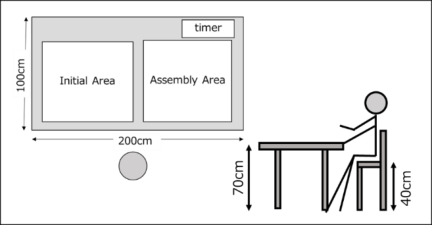
Experiment Environment The experiment environment for verification is shown below (Fig. 1). In the initial area, the parts before assembly were arranged according to the type of parts. Using the parts in the initial area, the subject reproduces the finished form in the assembly area. In addition, a timer was placed in a place that
A Failure Event Virtual Learning Method that Replaces Field Experience 47
Table 5. Reference words and subject behavior appearing in each skill element.
Table available in the original PDF paper.
Reference word Subject behavior
Skills Each skill element Planning plan, prepare, just in case, in advance workload manage- ment skills Instead of moving his hands immediately after starting task, he takes the action of thinking for a certain period of time. Change, Anticipate, Prepare time, opportunity, timing Prioritizing Priority While checking the time during task, he sets the priority of assembly. time, amount of tasks, workload emergency, abnormal Distribution Allocation The completed form is divided into small parts for task. monitor, watch, Auto, AI, Drone
Monitor Sharing discomfort, symptoms, and perceptions
situational awareness manage- ment skills
The task is progressing while frequently checking whether the task working on is correct. mode, state Vigilance immersion, concentration
If he makes a mistake, he can immediately recognize it and make a recovery. normally Discomfort, situational awareness timing, right Anticipation predict The parts are carefully arranged in case the assembled product breaks. if Analysis Information gathering He stops and takes the time to check the finished drawing, which is the number one source of information. Consideration
Figure 1: Experiment environment.
would not interfere with the task, so that the subjects could grasp the task time.
In addition, in order to reduce fatigue of the operator, this experiment was conducted in a sitting position, and the heights of the task table and
48 Aoyagi and Okada
chair were set at 70 cm and 40 cm, respectively, which are considered appro- priate heights for a typical Japanese adult male. and set up the verification environment.
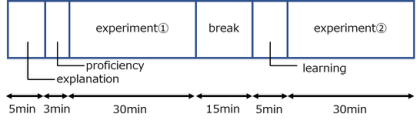
Experiment Flow The experiment flow for verification is shown below (Fig. 2). At the begin- ning, the subject was given an explanation of the purpose of this task, simply to “assemble and reproduce the parts according to the distributed image”. After that, three minutes of learning time is provided, and the shape of the part is grasped. As for the shape grasp, it was difficult to grasp the differe- nce in shape of many parts just by looking at them, so we allowed them to actually hold them in their hands and check them. After that, a experiment is conducted, and the subject assembles the parts in the Assembly Area in 30 minutes. After a 15-minute break, the subject reads and learns the materials in Table 6 for 5 minutes. After learning, a similar experiment is performed. After the 1st and 2nd experiments, we will interview the subjects about what they noticed during the experiment.
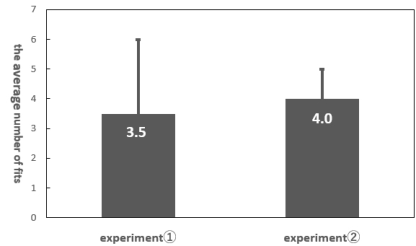
Experimental Result Based on the motions of the subjects filmed with a video camera, we analyzed the number of fits to the seven behaviors of the subjects in Table 5. As a result, the average number of fits increased by 0.5, as shown in Fig. 3. As
Table 6. Materials shown to subjects.
Table available in the original PDF paper.
Explanation Skills required for on-site instructors
expressiveness The ability to convey one’s own experiences and observations to a third party in an easy-to-understand manner. Even if you have a realization within yourself, if you can’t properly communicate that realization to those around you, the realization will be your own, and the effect will be halved. logic Ability to not only intuitively perceive one’s own perceptions, but also to think about background factors. The ability to think logically is of course useful during work, but it also has the advantage of increasing your persuasive power when communicating your thoughts to those around you.. diversity The ability to think about things from other people’s perspectives based on what you notice while working. Being able to take a bird’s-eye view of work from the standpoint of various people is something that cannot be achieved without a broad perspective, and is a higher skill than the above two items. versatility The ability to discover new insights that can be applied to other work through experienced work. This is the highest skill of the four items.
A Failure Event Virtual Learning Method that Replaces Field Experience 49
Figure 2: Flow of verification experiment.Figure 3: Average number of fits to seven behaviors.
a reason to the increase in the number of fits, the subjects who failed were able to change the actions that were applicable in experiment with respect to “Distribution”, which is an element of workload management skills, and “Anticipation”, which is an element of situational awareness management skills. In other words, it is thought that learning has given them the ability to think logically about the path to achieving their goals, and that they have become able to act while anticipating what will happen in the future.
On the other hand, some problems were observed. The first is the decrease in the number of subjects who were successful in experimentx. In experi- mentx, “Planning”, which is an element of workload management skills, was completed, while in experimenty, task was started immediately without thinking. This test subject also succeeded in experimenty, and the task time from experimentx to experimenty was reduced to 1/3 or less, so the task efficiency was significantly improved. However, there is a concern that the word “easy” appeared five times in the interview after experimenty. Doing a task while thinking it is easy leads to ruts and overconfidence in the task, which entails the risk of making a serious mistake. Second, none of the sub- jects improved their skill elements in “Planning,” “Prioritizing,” “Vigilance,” and “Analysis.” In particular, regarding “Prioritizing”, neither of the subjects could have it in experiment x and y.
this method was confirmed to be somewhat effective for subjects with low workload management skills and situational awareness management skills, it is necessary to take a new approach for subjects with high these skills. will be an issue for the future.
CONCLUSION
In this study, we proposed a conceptual skill acquisition support method that is especially required for leaders of organizations such as field leaders. In
50 Aoyagi and Okada
order to acquire conceptual skills, we focused on “workload management skills” and “situation awareness management skills”, which are skills that are used in individual task, aiming to expand the subject’s work performance characteristics. Through the experiment, it was confirmed that the behavior of subjects who lacked these skills changed and that they were able to draw a path toward achieving their goals.
Since we were able to confirm a certain effect in individual task, it is sug- gested that the learning method proposed this time could contribute to the expansion of the work performance characteristics of workers for general field work. However, since improvement was not seen in four of the seven skill elements mentioned, it is necessary to consider further enhancing the explanation, such as giving specific examples of skill utilization in the expla- nation content of the material. In addition, it was found that there is room for consideration in educating human resources who originally have high conceptual skill.
As a future issue, it is necessary to consider effective learning methods for all seven skill elements, and to consider a conceptual skill acquisition method that takes into account the skills exhibited in team task, which was not the subject of this study.
REFERENCES
Arthur P. Brief, Stephan J. Motowidlo, “Prosocial organizational behavior,” The Academy of Management Review, Vol. 11, No. 4, pp. 710–725, 1986. Daniel Katz, Robert L. Kahn, “The Social Psychology of Organizations”, Wiley,
New York, 1966. Dennis W. Organ, “Organizational citizenship behavior: The good soldier syndrome”, Lexington Books, 1988. Erik Hollnagel, David D Woods, Nancy Leveson, “Resilience Engineering: Concepts
and Precepts”, Crc Press, 2006. Jennifer M. George, Arthur P. Brief, “Feeling Good-Doing Good: A Conceptual Analysis of the Mood at Work-Organizational Spontaneity Relationship,” Psych- ological Bulletin, Vol. 112, No. 2, pp. 310–329, 1992. Linn NA Van Dyne Jill W. Graham Richard M. Dienesch, “Organizational Citi-
zenship Behavior: Construct Redefinition, Measurement, and Validation,” The Academy of Management Journal, Vol. 37, No. 4, pp. 765–802, 1994. Linn NA Van Dyne, L. L. Cummings, Judi McLean Parks, “Extra-role behaviors: in pursuit of construct and definitional clarity (a bridge over muddied waters),” L. L. Cummings & B. M. Staw (Eds.), Research in organizational behavior, Vol.17, pp. 215–285, 1995. Philip M. Podsakoff, Scott B. MacKenzie, Chun Hui, “Organizational citizenship
behaviors and managerial evaluations of employee performance: A review and suggestions for future research”, Research in personnel and human resource management, Vol. 11, pp. 1–40, 1993. S. D Robinson, “Visual representation of safety narratives”, Safety Science, Vol. 88, pp. 123–128, 2016. Smith C. Ann, Dennis W. Organ, Janet P. Near, “Organizational citizenship behavior:
Its nature and antecedents.,” Journal of Applied Psychology, Vol. 68, pp. 653–663, 1983.
LISTED IN THE AHFE DIGITAL BOOKSTORE CATALOGUE
Explore the complete digital volume
Physical Ergonomics and Human Factors
Read this individual research paper free through the original publisher, or explore the full digital proceedings book.
ISBN 978-1-958651-79-7
Explore this ISBN in the AHFE Bookstore ↗Listed in the July 2026 bookstore catalogue; search by ISBN to confirm current availability · Digital book purchase optional